(Above: I love this. Found it unattributed on Pinterest. If anyone knows the artist – please tell me so I can credit and link.)
Hello! Can you feel the change in seasonal energy out there? Barren-looking fruit tree branches now fat in bud or with the first green emerging. Magnolias doing their thing. Spring bulbs.
I’ve been eyeing up the vege gardens and wondering when the moment is to pull out the wintery stuff to prep the beds for those first tomato babies.
Lazy/easy hosting
I recently read an article about ‘imperfect hosting’. The jist of it was…what if we relaxed our standards for having people over so that it happens more often…rather doing it ‘perfectly’ but hardly at all because of that perfectionism?
Inspired by that, we had six friends over for a ‘Sunday Toast’. We supplied bread, butter and a couple of things to go on toast. (I made tomato dahl and a smoked fish + cream cheese dip.) We asked our friends to bring a toast topping.
We put all the toast toppings on the dining table. At dinner time, we took turns at the toaster making toast… then move to the dining table and applied toppings of choice. (Basically, yes, our friends had to cook their own dinner.) Dessert was a ‘zero dishes’ very lazy effort of a box of Cadbury ‘Favourites’ and some mandarins. It was interactive and fun, very easy and after they left – we were all cleaned up in about 15 minutes.
We also learned a cool thing from our friends Marolyn and Ruth. They invite people over for a specific window of time, e.g. ‘Come for dinner between 5 and 8pm.) Having an end time makes hosting feel more do-able, too. We copied them. Everyone had fun and then left round 8pm. We had the great feeling of having caught up with mates and hosted something AND we still had a couple of hours of our Sunday night left for chillin’.
Something good to watch: ‘Datastream’ Documentary
I really enjoyed this short documentary about legendary Wellington print shop, Datastream. They closed back in 2017 after 35 years in business!
They were a print shop with a radical heart but they worked with everyone local. It’s very heart-warming and a testament to the love a business can get when they commit to their community.
Homemade Worcestershire Sauce Recipe
I don’t think I’d ever consider what the base of Worcestershire Sauce is…or that I could potentially make it myself. I follow Australian food writer, Sally Wise’s blog and she recently published a recipe for it.
Turns out the base is plums so it’s a good recipe if you have plum trees. Part of me is intrigued to make it…the more logical part of me is questioning just how many bottles of Worcestershire Sauce one family needs…but on the other hand, a cool thing to gift or trade.
Affordable Art…on the move
Tote are a fun way to have art in your life. It’s art you can wear… it’s useful art.
A laid-back and heartfelt tune by UK hiphop artist, Little Simz. Lyrics as sweet and warm as a jar of honey sitting in the sun:
‘I think that love is forgiving yourself
I think that love is offering your immediate help
I think that love is everything that we need in this world
I think the key is being honest and being yourself
I think love is understanding that people can change
And loving them anyway through every stage.’
(I add one track each week to the slow-growing Slow Small Media playlist. You can listen to all of the tracks in the order they were added here on Youtube.)
A poem for the week: ‘What’s fun until it gets weird?’ by Chris Tse
Last week Chris Tse finished his time as New Zealand Poet Laureate. He did some amazing work in this role, travelling extensively and representing New Zealand so well. Here’s an excellent recent poem of his, ‘What’s fun until it gets weird?’
This weekend, we are chipping away at some changes we’re making to our back yard – extending our porch, moving plants, and first baby steps towards building me a home studio. This weekend marks the end of week two of my Verb Home-Based Residency. I’m planning on giving my little greenhouse a good sort out and clean up ahead of spring activities.
I hope you are faring well out there. Hope there are some lovely things in your weekend.
I consider the writer, Iona Winter my friend even though we’ve only met in real life once. We’ve exchanged lots of warm and intimate dialogue via email. I read an early draft of one of her poetry books for her. She included a poem of mine in her grief anthology ‘a liminal gathering’ which I wrote about back here.
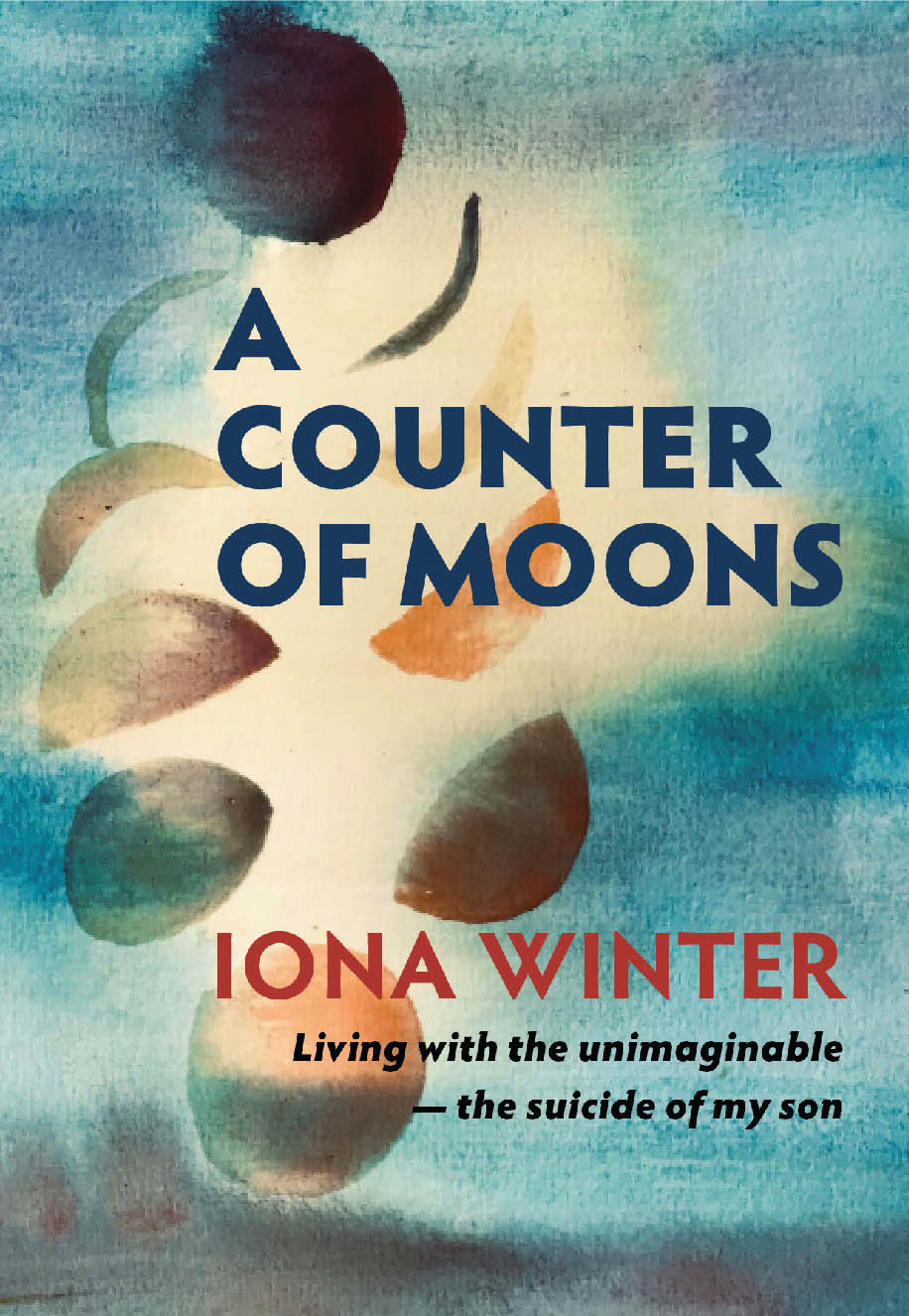
Iona recently released a hybrid memoir, A Counter of Moons. In it, she writes candidly about the time surrounding the suicide of her beloved son, the musician Reuben Winter.
I recently slow-interviewed (via email exchanges) Iona about her new book.
(Content heads-up: Iona’s book discusses suicide, mental health, grief so, naturally, all of these subjects feature in this interview as well.)
Kia ora Iona, thanks for talking to me about your beautiful new book. I really enjoy your poetry so I am looking forward to reading your memoir.
Can you share a little about how this book came into creation?
Iona: Kia ora Helen, thanks for inviting me along e hoa. I love the idea of a slow interview, it’s like we’re having a cuppa together, fireside, with a plate of delicious homemade biscuits!
A Counter of Moons is part of a body of work that began after my tama Reuben took his life, during Covid lockdowns in 2020. I’m deeply grateful to have received the 2022 CLNZ/NZSA Writers’ Award, that enabled me to complete the initial manuscript. This book and my poetry collection In the shape of his hand lay a river (2024), started out life together, as companions…but the world of publishing had other plans. Writing has been my main solace, while facing into an experience that is, for the most part, wordless.
The first project published was the multimedia grief almanac a liminal gathering (2023) Elixir & Star Press– a small indie press I set up in Ru’s memory. Knowing that grief is everywhere, from sharing my grief experiences, I kept hearing that many people carry their grief alone and feel dreadfully isolated. It was like Ru spoke into my ear then, saying, “You need to create a space for other people’s grief Mā”. It wasn’t really an option, more like an essential thing to do.
After Reuben died, I wrote diary entries, poetry, ranty-af essays and explored literature around suicide bereavement and grief. There wasn’t much, in terms of dead-child-grieving-mother books, and the rest was either academic or self-help. What I needed was to read people’s personal stories – something to mitigate the deep grief that accompanies suicide bereavement. I was active on social media for a couple of years, because I didn’t want Ru’s death to go into a void. It felt important not to disappear either, as a grieving māmā; not to garner attention but to raise awareness. Along the way I’ve attempted to challenge the social stigma attached to being a suicide bereaved mother in Aotearoa. A Counter of Moons is a hybrid non-fiction memoir; a snapshot of my life, Reuben’s life and his departure from this realm.
I think of you as a writer who can’t be confined to one genre so it makes sense the memoir turned into a hybrid book. It also makes sense in terms of how grief feels, right? You never know how you’re going to be one moment to the next.
Now that it’s out, how has it been (so far) having it out in the world?
Iona: Yeah, grief is hybrid by its very nature, as is love. I guess you’ll never find me writing something straightforward, probably because my brain doesn’t work that way, but also because I don’t see life, or death for that matter, as linear, formulaic or clearcut. Everything is interconnected and interdimensional. I’ve crafted a hybrid book because that’s how grief is for me – all over the freakin show, intermingled with moments of clarity and belonging, and at others feeling desperately alone and silenced.
It’s been odd since the book came out; a mix of relief, exhaustion, and flatness. Reuben used to say that too whenever he released a new album, and how it often felt ‘over-cooked’. Truckloads of energy went into these grief projects, but putting everything into grief-art, despite being purposeful for myself and others, has taken a massive toll on my wellbeing.
The feedback from those who’ve connected with A Counter of Moons has been potent, heartfelt and moving. To date, I’ve been blessed with generous and hearty responses; yet alongside this I’ve noticed the same pervasive silence that accompanies suicide. All I can do is trust that it’ll make it into the right hands. As a bereaved mother, I saw a major gap in the literature and have attempted to place a signpost there. I’m under no illusion that this book will be a bestseller, because most people seem reluctant to engage with the subject matter; including those who’ve said they can’t because they don’t want to feel sad. I say in the book, “We are expected to get over grief, not wallow in it, and to hide our teary-eyed sleep-deprived faces. Except if you’re me, and these days I say, bugger that. I’ll be real about this, even if it kills me.” It hasn’t killed me yet, and I’m pretty feisty about everyone’s right to do grief in their own way.
In making these three books, I do wonder if there’d be more engagement if I was a shouty wahine standing on the steps of the Beehive! The silence with suicide and difficult emotions, I believe, speaks to our collective fears of going there with our own grief and internal pain. Heaven help us if we are triggered into feeling something other than the socially prescribed or accepted norms.
Here in Palmerston North, a well-known local writer, Paula Harris killed herself in 2023.
Paula was very open, very vocal about her mental health struggles, her suicidal thoughts, her feelings of isolation & her despair at her treatment by mental health professionals.
She wrote about being sectioned in essays published on The Spinoff.
It seemed to me that there was often silence after Paula spoke out on social media or published one of her essays or poems. Not total silence, some people would response and try to say supportive, buoying things, however, it was to little effect.
Whenever suicide features in an art work, there is a often a list of links afterwards and a statement like ‘if you are struggling…help is available.’ In Paula’s case, though, ‘the help’ seemed to make things worse…and with mental health services so underfunded…IS help available, really?’
I’d be interested in your reflections on this, not Paula’s case so much, but more the ‘help is available’ phrase we see/hear so often.
Iona: Thank you for mentioning Paula, and naming the silence.
Last time I saw Paula was at the Verb Writers Festival, we’d followed each other for years on social media. It was great to have a hug, put a face to the name and have a shared rant about the state of the world. It’s important to mention Paula, because she’s just as ‘with us’ as Reuben is. Our dead don’t go into a box, as I’ve mentioned in the book.
Canadian artist Tanya Tagaq says in Split Tooth, “We carry our dead with us like helium ballons. There is no breaking the umbilicus. They have always been with me. They are me.” And it’s up to us to keep their names in the conversation, rather than not. Less avoidance would go a long way towards developing more honest kōrero in our communities.
While I have theories about why people are so afraid to speak about suicide, grief, mental health; when there have been decades of awareness-raising, it still doesn’t make sense. I’ve written about my take on this in A Counter of Moons. The ways we speak of our dead varies a great deal, is often dependant on how they died, and their death-stories seem to have a hierarchy. It’s like I can’t celebrate Reuben’s life, because he took himself out of that life, and the lives of everyone who loved him. It’s as though I must feel ashamed as his mother, for not being a good enough parent. There are many shitty things people have flippantly said to me, about Ru’s suicide. I understand the anger about being suicide bereaved, I’ve been like Mahuika or Kali at times, but beneath any anger are myriad emotions (as we well know). What if we looked inside ourselves first, before opening our māngai to comment on things we know nothing about? What if we made more time for one another without time limits (frankly a preposterous idea when it comes to any kind of grief)?
The silence when we have been open about what’s really going on for us, is palpable. But I reckon the ‘what’s really going on’ is what the general populous find repellent, triggering or easy to avoid. Reuben was often met with silence, as was Paula, and I’ve experienced this in life too. The ‘afterwards list’ of people to contact is probably a way of covering butts, as if to say, “I’m sorry that happened but we did make a list of people for you to connect with.” It’s like there’s even less responsibility taken because of that. I’ve spoken for years about the lack of resources and the lack of funding – and I promised myself not to be political today – but can see that it’s never been high on any politician’s list of priorities. It’s as though we don’t want to see what’s going on in our own backyards; the many dire situations including suicide, homelessness, poverty, and the ways these are spoken to with an increasingly more tokenistic vibe.
In terms of ‘Help’ being available; it can only be available if you are willing and able to access it and there are enough people to provide it. I remember working at Youthline in the 90’s, and how many people would call up simply to have someone on the end of the phone, to combat loneliness. Perhaps we need to attend to the ways we silence one another, and the subsequent loneliness and isolation first?
Can you speak to this? What do you think it is about writing / creativity that has kept you going?
Writing has always been my go-to, when life has overwhelmed me, or when I’ve had nobody to share it with. There’s something incredibly immediate about writing whatever’s in my head down onto the page.
Much of how I defined myself (aka society’s labels) has been stripped away over the last decade with a brain injury, a mesh injury from medical misadventure, being unable to work a normal job ever again, and Reuben’s death. There’s been a great deal of grief and loss to attend to, and with limitations on ‘help’ and a lack of financial resources, I’ve had to dig deep in my own soul and find ways to navigate this.
Poetry, either reading another’s or writing my own, creates space to express what’s going on for me internally. I don’t think we have many options these days, for this kind of expression, that feel safe. The good thing about writing on paper is that you can always use it as a firestarter if you don’t like it! When there’s more space in my head and heart, after expression of intense emotions, I think it leaves space for something new to emerge.
Thank you, my friend, do you have any final thoughts you want to share?
If people want a copy of A Counter of Moons, or the other books I’ve mentioned, I have copies and am happy to post anywhere. Or if money is a barrier, perhaps people could request their local library gets copies? Alternatively, copies can be purchased direct from Steele Roberts Aotearoa.
My hope is that these books will start and continue conversations around suicide bereavement and grief, perhaps even making these conversations more commonplace and without fear or avoidance. As I’ve written in this book, death is a part of life and we need the same village that raises our children, to wrap around us when we face death.
Thank you, Helen, for inviting me along, and for being unafraid to go there with me. Thank you for not joining in with the silence that pervades our society, and for meeting me in a beautiful heart-space, I’m very grateful.
I bought my monster desk from the Wellington Central Salvation Army op-shop in 1999 – the year I was studying creative writing full-time.
I think at the time I felt I needed a serious desk to be a serious writer.
When I got it home, it had old papers in the drawers from the Ministry of Education so I guess that’s where it spent the first part of it’s working life?
It’s huge and heavy and more than once when we’ve moved house we’ve had to take doors off their hinges to get it inside.
It’s heavy and daft…and I still love it, twenty-five years on.
Having begun my home-based residency, I want to publicly applaud Verb for their forward-thinking, compassion and generosity in establishing this (sadly) unique opportunity for writers who have circumstances which make applying for away-from-home artist residencies from challenging to impossible.
When I first saw the advertisement for the home-based residency, I felt so very moved and so happy for our NZ writing community. I know so many writers for whom travelling to writing opportunities is outside what is possible in their lives.
This home-based residency acknowledges and honours the unique challenges of disability, of care work and of care load.
More than anything else, it gives visibility to a strata of creatives who often feel invisible, unseen and unsupported. I know that while I have done my very best to keep my creative work alive it has often felt like swimming upstream of the demands of my life.
(Btw, If you don’t know me well enough to know what my circumstances are, I have an adult son (he’s 20) with autism and I am his main carer. I do my writing work around his care.)
I also wish to thank Verb for generously deciding to award two residencies in this inaugural year. They advertised for one and after considering the applications, awarded two. How marvellous, hey?
My fellow ‘at-home’ resident is the brilliant Henrietta Bollinger. Do go and read Henrietta’s book. It’s smart, fierce and very funny.
So here I sit, at home at the monster desk as usual…but with the warmest feeling of support, visibility and with large swells of gratitude.
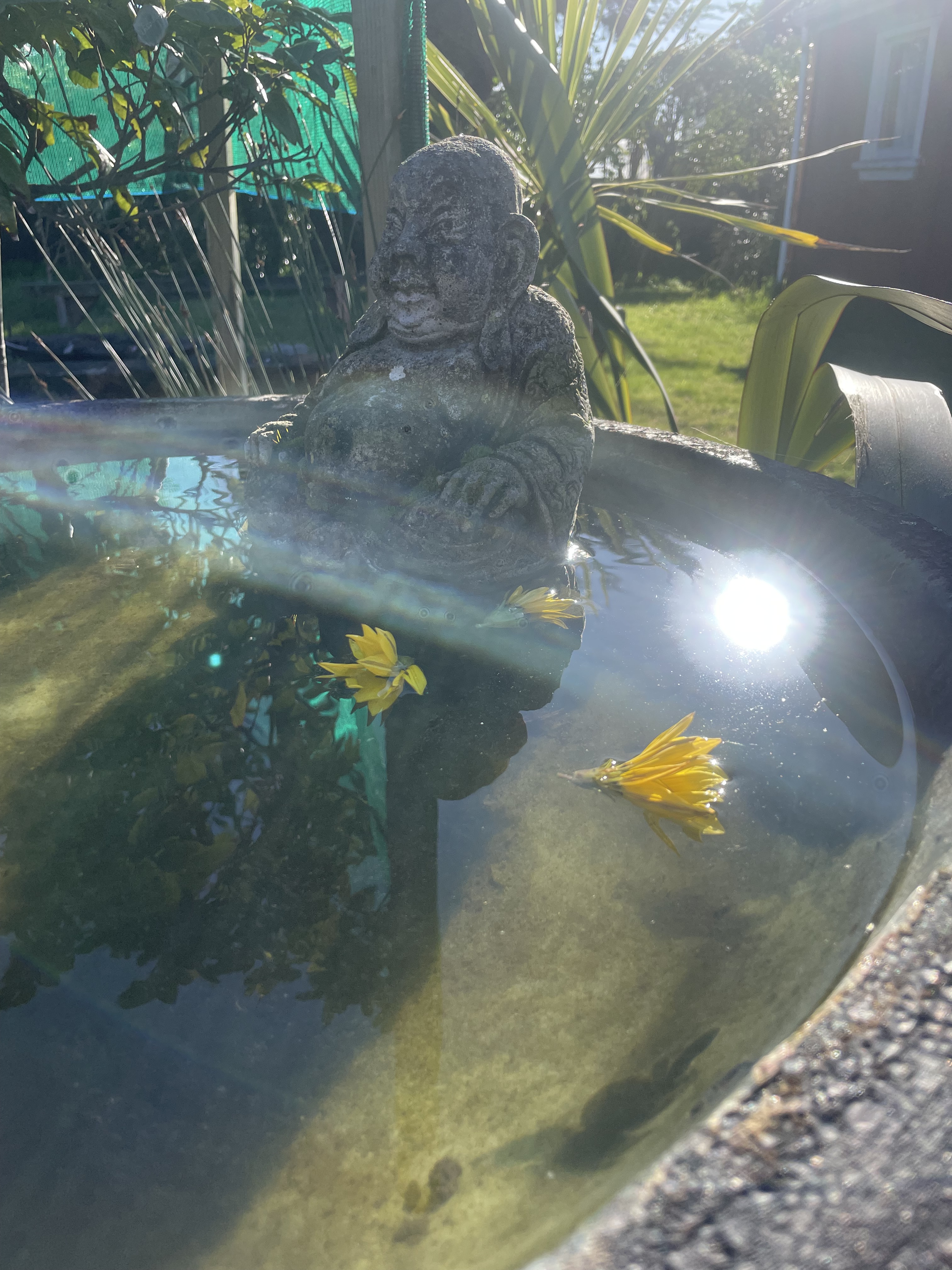
(Above: resident garden Buddha at the bach I stayed in at Ōtaki.)
I’m back from my residency in Ōtaki.
How was it?
Well, all these things are true at once:
It was a wonderful experience. Parts of it were challenging. I got sick. Woke up sick on the first morning. A nasty dose of ‘flu – fevers, sweats, body aches, etc. I managed to do all of my public-facing things but I did not manage to sparkle. I’m a bit sad that I was a depleted version of myself when I was so keen to converse and connect. I was too sick to catch up with my local friends. The beach was stunning. The beach was my new best friend. The cottage I was housed in was wonderful. simple, sweet, one block from the beach. The organisers of the residency are warm, generous, kind people. Once my eyes stopped stinging and streaming, I read a lot. I did not manage to work on my manuscript…too ill to be generative or analytical. I did keep a journal about the whole experience so maybe there’s something in there? Or possibly it’s a load of feverish waffle. I can’t face looking at it right now but will crack it open when I’m all the way recovered and fully landed back in normal life. It was weird. It was confusing. It was perfect.
I know I go quiet when I’m feeling overwhelmed and I observe that many friends do, too.
Let’s try to be there for each other…even when it feels hard.
A recipe for a very weedy pie: ‘Hortopita’
Last week in Ōtaki, I chatted all things winter forage-able weeds with some lovely locals in the beautiful Ōtaki library. (We had planned to do a foraging walk in a near-by park, but rain stopped play so we talked weeds indoors in the warm and dry.)
In every season, something in nature is thriving, and winter is great for fresh, bright green greens, well-watered from all the rain. Here is a recipe which calls for 11 cups of weeds! It’s a wild weeds version of spanokopita, ‘Hortopita’.
I think a lot about food as love and food as care because I’ve had 25 years of cooking for a family.
I like the simplicity and poignancy of this poem about a small moment of a food offering spurned.
(+ Lehndorf-trivia: I flatted with Therese when we were in our 20s. Back then we were part of a performance poetry group called ‘Poetry For Real’.)
By Sunday
You refused the grapefruit
I carefully prepared
Serrated knife is best
less tearing, less waste
To sever the flesh from the sinew
the chambers where God grew this fruit
the home of the sun, that is
A delicate shimmer of sugar
and perfect grapefruit sized bowl
and you said, no, God, no
I deflated a little
and was surprised by that
What do we do when we serve?
Offer little things
as stand-ins for ourselves
All of us here
women standing to attention
knives and love in our hands
Affordable art: original moka pot linoprint
We have a big espresso machine. F is a coffee aficionado and roasts our coffee. Coffee is a big part of our daily ritual.
When I got home F surprised me by telling me that while I was away he didn’t turn on the big noisy coffee beast and just made stove top for himself each morning.
Stove top is what we used to have before we had fancy espresso machines and it’s what we have when traveling.
There’s something so handsome about the classic Bialetti moka pot and it has so many warm associations for me.
I’ve followed Faythe’s creative life since falling in love with her film ‘Handmade Nation’ 16 years ago! (I was part of that wave of renaissance of handmade things and used to make a bit of money selling at Indie Craft Fairs. It was a huge and exciting scene at the time. It’s hard to convey the unique vibe of those first fairs now but at the time they were very fresh and exciting.)
In the article, Faythe finds a very charming hand-illustrated book at a second hand shop and then follows her enamouredness into a research side-road.
The book she finds is charming, Faythe’s writing is so good, the whole premise is very entertaining.
‘The Candy Factory’ – a charming short film
I can’t find the words to express how beautiful this film is so just, please, trust me and watch it. (Content warning: heartbreak.)
*
OK, that’s the digest for this week. Did you miss it last week? & If you’ve read or watched or listened to anything you think I might like, please share in the comments.
Last night I got my 100th subscriber on Substack which is so lovely. If you didn’t know, I write over there about permaculture, radical reciprocity, attempts to live in gift economy, voluntary simplicity, permaculture, foraging & more. I’m still finding my way there, to be honest…but trying not to apply feelings of urgency to things that don’t really need it.
This weekend I am going to:
continue getting better, clean! (house is looking a bit end-of-winter-ish), in the garden, all my rocket is ready at once so I might make a rocket pesto, read more of this book and I’ve been doing some Japanese-inspired visible mending of pants…so I might carry on with that. It’s slow work but looks so great.
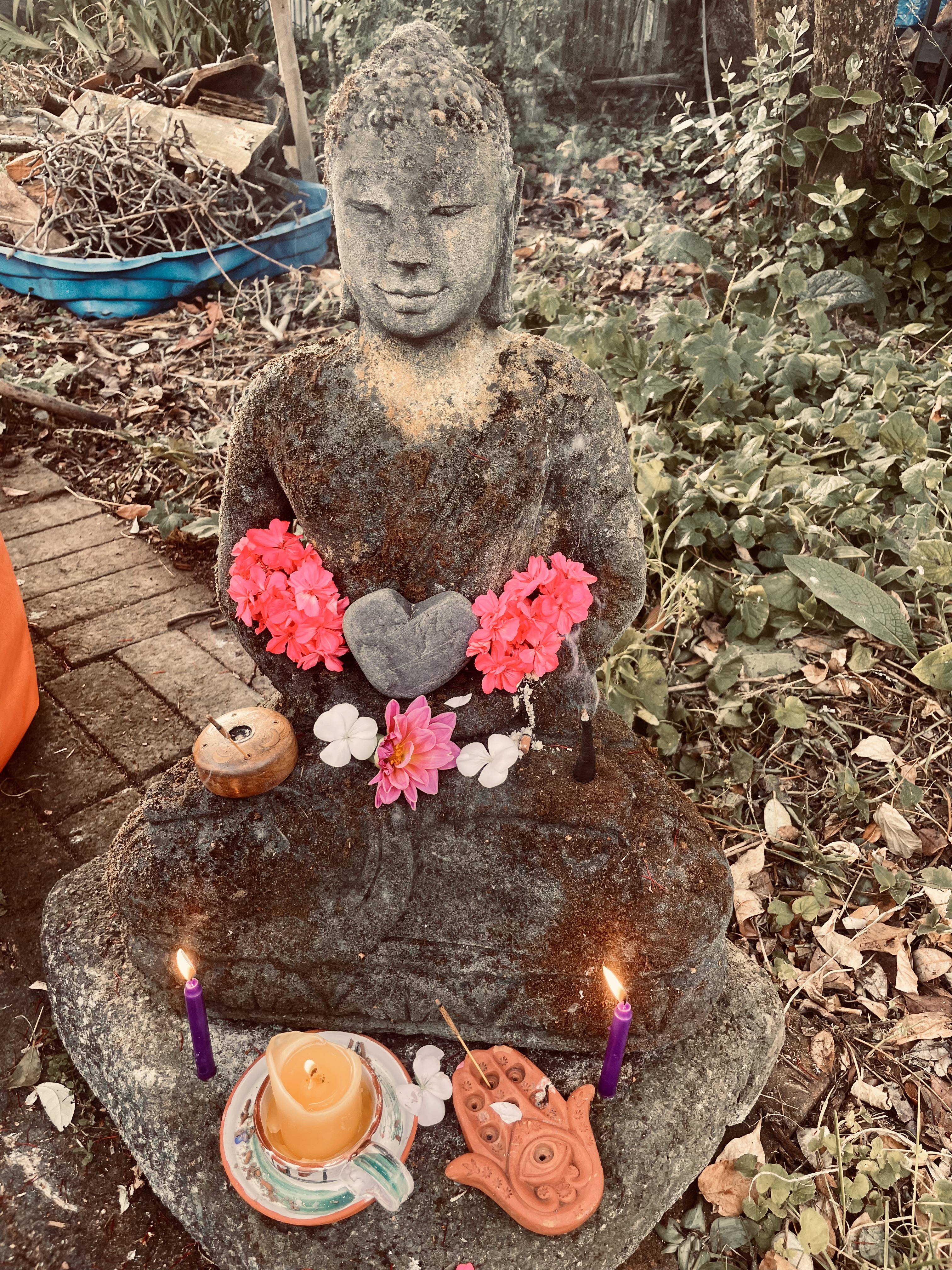
(Above: my beloved Buddha statue in our back garden . F imported him from Thailand (!) for my 40th birthday. (So I’ve had him 12 years.) He’s made from volcanic rock and was very black when new. Now he’s faded and mossy…but still serene.)
Hello!
I’ll be taking a break from the digest next week because I am going to be away for ten days being a resident as part of this new artist residency programme down in Ōtaki.
Ten days is the longest I will have been away from my family in 25 years! I feel a bit anxious about who or what or how I will be outside of the braid of my family.
Who AM I when I can think long, digressive thoughts without interruption?
When I only have to worry about feeding myself?
When I don’t have to try to keep everyone’s appointments and life-admin in my head at all times?
When I can utterly design my own schedule each day?
I don’t know.
I’m curious to find out.
Do you think I’ll be okay?
But for now, here’s some thoughtful, calm things for your slow perusal.
A list of genuinely beautiful compliments
Do you ever want to express how much you enjoy or like or care about someone but struggle to find words that don’t feel clunky or inadequate?
Here’s a list of excellent compliments to inspire you. I tend to fall back on the same superlatives with my friends: love love amazing incredible talented strong beautiful…like too much sugar in a dish I worry I become cloying…that it sounds insincere because of the volume. I think they possibly stop hearing me? So this list was inspiring to me.
A song (and an introduction to an amazing person)
‘The heart never tires / the heart is tired all the time’ sings Meg Vellejos McCoy, (formerly Meghan Yates) in this beautiful song.
In 2021, I worked with Meg in her capacity as ‘art monk’ and community pastor. She ran a peer support group…essentially for tired artists to listen to and support one another. To tend to our sadnesses and darknesses so we could move through them and begin to find fresh ground for inspiration. We met via Zoom.
The rest of the group were all in the USA. I was the only southern hemisphere person. That suited me at a moment of despair and burnout when I didn’t want to know anyone or be known in that way that is unavoidable in New Zealand > our tiny floating hobbit village of interconnection.*
Meg was an amazing facilitator, deep listener and reflector. I got so much from the sessions. I feel like she (and the group) gently helped me to put myself back together.
I also feel like they helped tend the ground for magic in my life because while I was in her programme I found out I had gotten the contract for ‘A Forager’s Life’.
I also love her music. I don’t understand why she isn’t more well-known as a musician because I think her music is incredible with very unusual vocalising style, powerful lyrics and a unique voice. You will think I’m exaggerating but I mean this … I think she’s as good as early Joni Mitchell.
If you’re curious about her music there’s a whole live concert here…poignant for how she can hold silence and pause in a live setting where she is the sole focus. Courageous!
It is ridiculously simple to make but sometimes the best dishes are the best because they are simple.
It’s a macerated dried apricot stuffed with an almond and then served with a little whipped cream or rich yoghurt. That’s it! It probably doesn’t sound very impressive. You’ll have to trust me. Tell me in the comments if you try it and what you think.
Affordable Art for the Week
I love the soft light of candles. I love fruit and vegetables.
Usually I prefer plain beeswax candles. I’m not a huge fan of soy or scented candles or novelty candles…but this fig candle looks so much like a fig! I dunno why. I just like it! It amuses me.
They also do apple candles, orange candles, pear candles…even a flat peach! But it was the fig that caught my eye.
A very calm video where a fibre artist lovingly mends some tattered textiles
The combination of her sweet voice, gentle ruminations on ‘make do and mend’ philosophy, her focussed attention, the satisfying mends and upcycling is entirely calming.
If you’re feeling at all frazzled, stop, drop and watch and let the calmness soothe you.
Poem for the week
In this poem, Eddie Krzeminski captures so vividly the impersonal, over-stimulating bamboozlement of the modern supermarket.
The poem floats through random observations and there’s a real sense of his urban isolation and craving for more connection …to both people and food.
‘Daydreaming in Publix’
by Eddie Krzeminski
I’m tired of Apple Jacks, Apple O’s, Apple Crisps,
Apple Cheerios, Apple Cinnamon Toast Crunch,
Apple Chex (Gluten Free), Apple Pebbles,
Apple Raisin Bran, and Apple Frosted Flakes,
but they are always, for some reason, on sale.
*
Standing in the pink menagerie
of meats, I realize that at twenty-five
I still don’t know the difference between
ground chuck and ground round.
I scry my future
through the expiration dates
on milk cartons:
hundreds of empty jugs
towering towards the sky,
surrounded by the shadows
of seagulls.
*
I know there’s a man in a mint green shirt
standing in the darkness behind these shelves
in the milk crate city.
I’ve seen his phantom hands
pushing new cartons out.
Why this urge to reach
and embrace them?
*
Crisp cold bags of butterhead lettuce,
big-stalked celeries, savoy cabbage
rimpled like the folds of a big emerald
brain, yellow and orange bells.
I don’t have enough money
for any of these.
*
O red-haired girl
leaning over
the freeze-dried plums,
blouse drooping
like a night-worker’s
eyelids,
can you teach me
the intricacies
of prunes?
*
I hate the way my hair looks
in the stale white light
of 600 LEDS.
* Charon hauls the carcasses
of spoiled fruit-stuff
behind the swinging double-doors
and down into the underworld.
*
I think of pushing
my bum-wheeled cart
into the stacked pyramid
of Budweiser cases—
the implosion, fugitive cans
bursting against the dur-a-flex floor,
spinning and shooting foam
to the tune of Enrique Iglesias.
*
The fourth grade in me wonders why,
with so many pounds of gelatinous cuisine,
nobody’s thought of starting a food fight.
*
My father taught me
what the color
of the bread ties mean
but among the whole grains
I remember nothing.
*
What did you think of the supermarket poem?
What’s your relationship with supermarkets like?
Have a restful weekend, hey?
Think of me away from home…finding my feet in Ōtaki.
Recently, a new local friend, Kaydee gave me some beautiful small ripe lemons.
I’d been wanting to make some salted lemons so they seemed perfect for a smallish jar of those. Salted lemons are used a lot in both Middle Eastern and Indian cuisines.
On the weekend, I judged them ready. I was going to a social gathering that day so I took the lemons out, scraped away the flesh*, and put the preserved rinds through my blender to make a salted lemon paste.
(*some people use this part too…but it didn’t taste very good to me. I did use it to clean the inside of my sink before I put it in the compost.)
I know my friends are busy people and I figured the preserve was more likely to be used if they could just scrape out a bit with a spoon rather than having to take it a lemon, rinse it and finely slice it.
Even a small jar of preserved lemons makes a lot...too much for our household to get through in the six months they last. So it was helpful to me to have some people to share it with.
This is how it looked blended & before I labelled the lids.
Something I’ve learned from attending Crop Swaps is that making signs is super helpful. Then anyone interested can just take a photo of the sign and the gifter doesn’t have to answer the same questions many times.
So here’s the little note I made when I put the containers of lemon paste on the table to be shared:
I think he’s kind of a nature-writer’s writer, in that not many people seem to have heard of him yet his way of life and his nature writing (he only published one book in his lifetime, ‘Waterlog’ and two were published post-humously) are seminal in their influence on writing and eco-memoir, kind of like how people say about the Velvet Underground that they weren’t very big in their hey-day but they influenced thousands of people to become musicians. Nature writer Robert McFarlane remembers him here.
I’ve learned about the fascinating back story of Caspian Sea Yoghurt, because my friend Bev gave me some of her starter. It’s very easy to make, no heat needed, it ferments whilst just sitting out on the bench.
I’ve now made my first batch and it’s so good! It has a mild, sour flavour that is very satisfying. I’m a convert.
I op-shopped this vintage-looking (not sure if it is, though) cushion which I just love and have been enjoying gazing at.
If it IS handmade, the embroidery is so detailed and beautiful. Check out those french knots in the centre!
I’ve been making variations of this winter tonic each morning, but I often throw in a garlic clove (doesn’t taste great but excellent for gut health and immunity) and a kiwifruit as well.
I’ve been watching Wolf Hall and loving the costumes, the intensity of the wranglings of the court and Mark Rylance’s incredible, nuanced performance as the lead character.
This brief but darling song is so sweet and captivating. I confess I’ve been adding it to various playlists for years now, but I just don’t tire of it.
An exciting new resource for vintage imagery free of copyright
Public.Work is a very cool new resource for sourcing copyright-free vintage imagery which you can use for creative projects. It’s really nicely designed and fun to use.
A painting which I saw in real life back in 2023 which has stayed with me
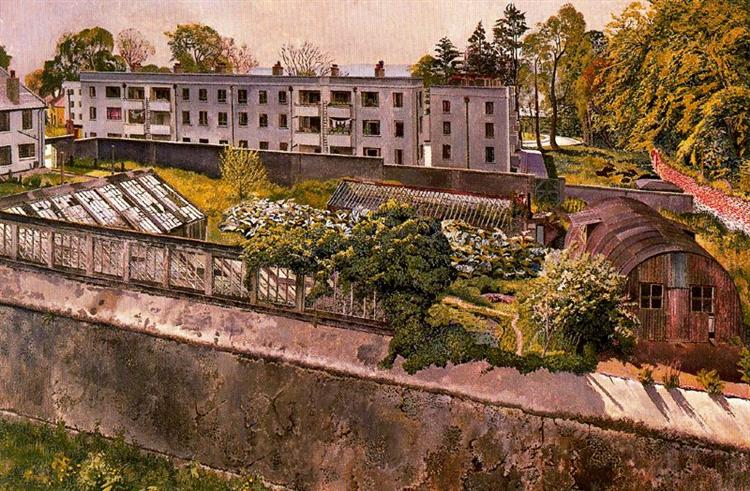
In 2023, I saw this painting, ‘Merville Garden Village near Belfast’, by English artist, Stanley Spencer, at the Dunedin Public Art Gallery when I was down there for an event at the Dunedin Readers and Writer’s festival for ‘A Forager’s Life’. (I wasn’t new to Stanley Spencer. I’ve read books about him and admire his work a lot so it was a real treat to see this IRL.)
I looked at it for a very long time. It’s even more beautiful in real life. It resonated for me as someone who likes to lurk around marginal spaces and does a lot of gazing over back fences and sideways vistas. On the Dunedin Public Library website they say of the painting,
‘Painted on-site while Stanley Spencer stayed with his elder brother Harold near Belfast, this painting compels us to emulate what this great British painter loved to do: climb up and peer over at ‘ungetatable’ places. (…) he brings the richness of the everyday to our attention. (…) The unpromising view is full of promise.’
That latter sentence captures so much of a forager’s approach to life!
Something to watch: a peaceful, inspiring tour of the Mahara Sculpture Garden in Coromandel
I’ve added it to the list of places I’d love to visit in the Coromandel. (Holidays are tricky for us with a disabled (now adult) kid who can’t cope with being away from home for more than a couple of nights…but I trust I will get there one day.)
A rebel 74-year old living off-grid in England
Speaking of potters, I enjoyed this article on World of Interiors about a potter, George Upwell, who was still living off-grid at age 74. I love the photographs of his simple, artful house and rebel spirit. (This article was first published in 2013.)
(Please comment below if you have any suggestions for the affordable art part of my digests. I’d love any leads from you.)
This simple and beautiful lino print of our native eel, by Carrie Dingwall is just $40.00. There’s only ten available, so if you share my love for eels, get in quick!
Today, my son Willoughby and I weeded, pruned, fed and mulched the raspberry patch. There’s something about doing tasks in deep winter that are about looking ahead to summer eating that make me feel so satisfied.
We also planted a weeping Kowhai and some more kawakawa…slowly trying to add more native plants to our small urban garden.
I hope your weekend is a pleasing mix of attending to tasks, resting and topping up your inspiration cup.
(Above: today’s bounty from a little wander around my own garden.)
Do you buy sprouts, bags of mesclun mix or microgreens from the supermarket?
Winter is a great time to find volunteer (‘weed’) microgreens, or young greens, around your garden or local park for FREE!
Because of winter’s rain and damp, the young weeds will be beautifully bright green, healthy and not heat-stressed.
To share some likely contenders with you, I took a walk around my small urban yard and here’s what I harvested.
I took care to only harvest volunteers/weeds and nothing that I’d planted intentionally. (Violet grows like a weed in my yard.)
The trick is to just harvest the young leaves, or the tips in the case of the dead nettle.
These wild ‘microgreens’ can be used in a salad, or chopped and sprinkled on top of soup, or in sandwiches, or blended into a smoothie…the same as you would use supermarket or homegrown microgreens.
I numbered the plants for ease of ID-ing them:
Nasturtium leaves. These are peppery in flavour so great in salads and on sandwiches, not so great in smoothies.
Dead Nettle tips. Great stand-in for lettuce.
Young violet leaves and flowers. Use in salad or cook as your would spinach.
Young ribwort plantain leaves. Important to pick the young ones as the older ones get stringy. The young leaves have a nutty flavour.
Chickweed. Such an enthusiastic garden volunteer. Use the young growth and chop finely.
Young dandelion leaves. These add a nice bitter element to a salad or sandwich. Not so great in smoothies.
Oxalis (known in the UK as ‘wood sorrell’ and the USA as ‘sour grass’) Has a sour, lemony flavour similar to sorrell. Use just a little at a time as it contains oxalic acid. Treat it more like a herb than a main vegetable.
Young mallow leaves. Mallow (also know as ‘Malva’) is a much-used vegetable in Middle-Eastern cuisine and parts of Italy. You can make dolmades with the leaves in place of grape leaves, making it useful during the winter when there are no grape leaves about. Young leaves are good in salad or cooked like spinach.
& of course, these plants have medicinal properties as well, (most plant food does.
I hope this inspires you to have a close look at what might be growing in your own back yard and save yourself a little money (or time) by eating some of the weeds around you.
Let me know in the comments if you have any questions.
(Above: recent pot of echinacea flower tea. I love watching flowers and herbs steep through a glass tea pot.)
How was your wintery week?
Somewhat counter-intuitively, winter is the time to be planting fruit trees so that they have time to establish roots and resilience before the heat stressors of summer.
Do you have any spots in the garden (or in a large pot if you’re renting) that you could plant a fruiting tree?
Last weekend we planted an omega plum tree. It will (eventually) hang over our front fence in the hope that passers-by can enjoy some fruit also. In 2020 we planted a Luisa Plum in a similar spot.
To be honest, it’s meant that we haven’t had many plums off that one because people have picked most of the fruit within reach…but that’s okay…it’s why we planted it there. Eventually, the trees will be big enough that there will be plenty for us and everyone else.
An Australian man using YouTube to Plant a Forest
Speaking of planting trees, if you will oblige me by giving this video your attention (it’s just 12 minutes long), your ‘watch’ will contribute to backyard adventurer Beau Miles planting trees on both his own land and other farms in his area, in Australia.
I follow Beau on YouTube and when I first watched this video last week, it only had a few hundred views and at the time of writing this it is up to 237, 000 views!
(Like I said last week, I love random side-quests.)
Affordable Art: Studio Soph Tea Towels
(Above: image borrowe from the Tikitibu website.)
I love the bold wittygraphics of New Zealand artist and designer, Studio Soph.
Many of her products are outside the $50 cut-off for ‘affordable art’ but she has a fantastic range of tea towels which retail for just $25 each.
After all, what is a tea towel but a large rectangle printed surface? With the right presentation, a tea towel can be wall art! Either gun-staple it over a cheap canvas from the op shop, or sew hems to slide pieces of dowling into, or just pin it to the wall as is!
She has lots of great tea towel designs, but I particularly like this ‘Bird in Flight’ design, available at Tikitibu.
(If you’re new here, I hunt around the internet for affordable art. ‘Affordable’ means $50 NZD or less. I believe everyone should be able to access art and beautiful things for their home.)
Something inspiring for your eyes – a street artist paints bee swarms on urban walls to bring attention to the plight of the bees
What I enjoy about this poem is how a simple encounter with another person (and a potato!), a small exchange, becomes a deeply embedded sense-memory for this poet.
Here’s an excerpt:
‘I met a farmer who pointed the way—
Machu Picchu allá, he said.
He knew where I wanted to go.
From my pack I pulled out an orange.
It seemed to catch fire
in that high blue Andean sky.
I gave it to him.
He had been digging in a garden,
turning up clumps of earth,
some odd, misshapen nuggets,
some potatoes.
He handed me one,
a potato the size of the orange
looking as if it had been in the ground
a hundred years…’
A poem about people exchanging crops with a message of gratitude for the simple things?
really gets me every time. How flying in planes, over mountains, over rivers, is such a miracle, and such a privilege…and yet we so often ‘don’t feel a thing’ about flying any more. If anything, it’s seen as a major hassle to be endured to get where we want to be.
I love their harmonies, their future-ancient sound. All of their work is beautiful.
Where I can, I like to promote New Zealand food writers because we have many excellent ones.
Seeing the produce, writers and food photographed in recognisable New Zealand contexts really fires me up to get out into the vegetable garden and get cooking.
It’s shot by my clever wild foodie/photographer friend, Sophie Merkens. See more of the gorgeous images from book here on Sophie’s website. (& Sophie has a very exciting book of her own launching later this year. Stay tuned for more on that!)
I enjoy recipe books which are focussed on bright, colourful, fresh vegetables, and Tracy’s book delivers on this.
Carrots are often sidelined as a vegetable, but their sweetness means a soup that is mostly carrot has a beautiful, refreshing flavour. Here’s a simple and gorgeous carrot soup from Tracey’s website.
Another option I like to make for a carrot soup is to cook it with indian spices and then in the last few minutes of cooking, blend in a cup of cashew nuts. It’s spicy, creamy sweetness is reminiscent of a korma sauce, but in soup form.
Toward family, toward one another, toward abundance. Let your body’s movement abandon lines. Those lines are the way of empire—extracting, penetrating, demanding, colonizing, ripping, and now, dying.
Embrace nonlinear meanders, worshipping a circumference held together by a center of unknowability.
Because another world awaits, is remembered in the shape of a field, a meadow for which there is no label to monetize, no body to exploit, no peak to bag.
As things die, they also begin anew, becoming something far more curious, rounded, and life-affirming. To walk away from empire means to walk toward a different shape.
Firepit, egg, seed, eye, sun, wheel, Earth.’
-Nicholas Triolo
*
Have a good weekend, everyone.
Try not to be busy. Keep it simple.
Eat some good soup made by someone you know in real life.
Lie on the ground and look out of the window at the sky.
(Above: a blazing nasturtium in the vege garden. I’m grateful for their bright faces on these gloomy winter days.)
I bring this to you from a late-afternoon energy lull. Does anyone reading suffer insomnia?
Over the last month, I’ve been wrangling with insomnia which hasn’t been much fun. If anyone has any suggestions, let me know. (Currently at bedtime, I take a valerian/hops/passionflower potion and rub my feet and legs with Magnesium oil which used to work a treat but recently, not so much.)
Enough about me! how are you?
Here’s a bunch of random good things for your weekend:
A sweet poem
I have a surname that people frequently struggle to spell, but it’s not as intense as the surname of this week’s poet, Amy Nezhukumatathil. Amy’s work is sensuous, at times humorous, she knows the natural world and writes it with great attention. I very much recommend her poetry.
But this week’s poem is slightly different from her usual style. It’s a found poem which is comprised of fragments of letters from high school students who are studying her poetry for their exams. (Note the misspelling of her name in the poem’s title.)
It’s affectionate and funny. I could feel the collective stress of the poor students rising up off the words.
A beautifully-written essay about a painful subject
Well, that’s because unlike the Wizard of Christchurch -who is mainly a satirical figure- Rosie is a real wizard…although she would never make that distinction (‘real’) herself.
Real wizards are very modest.
Rosie has written a beautiful, meandering, thoughtful, honest essay called Precariat Blues about the pain of losing her latest home (another rental sold out from under her) and about precariat housing (and living) generally.
From Rosie’s essay:
‘Chop wood, carry water, by all means dig. But if you rent, I would advise applying your effort to things you can carry with you when you go. Never forget that you stand to lose your labour. Human ingenuity is bonsai’d by the learned helplessness of tenancy. This pinching out of side-shoots is maybe the greatest tragedy of what renting does to a person’s soul.’
Because she’s a real wizard, she makes a very sad subject beautiful. You’ll read it and possibly feel sad, mad, bad, but also so glad that you read it…because it really is phenomenal writing.
I really hope Rosie publishes a book of her essays one day.
One would be beautiful…or if you have more than $50 to spend on art, you could have a pair…or a flock! They’re like a contemporary take on the classic flying duck wall ornaments.
This live version has a vibrant, compelling quality. Plus, if you’re watching as well as listening, it’s soothing to watch Ben noodling away in his music room surrounded by his beloved musical instruments.
In the kitchen: three ways to eat onion weed
Did you know you can eat onion weed? It’s particularly succulent and good in winter and spring in New Zealand and it’s SO easy to find….a ‘Foraging 101’ kind of plant.
Here’s a beautifully-produced video from local weeds-loving, vegan chef Anna Valentine on four ways with onion weed.
She shares a mayonnaise, a super salt, a salad and a tempura which use the bulbs, stems and flowers of onion weed.
An article about the world of miniatures
There’s something so hugely compelling about tiny things.
Once, a friend bought me a miniature bok choy plant made of resin because ‘I knew you’d love it’. She was right, I do.
I bought my Mum a miniature Victorian copper kettle for her recent birthday because I knew she’d love it. She does. It’s now sitting on her dresser.
I googled where to buy cute miniature things in New Zealand. I’ve always dreamed of having a green Aga stove and from the In Miniatures shop, I could have one for just $29.00.
& something very, very, very silly to finish
Last night I had insomnia so after lying in bed staring into the dark for two hours, I eventually gave up on trying to sleep, lit the fire and opened Youtube.
The first thing the YouTube algorithm suggested was a video where comedian crafter, Ash Bentley, knits herself a ‘cursed outfit’. I was skeptical, but also wired and tired so I watched and, oh my goodness, it is worth watching Ash’s reveal of her cursed crafting effort.
Trust me, it’s worth it. It’s a horror and she’s a crack-up.
(Given I mostly watch foraging, permaculture and ‘slow life’ Youtube, I have no idea why YouTube suggested this to me…but I’m not mad about it.) Gosh, I love a silly side-quest.
*
The weekend ahead: I’m trying to do something of a midwinter-clean, like a spring clean but in winter. My fantasy is that we won’t need to spring clean because I’m going to do so much over July and August that I will land in September all sorted and fresh. Clearly the kind of thing us Virgos daydream about. In spring I’d rather be in the garden than in the house.
At the moment, this looks like a pile of boxes and supermarket bags in the hallway floor spilling over with the recently-culled.
If I have friends visiting while such piles are lying about, I always invite them to mooch the op shop pile before it heads off to the op shop. Already I’ve re-homed some clothes and some books. Happy friends and less for me to cart to the op shop. Hoorah!
So this weekend, I’m going to carry on with a bit of that. Last weekend I tackled my wardrobe, this weekend, it will be our bookshelves. Might be time to give some books the chance to be read and enjoyed by other people instead of gathering dust here. Not every book is going to be one that you re-read, right?
I have a pile of shiny, new permaculture magazines from the library to read. Our library is so great in the variety of magazines they get. I can’t believe there are multiple permaculture titles to mooch.
It’s Palmy Crop Swap weekend and so I’ll head off to that on Sunday with some succulents I’ve potted up and some of my herbal tea to share.
That feels like enough ‘might do’s’ for the weekend. I like a ‘might do’ because if at the last minute I feel lazy and don’t do any of it…having a rest is a great use of a weekend, too.
I hope there’s some resting, some cheerful eats and some fun in your weekend.









 Helen Lehndorf