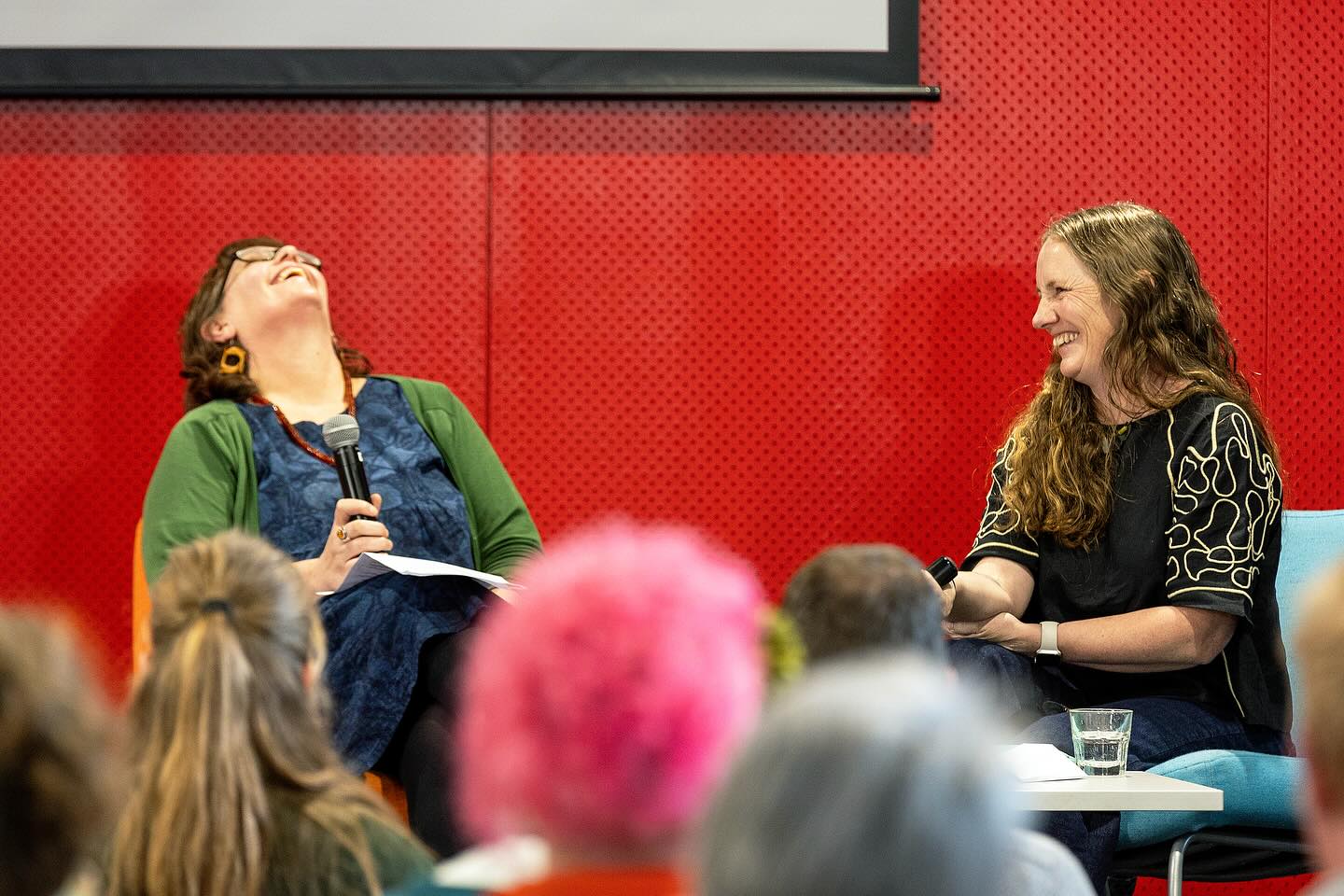
(Above: Me (on left) and Carly Thomas cracking each other up at her 11 October 2024 book launch at the Palmerston North City Library.)
Almost a year ago, I interviewed writer Carly Thomas live as part of her book launch event at the Palmerston North City Library. I don’t recall the specifics of the conversation but I do remember there was a lot of laughter. Carly is very funny. Also, very self-deprecating.
I kept insisting she was courageous, intrepid, fearless and she kept batting such suggestions away. She’s a very humble person. In winter, I invited her to be my second slow interviewee. These interviews take place via email exchanges in an unhurried way. The first one was with writer Iona Winter.
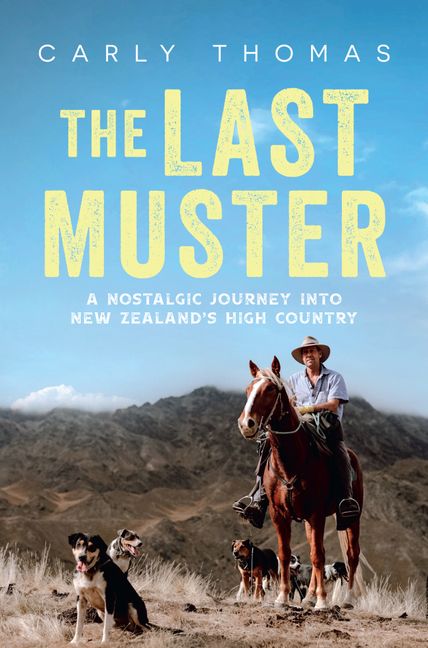
I wanted to check in with Carly a year out from the publication of ‘The Last Muster’: A nostalgic journey into New Zealand’s High Country.’
H: Congratulations on the publication of your book! & Thanks for inviting me to help you launch it. That was a great night.
Can you tell me a bit about your (very impressive) research trips for this book… you did a kind of ‘action research’ where you joined the mustering gangs. I reckon that was so brave!
C: The launch was so neat and you were a big part of that so a massive thanks to you, Helen. It all seems like a long time ago.
Writing a book is a funny old thing, it is all consuming and then it is done. It feels like you have been out at sea, in the thick of storms and intense sunshine and then you come ashore and the tide comes in and it goes out and all is calm. That sounds depressing but it’s not, it’s just there’s a lull, a pause, and then an in-between afterwards.
I knew straight away that I would go and work alongside the people I was writing about. I started ringing and emailing high country stations that I had already had contact with through previous writing gigs. It took a few calls before I figured out how to communicate what exactly it was that I was doing. It became apparent that I needed to head south for the Autumn weaning musters quickly and so I got straight into getting down there.
I’d read up a bit on each station I was going to, but not in depth, that would come later. I like to go into things a bit naive. I figure that asking stupid questions is better than assuming you already know, so I did a lot of that. I learnt as I went, was given ideas on where to go next and in that semi-informed/ follow-my-nose style I got passed onto musters.
I didn’t have a big planned out map of things, I really just took whatever next turn presented itself. I started down in Glenorchy at Greenstone Station and was well and truly thrown in the deep end on a four day muster with a motley crew of shepherds. After that the ball was rolling – I’d finish a muster, chuck my muddy saddle and gear in the car and head to the next one. Word got out about what I was doing and it got easier to get on the musters. I was learning skills as I went and got more handy as I went.
My tools for capturing everything were my phone recorder/ camera/ notes, my big Sony camera (not at all fancy) and my memory for conversations. People would say great stuff, as I was riding along trying to keep a bunch of unruly cattle in line, and I would have to remember it until I could do a voice memo of what they said. It was full on and it took my ADHD multitasking superpowers to a new level.
I’d do dumps of writing notes when I could, when I had a day or two in between musters, but not a lot of writing happened till I got home. There was a lot of writing in my head on long car journeys. I would try to hold onto each station’s colours, tone, sound, smell, taste and hum. When I did get to sit down, those were the first words to go down, then I got to the long and arduous job of transcribing.
Research came last, which I guess is a bit round-the-other-way from what some writers do. As I was travelling about I would try to go to local libraries to find historical tales of the area and old mustering yarns. I also collected a pretty big haul of old New Zealand mustering books from the many secondhand bookshops and op-shops I visited on my travels. Once back home I trawled through online archives and libraries to collect up old stories and facts. I went down massive rabbit holes.
One particular moment of connection was when I was trying to find the history of a particular homestead that had been abandoned on a station. I was coming up against dead ends and in frustration I called a tiny community library opened once a week by volunteers. As I was on the phone to the woman in charge that day who was telling me “just the person I should talk to was…..”, she paused and then said, “you won’t believe this, but she just walked in the door”.
The particular 90-something-year-old who was the missing link to the information I really needed was put onto the phone. It was magic. She told me things that were not written anywhere and could have been lost if she hadn’t stepped in right then. I just love that sort of thing and there really is something special about these encounters.
The whole book writing process was a combination of high adventure, a saddle-sore body, sleep deprivation, many kilometres on my little nana car’s clock and wondering where I would land next and spending hours researching in drafty libraries or sitting on my couch with a cat, a cup of tea and books piled high around me. I am a contrary soul and I enjoy both of those things equally.
H: Writing a book is so different from having a book published, isn’t it?
Yes, it really is and I think the main thing for me, this being my first experience of working with a big publisher, was knowing this project was bigger than me. I had to trust my publisher and editor and I took the opportunity to just say “yes” and be more open than I have ever been. It wasn’t just my book, it had many people involved, the most important part being all the people I encountered on the journey, who trusted me with their stories and way of life. It’s a responsibility to take care, while also telling it like it is.
And then it’s done, the final proof is FINAL and the printers crank into gear. And then you have to let it go, into the open, out into the world, into the hands of others.
The tide goes out, I take the dog for a walk, I look at the hills with new eyes and I wonder, ‘what’s next?’.
H: What did you learn about the horse mustering community over the course of writing the book? Did anything surprise you?
Every station was different but a few things were always the same. They love their horses and will always have them in their front paddock no matter what. They are people who choose horses over machinery to get the stock work done and that made them a certain kind of person. Horses may be a slower way of doing things, in some respects, but they are a quieter and kinder way to work stock. Stations that use horses tend to care about their animals, enjoy a slower, older way and there’s also a romance to it all as well.
The way you see things on a horse, the chats along the way possible without the roar of a bike and the relationship you have with your horse. So yeah, they were a certain type, often a little quirky and more often very stubborn about their way of life. And they all knew each other, the connections ran very deep.
I was sometimes surprised by their openness in having me along. Their honesty and their passion to really help me to understand what it all means to them. Sure, there were plenty of tight lipped cowboys, but I also experienced real moments of truth and authenticity.
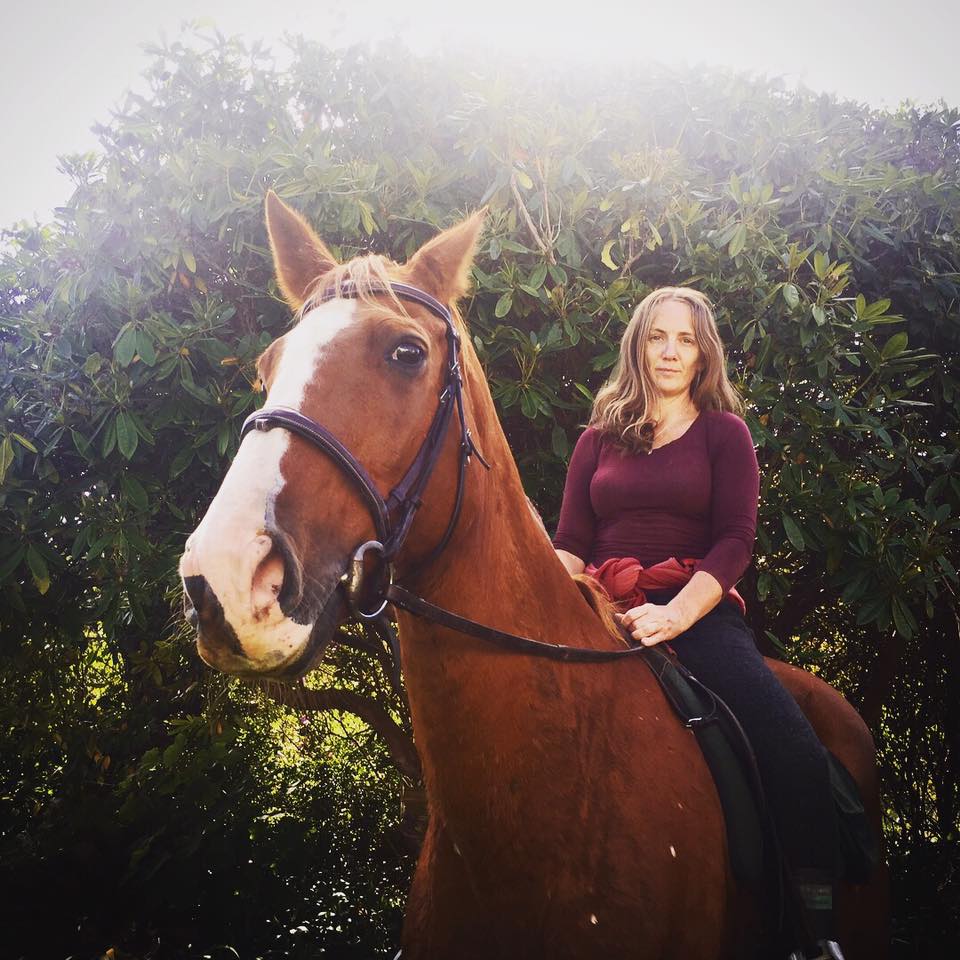
(Above: writer Carly Thomas on horseback.)
H: Do you want to share a favourite moment from your travels with us?
That’s got to be on Pitt Island on a day off from mustering the cattle and doing yard work. Me and the two kids from the family I was staying with went for a windy adventure with them leading the way. They proudly showed me the very steep cliff drop-off where they weren’t supposed to go, the quick (and very scary!) way down to the beach and the wharf and the old shearing shed retired back when wool prices dropped to pretty much nothing.
I was told the names of birds and horses and paddocks and we arrived back hungry, windswept and grinning. Brilliant day!
H: What have you been reading lately? Can you recommend a few recent reads?
Oh so many good books lately! I have discovered a New Zealand author, Fiona Sussman and now her book Addressed to Greta is a favourite. The main character Greta is one of those memorable ones that you fall in love with.
I have also become a little obsessed with Elif Shafak, a Turkish writer who wrote There are rivers in the sky. It’s an epic story told over different decades and cultures. A must-read I’d say.
Oh and The Homemade God by Rachel Joyce. I love a good complicated family dynamic story and this is a goodie.
H: Thanks heaps for doing a slow interview with me, Carly. I hope there are lots of horsey good times in your summer.
C: Thanks mate!
*
Carly is already deep in her next project. It’s an ongoing project to capture the stories of Aotearoa’s rural elderly called Landlines.
Check out their first short film:




 Helen Lehndorf