Category: permaculture

  • Capture and store: Silverbeet

    A couple of weeks ago I wrote about how we were eating a lot of silverbeet in an effort to keep up with the spring bolts of the plant.

    This has continued, I’ve discovered that if you snip off the ‘bolt’ stem…the thick stem growing up the centre that is beginning the process of sending the plant to seed…sometimes the plant will do another flush of leaves so I’ve delayed having to remove the plants entirely. (While our local spring continues to be more like winter…with ground temperatures too low for summer meditteranean plants like tomatoes and zucchini…there’s no urgency to make space.)

    If you’re not a permaculture practitioner, ‘Capture and Store’ is one of the main permaculture principles. The idea being…it isn’t enough to grow things (or create energy)…an important piece of the equation is to honour the garden by capturing the harvest and, if possible, storing some for later on.

    Occasionally, I like to write articles about the ways our permaculture family ‘captures and stores’ around our small, urban property. As food and energy prices rocket, I imagine these skills will ripple out beyond permaculture to become more important for households.

    Yesterday, my son Willoughby and I spent around an hour and a half processing the silverbeet, celery and flat leaf parsley plants which had begun to bolt.

    The celery stalks went into dinner and the fridge. The celery greens and flat leaf parsley bolt-stems we chopped up and put into our dehydrator. I will put them and some NZ sea salt through our electric spice grinder to make a herb salt which is great for adding to soups and stews.

    We picked a huge amount of silverbeet. Approximately the equivalent of five of those plastic-wrapped bunches you can buy at supermarket.

    Here’s how we processed it to become freeflow bunches of chopped silverbeet, similar to the way spinach comes frozen at the supermarket.

    We harvested the ‘bolt’ stems. I cut off the leaves with a pair of kitchen scissors into a large bow of water and gave it a wash.

    We then chopped it.

    Next step was a quick blanch in a shallow pan of boiling water. Just long enough that it wilts and goes bright green.
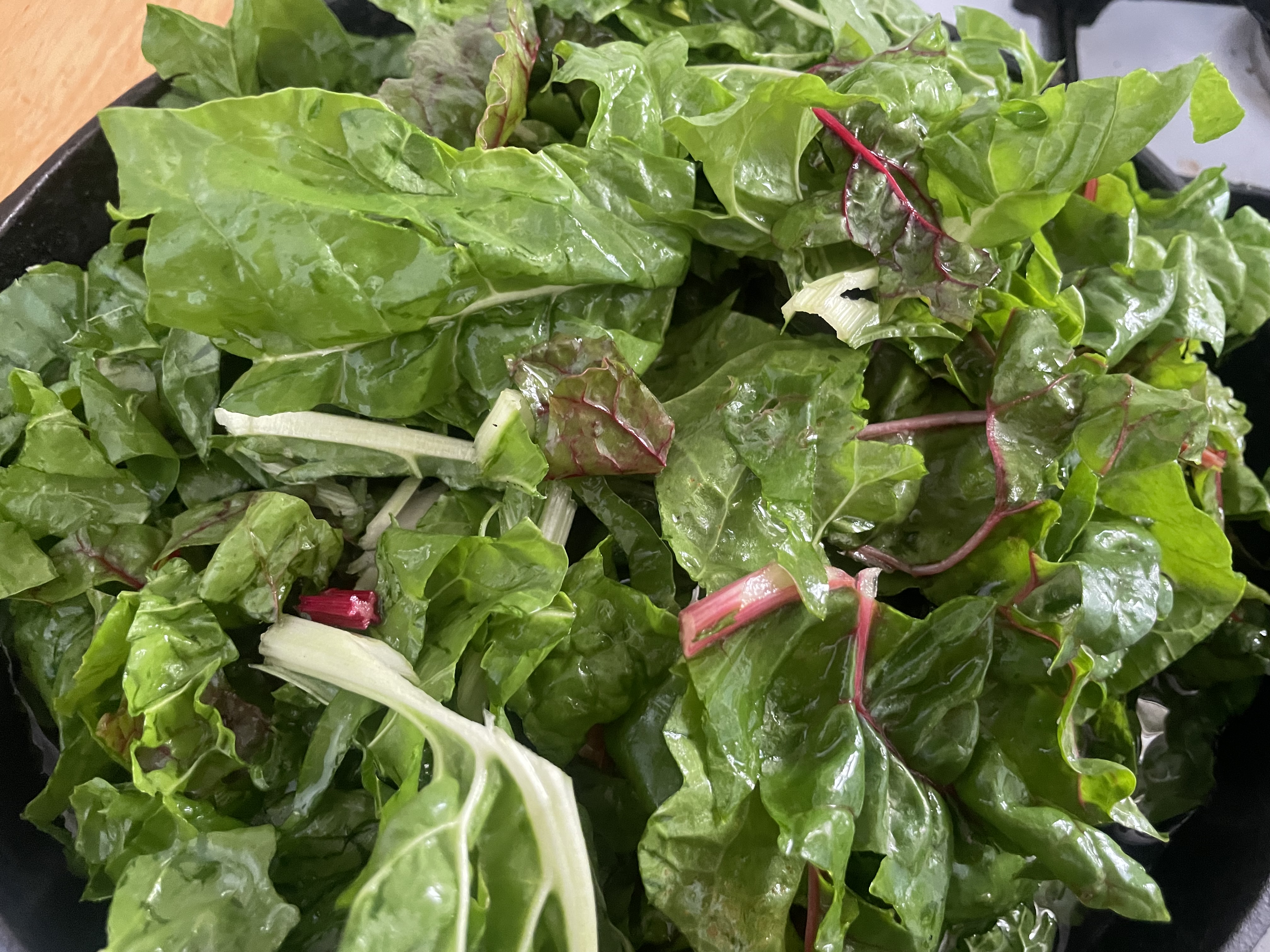
    Then I strained it and pushed as much water out as I could with a wooden spoon (obviously it is too hot to touch with bare hands at this stage. I left it sitting in the strainer to cool.

    Once it had cooled enough to handle, I formed it into balls. (Think about the amount you’d like to add to a soup or stew.) The trick to a tasty end result is to squeeze and squeeze it getting out as much of the liquid as you can. Silverbeet seems to retain a lot of liquid so keep squeezing…think of it as a workout for your hands!

    After that, place the fistfuls on a biscuit tray and put into the freezer.

    Once they are frozen, remove from the freezer, put into a ziploc bag or plastic container and put back into the freezer and there you go, you have one meal amounts of pre-prepared silverbeet ready to add to your cooking.

    You might ask why we’d bother doing this when silverbeet grows all year round in most of New Zealand’s climate? I suppose a big motivator is frugality, but also, I find I use more silverbeet if it is prepared this way. I also loathe waste and, because I know the effort I’ve put into growing the food, I prefer to have it travel through the kitchen rather than go straight from garden bed to the compost heap.

    Silverbeet is so nutritious! I think it needs a PR campaign. In NZ we tend to take if for granted or spurn it because it’s so ubiquitous in our vegetable gardens. Forget about overpriced supermarket spinach….eat your silverbeet!

    If I’ve inspired you to make more of your silverbeet, here are two excellent links with multiple tasty-looking silverbeet recipes.

    11 tasty silverbeet recipes from Delicious magazine

    12 yummy silverbeet-based dinners from NZ Woman’s Weekly magazine

    One of my favourite ways to eat A LOT of silverbeet at once is to make an Indian Saag Aloo, using silverbeet instead of spinach. Delicious and so greeeeeeen.

    If you have a signature silverbeet dish…please share it with me.

  • Matariki: the public holiday we all needed

    (Above: our Matariki mandala this year.)

    I think Matariki is my new favourite holiday. Long before it was made a public holiday, I used to grizzle that New Zealand needed another public holiday in winter as it was a long stretch from (then) Queen’s Birthday in June until Labour Day in October.

    & because, as a pākeha, it is a new holiday, I’m really enjoying that we (my family) are creating our own celebrations for it: inviting friends to share kai and reflections, and focusing on rest.

    I was hoping for a cold, wet weekend so I could be lazy and give some attention to my teetering pile of delicious library books…alas, (hello, climate change?) our winter here in the Manawatū seems to come later every year. Spring is the season I brace for…here our springs are mizzling, windy (we have a phenomena known as ‘the November gales’) and cold. So the weekend, while chilly, was also sunny…which meant I had to get out into the garden.

    I did some satisfying chores that I only get to when the urgent business of harvest season is over: I tidied my junky heap of garden pots and paraphernalia into virgo-level neatness again. I cleared out the greenhouse, pruned and fed the fruit trees, planted more comfrey around their bases, dug up the dahlia bulbs. It was satisfying work that called for an afternoon tea of cinnamon pinwheels and a big pot of homemade masala chai (none of that syrupy nonsense.)

    (Above: just the Edmonds date scone mixture but rolled out, spread with fruit mince and sliced into pinwheels instead of dates.)

    Gardeners are always thinking a season (or more!) ahead. My winter food garden is all planted now…not too much to do. (Having said that I planted rockets seed and more broad beans on the weekend.) So now I’m dreaming ahead to summer flower/herb beds, by digging up clumps of perennial herbs and flowers and dividing them. I’ve been getting very inspired by urban rewilding books I’ve been reading (more on that in another post) so I’m eyeballing the little bits of lawn we still have and wondering if I might turn them into weedy spaces full of self-maintaining weeds and ‘wild’ flowers …for the pollinators and birds.

    It takes a leap deeper into wildness and unruliness which can have a mixed response in an urban setting…and yet is so important for urban biodiversity as central city housing gets denser and more and more gardens are lost.

    So, I ended up not being as lazy as I’d hoped for Matariki/Winter Solstice weekend…but it all felt good, a healthy-busy…not a pushing-hustle. Dreaming into summer is a kind of rest, I think.

    & I know we’ll get plenty of stormy, frigid days in spring.

    I get Koanga Garden’s newsletter and in the latest one, I like this, from founder Kay Baxter:

    ‘This is how regeneration works: a little effort now, in rhythm with nature, pays forward in resilience, nourishment and beauty.’

    Tell me what you’re up to in your gardens. x

  • witch sticks & autumn harvests

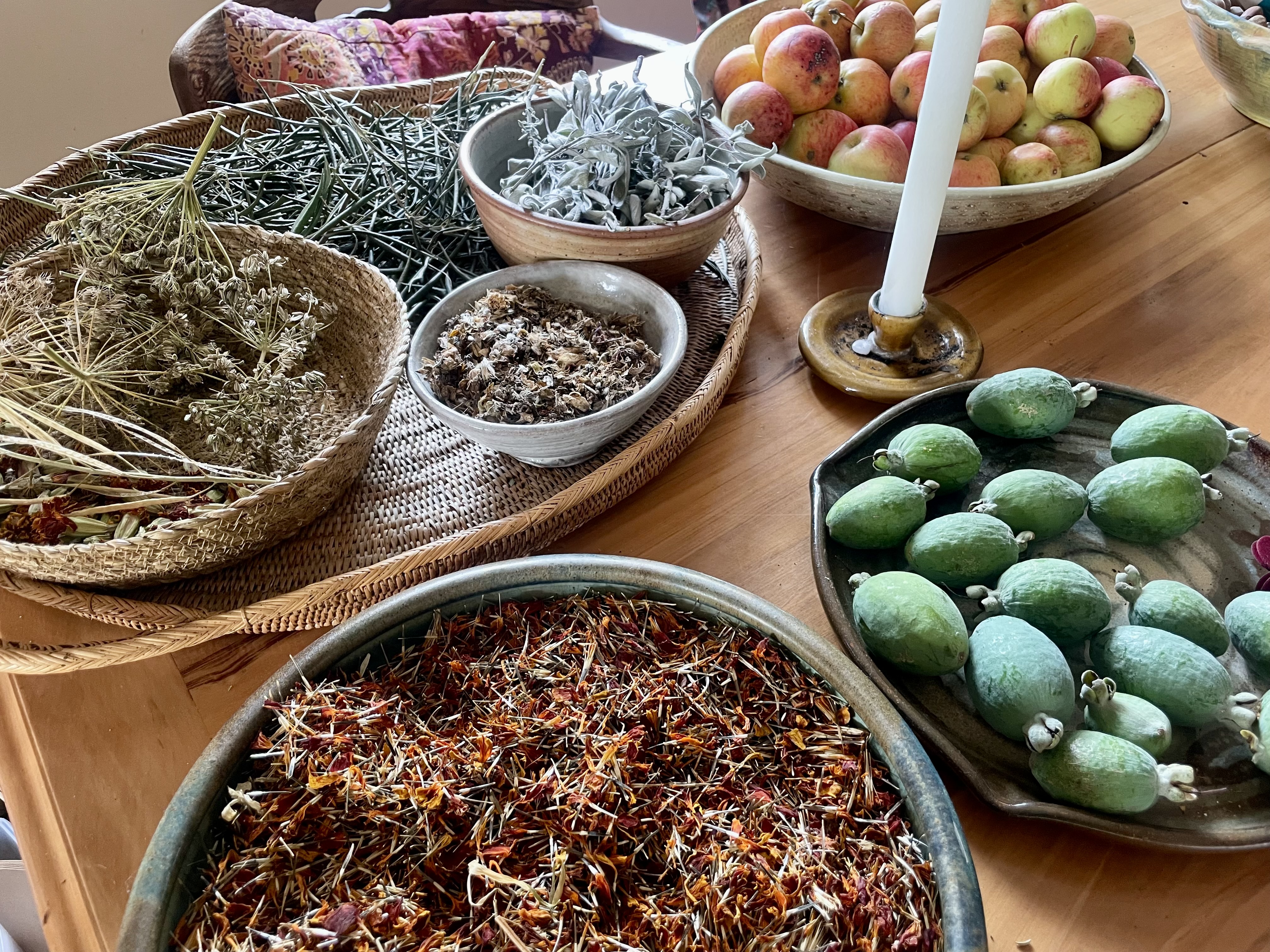
    (Above: Our kitchen table is a busy surface with often-changing bowls and baskets reflecting what is going on in the garden and the foraging season: things drying or waiting to be processed.)

    Autumn is my favourite season and, as a permaculture household, a busier season than summer with our labours to ‘capture and store’. There’s lots of picking and gathering and then kitchen work processing everything.

    (Above: Last sunday morning’s harvest chore was bottling a box of apples from our friend Bev’s orchard. These will turn into crumbles or top our porridge this winter.)

    Last week I gave my potted white sage plant a prune, ready to overwinter it in the greenhouse. White sage is a desert plant, native to the American southwest and Mexican northwest, so it doesn’t love the Manawatū winters.

    In the summer, I put it outside in full sun then prune it down to almost sticks at the end of summer and put it in the greenhouse where it sulks the winter away…but it (just) survives. Mine is about six years old now.

    (Above: white sage prunings, cotton thread. It’s on the sofa because I made the witch sticks while watching something in the evening. I do a lot of processing tasks (this, peeling fruit, cutting up herbs for tea, seed saving jobs) on the sofa…which might seem a bit odd…but I don’t see it as much different from knitting or hand-sewing in front of the TV. Does anyone else do this?)

    The prunings can be turned into what I call ‘witch sticks’ for burning by folding up the leaves on the stalk, weaving and rolling them longways and then tying with cotton thread. (Never use synthetic thread: it will melt and emit toxic smoke.) When the leaves have all burned down, you can burn the stalks, too.

    (White sage is a plant sacred to Indigenous people in USA and Mexico, so if you want some…have a go at growing it rather than buying imported sage. White sage is overharvested in the USA particularly. In ‘A Forager’s Life’, I write about alternative plants to white sage for making cleansing/burning sticks.)

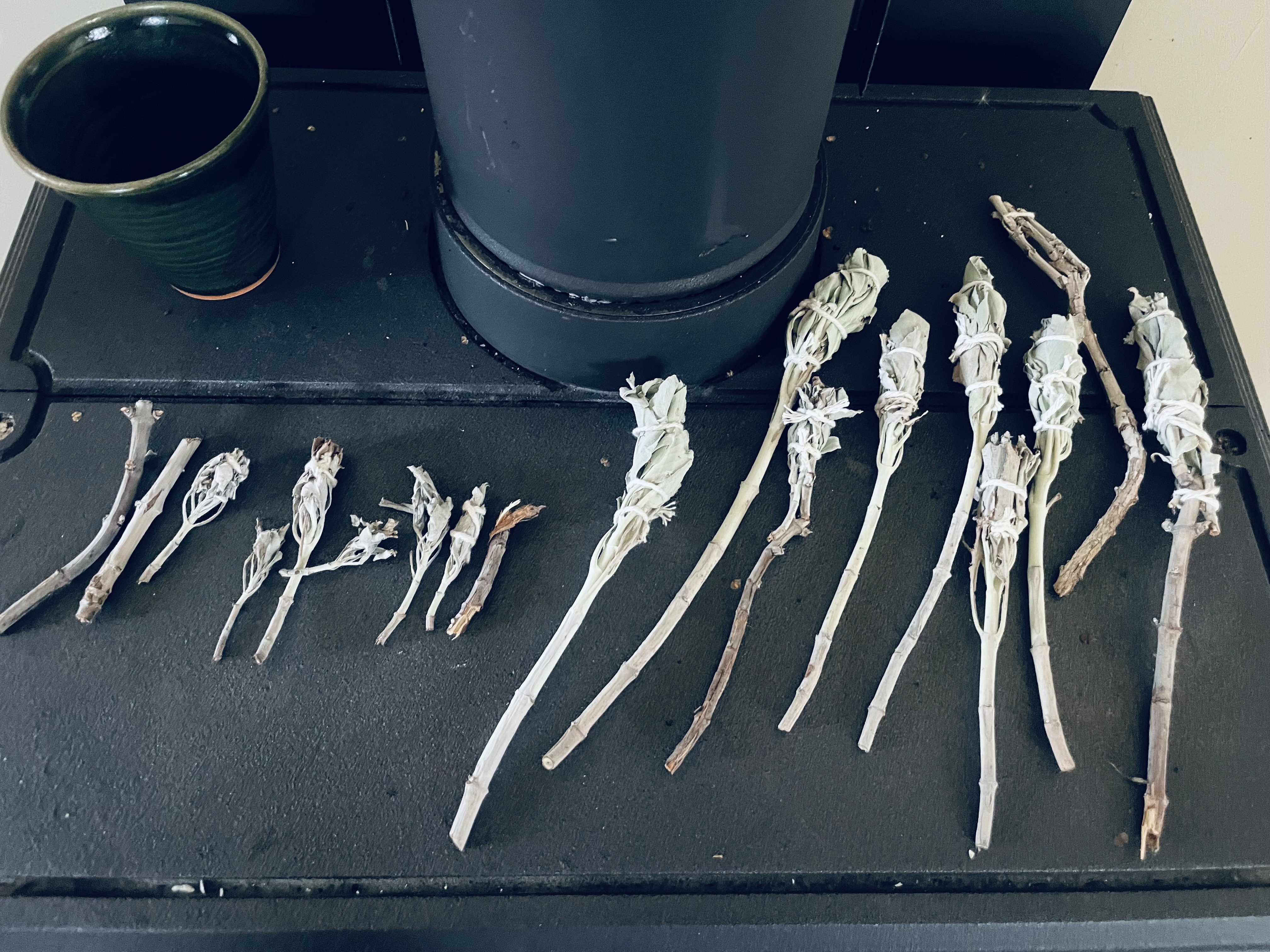
    (Above: I got eight decent witch sticks, plus some smaller bits and pieces of stalk…all of which can be burned. Here they are drying on my fire top.)

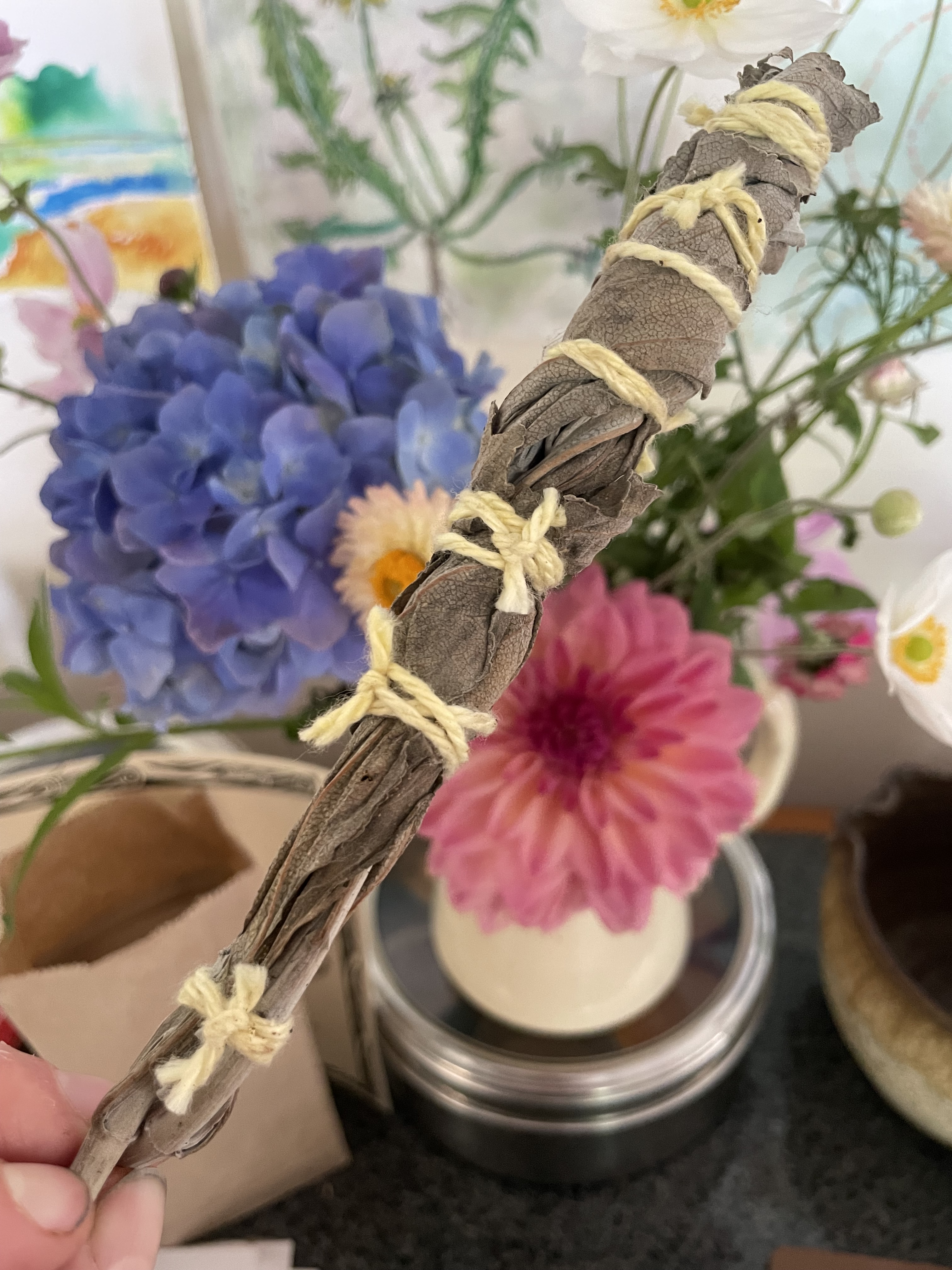
    I see a lot of ‘how-to’ articles about making cleansing/burning sticks around…but they often forget a detail which I think is important. For them to burn well and safely, don’t wind the string around and around the bundle, securing only at top and bottom. This will mean your stick will fall apart as the thread burns and you could have a higher risk of embers dropping off it. Instead, tie it tightly with small pieces of string at regular intervals, like in this photograph:

    (Above: please forgive my ‘dirt manicure’ as garden writer Gayla Trail calls it. I scrub* my nails regularly but folks who ‘touch soil’ (which is ilke ‘touching grass’ only more grubby) every day struggle to have photogenic hands. ((I have to buy a new nail brush every couple of months…so intent is my endless scrubbing.))

    Do you have a favourite season or are you one of those calm, rational people who loves them all equally?

    I’d love to hear what kitchen or garden chores you’ve been doing lately. Let me know below.

    “As long as autumn lasts, I shall not have hands, canvas or colours enough to paint the beautiful things I see.”

    -Vincent Van Gogh

  • the L-family’s beautiful permaculture garden

    One of my favourite things to do is to visit other people’s vegetable gardens and have a good nose around…I always learn so much and get inspired to go home and get into my own.

    Here are some photographs from a beautiful, well-established permaculture garden on the Kapiti coast I visited in late spring last year.

    Here is their garden photographed from just beyond their porch, you can see this from the house:

    aands_1

    I loved the way they had their main crops (potatoes, corn) in large clear beds, their salad crops growing more ‘wildly’ in the shadey edges, and they had planted an orchard at the foot of the garden which doubles as the chicken run…the chickens keep the grass from around the base of the trees (most fruiting trees don’t like grass growing around their bases), and the chickens fertilize the trees with their poo…meanwhile, the trees offer shade to the chooks, and food, too. (Unfortunately for my chickens, the two huge trees in their run are feijoa trees, and it seems chooks don’t like feijoas, so no happy harvest for my lot!)

    aands_2

    Everywhere I turned there were different crops – here you can see salad vegetables, calendula, dark leafy greens and garlic…

    aands_7

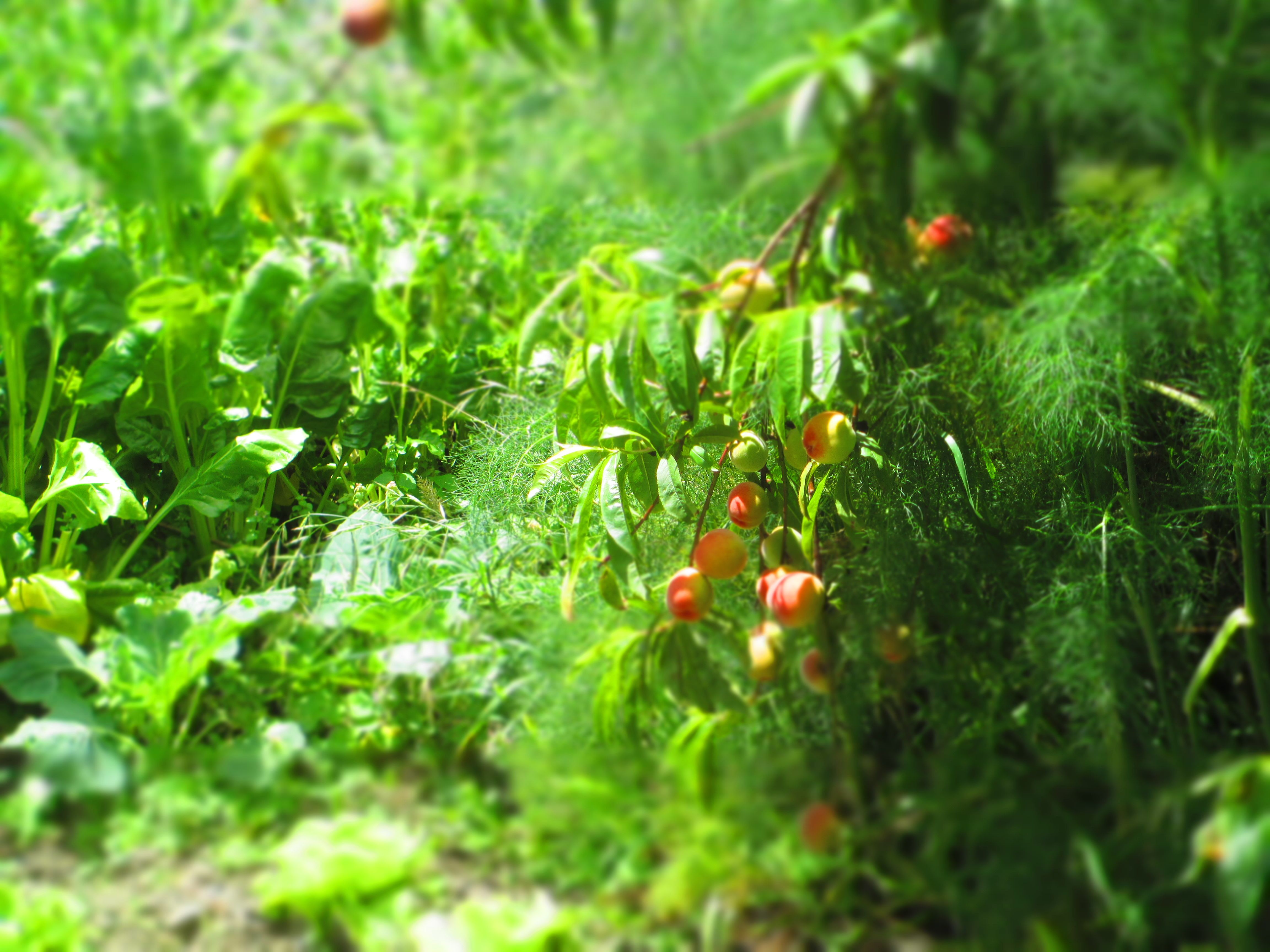
    Near the house was an absolutely beautiful peach tree sorrounded by fennel, with flawless fruit dripping off it. I sat under it for a while – it sure was a special tree – and took a bazillion photographs…but I’ll just share a couple with you here as you may not find photographs of peaches so mesmerising as I do.

    aands_8

    aands_9

    Beautiful hand-woven baskets and seedling pots made from newspaper…

    aands_4

    aands_5

    I noticed they had a ground cover of red clover, too.

    aands_10

    I have another vegetable garden visit to share with you, soon. I hope you enjoyed this one!

  • victory gardens / mend and make do

    I’m very inspired by World War Two imagery around Victory Gardens and Mend & Make Do campaigns. I’m also fascinated by the Land Girls / Womens’ Land Army, and the way WW2 changed work life for women in the West forever.

    I recently had a pile of WW2 social history books out of the library and wanted to share with you some of the images. (Sorry I didn’t have the time/patience to scan them, so they are photographs of book pages. Not ideal. Forgive me.)

    I don’t at all idealise the 1940s. I’m know it was a very hard time, a frightening time, lots of death and fear and sadness and people worked very hard just to keep their houses clean and keep their families fed. All the same, I enjoy the parallels between the Victory Garden movement and the 21st zeitgeist of backyard chicken farming, raised bed gardening, community gardening, CSA schemes, Seed Banks, recycling, upcycling etc….the similarities are strong.

    There’s a great shop on etsy which sells modern day ‘victory garden’ posters – great witty designs. It’s called ‘The Victory Garden of Tomorrow’. I so want to buy something from the shop for my kitchen, but I can’t make up my mind which one I like the best!

    Here are some of my favourite WW2 images from the books:

    Women darning their tights….

    digvic_9

    In today’s world of ‘from sweat-shop to landfill’ fashion, I’m proud to say I DO mend my clothes…as below…

    digvic_8

    Dig for victory NOW!

    digvic_7

    I would join this girl gang of happy gardeners!

    digvic_6

    Have you ever seen a sugar beet? Not the most inspiring of vegetables…. 

    digvic_5

    The lawns of Kensington Park in London were dug up for food production….

    digvic_4

    Love the way the word ‘FOOD’ is made from vegetables here… 

    digvic_3

    Even Yardley face cream got in on the victory gardening trend for it’s advertising… 

    digvic_2

    WOMEN MUST DIG!

    digvic_1


  • the poppies live on

    A few years ago, I rescued a whole lot of plants from a garden in my old neighbourhood which was about to be demolished.

    When I moved to my new house, just over a year ago, I was careful to shift a lot of the tiny poppy baby plants from the legacy of that garden-save. (At the time, with a whole household to move, faffing about digging up tiny seedlings seemed kind of mad – but I now I am glad I took the trouble to do it!) I am happy to report they are doing well, and doing what poppies do in their second year, which is ‘pop’ up in all kinds of places which are often not garden beds.

    As well as the red poppies from the old house, this year I also planted big pink poppies. Alas, on the verge of flowering magnificently – they got blown over in last week’s winds. I will leave them in anyway, in the hope they still go to seed, so I can at least have them next year.

    (Photo one above is the pink poppies about to pop. Photos two and three are rununculas, in lieu of the (now horizontal) pink poppies. The rununculas are being the pink poppies ‘stand-in’ for this post – lol.

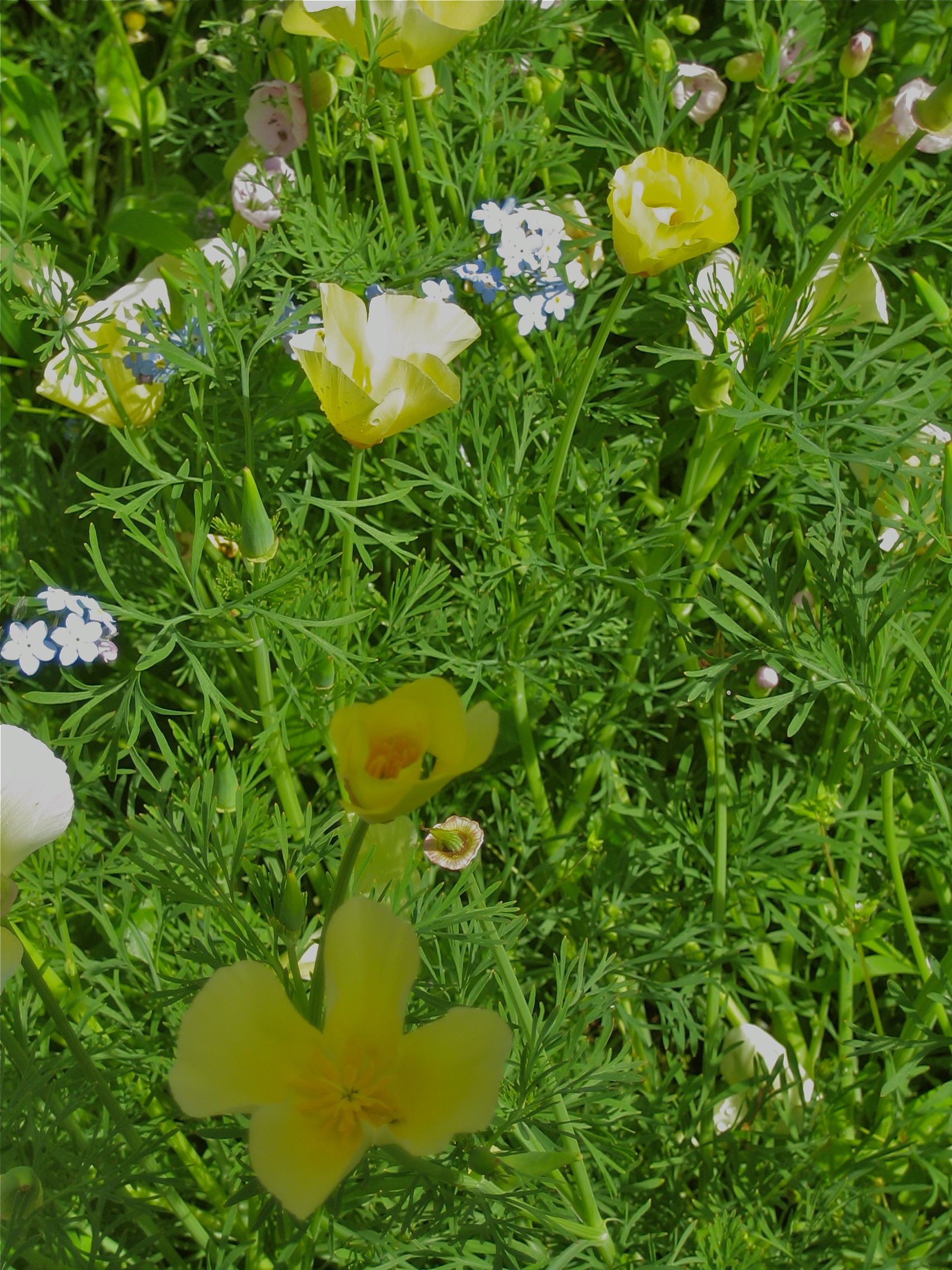
    I also planted yellow californian poppies. These are lovely, elegant plants. In New Zealand you often see them around lakes and rivers. There are lots of bright orange ones around Lake Taupo, for example.

    As well as poppies, I’m planting as many self-seeding flowers as possible so that after a few years, I will have a low-labour, self-sustaining flower garden.

    Viva la poppies!