Category: urban permaculture

  • Capture and store: Silverbeet

    A couple of weeks ago I wrote about how we were eating a lot of silverbeet in an effort to keep up with the spring bolts of the plant.

    This has continued, I’ve discovered that if you snip off the ‘bolt’ stem…the thick stem growing up the centre that is beginning the process of sending the plant to seed…sometimes the plant will do another flush of leaves so I’ve delayed having to remove the plants entirely. (While our local spring continues to be more like winter…with ground temperatures too low for summer meditteranean plants like tomatoes and zucchini…there’s no urgency to make space.)

    If you’re not a permaculture practitioner, ‘Capture and Store’ is one of the main permaculture principles. The idea being…it isn’t enough to grow things (or create energy)…an important piece of the equation is to honour the garden by capturing the harvest and, if possible, storing some for later on.

    Occasionally, I like to write articles about the ways our permaculture family ‘captures and stores’ around our small, urban property. As food and energy prices rocket, I imagine these skills will ripple out beyond permaculture to become more important for households.

    Yesterday, my son Willoughby and I spent around an hour and a half processing the silverbeet, celery and flat leaf parsley plants which had begun to bolt.

    The celery stalks went into dinner and the fridge. The celery greens and flat leaf parsley bolt-stems we chopped up and put into our dehydrator. I will put them and some NZ sea salt through our electric spice grinder to make a herb salt which is great for adding to soups and stews.

    We picked a huge amount of silverbeet. Approximately the equivalent of five of those plastic-wrapped bunches you can buy at supermarket.

    Here’s how we processed it to become freeflow bunches of chopped silverbeet, similar to the way spinach comes frozen at the supermarket.

    We harvested the ‘bolt’ stems. I cut off the leaves with a pair of kitchen scissors into a large bow of water and gave it a wash.

    We then chopped it.

    Next step was a quick blanch in a shallow pan of boiling water. Just long enough that it wilts and goes bright green.
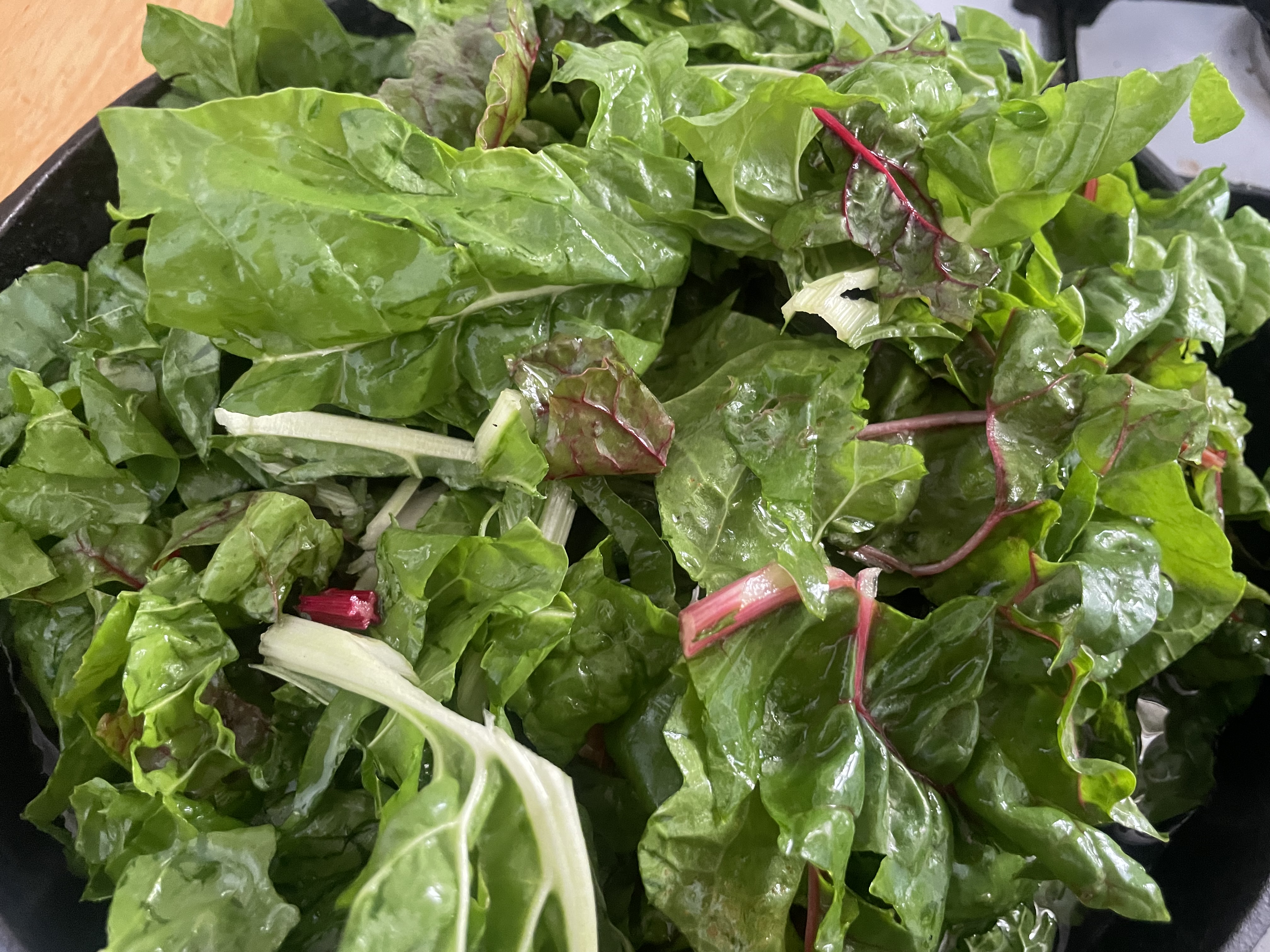
    Then I strained it and pushed as much water out as I could with a wooden spoon (obviously it is too hot to touch with bare hands at this stage. I left it sitting in the strainer to cool.

    Once it had cooled enough to handle, I formed it into balls. (Think about the amount you’d like to add to a soup or stew.) The trick to a tasty end result is to squeeze and squeeze it getting out as much of the liquid as you can. Silverbeet seems to retain a lot of liquid so keep squeezing…think of it as a workout for your hands!

    After that, place the fistfuls on a biscuit tray and put into the freezer.

    Once they are frozen, remove from the freezer, put into a ziploc bag or plastic container and put back into the freezer and there you go, you have one meal amounts of pre-prepared silverbeet ready to add to your cooking.

    You might ask why we’d bother doing this when silverbeet grows all year round in most of New Zealand’s climate? I suppose a big motivator is frugality, but also, I find I use more silverbeet if it is prepared this way. I also loathe waste and, because I know the effort I’ve put into growing the food, I prefer to have it travel through the kitchen rather than go straight from garden bed to the compost heap.

    Silverbeet is so nutritious! I think it needs a PR campaign. In NZ we tend to take if for granted or spurn it because it’s so ubiquitous in our vegetable gardens. Forget about overpriced supermarket spinach….eat your silverbeet!

    If I’ve inspired you to make more of your silverbeet, here are two excellent links with multiple tasty-looking silverbeet recipes.

    11 tasty silverbeet recipes from Delicious magazine

    12 yummy silverbeet-based dinners from NZ Woman’s Weekly magazine

    One of my favourite ways to eat A LOT of silverbeet at once is to make an Indian Saag Aloo, using silverbeet instead of spinach. Delicious and so greeeeeeen.
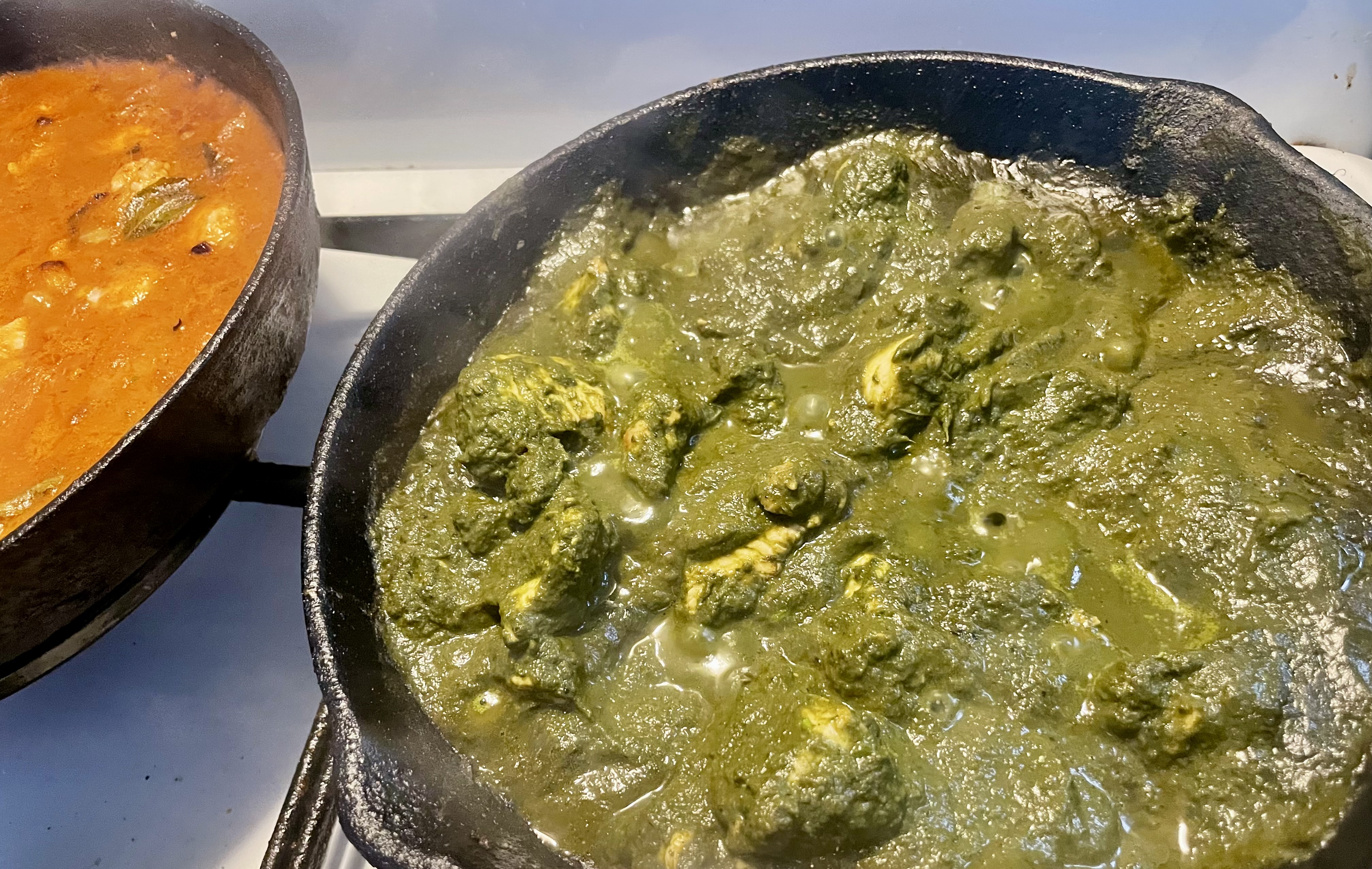
    If you have a signature silverbeet dish…please share it with me.
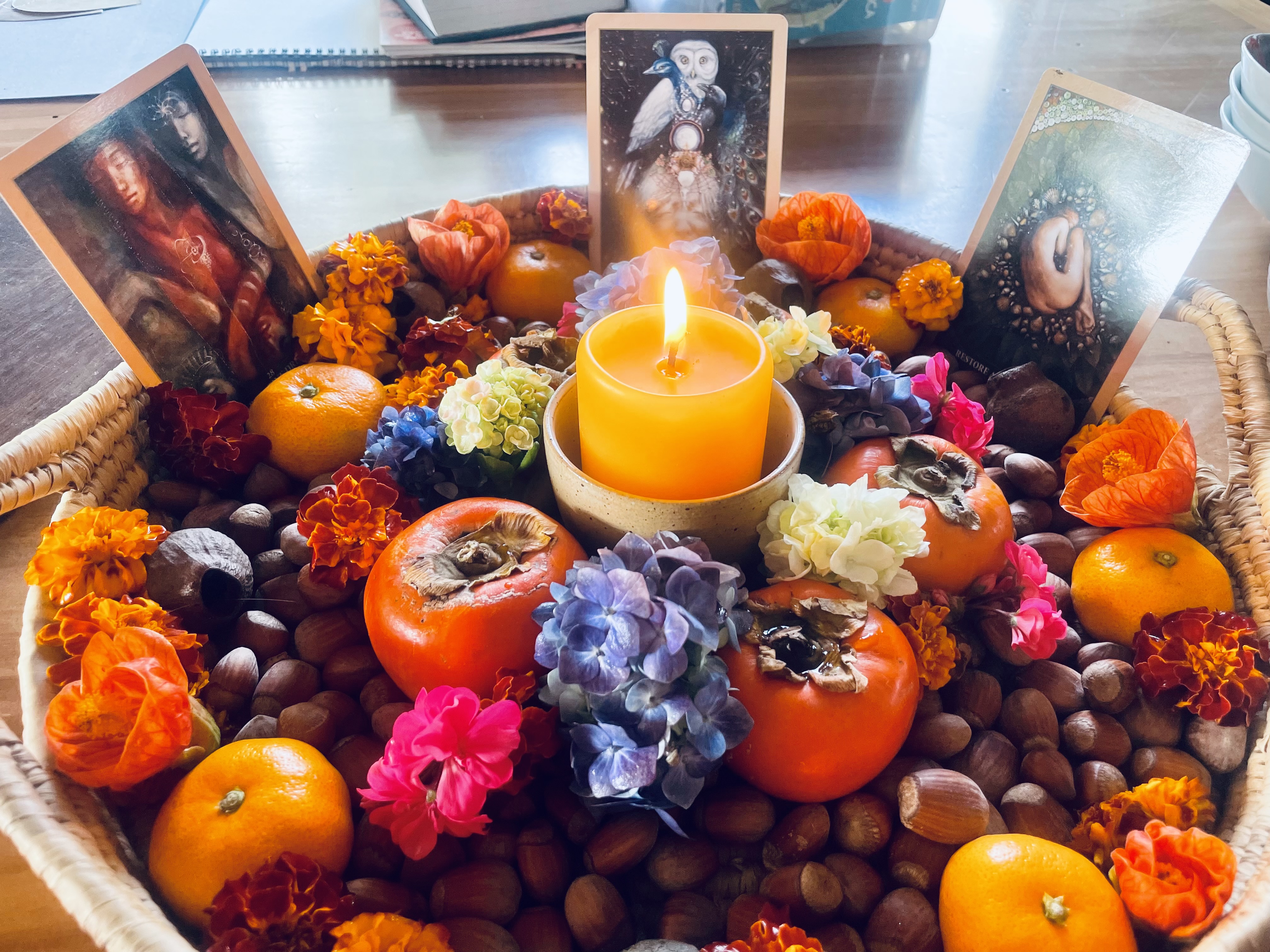
  • Matariki: the public holiday we all needed

    (Above: our Matariki mandala this year.)

    I think Matariki is my new favourite holiday. Long before it was made a public holiday, I used to grizzle that New Zealand needed another public holiday in winter as it was a long stretch from (then) Queen’s Birthday in June until Labour Day in October.

    & because, as a pākeha, it is a new holiday, I’m really enjoying that we (my family) are creating our own celebrations for it: inviting friends to share kai and reflections, and focusing on rest.

    I was hoping for a cold, wet weekend so I could be lazy and give some attention to my teetering pile of delicious library books…alas, (hello, climate change?) our winter here in the Manawatū seems to come later every year. Spring is the season I brace for…here our springs are mizzling, windy (we have a phenomena known as ‘the November gales’) and cold. So the weekend, while chilly, was also sunny…which meant I had to get out into the garden.

    I did some satisfying chores that I only get to when the urgent business of harvest season is over: I tidied my junky heap of garden pots and paraphernalia into virgo-level neatness again. I cleared out the greenhouse, pruned and fed the fruit trees, planted more comfrey around their bases, dug up the dahlia bulbs. It was satisfying work that called for an afternoon tea of cinnamon pinwheels and a big pot of homemade masala chai (none of that syrupy nonsense.)

    (Above: just the Edmonds date scone mixture but rolled out, spread with fruit mince and sliced into pinwheels instead of dates.)

    Gardeners are always thinking a season (or more!) ahead. My winter food garden is all planted now…not too much to do. (Having said that I planted rockets seed and more broad beans on the weekend.) So now I’m dreaming ahead to summer flower/herb beds, by digging up clumps of perennial herbs and flowers and dividing them. I’ve been getting very inspired by urban rewilding books I’ve been reading (more on that in another post) so I’m eyeballing the little bits of lawn we still have and wondering if I might turn them into weedy spaces full of self-maintaining weeds and ‘wild’ flowers …for the pollinators and birds.

    It takes a leap deeper into wildness and unruliness which can have a mixed response in an urban setting…and yet is so important for urban biodiversity as central city housing gets denser and more and more gardens are lost.

    So, I ended up not being as lazy as I’d hoped for Matariki/Winter Solstice weekend…but it all felt good, a healthy-busy…not a pushing-hustle. Dreaming into summer is a kind of rest, I think.

    & I know we’ll get plenty of stormy, frigid days in spring.

    I get Koanga Garden’s newsletter and in the latest one, I like this, from founder Kay Baxter:

    ‘This is how regeneration works: a little effort now, in rhythm with nature, pays forward in resilience, nourishment and beauty.’

    Tell me what you’re up to in your gardens. x

  • How I auditioned to play myself and got rejected

    (An occasional series where I write about things that happened around my book, ‘A Forager’s Life’.)

    (Above: The audiobook as a tangible object!

    In winter 2023,  a few months after ‘A Forager’s Life’ came out, I received the exciting news that the book was going to be made into an audiobook with Bolinda Audio.   

    (By the way, it’s also available as an e-book) 

    Bolinda told me that they would soon be casting a voice artist and it would be recorded in Australia. They also asked me if there was anything particular criteria I would like for the voice actor. I replied that I’d like a warm, friendly voice and that it was very important to me that the Māori words in the book be pronounced correctly. 

    After I sent that email, I got to thinking ‘hang on a minute, don’t some authors read their own audiobooks?’. Of course they do…although it’s more common with celebrity authors or for celebrity memoirs. But in 2020, I’d had a bit of a go at recording some of my original meditations for the meditation app, Insight Timer.  I’d really enjoyed doing this and I thought my voice sounded pretty good… calm, composed. 

    So then I did something I almost never do…I advocated for myself and asked them if it would be at all possible that I be cast as Helen Lehndorf for the narration of the audiobook?

    They were very gracious and replied, ok, although it was unusual for the author to narrate their own audiobook, I could send them an audition ‘tape’ (MP3)  of me reading a part of the book. 

    I duly locked myself in my office and spent a couple of hours getting a decent recording of about five minutes of one of the chapters which had a bit of dialogue in it so they could hear me doing multiple voices. Listening back to it, I thought it sounded pretty good. I sent it off feeling reasonably confident. 

    A few weeks passed…and then I got an email to say they were sorry, but they didn’t feel I was suitable. 

    In other words, I’d failed the audition to play myself.

    They told me they had cast a young Australian actor, Ayesha Gibson. Then, (possibly because they felt sorry for me?) they asked if I would like to record the book’s epilogue. It would involve a trip to Wellington and a few hours in a recording studio. By this stage I felt a bit embarrassed by my bid to read the book myself, however I thought it would be an interesting experience so I said yes

    (Above: A photograph Ayesha sent me of herself in the Melbourne recording studio.) 

    I was booked to record in the same week as Ayesha. She recorded the whole book over just a few days. (The audiobook version is around eight hours long.) On the day I travelled to Wellington to record my little bit, Ayesha and I were in Whatsapp conversation about the recording process. She was (very sweetly) giving me little updates on how it was all going and would occasionally send me a question about pronunciation or meaning. It felt surreal to be getting these messages as I travelled on the train southwards…knowing we were both recording bits of the book at the same time in two different countries, timezones, studios. 

    My recording session wasn’t until the late afternoon. I was so paranoid about wearing out my voice so bought throat lozenges, a lemon honey drink and tried not to talk as I mooched around Wellington waiting. 

    I turned up at The Armoury Studio trying to look nonchalant and no doubt failing. I had around 3000 words to record. 

    Friends, it was challenging. It was harder than I imagined. Now I understand why Bolinda prefers to hire professional actors. I had to do retake after retake because of all manner of things…throat-clearing, dropped words, flubbed bits, weird nervous breathing. 

    (Above: one of the lovely (and patient) sound engineers at Armoury on my recording day.

    I don’t mean to make it sound like I did a terrible job…I didn’t..but nor am I a professional voice actor. And the sound engineers were lovely and reassured me everything that was happening was totally normal and I was ‘doing great’. However, it was precise, intense work. After just a few hours in the studio, I was so tired. 

    On the train on the way home, I felt relieved I had failed the audition to narrate the whole thing myself. Ayesha did an amazing job and I feel so proud of the audiobook version. 

    A few months later, I got sent a few copies of the Audiobook as a tangible object … an MP3 CD! It’s also available on Audible and, if your local library uses the service, Borrowbox

    And that is the story of how I failed an audition to play myself. 

  • ‘now we recognise ourselves less and less’

    (Above: plastic rubbish I picked out from my vegetable beds last week. I collect around this much rubbish each time I tend or harvest from my vegetable beds.)

    I enjoy the writing on The Dark Mountain Project. It’s an ongoing project (based in the UK) that publishes ‘uncivilised writing’, holds gatherings, creates a space for conversations about all manner of unsettling and challenging elements of living at this point of human history. There you will find writing beyond polite eco poetics or nature writing that merely holds nature in a human/nature binary of saccahrine reverence. I don’t always agree with what I read there and that is why I like it.

    Last week I read this piece by Amy Kennedy from the most recent issue with the theme of ‘bodies‘.

    At first it seems a deceptively simple piece of writing, Amy describes a group of parents at a childrens’ birthdday party. One of them brings up the subject of the finding of microplastics in human placentas. The piece explores plastic: our culpability and the unavoidable enormity of the tsunami of plastics in our lives.

    I have a fairly high threshold for ingesting media about climate collapse and environmental degradation. I don’t have my head in the sand.This is not because of courage but more that I am an anxious person who approaches life in a ‘forewarned is forearmed’ sort of way. I like to know something of what’s coming so I can consider in advance how I might respond. (I’d prefer not to be built this way but there is only so much you can do about your neurological wiring.)

    I was surprised by my visceral reaction to this piece with it’s blunt presentation of human culpability in terms of the use of plastics and refusal to look away from the idea of microplastics in human placentas, in human bodies. ‘Now we recognise ourselves less and less’, Amy writes. A familiar feeling for the eco-anxious amongst us and a statement that works on many levels.

    A few years back I wrote a poem in a similar vein about digging up the backyard of my crappy Wellington flat to grow food for my oldest son when he was a baby …only to years later find out that backyard had been a dumping ground for old car bodies and broken machinery and was no doubt full of petrol and lead and other toxins. In my youthful naiveté, I hadn’t considered the urban soil’s history.

    These human missteps we make in the name of love: a birthday cake served with a plastic fork, feeding a baby mashed carrots grown in polluted soil…the hell we plod towards on our road of good intentions.

    The depth to which I was triggered by Amy’s writing surprised me at first (I thought I was made of tougher stuff by now). But then when I thought about it, I realised it touched on a tender spot in my own gardening practice…a spot where I choose to put blinders on.

    I live in the centre of a city. Every time I weed or harvest from my front yard garden (tended so carefully with the best organic soil amendments and lovingly homemade compost) I fish bits of plastic out of my garden: plastic bag fragments, fruit stickers, junk food packaging, lollipop sticks. Some of it seems to get into our compost somehow, despite careful sorting at the kitchen end. The plastic in the vegetable beds seems to blow in from the street.

    (I wondered if this plastic trash were an urban problem but a friend who lives rurally said that there is just as much plastic trash out her way, in the road gutters, in streams, from the plastic packaging of hay bales and farm products.)

    I throw the bits of plastic into a colander that I have with me in my harvest basket then put them in the rubbish bin where they will travel in a plastic bag to the plastic afterlife, which is to say slowly deteriorating into microplastics in the city’s landfill.

    I dwell in a space of both knowing that I have my stubborn blind spots (the macro and micro plastics in my own food garden and in the soil I am creating in my compost) and also having no inclination to stop. I will carry on composting. I will carry on growing food in this microplastick-y soil I am making.

    I enjoyed this essay about composting by Scottish writer Fraser MacDonald (found via Pip Lincolne) He, too, is carrying on composting on despite tangible evidence of plastics in his compost. He writes:

    ‘I make my own compost so that I can convince myself that even when the world seems socially and ecologically broken there are still mechanisms for recovery: it shows that change is possible. Composting is a simple habit of composition or gathering together that integrates past fragments into a future whole, so that what matters is not the individual ingredients but the fertile new thing they can become.

    & that ‘fertile new thing’ possibly contains microplastics…yet still I persist in habits which put me squarely in the ‘doing’ space of the world, in flawed creative acts which give me a sense of agency and regenerate my spirit if nothing else.

    For that purpose alone I believe they are worthy.