Tag: art

  • Capture and store: Silverbeet

    A couple of weeks ago I wrote about how we were eating a lot of silverbeet in an effort to keep up with the spring bolts of the plant.

    This has continued, I’ve discovered that if you snip off the ‘bolt’ stem…the thick stem growing up the centre that is beginning the process of sending the plant to seed…sometimes the plant will do another flush of leaves so I’ve delayed having to remove the plants entirely. (While our local spring continues to be more like winter…with ground temperatures too low for summer meditteranean plants like tomatoes and zucchini…there’s no urgency to make space.)

    If you’re not a permaculture practitioner, ‘Capture and Store’ is one of the main permaculture principles. The idea being…it isn’t enough to grow things (or create energy)…an important piece of the equation is to honour the garden by capturing the harvest and, if possible, storing some for later on.

    Occasionally, I like to write articles about the ways our permaculture family ‘captures and stores’ around our small, urban property. As food and energy prices rocket, I imagine these skills will ripple out beyond permaculture to become more important for households.

    Yesterday, my son Willoughby and I spent around an hour and a half processing the silverbeet, celery and flat leaf parsley plants which had begun to bolt.

    The celery stalks went into dinner and the fridge. The celery greens and flat leaf parsley bolt-stems we chopped up and put into our dehydrator. I will put them and some NZ sea salt through our electric spice grinder to make a herb salt which is great for adding to soups and stews.

    We picked a huge amount of silverbeet. Approximately the equivalent of five of those plastic-wrapped bunches you can buy at supermarket.

    Here’s how we processed it to become freeflow bunches of chopped silverbeet, similar to the way spinach comes frozen at the supermarket.

    We harvested the ‘bolt’ stems. I cut off the leaves with a pair of kitchen scissors into a large bow of water and gave it a wash.

    We then chopped it.

    Next step was a quick blanch in a shallow pan of boiling water. Just long enough that it wilts and goes bright green.
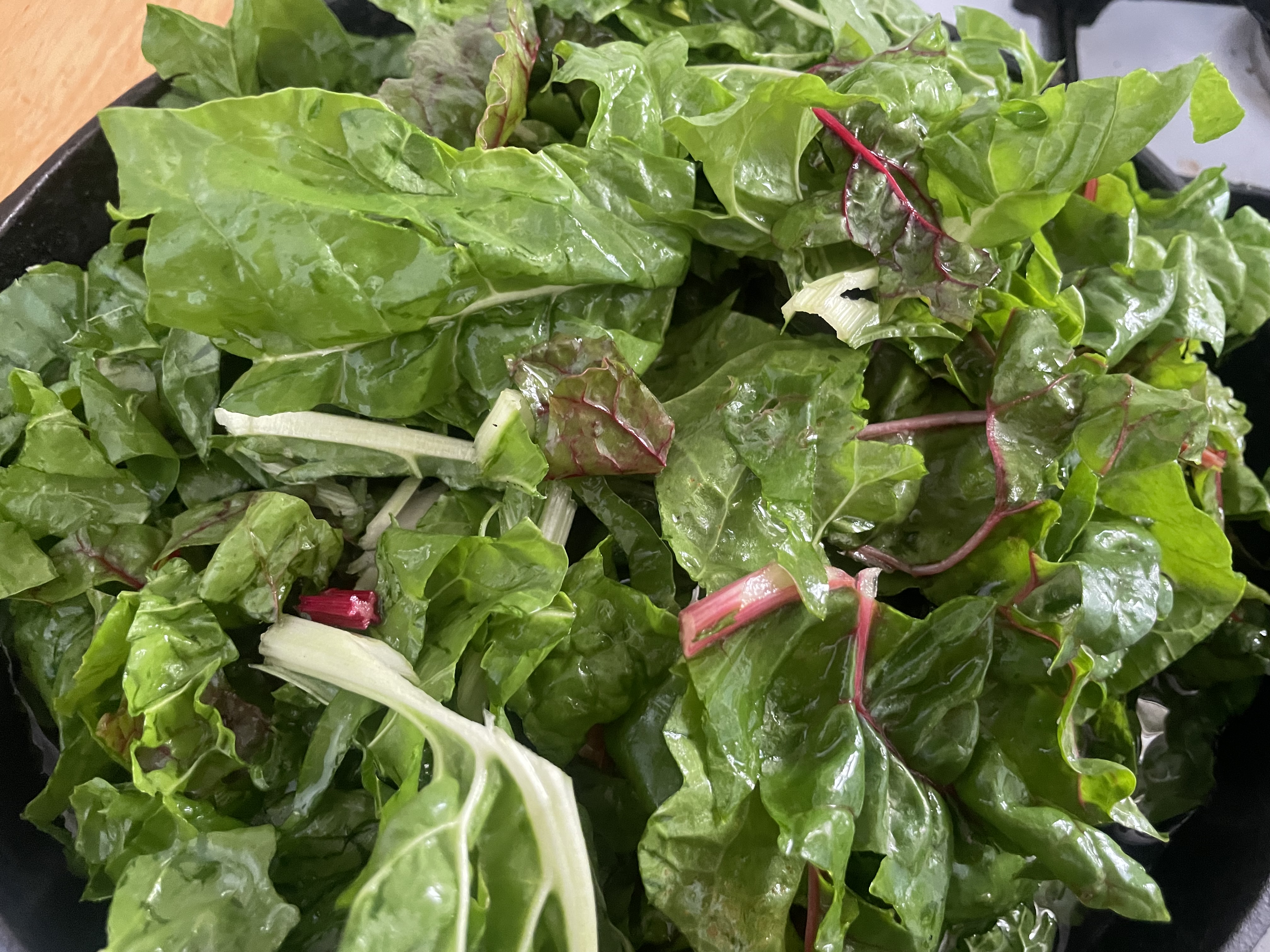
    Then I strained it and pushed as much water out as I could with a wooden spoon (obviously it is too hot to touch with bare hands at this stage. I left it sitting in the strainer to cool.

    Once it had cooled enough to handle, I formed it into balls. (Think about the amount you’d like to add to a soup or stew.) The trick to a tasty end result is to squeeze and squeeze it getting out as much of the liquid as you can. Silverbeet seems to retain a lot of liquid so keep squeezing…think of it as a workout for your hands!

    After that, place the fistfuls on a biscuit tray and put into the freezer.

    Once they are frozen, remove from the freezer, put into a ziploc bag or plastic container and put back into the freezer and there you go, you have one meal amounts of pre-prepared silverbeet ready to add to your cooking.

    You might ask why we’d bother doing this when silverbeet grows all year round in most of New Zealand’s climate? I suppose a big motivator is frugality, but also, I find I use more silverbeet if it is prepared this way. I also loathe waste and, because I know the effort I’ve put into growing the food, I prefer to have it travel through the kitchen rather than go straight from garden bed to the compost heap.

    Silverbeet is so nutritious! I think it needs a PR campaign. In NZ we tend to take if for granted or spurn it because it’s so ubiquitous in our vegetable gardens. Forget about overpriced supermarket spinach….eat your silverbeet!

    If I’ve inspired you to make more of your silverbeet, here are two excellent links with multiple tasty-looking silverbeet recipes.

    11 tasty silverbeet recipes from Delicious magazine

    12 yummy silverbeet-based dinners from NZ Woman’s Weekly magazine

    One of my favourite ways to eat A LOT of silverbeet at once is to make an Indian Saag Aloo, using silverbeet instead of spinach. Delicious and so greeeeeeen.
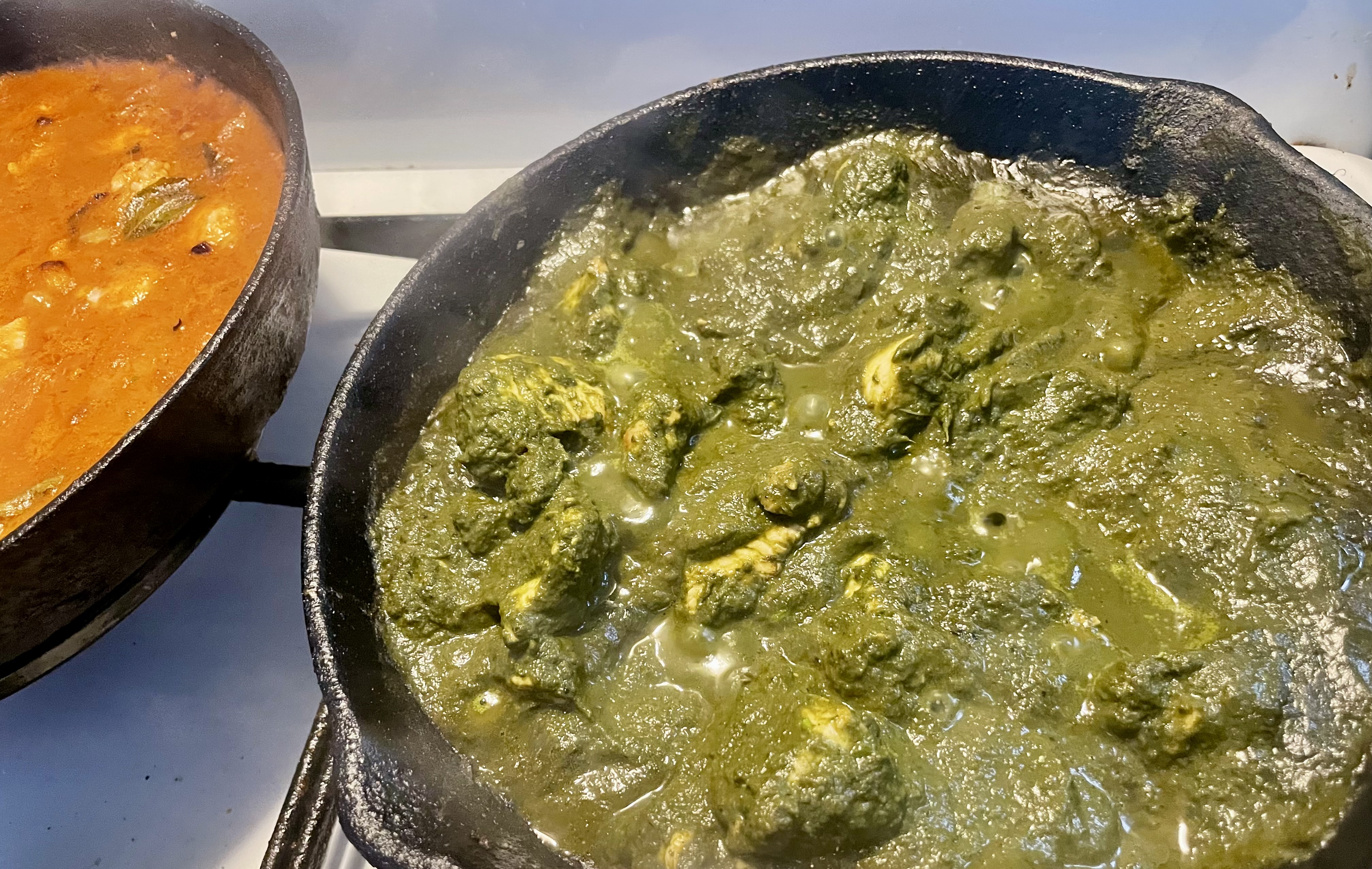
    If you have a signature silverbeet dish…please share it with me.
  • 52 and still stumbling over the ‘A’ word…

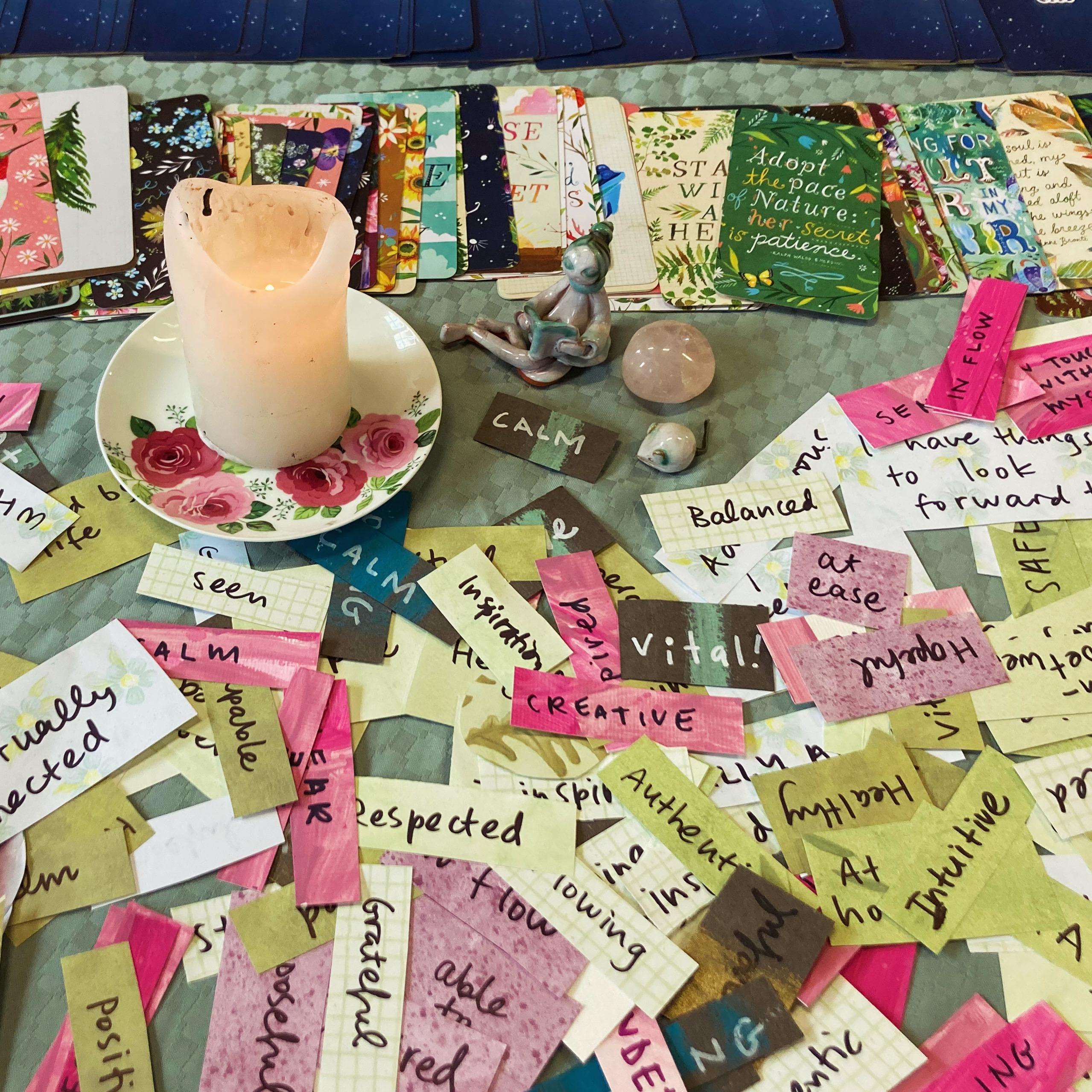
    (Above: journal word cards I make for my workshops.)

    Over the weekend, I was at a beach-side retreat for women so I was meeting some new people. I had just taught a journaling workshop (if you’re reading the blog because of foraging…you might not know my second book was about the practice of keeping a journal and I teach journal workshops) and a new acquaintance asked if I were an artist.

    I made some digressive, stumbling reply about how I loved to ‘mess about’ with art, had a visual element to my journal practice, love to play with art materials…mumble mumble… but ‘no, I am not a ‘proper’ artist.’

    My friend C, who was standing there, who is a visual artist, has been to art school, etc, interjected and said,

    ‘Helen, you are an artist. You are. You spend a lot of time doing art. You’re an artist!’

    I thanked her…the conversation moved on…but it left me reflecting.

    (Above: Mixed-media chamomile from a botanical sketchbook I’ve been working on.)

    I have taught creative writing for most of my working life (at university) and there I was, encouraging my undergrads to claim the ‘W’ word, ‘writer’ for themselves.

    ‘If you are passionate about writing, you spend your time writing, you are a writer!’ I said to them. I meant it, too. I felt there was power in the claiming of the word for themselves.

    And yet…and yet…here I am, old enough to know better, and still wiggling around doing the same thing for myself in another creative discipline. I studied creative writing at university and spend a great deal of time writing so it feels simple to claim ‘writer’ for myself. I still wobble around with claiming ‘artist’.

    Aren’t our brains fascinating, and odd, and annoying?

    (Above: Mixed-media red clover from a botanical sketchbook I’ve been working on.)

    I think part of it is where a passion intersects with an audience, or with capitalism. I find it easy to claim ‘writer’ because I have published things and had an audience respond to them. My words have earned me (a little!) money. I have been successful in selling books.

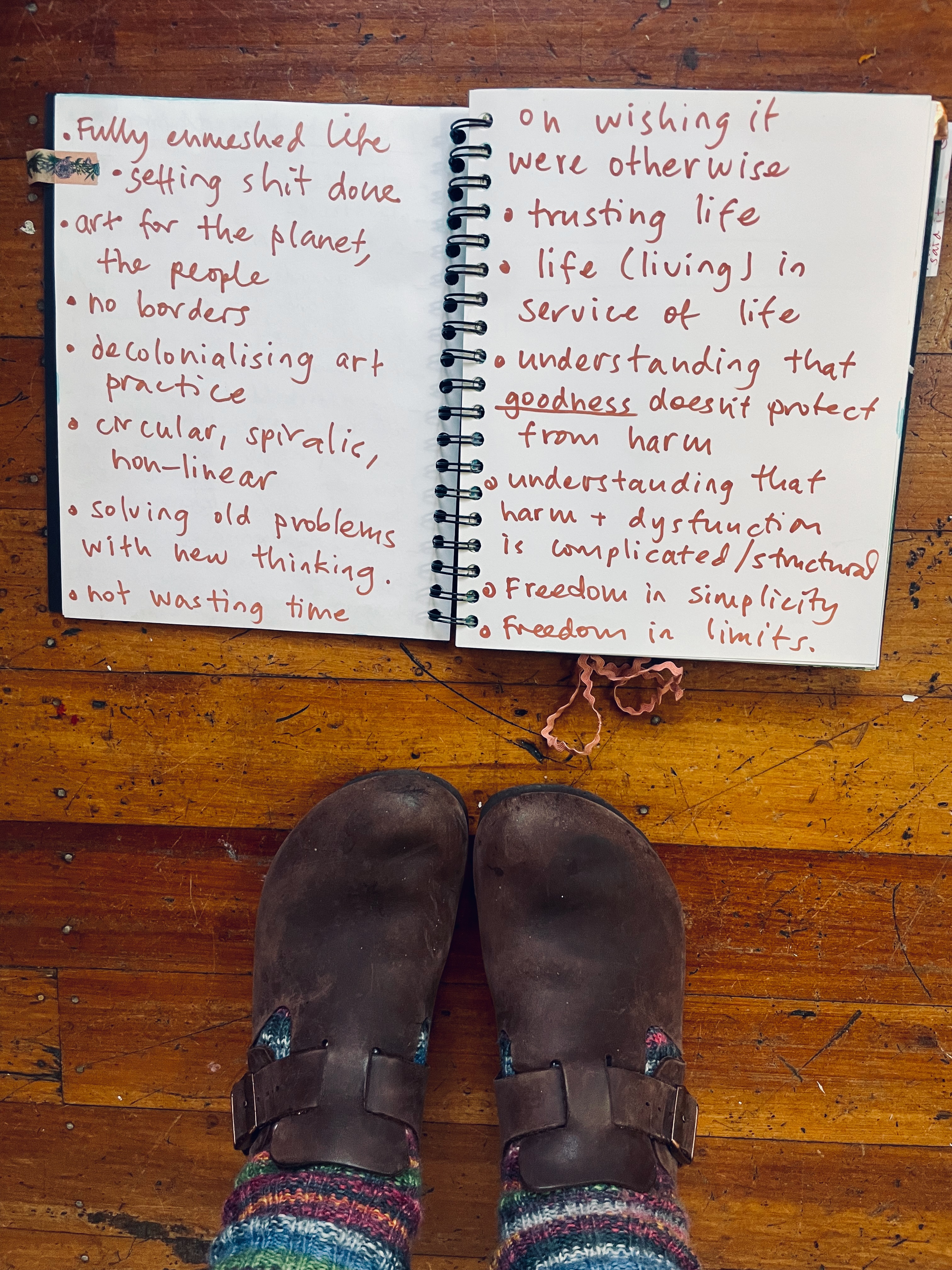
    (Above: art manifesto in the making. Sketchbook notes.)

    My art is mostly in the vein of play, experimentation and enjoyment of the creative process. I have exhibited art work and sold a few things. When my children were small, I supplemented my income with making self-designed and drafted textile crafts and paper goods. I love taking photographs. I feel I have a good visual eye.

    So how is it, I can, for years, have encouraged students to claim ‘writer’ for themselves and yet fail to take my own advice in another discipline?

    Do you have a creative practice noun -artist, writer, musician, singer, potter?-…..you yearn to claim and inhabit but struggle with? I’d love to hear about your blocks or advice for overcoming this odd phenomena.

    Love, Helen, (confident writer, tenuous artist.)

  • Slow-Small Media for the Weekend

    Introducing … Slow-Small Media for the Weekend, a weekly digest of things which have caught my eye lately. My hope for these digests is that you can curl up with with a cup of tea over the weekend and enjoy these things as an antidote to the overstimulation of social media. 

    A read

    I’ve been enjoying Kirsten Bradley’s new art/writing project about moon literacy and garden tending.  If you like thoughtful writing about land tending and community care coupled with an art practice (cyanoptye) and folk herbalism…this is for you.

    Her article about progressive pickles and caring for her child particularly resonated with me. I, too, have had to let go of a lot of ideas about what loving family routines ‘should’ look like. I have a family member who dislikes eating with us. He eats his meals alone out on the porch.

    Kirsten writes: 

    ‘I have learned that insisting that we do things in the Family Way (…) was something I needed to let go of. (…) 

    Care can look like learning to pay close attention to what is actually doable for this kid, this day, rather than assuming I know better and pushing them too far.’ 

    Read the full essay here. 

    If you have time, read her other essays, too. All rich, contemplative stuff about nature and art and care. 

    A song

    When I find a song I love, I listen to it over and over and over. It feels like spending time with a friend. This has been my song of early autumn: ‘Time to Bide’ by New Zealand artist, Monty Bevins. It’s a whole journey in one song and a great example of song as storytelling.

    I love the spaciousness of the beginning. The song begins in Māori and then switches to English. Then just as you think you have a handle on what the song is going to be… changes pace. It is a song which demands close-listening. 

    + It’s a song that references cold weather and fires so it is a beautiful one to play loudly beside the fire. 

    Read more about Monty here. 

    A zine

    The Theme Zine is a project which brings together an international cohort of artists and writers to collaborate on zines based around set themes. Their latest issue’s theme is ‘Nature as Sanctuary. It’s beautiful short read (and best read on a laptop so you can enjoy the art). 

    An artist crush

    I love the work of American artist Chelsea Granger. I have her plant oracle deck The Dirt Gems and it is just stunning. Her work is so beautiful, humane, colourful, intimate. It feels like steeping into another world…a better one. If you tap the first tile on the top left, you can then view all her art as a slideshow. Trust me, it’s worth it. You’ll feel better about the world afterwards. 

    A watch 

    I found this short (12 minute) film about the ARK (Acts of Restorative Kindness)rewilding movement so soothing and nourishing for my nervous system, I’ve rewatched it four times over the last week.

    It’s got me thinking about where in my small garden I can intervene even less and ‘rewild’ small pockets for all the other creatures I share this little patch of land with. We (humans) like to try to be in charge of our gardens…it takes some real reprogramming (deprogramming?) to let go of control and let nature do what it is so good at, romping greenly. 

    Read more about the ARK movement.

    + I recommend Mary’s two books, also. I’ve read both and they are beautiful and inspiring. 

    A recipe

    If you were too busy in late summer to make a tomato kusundi, Nicola Galloway has a fantastic version made from feijoas.  If you like Indian flavours and haven’t tried kusundi before you will love this spicy, aromatic pickle. It’s a great thing to have around to liven up winter sandwiches. 

    Or if you are in the northern hemisphere, where spring weeds are springing…here’s a great recipe for wild weed pesto with a guide to some suitable weeds. 

    *

    This weekend I’m planning on sharing a morning tea with friends, making Nicola’s kusundi with our feijoa abundance, painting a new sign for the sharing shelf (the orange one in this post got stolen) and digging up some of my abundant strawberry and yarrow plants to share. 

    Tell me what you’re getting up to in the comments. Happy weekend, friends!