Tag: Books

  • Slow-Small Media for the Weekend #20

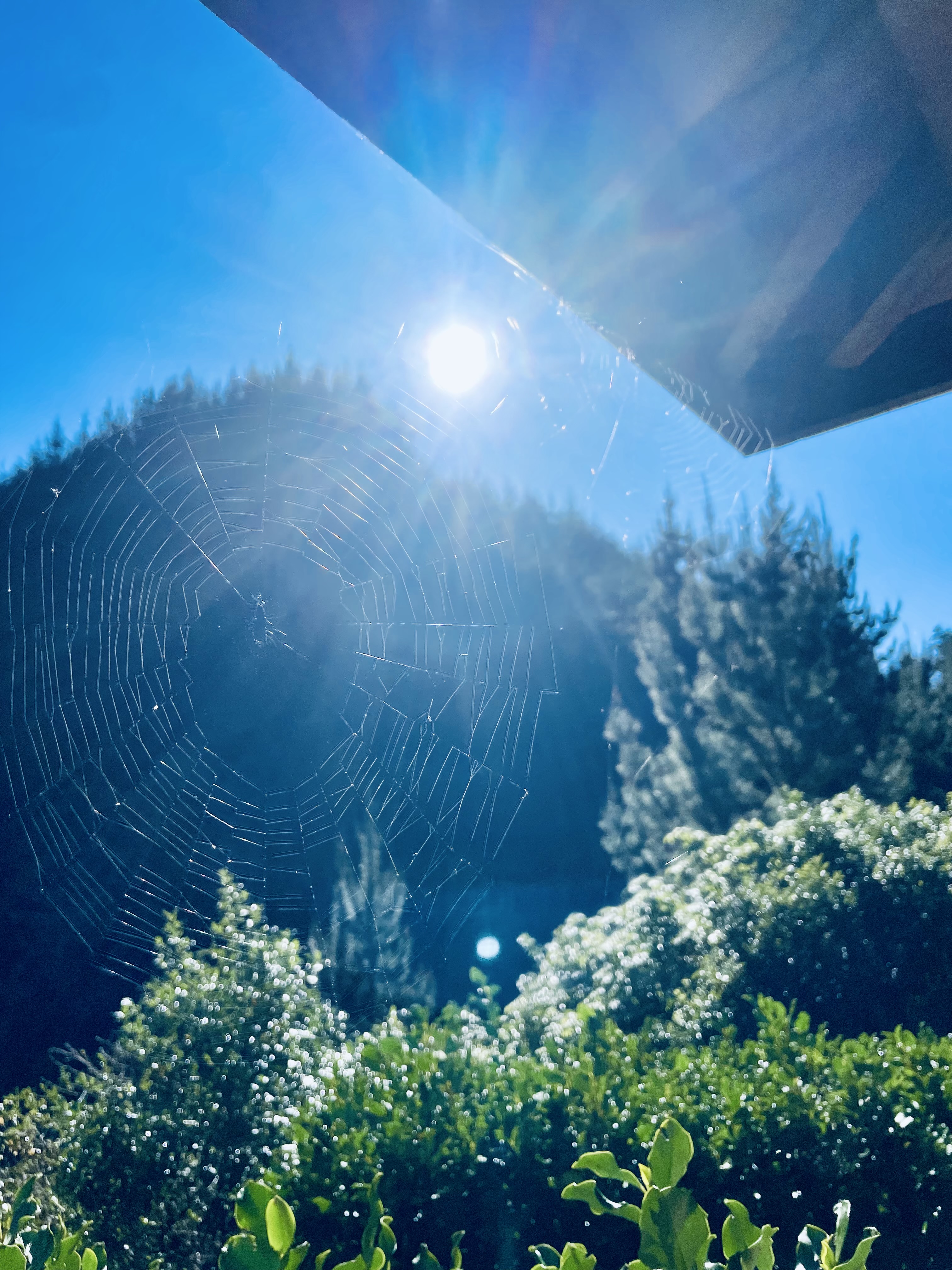
    (Above: a spiderweb in sunlight, September 20 2025, Ōtaki Gorge.)

    Last Saturday I turned 53. The above photograph was taken on my birthday. The sun came out!

    It’s been a crappy spring (weatherwise) so the sun felt like such a gift.

    I sat on the porch of the place I was staying and tried to read in the warmth…but the sun felt like such rich medicine I couldn’t hold my attention on my book and just kept closing my eyes and facing the sun like some kind of warmth-starved Tuatara.

    We were travelling light so my birthday cake was a supermarket almond finger (one of my faves) with a birthday candle and some dandelion petals:

    Article: Why is spring so hard?

    I find spring a challenging season so I was much heartened by this article answering this questions by one of my favourite writers, Juliet Batten.

    Juliet explores why spring can be a ‘bumpy’ season and reassures that it’s quite normal to find it difficult.

    A solace read.

    Carrying on with that question…an article: ‘The Cruelty of Spring and our Heartbreak at it’s Fickleness’

    This article on the ‘Examined Life’ website pulls some terrific examples from literature expanding on Juliet’s theme of spring being difficult.

    The website’s author, Ellen Vrana says:

    ‘There is life and birth and death in spring. There are lambs and rains and feasts and withdrawals, resurrections and divination.’

    Song for the week: ‘Near a Priory’ by Maxine Funke

    Any song which starts with the word ‘Granny’ is likely to get my attention.

    I like the breathy and minimalist style of New Zealand synth-folk artist Maxine Funke and this song is a sweetie:

    (You can listen to all twenty songs -I add a song every time I write a digest- on Youtube here.)

    Article: A frugal and lighthearted person talks about simple living for financial freedom

    I always read The Spinoff’s ‘Cost of Being’ series where people talk about their finances because I find it so fascinating. The way we approach money reveals so much about prorities, values and life circumstances.

    I particularly enjoyed this one.

    I immediately sent it to Fraser and said ‘this could be us!’…not so much her particular circumstances…but more her attitude. A little bit broke (compared to many) but with a resilient, light-hearted, resourceful attitude.

    This bit sounded very much like our household:

    Typical weekly food costs

    Groceries: I have no idea but it’s not much. A lot of my work involves food rescue and making community kai, so I’m always taking food home. I also grow most of my veges, and have excellent fossicking and scrounging skills!

    A lively read and helped refresh my own commitment to simple living.

    Affordable Art: ‘Resist’ by Bread and Puppet Theatre, Vermont, USA
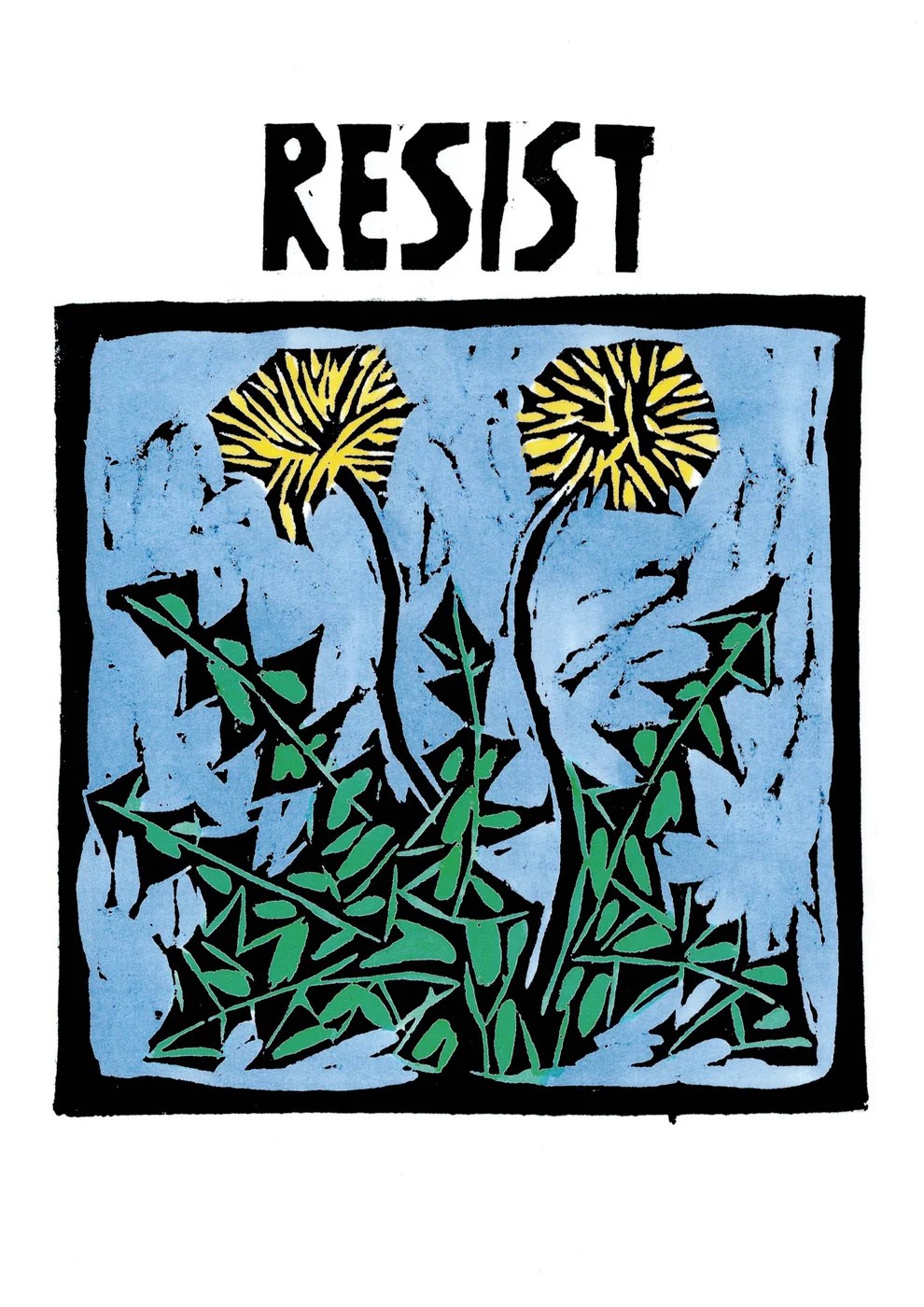
    (Above: nothing says ‘resist!’ like weeds which will grow in cracks in the concrete. Image borrowed from Bread and Puppet Press.)

    I love dandelions. I love resistance. I love the work of the Bread and Puppet Theatre. I love this postcard and it comes in at a mere $6.00

    (& Possibly once you add postage it would be close to $50 NZD, the cut off price for ‘affordable art’…)

    A long and fascinating delve into the luddite movement

    Speaking of voluntary simplicity, my pen-friend and Wizard of Wellington, Rosie Whinray, published a long, well-researched, fascinating and fun article about the Luddites: ‘Summoning Ned Lud’.

    It’s not just about the Luddites, of course, it’s about time and labour and music and materiality and injustice and autonomy and so much more.

    Make yourself a POT of tea and sit and read this. It will take more than one cup of tea because it has various links to music and interviews on YouTube and no doubt you’ll want to savour them all.

    Thanks for another stellar read, Rosie!

    Video> ‘Life is never still’: an inspiring 92-year-old artist and writer shows us all how to live

    From the description:

    ‘His vibrant paintings burst with dramatic light and dark, playing with colour and drawing upon his Caribbean heritage. He powerfully captures the energy of Trinidadian carnival culture, folklore, and the cathartic power that the celebration holds.

    Join us for an intimate look inside his studio, writing shed, and kitchen, and experience his unique creative process that blends painting, poetry, cooking – and most importantly – love. Learn why mistakes are essential, why stepping away can spark inspiration, and how collecting objects can fuel new ideas.’

    He’s an absolute joy! You won’t regret spending 12 minutes watching his cruise through his day.

    That’s it for the week’s digest. This weekend I am hoping the weather will permit gardening. I have letters to write, mending to attend to, a new stack of library books to hang out with.

    My nettle patch is coming back to life so I’ve been making simple nettle soups and will make it again this weekend.

    I also bought a bottle of vodka so I can make some lemonbalm tincture with the new season’s lemonbalm; it always feels at most potent in spring to me…the leaves bright green and shiny. Lemonbalm is good for stress and anxiety, is known for being a ‘gladdening’ herb. (Now there’s a sweet old-fashioned word.) Read more about it here.

    I hope there are ‘gladdening’ things in your weekend.

    Thanks for being here and sharing the things that I caught in my net this week.

    x Helen
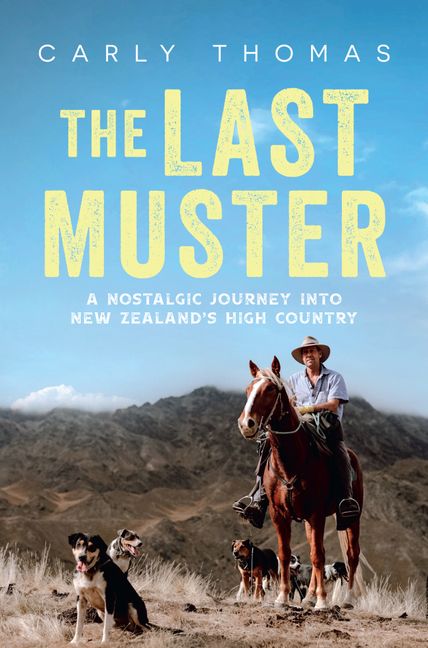
  • Writer Carly Thomas on ‘The Last Muster’

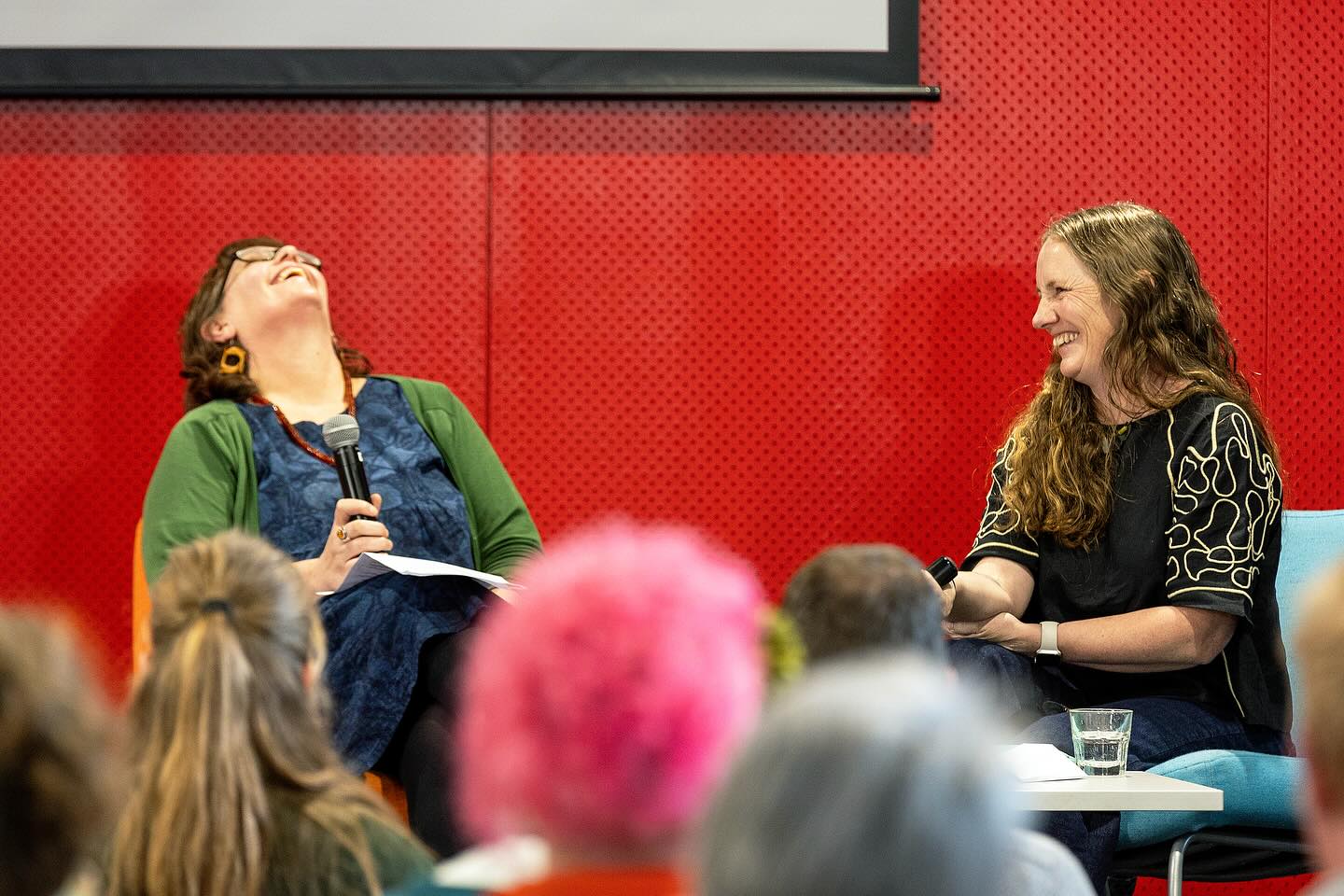
    (Above: Me (on left) and Carly Thomas cracking each other up at her 11 October 2024 book launch at the Palmerston North City Library.)

    Almost a year ago, I interviewed writer Carly Thomas live as part of her book launch event at the Palmerston North City Library. I don’t recall the specifics of the conversation but I do remember there was a lot of laughter. Carly is very funny. Also, very self-deprecating.

    I kept insisting she was courageous, intrepid, fearless and she kept batting such suggestions away. She’s a very humble person. In winter, I invited her to be my second slow interviewee. These interviews take place via email exchanges in an unhurried way. The first one was with writer Iona Winter.

    I wanted to check in with Carly a year out from the publication of ‘The Last Muster’: A nostalgic journey into New Zealand’s High Country.’

    H: Congratulations on the publication of your book! & Thanks for inviting me to help you launch it. That was a great night. 

    Can you tell me a bit about your (very impressive) research trips for this book… you did a kind of ‘action research’ where you joined the mustering gangs. I reckon that was so brave!

    C: The launch was so neat and you were a big part of that so a massive thanks to you, Helen. It all seems like a long time ago.

    Writing a book is a funny old thing, it is all consuming and then it is done. It feels like you have been out at sea, in the thick of storms and intense sunshine and then you come ashore and the tide comes in and it goes out and all is calm. That sounds depressing but it’s not, it’s just there’s a lull, a pause, and then an in-between afterwards. 

    I knew straight away that I would go and work alongside the people I was writing about. I started ringing and emailing high country stations that I had already had contact with through previous writing gigs. It took a few calls before I figured out how to communicate what exactly it was that I was doing. It became apparent that I needed to head south for the Autumn weaning musters quickly and so I got straight into getting down there.

    I’d read up a bit on each station I was going to, but not in depth, that would come later. I like to go into things a bit naive. I figure that asking stupid questions is better than assuming you already know, so I did a lot of that. I learnt as I went, was given ideas on where to go next and in that semi-informed/ follow-my-nose style I got passed onto musters. 

    I didn’t have a big planned out map of things, I really just took whatever next turn presented itself. I started down in Glenorchy at Greenstone Station and was well and truly thrown in the deep end on a four day muster with a motley crew of shepherds. After that the ball was rolling – I’d finish a muster, chuck my muddy saddle and gear in the car and head to the next one. Word got out about what I was doing and it got easier to get on the musters. I was learning skills as I went and got more handy as I went.

    My tools for capturing everything were my phone recorder/ camera/ notes, my big Sony camera (not at all fancy) and my memory for conversations. People would say great stuff, as I was riding along trying to keep a bunch of unruly cattle in line, and I would have to remember it until I could do a voice memo of what they said. It was full on and it took my ADHD multitasking superpowers to a new level. 

    I’d do dumps of writing notes when I could, when I had a day or two in between musters, but not a lot of writing happened till I got home. There was a lot of writing in my head on long car journeys. I would try to hold onto each station’s colours, tone, sound, smell, taste and hum. When I did get to sit down, those were the first words to go down, then I got to the long and arduous job of transcribing.

    Research came last, which I guess is a bit round-the-other-way from what some writers do. As I was travelling about I would try to go to local libraries to find historical tales of the area and old mustering yarns. I also collected a pretty big haul of old New Zealand mustering books from the many secondhand bookshops and op-shops I visited on my travels. Once back home I trawled through online archives and libraries to collect up old stories and facts. I went down massive rabbit holes.

    One particular moment of connection was when I was trying to find the history of a particular homestead that had been abandoned on a station. I was coming up against dead ends and in frustration I called a tiny community library opened once a week by volunteers. As I was on the phone to the woman in charge that day who was telling me “just the person I should talk to was…..”, she paused and then said, “you won’t believe this, but she just walked in the door”.

    The particular 90-something-year-old who was the missing link to the information I really needed was put onto the phone. It was magic. She told me things that were not written anywhere and could have been lost if she hadn’t stepped in right then. I just love that sort of thing and there really is something special about these encounters. 

    The whole book writing process was a combination of high adventure, a saddle-sore body, sleep deprivation, many kilometres on my little nana car’s clock and wondering where I would land next and spending hours researching in drafty libraries or sitting on my couch with a cat, a cup of tea and books piled high around me. I am a contrary soul and I enjoy both of those things equally. 

    H: Writing a book is so different from having a book published, isn’t it? 

    Yes, it really is and I think the main thing for me, this being my first experience of working with a big publisher, was knowing this project was bigger than me. I had to trust my publisher and editor and I took the opportunity to just say “yes” and be more open than I have ever been. It wasn’t just my book, it had many people involved, the most important part being all the people I encountered on the journey, who trusted me with their stories and way of life. It’s a responsibility to take care, while also telling it like it is.

    And then it’s done, the final proof is FINAL and the printers crank into gear. And then you have to let it go, into the open, out into the world, into the hands of others. 

    The tide goes out, I take the dog for a walk, I look at the hills with new eyes and I wonder, ‘what’s next?’.

    H: What did you learn about the horse mustering community over the course of writing the book? Did anything surprise you? 

    Every station was different but a few things were always the same. They love their horses and will always have them in their front paddock no matter what. They are people who choose horses over machinery to get the stock work done and that made them a certain kind of person. Horses may be a slower way of doing things, in some respects, but they are a quieter and kinder way to work stock. Stations that use horses tend to care about their animals, enjoy a slower, older way and there’s also a romance to it all as well.

    The way you see things on a horse, the chats along the way possible without the roar of a bike and the relationship you have with your horse. So yeah, they were a certain type, often a little quirky and more often very stubborn about their way of life. And they all knew each other, the connections ran very deep. 

    I was sometimes surprised by their openness in having me along. Their honesty and their passion to really help me to understand what it all means to them. Sure, there were plenty of tight lipped cowboys, but I also experienced real moments of truth and authenticity. 

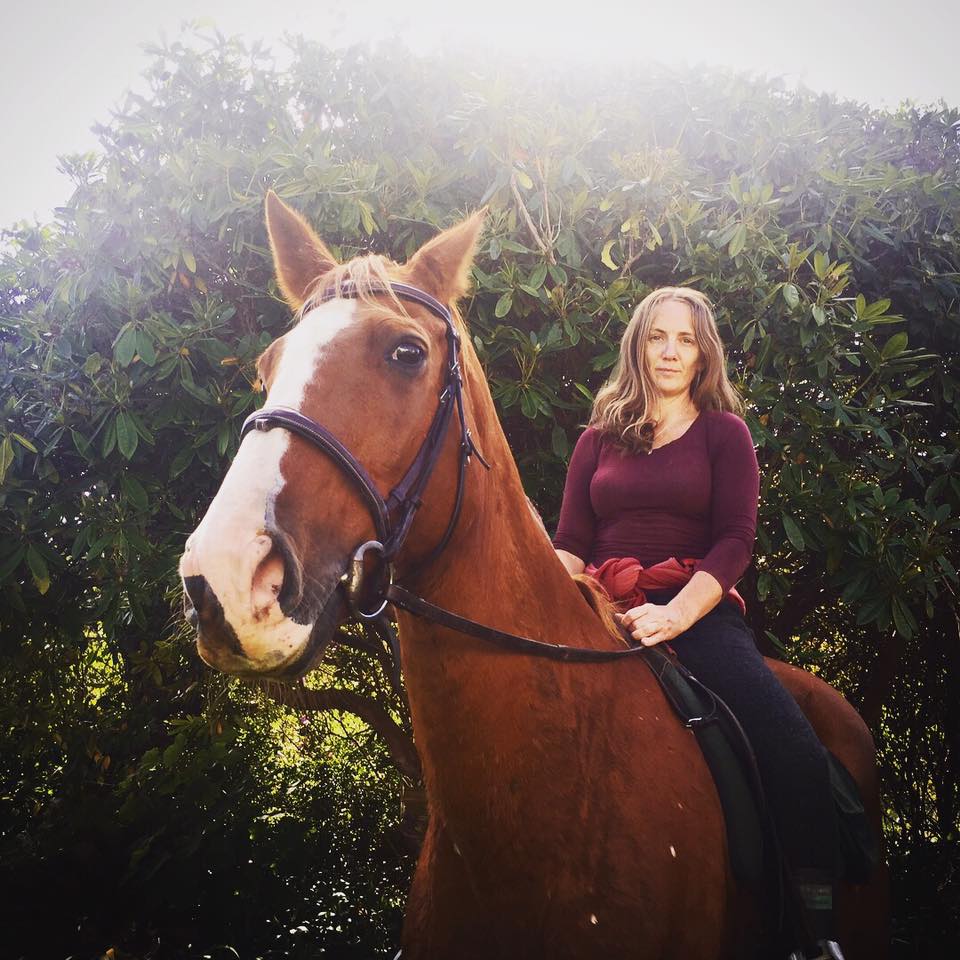
    (Above: writer Carly Thomas on horseback.)

    H: Do you want to share a favourite moment from your travels with us? 

    That’s got to be on Pitt Island on a day off from mustering the cattle and doing yard work. Me and the two kids from the family I was staying with went for a windy adventure with them leading the way. They proudly showed me the very steep cliff drop-off where they weren’t supposed to go, the quick (and very scary!) way down to the beach and the wharf and the old shearing shed retired back when wool prices dropped to pretty much nothing.

    I was told the names of birds and horses and paddocks and we arrived back hungry, windswept and grinning. Brilliant day! 

    H: What have you been reading lately? Can you recommend a few recent reads? 

    Oh so many good books lately! I have discovered a New Zealand author, Fiona Sussman and now her book Addressed to Greta is a favourite. The main character Greta is one of those memorable ones that you fall in love with.

    I have also become a  little obsessed with Elif Shafak, a Turkish writer who wrote There are rivers in the sky. It’s an epic story told over different decades and cultures. A must-read I’d say.

    Oh and The Homemade God by Rachel Joyce. I love a good complicated family dynamic story and this is a goodie. 

    H: Thanks heaps for doing a slow interview with me, Carly. I hope there are lots of horsey good times in your summer.

    C: Thanks mate!

    *

    Carly is already deep in her next project. It’s an ongoing project to capture the stories of Aotearoa’s rural elderly called Landlines.

    Check out their first short film:

  • Slow-Small Media for the Weekend #18

    (Above: a tiny posy of small flowers from the garden: forget-me-not, pansies, calendula, & marigold.) )

    Hello!

    Another week of our lives has passed since the last time you were here…indulging me by reading my collected nonsense.

    How was your week? Did you have time to look at the sky for a while? Read a good book? Wear something that makes you feel excellent and utterly yourself? Did you drink enough cups of tea?

    If not, make yourself one now and settle in for some slow-small media imbibing…

    The joy of simple well-made things

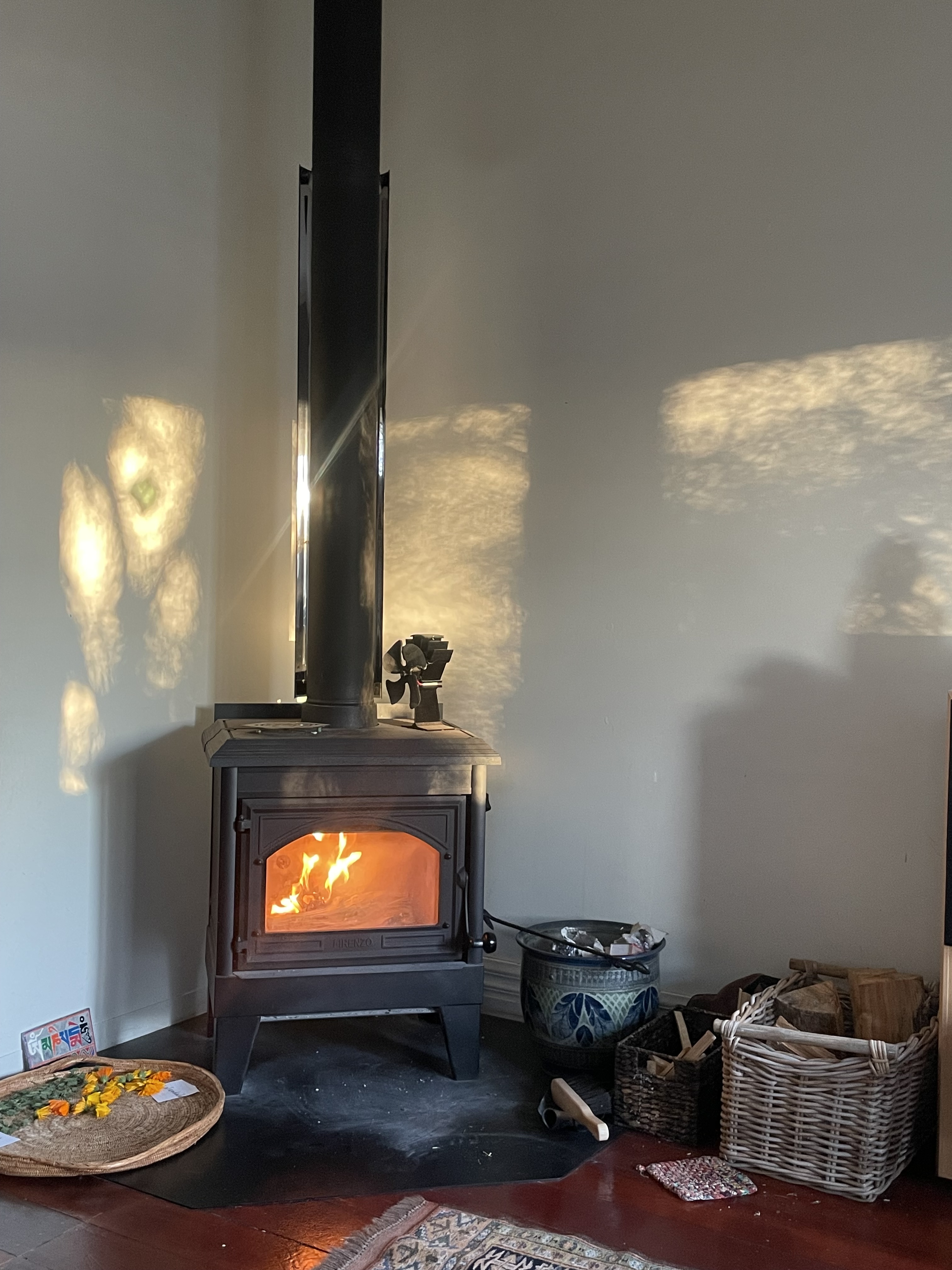
    I write this from beside our fire. It’s stormy outside and today’s high is 12 degrees. The fire is just over a year old. We had it put in when our 1980s gas fire was condemned by the gas inspector. He recommended a heat pump. We did this instead and have not regretted the decision for even a second.

    The fire was made in New Zealand in a business in the Hawke’s Bay. The fire feels like a new member of the family and staring into her depths has given me many happy moments.

    (Above: our little fire with the morning sun on her.)

    When I was in Taupō last weekend, I upgraded our poker to a lovely hand made one from a metalsmith at the local Sunday morning market. I took a photo of him brandishing the poker at the market because he was a lovely chap and I am a nerd for the provenance of handmade things:

    (Above: The maker of our new poker. He didn’t make the hooks on display but he did make the poker.)

    Speaking of woodstoves, last week I stumbled on the YouTube account of Homewood Stoves, another NZ-made wood fire business – this time based near Whangarei.

    Their videos are full of wholesome and homey videos featuring their beautiful homes, gorgeous kids and lovely kitchen…it’s peak #cottagecore content but in a NZ context. Very soothing viewing for a rattled nervous system. Which leads me to today’s recipe…

    How to start a ginger bug for homemade ginger beer

    Also on the Homewood Stoves channel, this aesthetically-pleasing and slow method video has really inspired me to brew up some ginger beer this summer.

    This is a very helpful and nicely made video.

    & I have kitchen-envy! >>

    Poetry: A bit of Mary Oliver balm for another hard news week

    On Thursday, I had a really long work day and was ‘head down, bum up’ all day so didn’t catch any news. When I finally knocked off, Fraser mentioned it had been a big news day in terms of global events and laid it all out for me. (I won’t rake it over here because it’s not Slow-Small-Media suitable… ) but again I was struck how, in these turbulent times, you can be offline just for a day and then plug back in and find the world has been through the wringer again…in new and newly-awful ways.

    To that end, I feel this week we need one of the big guns of solace poetry…so here’s an excerpt from Mary Oliver’s ‘In Blackwater Woods’ (read the whole poem here):

    Here she is on love and the necessity of detachment as part of that love:

    ‘To live in this world

    you must be able
    to do three things:
    to love what is mortal;
    to hold it

    against your bones knowing
    your own life depends on it;
    and, when the time comes to let it go,
    to let it go.’

    A song for the week: ‘So Free’ by Lūka, & Mose

    I appreciate every season…however, at this stage of late winter/crappy spring, I can’t help but begin to yearn for summer.

    This newish song by Lūka & Mose gives me that spacious and bright summer-road-trip feeling…even on this stormy day.

    I can tell I’ll be playing it a lot this summer:

    (You can listen to all of the Slow-Small Media songs over on YouTube here. I add one song every time I write a new edition of this digest.)

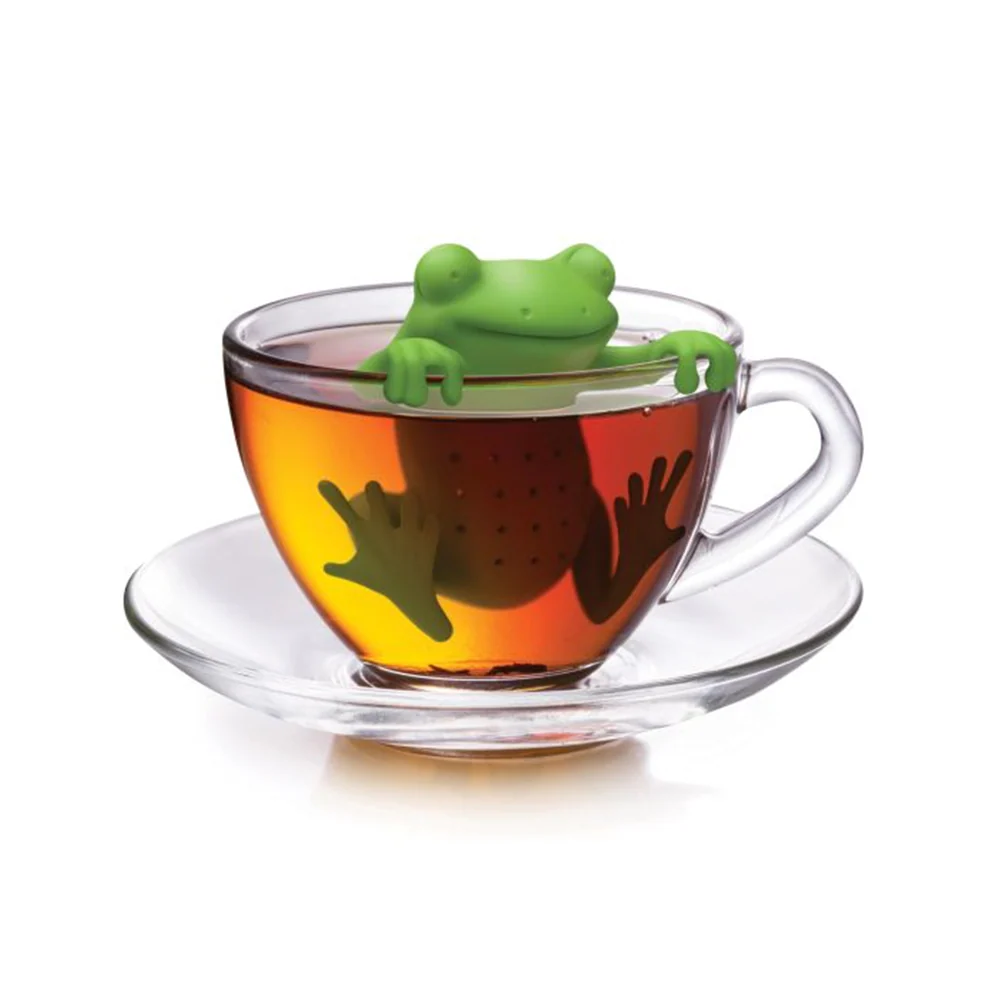
    Affordable Art : the Tea Frog you probably don’t need at all but might make you smile

    Oh, hi:

    (Above: image borrowed from the IkoIko website.)

    Look, I know nobody needs this ridiculous object…but how much fun, hey? )(+ Who ever went into IkoIko looking for something they needed?)

    This little guy is $33 so he falls well within the affordable art budget of $50.

    Is it ‘art’ though? I imagine you asking… I’d argue it makes having a cup of tea more artful…and so yes, he qualifies.

    A short list of ‘sacred gifts’, from Alex Klingenberg

    Returning to the topic of regulating the nervous system after feeling rattled by the noise of the world… this short article by Alex Klingenberg invites us to consider what we have to give in this moment, what our ‘sacred gifts’ are.

    I particularly like this excerpt. As I read the list below, I think about how I can bring these qualities into my relationships, my family, my friendships.

    Does my being in my presence leave people a little uplifted? I hope so.

    Sacred Gifts of Being:

    • Presence – showing up fully to the moment.
    • Attention – the act of noticing, listening, and honoring.
    • Wonder – the childlike awe that keeps the world alive.
    • Stillness – the capacity to rest, pause, and make space.
    • Resilience – carrying light through difficulty.
    • Gratitude – choosing to see abundance and say thank you.

    The article is gentle and thoughtful; I felt a little steadier after reading it.

    (Hat tip for this link to Thousand Shades of Gray who also does a regular digest which I really enjoy and find a lot of good reads from.)

    An artist who embraced the slow art of sewing after an illness

    Speaking of gratitude and presence, this is a lovely watch. Louise Watson had to give up her teaching career after illness. Now, she lives more slowly and has begun and nature-based art practice as part of her new, slowed-down life:

    & That’s a wrap for this week’s sharing.

    This weekend I’ve been invited to a friend’s house for the inaugural paella in her new (from the op shop) paella pan; I’m going to be sharing early birthday cake with some fellow September-birthday friends and I’m going to a Sika Sound Journey as he’s passing through town. This will be my fifth time going to a Sika journey. I’ve been twice at yoga/kirtan camps and twice here in my home town. It’s always worth it. Transporting!

    Sika often starts his journeys with the repeated phrase:

    ‘you are leaving time…you are leaving time…you are leaving time…’

    I hope you can find some moments of presence, attention, wonder, stillness, resilience and gratitude this weekend and also maybe ‘leave time‘ for a little bit.

    Much love.

  • Slow-Small Media for the Week #15

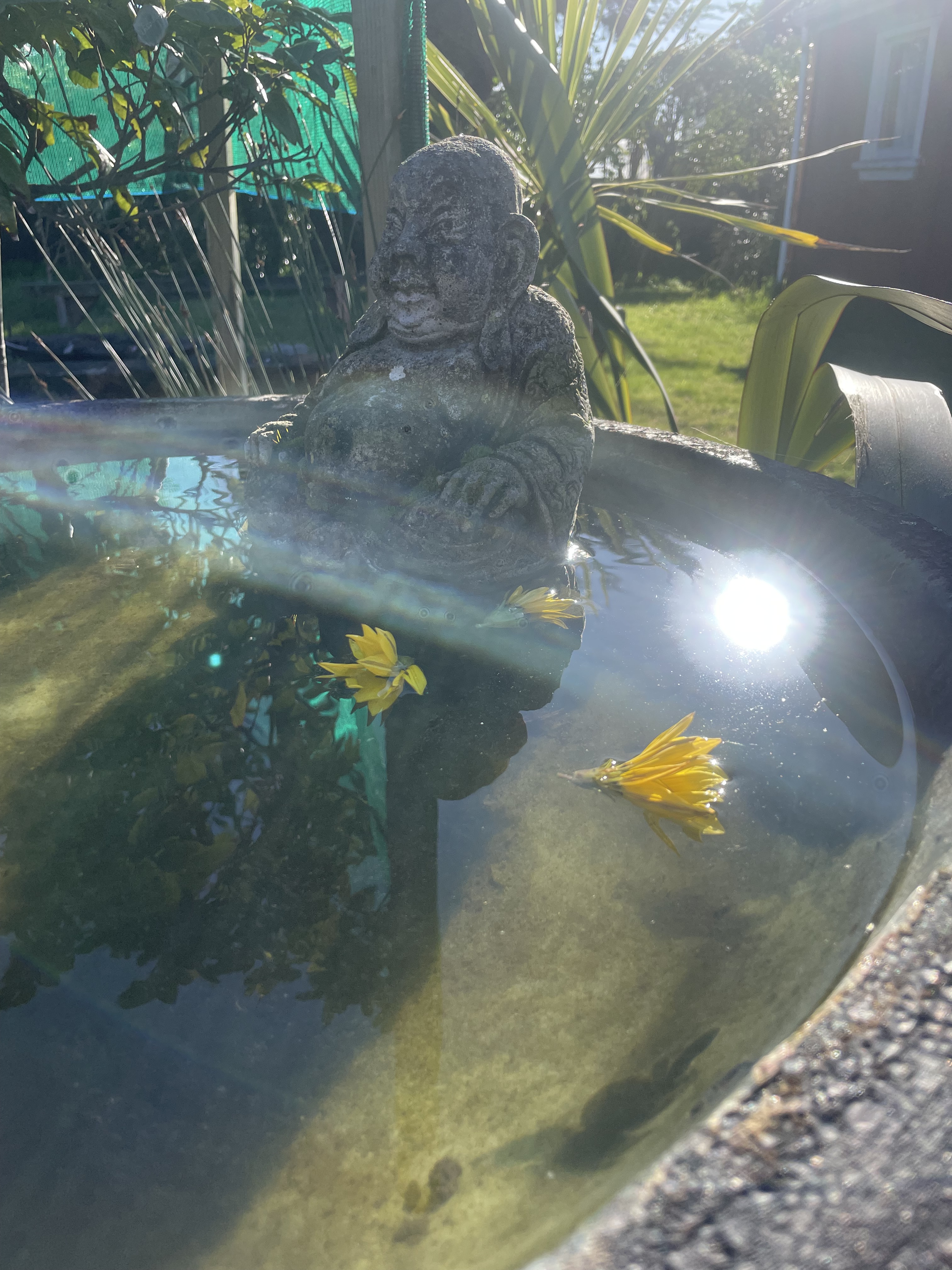
    (Above: resident garden Buddha at the bach I stayed in at Ōtaki.)

    I’m back from my residency in Ōtaki.

    How was it? 

    Well, all these things are true at once: 

    It was a wonderful experience. Parts of it were challenging. I got sick. Woke up sick on the first morning. A nasty dose of ‘flu – fevers, sweats, body aches, etc. I managed to do all of my public-facing things but I did not manage to sparkle. I’m a bit sad that I was a depleted version of myself when I was so keen to converse and connect. I was too sick to catch up with my local friends. The beach was stunning. The beach was my new best friend. The cottage I was housed in was wonderful. simple, sweet, one block from the beach. The organisers of the residency are warm, generous, kind people. Once my eyes stopped stinging and streaming, I read a lot. I did not manage to work on my manuscript…too ill to be generative or analytical. I did keep a journal about the whole experience so maybe there’s something in there? Or possibly it’s a load of feverish waffle. I can’t face looking at it right now but will crack it open when I’m all the way recovered and fully landed back in normal life. It was weird. It was confusing. It was perfect.

    Does that give you a sense of how it went?

    Aaah life, hey? Let’s get into today’s digest…

    Some tools for the ‘pointy end’ of winter 

    Next week,  I’ll be sharing an interview with you with Iona Winter about her new book, ‘Counter of Moons’ where we talk a bit about finding help when life gets overwhelming. 

    Here, from Pip Lincolne, all round sensible person and excellent advice giver, is

    Ten ways to help a friend when they are sad or struggling

    I know I go quiet when I’m feeling overwhelmed and I observe that many friends do, too. 

    Let’s try to be there for each other…even when it feels hard. 

    A recipe for a very weedy pie: ‘Hortopita’ 

    Last week in Ōtaki, I chatted all things winter forage-able weeds with some lovely locals in the beautiful Ōtaki library. (We had planned to do a foraging walk in a near-by park, but rain stopped play so we talked weeds indoors in the warm and dry.) 

    In every season, something in nature is thriving, and winter is great for fresh, bright green greens, well-watered from all the rain. Here is a recipe which calls for 11 cups of weeds! It’s a wild weeds version of spanokopita, ‘Hortopita’. 

    What a great way to get a big dose of wild greens into your belly!

    This week’s song: Song of the Siren by Tim Buckley 

    The first version of this song that I knew was the famous This Mortal Coil version. Somehow I totally missed the fact that it was a cover! 

    I stumbled over the original version via YouTube. At first it sounded so wrong to me…but after a few listens, I really like it. 

    I know the This Mortal Coil version so well, it’s sort of like I can hear both versions concurrently as I listen. 

    (I add one song each week to the Slow Small Media playlist over on Youtube. Here’s the whole playlist so far.)

    This week’s poem

    is by Therese Lloyd, from her 2018 book, The Facts

    I think a lot about food as love and food as care because I’ve had 25 years of cooking for a family.

    I like the simplicity and poignancy of this poem about a small moment of a food offering spurned.

    (+ Lehndorf-trivia: I flatted with Therese when we were in our 20s. Back then we were part of a performance poetry group called ‘Poetry For Real’.) 

    By Sunday

    You refused the grapefruit

    I carefully prepared

    Serrated knife is best

    less tearing, less waste

    To sever the flesh from the sinew

    the chambers where God grew this fruit

    the home of the sun, that is

    A delicate shimmer of sugar

    and perfect grapefruit sized bowl

    and you said, no, God, no

    I deflated a little

    and was surprised by that

    What do we do when we serve?

    Offer little things 

    as stand-ins for ourselves

    All of us here

    women standing to attention

    knives and love in our hands

    Affordable art: original moka pot linoprint

    We have a big espresso machine. F is a coffee aficionado and roasts our coffee. Coffee is a big part of our daily ritual. 

    When I got home F surprised me by telling me that while I was away he didn’t turn on the big noisy coffee beast and just made stove top for himself each morning. 

    Stove top is what we used to have before we had fancy espresso machines and it’s what we have when traveling. 

    There’s something so handsome about the classic Bialetti moka pot and it has so many warm associations for me.

    So this week’s affordable art (so affordable! $30!) is this simple, charming linoprint of a moka pot by Waikato based maker ‘Stich and Whimsy’ on Felt. 

    (Above: photo of linoprint is borrowed from Felt.)

    ‘Tansy cakes, Fiddleheads & Sea Rocket’ 

    I do love a deep dive into a very niche area of interest and that’s what this article by Faythe Levine is.

    I’ve followed Faythe’s creative life since falling in love with her film ‘Handmade Nation’ 16 years ago! (I was part of that wave of renaissance of handmade things and used to make a bit of money selling at Indie Craft Fairs. It was a huge and exciting scene at the time. It’s hard to convey the unique vibe of those first fairs now but at the time they were very fresh and exciting.)

    In the article, Faythe finds a very charming hand-illustrated book at a second hand shop and then follows her enamouredness into a research side-road.

    The book she finds is charming, Faythe’s writing is so good, the whole premise is very entertaining. 

    ‘The Candy Factory’ – a charming short film

    I can’t find the words to express how beautiful this film is so just, please, trust me and watch it. (Content warning: heartbreak.)

    *

    OK, that’s the digest for this week. Did you miss it last week? & If you’ve read or watched or listened to anything you think I might like, please share in the comments.

    Last night I got my 100th subscriber on Substack which is so lovely. If you didn’t know, I write over there about permaculture, radical reciprocity, attempts to live in gift economy, voluntary simplicity, permaculture, foraging & more. I’m still finding my way there, to be honest…but trying not to apply feelings of urgency to things that don’t really need it.

    This weekend I am going to:

    continue getting better, clean! (house is looking a bit end-of-winter-ish), in the garden, all my rocket is ready at once so I might make a rocket pesto, read more of this book and I’ve been doing some Japanese-inspired visible mending of pants…so I might carry on with that. It’s slow work but looks so great.

    Warmest weekendy wishes to you,

    Helen x

  • 52 and still stumbling over the ‘A’ word…

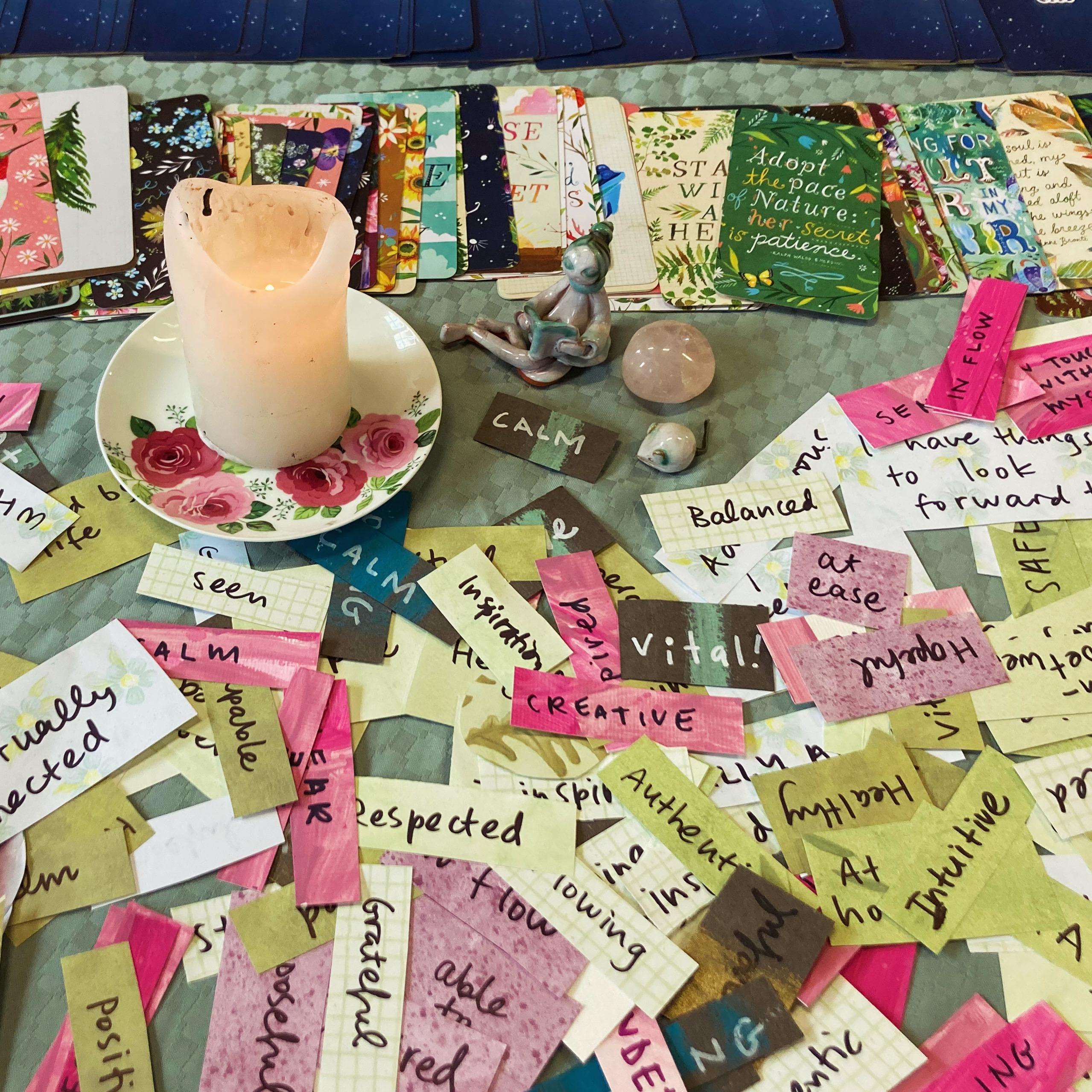
    (Above: journal word cards I make for my workshops.)

    Over the weekend, I was at a beach-side retreat for women so I was meeting some new people. I had just taught a journaling workshop (if you’re reading the blog because of foraging…you might not know my second book was about the practice of keeping a journal and I teach journal workshops) and a new acquaintance asked if I were an artist.

    I made some digressive, stumbling reply about how I loved to ‘mess about’ with art, had a visual element to my journal practice, love to play with art materials…mumble mumble… but ‘no, I am not a ‘proper’ artist.’

    My friend C, who was standing there, who is a visual artist, has been to art school, etc, interjected and said,

    ‘Helen, you are an artist. You are. You spend a lot of time doing art. You’re an artist!’

    I thanked her…the conversation moved on…but it left me reflecting.

    (Above: Mixed-media chamomile from a botanical sketchbook I’ve been working on.)

    I have taught creative writing for most of my working life (at university) and there I was, encouraging my undergrads to claim the ‘W’ word, ‘writer’ for themselves.

    ‘If you are passionate about writing, you spend your time writing, you are a writer!’ I said to them. I meant it, too. I felt there was power in the claiming of the word for themselves.

    And yet…and yet…here I am, old enough to know better, and still wiggling around doing the same thing for myself in another creative discipline. I studied creative writing at university and spend a great deal of time writing so it feels simple to claim ‘writer’ for myself. I still wobble around with claiming ‘artist’.

    Aren’t our brains fascinating, and odd, and annoying?

    (Above: Mixed-media red clover from a botanical sketchbook I’ve been working on.)

    I think part of it is where a passion intersects with an audience, or with capitalism. I find it easy to claim ‘writer’ because I have published things and had an audience respond to them. My words have earned me (a little!) money. I have been successful in selling books.

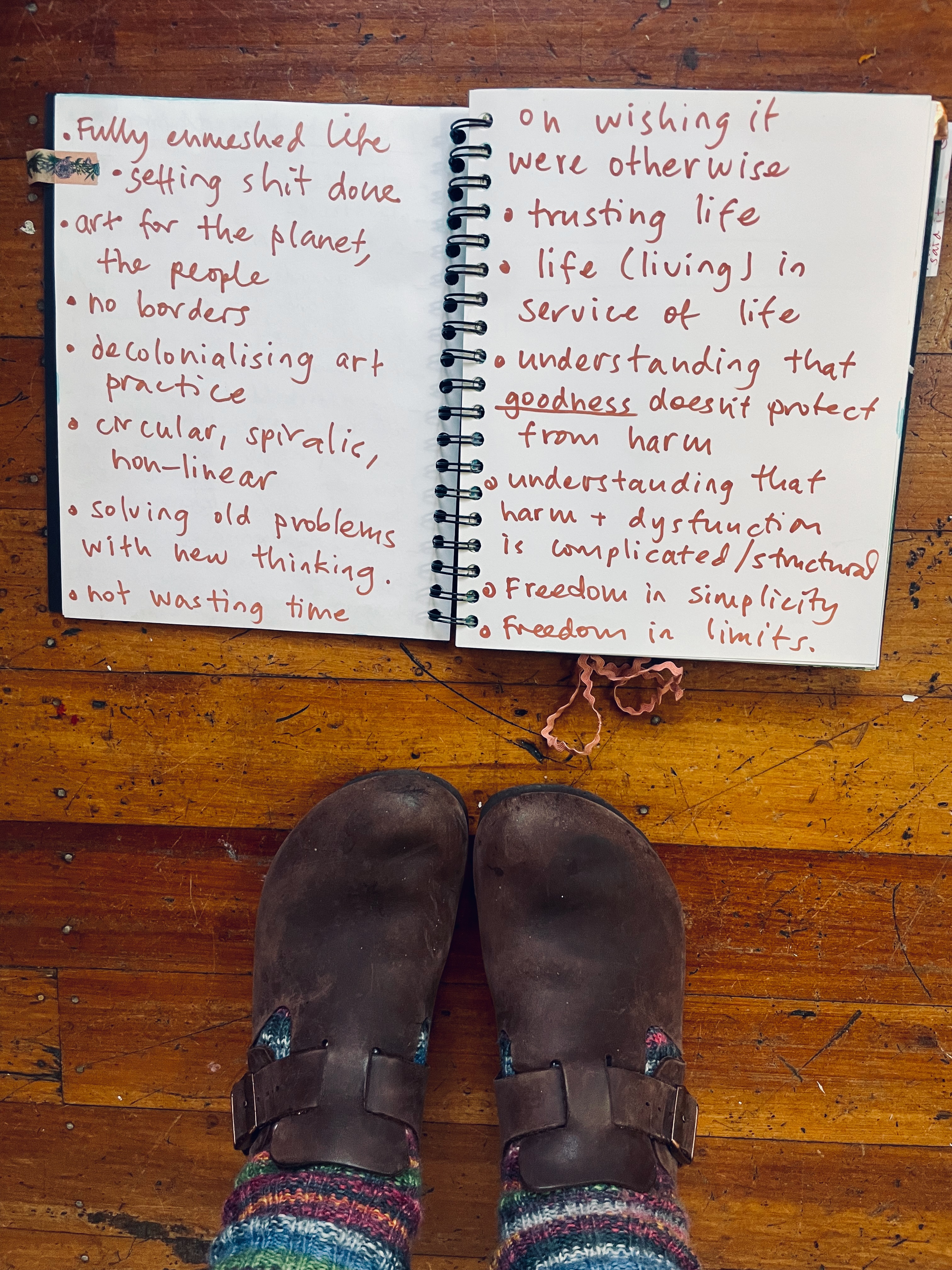
    (Above: art manifesto in the making. Sketchbook notes.)

    My art is mostly in the vein of play, experimentation and enjoyment of the creative process. I have exhibited art work and sold a few things. When my children were small, I supplemented my income with making self-designed and drafted textile crafts and paper goods. I love taking photographs. I feel I have a good visual eye.

    So how is it, I can, for years, have encouraged students to claim ‘writer’ for themselves and yet fail to take my own advice in another discipline?

    Do you have a creative practice noun -artist, writer, musician, singer, potter?-…..you yearn to claim and inhabit but struggle with? I’d love to hear about your blocks or advice for overcoming this odd phenomena.

    Love, Helen, (confident writer, tenuous artist.)

  • don’t buy a sympathy card, buy this

    Another thing that happened while I was too distracted by the release of ‘A Forager’s Life’ to give it the attention it deserved is that writer Iona Winter published a grief almanac called ‘a liminal gathering‘.

    I submitted poems to it and Iona chose one for the almanac, which I share below. I feel privileged to be amongst the writers, artists, musicians and photographers who are part of this precious container for giving voice to grief.

    Iona’s son, the musician and artist Reuben Winter killed himself in 2020. Since Reuben’s death, Iona has used her skills as a writer and communicator to be public with her grief in service to all who grieve and are silenced, or are too overcome by grief to speak themselves.

    A review of the almanac by Hester Ullyart says, ‘This is a hopeful resource, much needed. A rope of stars thrown out into the murk of grief. I recommend this almanac for every shelf, for death touches us all, and no one need struggle alone.’

    I so agree. This book contains both the intensity of new grief and the wearing plod of long-carried grief. It spans anger, raw shock and emotional pain through to gratitude, reverence, elegy…sometimes in the same piece of work.

    If someone you love loses someone they love, don’t buy a sympathy card, buy them this. You will be giving them the gift of a chorus of voices who dwell in the same place as them, a liminal gathering: grief.

    In his piece in the almanac Dear Reader, Rushi Vyas captures the some of the nuance of grief in his poem’s ending:

    ‘Dear Reader, go outside. Feel everything. The wind is cruel. And full of oxygen. The sun is deadly radiation. And our only source of warmth.’

    -Rushi Vyas

    & here is my poem from the almanac:

    negotiating boundaries with the dead

    grief: week one

    kaimanawa horse in my living room

    wild waters                        white flames

    grief: week two

    flower’s fingers holding medals 

    i’m a hobo pedestaled for bravery

    grief: week three

    in the musty cave mushrooms sprout from armpits

    it’s a total eclipse of the total eclipse

    grief: week four

    hurricane chasers, race to get best footage of worst damage

    a raggedy lone wolf to stare down

    grief week five: 

    bat-infested feeling my way   with echo-location

    drink puddle-water      trying for nutrition by chewing on a husk

    grief: week six

    (but wait there’s more

    were you looking for a neat trajectory?) 

    belly-crawling at toadstool height

    make the bed with a chainsaw

    grief: week seven

    turns out the source of the tinnitus is my own throat’s moaning

    some forest fires happen to crack the open the seeds of amoured shells. But not here.

    Just another searing morning. The petrol pours itself.

  • twenty years ago I started a commonplace book and didn’t even realise

    I was reading on writer Pip Lincolne’s delightful Wallflower Cordial the other day about her beginning a commonplace book. Then I remembered I had something similar, although I hadn’t realised it was a commonplace book.

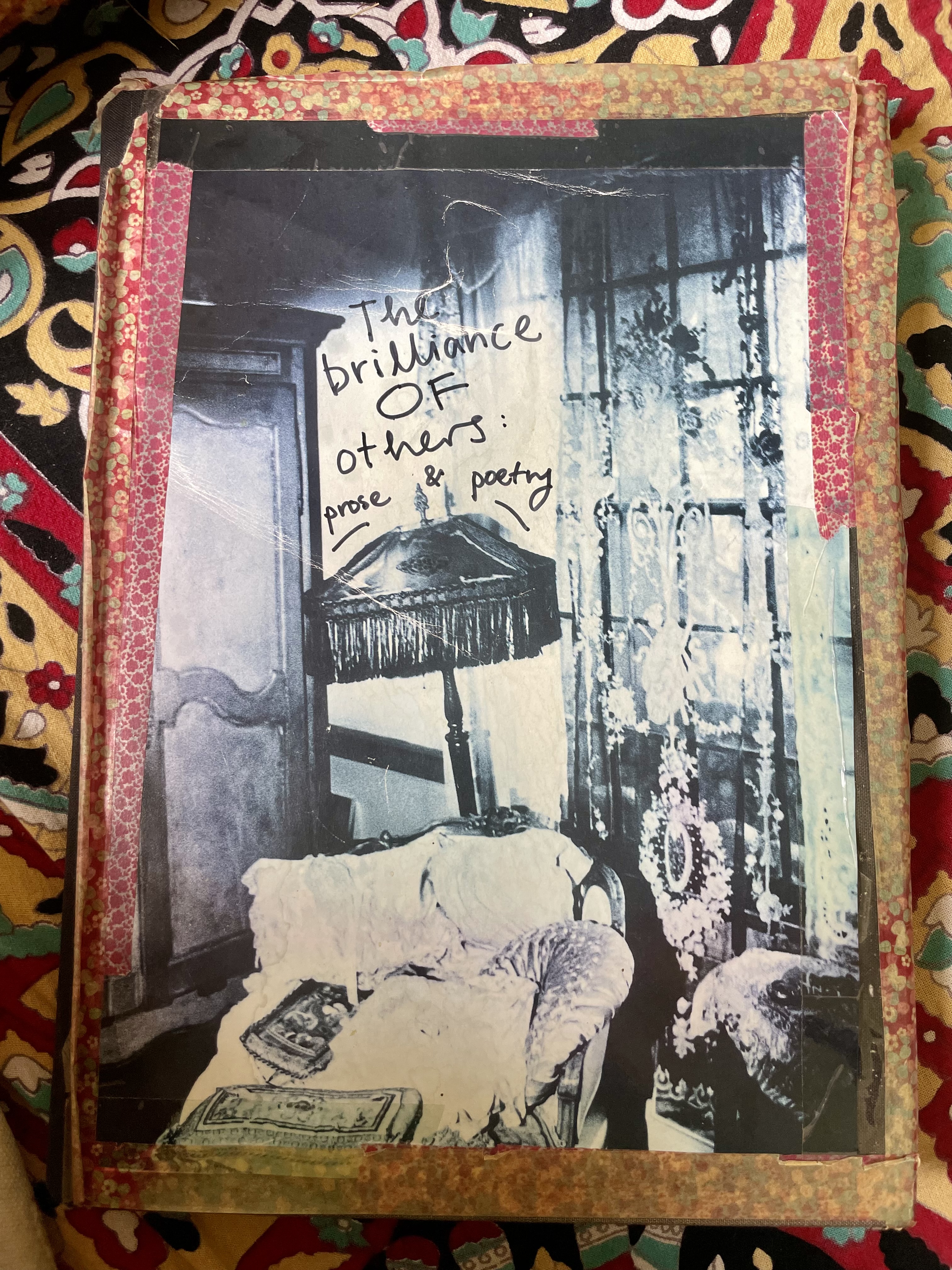
    I called mine ‘The Brilliance of Others’. On the cover is a somewhat gloomy photograph of the reading chair of someone famous. (I didn’t record who so if you recognise it–let me know.)

    On the inside cover it says, “Personal Poetry Anthology: words by other people that move, stimulate, excite…& at the back, quotations.” 

    I guess I hadn’t heard of commonplace books then because that would have been a much more succinct title.

    I started it in April 2004 which was around when I became pregnant with my second child, Magnus. I guess that is why, after over twenty years, it is only half-way full. Nine months later, a decades-spanning distraction was born. 

    Still, from time to time, I remember it exists and I add something. There are currently 51 entries. 

    In it there are poems I’ve copied by hand from library books, some snipped out of the New Yorker (now yellowing…that New Yorker paper doesn’t age well), or printed out. From time to time I subscribed to the Academy of American Poets ‘Poem a Day’ emails and I would print out the ones I particularly liked. 

    (I’ve subscribed to this so many times over the years…usually when I feel like I’m not reading enough new poetry and I should make more of an effort to ‘keep up’…but a poem every day to your in-box is so many poems! & so many emails. Therefore I usually only last a month or two and then unsubscribe again after getting overwhelmed. It turns out even poets can be exposed to too much poetry.)

    (Above: This Merwin poem on brittle, yellowing New Yorker paper still gets me in the gut. What an ambiguous, radiant, brutal final stanza.)

    There’s also the occasional dashed-down note which must have seemed very relevant to something I was thinking about or working on at the time and now I have no clue why. Thus:

    According to USA lifestyle magazine The Good Trade, commonplace books are increasing in popularity again. Younger people are enjoying them as a kind of palate-cleansing, analogue and slow antidote to the relentlessness of social media. I totally approve of this trend. 

    Do you have a commonplace book or something like it?

    Here’s a quote I wrote down from G.K.Chesterton. Why younger me liked it so much, I’m not sure…possibly the poetry in the final eight words?

    “He discovered the fact that all romantics knowthat adventures happen on dull days and not on sunny ones. When the chord of monotony is stretched most tight then it breaks with a sound like a song.” 

  • somehow, ‘a forager’s life’ is two

    On March 18 my book ‘A Forager’s Life’ turned two!

    The two years since it emerged into the world have been, frankly, mad.

    I’m a person who enjoys a slow, simple life and lots of huge (for me, anyway) and exciting things happened with the book since it’s release. In this space, I’m going to share some of the things that happened…even though they are old news in terms of the pace of the online world. They are still very much with me.

    (Above: I threw a morning tea for the staff at my wonderful local bookshop, Bruce McKenzie Books on the day the books arrived in store, March 2023.)

    I was unkind to myself and, freaking out about money once my book manuscript was delivered, started a new job before the book even came out. At the same time, my younger son who has a disability was finishing high school and in a massive phase of transition into post-school life. I had underestimated how intense of this phase would be for him, resulting in a high-pressured time where I was trying to enjoy the opportunities the book bought my way, learn and hold down a new job and be there for the kid. Oof.

    It was all too much and, coupled with the NZ government’s slashes to disability support last year, I only lasted two years in the job before something had to give and I left it so I could adequately look after my boy.

    Now I’m out the other side of the intense part of the booky fizz, the job debacle, am still navigating the kid’s shaky steps into adulthood (I guess I always will be), plus I’m in the midst of the intense mind/body/spirit shake up that is menopause.

    I’m sitting here, a bit dishevelled, trying to put myself back together. It’s been a very strange time of immense, beautiful highs and difficult, fractious lows. (Then there’s everything going on in the world beyond my front door where the world appears to have gone completely mad.) Therefore, I’m hoping this winter is very boring and nesty so I can read mountains of books beside the fire and journal a lot (on paper and here) and let it all integrate into me at a pace I can cope with.

    So, interspersed with posts about other things, there will be the occasional retrospective post my experiences with ‘Forager’s’.

    I hope it’s interesting for you to read about such things from a writer’s perspective? As writers we are supposed to act very cool and nonchalant about the occasionally great things that can happen if you write something that people respond to…but I have never managed to be cool…I’m an awkward, nerdy, sensitive person who gets overwhelmed easily. I’m not at all nonchalant…I get very revved up about exciting things. In fact I get excited about non-exciting things, like the shape of a dried fennel seed head, finding a particularly niche-to-me second-hand book, or sampling from a pan of sun-ripened then slow roasted cherry tomatoes.

    & I know blogging is long dead but (see above point about not being very cool) however I’m hoping if I write here, the right people will find me, despite claims that blogging and personal websites have been made irrelevant by speedy old social media and peoples’ diminishing attention spans. ‘The right people’ are folks who like reading longer form than an Instagram caption and appreciate the reedy, faint voice of a shaky woman trying to lure kindred people into giving their precious attention to her personal website rather than further furnishing the pockets of tech billionaires.

    If that’s you, warmest of welcomes aboard.

    (Do leave comments if you feel moved to. I read everything and promise to respond.)