
(Above: plastic rubbish I picked out from my vegetable beds last week. I collect around this much rubbish each time I tend or harvest from my vegetable beds.)
I enjoy the writing on The Dark Mountain Project. It’s an ongoing project (based in the UK) that publishes ‘uncivilised writing’, holds gatherings, creates a space for conversations about all manner of unsettling and challenging elements of living at this point of human history. There you will find writing beyond polite eco poetics or nature writing that merely holds nature in a human/nature binary of saccahrine reverence. I don’t always agree with what I read there and that is why I like it.
Last week I read this piece by Amy Kennedy from the most recent issue with the theme of ‘bodies‘.
At first it seems a deceptively simple piece of writing, Amy describes a group of parents at a childrens’ birthdday party. One of them brings up the subject of the finding of microplastics in human placentas. The piece explores plastic: our culpability and the unavoidable enormity of the tsunami of plastics in our lives.
I have a fairly high threshold for ingesting media about climate collapse and environmental degradation. I don’t have my head in the sand.This is not because of courage but more that I am an anxious person who approaches life in a ‘forewarned is forearmed’ sort of way. I like to know something of what’s coming so I can consider in advance how I might respond. (I’d prefer not to be built this way but there is only so much you can do about your neurological wiring.)
I was surprised by my visceral reaction to this piece with it’s blunt presentation of human culpability in terms of the use of plastics and refusal to look away from the idea of microplastics in human placentas, in human bodies. ‘Now we recognise ourselves less and less’, Amy writes. A familiar feeling for the eco-anxious amongst us and a statement that works on many levels.
A few years back I wrote a poem in a similar vein about digging up the backyard of my crappy Wellington flat to grow food for my oldest son when he was a baby …only to years later find out that backyard had been a dumping ground for old car bodies and broken machinery and was no doubt full of petrol and lead and other toxins. In my youthful naiveté, I hadn’t considered the urban soil’s history.
These human missteps we make in the name of love: a birthday cake served with a plastic fork, feeding a baby mashed carrots grown in polluted soil…the hell we plod towards on our road of good intentions.
The depth to which I was triggered by Amy’s writing surprised me at first (I thought I was made of tougher stuff by now). But then when I thought about it, I realised it touched on a tender spot in my own gardening practice…a spot where I choose to put blinders on.
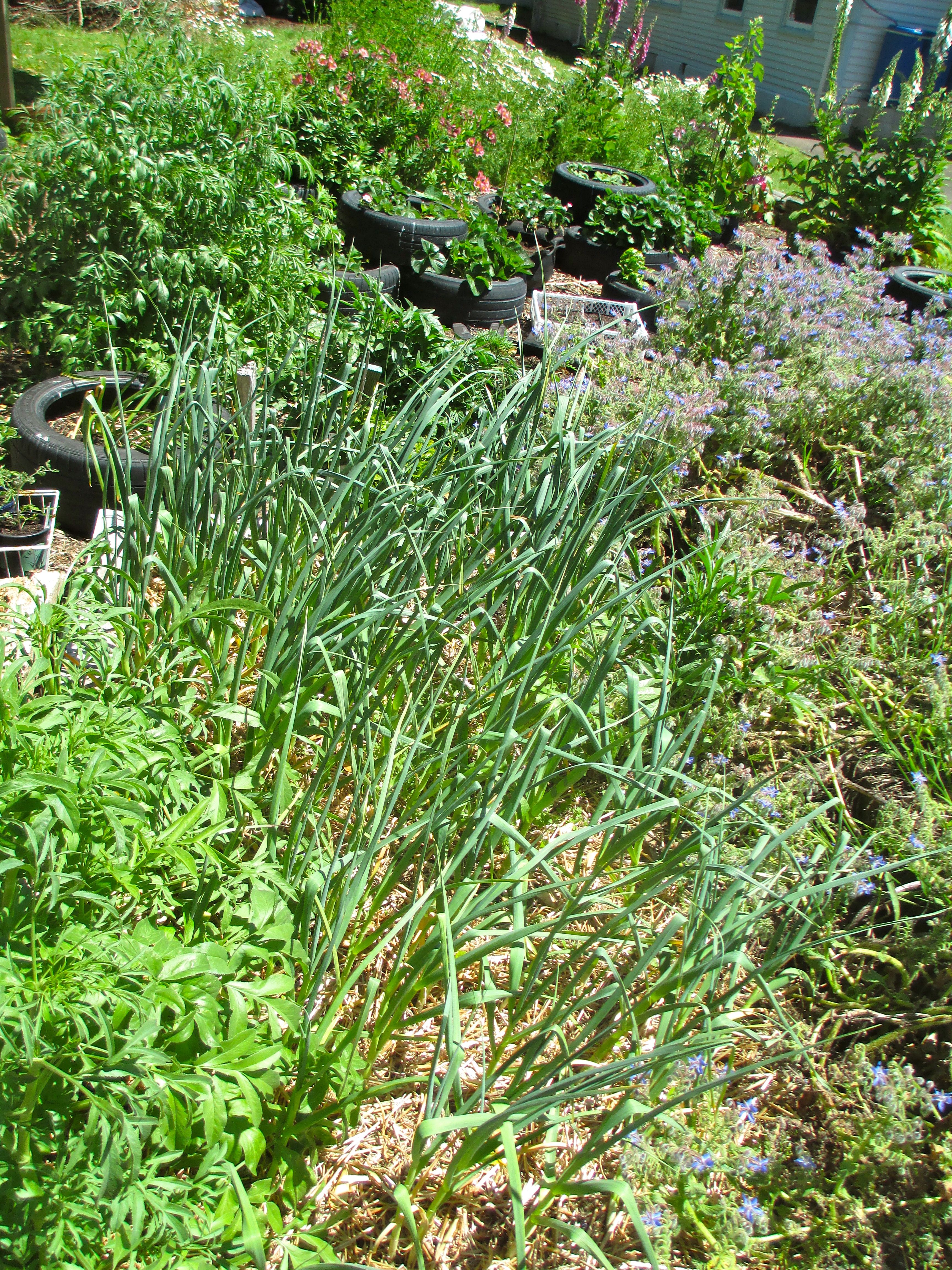
I live in the centre of a city. Every time I weed or harvest from my front yard garden (tended so carefully with the best organic soil amendments and lovingly homemade compost) I fish bits of plastic out of my garden: plastic bag fragments, fruit stickers, junk food packaging, lollipop sticks. Some of it seems to get into our compost somehow, despite careful sorting at the kitchen end. The plastic in the vegetable beds seems to blow in from the street.
(I wondered if this plastic trash were an urban problem but a friend who lives rurally said that there is just as much plastic trash out her way, in the road gutters, in streams, from the plastic packaging of hay bales and farm products.)
I throw the bits of plastic into a colander that I have with me in my harvest basket then put them in the rubbish bin where they will travel in a plastic bag to the plastic afterlife, which is to say slowly deteriorating into microplastics in the city’s landfill.
I dwell in a space of both knowing that I have my stubborn blind spots (the macro and micro plastics in my own food garden and in the soil I am creating in my compost) and also having no inclination to stop. I will carry on composting. I will carry on growing food in this microplastick-y soil I am making.
I enjoyed this essay about composting by Scottish writer Fraser MacDonald (found via Pip Lincolne) He, too, is carrying on composting on despite tangible evidence of plastics in his compost. He writes:
‘I make my own compost so that I can convince myself that even when the world seems socially and ecologically broken there are still mechanisms for recovery: it shows that change is possible. Composting is a simple habit of composition or gathering together that integrates past fragments into a future whole, so that what matters is not the individual ingredients but the fertile new thing they can become.‘
& that ‘fertile new thing’ possibly contains microplastics…yet still I persist in habits which put me squarely in the ‘doing’ space of the world, in flawed creative acts which give me a sense of agency and regenerate my spirit if nothing else.
For that purpose alone I believe they are worthy.








 Helen Lehndorf