Tag: foraging

  • Slow-Small Media for the Week #15

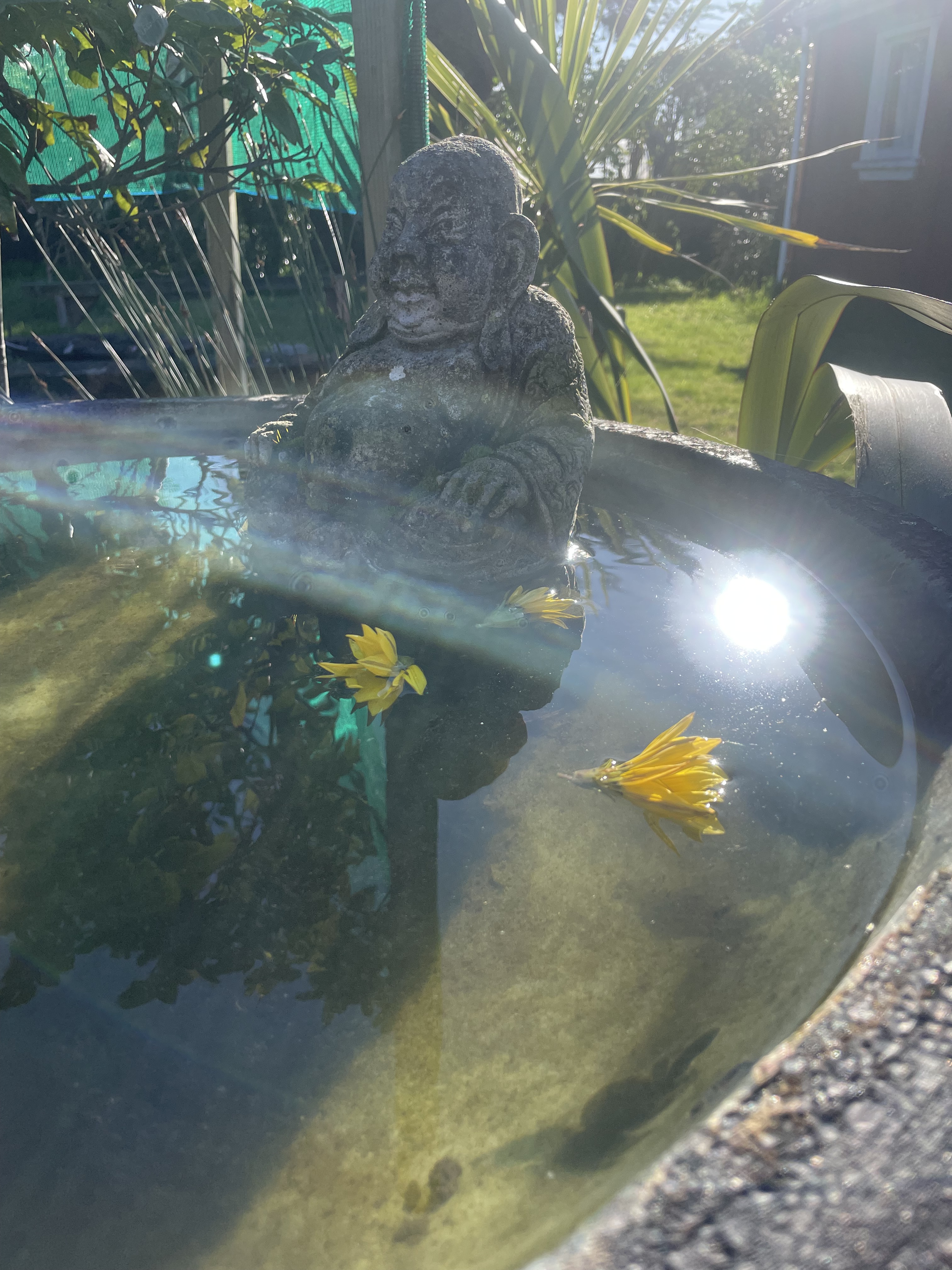
    (Above: resident garden Buddha at the bach I stayed in at Ōtaki.)

    I’m back from my residency in Ōtaki.

    How was it? 

    Well, all these things are true at once: 

    It was a wonderful experience. Parts of it were challenging. I got sick. Woke up sick on the first morning. A nasty dose of ‘flu – fevers, sweats, body aches, etc. I managed to do all of my public-facing things but I did not manage to sparkle. I’m a bit sad that I was a depleted version of myself when I was so keen to converse and connect. I was too sick to catch up with my local friends. The beach was stunning. The beach was my new best friend. The cottage I was housed in was wonderful. simple, sweet, one block from the beach. The organisers of the residency are warm, generous, kind people. Once my eyes stopped stinging and streaming, I read a lot. I did not manage to work on my manuscript…too ill to be generative or analytical. I did keep a journal about the whole experience so maybe there’s something in there? Or possibly it’s a load of feverish waffle. I can’t face looking at it right now but will crack it open when I’m all the way recovered and fully landed back in normal life. It was weird. It was confusing. It was perfect.

    Does that give you a sense of how it went?

    Aaah life, hey? Let’s get into today’s digest…

    Some tools for the ‘pointy end’ of winter 

    Next week,  I’ll be sharing an interview with you with Iona Winter about her new book, ‘Counter of Moons’ where we talk a bit about finding help when life gets overwhelming. 

    Here, from Pip Lincolne, all round sensible person and excellent advice giver, is

    Ten ways to help a friend when they are sad or struggling

    I know I go quiet when I’m feeling overwhelmed and I observe that many friends do, too. 

    Let’s try to be there for each other…even when it feels hard. 

    A recipe for a very weedy pie: ‘Hortopita’ 

    Last week in Ōtaki, I chatted all things winter forage-able weeds with some lovely locals in the beautiful Ōtaki library. (We had planned to do a foraging walk in a near-by park, but rain stopped play so we talked weeds indoors in the warm and dry.) 

    In every season, something in nature is thriving, and winter is great for fresh, bright green greens, well-watered from all the rain. Here is a recipe which calls for 11 cups of weeds! It’s a wild weeds version of spanokopita, ‘Hortopita’. 

    What a great way to get a big dose of wild greens into your belly!

    This week’s song: Song of the Siren by Tim Buckley 

    The first version of this song that I knew was the famous This Mortal Coil version. Somehow I totally missed the fact that it was a cover! 

    I stumbled over the original version via YouTube. At first it sounded so wrong to me…but after a few listens, I really like it. 

    I know the This Mortal Coil version so well, it’s sort of like I can hear both versions concurrently as I listen. 

    (I add one song each week to the Slow Small Media playlist over on Youtube. Here’s the whole playlist so far.)

    This week’s poem

    is by Therese Lloyd, from her 2018 book, The Facts

    I think a lot about food as love and food as care because I’ve had 25 years of cooking for a family.

    I like the simplicity and poignancy of this poem about a small moment of a food offering spurned.

    (+ Lehndorf-trivia: I flatted with Therese when we were in our 20s. Back then we were part of a performance poetry group called ‘Poetry For Real’.) 

    By Sunday

    You refused the grapefruit

    I carefully prepared

    Serrated knife is best

    less tearing, less waste

    To sever the flesh from the sinew

    the chambers where God grew this fruit

    the home of the sun, that is

    A delicate shimmer of sugar

    and perfect grapefruit sized bowl

    and you said, no, God, no

    I deflated a little

    and was surprised by that

    What do we do when we serve?

    Offer little things 

    as stand-ins for ourselves

    All of us here

    women standing to attention

    knives and love in our hands

    Affordable art: original moka pot linoprint

    We have a big espresso machine. F is a coffee aficionado and roasts our coffee. Coffee is a big part of our daily ritual. 

    When I got home F surprised me by telling me that while I was away he didn’t turn on the big noisy coffee beast and just made stove top for himself each morning. 

    Stove top is what we used to have before we had fancy espresso machines and it’s what we have when traveling. 

    There’s something so handsome about the classic Bialetti moka pot and it has so many warm associations for me.

    So this week’s affordable art (so affordable! $30!) is this simple, charming linoprint of a moka pot by Waikato based maker ‘Stich and Whimsy’ on Felt. 

    (Above: photo of linoprint is borrowed from Felt.)

    ‘Tansy cakes, Fiddleheads & Sea Rocket’ 

    I do love a deep dive into a very niche area of interest and that’s what this article by Faythe Levine is.

    I’ve followed Faythe’s creative life since falling in love with her film ‘Handmade Nation’ 16 years ago! (I was part of that wave of renaissance of handmade things and used to make a bit of money selling at Indie Craft Fairs. It was a huge and exciting scene at the time. It’s hard to convey the unique vibe of those first fairs now but at the time they were very fresh and exciting.)

    In the article, Faythe finds a very charming hand-illustrated book at a second hand shop and then follows her enamouredness into a research side-road.

    The book she finds is charming, Faythe’s writing is so good, the whole premise is very entertaining. 

    ‘The Candy Factory’ – a charming short film

    I can’t find the words to express how beautiful this film is so just, please, trust me and watch it. (Content warning: heartbreak.)

    *

    OK, that’s the digest for this week. Did you miss it last week? & If you’ve read or watched or listened to anything you think I might like, please share in the comments.

    Last night I got my 100th subscriber on Substack which is so lovely. If you didn’t know, I write over there about permaculture, radical reciprocity, attempts to live in gift economy, voluntary simplicity, permaculture, foraging & more. I’m still finding my way there, to be honest…but trying not to apply feelings of urgency to things that don’t really need it.

    This weekend I am going to:

    continue getting better, clean! (house is looking a bit end-of-winter-ish), in the garden, all my rocket is ready at once so I might make a rocket pesto, read more of this book and I’ve been doing some Japanese-inspired visible mending of pants…so I might carry on with that. It’s slow work but looks so great.

    Warmest weekendy wishes to you,

    Helen x

  • Winter is a great time for harvesting volunteer ‘microgreens’ from your garden (or local park)

    (Above: today’s bounty from a little wander around my own garden.)

    Do you buy sprouts, bags of mesclun mix or microgreens from the supermarket?

    Winter is a great time to find volunteer (‘weed’) microgreens, or young greens, around your garden or local park for FREE!

    Because of winter’s rain and damp, the young weeds will be beautifully bright green, healthy and not heat-stressed.

    To share some likely contenders with you, I took a walk around my small urban yard and here’s what I harvested.

    I took care to only harvest volunteers/weeds and nothing that I’d planted intentionally. (Violet grows like a weed in my yard.)

    The trick is to just harvest the young leaves, or the tips in the case of the dead nettle.

    These wild ‘microgreens’ can be used in a salad, or chopped and sprinkled on top of soup, or in sandwiches, or blended into a smoothie…the same as you would use supermarket or homegrown microgreens.

    I numbered the plants for ease of ID-ing them:

    1. Nasturtium leaves. These are peppery in flavour so great in salads and on sandwiches, not so great in smoothies.
    2. Dead Nettle tips. Great stand-in for lettuce.
    3. Young violet leaves and flowers. Use in salad or cook as your would spinach.
    4. Young ribwort plantain leaves. Important to pick the young ones as the older ones get stringy. The young leaves have a nutty flavour.
    5. Chickweed. Such an enthusiastic garden volunteer. Use the young growth and chop finely.
    6. Young dandelion leaves. These add a nice bitter element to a salad or sandwich. Not so great in smoothies.
    7. Oxalis (known in the UK as ‘wood sorrell’ and the USA as ‘sour grass’) Has a sour, lemony flavour similar to sorrell. Use just a little at a time as it contains oxalic acid. Treat it more like a herb than a main vegetable.
    8. Young mallow leaves. Mallow (also know as ‘Malva’) is a much-used vegetable in Middle-Eastern cuisine and parts of Italy. You can make dolmades with the leaves in place of grape leaves, making it useful during the winter when there are no grape leaves about. Young leaves are good in salad or cooked like spinach.

    & of course, these plants have medicinal properties as well, (most plant food does.

    I hope this inspires you to have a close look at what might be growing in your own back yard and save yourself a little money (or time) by eating some of the weeds around you.

    Let me know in the comments if you have any questions.

    Do you eat any of the weeds in your garden?

  • fennel from the river

    (Above: My favourite selfie, out foraging beside the river.)

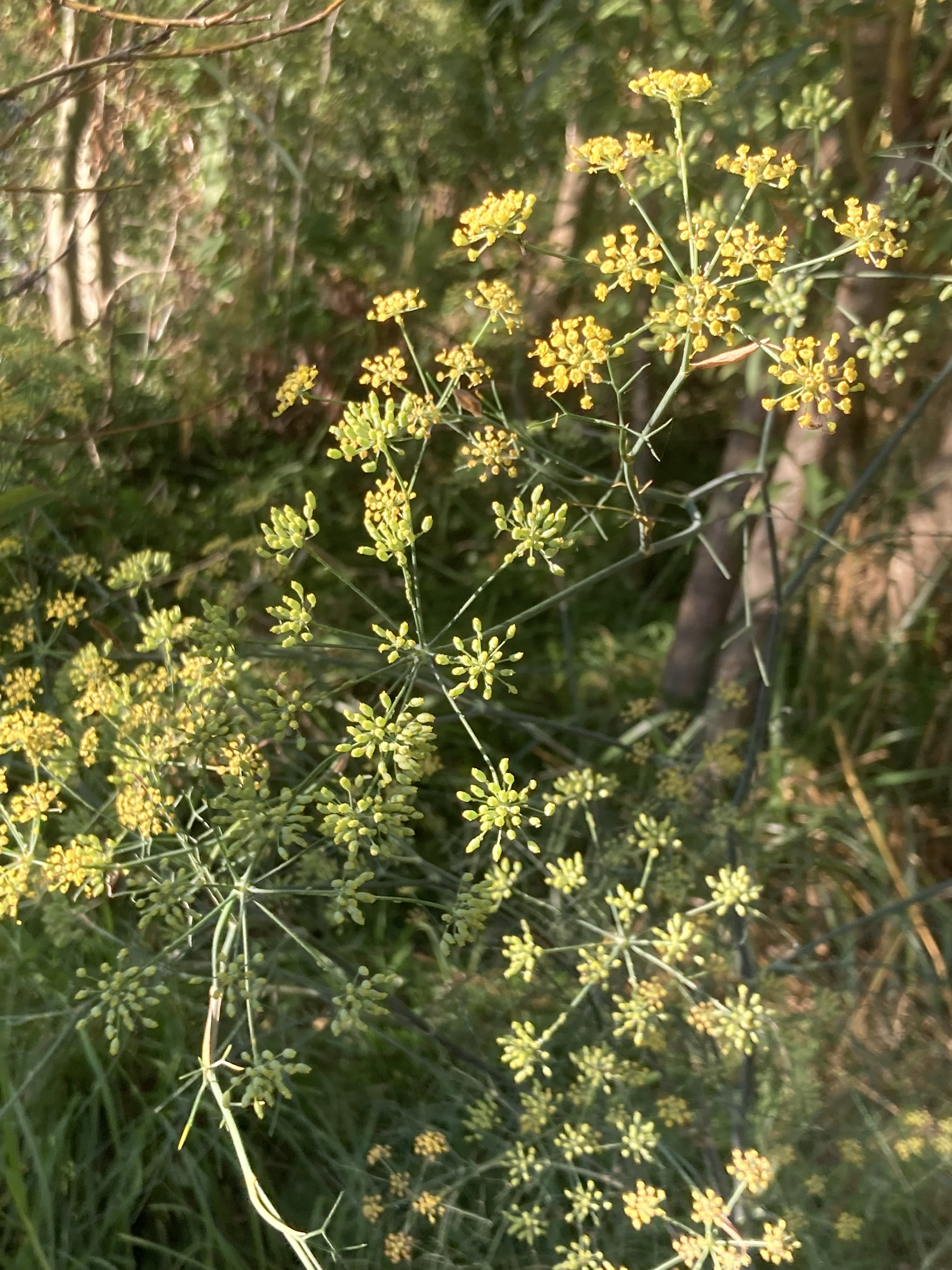
    In autumn, I forage for fennel seeds. Along the Manawatū river, the fennel plants are plentiful. This year, it’s been such a warm autumn, there is still fennel in flower as well as the older plants going to seed. I find fennel such a beautiful plant in all it’s stages: the bright green fronds of early spring, the sunny yellow umbels of summer…then the handsome dried seed heads of autumn.

    (Above: A ‘fennel tunnel, fennel tunnel, fennel tunnel’ < a little phrase from my foraging book.)

    Fennel is an enjoyable thing to forage for because each plant is so laden with seed heads that it’s easy to forage enough for the pantry in just a couple of walks. I fill up this 500ml jar and it lasts me a year of curries and pickles and tea.

    (Above: yellow fennel flowers going to seed.)

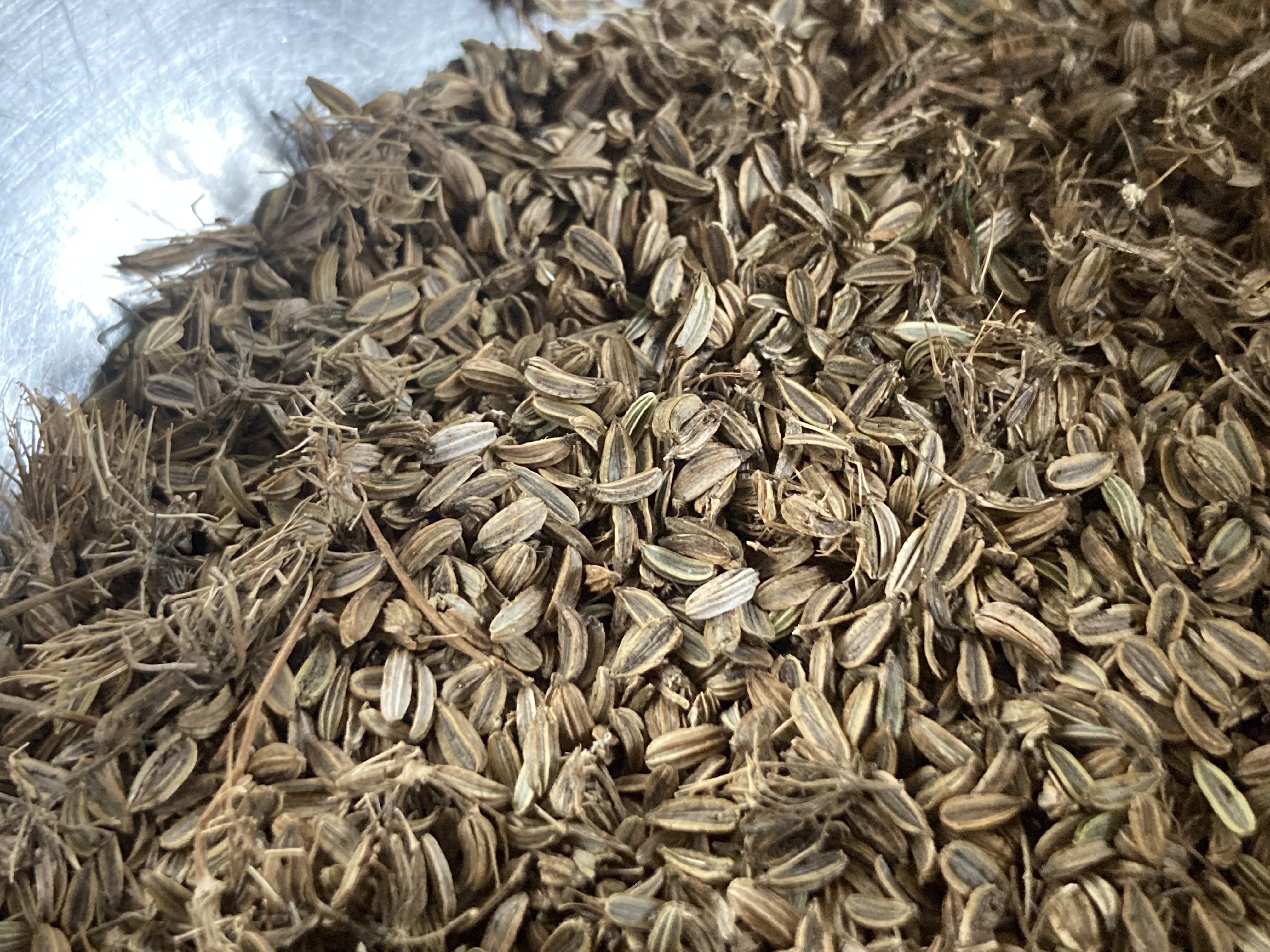
    I take secateurs with me and snip some of the seed heads that look grey and dry. Although they are probably dry enough off the plant, I leave them on a tray on my kitchen table to dry more…just to be sure they are totally dry. Then I rub the seeds off over a large bowl.

    (Above: the fennel seed heads drying a little longer at home.)

    I have an interest in Ayurveda. Fennel seed is highly-valued in Ayurveda for it’s digestive properties. In some Indian restaurants, they offer tea spoons full of tiny coloured sweets as a digestif after your meal. These are sugar-coated fennel seeds.

    (Above: The fennel seeds fresh off the seed heads before I sort through and get all the little bits of flower head out.)

    Here is a recipe (well, more a proportions guide) to a digestive tea I make with my foraged fennel seeds. I get the fenugreek from my local Indian supermarket and the licorice root powder from Pure Nature. Fenugreek has powerful digestive properties and can help regulate blood sugar, too. Licorice powder aids digestion and adds sweetness to the tea blend. Ginger helps with digestion also and tastes wonderful.

    Digestive Tea

    One part fennel seeds

    One part fenugreek, seeds or leaves

    One part licorice root powder

    One part ginger powder

    This tea is great to have first thing in the morning to awaken your digestive fire, or agni as it is called in Ayurveda. It’s also good to drink about an hour after a meal to calm the stomach, prevent flatulence, help with digestion.

    *

    I have an avid interest in folk herbalism so I tend to mostly make medicinal things with my foraged finds.

    Autumn is a lovely time for foraging…less chance of getting sunburn and so much to see everywhere! I’ve been enjoying looking at all the different fungi friends who emerge this time of year, picking up windfall eucalyptus leaves for eco-dyeing and harvesting mullein for making winter medicines with.

    What have you been foraging or harvesting?

  • The poem I needed right now, from Mary Walker

    The poem I needed right now, from Mary Walker

    My friend, the writer Mary Walker, recently invited her Instagram followers to request a poem for a particular mood or need. She said she would see which of her poems came forward as answering the request. Mary is a sensitive listener -of both people and the land- so I immediately took her up on the call.

    Mary’s invitation…

    I have a new book coming out next month. It’s a funny thing…publication is both a writer’s dream…and yet is not without it’s challenging elements. It can feel so strange and exposing. Each time I’ve done it I feel a very odd mix of elation and also queasiness and vulnerability. As writers we hope our offerings will be met with kindness, generosity…but once the book has gone from the writer’s mind to becoming a tangible artefact – all control is lost and the work must be let go to have a life of its own, for good or ill.

    So I asked Mary for a poem for ‘vulnerability and visibility’.

    Here is what stepped forward for me…

    Mary’s ‘Wild Fruit’

    A more perfect poem I could not imagine. I was moved to tears when I read it.

    Mary can’t know this (and yet somehow she did) but my book opens with a scene about me picking blackberries as a child…and about blackberries as a powerful edgeland plant with much to teach us about boundaries, courage and tenacity. Mary gave me just the poem I needed…at the moment I needed it. I cannot thank her enough.

    Mary’s new book is available for order now. Her poems reveal her deep enmeshment with the land and a fearless engagement with all of the challenges of being a deeply-conscious human in this world. Thank you, Mary, for this timely gift. Thank you for gifting blackberry back to me…an uncanny coincidence, a portent, and a sign…that there is magic in this world if we invite it and then listen carefully for the evidence.

  • Elderberries and Red Clover

    Elderberries and Red Clover

    It’s elderberry season … I foraged these from an abandoned yard in the middle of the city and there was a thick patch of red clover near by, as well, so I picked a big bag of that.

    Every summer I make elderberry elixirs ahead of winter. It’s great for when I can feel myself getting a cold …a dose of this seems to stave it off.

    The dark shine of the berries is so beautiful. Here they are soaking in my kitchen sink before processing.