Tag: garden

  • Slow-Small Media for the Week #15

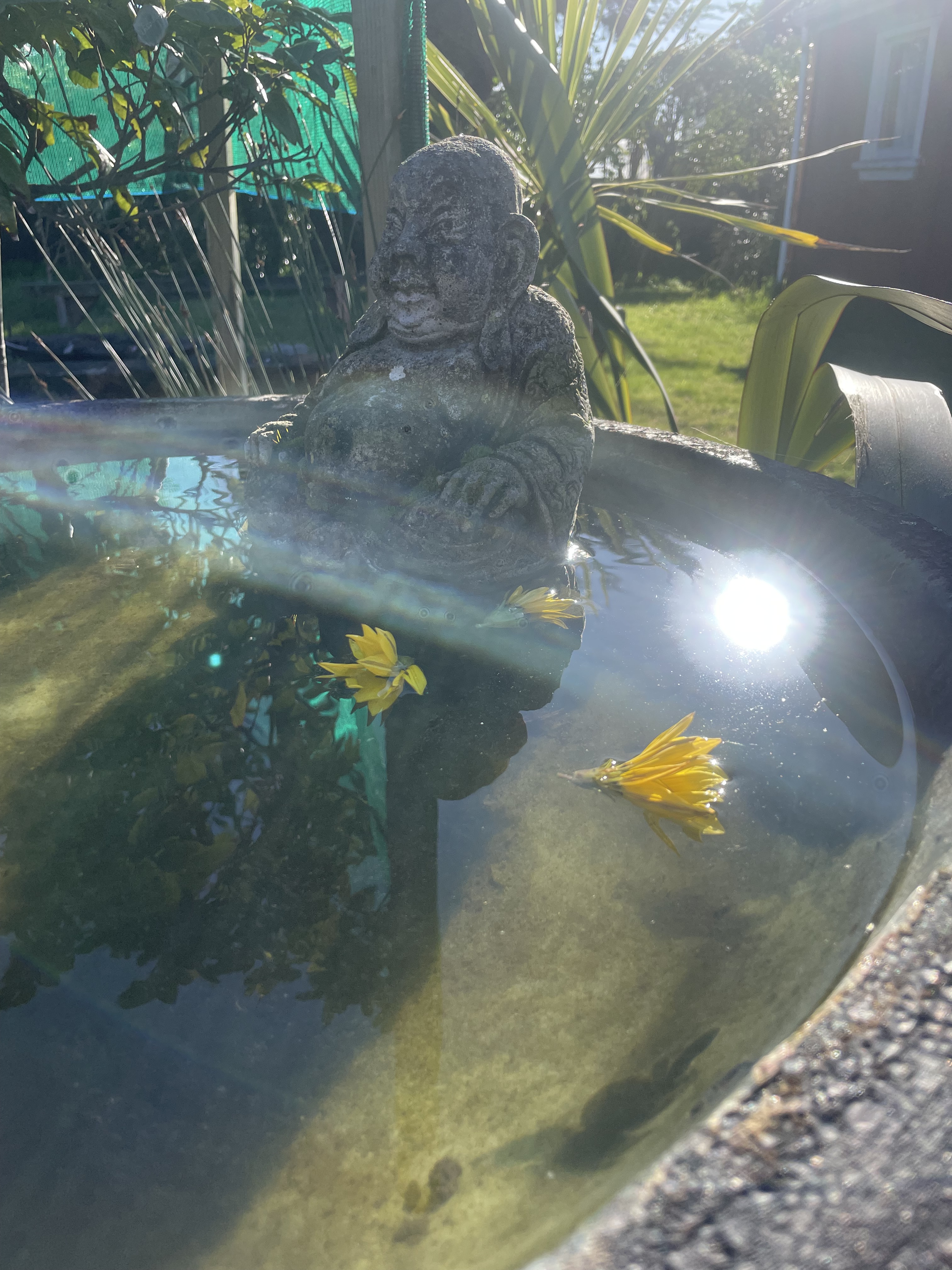
    (Above: resident garden Buddha at the bach I stayed in at Ōtaki.)

    I’m back from my residency in Ōtaki.

    How was it? 

    Well, all these things are true at once: 

    It was a wonderful experience. Parts of it were challenging. I got sick. Woke up sick on the first morning. A nasty dose of ‘flu – fevers, sweats, body aches, etc. I managed to do all of my public-facing things but I did not manage to sparkle. I’m a bit sad that I was a depleted version of myself when I was so keen to converse and connect. I was too sick to catch up with my local friends. The beach was stunning. The beach was my new best friend. The cottage I was housed in was wonderful. simple, sweet, one block from the beach. The organisers of the residency are warm, generous, kind people. Once my eyes stopped stinging and streaming, I read a lot. I did not manage to work on my manuscript…too ill to be generative or analytical. I did keep a journal about the whole experience so maybe there’s something in there? Or possibly it’s a load of feverish waffle. I can’t face looking at it right now but will crack it open when I’m all the way recovered and fully landed back in normal life. It was weird. It was confusing. It was perfect.

    Does that give you a sense of how it went?

    Aaah life, hey? Let’s get into today’s digest…

    Some tools for the ‘pointy end’ of winter 

    Next week,  I’ll be sharing an interview with you with Iona Winter about her new book, ‘Counter of Moons’ where we talk a bit about finding help when life gets overwhelming. 

    Here, from Pip Lincolne, all round sensible person and excellent advice giver, is

    Ten ways to help a friend when they are sad or struggling

    I know I go quiet when I’m feeling overwhelmed and I observe that many friends do, too. 

    Let’s try to be there for each other…even when it feels hard. 

    A recipe for a very weedy pie: ‘Hortopita’ 

    Last week in Ōtaki, I chatted all things winter forage-able weeds with some lovely locals in the beautiful Ōtaki library. (We had planned to do a foraging walk in a near-by park, but rain stopped play so we talked weeds indoors in the warm and dry.) 

    In every season, something in nature is thriving, and winter is great for fresh, bright green greens, well-watered from all the rain. Here is a recipe which calls for 11 cups of weeds! It’s a wild weeds version of spanokopita, ‘Hortopita’. 

    What a great way to get a big dose of wild greens into your belly!

    This week’s song: Song of the Siren by Tim Buckley 

    The first version of this song that I knew was the famous This Mortal Coil version. Somehow I totally missed the fact that it was a cover! 

    I stumbled over the original version via YouTube. At first it sounded so wrong to me…but after a few listens, I really like it. 

    I know the This Mortal Coil version so well, it’s sort of like I can hear both versions concurrently as I listen. 

    (I add one song each week to the Slow Small Media playlist over on Youtube. Here’s the whole playlist so far.)

    This week’s poem

    is by Therese Lloyd, from her 2018 book, The Facts

    I think a lot about food as love and food as care because I’ve had 25 years of cooking for a family.

    I like the simplicity and poignancy of this poem about a small moment of a food offering spurned.

    (+ Lehndorf-trivia: I flatted with Therese when we were in our 20s. Back then we were part of a performance poetry group called ‘Poetry For Real’.) 

    By Sunday

    You refused the grapefruit

    I carefully prepared

    Serrated knife is best

    less tearing, less waste

    To sever the flesh from the sinew

    the chambers where God grew this fruit

    the home of the sun, that is

    A delicate shimmer of sugar

    and perfect grapefruit sized bowl

    and you said, no, God, no

    I deflated a little

    and was surprised by that

    What do we do when we serve?

    Offer little things 

    as stand-ins for ourselves

    All of us here

    women standing to attention

    knives and love in our hands

    Affordable art: original moka pot linoprint

    We have a big espresso machine. F is a coffee aficionado and roasts our coffee. Coffee is a big part of our daily ritual. 

    When I got home F surprised me by telling me that while I was away he didn’t turn on the big noisy coffee beast and just made stove top for himself each morning. 

    Stove top is what we used to have before we had fancy espresso machines and it’s what we have when traveling. 

    There’s something so handsome about the classic Bialetti moka pot and it has so many warm associations for me.

    So this week’s affordable art (so affordable! $30!) is this simple, charming linoprint of a moka pot by Waikato based maker ‘Stich and Whimsy’ on Felt. 

    (Above: photo of linoprint is borrowed from Felt.)

    ‘Tansy cakes, Fiddleheads & Sea Rocket’ 

    I do love a deep dive into a very niche area of interest and that’s what this article by Faythe Levine is.

    I’ve followed Faythe’s creative life since falling in love with her film ‘Handmade Nation’ 16 years ago! (I was part of that wave of renaissance of handmade things and used to make a bit of money selling at Indie Craft Fairs. It was a huge and exciting scene at the time. It’s hard to convey the unique vibe of those first fairs now but at the time they were very fresh and exciting.)

    In the article, Faythe finds a very charming hand-illustrated book at a second hand shop and then follows her enamouredness into a research side-road.

    The book she finds is charming, Faythe’s writing is so good, the whole premise is very entertaining. 

    ‘The Candy Factory’ – a charming short film

    I can’t find the words to express how beautiful this film is so just, please, trust me and watch it. (Content warning: heartbreak.)

    *

    OK, that’s the digest for this week. Did you miss it last week? & If you’ve read or watched or listened to anything you think I might like, please share in the comments.

    Last night I got my 100th subscriber on Substack which is so lovely. If you didn’t know, I write over there about permaculture, radical reciprocity, attempts to live in gift economy, voluntary simplicity, permaculture, foraging & more. I’m still finding my way there, to be honest…but trying not to apply feelings of urgency to things that don’t really need it.

    This weekend I am going to:

    continue getting better, clean! (house is looking a bit end-of-winter-ish), in the garden, all my rocket is ready at once so I might make a rocket pesto, read more of this book and I’ve been doing some Japanese-inspired visible mending of pants…so I might carry on with that. It’s slow work but looks so great.

    Warmest weekendy wishes to you,

    Helen x

  • Slow-Small Media for the Weekend #13

    (Above: beach walking with F during a particularly lovely dusk.)

    Hello! What have you been up to? 

    Here’s a few things from my week.

    I finished reading this book, ‘Thunderstone’ by Nancy Campbell and started reading this biography about Roger Deakin. 

    Have you heard of Roger Deakin?

    I think he’s kind of a nature-writer’s writer, in that not many people seem to have heard of him yet his way of life and his nature writing (he only published one book in his lifetime, ‘Waterlog’ and two were published post-humously) are seminal in their influence on writing and eco-memoir, kind of like how people say about the Velvet Underground that they weren’t very big in their hey-day but they influenced thousands of people to become musicians. Nature writer Robert McFarlane remembers him here.  

    I’ve learned about the fascinating back story of Caspian Sea Yoghurt, because my friend Bev gave me some of her starter. It’s very easy to make, no heat needed, it ferments whilst just sitting out on the bench.

    I’ve now made my first batch and it’s so good! It has a mild, sour flavour that is very satisfying. I’m a convert. 

    I op-shopped this vintage-looking (not sure if it is, though) cushion which I just love and have been enjoying gazing at.

    If it IS handmade, the embroidery is so detailed and beautiful. Check out those french knots in the centre!

    I’ve been making variations of this winter tonic each morning, but I often throw in a garlic clove (doesn’t taste great but excellent for gut health and immunity) and a kiwifruit as well.  

    I’ve been watching Wolf Hall and loving the costumes, the intensity of the wranglings of the court and Mark Rylance’s incredible, nuanced performance as the lead character. 

    Anyway, let’s get digest-ing!

    Song for the week: Winter Sun, by Mogli

    I encountered this song when watching a travel documentary, ‘Expedition Happiness’ about the artist and her partner.  

    This brief but darling song is so sweet and captivating. I confess I’ve been adding it to various playlists for years now, but I just don’t tire of it. 

    (You can listen to the whole Slow-Small Playlist here.)

    An exciting new resource for vintage imagery free of copyright

    Public.Work is a very cool new resource for sourcing copyright-free vintage imagery which you can use for creative projects. It’s really nicely designed and fun to use. 

    Here’s what came up when I searched ‘folk art’.

    And here’s the results for ‘woman gardener’. 

    Oh my gosh, so fun! & so much potential. 

    A painting which I saw in real life back in 2023 which has stayed with me

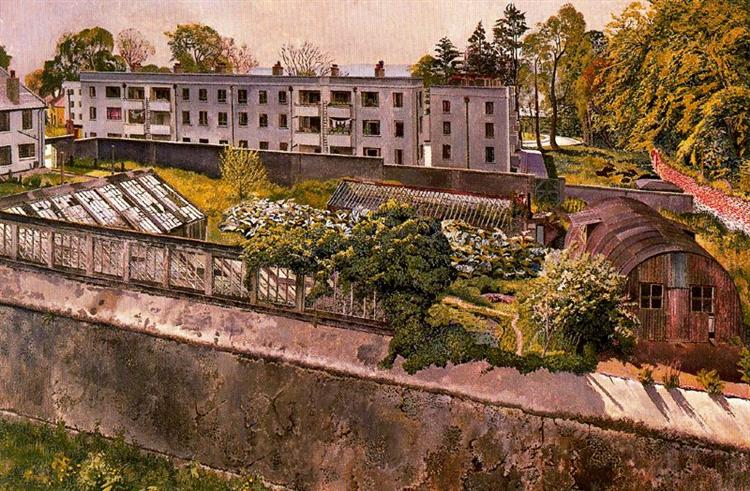
    In 2023, I saw this  painting, ‘Merville Garden Village near Belfast’, by English artist, Stanley Spencer, at the Dunedin Public Art Gallery when I was down there for an event at the Dunedin Readers and Writer’s festival for ‘A Forager’s Life’. (I wasn’t new to Stanley Spencer. I’ve read books about him and admire his work a lot so it was a real treat to see this IRL.) 

    I looked at it for a very long time. It’s even more beautiful in real life. It resonated for me as someone who likes to lurk around marginal spaces and does a lot of gazing over back fences and sideways vistas. On the Dunedin Public Library website they say of the painting, 

    ‘Painted on-site while Stanley Spencer stayed with his elder brother Harold near Belfast, this painting compels us to emulate what this great British painter loved to do: climb up and peer over at ‘ungetatable’ places. (…) he brings the richness of the everyday to our attention. (…) The unpromising view is full of promise.’

    That latter sentence captures so much of a forager’s approach to life!

    Something to watch: a peaceful, inspiring tour of the Mahara Sculpture Garden in Coromandel

    This (24 mins) video is a beautiful slow tour of the unique and spiritual Mahara Scupture Garden and an interview with it’s creator, Heather Chesterman. 

    Heather learned to pot from famous NZ potter, Barry Brickell. 

    I’ve added it to the list of places I’d love to visit in the Coromandel. (Holidays are tricky for us with a disabled (now adult) kid who can’t cope with being away from home for more than a couple of nights…but I trust I will get there one day.) 

    A rebel 74-year old living off-grid in England

    Speaking of potters, I enjoyed this article on World of Interiors about a potter, George Upwell, who was still living off-grid at age 74. I love the photographs of his simple, artful house and rebel spirit. (This article was first published in 2013.) 

    It reminded me a little of the feeling of visiting Wairarapa’s most famous potter, Paul Melser, with it’s large trees, old wooden house and beautiful dry stone wall. 

    Affordable Art

    (Please comment below if you have any suggestions for the affordable art part of my digests. I’d love any leads from you.) 

    This simple and beautiful lino print of our native eel, by Carrie Dingwall is just $40.00. There’s only ten available, so if you share my love for eels, get in quick! 

    A film I can’t wait to see

    Check out the trailer for the latest offering from Happen Films, The New Peasants. I’ve been a little obsessed with Artist As Family for some years now and cannot wait to see this feature length documentary about their daily lives. It is being released at the end of July. 

    *

    Today, my son Willoughby and I weeded, pruned, fed and mulched the raspberry patch. There’s something about doing tasks in deep winter that are about looking ahead to summer eating that make me feel so satisfied.

    We also planted a weeping Kowhai and some more kawakawa…slowly trying to add more native plants to our small urban garden.

    I hope your weekend is a pleasing mix of attending to tasks, resting and topping up your inspiration cup.

    Thanks for visiting,

    x Helen

  • Winter is a great time for harvesting volunteer ‘microgreens’ from your garden (or local park)

    (Above: today’s bounty from a little wander around my own garden.)

    Do you buy sprouts, bags of mesclun mix or microgreens from the supermarket?

    Winter is a great time to find volunteer (‘weed’) microgreens, or young greens, around your garden or local park for FREE!

    Because of winter’s rain and damp, the young weeds will be beautifully bright green, healthy and not heat-stressed.

    To share some likely contenders with you, I took a walk around my small urban yard and here’s what I harvested.

    I took care to only harvest volunteers/weeds and nothing that I’d planted intentionally. (Violet grows like a weed in my yard.)

    The trick is to just harvest the young leaves, or the tips in the case of the dead nettle.

    These wild ‘microgreens’ can be used in a salad, or chopped and sprinkled on top of soup, or in sandwiches, or blended into a smoothie…the same as you would use supermarket or homegrown microgreens.

    I numbered the plants for ease of ID-ing them:

    1. Nasturtium leaves. These are peppery in flavour so great in salads and on sandwiches, not so great in smoothies.
    2. Dead Nettle tips. Great stand-in for lettuce.
    3. Young violet leaves and flowers. Use in salad or cook as your would spinach.
    4. Young ribwort plantain leaves. Important to pick the young ones as the older ones get stringy. The young leaves have a nutty flavour.
    5. Chickweed. Such an enthusiastic garden volunteer. Use the young growth and chop finely.
    6. Young dandelion leaves. These add a nice bitter element to a salad or sandwich. Not so great in smoothies.
    7. Oxalis (known in the UK as ‘wood sorrell’ and the USA as ‘sour grass’) Has a sour, lemony flavour similar to sorrell. Use just a little at a time as it contains oxalic acid. Treat it more like a herb than a main vegetable.
    8. Young mallow leaves. Mallow (also know as ‘Malva’) is a much-used vegetable in Middle-Eastern cuisine and parts of Italy. You can make dolmades with the leaves in place of grape leaves, making it useful during the winter when there are no grape leaves about. Young leaves are good in salad or cooked like spinach.

    & of course, these plants have medicinal properties as well, (most plant food does.

    I hope this inspires you to have a close look at what might be growing in your own back yard and save yourself a little money (or time) by eating some of the weeds around you.

    Let me know in the comments if you have any questions.

    Do you eat any of the weeds in your garden?

  • Matariki: the public holiday we all needed

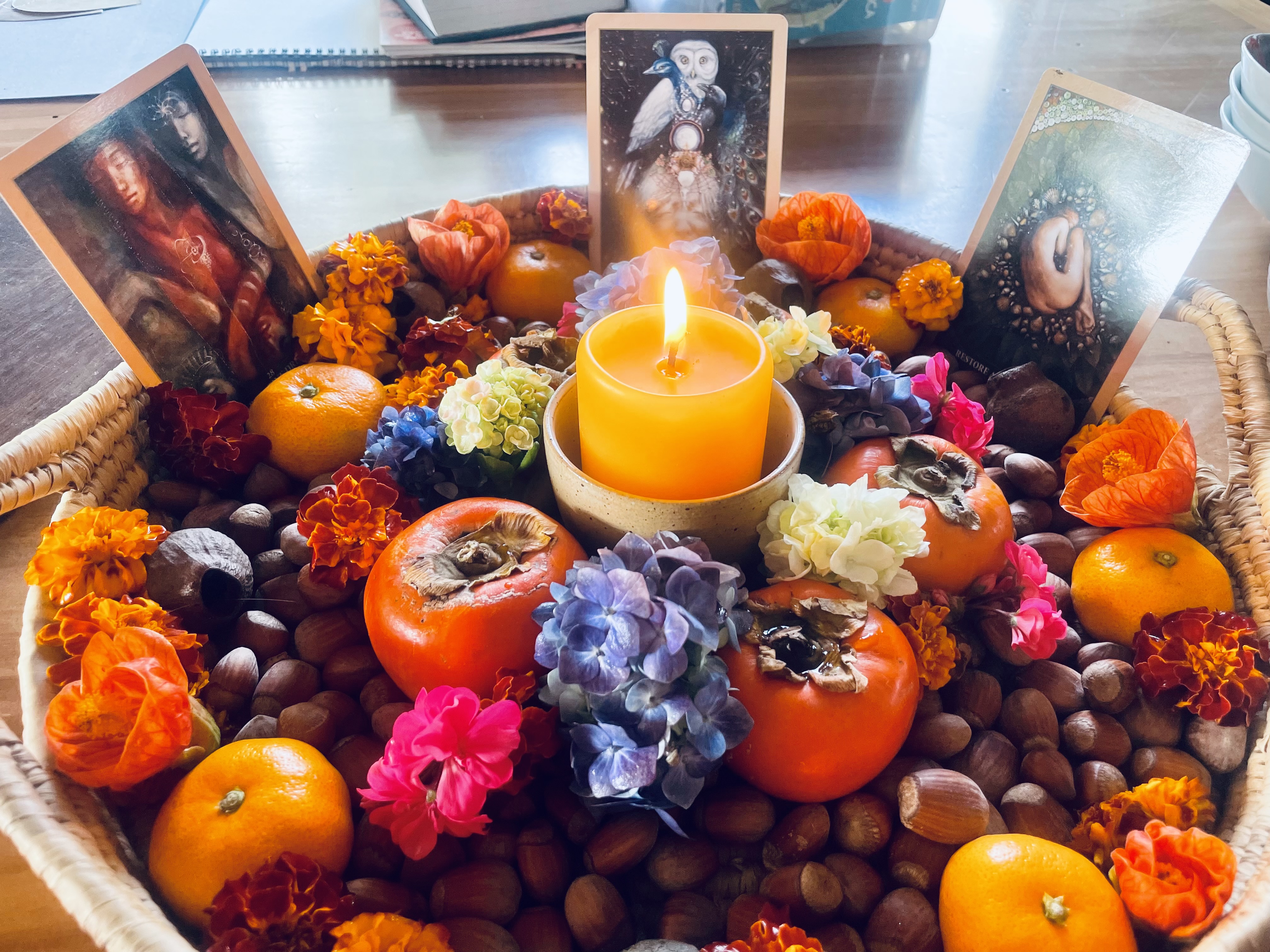
    (Above: our Matariki mandala this year.)

    I think Matariki is my new favourite holiday. Long before it was made a public holiday, I used to grizzle that New Zealand needed another public holiday in winter as it was a long stretch from (then) Queen’s Birthday in June until Labour Day in October.

    & because, as a pākeha, it is a new holiday, I’m really enjoying that we (my family) are creating our own celebrations for it: inviting friends to share kai and reflections, and focusing on rest.

    I was hoping for a cold, wet weekend so I could be lazy and give some attention to my teetering pile of delicious library books…alas, (hello, climate change?) our winter here in the Manawatū seems to come later every year. Spring is the season I brace for…here our springs are mizzling, windy (we have a phenomena known as ‘the November gales’) and cold. So the weekend, while chilly, was also sunny…which meant I had to get out into the garden.

    I did some satisfying chores that I only get to when the urgent business of harvest season is over: I tidied my junky heap of garden pots and paraphernalia into virgo-level neatness again. I cleared out the greenhouse, pruned and fed the fruit trees, planted more comfrey around their bases, dug up the dahlia bulbs. It was satisfying work that called for an afternoon tea of cinnamon pinwheels and a big pot of homemade masala chai (none of that syrupy nonsense.)

    (Above: just the Edmonds date scone mixture but rolled out, spread with fruit mince and sliced into pinwheels instead of dates.)

    Gardeners are always thinking a season (or more!) ahead. My winter food garden is all planted now…not too much to do. (Having said that I planted rockets seed and more broad beans on the weekend.) So now I’m dreaming ahead to summer flower/herb beds, by digging up clumps of perennial herbs and flowers and dividing them. I’ve been getting very inspired by urban rewilding books I’ve been reading (more on that in another post) so I’m eyeballing the little bits of lawn we still have and wondering if I might turn them into weedy spaces full of self-maintaining weeds and ‘wild’ flowers …for the pollinators and birds.

    It takes a leap deeper into wildness and unruliness which can have a mixed response in an urban setting…and yet is so important for urban biodiversity as central city housing gets denser and more and more gardens are lost.

    So, I ended up not being as lazy as I’d hoped for Matariki/Winter Solstice weekend…but it all felt good, a healthy-busy…not a pushing-hustle. Dreaming into summer is a kind of rest, I think.

    & I know we’ll get plenty of stormy, frigid days in spring.

    I get Koanga Garden’s newsletter and in the latest one, I like this, from founder Kay Baxter:

    ‘This is how regeneration works: a little effort now, in rhythm with nature, pays forward in resilience, nourishment and beauty.’

    Tell me what you’re up to in your gardens. x

  • ‘now we recognise ourselves less and less’

    (Above: plastic rubbish I picked out from my vegetable beds last week. I collect around this much rubbish each time I tend or harvest from my vegetable beds.)

    I enjoy the writing on The Dark Mountain Project. It’s an ongoing project (based in the UK) that publishes ‘uncivilised writing’, holds gatherings, creates a space for conversations about all manner of unsettling and challenging elements of living at this point of human history. There you will find writing beyond polite eco poetics or nature writing that merely holds nature in a human/nature binary of saccahrine reverence. I don’t always agree with what I read there and that is why I like it.

    Last week I read this piece by Amy Kennedy from the most recent issue with the theme of ‘bodies‘.

    At first it seems a deceptively simple piece of writing, Amy describes a group of parents at a childrens’ birthdday party. One of them brings up the subject of the finding of microplastics in human placentas. The piece explores plastic: our culpability and the unavoidable enormity of the tsunami of plastics in our lives.

    I have a fairly high threshold for ingesting media about climate collapse and environmental degradation. I don’t have my head in the sand.This is not because of courage but more that I am an anxious person who approaches life in a ‘forewarned is forearmed’ sort of way. I like to know something of what’s coming so I can consider in advance how I might respond. (I’d prefer not to be built this way but there is only so much you can do about your neurological wiring.)

    I was surprised by my visceral reaction to this piece with it’s blunt presentation of human culpability in terms of the use of plastics and refusal to look away from the idea of microplastics in human placentas, in human bodies. ‘Now we recognise ourselves less and less’, Amy writes. A familiar feeling for the eco-anxious amongst us and a statement that works on many levels.

    A few years back I wrote a poem in a similar vein about digging up the backyard of my crappy Wellington flat to grow food for my oldest son when he was a baby …only to years later find out that backyard had been a dumping ground for old car bodies and broken machinery and was no doubt full of petrol and lead and other toxins. In my youthful naiveté, I hadn’t considered the urban soil’s history.

    These human missteps we make in the name of love: a birthday cake served with a plastic fork, feeding a baby mashed carrots grown in polluted soil…the hell we plod towards on our road of good intentions.

    The depth to which I was triggered by Amy’s writing surprised me at first (I thought I was made of tougher stuff by now). But then when I thought about it, I realised it touched on a tender spot in my own gardening practice…a spot where I choose to put blinders on.

    I live in the centre of a city. Every time I weed or harvest from my front yard garden (tended so carefully with the best organic soil amendments and lovingly homemade compost) I fish bits of plastic out of my garden: plastic bag fragments, fruit stickers, junk food packaging, lollipop sticks. Some of it seems to get into our compost somehow, despite careful sorting at the kitchen end. The plastic in the vegetable beds seems to blow in from the street.

    (I wondered if this plastic trash were an urban problem but a friend who lives rurally said that there is just as much plastic trash out her way, in the road gutters, in streams, from the plastic packaging of hay bales and farm products.)

    I throw the bits of plastic into a colander that I have with me in my harvest basket then put them in the rubbish bin where they will travel in a plastic bag to the plastic afterlife, which is to say slowly deteriorating into microplastics in the city’s landfill.

    I dwell in a space of both knowing that I have my stubborn blind spots (the macro and micro plastics in my own food garden and in the soil I am creating in my compost) and also having no inclination to stop. I will carry on composting. I will carry on growing food in this microplastick-y soil I am making.

    I enjoyed this essay about composting by Scottish writer Fraser MacDonald (found via Pip Lincolne) He, too, is carrying on composting on despite tangible evidence of plastics in his compost. He writes:

    ‘I make my own compost so that I can convince myself that even when the world seems socially and ecologically broken there are still mechanisms for recovery: it shows that change is possible. Composting is a simple habit of composition or gathering together that integrates past fragments into a future whole, so that what matters is not the individual ingredients but the fertile new thing they can become.

    & that ‘fertile new thing’ possibly contains microplastics…yet still I persist in habits which put me squarely in the ‘doing’ space of the world, in flawed creative acts which give me a sense of agency and regenerate my spirit if nothing else.

    For that purpose alone I believe they are worthy.

  • What do green tomatoes have to do with mutual aid?

    (Above: many hands make work fun. A harvesting and chopping working bee at Kirsty’s place. Photo by Kirsty Porter.)

    Fascism is on the speedy rise, climate collapse is escalating, increasingly our governments and power structures are unreliable at best, malevolent at worst. What is there to be done?

    I am reading a lot of Margaret Killjoy , Adrienne Maree Brown, Bayo Akomolafe and Donna Harraway. Listening to a lot of collapse-aware podcasts. & Trying to be (mostly) off (anti)social media. But beyond what I consume and intake…I am making slow steps towards deeper resilience within my friend groups.

    I’m in a couple of ‘conscious-collapse’ groups. One is aimed more at emotional support and mutual aid (deep listening, space-holding, nourishing one another with beauty and soothing art), the other is more about practical supports, and intentional-relationship-building over time (working bees, resource sharing, fun gatherings.)

    While both groups have group chats in messaging apps, we make a conscious effort to take them offline and get together regularly, because actually being together is so much more healing than more time staring at our phones.

    The photo above is the latter group. We had a working bee to harvest all the end-of-season green tomatoes, then we sat around Kirsty’s kitchen table and chopped up the harvest. We filled four buckets (!) with chopped green tomatoes. Kirsty kept two, M & R took one and I took one. Kirsty, M&R turned theirs into Kirsty’s Grandmother’s recipe for green tomato chutney and I turned mine into a spicy Mexican green sauce.

    While we worked, we chatted, we laughed and the folks in the group who had only recently met got to know each other better. It might not seem to have much to do with the mitigation of fascism & climate collapse…but it was a practical, positive, soul-warming way to spend an afternoon. Every small action like this brings us closer, braids us together a little more…all while we work on our food resilience skills.

    Kirsty might have struggled to ‘capture and store’ her green tomato abundance alone…but with five of us at work…we got it all done in a couple of hours.

    ‘Communities are not built, relationships are built. Communities build themselves.’

    -Patrick Jones

    What sorts of things are you doing to nourish yourself in these challenging times?

    In other tomato news…I like to challenge myself to memorise high-rotate recipes, like fruit crumbles, scones, pikelets, simple cakes…so in the unlikely event I am somewhere I can’t use my recipe books or the internet, I can still make these things. I figure it’s good for my brain, at the very least. Also, it makes me feel next-level to be able to bash them out without cracking a book.

    This winter, I am attempting to perfect and memorise focaccia. I made this one with one of the last crops of cherry tomatoes and basil from the garden.

    In my household, we are seasonal eaters, which gives the last tomato harvests a real poignancy.

    The basil is valiantly carrying on, despite some colder nights…but how much longer for? Time to make some big batches of pesto, I think.

  • witch sticks & autumn harvests

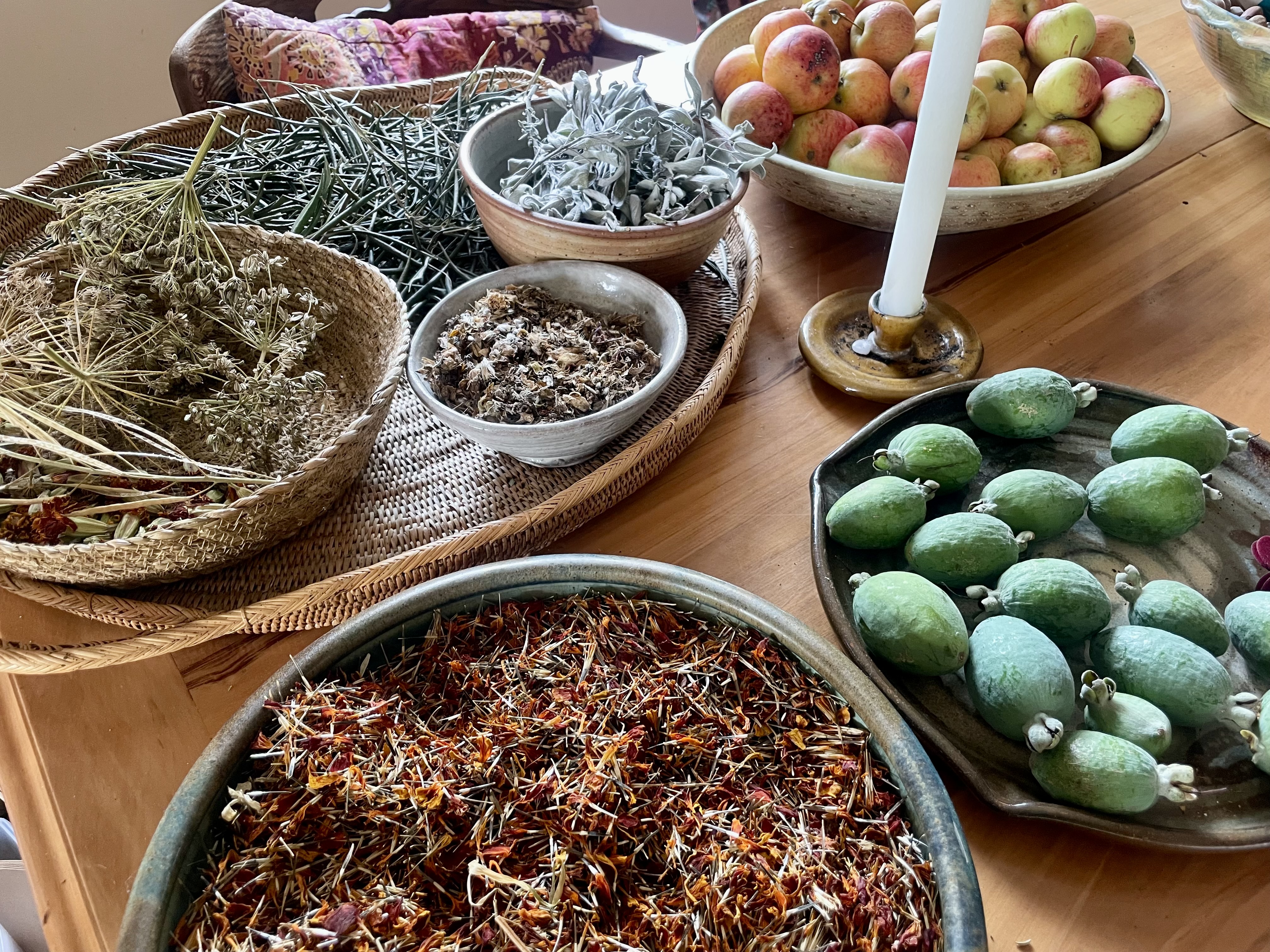
    (Above: Our kitchen table is a busy surface with often-changing bowls and baskets reflecting what is going on in the garden and the foraging season: things drying or waiting to be processed.)

    Autumn is my favourite season and, as a permaculture household, a busier season than summer with our labours to ‘capture and store’. There’s lots of picking and gathering and then kitchen work processing everything.

    (Above: Last sunday morning’s harvest chore was bottling a box of apples from our friend Bev’s orchard. These will turn into crumbles or top our porridge this winter.)

    Last week I gave my potted white sage plant a prune, ready to overwinter it in the greenhouse. White sage is a desert plant, native to the American southwest and Mexican northwest, so it doesn’t love the Manawatū winters.

    In the summer, I put it outside in full sun then prune it down to almost sticks at the end of summer and put it in the greenhouse where it sulks the winter away…but it (just) survives. Mine is about six years old now.

    (Above: white sage prunings, cotton thread. It’s on the sofa because I made the witch sticks while watching something in the evening. I do a lot of processing tasks (this, peeling fruit, cutting up herbs for tea, seed saving jobs) on the sofa…which might seem a bit odd…but I don’t see it as much different from knitting or hand-sewing in front of the TV. Does anyone else do this?)

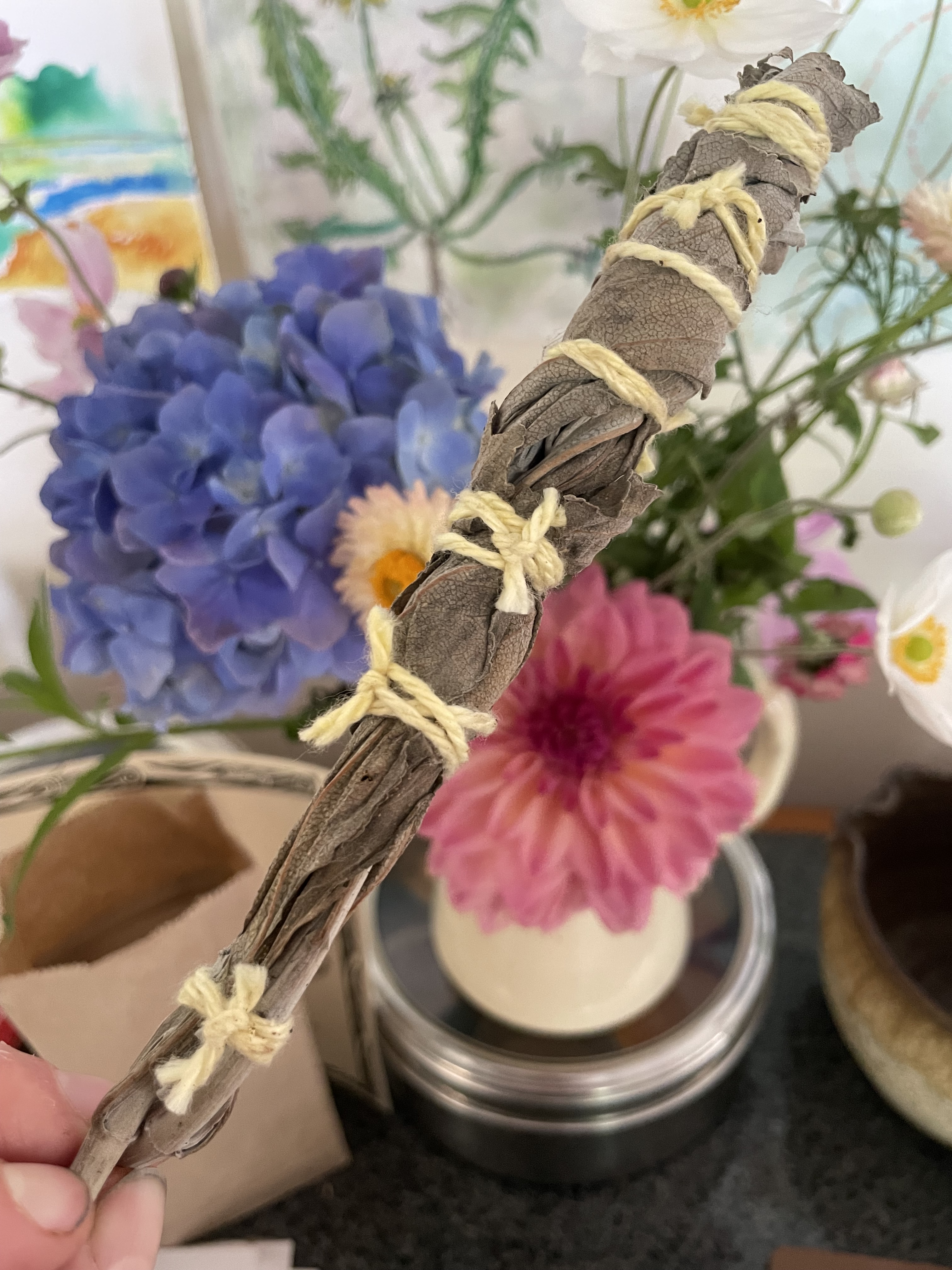
    The prunings can be turned into what I call ‘witch sticks’ for burning by folding up the leaves on the stalk, weaving and rolling them longways and then tying with cotton thread. (Never use synthetic thread: it will melt and emit toxic smoke.) When the leaves have all burned down, you can burn the stalks, too.

    (White sage is a plant sacred to Indigenous people in USA and Mexico, so if you want some…have a go at growing it rather than buying imported sage. White sage is overharvested in the USA particularly. In ‘A Forager’s Life’, I write about alternative plants to white sage for making cleansing/burning sticks.)

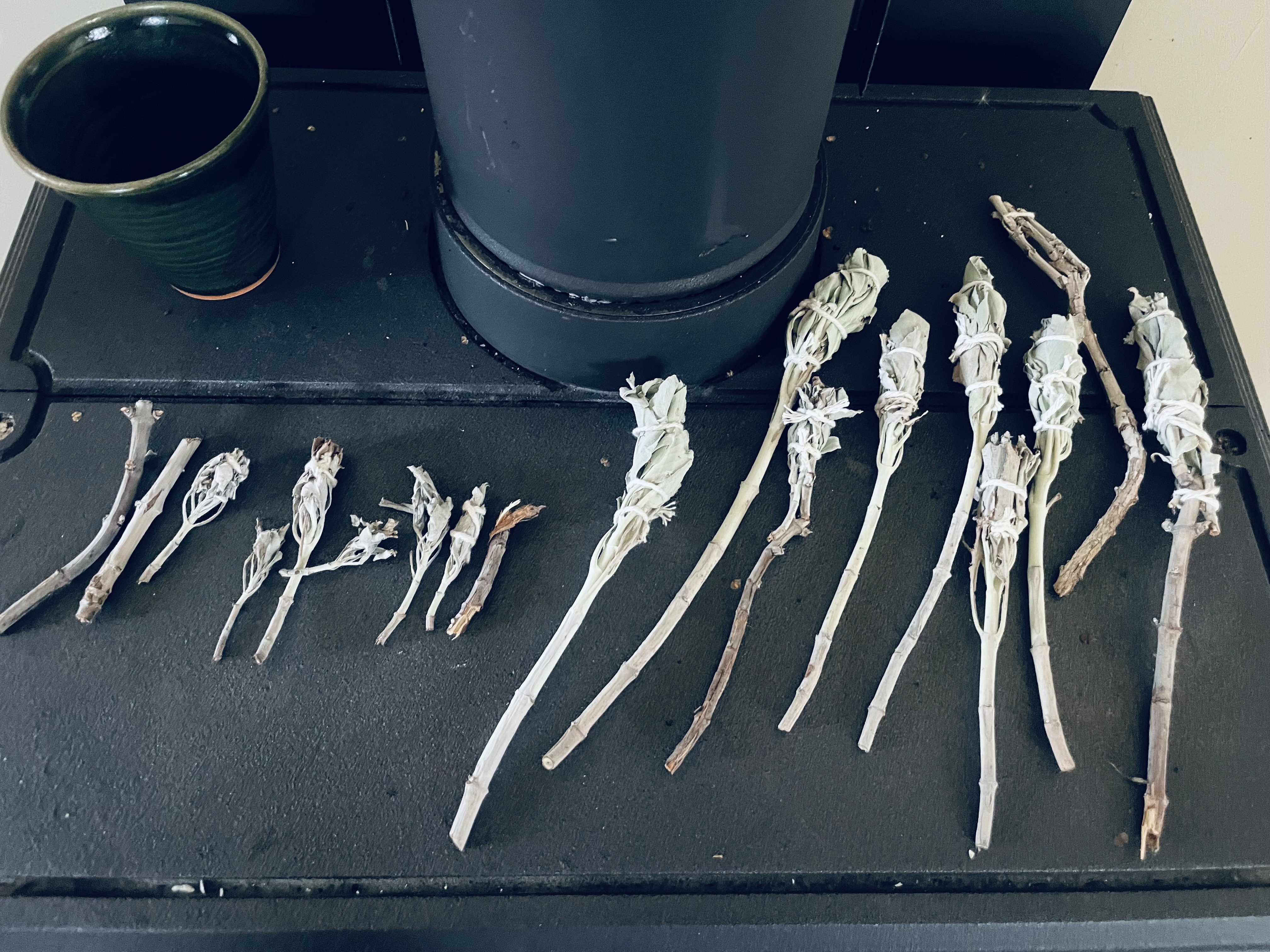
    (Above: I got eight decent witch sticks, plus some smaller bits and pieces of stalk…all of which can be burned. Here they are drying on my fire top.)

    I see a lot of ‘how-to’ articles about making cleansing/burning sticks around…but they often forget a detail which I think is important. For them to burn well and safely, don’t wind the string around and around the bundle, securing only at top and bottom. This will mean your stick will fall apart as the thread burns and you could have a higher risk of embers dropping off it. Instead, tie it tightly with small pieces of string at regular intervals, like in this photograph:

    (Above: please forgive my ‘dirt manicure’ as garden writer Gayla Trail calls it. I scrub* my nails regularly but folks who ‘touch soil’ (which is ilke ‘touching grass’ only more grubby) every day struggle to have photogenic hands. ((I have to buy a new nail brush every couple of months…so intent is my endless scrubbing.))

    Do you have a favourite season or are you one of those calm, rational people who loves them all equally?

    I’d love to hear what kitchen or garden chores you’ve been doing lately. Let me know below.

    “As long as autumn lasts, I shall not have hands, canvas or colours enough to paint the beautiful things I see.”

    -Vincent Van Gogh

  • the sharing shelf

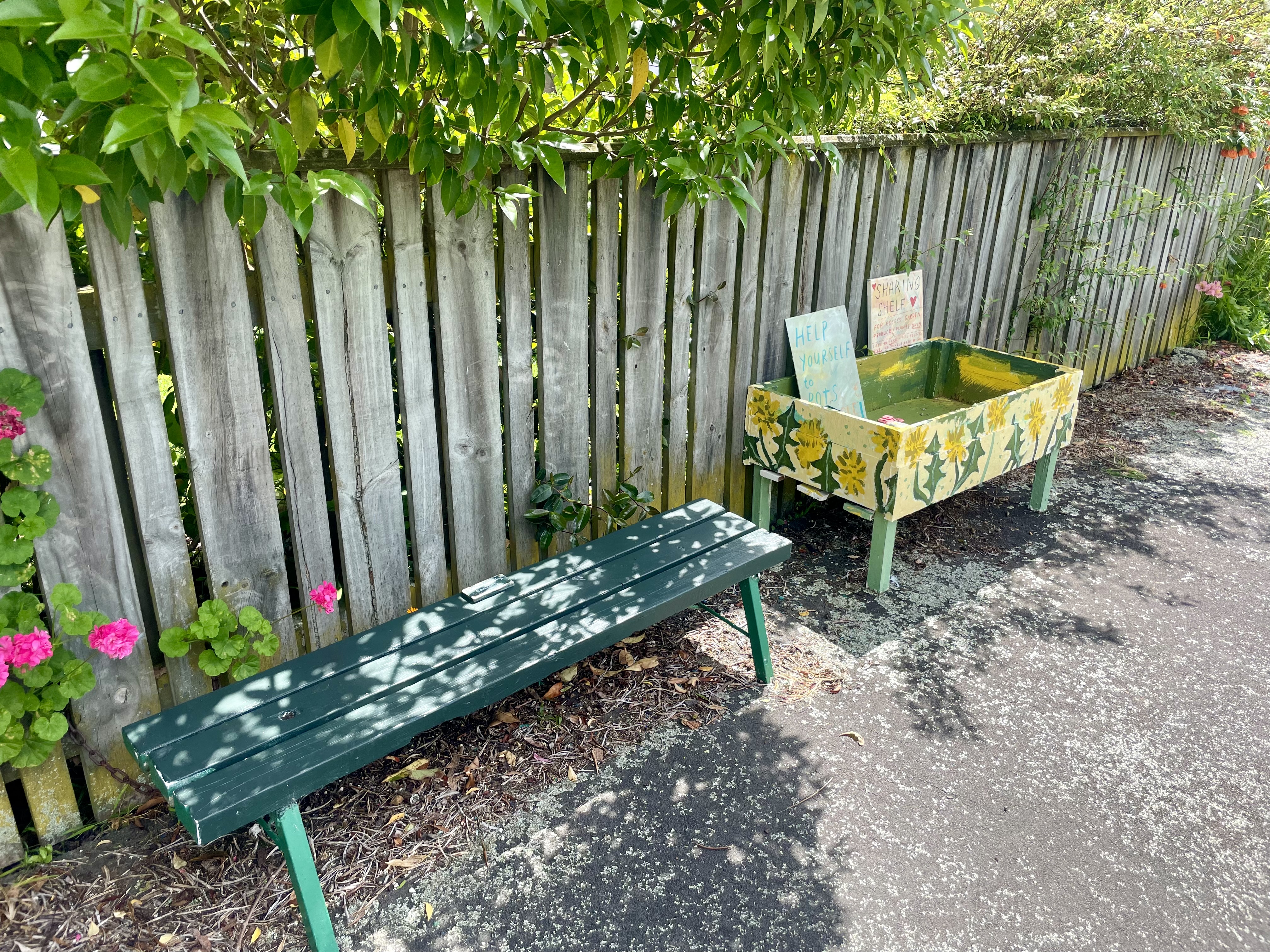
    Late last year we put a sharing shelf outside our front fence.

    We’ve always shared excess produce from our vegetable garden by putting it in a box on the community seat (for more about the community seat, check out my last book, ‘A Forager’s Life‘) but I wanted to make it a little more formal so that it could be a site of #radicalreciprocity* in the neighbourhood and many people could contribute to it.

    (#radicalreciprocity is how I try to live my life. Giving generously, receiving with gratitude and humility, and trusting that there is more than enough to go around if we can all learn to do both.)

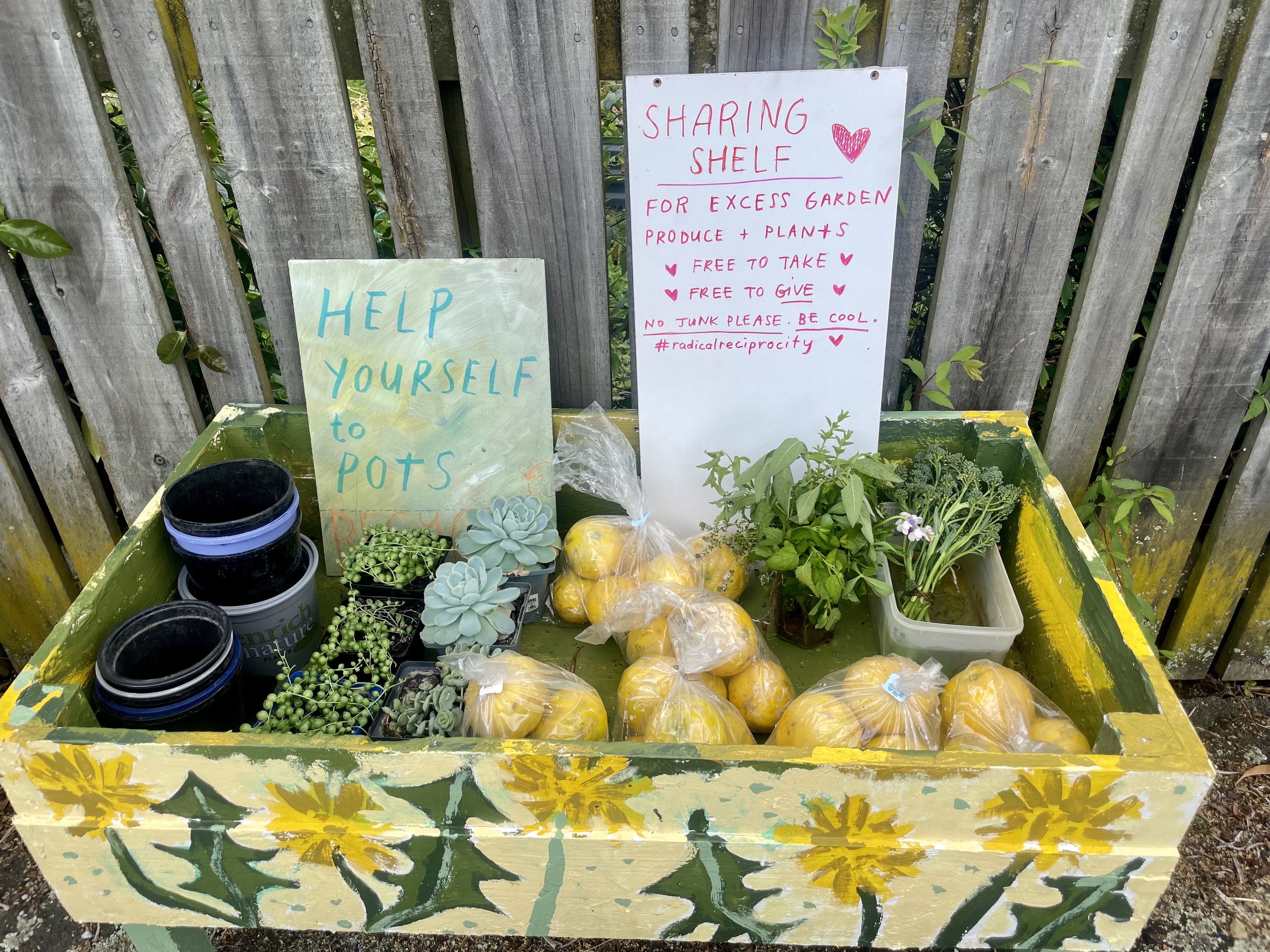
    I bought the planter from a local young woman who makes them from upcycled pallets and then I painted a dandelion motif on it. The dandelion is a plant that means a lot to me and acts as a symbol of courage and generosity in my personal symbology.

    It didn’t take long -a few weeks or so- for neighbours to get the idea and things began to appear in it that weren’t from us.

    Part of putting something like this into a public sphere requires a willingness to look after it well so I check it twice a day, first thing in the morning and then at dusk.

    Although the purpose of it is to share the excess garden produce and garden related things, occasionally people put perishable or pantry food in it. The perishable food (things like bread, sandwiches, etc) I dispose of (usually feed it to the backyard birds, or my worm farm, if possible) because I don’t want to be responsible for anyone getting ill from spoiled food. Mostly, though, people seem to get the idea. There’s been all sorts of vegetables, seedlings, cut herbs. It’s been mostly delightful things.

    My original sign (paint and vivid marker on an art canvas) melted away in the rain, so I painted an old cutting board with outdoor paint in an attempt to make a more weather-proof sign:

    People have not 100% ‘been cool’. There’s the occasional beer bottle or pizza box after a Friday or Saturday night. There was one incident when someone kicked the front of it in, breaking a board. But for the most part, it’s been a success and a fun, new element in my days.

    March has definitely been the month of the giant marrow. Hearteningly, these swollen offerings have all been taken, though so I guess there are some good marrow recipes being cooked around Takaro. There’s also been lots of bags of tomatoes and apples.

    Every day is different in the sharing shelf. Things flow in and out.

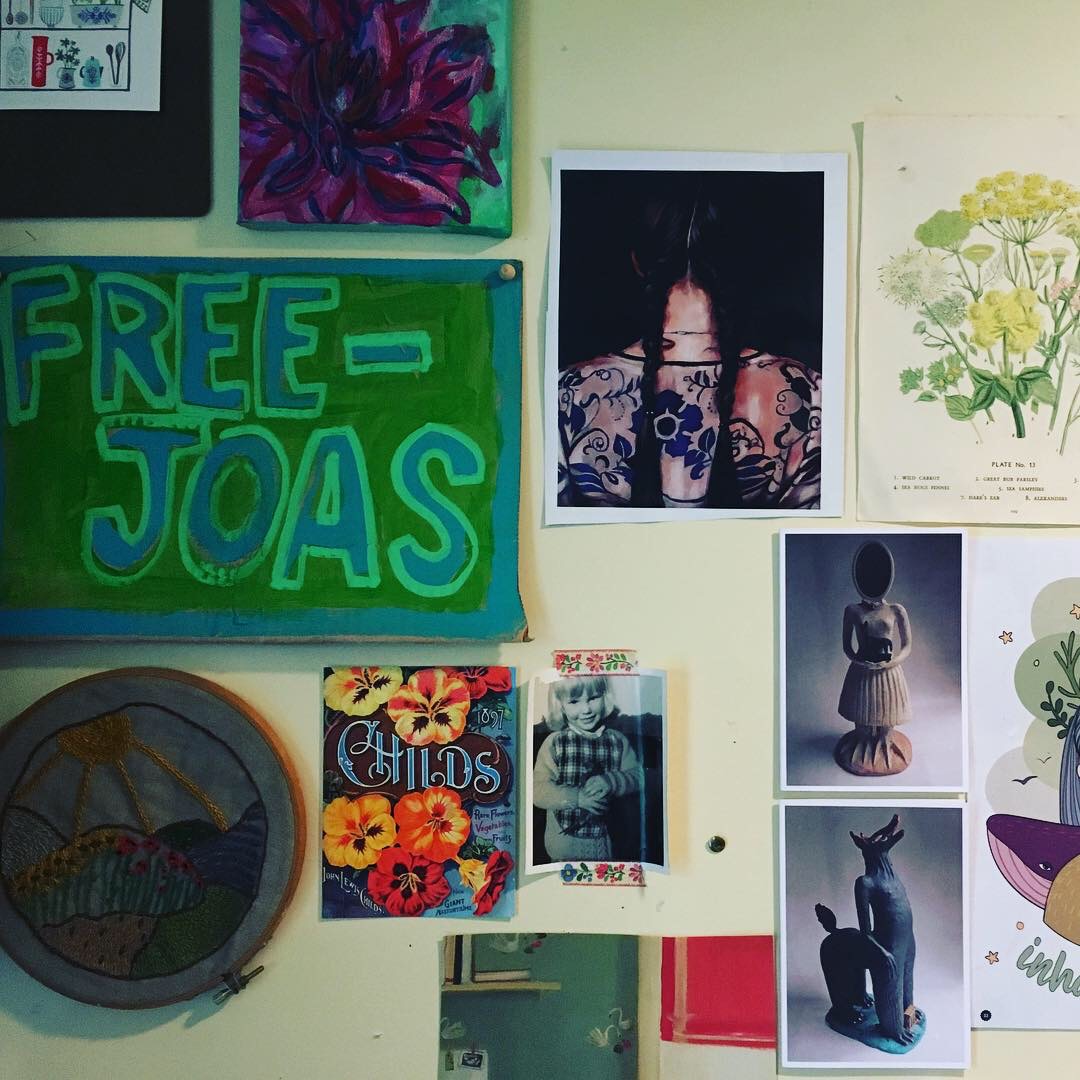
    With feijoas just beginning, I’m expecting it to become mostly a ‘freejoa’ booth any day now.