Tag: gardening

  • Capture and store: Silverbeet

    A couple of weeks ago I wrote about how we were eating a lot of silverbeet in an effort to keep up with the spring bolts of the plant.

    This has continued, I’ve discovered that if you snip off the ‘bolt’ stem…the thick stem growing up the centre that is beginning the process of sending the plant to seed…sometimes the plant will do another flush of leaves so I’ve delayed having to remove the plants entirely. (While our local spring continues to be more like winter…with ground temperatures too low for summer meditteranean plants like tomatoes and zucchini…there’s no urgency to make space.)

    If you’re not a permaculture practitioner, ‘Capture and Store’ is one of the main permaculture principles. The idea being…it isn’t enough to grow things (or create energy)…an important piece of the equation is to honour the garden by capturing the harvest and, if possible, storing some for later on.

    Occasionally, I like to write articles about the ways our permaculture family ‘captures and stores’ around our small, urban property. As food and energy prices rocket, I imagine these skills will ripple out beyond permaculture to become more important for households.

    Yesterday, my son Willoughby and I spent around an hour and a half processing the silverbeet, celery and flat leaf parsley plants which had begun to bolt.

    The celery stalks went into dinner and the fridge. The celery greens and flat leaf parsley bolt-stems we chopped up and put into our dehydrator. I will put them and some NZ sea salt through our electric spice grinder to make a herb salt which is great for adding to soups and stews.

    We picked a huge amount of silverbeet. Approximately the equivalent of five of those plastic-wrapped bunches you can buy at supermarket.

    Here’s how we processed it to become freeflow bunches of chopped silverbeet, similar to the way spinach comes frozen at the supermarket.

    We harvested the ‘bolt’ stems. I cut off the leaves with a pair of kitchen scissors into a large bow of water and gave it a wash.

    We then chopped it.

    Next step was a quick blanch in a shallow pan of boiling water. Just long enough that it wilts and goes bright green.
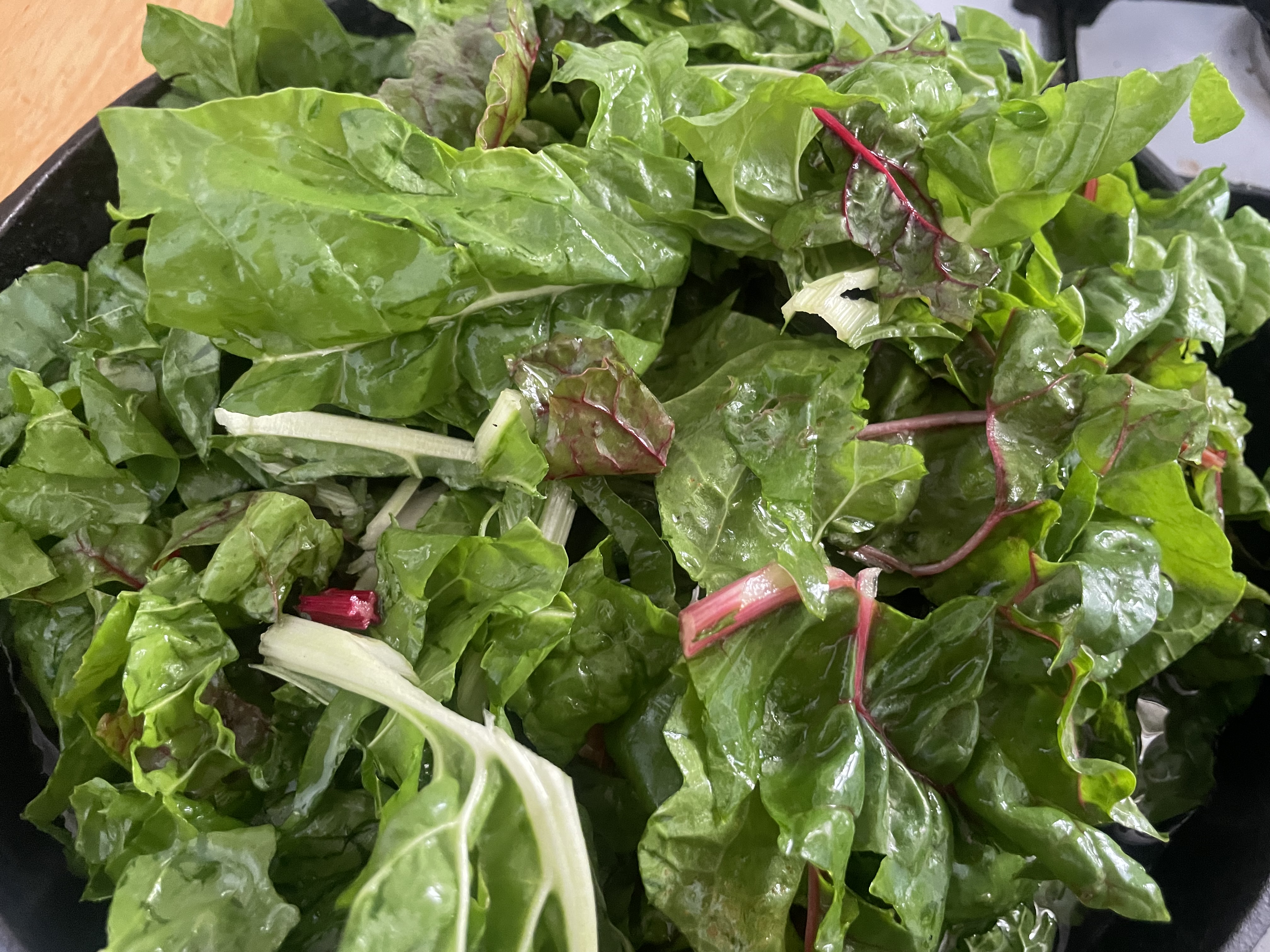
    Then I strained it and pushed as much water out as I could with a wooden spoon (obviously it is too hot to touch with bare hands at this stage. I left it sitting in the strainer to cool.

    Once it had cooled enough to handle, I formed it into balls. (Think about the amount you’d like to add to a soup or stew.) The trick to a tasty end result is to squeeze and squeeze it getting out as much of the liquid as you can. Silverbeet seems to retain a lot of liquid so keep squeezing…think of it as a workout for your hands!

    After that, place the fistfuls on a biscuit tray and put into the freezer.

    Once they are frozen, remove from the freezer, put into a ziploc bag or plastic container and put back into the freezer and there you go, you have one meal amounts of pre-prepared silverbeet ready to add to your cooking.

    You might ask why we’d bother doing this when silverbeet grows all year round in most of New Zealand’s climate? I suppose a big motivator is frugality, but also, I find I use more silverbeet if it is prepared this way. I also loathe waste and, because I know the effort I’ve put into growing the food, I prefer to have it travel through the kitchen rather than go straight from garden bed to the compost heap.

    Silverbeet is so nutritious! I think it needs a PR campaign. In NZ we tend to take if for granted or spurn it because it’s so ubiquitous in our vegetable gardens. Forget about overpriced supermarket spinach….eat your silverbeet!

    If I’ve inspired you to make more of your silverbeet, here are two excellent links with multiple tasty-looking silverbeet recipes.

    11 tasty silverbeet recipes from Delicious magazine

    12 yummy silverbeet-based dinners from NZ Woman’s Weekly magazine

    One of my favourite ways to eat A LOT of silverbeet at once is to make an Indian Saag Aloo, using silverbeet instead of spinach. Delicious and so greeeeeeen.
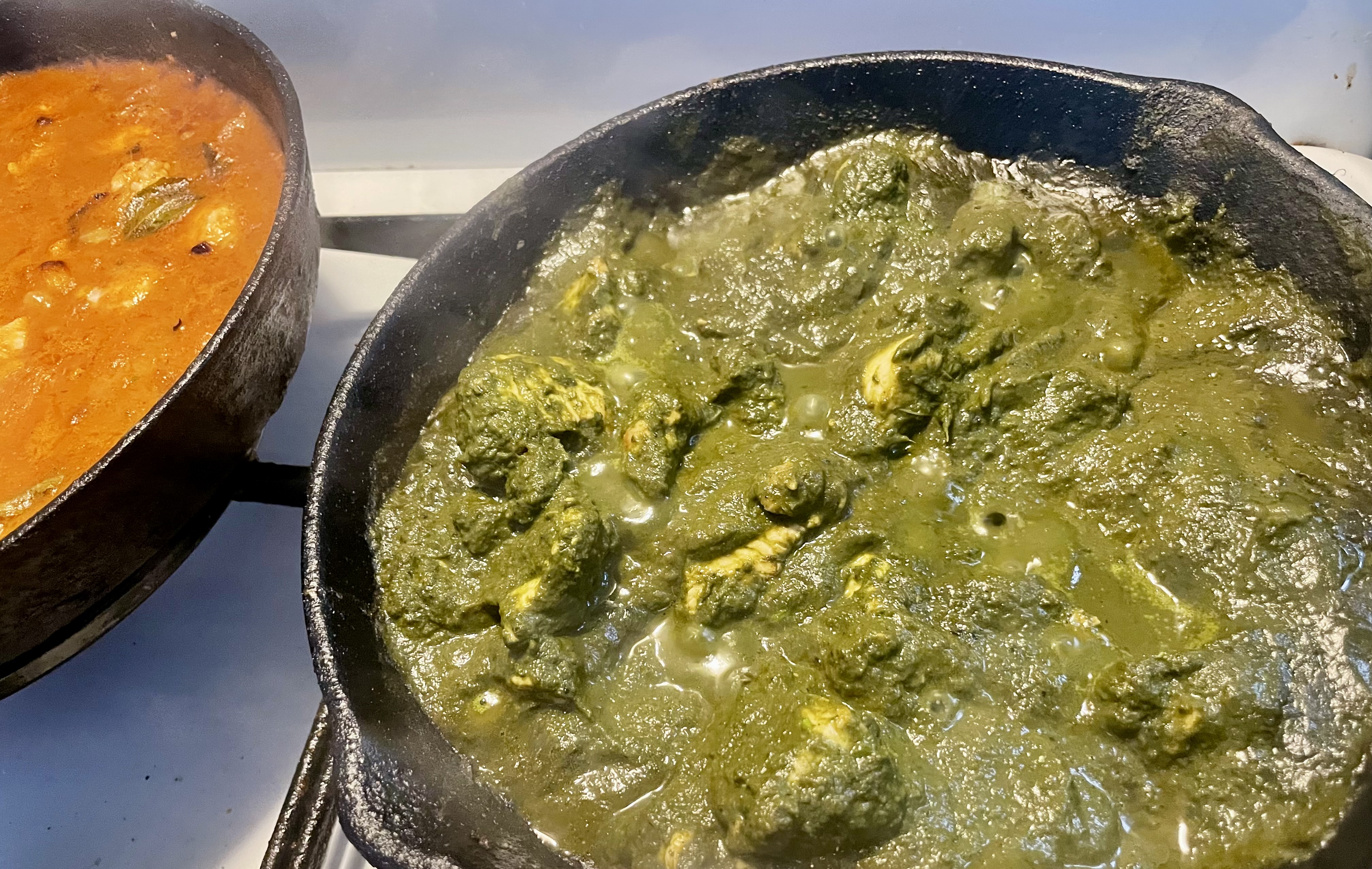
    If you have a signature silverbeet dish…please share it with me.

  • Slow-Small Media for the Weekend #17

    (Above: PN’s Te Manawa Museum currently has an exhibition about sunshine and light. Here I am playing with my shadow in the light box.)

    Song for the week: Just George ‘Lungs’

    This local tune is by my friend Abi Symes. I’m proud to have a little connection to this song, all about the overwhelming nature of grief, because Abi wrote it after we had a conversation about the physicality of grief. Abi got a bad lung infection after going through multiple griefs in quick succession and I told them that in Traditional Chinese Medicine, the lungs are an organ where grief is felt.

    Abi sent me the song and I felt all tingly at the way, as creative people, we can cross-pollinate each other without even intending to. I love the song and I love Abi.

    (I add one song every time I compile this digest. You can enjoy the whole playlist on Youtube here.)

    Be careful, this video may turn you into a total bird nerd

    I loved everything about this little clip from Gardening Australia: the birds, the Australian native plants…but mostly, the enthusiasm and nerdy citizen-science of the sweet, sweet couple who are developing the bird garden. They gave me a deep case of ‘elder couple goals’ for me and F.

    Watch this and then tell me people aren’t good:

    A fun spring challenge: can you find enough edible flowers to make a ‘fairy salad’?

    (Above: my fairy salad – all of this was growing in the garden.)

    Spring in the Manawatū is pretty horrid. Squally winds, sudden temperature drops, weather that goes from warm to icy within the same outing…leaving me in the wrong clothing…all uncomfortable and cross.

    It’s been like that all week….then on Wednesday…there was a brief reprieve and the sun came out. The garden was still. I could hear the tūi. I could hear my own thoughts.

    I grabbed the sun-window to play in the garden and I made a fairy salad from edible flowers.

    Read all about it, including the recipe for the dressing, over on my Substack.

    (btw, I’m still not sure about writing in two places. Here and Substack. I thought I’d do it for a year and then reassess. Do you have any opinions? I’d love to hear them in the comments.)

    Affordable Art*: ‘Forage’ vase

    (Above: image of the ‘forage’ vase from Jilly Jam Pots borrwed from Felt)

    At just $48, I think this vase is such good value. Handmade, rustic, interesting, very original. The inside is glazed to hold water for the little stems you have foraged from around the place. I love it – so simple and eye-catching. The maker, jilly jam pots, has lots of other goodness in their shop, too, including this little vase that looks like a lotus pod. So good.

    (*To qualify as ‘affordable art’, the item needs to be less than $50 NZD. Let me know if you’ve spotted anything around the internet you think people might enjoy and I’ll share it.)

    Rest in power, Kelly Ana Morey

    As a Gen-X NZ writer, I was shocked and saddened to hear of the death of Kelly Ana Morey.

    Kelly is iconic among my generation of NZ writers. Punky, fierce, funny, no-bullshit, straight from the hip, generous, strong sense of justice and of course, a brilliant writer who didn’t get enough kudos and celebration.

    As my FB feed filled with tributes and lamentations, I was again filled with that deep sense of life is so short and random.

    Tell people you appreciate them now. If people cross your mind – get in touch and tell them you were thinking of them.

    Tell a creaky, broke, vulnerable NZ artist that you love their work TODAY. Or if you can’t be bothered doing that, give them $20 via their online begging bowls or maybe, buy one their creative efforts.

    It’s hard being an artist in NZ:

    “This fucking stupid milk-loving piece of shit dumbass mean-spirited sale at Briscoes racist sexist 40% off deck furniture piss country.”

    as Hera Lindsay Bird once tweeted. (Also iconic.)

    A poem: ‘After Work’ by Gary Snyder

    I love Gary Snyder. Especially this book.

    This week’s poem, ‘After Work’ I thought would be a good one as we (in NZ) leave winter…

    It’s simple, it’s erotic, it’s amusing.

    The stew simmering on the fire is not the only thing simmering.

    & it reflects his Zen-eyes.

    After Work

    The shack and a few trees
    float in the blowing fog

    I pull out your blouse,
    warm my cold hands
    on your breasts.
    you laugh and shudder
    peeling garlic by the
    hot iron stove.
    bring in the axe, the rake,
    the wood

    we'll lean on the wall
    against each other
    stew simmering on the fire
    as it grows dark
    drinking wine.

    *

    I think that’s all I have to share this week, friends. Soon we are driving up the Desert Road to visit my folks. I’m hoping there will be snow so we can have a snowball fight and I can take photographs of icicles.

    (I have a poem which mentions the Desert Road.)

    + Happy Fathers Day to all the good Dads in the world…and may the not-good Dads be forgiven so their offspring can find peace in their hearts.

    If I don’t blow away in these horrible spring blusters…I will see you here again next week.

    x Helen

  • Slow-Small Media for the Week #15

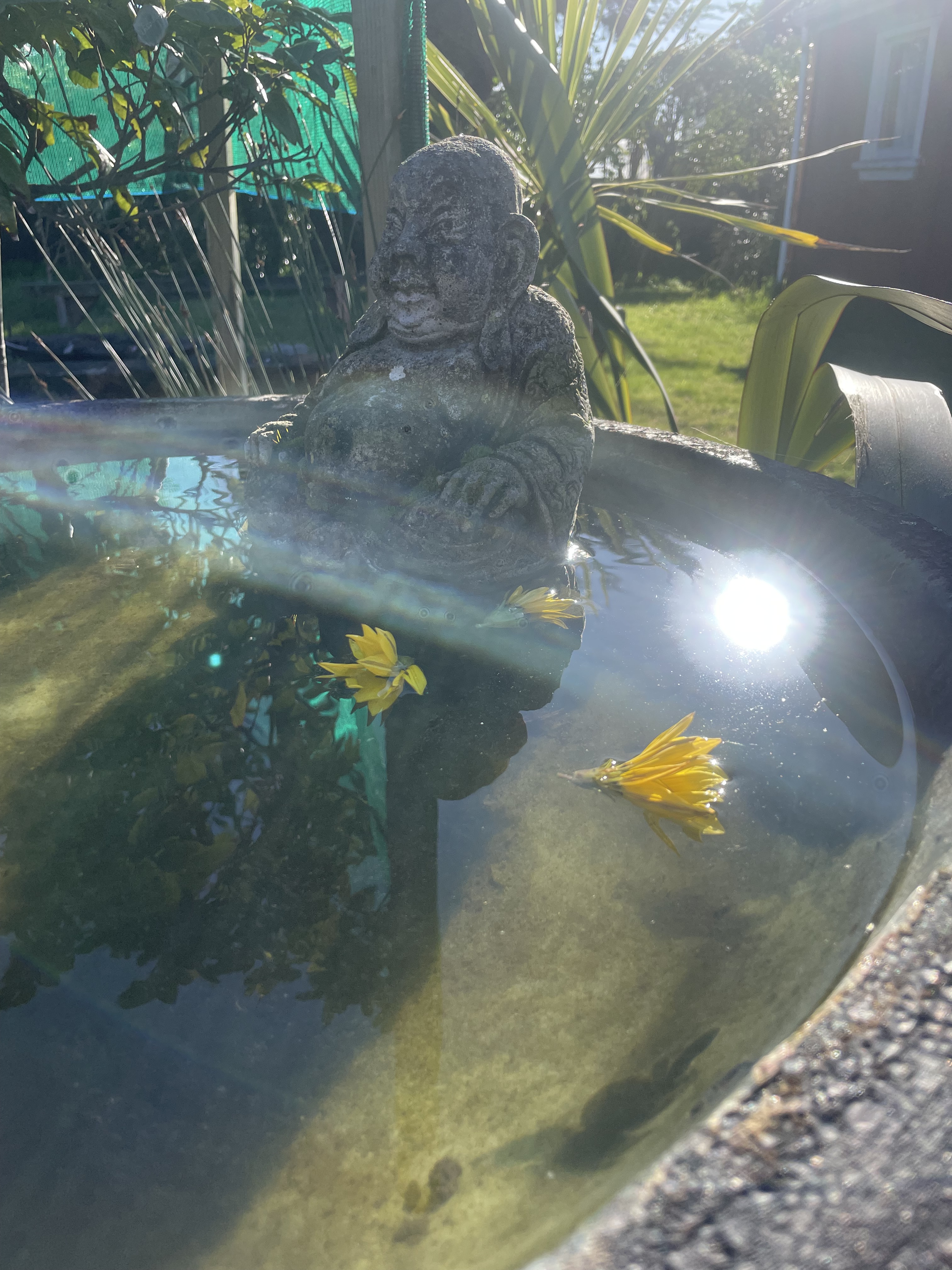
    (Above: resident garden Buddha at the bach I stayed in at Ōtaki.)

    I’m back from my residency in Ōtaki.

    How was it? 

    Well, all these things are true at once: 

    It was a wonderful experience. Parts of it were challenging. I got sick. Woke up sick on the first morning. A nasty dose of ‘flu – fevers, sweats, body aches, etc. I managed to do all of my public-facing things but I did not manage to sparkle. I’m a bit sad that I was a depleted version of myself when I was so keen to converse and connect. I was too sick to catch up with my local friends. The beach was stunning. The beach was my new best friend. The cottage I was housed in was wonderful. simple, sweet, one block from the beach. The organisers of the residency are warm, generous, kind people. Once my eyes stopped stinging and streaming, I read a lot. I did not manage to work on my manuscript…too ill to be generative or analytical. I did keep a journal about the whole experience so maybe there’s something in there? Or possibly it’s a load of feverish waffle. I can’t face looking at it right now but will crack it open when I’m all the way recovered and fully landed back in normal life. It was weird. It was confusing. It was perfect.

    Does that give you a sense of how it went?

    Aaah life, hey? Let’s get into today’s digest…

    Some tools for the ‘pointy end’ of winter 

    Next week,  I’ll be sharing an interview with you with Iona Winter about her new book, ‘Counter of Moons’ where we talk a bit about finding help when life gets overwhelming. 

    Here, from Pip Lincolne, all round sensible person and excellent advice giver, is

    Ten ways to help a friend when they are sad or struggling

    I know I go quiet when I’m feeling overwhelmed and I observe that many friends do, too. 

    Let’s try to be there for each other…even when it feels hard. 

    A recipe for a very weedy pie: ‘Hortopita’ 

    Last week in Ōtaki, I chatted all things winter forage-able weeds with some lovely locals in the beautiful Ōtaki library. (We had planned to do a foraging walk in a near-by park, but rain stopped play so we talked weeds indoors in the warm and dry.) 

    In every season, something in nature is thriving, and winter is great for fresh, bright green greens, well-watered from all the rain. Here is a recipe which calls for 11 cups of weeds! It’s a wild weeds version of spanokopita, ‘Hortopita’. 

    What a great way to get a big dose of wild greens into your belly!

    This week’s song: Song of the Siren by Tim Buckley 

    The first version of this song that I knew was the famous This Mortal Coil version. Somehow I totally missed the fact that it was a cover! 

    I stumbled over the original version via YouTube. At first it sounded so wrong to me…but after a few listens, I really like it. 

    I know the This Mortal Coil version so well, it’s sort of like I can hear both versions concurrently as I listen. 

    (I add one song each week to the Slow Small Media playlist over on Youtube. Here’s the whole playlist so far.)

    This week’s poem

    is by Therese Lloyd, from her 2018 book, The Facts

    I think a lot about food as love and food as care because I’ve had 25 years of cooking for a family.

    I like the simplicity and poignancy of this poem about a small moment of a food offering spurned.

    (+ Lehndorf-trivia: I flatted with Therese when we were in our 20s. Back then we were part of a performance poetry group called ‘Poetry For Real’.) 

    By Sunday

    You refused the grapefruit

    I carefully prepared

    Serrated knife is best

    less tearing, less waste

    To sever the flesh from the sinew

    the chambers where God grew this fruit

    the home of the sun, that is

    A delicate shimmer of sugar

    and perfect grapefruit sized bowl

    and you said, no, God, no

    I deflated a little

    and was surprised by that

    What do we do when we serve?

    Offer little things 

    as stand-ins for ourselves

    All of us here

    women standing to attention

    knives and love in our hands

    Affordable art: original moka pot linoprint

    We have a big espresso machine. F is a coffee aficionado and roasts our coffee. Coffee is a big part of our daily ritual. 

    When I got home F surprised me by telling me that while I was away he didn’t turn on the big noisy coffee beast and just made stove top for himself each morning. 

    Stove top is what we used to have before we had fancy espresso machines and it’s what we have when traveling. 

    There’s something so handsome about the classic Bialetti moka pot and it has so many warm associations for me.

    So this week’s affordable art (so affordable! $30!) is this simple, charming linoprint of a moka pot by Waikato based maker ‘Stich and Whimsy’ on Felt. 

    (Above: photo of linoprint is borrowed from Felt.)

    ‘Tansy cakes, Fiddleheads & Sea Rocket’ 

    I do love a deep dive into a very niche area of interest and that’s what this article by Faythe Levine is.

    I’ve followed Faythe’s creative life since falling in love with her film ‘Handmade Nation’ 16 years ago! (I was part of that wave of renaissance of handmade things and used to make a bit of money selling at Indie Craft Fairs. It was a huge and exciting scene at the time. It’s hard to convey the unique vibe of those first fairs now but at the time they were very fresh and exciting.)

    In the article, Faythe finds a very charming hand-illustrated book at a second hand shop and then follows her enamouredness into a research side-road.

    The book she finds is charming, Faythe’s writing is so good, the whole premise is very entertaining. 

    ‘The Candy Factory’ – a charming short film

    I can’t find the words to express how beautiful this film is so just, please, trust me and watch it. (Content warning: heartbreak.)

    *

    OK, that’s the digest for this week. Did you miss it last week? & If you’ve read or watched or listened to anything you think I might like, please share in the comments.

    Last night I got my 100th subscriber on Substack which is so lovely. If you didn’t know, I write over there about permaculture, radical reciprocity, attempts to live in gift economy, voluntary simplicity, permaculture, foraging & more. I’m still finding my way there, to be honest…but trying not to apply feelings of urgency to things that don’t really need it.

    This weekend I am going to:

    continue getting better, clean! (house is looking a bit end-of-winter-ish), in the garden, all my rocket is ready at once so I might make a rocket pesto, read more of this book and I’ve been doing some Japanese-inspired visible mending of pants…so I might carry on with that. It’s slow work but looks so great.

    Warmest weekendy wishes to you,

    Helen x

  • Winter is a great time for harvesting volunteer ‘microgreens’ from your garden (or local park)

    (Above: today’s bounty from a little wander around my own garden.)

    Do you buy sprouts, bags of mesclun mix or microgreens from the supermarket?

    Winter is a great time to find volunteer (‘weed’) microgreens, or young greens, around your garden or local park for FREE!

    Because of winter’s rain and damp, the young weeds will be beautifully bright green, healthy and not heat-stressed.

    To share some likely contenders with you, I took a walk around my small urban yard and here’s what I harvested.

    I took care to only harvest volunteers/weeds and nothing that I’d planted intentionally. (Violet grows like a weed in my yard.)

    The trick is to just harvest the young leaves, or the tips in the case of the dead nettle.

    These wild ‘microgreens’ can be used in a salad, or chopped and sprinkled on top of soup, or in sandwiches, or blended into a smoothie…the same as you would use supermarket or homegrown microgreens.

    I numbered the plants for ease of ID-ing them:

    1. Nasturtium leaves. These are peppery in flavour so great in salads and on sandwiches, not so great in smoothies.
    2. Dead Nettle tips. Great stand-in for lettuce.
    3. Young violet leaves and flowers. Use in salad or cook as your would spinach.
    4. Young ribwort plantain leaves. Important to pick the young ones as the older ones get stringy. The young leaves have a nutty flavour.
    5. Chickweed. Such an enthusiastic garden volunteer. Use the young growth and chop finely.
    6. Young dandelion leaves. These add a nice bitter element to a salad or sandwich. Not so great in smoothies.
    7. Oxalis (known in the UK as ‘wood sorrell’ and the USA as ‘sour grass’) Has a sour, lemony flavour similar to sorrell. Use just a little at a time as it contains oxalic acid. Treat it more like a herb than a main vegetable.
    8. Young mallow leaves. Mallow (also know as ‘Malva’) is a much-used vegetable in Middle-Eastern cuisine and parts of Italy. You can make dolmades with the leaves in place of grape leaves, making it useful during the winter when there are no grape leaves about. Young leaves are good in salad or cooked like spinach.

    & of course, these plants have medicinal properties as well, (most plant food does.

    I hope this inspires you to have a close look at what might be growing in your own back yard and save yourself a little money (or time) by eating some of the weeds around you.

    Let me know in the comments if you have any questions.

    Do you eat any of the weeds in your garden?

  • Slow-Small Media for the Weekend #11

    (Above: a blazing nasturtium in the vege garden. I’m grateful for their bright faces on these gloomy winter days.)

    I bring this to you from a late-afternoon energy lull. Does anyone reading suffer insomnia? 

    Over the last month, I’ve been wrangling with insomnia which hasn’t been much fun. If anyone has any suggestions, let me know. (Currently at bedtime, I take a valerian/hops/passionflower potion and rub my feet and legs with Magnesium oil which used to work a treat but recently, not so much.) 

    Enough about me! how are you?

    Here’s a bunch of random good things for your weekend: 

    A sweet poem

    I have a surname that people frequently struggle to spell, but it’s not as intense as the surname of this week’s poet, Amy Nezhukumatathil. Amy’s work is sensuous, at times humorous, she knows the natural world and writes it with great attention. I very much recommend her poetry.

    But this week’s poem is slightly different from her usual style. It’s a found poem which is comprised of fragments of letters from high school students who are studying her poetry for their exams. (Note the misspelling of her name in the poem’s title.) 

    It’s affectionate and funny. I could feel the collective stress of the poor students rising up off the words. 

    A beautifully-written essay about a painful subject

    Over the last couple of weeks I’ve been very much enjoying reading through the essays and articles on the Substack of the Wizard of Wellington, Rosie Whinray. 

    You didn’t know Wellington had a wizard? 

    Well, that’s because unlike the Wizard of Christchurch -who is mainly a satirical figure- Rosie is a real wizard…although she would never make that distinction (‘real’) herself. 

    Real wizards are very modest. 

    Rosie has written a beautiful, meandering, thoughtful, honest essay called Precariat Blues about the pain of losing her latest home (another rental sold out from under her) and about precariat housing (and living) generally. 

    From Rosie’s essay:

    ‘Chop wood, carry water, by all means dig. But if you rent, I would advise applying your effort to things you can carry with you when you go. Never forget that you stand to lose your labour. Human ingenuity is bonsai’d by the learned helplessness of tenancy. This pinching out of side-shoots is maybe the greatest tragedy of what renting does to a person’s soul.’

    Because she’s a real wizard, she makes a very sad subject beautiful. You’ll read it and possibly  feel sad, mad, bad, but also so glad that you read it…because it really is phenomenal writing. 

    I really hope Rosie publishes a book of her essays one day. 

    Affordable Art

    In this week’s affordable art is these striking sgraffito ceramic birds by Borrowed Earth 

    They cost $45 (our budget for ‘affordable art’ cuts off at $50) and there are five different designs. 

    (Above: Photo borrowed from Little Beehive Co website.)

    One would be beautiful…or if you have more than $50 to spend on art, you could have a pair…or a flock! They’re like a contemporary take on the classic flying duck wall ornaments. 

    Music

    The addition to the slow-evolving ‘Slow-Small Media’ playlist over on YouTube this week is not just one song but a whole record; it’s Ben Harper playing his 2020 album ‘Winter is for Lovers’ live in his music room. 

    This live version has a vibrant, compelling quality. Plus, if you’re watching as well as listening, it’s soothing to watch Ben noodling away in his music room surrounded by his beloved musical instruments. 

    In the kitchen: three ways to eat onion weed

    Did you know you can eat onion weed? It’s particularly succulent and good in winter and spring in New Zealand and it’s SO easy to find….a ‘Foraging 101’ kind of plant.

    Here’s a beautifully-produced video from local weeds-loving, vegan chef Anna Valentine on four ways with onion weed.

    She shares a mayonnaise, a super salt, a salad and a tempura which use the bulbs, stems and flowers of onion weed.

    An article about the world of miniatures

    There’s something so hugely compelling about tiny things. 

    Once, a friend bought me a miniature bok choy plant made of resin because ‘I knew you’d love it’. She was right, I do. 

    I bought my Mum a miniature Victorian copper kettle for her recent birthday because I knew she’d love it. She does. It’s now sitting on her dresser. 

    Here’s an interesting NPR article about the world of miniatures. 

    I googled where to buy cute miniature things in New Zealand. I’ve always dreamed of having a green Aga stove and from the In Miniatures shop, I could have one for just $29.00

    & something very, very, very silly to finish

    Last night I had insomnia so after lying in bed staring into the dark for two hours, I eventually gave up on trying to sleep, lit the fire and opened Youtube. 

    The first thing the YouTube algorithm suggested was a video where comedian crafter,  Ash Bentley, knits herself a ‘cursed outfit’. I was skeptical, but also wired and tired so I watched and, oh my goodness, it is worth watching Ash’s reveal of her cursed crafting effort. 

    The video is almost an hour long but -unless you have an interest in watching Ash figure out how to knit all the components- just do as I did and watch her introduction and then skip through to 52 minutes in for the big reveal. Now, imagine watching it in the subterranean state of an early insomniac morning. 

    Trust me, it’s worth it. It’s a horror and she’s a crack-up. 

    (Given I mostly watch foraging, permaculture and ‘slow life’ Youtube, I have no idea why YouTube suggested this to me…but I’m not mad about it.) Gosh, I love a silly side-quest.

    *

    The weekend ahead: I’m trying to do something of a midwinter-clean, like a spring clean but in winter. My fantasy is that we won’t need to spring clean because I’m going to do so much over July and August that I will land in September all sorted and fresh. Clearly the kind of thing us Virgos daydream about. In spring I’d rather be in the garden than in the house.

    At the moment, this looks like a pile of boxes and supermarket bags in the hallway floor spilling over with the recently-culled.

    If I have friends visiting while such piles are lying about, I always invite them to mooch the op shop pile before it heads off to the op shop. Already I’ve re-homed some clothes and some books. Happy friends and less for me to cart to the op shop. Hoorah! 

    So this weekend, I’m going to carry on with a bit of that. Last weekend I tackled my wardrobe, this weekend, it will be our bookshelves. Might be time to give some books the chance to be read and enjoyed by other people instead of gathering dust here. Not every book is going to be one that you re-read, right?

    I have a pile of shiny, new permaculture magazines from the library to read. Our library is so great in the variety of magazines they get. I can’t believe there are multiple permaculture titles to mooch.

    & I got a big fennel bulb in our CSA vege box so I’m going to make a fennel gratin

    It’s Palmy Crop Swap weekend and so I’ll head off to that on Sunday with some succulents I’ve potted up and some of my herbal tea to share. 

    That feels like enough ‘might do’s’ for the weekend. I like a ‘might do’ because if at the last minute I feel lazy and don’t do any of it…having a rest is a great use of a weekend, too. 

    I hope there’s some resting, some cheerful eats and some fun in your weekend. 

    x x

  • Slow-Small Media for the Weekend #10

    (Above: F and I like to have fires in the backyard, whatever the weather. A recent violet dusk.)

    Does it feel to you like the weeks are whizzing by? Friday seems to come around faster and faster lately. Here we are again!

    I’ve had some lovely feedback for these Slow-Small Media digests. Thanks to everyone who has been in touch. I’m so glad you’re enjoying them. I really enjoy ‘foraging’ for things to share with you. 

    A ‘corny’ song

    This week’s addition to the slow-growing Slow-Small Media playlist, is ‘Close My Eyes’ by Arthur Russell. 

    I was new to Arthur Russell until I recently watched this fascinating documentary about him. (I love music documentaries even if I don’t know the subject. I find a lot of new-to-me music this way.) 

    If you’ve been reading these Friday digests since the beginning, you’ll probably know by now that I love nature-based songs, or songs that reference growing food and tending gardens. This beautiful soft song references a corn field: 

    ‘Will the corn be growing a little tonight

    As I wait in the fields for you

    Who knows what grows in the morning light

    When we can feel the watery dew.’

    (I add one carefully-considered song per week. You can find the whole playlist here. It’s nice to listen to on a weekend morning.)

    An ‘Eat the Weeds’ Pesto

    I am a massive Nicola Galloway fan so it meant a lot to me that she gave ‘A Forager’s Life’ a little shout-out in this column in ‘Life and Leisure’ magazine. 

    In the article she shares a delicious version of a foraged weeds pesto.

    Pesto is one of the best ways to ‘sneak’ weeds into your family’s diet if they are weed-resistant. They’ll never know once it’s all blended up and on pasta or some crackers. (Other good ways are soups, smoothies and quiches.) 

    Something to watch: a fascinating wild honey bee conservationist making beautiful hives from wood and rushes

    In the UK, Wild honey bee conservationist and carpenter, Matt Somerville, has designed a beautiful, natural, handmade hive habitat and over the last 14 years has installed 800 (!) for the wild bees. No honey is ever harvested from these hives – they are installed just to support wild honey bee biodiversity. 

    This beautiful 12 minute film about Matt’s work is inspiring in terms of how much of a difference one person with a big passion can make. I so appreciate that he wanted the hives to look appealing as well as being beneficial. 

    Some sweet, sweet cakes that are food for the eyes only: 

    Artist Heather Rios makes delightful cakes from polymer clay and embroidery.

    A feast for the eyes and oddly uplifting to regard, I found.  

     (Above: photograph borrowed from FrogsbyGigi.

    Affordable Art: 

    Felt Shop artist Gigi handknits frogs and dresses them in tiny jerseys or overalls.

    They come in under the $50 budge for affordable art and although you might argue they are toys not art, I’ll bet most of them are purchased by adults and then perched on bookshelves and desks…which means they are qualify as works of art. 😉 

    Aren’t they adorable?

    ‘This is the best domestic perfume: an ode to the humble onion

    I like how in this week’s poem William Matthews elevates the humble onion to it’s rightful place as the beginning of many things good in the kitchen. 

    This poem reminds me how good poems are all about looking at things, even humble things, very closely and being curious about what’s to be found there. Over the years, I have written poems about garlic, pasta sauce, my bicycle, and many other tangible things.

    An Anarchist Gardener’s Club on Substack!

    I think I know who the writer is behind this fabulous ‘Anarchist Gardener’s Club’ on Substack…

    enjoy their call for collective green-fingered mischief!

    “We will cultivate whatever we can.
    We will grow flowers in the cracks.
    We will seed bomb every desolate corner of the scrub land.
    We will enjoy a brew and a biscuit as we do it.”

    Count me in!

    *

    I’m always overly-ambitious for how much I can fit into a weekend.

    Here’s my ‘might-do’ list for this weekend.

    -make kimchi. We got a beautiful cabbage in our CSA box and it’s calling to become kimchi, I think.

    -plant the dahlia bulbs I dug up and divided two weekends ago

    -work on my poetry manuscript some more

    -do some food prep ahead of the week -mostly washing and chopping vegetables- so we are more likely to eat them in salads and stir-fries

    -finish reading this wonderful book by Nadine Hura 

    I think that’s enough of a list, hey? If I even get a couple of those things done I will feel content. 

    What’s on your ‘might do’ list for the weekend?

    Try not to do too much, hey? And always factor in some fun.

  • Slow-Small Media for the Weekend #9

    (Above: low winter sun through some crops gone to seed at the Awapuni Community Garden.)

    Hi lovelies,

    Jeez, another week of scary news in a world gone mad. I hope you are faring okay and doing plenty of sensory, nature-based things off screens to give your nervous systems a chance to recover.

    Winter calls for an encounter with ‘a Wild God’

    Long a favourite poem of mine, I went looking for a shareable version of ‘Sometimes a Wild God‘ by Tom Hirons and saw, to my delight, that you can both read it and listen to it being read by the author here. There’s something about listening to poems read by their authors which is really special.

    This poem speaks to that longing inside us to connect with nature’s raw wildness…how that raw wildness is no joke…and it also has such a great ending. A modern classic, I think.

    Song for the week

    This week’s song is gentle, evocative and sounds a bit like Nick Drake. It’s ‘Crow’ by English ‘folktronica’ band, Tuung.

    As a poet, I can’t fall 100% in love with a song unless the lyrics are thoughtful and interesting. The chorus for this song are so good:

    ‘And we bide our time
    And we shed our skins
    And we shake our bones
    And we sink like stone
    And we crawl through mud
    Til we reach the sky
    And we bide our time.’

    (Listen the full playlist of Slow-Small Media songs here on Youtube.)

    Sally Wise’s ‘Apple Day

    Nothing warms my heart like friends and communities getting together to work on food harvests and processing together. (If you didn’t catch it already, here’s an article about some friends and I doing just this with green tomatoes.)

    Australian food writer Sally Wise just wrote about her annual ‘apple day’ here.

    I especially like the photographs. What great seasonal fun.

    Make a liver-cleansing, iron-boosting tonic from a much-maligned weed

    Most people I talk to are unaware that yellow dock, a plant loathed by many, is a powerful medicinal plant.

    When I did a live-cooking event at the Womad Festival last year, one of the things I made was some wild seedy crackers which had yellow dock seed in them which I foraged.

    Dock root is rich in iron, minerals and vitamins. Check out this recipe for an Iron Rich Liver-Cleansing Support Oxymel from one of my favourite New Zealand food writers, Anna Valentine.

    Lot’s of weeds are a bit of a pain, it’s true (hello, tradescantia, hello, convolvulus) …but so many weeds are edible or medicinal. I feel like re-learning all of the offerings of local weeds will be an important passtime for the coming years.

    Here’s to the humble dock plant: mineral-retriever with it’s deep taproot, generous-seed-offerer, cleanser of livers and booster of blood.

    This week’s affordable art: Whakangā

    This week’s affordable art is not wall art, but an artful object, a meditation tool, a little something perfect for the wintery months. This would make a beautiful gift.

    (Above: photo borrowed from the Creative Hive NZ website.)

    It’s a little beeswax candle set from the Creative Hive NZ. Whakangā means in Māori to take a breath, catch your breath, rest, relax or inhale.

    From their website: ‘This beautiful Whakangā set is the perfect addition to your wellbeing with 21 small beeswax candles and an exquisite artisan ceramic kawakawa leaf holder.’

    I think it qualifies as ‘art’ and is very reasonable at just $35.00 for the set.

    This is such a thoughtful product. The tiny candles are made to burn for twenty minutes; just long enough to take a break or meditate. A friend of mine has a set and the candles are so very small and sweet.

    How to make a Wild Food Map of your neighbourhood

    This is a great article from Milkwood Permaculture on how to make a wild food map of your neighbourhood. I haven’t done this but I’d love to. If you have younger kids, it could be a fun activity to get them involved in over the school holidays?

    As well as great instructions on this project, this article has a handy list of links for online community food maps at the end, like Falling Fruit a global map of crowd-sourced information about public fruit trees. It’s very fun to type your address into it and see what’s within walking distance of your house. You can add your local knowledge to it, too.

    Something chill to watch: a Brixton folk artist’s beautiful house and studio

    This short (9min) clip featuring folk artist Abe Odedina on the World of Interiors YT channel is a good time.

    He’s a vibe, and I loved seeing his house and studio. His house is beautiful as is his art. I also appreciated how much he talks about loving being at home. I think since the pandemic, many of us feel the same way, hey?

    (I lived in Brixton a zillion years ago when I was on my travels. I found it such a vibrant, exciting suburb of London.)

    A Manifesto for Stubborn Optimists

    From the Montague Workshop (Brad and Kristi Montague), a Manifesto for Stubborn Optimists:

    ‘We believe that care is courageous.

    Joy is rebellious.

    Wonder is defiance.

    We believe in the builders,

    teachers, growers, healers,

    quiet ones making room at the table,

    the messy middle, the long haul, and

    in the overlooked beauty of a slow repair.’

    This manifesto gave me some solace this week. I love manifestos. I think most things I write end up being thinly disguised manifestos; I can’t help it.

    I’m going to print it out and stick it on my fridge.

    This weekend my oldest ‘baby’ turns 25. Quarter of a century!

    (Above: the oldest baby when he was 4. A favourite pic.)

    I spent my 25th birthday dancing at Duckie London – a queer club night that’s still going! But I started off the night straddled across one of the bronze lions of Trafalger Square in London, drinking straight from a 1.5 litre bottle of Absolut vodka. Classy, aye? (I wasn’t always the quiet homebody I am now.)

    It’s funny, because I remember clearly thinking back then ‘I’m going to climb up here and get on one of the lions…because then I will always remember what I did on my 25th birthday’ …and it worked, I do!

    Anyway, there will be birthday celebrations this weekend and no doubt F and I will have a tipple of whisky and contemplate the bizarre passage of time.

    Hope there are sweet, calm things in your weekend, too. x

  • Matariki: the public holiday we all needed

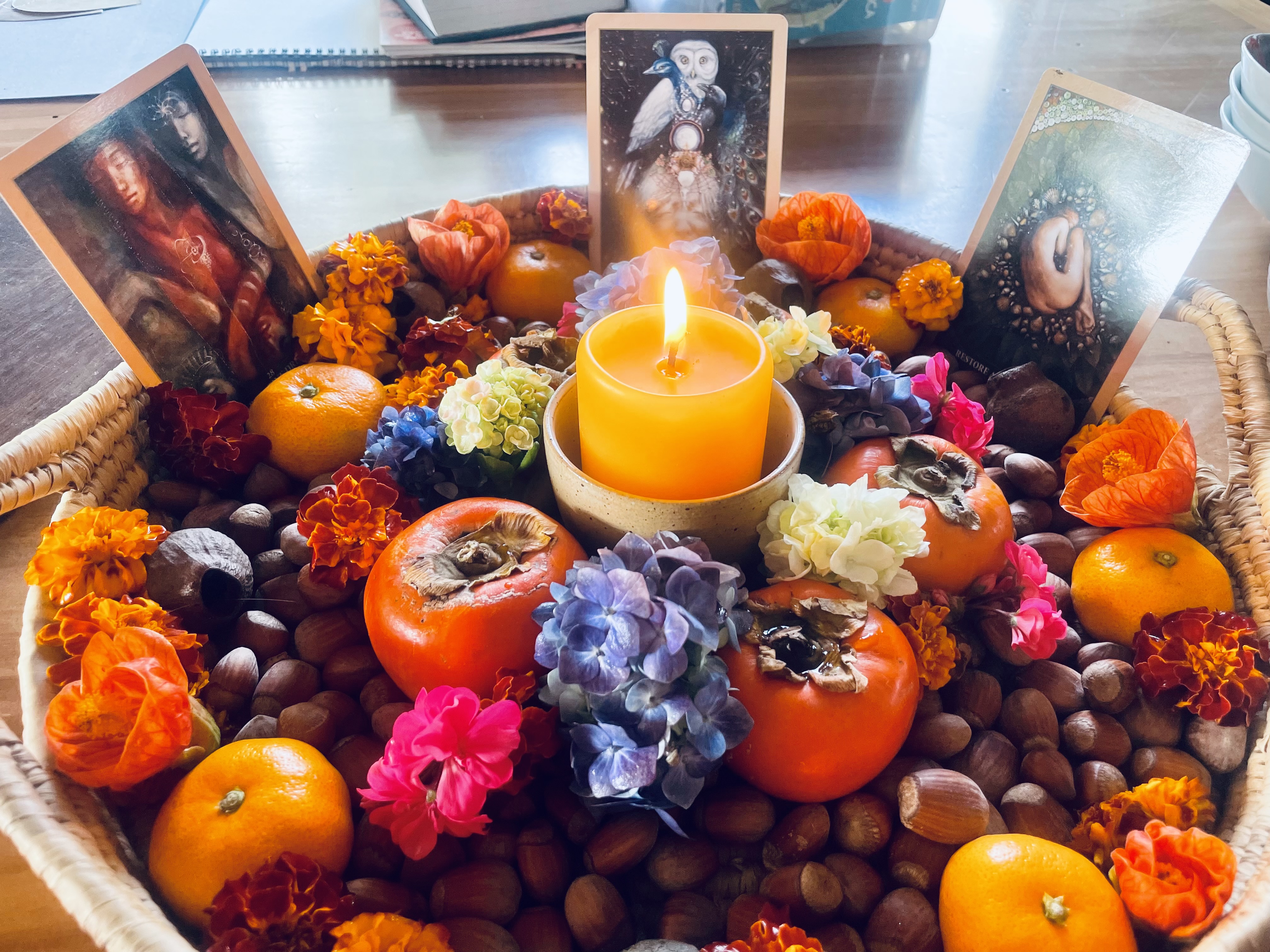
    (Above: our Matariki mandala this year.)

    I think Matariki is my new favourite holiday. Long before it was made a public holiday, I used to grizzle that New Zealand needed another public holiday in winter as it was a long stretch from (then) Queen’s Birthday in June until Labour Day in October.

    & because, as a pākeha, it is a new holiday, I’m really enjoying that we (my family) are creating our own celebrations for it: inviting friends to share kai and reflections, and focusing on rest.

    I was hoping for a cold, wet weekend so I could be lazy and give some attention to my teetering pile of delicious library books…alas, (hello, climate change?) our winter here in the Manawatū seems to come later every year. Spring is the season I brace for…here our springs are mizzling, windy (we have a phenomena known as ‘the November gales’) and cold. So the weekend, while chilly, was also sunny…which meant I had to get out into the garden.

    I did some satisfying chores that I only get to when the urgent business of harvest season is over: I tidied my junky heap of garden pots and paraphernalia into virgo-level neatness again. I cleared out the greenhouse, pruned and fed the fruit trees, planted more comfrey around their bases, dug up the dahlia bulbs. It was satisfying work that called for an afternoon tea of cinnamon pinwheels and a big pot of homemade masala chai (none of that syrupy nonsense.)

    (Above: just the Edmonds date scone mixture but rolled out, spread with fruit mince and sliced into pinwheels instead of dates.)

    Gardeners are always thinking a season (or more!) ahead. My winter food garden is all planted now…not too much to do. (Having said that I planted rockets seed and more broad beans on the weekend.) So now I’m dreaming ahead to summer flower/herb beds, by digging up clumps of perennial herbs and flowers and dividing them. I’ve been getting very inspired by urban rewilding books I’ve been reading (more on that in another post) so I’m eyeballing the little bits of lawn we still have and wondering if I might turn them into weedy spaces full of self-maintaining weeds and ‘wild’ flowers …for the pollinators and birds.

    It takes a leap deeper into wildness and unruliness which can have a mixed response in an urban setting…and yet is so important for urban biodiversity as central city housing gets denser and more and more gardens are lost.

    So, I ended up not being as lazy as I’d hoped for Matariki/Winter Solstice weekend…but it all felt good, a healthy-busy…not a pushing-hustle. Dreaming into summer is a kind of rest, I think.

    & I know we’ll get plenty of stormy, frigid days in spring.

    I get Koanga Garden’s newsletter and in the latest one, I like this, from founder Kay Baxter:

    ‘This is how regeneration works: a little effort now, in rhythm with nature, pays forward in resilience, nourishment and beauty.’

    Tell me what you’re up to in your gardens. x

  • fennel from the river

    (Above: My favourite selfie, out foraging beside the river.)

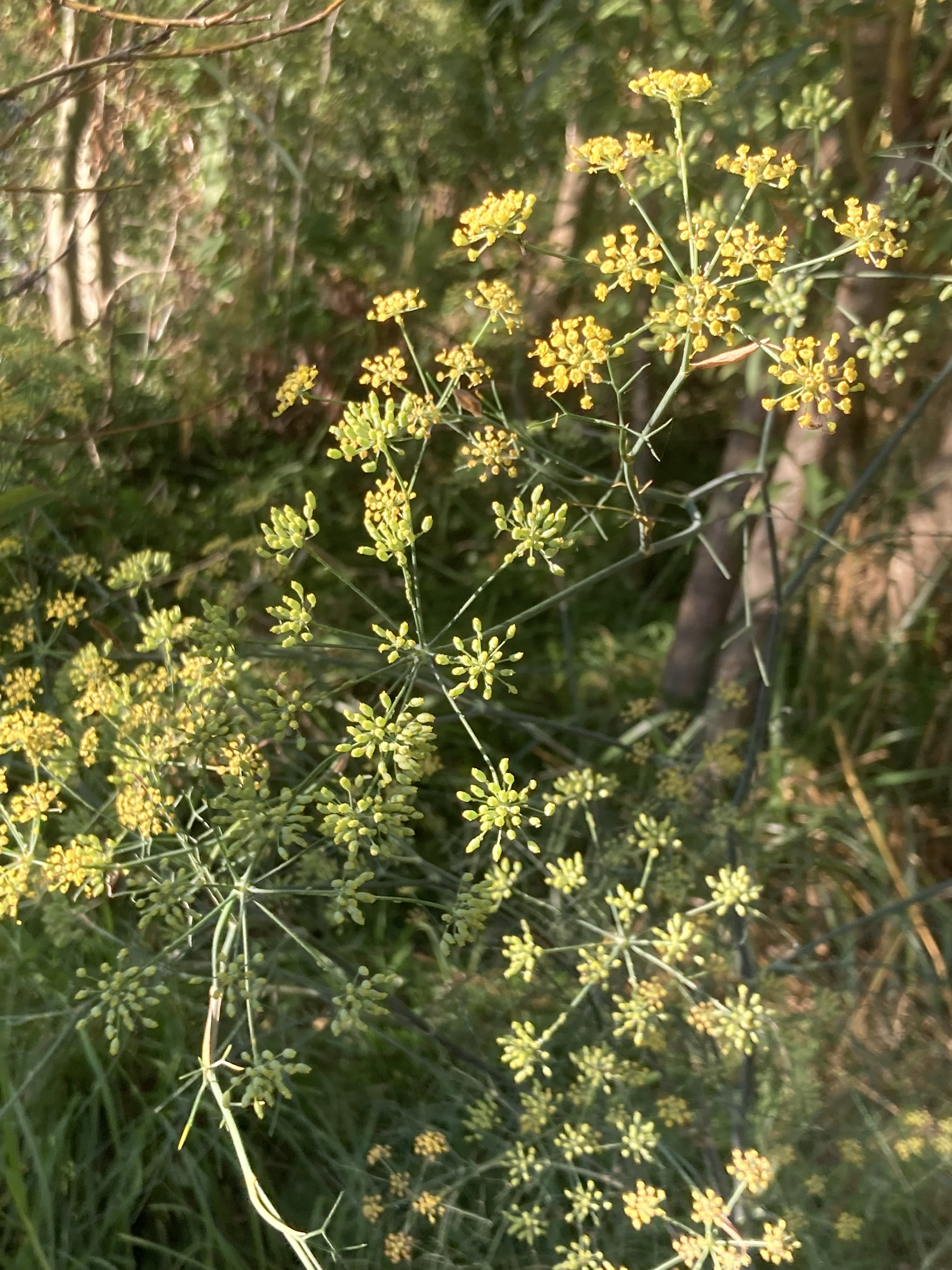
    In autumn, I forage for fennel seeds. Along the Manawatū river, the fennel plants are plentiful. This year, it’s been such a warm autumn, there is still fennel in flower as well as the older plants going to seed. I find fennel such a beautiful plant in all it’s stages: the bright green fronds of early spring, the sunny yellow umbels of summer…then the handsome dried seed heads of autumn.

    (Above: A ‘fennel tunnel, fennel tunnel, fennel tunnel’ < a little phrase from my foraging book.)

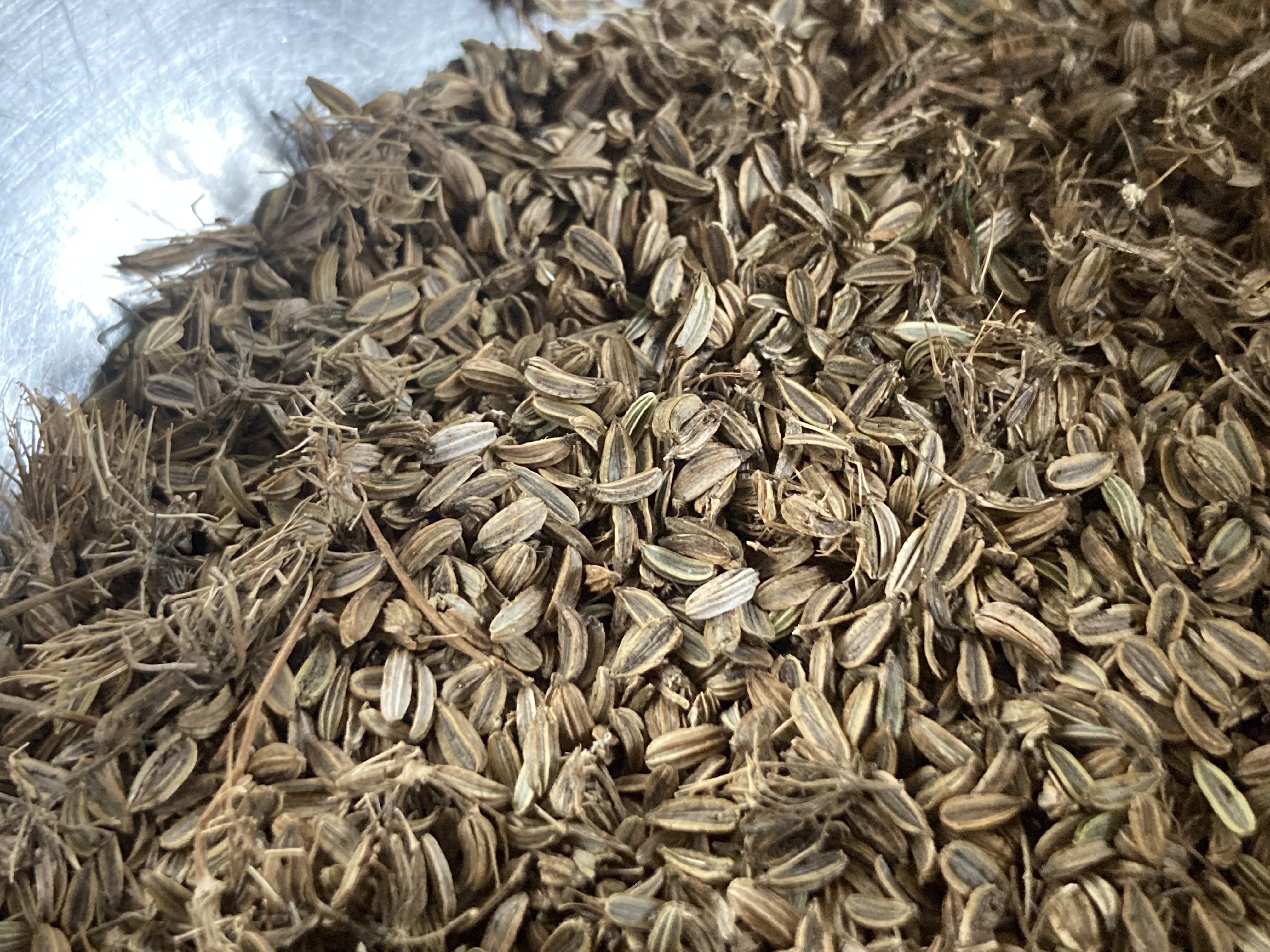
    Fennel is an enjoyable thing to forage for because each plant is so laden with seed heads that it’s easy to forage enough for the pantry in just a couple of walks. I fill up this 500ml jar and it lasts me a year of curries and pickles and tea.

    (Above: yellow fennel flowers going to seed.)

    I take secateurs with me and snip some of the seed heads that look grey and dry. Although they are probably dry enough off the plant, I leave them on a tray on my kitchen table to dry more…just to be sure they are totally dry. Then I rub the seeds off over a large bowl.

    (Above: the fennel seed heads drying a little longer at home.)

    I have an interest in Ayurveda. Fennel seed is highly-valued in Ayurveda for it’s digestive properties. In some Indian restaurants, they offer tea spoons full of tiny coloured sweets as a digestif after your meal. These are sugar-coated fennel seeds.

    (Above: The fennel seeds fresh off the seed heads before I sort through and get all the little bits of flower head out.)

    Here is a recipe (well, more a proportions guide) to a digestive tea I make with my foraged fennel seeds. I get the fenugreek from my local Indian supermarket and the licorice root powder from Pure Nature. Fenugreek has powerful digestive properties and can help regulate blood sugar, too. Licorice powder aids digestion and adds sweetness to the tea blend. Ginger helps with digestion also and tastes wonderful.

    Digestive Tea

    One part fennel seeds

    One part fenugreek, seeds or leaves

    One part licorice root powder

    One part ginger powder

    This tea is great to have first thing in the morning to awaken your digestive fire, or agni as it is called in Ayurveda. It’s also good to drink about an hour after a meal to calm the stomach, prevent flatulence, help with digestion.

    *

    I have an avid interest in folk herbalism so I tend to mostly make medicinal things with my foraged finds.

    Autumn is a lovely time for foraging…less chance of getting sunburn and so much to see everywhere! I’ve been enjoying looking at all the different fungi friends who emerge this time of year, picking up windfall eucalyptus leaves for eco-dyeing and harvesting mullein for making winter medicines with.

    What have you been foraging or harvesting?

  • ‘now we recognise ourselves less and less’

    (Above: plastic rubbish I picked out from my vegetable beds last week. I collect around this much rubbish each time I tend or harvest from my vegetable beds.)

    I enjoy the writing on The Dark Mountain Project. It’s an ongoing project (based in the UK) that publishes ‘uncivilised writing’, holds gatherings, creates a space for conversations about all manner of unsettling and challenging elements of living at this point of human history. There you will find writing beyond polite eco poetics or nature writing that merely holds nature in a human/nature binary of saccahrine reverence. I don’t always agree with what I read there and that is why I like it.

    Last week I read this piece by Amy Kennedy from the most recent issue with the theme of ‘bodies‘.

    At first it seems a deceptively simple piece of writing, Amy describes a group of parents at a childrens’ birthdday party. One of them brings up the subject of the finding of microplastics in human placentas. The piece explores plastic: our culpability and the unavoidable enormity of the tsunami of plastics in our lives.

    I have a fairly high threshold for ingesting media about climate collapse and environmental degradation. I don’t have my head in the sand.This is not because of courage but more that I am an anxious person who approaches life in a ‘forewarned is forearmed’ sort of way. I like to know something of what’s coming so I can consider in advance how I might respond. (I’d prefer not to be built this way but there is only so much you can do about your neurological wiring.)

    I was surprised by my visceral reaction to this piece with it’s blunt presentation of human culpability in terms of the use of plastics and refusal to look away from the idea of microplastics in human placentas, in human bodies. ‘Now we recognise ourselves less and less’, Amy writes. A familiar feeling for the eco-anxious amongst us and a statement that works on many levels.

    A few years back I wrote a poem in a similar vein about digging up the backyard of my crappy Wellington flat to grow food for my oldest son when he was a baby …only to years later find out that backyard had been a dumping ground for old car bodies and broken machinery and was no doubt full of petrol and lead and other toxins. In my youthful naiveté, I hadn’t considered the urban soil’s history.

    These human missteps we make in the name of love: a birthday cake served with a plastic fork, feeding a baby mashed carrots grown in polluted soil…the hell we plod towards on our road of good intentions.

    The depth to which I was triggered by Amy’s writing surprised me at first (I thought I was made of tougher stuff by now). But then when I thought about it, I realised it touched on a tender spot in my own gardening practice…a spot where I choose to put blinders on.

    I live in the centre of a city. Every time I weed or harvest from my front yard garden (tended so carefully with the best organic soil amendments and lovingly homemade compost) I fish bits of plastic out of my garden: plastic bag fragments, fruit stickers, junk food packaging, lollipop sticks. Some of it seems to get into our compost somehow, despite careful sorting at the kitchen end. The plastic in the vegetable beds seems to blow in from the street.

    (I wondered if this plastic trash were an urban problem but a friend who lives rurally said that there is just as much plastic trash out her way, in the road gutters, in streams, from the plastic packaging of hay bales and farm products.)

    I throw the bits of plastic into a colander that I have with me in my harvest basket then put them in the rubbish bin where they will travel in a plastic bag to the plastic afterlife, which is to say slowly deteriorating into microplastics in the city’s landfill.

    I dwell in a space of both knowing that I have my stubborn blind spots (the macro and micro plastics in my own food garden and in the soil I am creating in my compost) and also having no inclination to stop. I will carry on composting. I will carry on growing food in this microplastick-y soil I am making.

    I enjoyed this essay about composting by Scottish writer Fraser MacDonald (found via Pip Lincolne) He, too, is carrying on composting on despite tangible evidence of plastics in his compost. He writes:

    ‘I make my own compost so that I can convince myself that even when the world seems socially and ecologically broken there are still mechanisms for recovery: it shows that change is possible. Composting is a simple habit of composition or gathering together that integrates past fragments into a future whole, so that what matters is not the individual ingredients but the fertile new thing they can become.

    & that ‘fertile new thing’ possibly contains microplastics…yet still I persist in habits which put me squarely in the ‘doing’ space of the world, in flawed creative acts which give me a sense of agency and regenerate my spirit if nothing else.

    For that purpose alone I believe they are worthy.