Tag: gardening

  • What do green tomatoes have to do with mutual aid?

    (Above: many hands make work fun. A harvesting and chopping working bee at Kirsty’s place. Photo by Kirsty Porter.)

    Fascism is on the speedy rise, climate collapse is escalating, increasingly our governments and power structures are unreliable at best, malevolent at worst. What is there to be done?

    I am reading a lot of Margaret Killjoy , Adrienne Maree Brown, Bayo Akomolafe and Donna Harraway. Listening to a lot of collapse-aware podcasts. & Trying to be (mostly) off (anti)social media. But beyond what I consume and intake…I am making slow steps towards deeper resilience within my friend groups.

    I’m in a couple of ‘conscious-collapse’ groups. One is aimed more at emotional support and mutual aid (deep listening, space-holding, nourishing one another with beauty and soothing art), the other is more about practical supports, and intentional-relationship-building over time (working bees, resource sharing, fun gatherings.)

    While both groups have group chats in messaging apps, we make a conscious effort to take them offline and get together regularly, because actually being together is so much more healing than more time staring at our phones.

    The photo above is the latter group. We had a working bee to harvest all the end-of-season green tomatoes, then we sat around Kirsty’s kitchen table and chopped up the harvest. We filled four buckets (!) with chopped green tomatoes. Kirsty kept two, M & R took one and I took one. Kirsty, M&R turned theirs into Kirsty’s Grandmother’s recipe for green tomato chutney and I turned mine into a spicy Mexican green sauce.

    While we worked, we chatted, we laughed and the folks in the group who had only recently met got to know each other better. It might not seem to have much to do with the mitigation of fascism & climate collapse…but it was a practical, positive, soul-warming way to spend an afternoon. Every small action like this brings us closer, braids us together a little more…all while we work on our food resilience skills.

    Kirsty might have struggled to ‘capture and store’ her green tomato abundance alone…but with five of us at work…we got it all done in a couple of hours.

    ‘Communities are not built, relationships are built. Communities build themselves.’

    -Patrick Jones

    What sorts of things are you doing to nourish yourself in these challenging times?

    In other tomato news…I like to challenge myself to memorise high-rotate recipes, like fruit crumbles, scones, pikelets, simple cakes…so in the unlikely event I am somewhere I can’t use my recipe books or the internet, I can still make these things. I figure it’s good for my brain, at the very least. Also, it makes me feel next-level to be able to bash them out without cracking a book.

    This winter, I am attempting to perfect and memorise focaccia. I made this one with one of the last crops of cherry tomatoes and basil from the garden.

    In my household, we are seasonal eaters, which gives the last tomato harvests a real poignancy.

    The basil is valiantly carrying on, despite some colder nights…but how much longer for? Time to make some big batches of pesto, I think.
  • witch sticks & autumn harvests

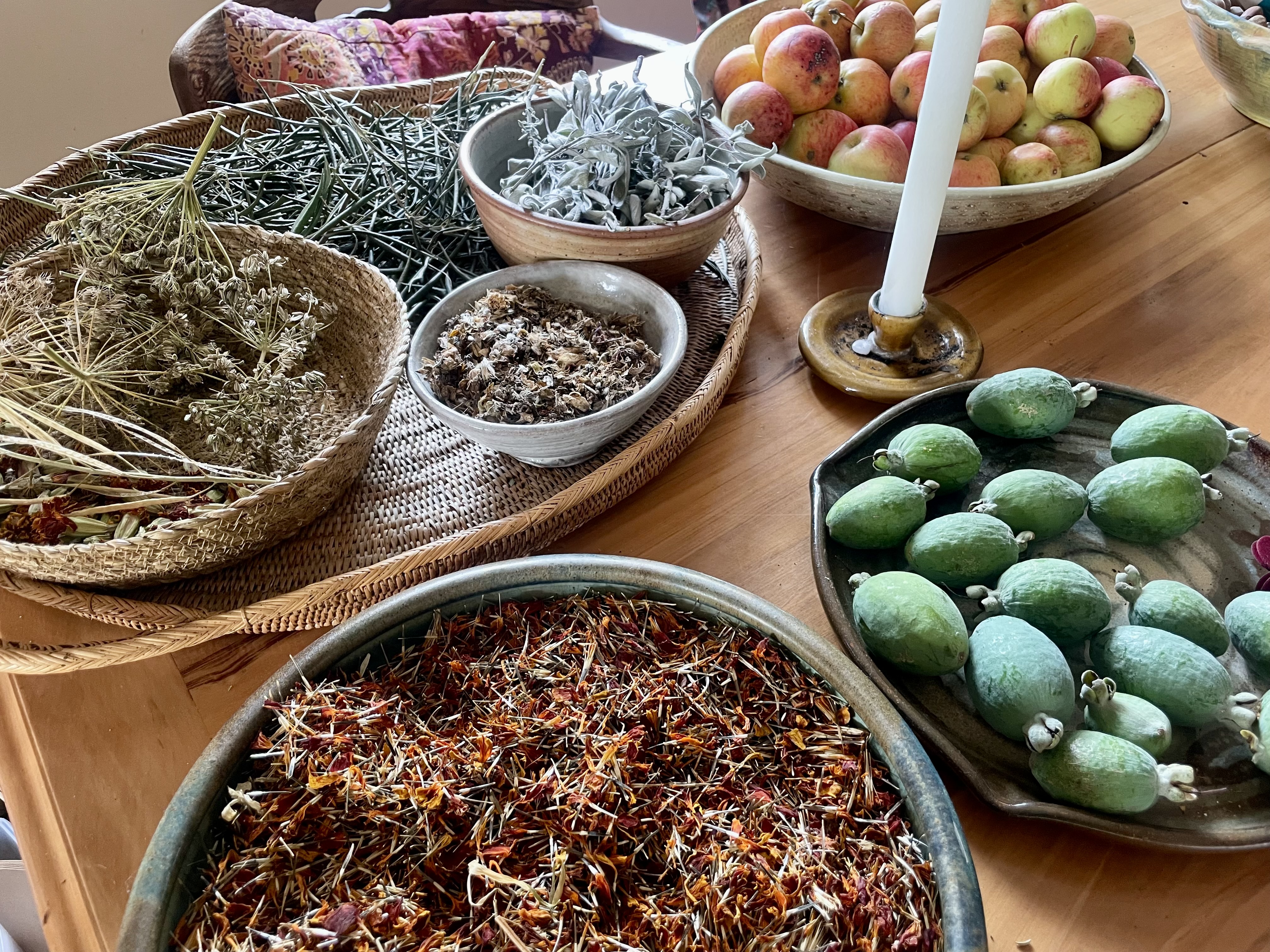
    (Above: Our kitchen table is a busy surface with often-changing bowls and baskets reflecting what is going on in the garden and the foraging season: things drying or waiting to be processed.)

    Autumn is my favourite season and, as a permaculture household, a busier season than summer with our labours to ‘capture and store’. There’s lots of picking and gathering and then kitchen work processing everything.

    (Above: Last sunday morning’s harvest chore was bottling a box of apples from our friend Bev’s orchard. These will turn into crumbles or top our porridge this winter.)

    Last week I gave my potted white sage plant a prune, ready to overwinter it in the greenhouse. White sage is a desert plant, native to the American southwest and Mexican northwest, so it doesn’t love the Manawatū winters.

    In the summer, I put it outside in full sun then prune it down to almost sticks at the end of summer and put it in the greenhouse where it sulks the winter away…but it (just) survives. Mine is about six years old now.

    (Above: white sage prunings, cotton thread. It’s on the sofa because I made the witch sticks while watching something in the evening. I do a lot of processing tasks (this, peeling fruit, cutting up herbs for tea, seed saving jobs) on the sofa…which might seem a bit odd…but I don’t see it as much different from knitting or hand-sewing in front of the TV. Does anyone else do this?)

    The prunings can be turned into what I call ‘witch sticks’ for burning by folding up the leaves on the stalk, weaving and rolling them longways and then tying with cotton thread. (Never use synthetic thread: it will melt and emit toxic smoke.) When the leaves have all burned down, you can burn the stalks, too.

    (White sage is a plant sacred to Indigenous people in USA and Mexico, so if you want some…have a go at growing it rather than buying imported sage. White sage is overharvested in the USA particularly. In ‘A Forager’s Life’, I write about alternative plants to white sage for making cleansing/burning sticks.)

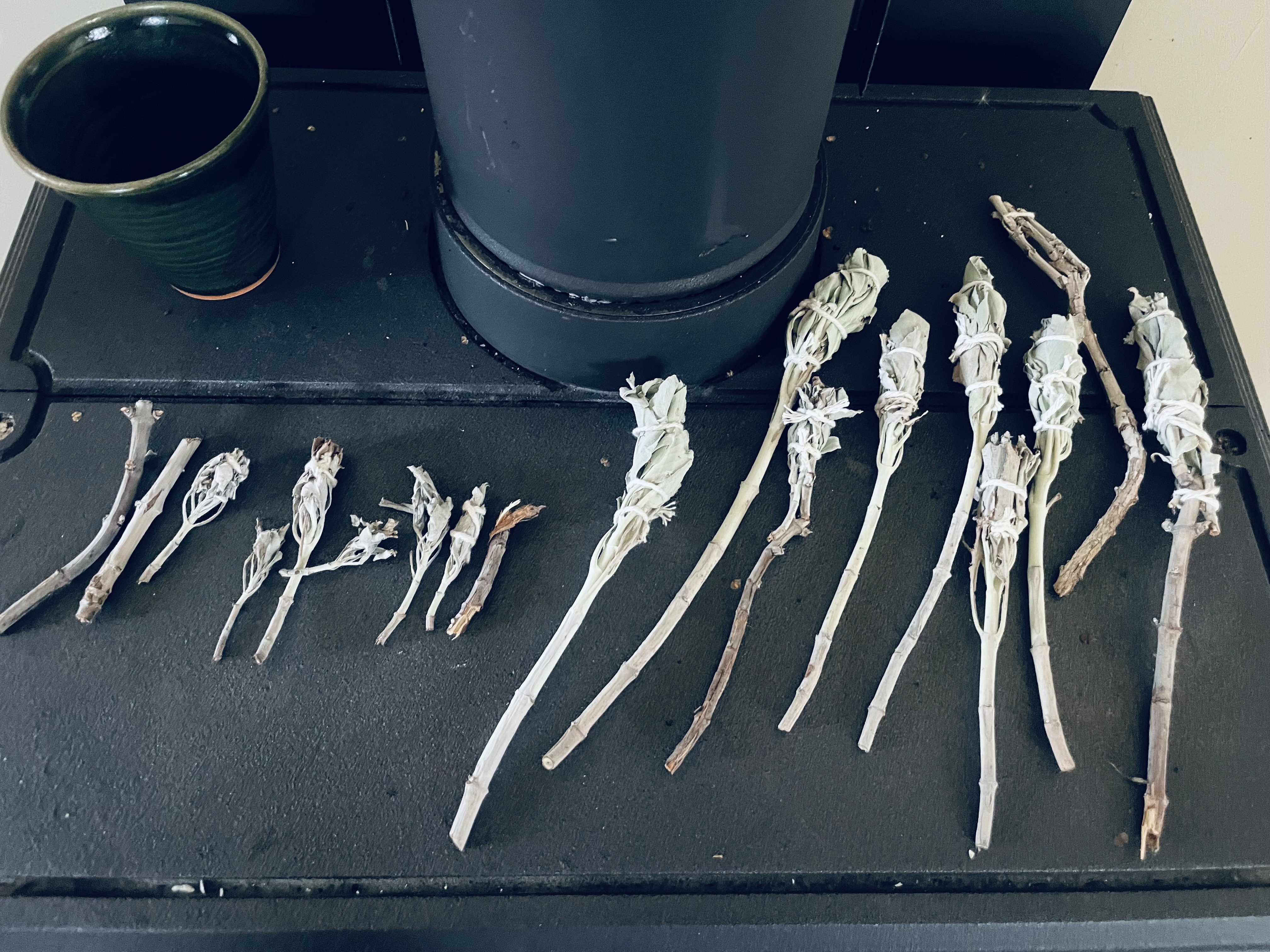
    (Above: I got eight decent witch sticks, plus some smaller bits and pieces of stalk…all of which can be burned. Here they are drying on my fire top.)

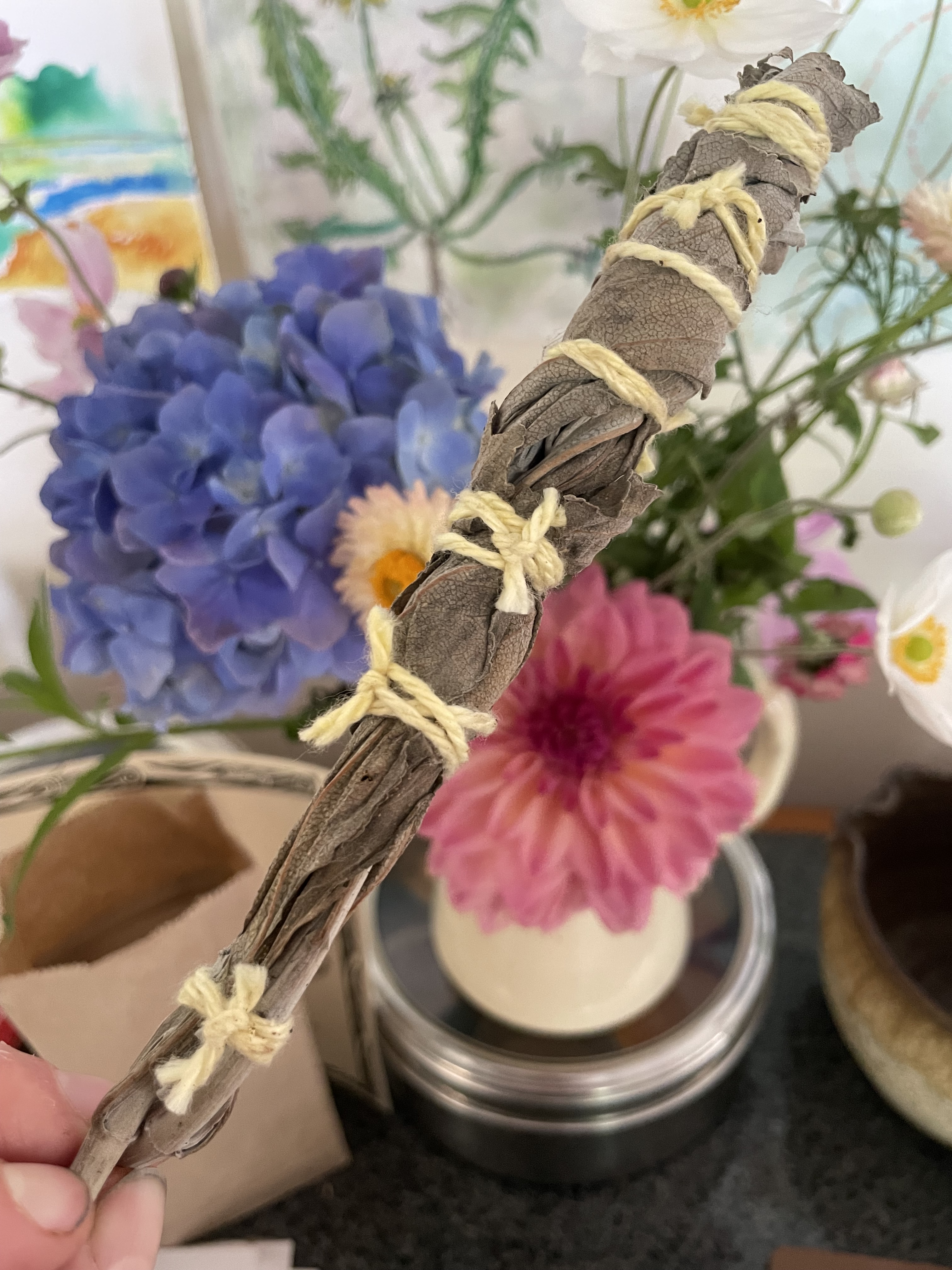
    I see a lot of ‘how-to’ articles about making cleansing/burning sticks around…but they often forget a detail which I think is important. For them to burn well and safely, don’t wind the string around and around the bundle, securing only at top and bottom. This will mean your stick will fall apart as the thread burns and you could have a higher risk of embers dropping off it. Instead, tie it tightly with small pieces of string at regular intervals, like in this photograph:

    (Above: please forgive my ‘dirt manicure’ as garden writer Gayla Trail calls it. I scrub* my nails regularly but folks who ‘touch soil’ (which is ilke ‘touching grass’ only more grubby) every day struggle to have photogenic hands. ((I have to buy a new nail brush every couple of months…so intent is my endless scrubbing.))

    Do you have a favourite season or are you one of those calm, rational people who loves them all equally?

    I’d love to hear what kitchen or garden chores you’ve been doing lately. Let me know below.

    “As long as autumn lasts, I shall not have hands, canvas or colours enough to paint the beautiful things I see.”

    -Vincent Van Gogh

  • the sharing shelf

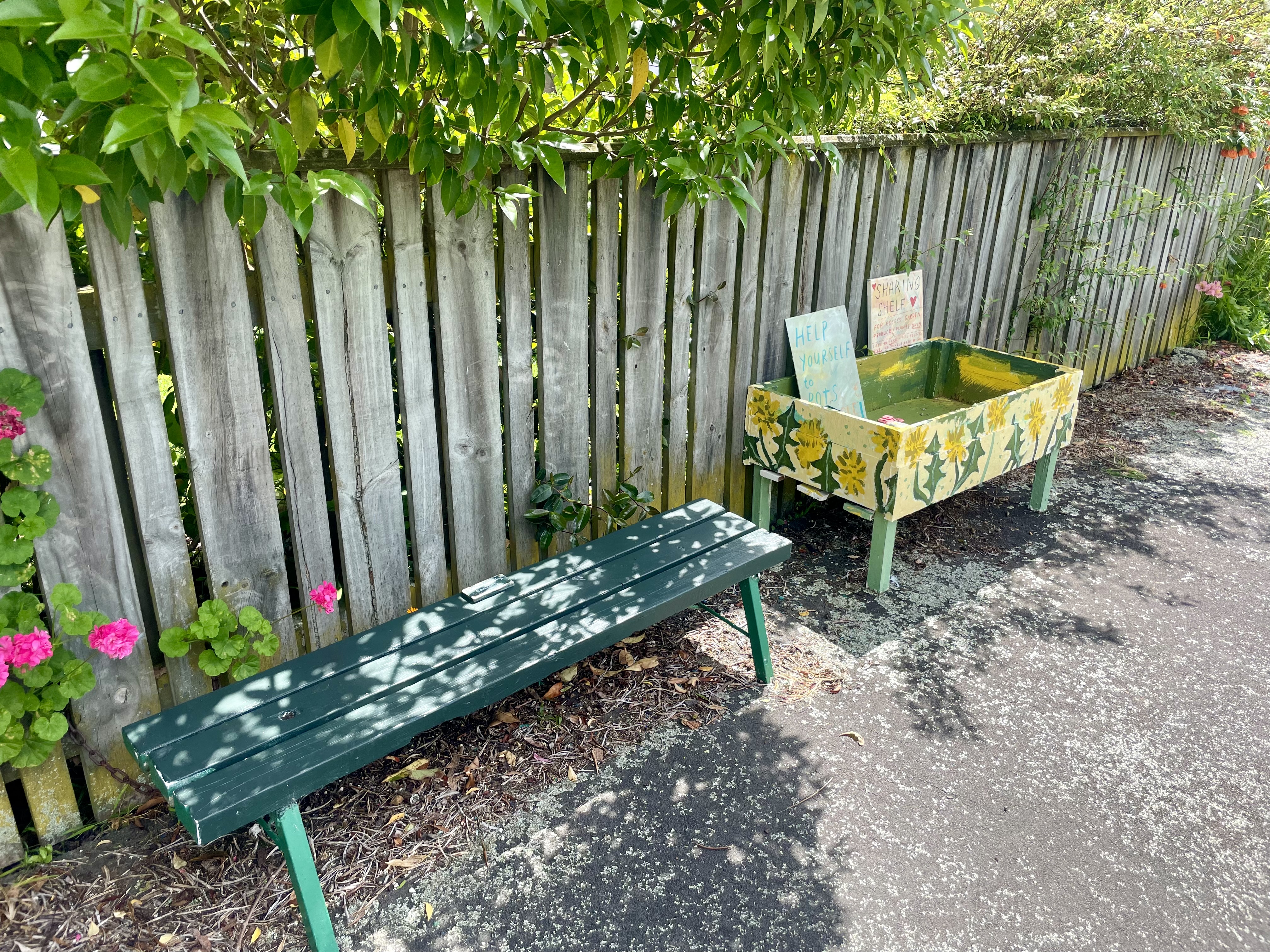
    Late last year we put a sharing shelf outside our front fence.

    We’ve always shared excess produce from our vegetable garden by putting it in a box on the community seat (for more about the community seat, check out my last book, ‘A Forager’s Life‘) but I wanted to make it a little more formal so that it could be a site of #radicalreciprocity* in the neighbourhood and many people could contribute to it.

    (#radicalreciprocity is how I try to live my life. Giving generously, receiving with gratitude and humility, and trusting that there is more than enough to go around if we can all learn to do both.)

    I bought the planter from a local young woman who makes them from upcycled pallets and then I painted a dandelion motif on it. The dandelion is a plant that means a lot to me and acts as a symbol of courage and generosity in my personal symbology.

    It didn’t take long -a few weeks or so- for neighbours to get the idea and things began to appear in it that weren’t from us.

    Part of putting something like this into a public sphere requires a willingness to look after it well so I check it twice a day, first thing in the morning and then at dusk.

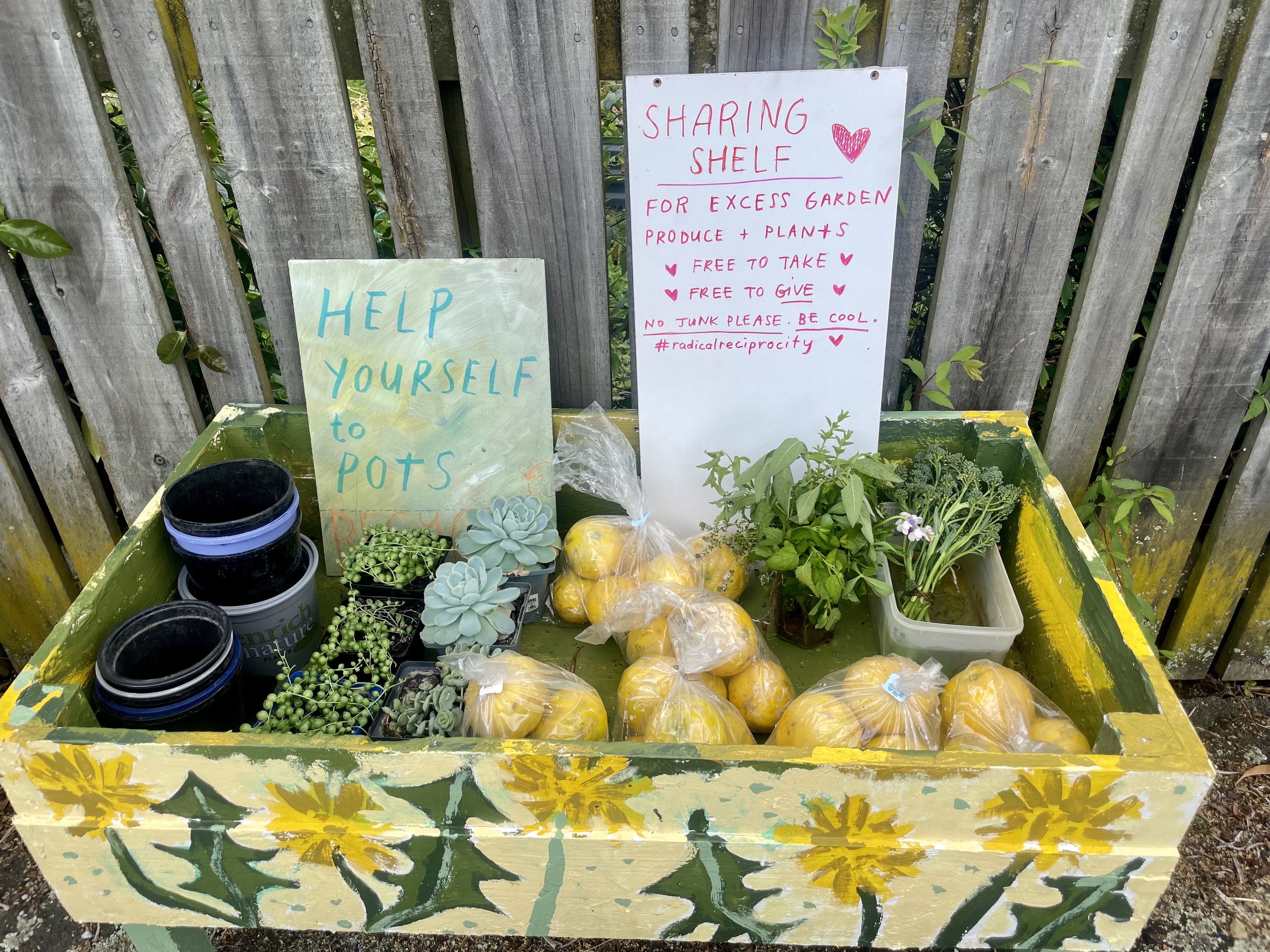
    Although the purpose of it is to share the excess garden produce and garden related things, occasionally people put perishable or pantry food in it. The perishable food (things like bread, sandwiches, etc) I dispose of (usually feed it to the backyard birds, or my worm farm, if possible) because I don’t want to be responsible for anyone getting ill from spoiled food. Mostly, though, people seem to get the idea. There’s been all sorts of vegetables, seedlings, cut herbs. It’s been mostly delightful things.

    My original sign (paint and vivid marker on an art canvas) melted away in the rain, so I painted an old cutting board with outdoor paint in an attempt to make a more weather-proof sign:

    People have not 100% ‘been cool’. There’s the occasional beer bottle or pizza box after a Friday or Saturday night. There was one incident when someone kicked the front of it in, breaking a board. But for the most part, it’s been a success and a fun, new element in my days.

    March has definitely been the month of the giant marrow. Hearteningly, these swollen offerings have all been taken, though so I guess there are some good marrow recipes being cooked around Takaro. There’s also been lots of bags of tomatoes and apples.

    Every day is different in the sharing shelf. Things flow in and out.

    With feijoas just beginning, I’m expecting it to become mostly a ‘freejoa’ booth any day now.