
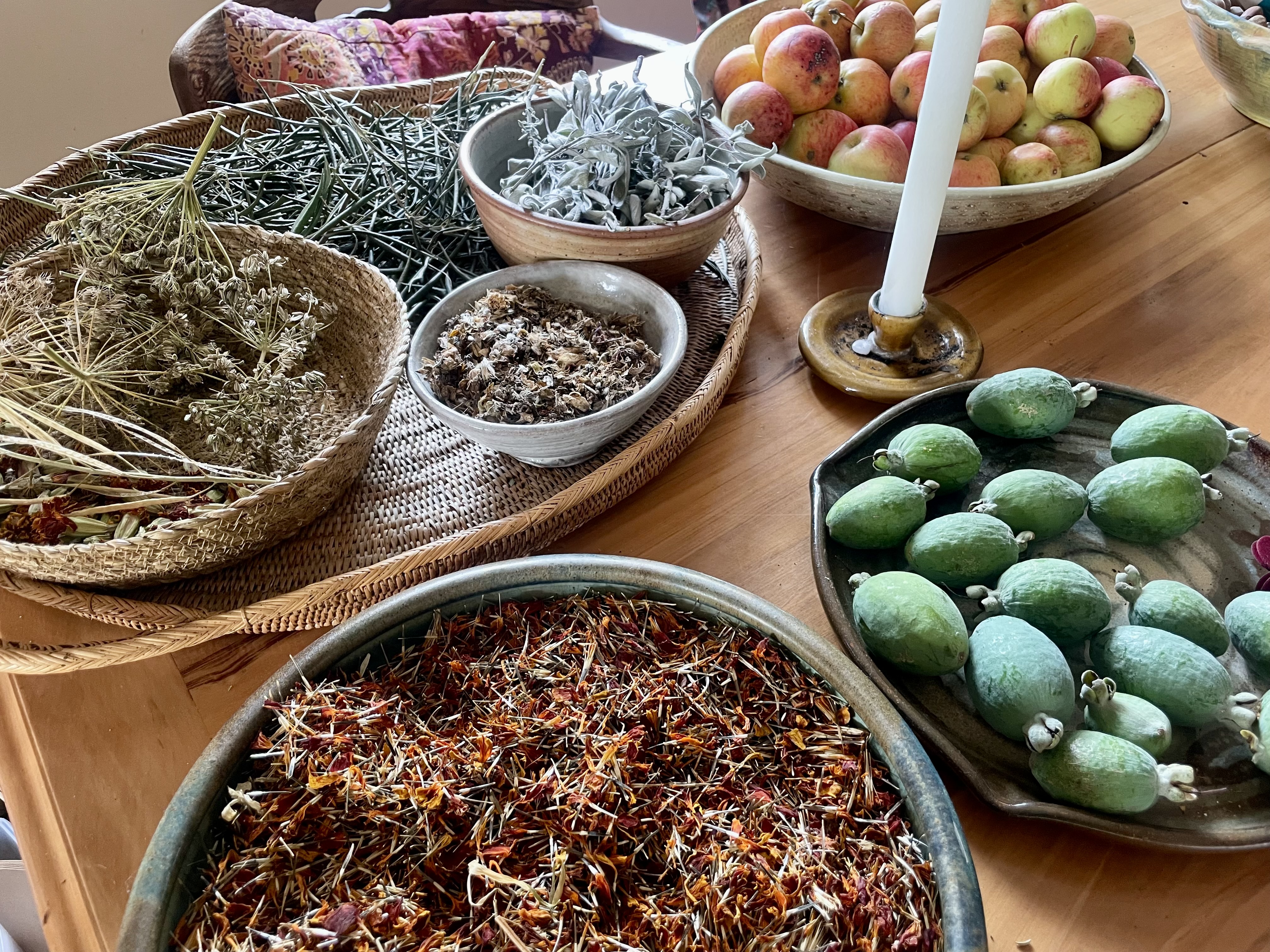
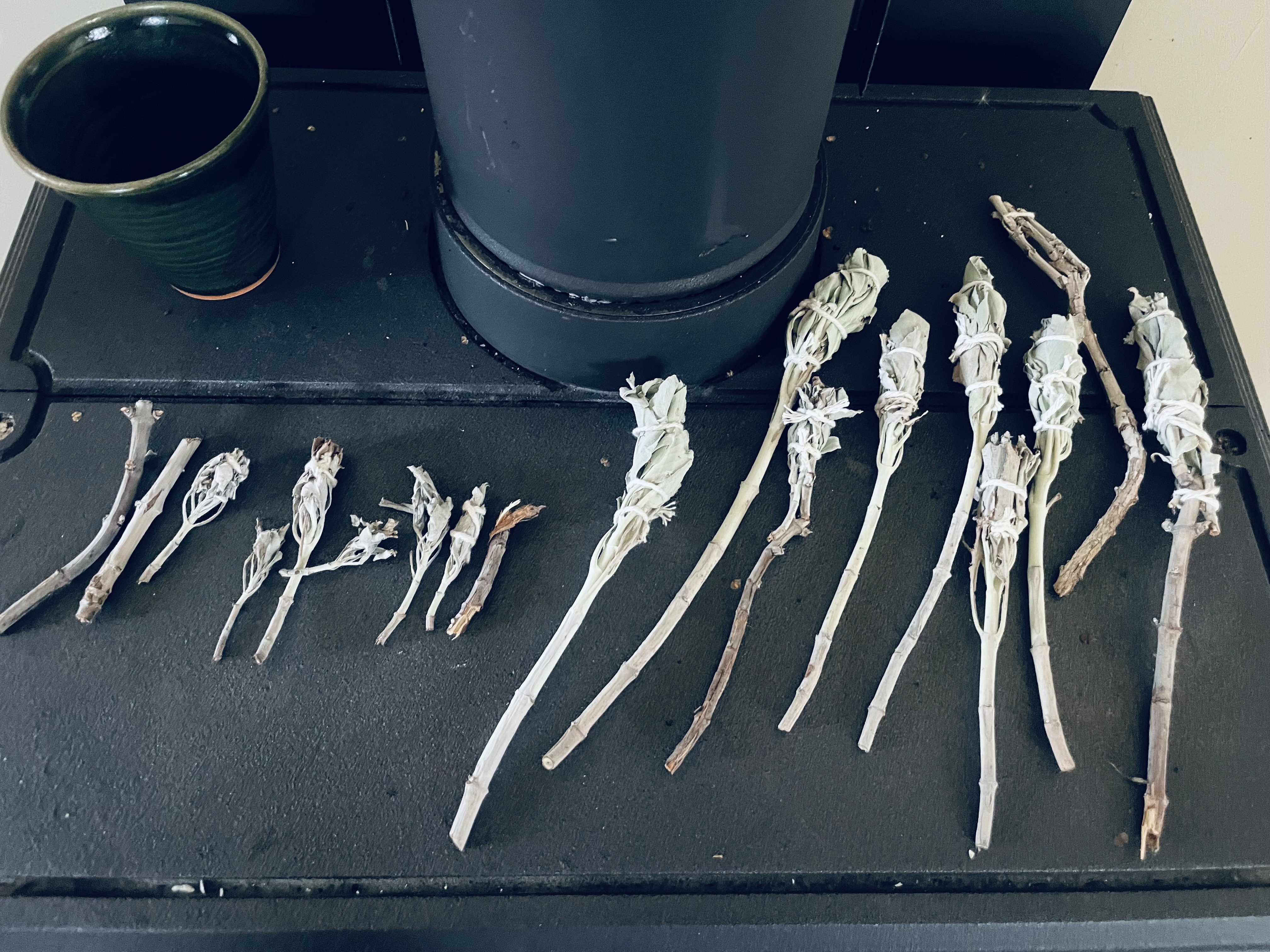
(Above: the things I put in this batch of Fire Cider. Every batch is unique. It’s a real ‘use what you have’ medicine.)
Kitchen-witchery is slow work.
Sometimes things that end up the jars in my kitchen began months ago with literal seeds in the greenhouse or foraged finds from a season the opposite to now. If I count growing, harvesting and sometimes drying or macerating in to the recipe hours…I have to describe the recipe method in months rather than hours. This is why I love ‘slow food’ or the localising food movement…it operates on an entirely different time-scale to the deadening speed of supermarkets and fast food outlets.
An example of this, I just conducted an kitchen experiment which began in back spring as seed…basil seed…grown by both me and my friend Bev of Kereru Natural Products. I had a modest basil harvest but Bev’s basil really flourished this summer and her basil patch was thigh high! I’d never seen such large basil plants. Whilst looking after her place for a weekend in summer, I harvested some and made a large batch of pesto; some for her, some for me. I’m used to making pesto without a recipe but for such a large batch, I googled a recipe to help me with proportions. I used this one which calls for 16 cups of chopped basil (!) to give you a sense of scale.
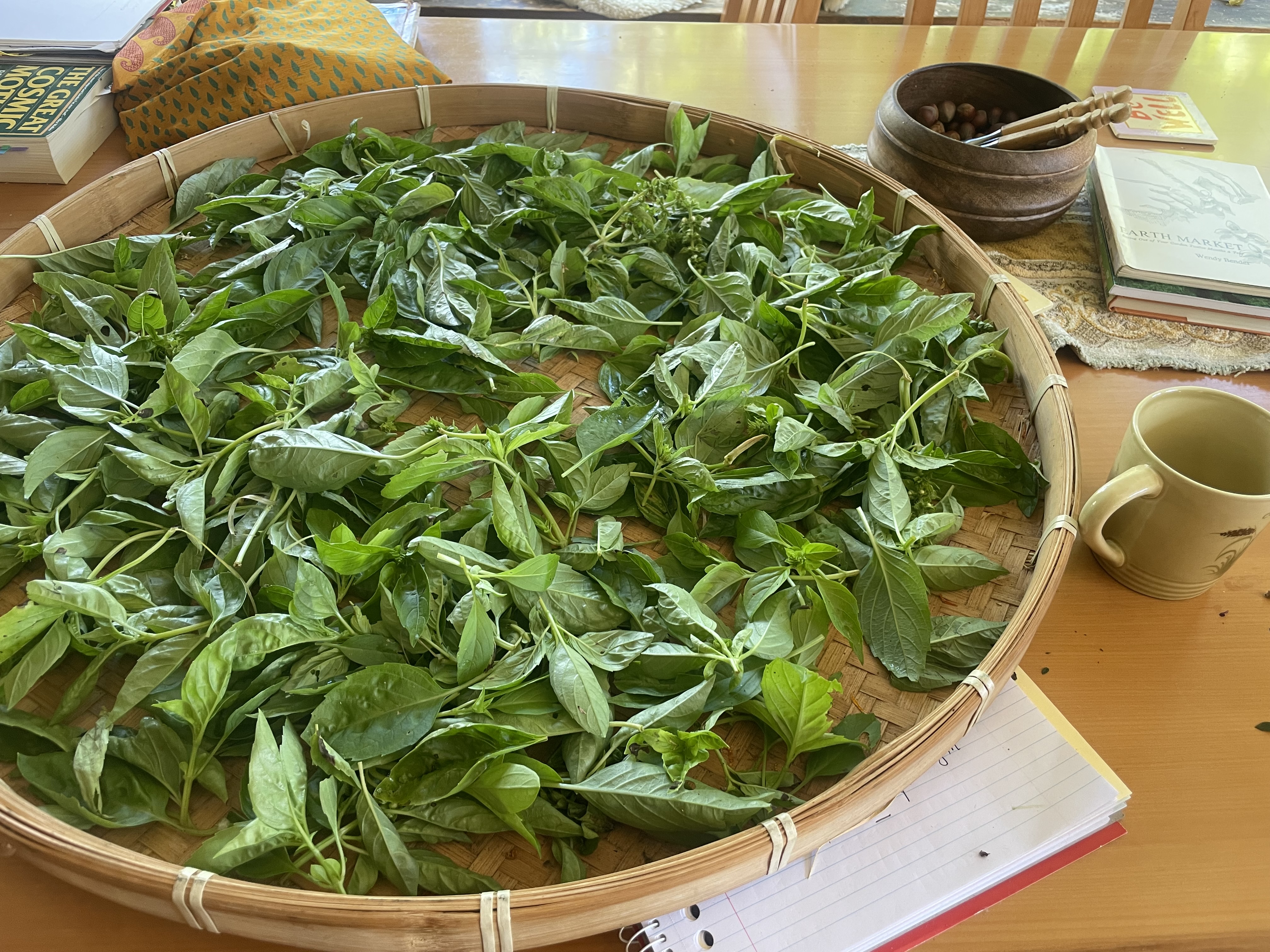
(Above: basil, basil everywhere.)
After the big basil-making session, the woody stalks were left behind. The stalks smelled so divinely peppery and aromatic, I felt loathe to compost them. So I tied the stalks from Bev’s basil and from my own in a bunch and hung them upside down in my greenhouse to dry.
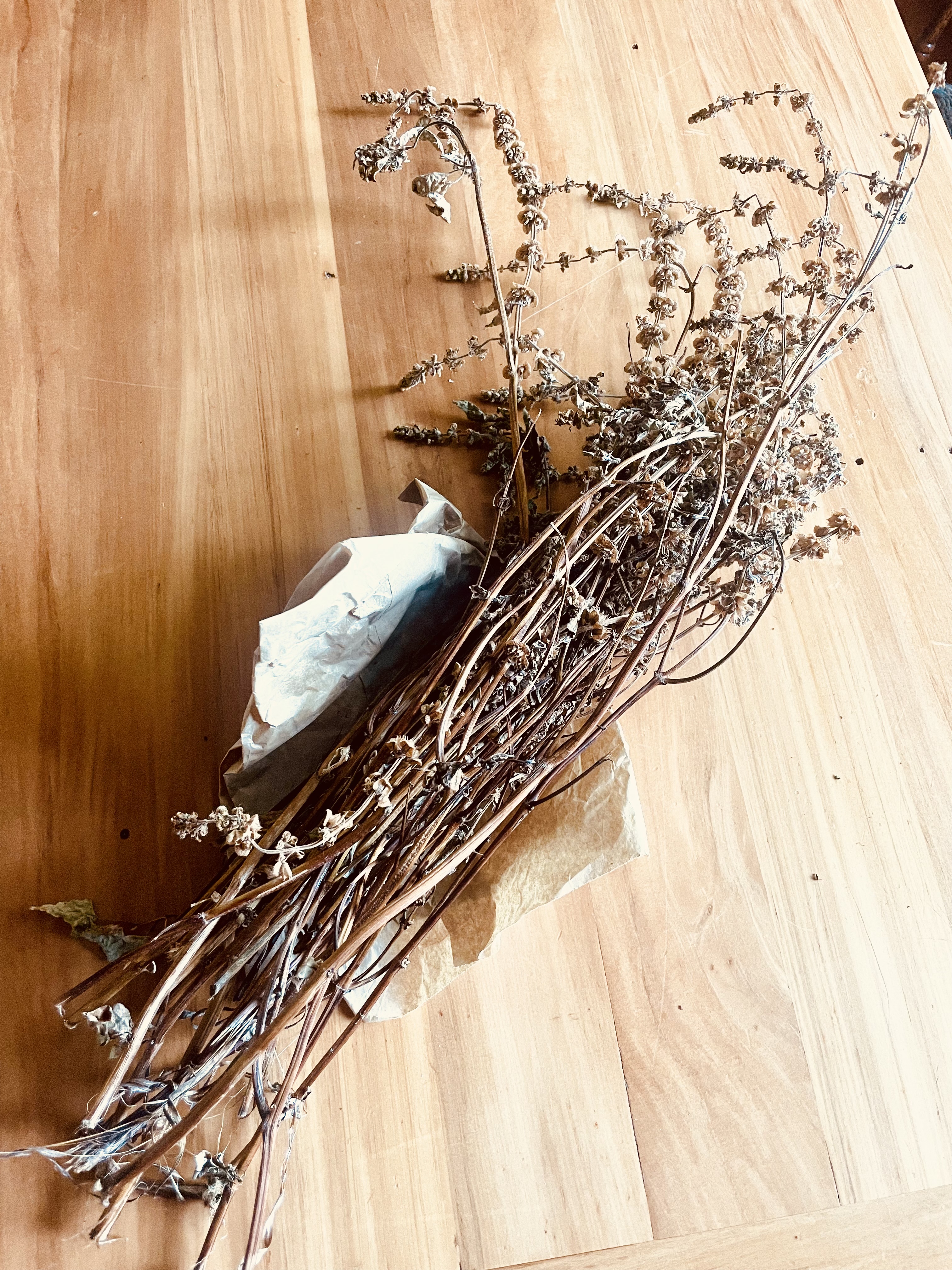
(Above: one of the bunches of dried basil stalks and flowers.)
Last weekend, with harvest season madness slowing down enough to get to some more peripheral tasks, I bought the dried basil stalks in and had a go at turning them into a basil salt by cutting them into small chunks and grinding them into NZ seasalt in my electric spice grinder.
I had to use garden secateurs for this, as they were very woody once dried. My spice grinder juuuuust coped. It made a not-very-visually-appealing, khaki, fibrous salt. However, what the salt lacks in visual appeal in more than makes up for in flavour.

(Above: ground basil stalk + NZ sea salt. It’s not pretty but it’s delicious.)
It has that intense, almost licorice smell that the top notes of basil has. It tastes like ‘essence of basil’. It’s freakn’ delicious and while it’s not attractive enough to be the kind of salt you’d put in a cute dish on the table, it makes a great ‘deep notes’ salt. I will be adding it to things which slow cook, like soups, stews and using it more like a stock than a table salt. I think this experiment was a success although if you have any thoughts about how to make it look more attractive, let me know in the comments. (You have to scroll all the way to the bottom of each post to find the comments box, btw.)
Another thing I made on the weekend, was a batch of Fire Cider as we’ve gotten through all of last year’s.
Fire Cider is basically a brew of ingredients which stimulate the immune system, the digestive system and are anti-inflammatory, steeped in apple cider vinegar. The resulting fiery brew can be taken as shots with a little water through the winter to help stave off winter colds. I also use it in dressings to we are ‘eating’ our medicine through the winter as well.
There’s a fascinating story about Fire Cider. In america, a natural goods company attempted to trademark ‘Fire Cider’…an insult to this commonly-known and used folk medicine! An angry and indignant group of ‘fiery’ herbalists fought in court against this attempt to trademark folk medicine and WON! Hoorah! A victory for the commons.
There’s no real ‘recipe’ to Fire Cider. You use what you have and the ingredients you prefer. I don’t like white onion in mine but I do like the heat of chillies and garlic. I used some oranges for vitamin C. Rosemary, sage and thyme, calendula from the garden > all great for sore throats and coughs. Plus ginger and turmeric. by the way, I’d made the apple cider vinegar myself from our summer apple harvest. (See what I mean about slow food?)
I find it a fun thing to make because it looks so pretty in the jar while it’s brewing. Our is currently sitting on the kitchen table…at least for a while.
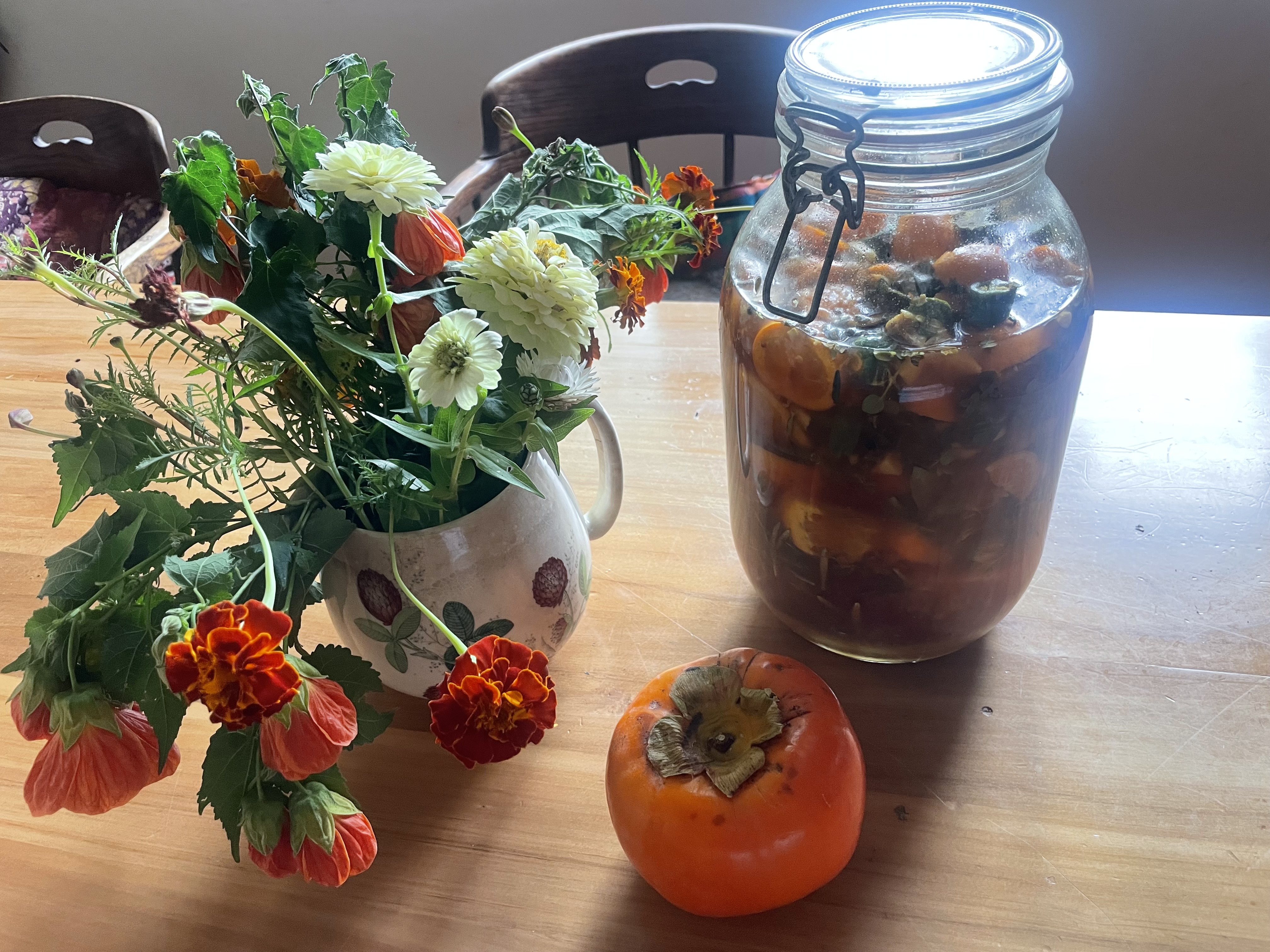
(Above: still life with garden blooms, fire cider brew and a huge persimmon my mother-in-law gave me.)
Every late summer and autumn, I make various winter medicinals: oxymels, tinctures, vinegars, throat sprays…etc. I think everyone should be able to access simple herbal medicinals. They can be very expensive from the health store so I like to share what I make around with my friends and family.
& that’s what’s been happening in Ahuru Kitchen this week. (Our house came with a name on the front: the Māori word, Ahuru, which means nest.)
Do you make medicinal things in your kitchen as well as culinary things? Do you ever do strange experiments with odd ingredients? I’d love to hear about it in the comments.
& May we all have robust health this winter! x


 Helen Lehndorf