Tag: recipes

  • all good things

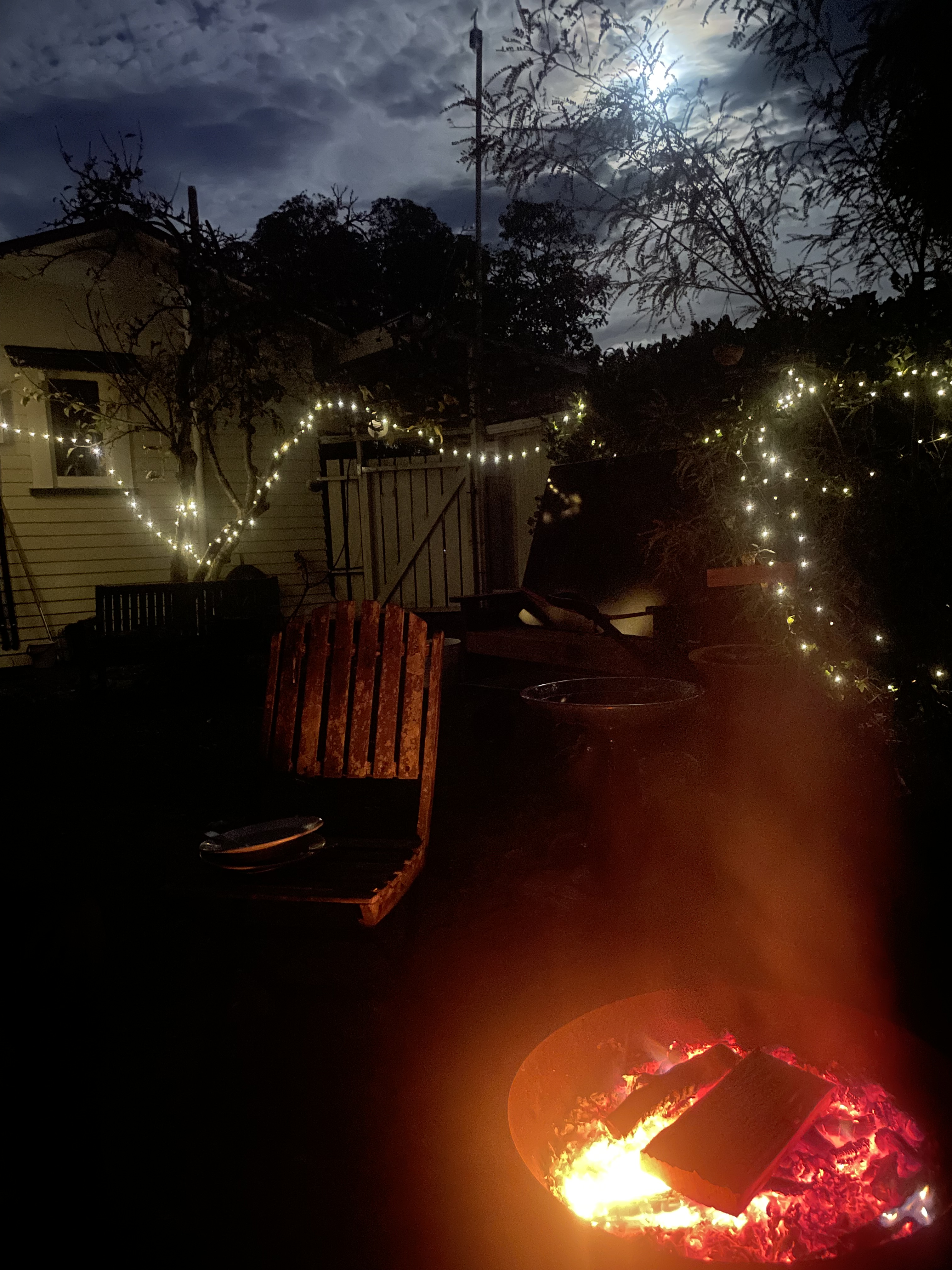
    (Last full moon we had a burn in the backyard. I don’t know why I try to take photographs of the moon but I do.)

    How have you been?

    Anyone feel like every day there is some new strange and terrible news to process? Whether it be personal or worldly? Tell me it isn’t just me, PLEASE!

    I want this post to be all good things.

    Sometimes that’s what I use as an email sign-off or a farewell in a card: ‘all good things, Helen’. Because I want all and only good things for people.

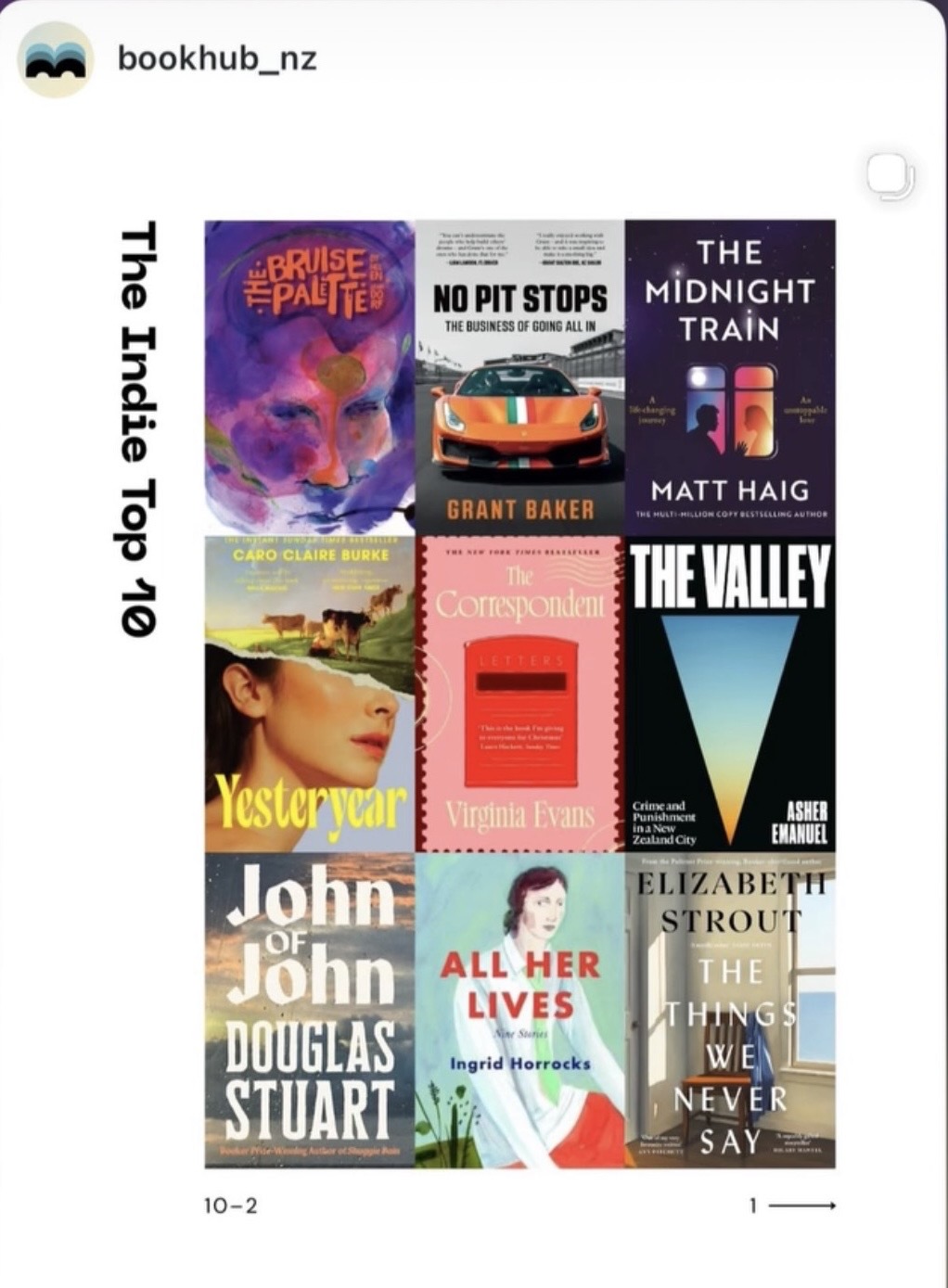
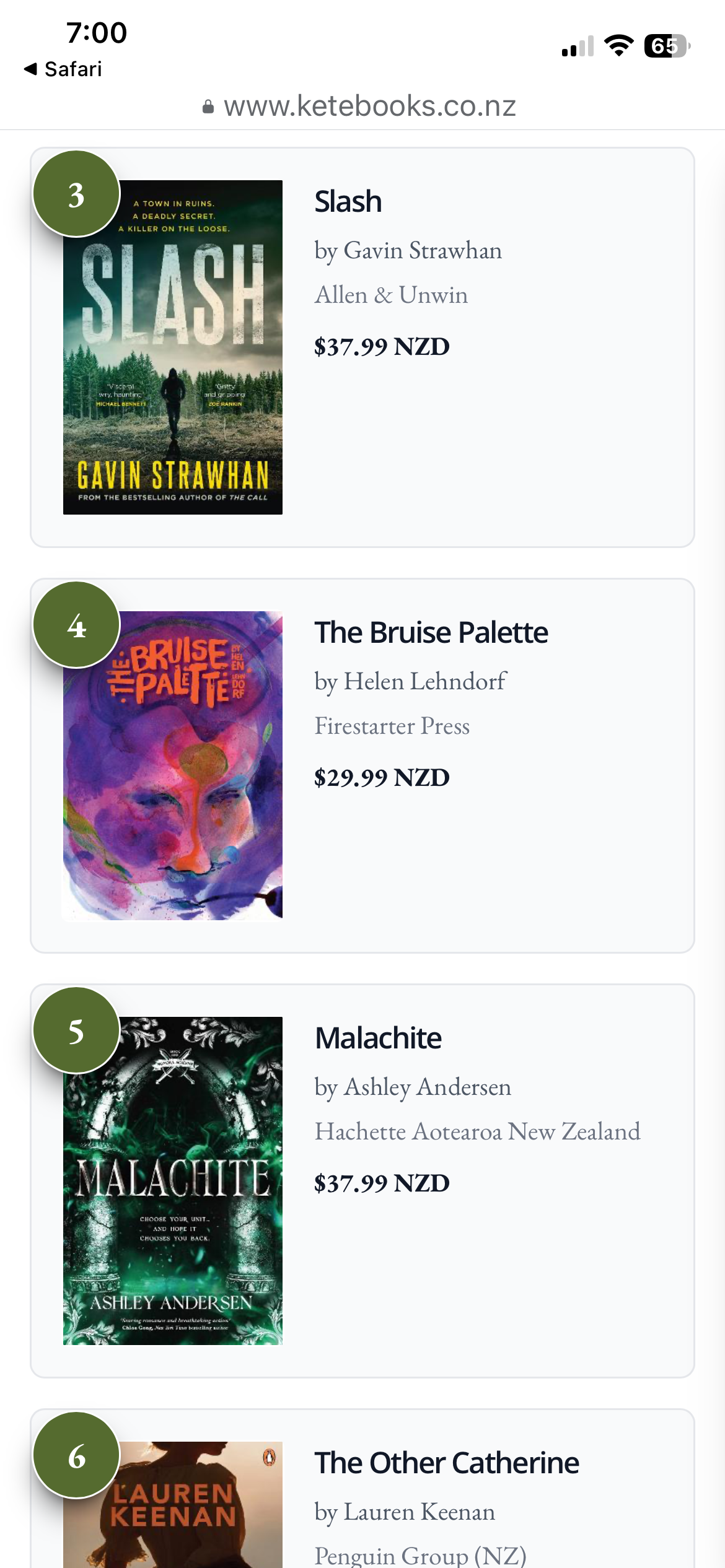
    Here’s the first good thing. Due to amazing support for the pre-order and the book launch, The Bruise Palette had a week at number FOUR on the NZ Bestseller list! NUMBER FOUR!

    Poetry rarely gets near the top twenty so this was a total buzz for me. I kept tapping the link and peeking at it sitting there at number four because I couldn’t believe it! Thank you x a million to everyone who bought a book.

    Screenshot
    Screenshot

    (Screenshots I took of TBP in the top ten. Happy days for weird, provincial poetry.)

    Another very cool things that happened recently is that I was interviewed for the Reskillience podcast. I’m a huge fan of Catie Payne’s work: her writing, her interviews, her world view, so this was an honour and a really good time.

    We talked about foraging and writing and plant communication and anarchism and what it means to live hyper-locally and much more besides.
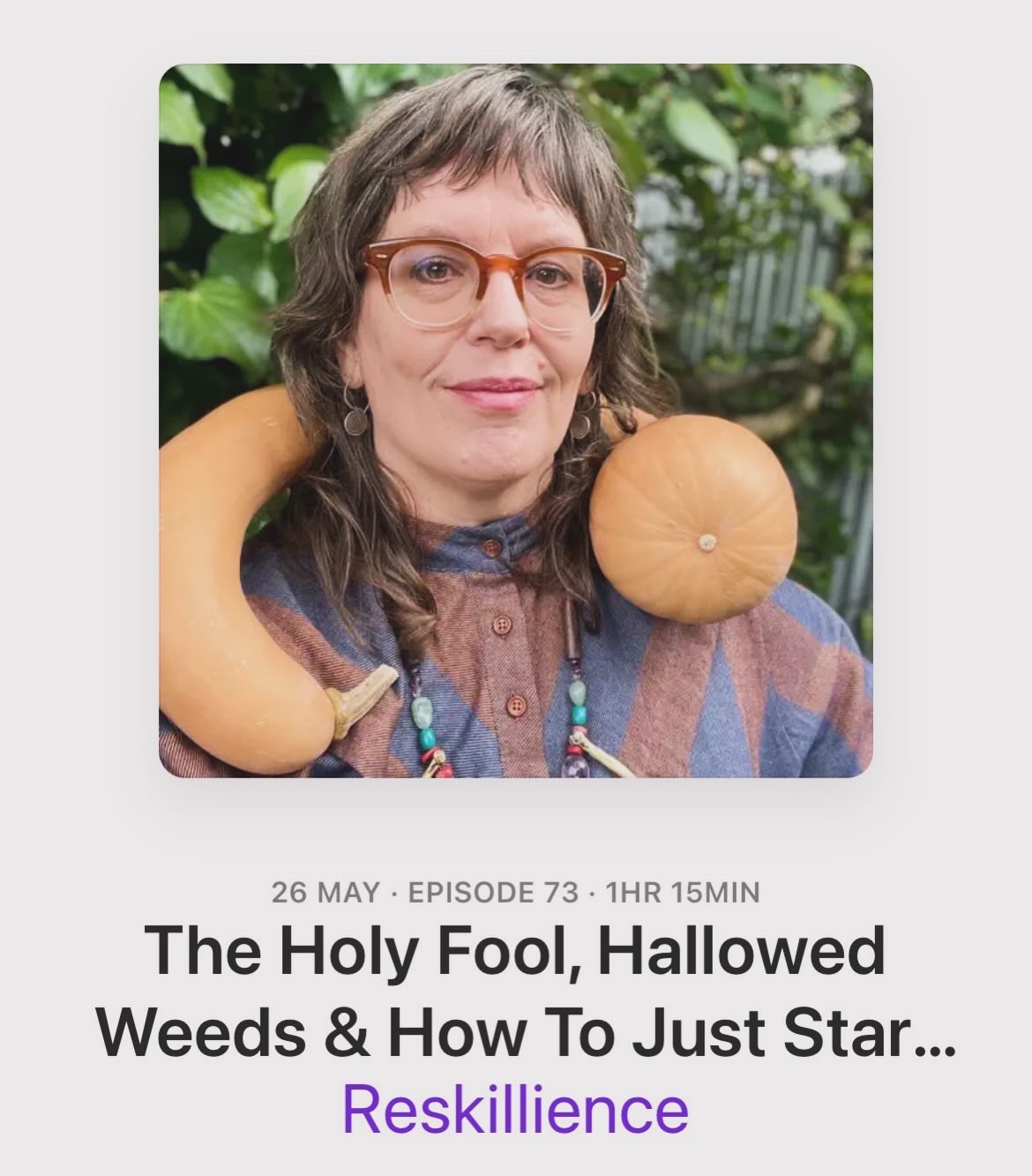
    I am your neighbourhood weird pumpkin lady.

    Listen via iTunes

    Listen via Spotify

    Here’s another good thing. I’m going to be reading poems with fellow poets and friends Airini Beautrais, Helen Heath and Maria McMillan in Paekākāriki later this winter. We want it to be relaxed and cosy so we’re emphasising tea and biscuits as an important feature of this Sunday afternoon event:
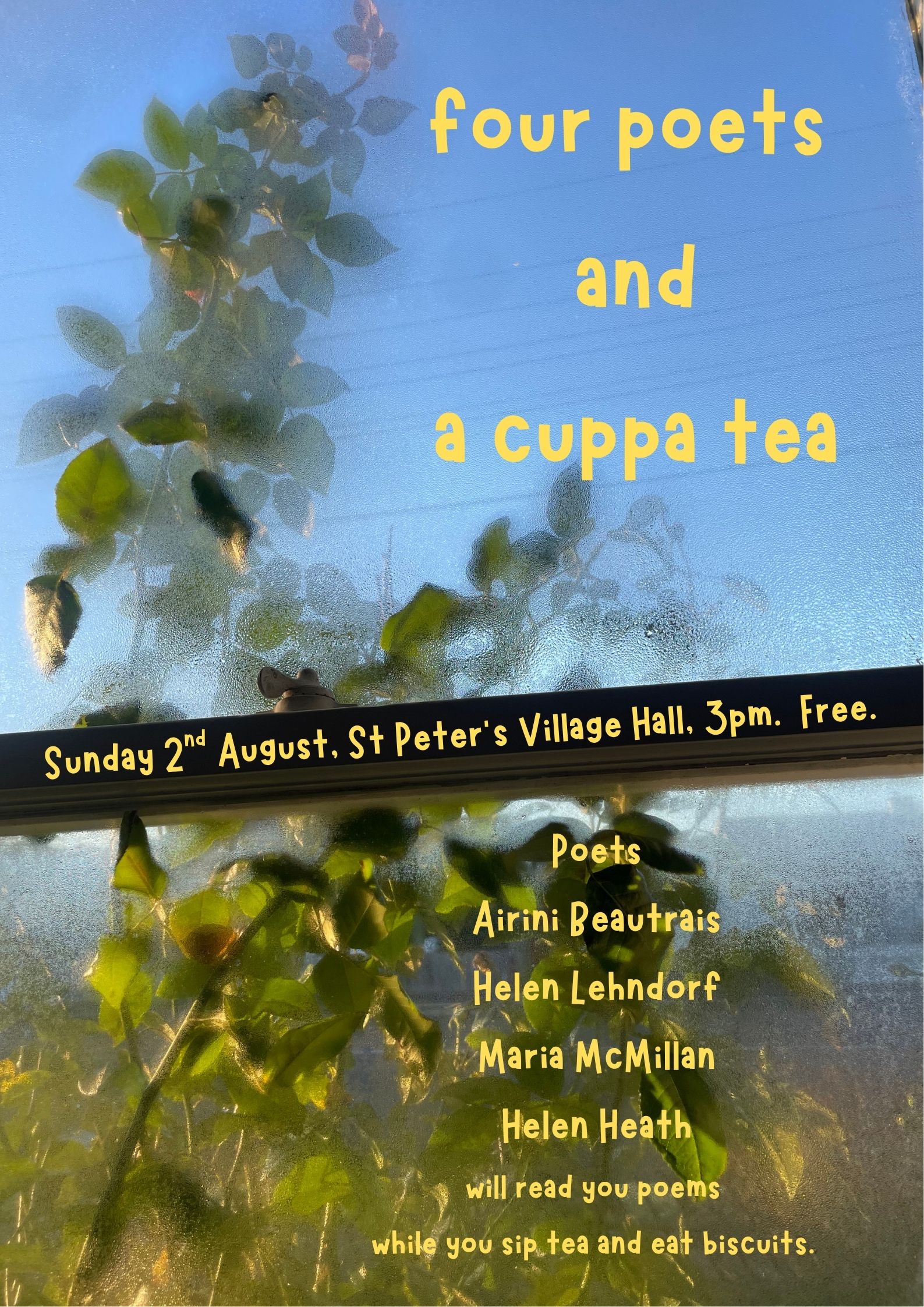
    (This poster was not made by AI. It was made by me on free Canva with no AI tools and a photograph I took and my own questionable font-choice.)

    Do come along if you live around those parts.

    I’ll have some copies of The Bruise Palette for sale, too.

    (But if you’d like to get one before then they are available online via Bruce McKenzie Books.)

    Now to some non-writing-related good things:

    Recently, fellow forager Peter Langlands and artist Erin Forsyth were invited by NZ Post to create a series of stamps around the theme of foraging!

    They are very pretty and you can buy all manner of NZ Post foraging stamp products (including just stamps for mailing things!)
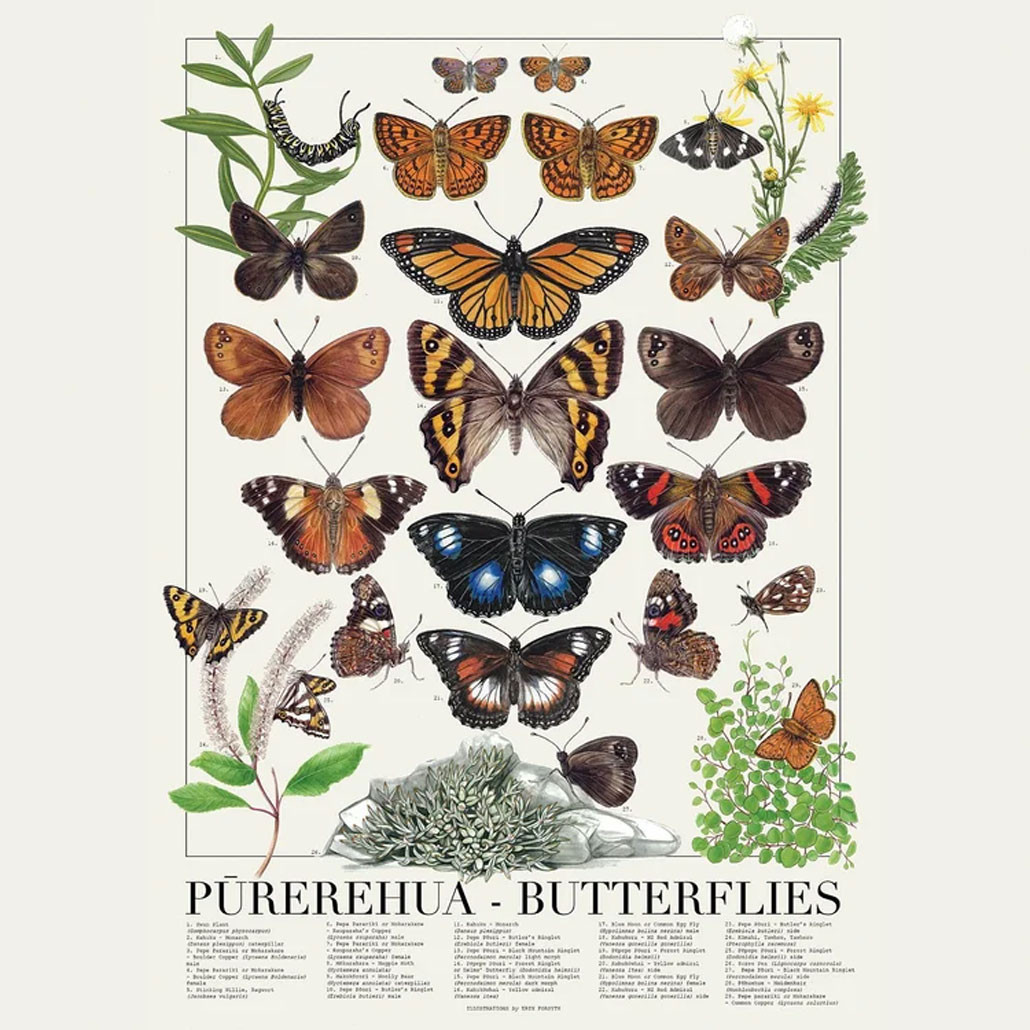
    I love this butterfly poster that is part of the product line.

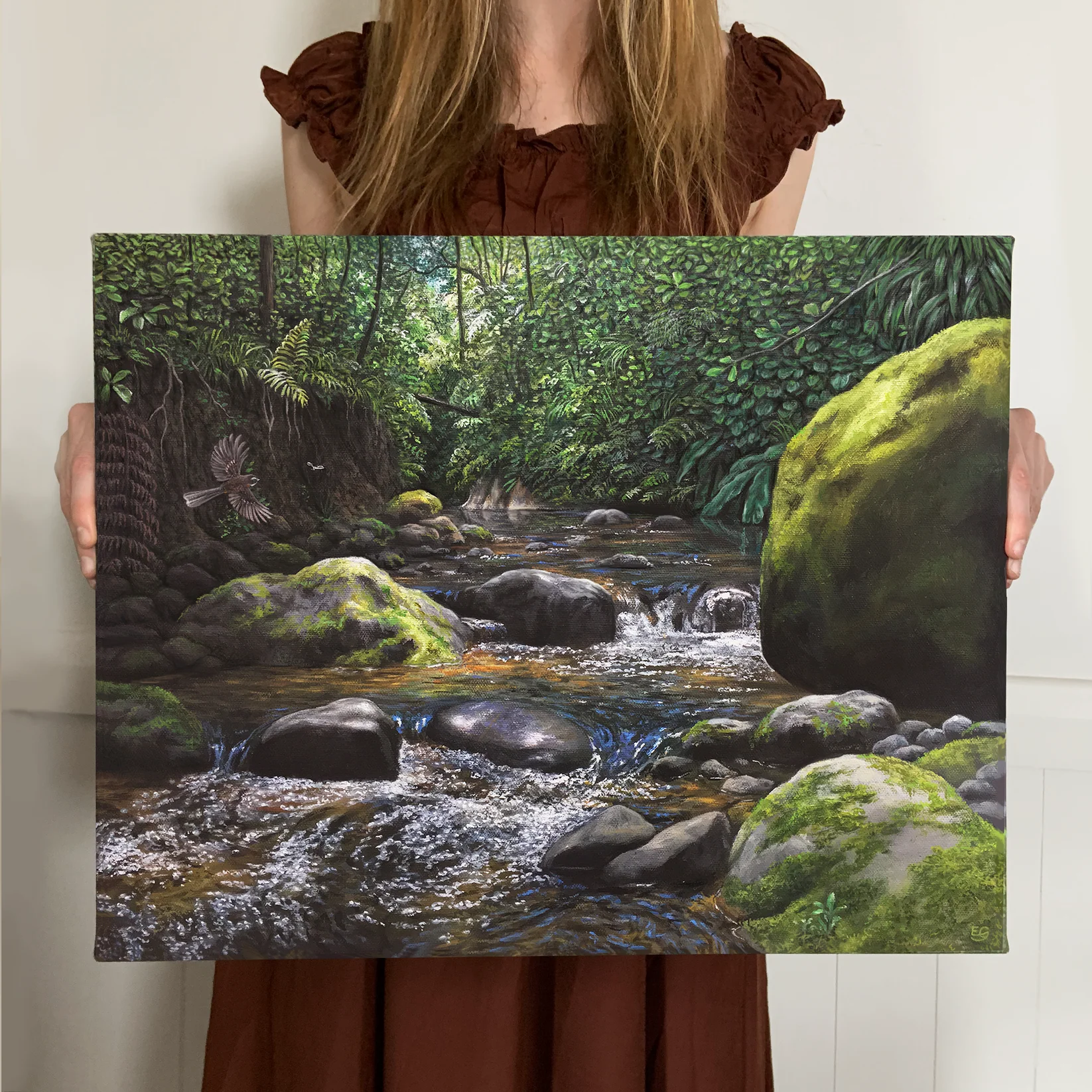
    Also in the realm of art and beauty, I’ve been sniffing around the stunning art of Emma Evangeline lately because it is nearly my oldest’s birthday and I want to get him something from her work. It is proving hard to choose, though, everything is so beautiful.

    I have a real thing for light reflecting on water and diffuse light through tree canopies so I particularly love her painting of Driving Creek:
    Witchy herbs

    I’m a self-taught (folk) herbalist and this year in my garden I am trying to find some of the more obscure and witchy/herbalist herbs to grow and learn that you don’t usually see at garden centres.

    Two great places to find these more obscure herbs are:

    for live plants, Kahikatea Farm.

    Late autumn I treated myself to a box of live plants from here and they arrive beautifully boxed up and in great coniditon. I got horehound, two kinds of mugwort, vervain, bergamot, skullcap and vervain. How’s them for some wonderfully witchy plant names? I’m looking forward to getting to know these herb friends in live plant form rather than just the dried versions I get from the health shop.

    For medicinal herb seeds, I recently bought an array from Seeds of Paheko. Again, lovely service and eco-packaged product. I can definitely recommend them.

    A poem I enjoyed.

    In The Bruise Palette there’s a poem called ‘Palmerston North Death Cleaning’ . Then in that way of morphic resonance, I stumbled on this poem Swedish Death Cleaning by Laura Grace Weldon published in OneArt journal.

    Here’s the opening stanza… but do go read the whole thing.

    “My black hole of a bedroom closet
    still holds long-impossible size eights,
    tattered protest posters, slumped purses,
    homemade Halloween costumes,
    and hopeful eyes facing the future
    from a box of black and white portraits.
    Each object a doorway into realms
    Where light no longer escapes.”

    (from Swedish Death Cleaning by Laura Grace Weldon

    I like the very messy human-ness in the poem and the midlife wrangling with all the selves we’ve been and then let go of along the way.

    A recipe for if you think you don’t like fennel

    I get a fortnightly CSA (Community Supported Agriculture) box from Live2Give Organics.

    The joy of getting seasonal produce according to what is ready on farm rather than me choosing what I want is that each time we get the box it’s like unwrapping a present: I never know what will be in there! The challenge, however, is that sometimes we get stuff that is harder for me to convince my family to eat (I’m looking at you swedes, kohlrabi, brussel sprouts, radicchio).

    This week we got a gigantic fennel bulb. I love fennel but the family aren’t so keen. I googled something like ‘fennel recipe for people who don’t like fennel’ and variations on this dish are what came up.

    Slow-roasting the fennel with lots of garlic, olive oil and parmesan totally changes the flavour profile of the fennel bulb. The aniseed/liquorice astringence fades and it is absolutely mellow, sweet and delicious cooked this way.

    Here’s a version of the recipe from local deli/grocery Farro. I didn’t use cream when I made it but I imagine the cream would make it even more lucious. But honestly, just garlic, olive oil and parmesan makes it a decadent tasting dish.
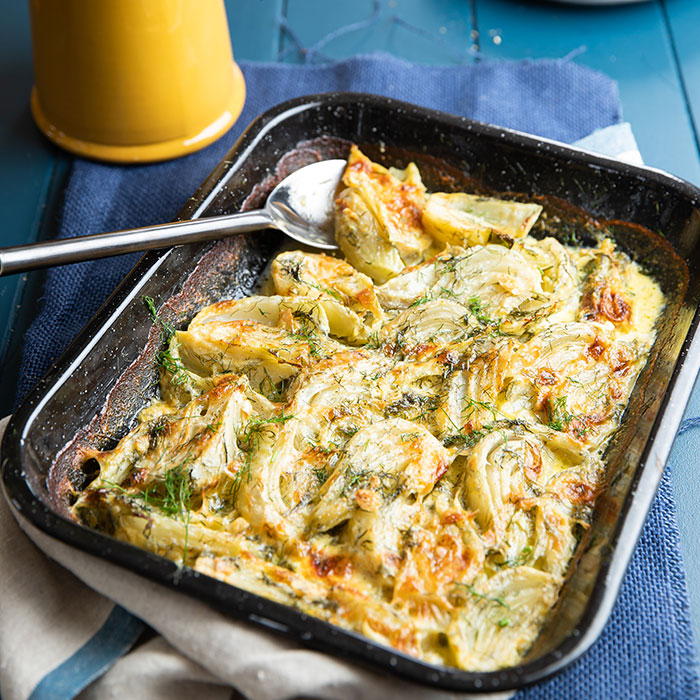
    (Photo from the Farro website.) YUM!

    Now, tell me your favourite recipes to make haters fall in love with brussel sprouts …because that’s my next challenge.

    A sweet song for early winter

    I’ve been obsessively playing this sweet song by Truthpaste (great name, no?) over and over in recent weeks.

    Something about the undulating quality of the vocals has really gotten under my skin.

    Also, the part in the song where the vocalist sings ‘How are you doing? Are you holding out?’ makes me feel really emotional. I think we are all asking each other that a lot lately, aren’t we?

    And the video is also very sweet:

    I’ve added the song to my very slow-growing ‘Slow Small Media’ playlist on Youtube. I occasionally add a mellow, thoughtful, emotional song when I’ve ‘auditioned’ it at great length and it has passed my very exacting standards for what constitutes a great song.

    Well, now I’ve spent far too long on this post when I should be doing much less fun and more grown-up things like calling people regarding appointments, sorting my taxes for the July returns, door-knocking arts organisations who are under-funded, under-staffed, over-worked and under pressure to try to promote my ridiculous little purple book… knowing that likely they will say no but i still have to try because ….I made a thing and there’s very little in the world that supports my making of things so therefore it’s very important that I attempt to champion my weird little thing in this fast, distracted, strange, anti-art, anti-deep-thought world we find ourselves in.

    Time to get off here and go and have some lunch, some water and a little stretch in the sunshine, I think. I hope you found this post to be ‘all good things’ as I intended. xx

  • Salted Lemons & Sharing

    Recently, a new local friend, Kaydee gave me some beautiful small ripe lemons.

    I’d been wanting to make some salted lemons so they seemed perfect for a smallish jar of those. Salted lemons are used a lot in both Middle Eastern and Indian cuisines.

    If you’re interested in having a go, here’s a good recipe which takes you through the steps. It’s pretty simple (just sea salt and lemons) but still, good to have some guidance for that first go.

    On the weekend, I judged them ready. I was going to a social gathering that day so I took the lemons out, scraped away the flesh*, and put the preserved rinds through my blender to make a salted lemon paste.

    (*some people use this part too…but it didn’t taste very good to me. I did use it to clean the inside of my sink before I put it in the compost.)

    I know my friends are busy people and I figured the preserve was more likely to be used if they could just scrape out a bit with a spoon rather than having to take it a lemon, rinse it and finely slice it.

    Even a small jar of preserved lemons makes a lot...too much for our household to get through in the six months they last. So it was helpful to me to have some people to share it with.

    This is how it looked blended & before I labelled the lids.

    Something I’ve learned from attending Crop Swaps is that making signs is super helpful. Then anyone interested can just take a photo of the sign and the gifter doesn’t have to answer the same questions many times.

    So here’s the little note I made when I put the containers of lemon paste on the table to be shared:

    From this one small social transaction:

    Kaydee shared her harvest with me,

    I learned a new ferment,

    I shared it back into our friend group,

    friends learn how to use a new-to-them ferment…

    & the lemons (and the love) keep circling.

  • In the kitchen this week: an experiment with basil and a batch of Fire Cider

    (Above: the things I put in this batch of Fire Cider. Every batch is unique. It’s a real ‘use what you have’ medicine.)

    Kitchen-witchery is slow work.

    Sometimes things that end up the jars in my kitchen began months ago with literal seeds in the greenhouse or foraged finds from a season the opposite to now. If I count growing, harvesting and sometimes drying or macerating in to the recipe hours…I have to describe the recipe method in months rather than hours. This is why I love ‘slow food’ or the localising food movement…it operates on an entirely different time-scale to the deadening speed of supermarkets and fast food outlets.

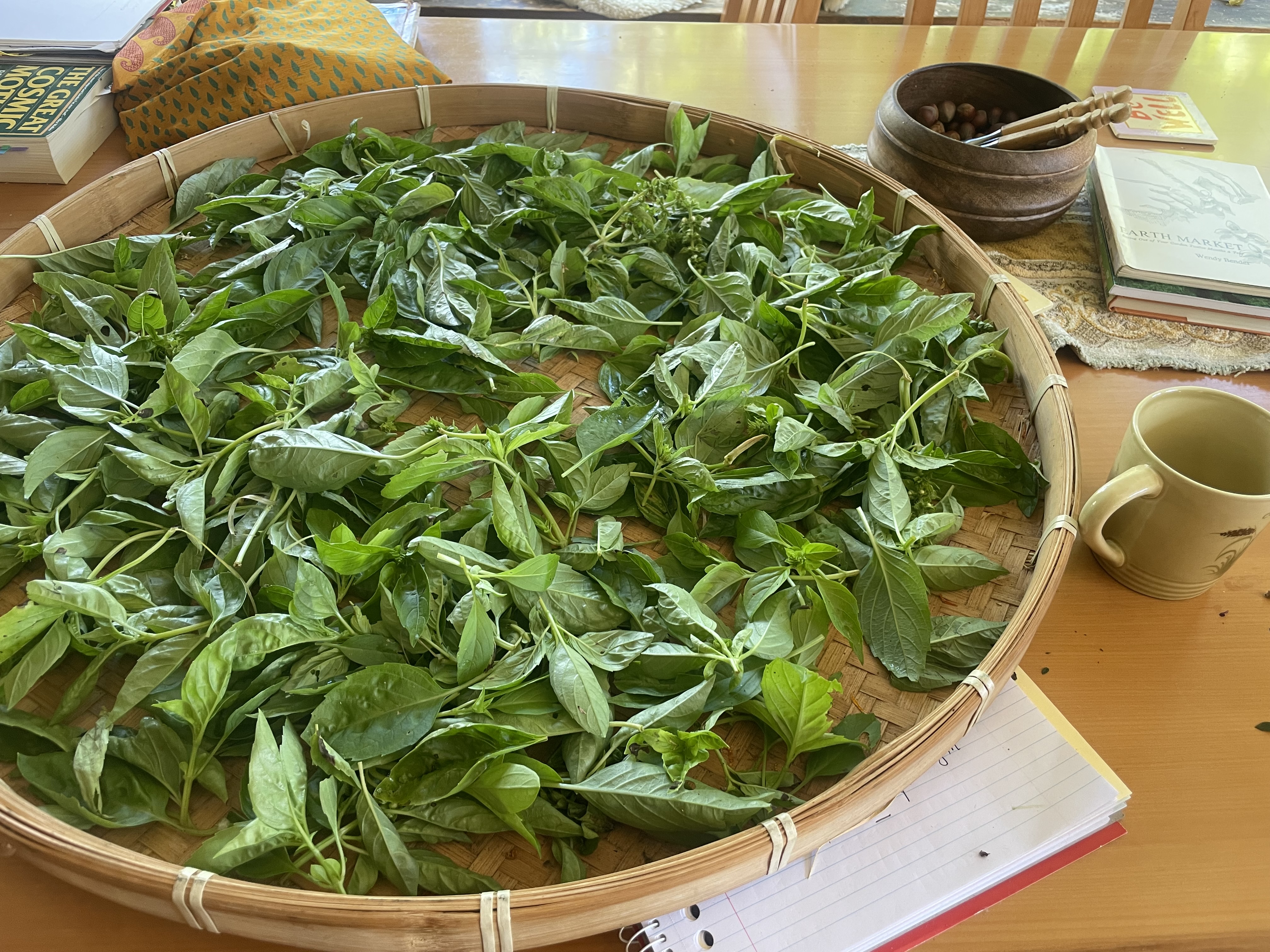
    An example of this, I just conducted an kitchen experiment which began in back spring as seed…basil seed…grown by both me and my friend Bev of Kereru Natural Products. I had a modest basil harvest but Bev’s basil really flourished this summer and her basil patch was thigh high! I’d never seen such large basil plants. Whilst looking after her place for a weekend in summer, I harvested some and made a large batch of pesto; some for her, some for me. I’m used to making pesto without a recipe but for such a large batch, I googled a recipe to help me with proportions. I used this one which calls for 16 cups of chopped basil (!) to give you a sense of scale.

    (Above: basil, basil everywhere.)

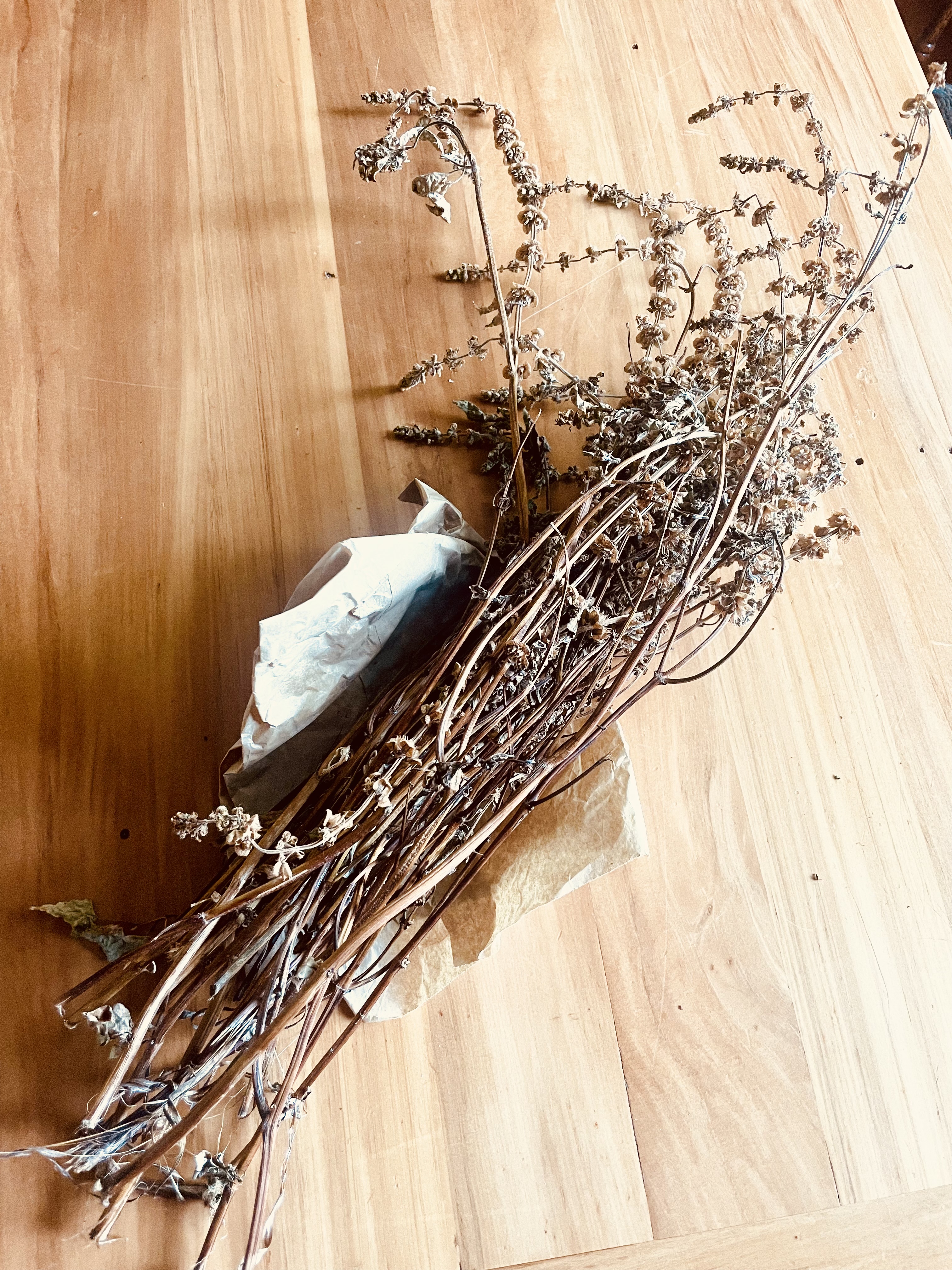
    After the big basil-making session, the woody stalks were left behind. The stalks smelled so divinely peppery and aromatic, I felt loathe to compost them. So I tied the stalks from Bev’s basil and from my own in a bunch and hung them upside down in my greenhouse to dry.

    (Above: one of the bunches of dried basil stalks and flowers.)

    Last weekend, with harvest season madness slowing down enough to get to some more peripheral tasks, I bought the dried basil stalks in and had a go at turning them into a basil salt by cutting them into small chunks and grinding them into NZ seasalt in my electric spice grinder.

    I had to use garden secateurs for this, as they were very woody once dried. My spice grinder juuuuust coped. It made a not-very-visually-appealing, khaki, fibrous salt. However, what the salt lacks in visual appeal in more than makes up for in flavour.

    (Above: ground basil stalk + NZ sea salt. It’s not pretty but it’s delicious.)

    It has that intense, almost licorice smell that the top notes of basil has. It tastes like ‘essence of basil’. It’s freakn’ delicious and while it’s not attractive enough to be the kind of salt you’d put in a cute dish on the table, it makes a great ‘deep notes’ salt. I will be adding it to things which slow cook, like soups, stews and using it more like a stock than a table salt. I think this experiment was a success although if you have any thoughts about how to make it look more attractive, let me know in the comments. (You have to scroll all the way to the bottom of each post to find the comments box, btw.)

    Another thing I made on the weekend, was a batch of Fire Cider as we’ve gotten through all of last year’s.

    Fire Cider is basically a brew of ingredients which stimulate the immune system, the digestive system and are anti-inflammatory, steeped in apple cider vinegar. The resulting fiery brew can be taken as shots with a little water through the winter to help stave off winter colds. I also use it in dressings to we are ‘eating’ our medicine through the winter as well.

    There’s a fascinating story about Fire Cider. In america, a natural goods company attempted to trademark ‘Fire Cider’…an insult to this commonly-known and used folk medicine! An angry and indignant group of ‘fiery’ herbalists fought in court against this attempt to trademark folk medicine and WON! Hoorah! A victory for the commons.

    There’s no real ‘recipe’ to Fire Cider. You use what you have and the ingredients you prefer. I don’t like white onion in mine but I do like the heat of chillies and garlic. I used some oranges for vitamin C. Rosemary, sage and thyme, calendula from the garden > all great for sore throats and coughs. Plus ginger and turmeric. by the way, I’d made the apple cider vinegar myself from our summer apple harvest. (See what I mean about slow food?)

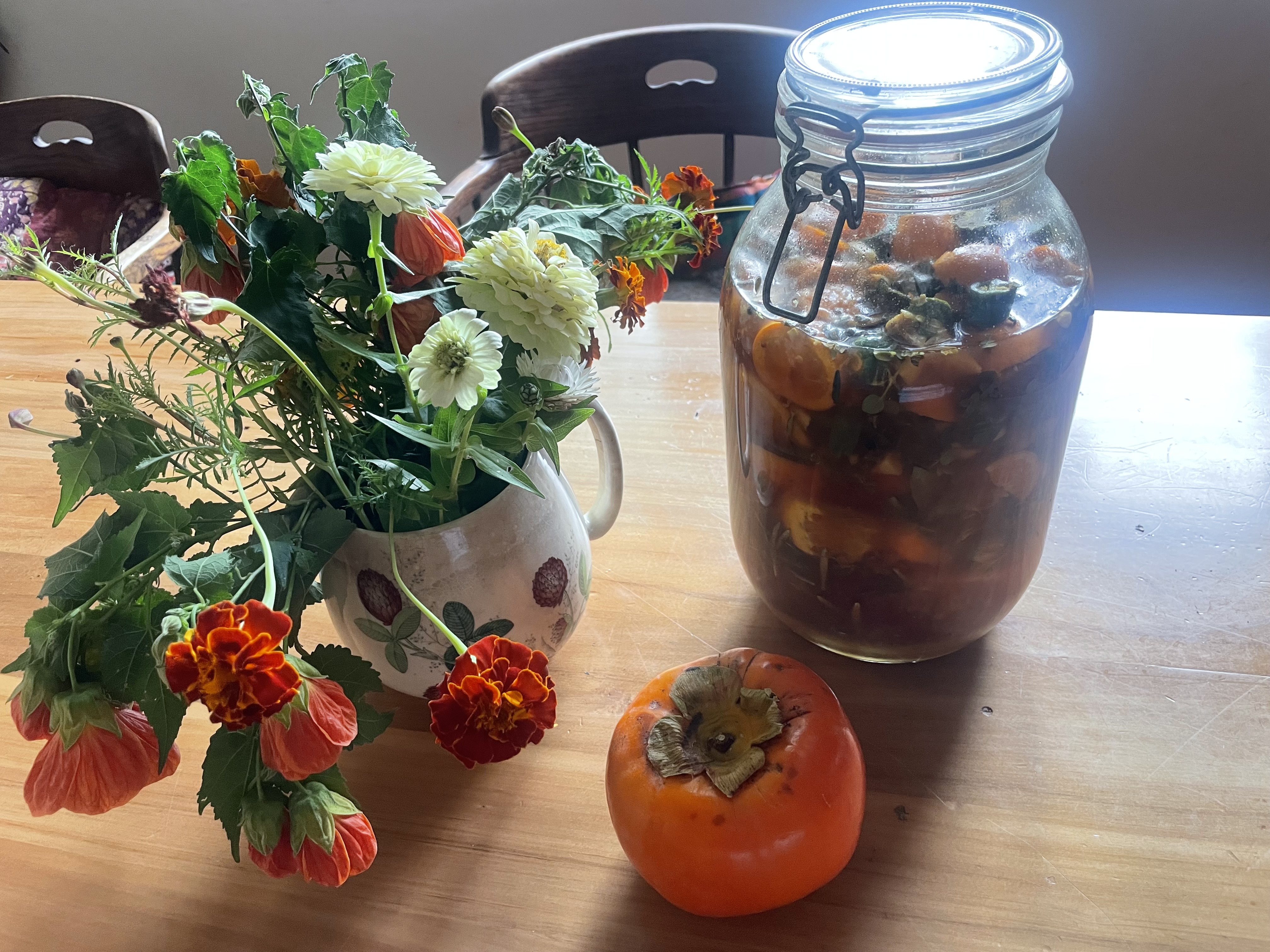
    I find it a fun thing to make because it looks so pretty in the jar while it’s brewing. Our is currently sitting on the kitchen table…at least for a while.

    (Above: still life with garden blooms, fire cider brew and a huge persimmon my mother-in-law gave me.)

    Every late summer and autumn, I make various winter medicinals: oxymels, tinctures, vinegars, throat sprays…etc. I think everyone should be able to access simple herbal medicinals. They can be very expensive from the health store so I like to share what I make around with my friends and family.

    & that’s what’s been happening in Ahuru Kitchen this week. (Our house came with a name on the front: the Māori word, Ahuru, which means nest.)

    Do you make medicinal things in your kitchen as well as culinary things? Do you ever do strange experiments with odd ingredients? I’d love to hear about it in the comments.

    & May we all have robust health this winter! x

  • Slow-Small Media for the Weekend

    Introducing … Slow-Small Media for the Weekend, a weekly digest of things which have caught my eye lately. My hope for these digests is that you can curl up with with a cup of tea over the weekend and enjoy these things as an antidote to the overstimulation of social media. 

    A read

    I’ve been enjoying Kirsten Bradley’s new art/writing project about moon literacy and garden tending.  If you like thoughtful writing about land tending and community care coupled with an art practice (cyanoptye) and folk herbalism…this is for you.

    Her article about progressive pickles and caring for her child particularly resonated with me. I, too, have had to let go of a lot of ideas about what loving family routines ‘should’ look like. I have a family member who dislikes eating with us. He eats his meals alone out on the porch.

    Kirsten writes: 

    ‘I have learned that insisting that we do things in the Family Way (…) was something I needed to let go of. (…) 

    Care can look like learning to pay close attention to what is actually doable for this kid, this day, rather than assuming I know better and pushing them too far.’ 

    Read the full essay here. 

    If you have time, read her other essays, too. All rich, contemplative stuff about nature and art and care. 

    A song

    When I find a song I love, I listen to it over and over and over. It feels like spending time with a friend. This has been my song of early autumn: ‘Time to Bide’ by New Zealand artist, Monty Bevins. It’s a whole journey in one song and a great example of song as storytelling.

    I love the spaciousness of the beginning. The song begins in Māori and then switches to English. Then just as you think you have a handle on what the song is going to be… changes pace. It is a song which demands close-listening. 

    + It’s a song that references cold weather and fires so it is a beautiful one to play loudly beside the fire. 

    Read more about Monty here. 

    A zine

    The Theme Zine is a project which brings together an international cohort of artists and writers to collaborate on zines based around set themes. Their latest issue’s theme is ‘Nature as Sanctuary. It’s beautiful short read (and best read on a laptop so you can enjoy the art). 

    An artist crush

    I love the work of American artist Chelsea Granger. I have her plant oracle deck The Dirt Gems and it is just stunning. Her work is so beautiful, humane, colourful, intimate. It feels like steeping into another world…a better one. If you tap the first tile on the top left, you can then view all her art as a slideshow. Trust me, it’s worth it. You’ll feel better about the world afterwards. 

    A watch 

    I found this short (12 minute) film about the ARK (Acts of Restorative Kindness)rewilding movement so soothing and nourishing for my nervous system, I’ve rewatched it four times over the last week.

    It’s got me thinking about where in my small garden I can intervene even less and ‘rewild’ small pockets for all the other creatures I share this little patch of land with. We (humans) like to try to be in charge of our gardens…it takes some real reprogramming (deprogramming?) to let go of control and let nature do what it is so good at, romping greenly. 

    Read more about the ARK movement.

    + I recommend Mary’s two books, also. I’ve read both and they are beautiful and inspiring. 

    A recipe

    If you were too busy in late summer to make a tomato kusundi, Nicola Galloway has a fantastic version made from feijoas.  If you like Indian flavours and haven’t tried kusundi before you will love this spicy, aromatic pickle. It’s a great thing to have around to liven up winter sandwiches. 

    Or if you are in the northern hemisphere, where spring weeds are springing…here’s a great recipe for wild weed pesto with a guide to some suitable weeds. 

    *

    This weekend I’m planning on sharing a morning tea with friends, making Nicola’s kusundi with our feijoa abundance, painting a new sign for the sharing shelf (the orange one in this post got stolen) and digging up some of my abundant strawberry and yarrow plants to share. 

    Tell me what you’re getting up to in the comments. Happy weekend, friends! 

  • What do green tomatoes have to do with mutual aid?

    (Above: many hands make work fun. A harvesting and chopping working bee at Kirsty’s place. Photo by Kirsty Porter.)

    Fascism is on the speedy rise, climate collapse is escalating, increasingly our governments and power structures are unreliable at best, malevolent at worst. What is there to be done?

    I am reading a lot of Margaret Killjoy , Adrienne Maree Brown, Bayo Akomolafe and Donna Harraway. Listening to a lot of collapse-aware podcasts. & Trying to be (mostly) off (anti)social media. But beyond what I consume and intake…I am making slow steps towards deeper resilience within my friend groups.

    I’m in a couple of ‘conscious-collapse’ groups. One is aimed more at emotional support and mutual aid (deep listening, space-holding, nourishing one another with beauty and soothing art), the other is more about practical supports, and intentional-relationship-building over time (working bees, resource sharing, fun gatherings.)

    While both groups have group chats in messaging apps, we make a conscious effort to take them offline and get together regularly, because actually being together is so much more healing than more time staring at our phones.

    The photo above is the latter group. We had a working bee to harvest all the end-of-season green tomatoes, then we sat around Kirsty’s kitchen table and chopped up the harvest. We filled four buckets (!) with chopped green tomatoes. Kirsty kept two, M & R took one and I took one. Kirsty, M&R turned theirs into Kirsty’s Grandmother’s recipe for green tomato chutney and I turned mine into a spicy Mexican green sauce.

    While we worked, we chatted, we laughed and the folks in the group who had only recently met got to know each other better. It might not seem to have much to do with the mitigation of fascism & climate collapse…but it was a practical, positive, soul-warming way to spend an afternoon. Every small action like this brings us closer, braids us together a little more…all while we work on our food resilience skills.

    Kirsty might have struggled to ‘capture and store’ her green tomato abundance alone…but with five of us at work…we got it all done in a couple of hours.

    ‘Communities are not built, relationships are built. Communities build themselves.’

    -Patrick Jones

    What sorts of things are you doing to nourish yourself in these challenging times?

    In other tomato news…I like to challenge myself to memorise high-rotate recipes, like fruit crumbles, scones, pikelets, simple cakes…so in the unlikely event I am somewhere I can’t use my recipe books or the internet, I can still make these things. I figure it’s good for my brain, at the very least. Also, it makes me feel next-level to be able to bash them out without cracking a book.

    This winter, I am attempting to perfect and memorise focaccia. I made this one with one of the last crops of cherry tomatoes and basil from the garden.

    In my household, we are seasonal eaters, which gives the last tomato harvests a real poignancy.

    The basil is valiantly carrying on, despite some colder nights…but how much longer for? Time to make some big batches of pesto, I think.