Tag: urban permaculture

  • Capture and store: Silverbeet

    A couple of weeks ago I wrote about how we were eating a lot of silverbeet in an effort to keep up with the spring bolts of the plant.

    This has continued, I’ve discovered that if you snip off the ‘bolt’ stem…the thick stem growing up the centre that is beginning the process of sending the plant to seed…sometimes the plant will do another flush of leaves so I’ve delayed having to remove the plants entirely. (While our local spring continues to be more like winter…with ground temperatures too low for summer meditteranean plants like tomatoes and zucchini…there’s no urgency to make space.)

    If you’re not a permaculture practitioner, ‘Capture and Store’ is one of the main permaculture principles. The idea being…it isn’t enough to grow things (or create energy)…an important piece of the equation is to honour the garden by capturing the harvest and, if possible, storing some for later on.

    Occasionally, I like to write articles about the ways our permaculture family ‘captures and stores’ around our small, urban property. As food and energy prices rocket, I imagine these skills will ripple out beyond permaculture to become more important for households.

    Yesterday, my son Willoughby and I spent around an hour and a half processing the silverbeet, celery and flat leaf parsley plants which had begun to bolt.

    The celery stalks went into dinner and the fridge. The celery greens and flat leaf parsley bolt-stems we chopped up and put into our dehydrator. I will put them and some NZ sea salt through our electric spice grinder to make a herb salt which is great for adding to soups and stews.

    We picked a huge amount of silverbeet. Approximately the equivalent of five of those plastic-wrapped bunches you can buy at supermarket.

    Here’s how we processed it to become freeflow bunches of chopped silverbeet, similar to the way spinach comes frozen at the supermarket.

    We harvested the ‘bolt’ stems. I cut off the leaves with a pair of kitchen scissors into a large bow of water and gave it a wash.

    We then chopped it.

    Next step was a quick blanch in a shallow pan of boiling water. Just long enough that it wilts and goes bright green.
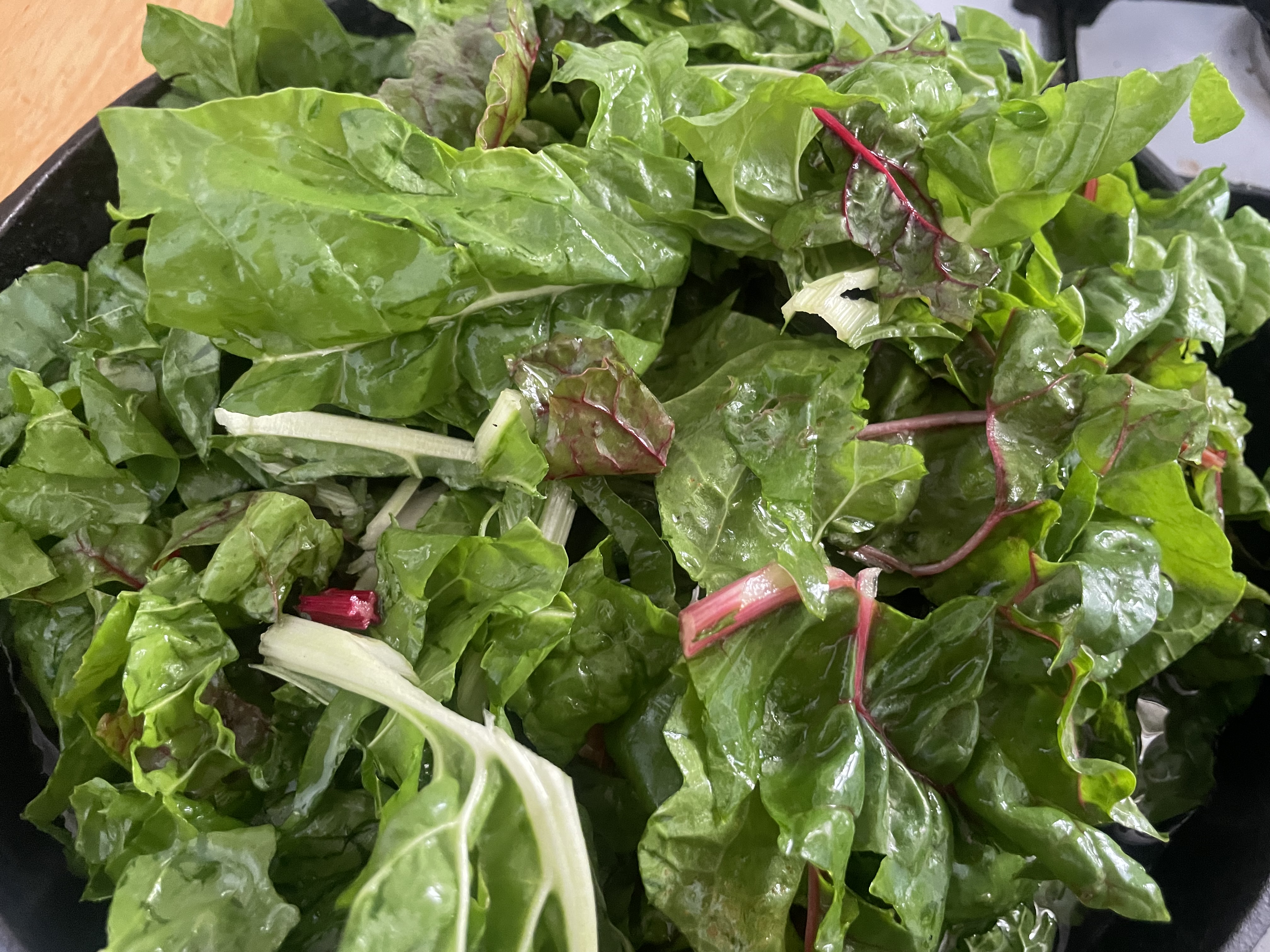
    Then I strained it and pushed as much water out as I could with a wooden spoon (obviously it is too hot to touch with bare hands at this stage. I left it sitting in the strainer to cool.

    Once it had cooled enough to handle, I formed it into balls. (Think about the amount you’d like to add to a soup or stew.) The trick to a tasty end result is to squeeze and squeeze it getting out as much of the liquid as you can. Silverbeet seems to retain a lot of liquid so keep squeezing…think of it as a workout for your hands!

    After that, place the fistfuls on a biscuit tray and put into the freezer.

    Once they are frozen, remove from the freezer, put into a ziploc bag or plastic container and put back into the freezer and there you go, you have one meal amounts of pre-prepared silverbeet ready to add to your cooking.

    You might ask why we’d bother doing this when silverbeet grows all year round in most of New Zealand’s climate? I suppose a big motivator is frugality, but also, I find I use more silverbeet if it is prepared this way. I also loathe waste and, because I know the effort I’ve put into growing the food, I prefer to have it travel through the kitchen rather than go straight from garden bed to the compost heap.

    Silverbeet is so nutritious! I think it needs a PR campaign. In NZ we tend to take if for granted or spurn it because it’s so ubiquitous in our vegetable gardens. Forget about overpriced supermarket spinach….eat your silverbeet!

    If I’ve inspired you to make more of your silverbeet, here are two excellent links with multiple tasty-looking silverbeet recipes.

    11 tasty silverbeet recipes from Delicious magazine

    12 yummy silverbeet-based dinners from NZ Woman’s Weekly magazine

    One of my favourite ways to eat A LOT of silverbeet at once is to make an Indian Saag Aloo, using silverbeet instead of spinach. Delicious and so greeeeeeen.
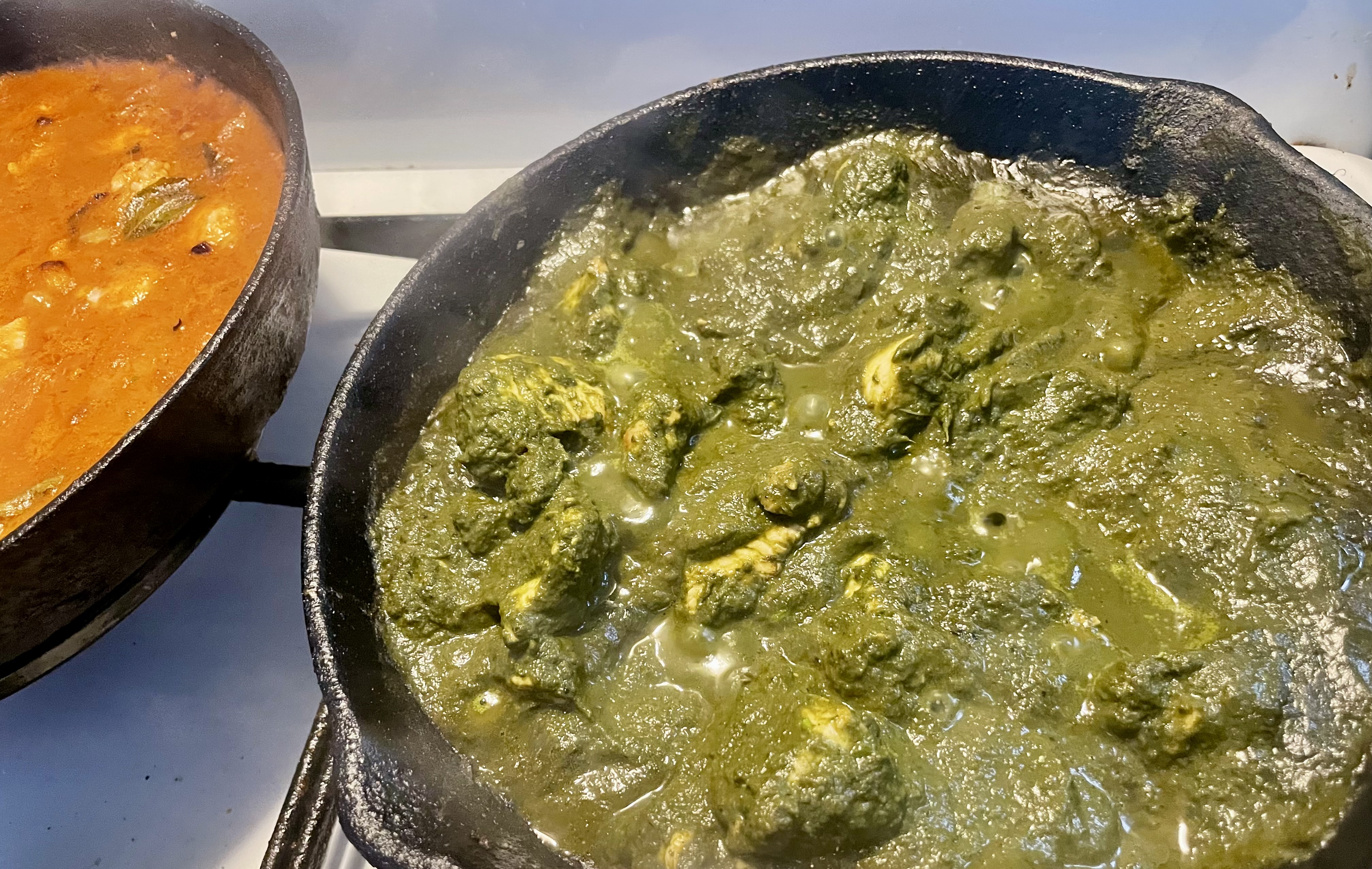
    If you have a signature silverbeet dish…please share it with me.

  • Winter is a great time for harvesting volunteer ‘microgreens’ from your garden (or local park)

    (Above: today’s bounty from a little wander around my own garden.)

    Do you buy sprouts, bags of mesclun mix or microgreens from the supermarket?

    Winter is a great time to find volunteer (‘weed’) microgreens, or young greens, around your garden or local park for FREE!

    Because of winter’s rain and damp, the young weeds will be beautifully bright green, healthy and not heat-stressed.

    To share some likely contenders with you, I took a walk around my small urban yard and here’s what I harvested.

    I took care to only harvest volunteers/weeds and nothing that I’d planted intentionally. (Violet grows like a weed in my yard.)

    The trick is to just harvest the young leaves, or the tips in the case of the dead nettle.

    These wild ‘microgreens’ can be used in a salad, or chopped and sprinkled on top of soup, or in sandwiches, or blended into a smoothie…the same as you would use supermarket or homegrown microgreens.

    I numbered the plants for ease of ID-ing them:

    1. Nasturtium leaves. These are peppery in flavour so great in salads and on sandwiches, not so great in smoothies.
    2. Dead Nettle tips. Great stand-in for lettuce.
    3. Young violet leaves and flowers. Use in salad or cook as your would spinach.
    4. Young ribwort plantain leaves. Important to pick the young ones as the older ones get stringy. The young leaves have a nutty flavour.
    5. Chickweed. Such an enthusiastic garden volunteer. Use the young growth and chop finely.
    6. Young dandelion leaves. These add a nice bitter element to a salad or sandwich. Not so great in smoothies.
    7. Oxalis (known in the UK as ‘wood sorrell’ and the USA as ‘sour grass’) Has a sour, lemony flavour similar to sorrell. Use just a little at a time as it contains oxalic acid. Treat it more like a herb than a main vegetable.
    8. Young mallow leaves. Mallow (also know as ‘Malva’) is a much-used vegetable in Middle-Eastern cuisine and parts of Italy. You can make dolmades with the leaves in place of grape leaves, making it useful during the winter when there are no grape leaves about. Young leaves are good in salad or cooked like spinach.

    & of course, these plants have medicinal properties as well, (most plant food does.

    I hope this inspires you to have a close look at what might be growing in your own back yard and save yourself a little money (or time) by eating some of the weeds around you.

    Let me know in the comments if you have any questions.

    Do you eat any of the weeds in your garden?

  • Slow-Small Media for the Weekend #11

    (Above: a blazing nasturtium in the vege garden. I’m grateful for their bright faces on these gloomy winter days.)

    I bring this to you from a late-afternoon energy lull. Does anyone reading suffer insomnia? 

    Over the last month, I’ve been wrangling with insomnia which hasn’t been much fun. If anyone has any suggestions, let me know. (Currently at bedtime, I take a valerian/hops/passionflower potion and rub my feet and legs with Magnesium oil which used to work a treat but recently, not so much.) 

    Enough about me! how are you?

    Here’s a bunch of random good things for your weekend: 

    A sweet poem

    I have a surname that people frequently struggle to spell, but it’s not as intense as the surname of this week’s poet, Amy Nezhukumatathil. Amy’s work is sensuous, at times humorous, she knows the natural world and writes it with great attention. I very much recommend her poetry.

    But this week’s poem is slightly different from her usual style. It’s a found poem which is comprised of fragments of letters from high school students who are studying her poetry for their exams. (Note the misspelling of her name in the poem’s title.) 

    It’s affectionate and funny. I could feel the collective stress of the poor students rising up off the words. 

    A beautifully-written essay about a painful subject

    Over the last couple of weeks I’ve been very much enjoying reading through the essays and articles on the Substack of the Wizard of Wellington, Rosie Whinray. 

    You didn’t know Wellington had a wizard? 

    Well, that’s because unlike the Wizard of Christchurch -who is mainly a satirical figure- Rosie is a real wizard…although she would never make that distinction (‘real’) herself. 

    Real wizards are very modest. 

    Rosie has written a beautiful, meandering, thoughtful, honest essay called Precariat Blues about the pain of losing her latest home (another rental sold out from under her) and about precariat housing (and living) generally. 

    From Rosie’s essay:

    ‘Chop wood, carry water, by all means dig. But if you rent, I would advise applying your effort to things you can carry with you when you go. Never forget that you stand to lose your labour. Human ingenuity is bonsai’d by the learned helplessness of tenancy. This pinching out of side-shoots is maybe the greatest tragedy of what renting does to a person’s soul.’

    Because she’s a real wizard, she makes a very sad subject beautiful. You’ll read it and possibly  feel sad, mad, bad, but also so glad that you read it…because it really is phenomenal writing. 

    I really hope Rosie publishes a book of her essays one day. 

    Affordable Art

    In this week’s affordable art is these striking sgraffito ceramic birds by Borrowed Earth 

    They cost $45 (our budget for ‘affordable art’ cuts off at $50) and there are five different designs. 

    (Above: Photo borrowed from Little Beehive Co website.)

    One would be beautiful…or if you have more than $50 to spend on art, you could have a pair…or a flock! They’re like a contemporary take on the classic flying duck wall ornaments. 

    Music

    The addition to the slow-evolving ‘Slow-Small Media’ playlist over on YouTube this week is not just one song but a whole record; it’s Ben Harper playing his 2020 album ‘Winter is for Lovers’ live in his music room. 

    This live version has a vibrant, compelling quality. Plus, if you’re watching as well as listening, it’s soothing to watch Ben noodling away in his music room surrounded by his beloved musical instruments. 

    In the kitchen: three ways to eat onion weed

    Did you know you can eat onion weed? It’s particularly succulent and good in winter and spring in New Zealand and it’s SO easy to find….a ‘Foraging 101’ kind of plant.

    Here’s a beautifully-produced video from local weeds-loving, vegan chef Anna Valentine on four ways with onion weed.

    She shares a mayonnaise, a super salt, a salad and a tempura which use the bulbs, stems and flowers of onion weed.

    An article about the world of miniatures

    There’s something so hugely compelling about tiny things. 

    Once, a friend bought me a miniature bok choy plant made of resin because ‘I knew you’d love it’. She was right, I do. 

    I bought my Mum a miniature Victorian copper kettle for her recent birthday because I knew she’d love it. She does. It’s now sitting on her dresser. 

    Here’s an interesting NPR article about the world of miniatures. 

    I googled where to buy cute miniature things in New Zealand. I’ve always dreamed of having a green Aga stove and from the In Miniatures shop, I could have one for just $29.00

    & something very, very, very silly to finish

    Last night I had insomnia so after lying in bed staring into the dark for two hours, I eventually gave up on trying to sleep, lit the fire and opened Youtube. 

    The first thing the YouTube algorithm suggested was a video where comedian crafter,  Ash Bentley, knits herself a ‘cursed outfit’. I was skeptical, but also wired and tired so I watched and, oh my goodness, it is worth watching Ash’s reveal of her cursed crafting effort. 

    The video is almost an hour long but -unless you have an interest in watching Ash figure out how to knit all the components- just do as I did and watch her introduction and then skip through to 52 minutes in for the big reveal. Now, imagine watching it in the subterranean state of an early insomniac morning. 

    Trust me, it’s worth it. It’s a horror and she’s a crack-up. 

    (Given I mostly watch foraging, permaculture and ‘slow life’ Youtube, I have no idea why YouTube suggested this to me…but I’m not mad about it.) Gosh, I love a silly side-quest.

    *

    The weekend ahead: I’m trying to do something of a midwinter-clean, like a spring clean but in winter. My fantasy is that we won’t need to spring clean because I’m going to do so much over July and August that I will land in September all sorted and fresh. Clearly the kind of thing us Virgos daydream about. In spring I’d rather be in the garden than in the house.

    At the moment, this looks like a pile of boxes and supermarket bags in the hallway floor spilling over with the recently-culled.

    If I have friends visiting while such piles are lying about, I always invite them to mooch the op shop pile before it heads off to the op shop. Already I’ve re-homed some clothes and some books. Happy friends and less for me to cart to the op shop. Hoorah! 

    So this weekend, I’m going to carry on with a bit of that. Last weekend I tackled my wardrobe, this weekend, it will be our bookshelves. Might be time to give some books the chance to be read and enjoyed by other people instead of gathering dust here. Not every book is going to be one that you re-read, right?

    I have a pile of shiny, new permaculture magazines from the library to read. Our library is so great in the variety of magazines they get. I can’t believe there are multiple permaculture titles to mooch.

    & I got a big fennel bulb in our CSA vege box so I’m going to make a fennel gratin

    It’s Palmy Crop Swap weekend and so I’ll head off to that on Sunday with some succulents I’ve potted up and some of my herbal tea to share. 

    That feels like enough ‘might do’s’ for the weekend. I like a ‘might do’ because if at the last minute I feel lazy and don’t do any of it…having a rest is a great use of a weekend, too. 

    I hope there’s some resting, some cheerful eats and some fun in your weekend. 

    x x

  • fennel from the river

    (Above: My favourite selfie, out foraging beside the river.)

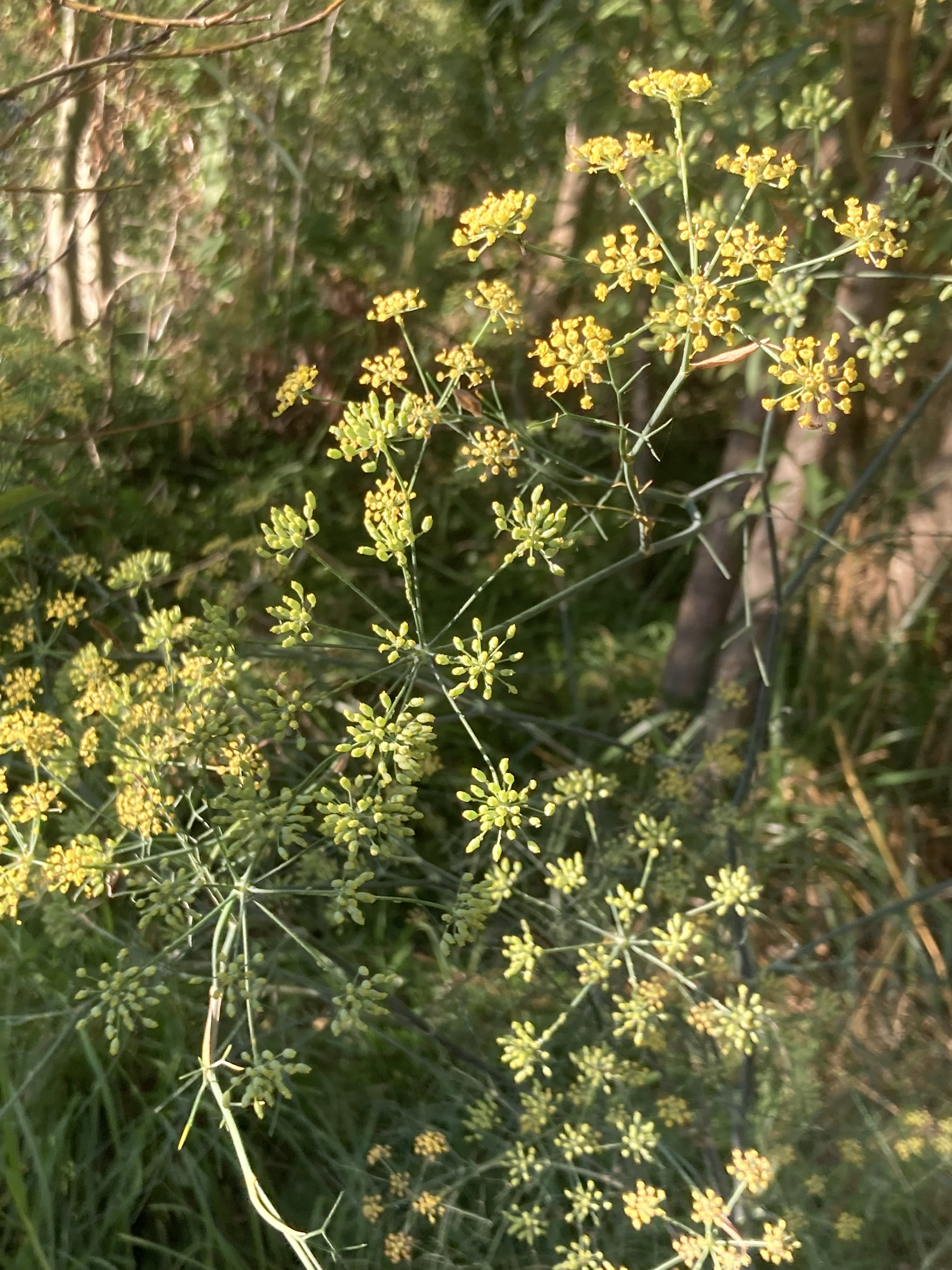
    In autumn, I forage for fennel seeds. Along the Manawatū river, the fennel plants are plentiful. This year, it’s been such a warm autumn, there is still fennel in flower as well as the older plants going to seed. I find fennel such a beautiful plant in all it’s stages: the bright green fronds of early spring, the sunny yellow umbels of summer…then the handsome dried seed heads of autumn.

    (Above: A ‘fennel tunnel, fennel tunnel, fennel tunnel’ < a little phrase from my foraging book.)

    Fennel is an enjoyable thing to forage for because each plant is so laden with seed heads that it’s easy to forage enough for the pantry in just a couple of walks. I fill up this 500ml jar and it lasts me a year of curries and pickles and tea.

    (Above: yellow fennel flowers going to seed.)

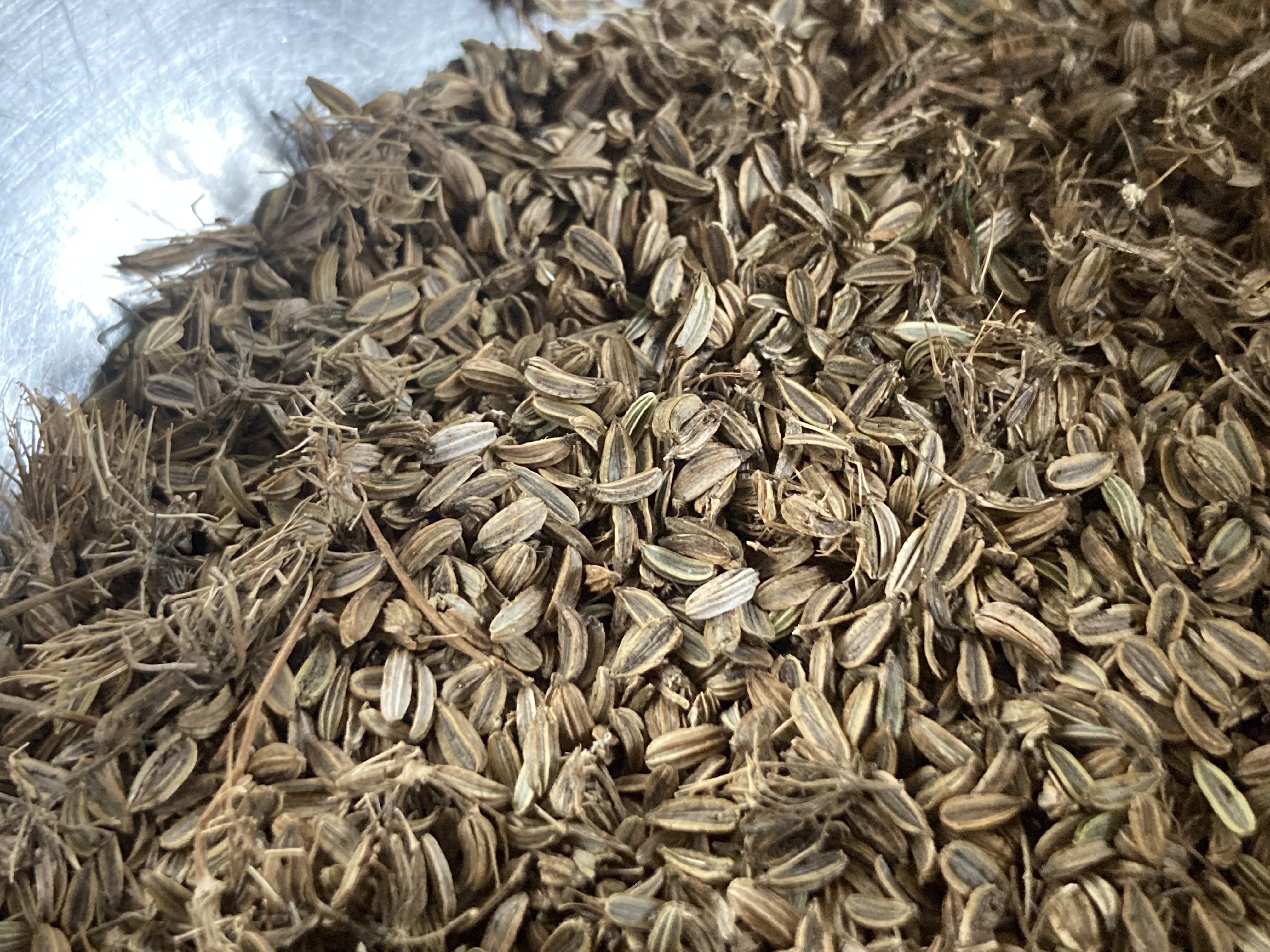
    I take secateurs with me and snip some of the seed heads that look grey and dry. Although they are probably dry enough off the plant, I leave them on a tray on my kitchen table to dry more…just to be sure they are totally dry. Then I rub the seeds off over a large bowl.

    (Above: the fennel seed heads drying a little longer at home.)

    I have an interest in Ayurveda. Fennel seed is highly-valued in Ayurveda for it’s digestive properties. In some Indian restaurants, they offer tea spoons full of tiny coloured sweets as a digestif after your meal. These are sugar-coated fennel seeds.

    (Above: The fennel seeds fresh off the seed heads before I sort through and get all the little bits of flower head out.)

    Here is a recipe (well, more a proportions guide) to a digestive tea I make with my foraged fennel seeds. I get the fenugreek from my local Indian supermarket and the licorice root powder from Pure Nature. Fenugreek has powerful digestive properties and can help regulate blood sugar, too. Licorice powder aids digestion and adds sweetness to the tea blend. Ginger helps with digestion also and tastes wonderful.

    Digestive Tea

    One part fennel seeds

    One part fenugreek, seeds or leaves

    One part licorice root powder

    One part ginger powder

    This tea is great to have first thing in the morning to awaken your digestive fire, or agni as it is called in Ayurveda. It’s also good to drink about an hour after a meal to calm the stomach, prevent flatulence, help with digestion.

    *

    I have an avid interest in folk herbalism so I tend to mostly make medicinal things with my foraged finds.

    Autumn is a lovely time for foraging…less chance of getting sunburn and so much to see everywhere! I’ve been enjoying looking at all the different fungi friends who emerge this time of year, picking up windfall eucalyptus leaves for eco-dyeing and harvesting mullein for making winter medicines with.

    What have you been foraging or harvesting?

  • ‘now we recognise ourselves less and less’

    (Above: plastic rubbish I picked out from my vegetable beds last week. I collect around this much rubbish each time I tend or harvest from my vegetable beds.)

    I enjoy the writing on The Dark Mountain Project. It’s an ongoing project (based in the UK) that publishes ‘uncivilised writing’, holds gatherings, creates a space for conversations about all manner of unsettling and challenging elements of living at this point of human history. There you will find writing beyond polite eco poetics or nature writing that merely holds nature in a human/nature binary of saccahrine reverence. I don’t always agree with what I read there and that is why I like it.

    Last week I read this piece by Amy Kennedy from the most recent issue with the theme of ‘bodies‘.

    At first it seems a deceptively simple piece of writing, Amy describes a group of parents at a childrens’ birthdday party. One of them brings up the subject of the finding of microplastics in human placentas. The piece explores plastic: our culpability and the unavoidable enormity of the tsunami of plastics in our lives.

    I have a fairly high threshold for ingesting media about climate collapse and environmental degradation. I don’t have my head in the sand.This is not because of courage but more that I am an anxious person who approaches life in a ‘forewarned is forearmed’ sort of way. I like to know something of what’s coming so I can consider in advance how I might respond. (I’d prefer not to be built this way but there is only so much you can do about your neurological wiring.)

    I was surprised by my visceral reaction to this piece with it’s blunt presentation of human culpability in terms of the use of plastics and refusal to look away from the idea of microplastics in human placentas, in human bodies. ‘Now we recognise ourselves less and less’, Amy writes. A familiar feeling for the eco-anxious amongst us and a statement that works on many levels.

    A few years back I wrote a poem in a similar vein about digging up the backyard of my crappy Wellington flat to grow food for my oldest son when he was a baby …only to years later find out that backyard had been a dumping ground for old car bodies and broken machinery and was no doubt full of petrol and lead and other toxins. In my youthful naiveté, I hadn’t considered the urban soil’s history.

    These human missteps we make in the name of love: a birthday cake served with a plastic fork, feeding a baby mashed carrots grown in polluted soil…the hell we plod towards on our road of good intentions.

    The depth to which I was triggered by Amy’s writing surprised me at first (I thought I was made of tougher stuff by now). But then when I thought about it, I realised it touched on a tender spot in my own gardening practice…a spot where I choose to put blinders on.

    I live in the centre of a city. Every time I weed or harvest from my front yard garden (tended so carefully with the best organic soil amendments and lovingly homemade compost) I fish bits of plastic out of my garden: plastic bag fragments, fruit stickers, junk food packaging, lollipop sticks. Some of it seems to get into our compost somehow, despite careful sorting at the kitchen end. The plastic in the vegetable beds seems to blow in from the street.

    (I wondered if this plastic trash were an urban problem but a friend who lives rurally said that there is just as much plastic trash out her way, in the road gutters, in streams, from the plastic packaging of hay bales and farm products.)

    I throw the bits of plastic into a colander that I have with me in my harvest basket then put them in the rubbish bin where they will travel in a plastic bag to the plastic afterlife, which is to say slowly deteriorating into microplastics in the city’s landfill.

    I dwell in a space of both knowing that I have my stubborn blind spots (the macro and micro plastics in my own food garden and in the soil I am creating in my compost) and also having no inclination to stop. I will carry on composting. I will carry on growing food in this microplastick-y soil I am making.

    I enjoyed this essay about composting by Scottish writer Fraser MacDonald (found via Pip Lincolne) He, too, is carrying on composting on despite tangible evidence of plastics in his compost. He writes:

    ‘I make my own compost so that I can convince myself that even when the world seems socially and ecologically broken there are still mechanisms for recovery: it shows that change is possible. Composting is a simple habit of composition or gathering together that integrates past fragments into a future whole, so that what matters is not the individual ingredients but the fertile new thing they can become.

    & that ‘fertile new thing’ possibly contains microplastics…yet still I persist in habits which put me squarely in the ‘doing’ space of the world, in flawed creative acts which give me a sense of agency and regenerate my spirit if nothing else.

    For that purpose alone I believe they are worthy.

  • What do green tomatoes have to do with mutual aid?

    (Above: many hands make work fun. A harvesting and chopping working bee at Kirsty’s place. Photo by Kirsty Porter.)

    Fascism is on the speedy rise, climate collapse is escalating, increasingly our governments and power structures are unreliable at best, malevolent at worst. What is there to be done?

    I am reading a lot of Margaret Killjoy , Adrienne Maree Brown, Bayo Akomolafe and Donna Harraway. Listening to a lot of collapse-aware podcasts. & Trying to be (mostly) off (anti)social media. But beyond what I consume and intake…I am making slow steps towards deeper resilience within my friend groups.

    I’m in a couple of ‘conscious-collapse’ groups. One is aimed more at emotional support and mutual aid (deep listening, space-holding, nourishing one another with beauty and soothing art), the other is more about practical supports, and intentional-relationship-building over time (working bees, resource sharing, fun gatherings.)

    While both groups have group chats in messaging apps, we make a conscious effort to take them offline and get together regularly, because actually being together is so much more healing than more time staring at our phones.

    The photo above is the latter group. We had a working bee to harvest all the end-of-season green tomatoes, then we sat around Kirsty’s kitchen table and chopped up the harvest. We filled four buckets (!) with chopped green tomatoes. Kirsty kept two, M & R took one and I took one. Kirsty, M&R turned theirs into Kirsty’s Grandmother’s recipe for green tomato chutney and I turned mine into a spicy Mexican green sauce.

    While we worked, we chatted, we laughed and the folks in the group who had only recently met got to know each other better. It might not seem to have much to do with the mitigation of fascism & climate collapse…but it was a practical, positive, soul-warming way to spend an afternoon. Every small action like this brings us closer, braids us together a little more…all while we work on our food resilience skills.

    Kirsty might have struggled to ‘capture and store’ her green tomato abundance alone…but with five of us at work…we got it all done in a couple of hours.

    ‘Communities are not built, relationships are built. Communities build themselves.’

    -Patrick Jones

    What sorts of things are you doing to nourish yourself in these challenging times?

    In other tomato news…I like to challenge myself to memorise high-rotate recipes, like fruit crumbles, scones, pikelets, simple cakes…so in the unlikely event I am somewhere I can’t use my recipe books or the internet, I can still make these things. I figure it’s good for my brain, at the very least. Also, it makes me feel next-level to be able to bash them out without cracking a book.

    This winter, I am attempting to perfect and memorise focaccia. I made this one with one of the last crops of cherry tomatoes and basil from the garden.

    In my household, we are seasonal eaters, which gives the last tomato harvests a real poignancy.

    The basil is valiantly carrying on, despite some colder nights…but how much longer for? Time to make some big batches of pesto, I think.

  • witch sticks & autumn harvests

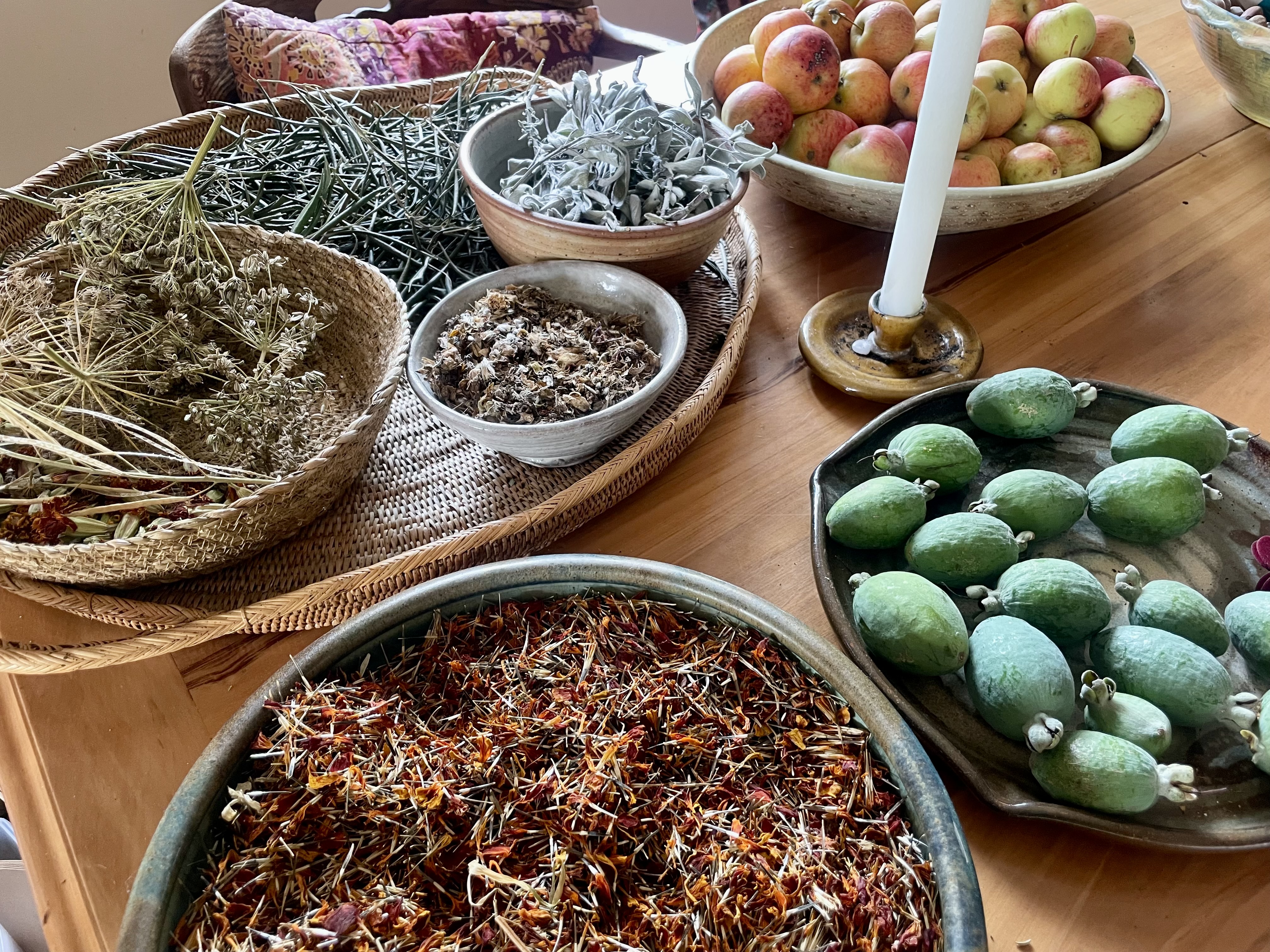
    (Above: Our kitchen table is a busy surface with often-changing bowls and baskets reflecting what is going on in the garden and the foraging season: things drying or waiting to be processed.)

    Autumn is my favourite season and, as a permaculture household, a busier season than summer with our labours to ‘capture and store’. There’s lots of picking and gathering and then kitchen work processing everything.

    (Above: Last sunday morning’s harvest chore was bottling a box of apples from our friend Bev’s orchard. These will turn into crumbles or top our porridge this winter.)

    Last week I gave my potted white sage plant a prune, ready to overwinter it in the greenhouse. White sage is a desert plant, native to the American southwest and Mexican northwest, so it doesn’t love the Manawatū winters.

    In the summer, I put it outside in full sun then prune it down to almost sticks at the end of summer and put it in the greenhouse where it sulks the winter away…but it (just) survives. Mine is about six years old now.

    (Above: white sage prunings, cotton thread. It’s on the sofa because I made the witch sticks while watching something in the evening. I do a lot of processing tasks (this, peeling fruit, cutting up herbs for tea, seed saving jobs) on the sofa…which might seem a bit odd…but I don’t see it as much different from knitting or hand-sewing in front of the TV. Does anyone else do this?)

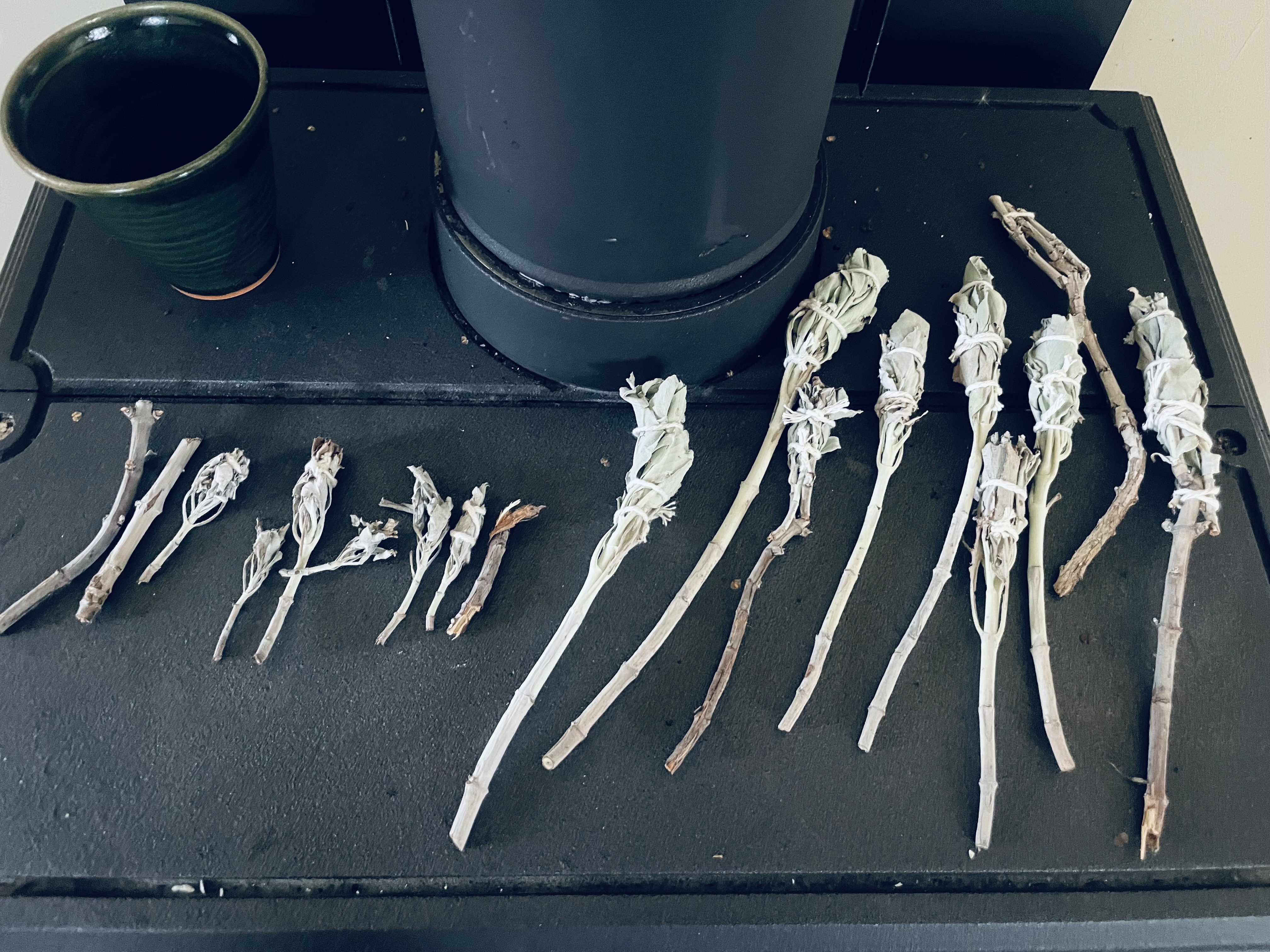
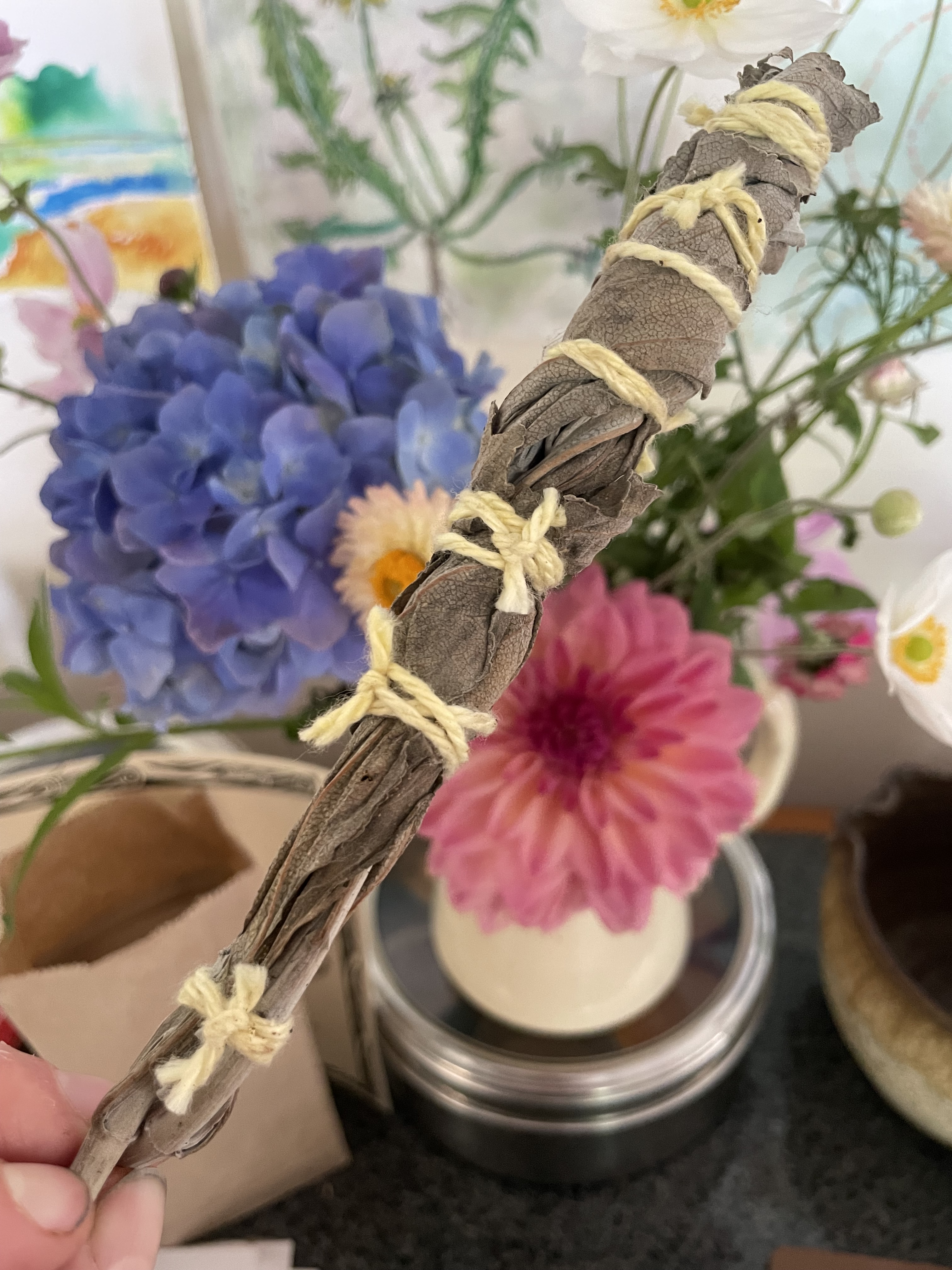
    The prunings can be turned into what I call ‘witch sticks’ for burning by folding up the leaves on the stalk, weaving and rolling them longways and then tying with cotton thread. (Never use synthetic thread: it will melt and emit toxic smoke.) When the leaves have all burned down, you can burn the stalks, too.

    (White sage is a plant sacred to Indigenous people in USA and Mexico, so if you want some…have a go at growing it rather than buying imported sage. White sage is overharvested in the USA particularly. In ‘A Forager’s Life’, I write about alternative plants to white sage for making cleansing/burning sticks.)

    (Above: I got eight decent witch sticks, plus some smaller bits and pieces of stalk…all of which can be burned. Here they are drying on my fire top.)

    I see a lot of ‘how-to’ articles about making cleansing/burning sticks around…but they often forget a detail which I think is important. For them to burn well and safely, don’t wind the string around and around the bundle, securing only at top and bottom. This will mean your stick will fall apart as the thread burns and you could have a higher risk of embers dropping off it. Instead, tie it tightly with small pieces of string at regular intervals, like in this photograph:

    (Above: please forgive my ‘dirt manicure’ as garden writer Gayla Trail calls it. I scrub* my nails regularly but folks who ‘touch soil’ (which is ilke ‘touching grass’ only more grubby) every day struggle to have photogenic hands. ((I have to buy a new nail brush every couple of months…so intent is my endless scrubbing.))

    Do you have a favourite season or are you one of those calm, rational people who loves them all equally?

    I’d love to hear what kitchen or garden chores you’ve been doing lately. Let me know below.

    “As long as autumn lasts, I shall not have hands, canvas or colours enough to paint the beautiful things I see.”

    -Vincent Van Gogh

  • the sharing shelf

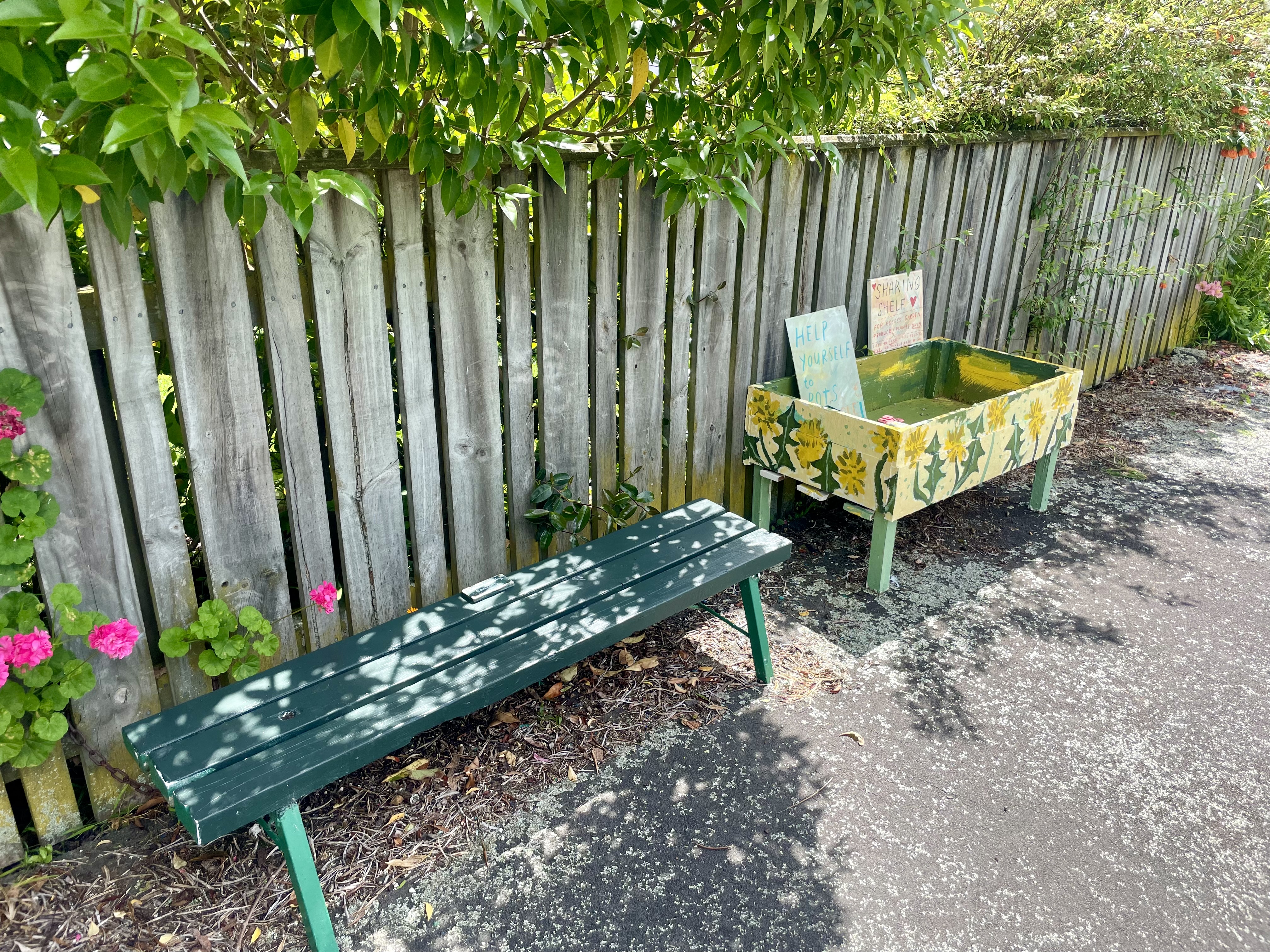
    Late last year we put a sharing shelf outside our front fence.

    We’ve always shared excess produce from our vegetable garden by putting it in a box on the community seat (for more about the community seat, check out my last book, ‘A Forager’s Life‘) but I wanted to make it a little more formal so that it could be a site of #radicalreciprocity* in the neighbourhood and many people could contribute to it.

    (#radicalreciprocity is how I try to live my life. Giving generously, receiving with gratitude and humility, and trusting that there is more than enough to go around if we can all learn to do both.)

    I bought the planter from a local young woman who makes them from upcycled pallets and then I painted a dandelion motif on it. The dandelion is a plant that means a lot to me and acts as a symbol of courage and generosity in my personal symbology.

    It didn’t take long -a few weeks or so- for neighbours to get the idea and things began to appear in it that weren’t from us.

    Part of putting something like this into a public sphere requires a willingness to look after it well so I check it twice a day, first thing in the morning and then at dusk.

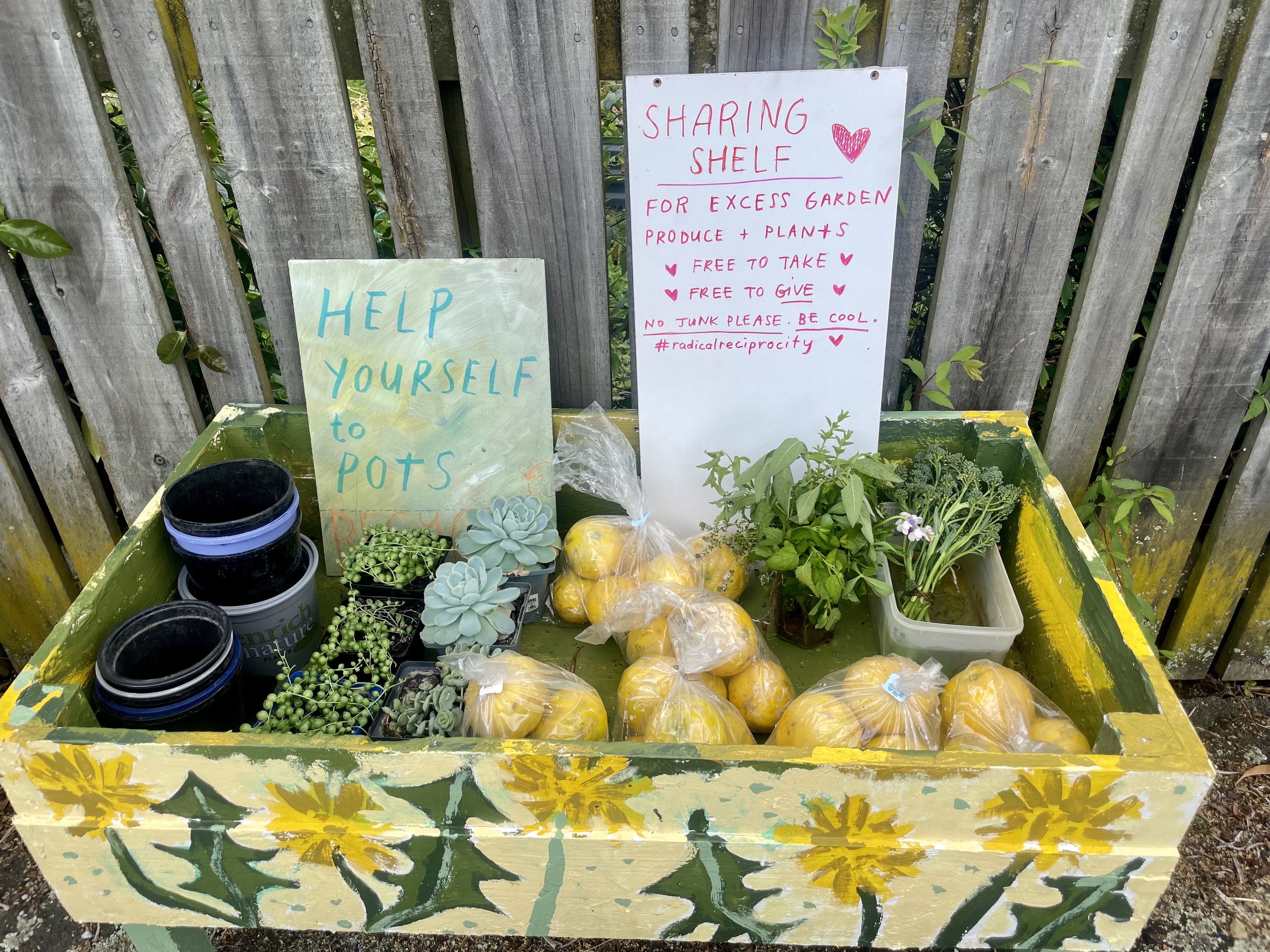
    Although the purpose of it is to share the excess garden produce and garden related things, occasionally people put perishable or pantry food in it. The perishable food (things like bread, sandwiches, etc) I dispose of (usually feed it to the backyard birds, or my worm farm, if possible) because I don’t want to be responsible for anyone getting ill from spoiled food. Mostly, though, people seem to get the idea. There’s been all sorts of vegetables, seedlings, cut herbs. It’s been mostly delightful things.

    My original sign (paint and vivid marker on an art canvas) melted away in the rain, so I painted an old cutting board with outdoor paint in an attempt to make a more weather-proof sign:

    People have not 100% ‘been cool’. There’s the occasional beer bottle or pizza box after a Friday or Saturday night. There was one incident when someone kicked the front of it in, breaking a board. But for the most part, it’s been a success and a fun, new element in my days.

    March has definitely been the month of the giant marrow. Hearteningly, these swollen offerings have all been taken, though so I guess there are some good marrow recipes being cooked around Takaro. There’s also been lots of bags of tomatoes and apples.

    Every day is different in the sharing shelf. Things flow in and out.

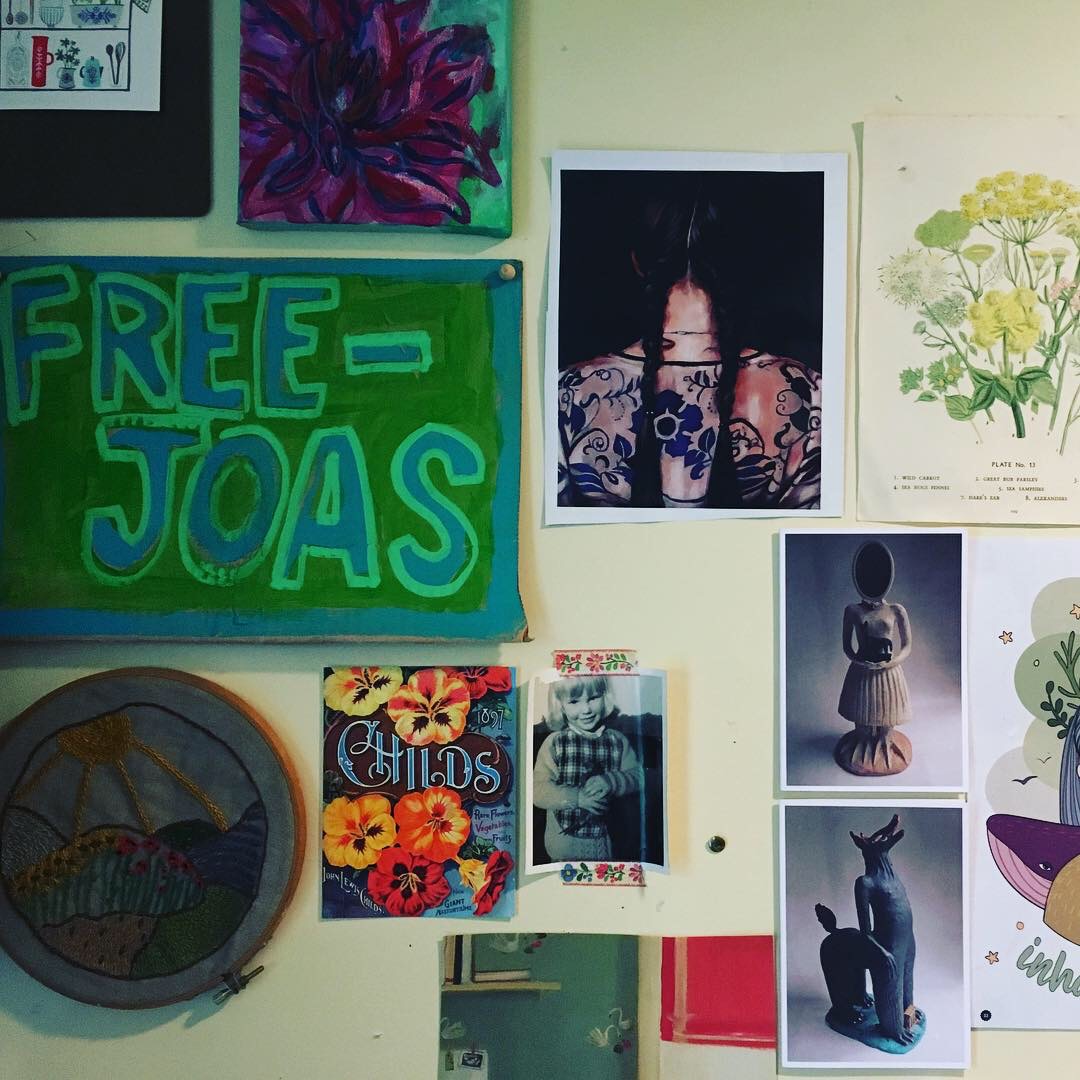
    With feijoas just beginning, I’m expecting it to become mostly a ‘freejoa’ booth any day now.