Tag: writing

  • Slow-Small Media for the Weekend #9

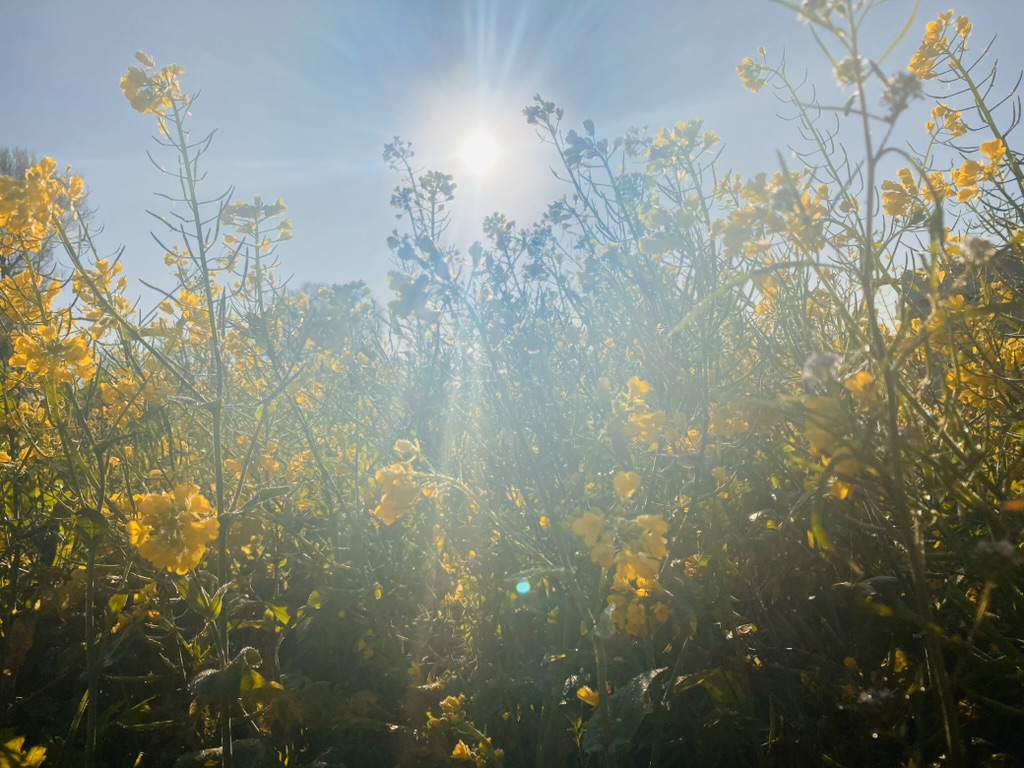
    (Above: low winter sun through some crops gone to seed at the Awapuni Community Garden.)

    Hi lovelies,

    Jeez, another week of scary news in a world gone mad. I hope you are faring okay and doing plenty of sensory, nature-based things off screens to give your nervous systems a chance to recover.

    Winter calls for an encounter with ‘a Wild God’

    Long a favourite poem of mine, I went looking for a shareable version of ‘Sometimes a Wild God‘ by Tom Hirons and saw, to my delight, that you can both read it and listen to it being read by the author here. There’s something about listening to poems read by their authors which is really special.

    This poem speaks to that longing inside us to connect with nature’s raw wildness…how that raw wildness is no joke…and it also has such a great ending. A modern classic, I think.

    Song for the week

    This week’s song is gentle, evocative and sounds a bit like Nick Drake. It’s ‘Crow’ by English ‘folktronica’ band, Tuung.

    As a poet, I can’t fall 100% in love with a song unless the lyrics are thoughtful and interesting. The chorus for this song are so good:

    ‘And we bide our time
    And we shed our skins
    And we shake our bones
    And we sink like stone
    And we crawl through mud
    Til we reach the sky
    And we bide our time.’

    (Listen the full playlist of Slow-Small Media songs here on Youtube.)

    Sally Wise’s ‘Apple Day

    Nothing warms my heart like friends and communities getting together to work on food harvests and processing together. (If you didn’t catch it already, here’s an article about some friends and I doing just this with green tomatoes.)

    Australian food writer Sally Wise just wrote about her annual ‘apple day’ here.

    I especially like the photographs. What great seasonal fun.

    Make a liver-cleansing, iron-boosting tonic from a much-maligned weed

    Most people I talk to are unaware that yellow dock, a plant loathed by many, is a powerful medicinal plant.

    When I did a live-cooking event at the Womad Festival last year, one of the things I made was some wild seedy crackers which had yellow dock seed in them which I foraged.

    Dock root is rich in iron, minerals and vitamins. Check out this recipe for an Iron Rich Liver-Cleansing Support Oxymel from one of my favourite New Zealand food writers, Anna Valentine.

    Lot’s of weeds are a bit of a pain, it’s true (hello, tradescantia, hello, convolvulus) …but so many weeds are edible or medicinal. I feel like re-learning all of the offerings of local weeds will be an important passtime for the coming years.

    Here’s to the humble dock plant: mineral-retriever with it’s deep taproot, generous-seed-offerer, cleanser of livers and booster of blood.

    This week’s affordable art: Whakangā

    This week’s affordable art is not wall art, but an artful object, a meditation tool, a little something perfect for the wintery months. This would make a beautiful gift.

    (Above: photo borrowed from the Creative Hive NZ website.)

    It’s a little beeswax candle set from the Creative Hive NZ. Whakangā means in Māori to take a breath, catch your breath, rest, relax or inhale.

    From their website: ‘This beautiful Whakangā set is the perfect addition to your wellbeing with 21 small beeswax candles and an exquisite artisan ceramic kawakawa leaf holder.’

    I think it qualifies as ‘art’ and is very reasonable at just $35.00 for the set.

    This is such a thoughtful product. The tiny candles are made to burn for twenty minutes; just long enough to take a break or meditate. A friend of mine has a set and the candles are so very small and sweet.

    How to make a Wild Food Map of your neighbourhood

    This is a great article from Milkwood Permaculture on how to make a wild food map of your neighbourhood. I haven’t done this but I’d love to. If you have younger kids, it could be a fun activity to get them involved in over the school holidays?

    As well as great instructions on this project, this article has a handy list of links for online community food maps at the end, like Falling Fruit a global map of crowd-sourced information about public fruit trees. It’s very fun to type your address into it and see what’s within walking distance of your house. You can add your local knowledge to it, too.

    Something chill to watch: a Brixton folk artist’s beautiful house and studio

    This short (9min) clip featuring folk artist Abe Odedina on the World of Interiors YT channel is a good time.

    He’s a vibe, and I loved seeing his house and studio. His house is beautiful as is his art. I also appreciated how much he talks about loving being at home. I think since the pandemic, many of us feel the same way, hey?

    (I lived in Brixton a zillion years ago when I was on my travels. I found it such a vibrant, exciting suburb of London.)

    A Manifesto for Stubborn Optimists

    From the Montague Workshop (Brad and Kristi Montague), a Manifesto for Stubborn Optimists:

    ‘We believe that care is courageous.

    Joy is rebellious.

    Wonder is defiance.

    We believe in the builders,

    teachers, growers, healers,

    quiet ones making room at the table,

    the messy middle, the long haul, and

    in the overlooked beauty of a slow repair.’

    This manifesto gave me some solace this week. I love manifestos. I think most things I write end up being thinly disguised manifestos; I can’t help it.

    I’m going to print it out and stick it on my fridge.

    This weekend my oldest ‘baby’ turns 25. Quarter of a century!

    (Above: the oldest baby when he was 4. A favourite pic.)

    I spent my 25th birthday dancing at Duckie London – a queer club night that’s still going! But I started off the night straddled across one of the bronze lions of Trafalger Square in London, drinking straight from a 1.5 litre bottle of Absolut vodka. Classy, aye? (I wasn’t always the quiet homebody I am now.)

    It’s funny, because I remember clearly thinking back then ‘I’m going to climb up here and get on one of the lions…because then I will always remember what I did on my 25th birthday’ …and it worked, I do!

    Anyway, there will be birthday celebrations this weekend and no doubt F and I will have a tipple of whisky and contemplate the bizarre passage of time.

    Hope there are sweet, calm things in your weekend, too. x

  • Sometimes reaching out to your heroes works out

    (Above: Morag Gamble + my book! *squeals with delight* Image borrowed from Morag’s website. I love this photograph. I look at it when I’m having low moments to do with writing stuff and it cheers me up.)

    Today I’m returning to an occasional series of sharing anecdotes from my experiences after publishing A Forager’s Life . This is a story about how I reached out to some writing or permaculture heroes, people I respect and look up to, and how it panned out.

    I have an amazing publicist at Harper Collins, Sandra Noakes, without whom I would not have had such good reach with the book or opportunities like feature articles in national publications, appearances at literary festivals and featuring on the bill at WOMAD.

    Any writer worth their salt, however, will do their best to get word out on their own steam as well. If you believe in your work enough to publish it…you have to keep backing it beyond publication. Publication isn’t the finish line. In some ways, it’s just the start line of phase two. Reaching out to people can be an excruciating experience. You have to steel yourself for plenty of ‘thanks but no thanks’ or, worse, silence. (*cue the sound of crickets chirping.*)

    Just after the book came out, I wrote to a dozen people (nature writers, permaculture heroes, eco-podcast hosts) introducing myself, explaining why I thought they might be interested in the book and offering to send them a copy. Out of that dozen – two said yes.

    Out of the two who said yes please to me sending a book…one worked out wonderfully well. The other person ghosted me. Being real with you, it’s hard not to take it personally…but for my mental health I’m choosing to believe that they were in a place of overwhelm with life and my book was one of the things that could fall off their ‘to-do’ list with minimal consequences …rather than: they just didn’t like the book.

    I share these details with you, not for sympathy, but to demonstrate how thick-skinned you have to be in the writing. business (and I’m not particularly…I bruise fairly easy). Take my recent lovely news about the Verb Home Based Writer’s Residency. I’m still so over the moon about this. What people don’t see, though, is the manifold rejections from other opportunities that I have thrown my hat in the ring for. The writing life takes tenacity…the amount of tenacity demanded can be wearing and I have definitely had fallow years where I just couldn’t find the grit to keep on trying. Or when the responsibilities of my life precluded space for creative pursuits.

    Anyway, this is a happy story, not a gloomy one!

    One of the permaculture heroes I approached was the indomitable, prolific, generous Morag Gamble. This name might not mean much to you if you aren’t active in the permaculture world but in permie-land, it means a lot.

    Morag is a permaculture teacher, mentor, writer who lives in Australia but works at a global scale. She has an excellent Youtube channel with dozens of helpful permaculture clips, she teaches permaculture teachers at the Permaculture Education Institute, and she runs a non-profit which gifts permaculture education to refugees in East Africa. She’s an incredible woman for whom I have a lot of admiration and respect.

    You can imagine my delight when she took me up on my offer to send her my book. I wrote a friendly letter and posted it off and then a while after that…she got back in touch to say that she’d read and really enjoyed the book (!!) and invited me to be a guest on her podcast! I was, and still am, thrilled.

    + Morag’s daughter also reviewed the book here.

    The podcast was conducted via Zoom. On the day, I was so nervous, my mouth kept going dry which is very annoying when you want to chat away and try to sound relaxed. I needn’t have worried, though, because Morag is just as warm and genuine as she seems in her videos and podcasts and talking to someone so aligned in values was an absolute dream.

    Here’s Morag’s description of our conversation: “As a published author of books like ‘A Forager’s Life‘, Helen has a beautiful way of emphasising humans’ reciprocal relationship with plants and the wisdom of plant tending. She also highlights the significance of hyperlocal food systems and the power of food commons and radical reciprocity.”

    You can listen to our conversation here.

    & while I didn’t have to tell you that I got the slot on Morag’s podcast because I chased it…I like to be honest about ‘behind the scenes’ things in the writing world in the hope it helps people get a sense of how things work and (maybe) to inspire you to keep going with whatever your dream is…even when things feel too huge or overwhelming.

    People will say no to you or they won’t respond at all…and that’s okay. Everyone is busy, often to the point of overwhelm, and I think one out of twelve is not too bad…especially given how delighted I was with the outcome. A more courageous writer than me would have sent out hundreds of emails…not just a dozen…but that was the maximum of what my nervous system could handle.

    I hope this story might have given you a little bit of inspiration to take the next step forward in working towards your aspirations. x

  • Another morning, full of hope

    Do you ever have movies that you love so much you watch them over and over?

    I am an obsessive re-watcher, re-reader, re-listener. When I really love something, I want to take it in over and over again, enjoying it manifold times and, in the process, getting new things from it. I’m not someone that needs endless novelty.

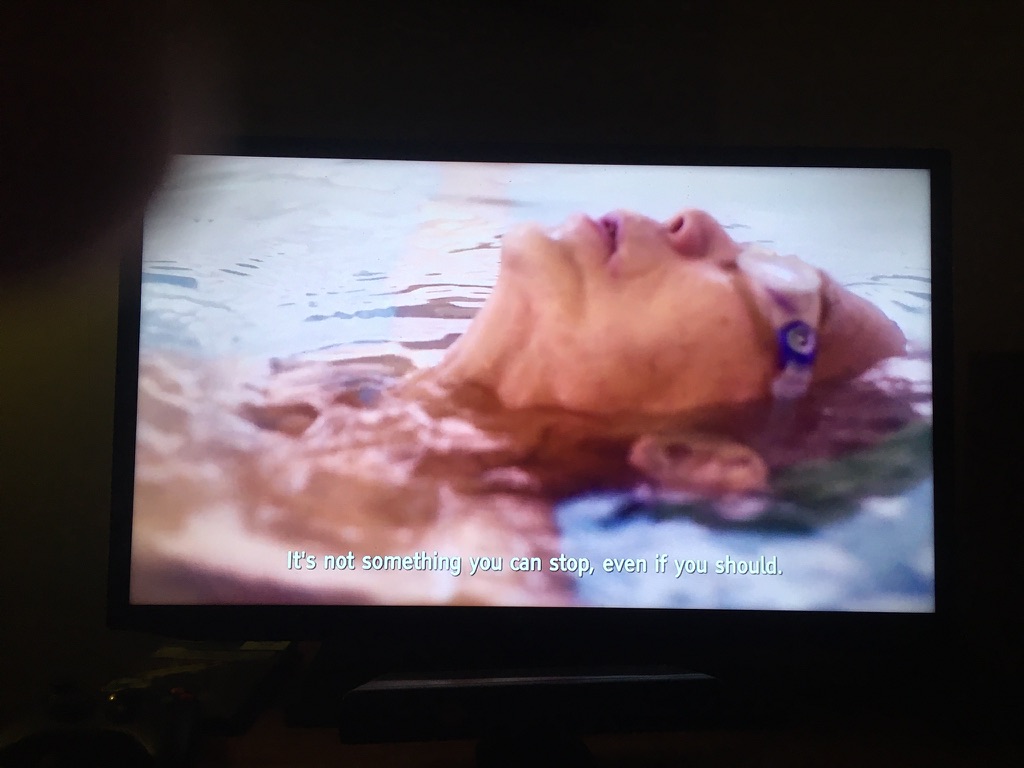
    One of those films I love to re-watch is a wonderfully odd documentary from 2013 called ‘Cutie and the Boxer’.

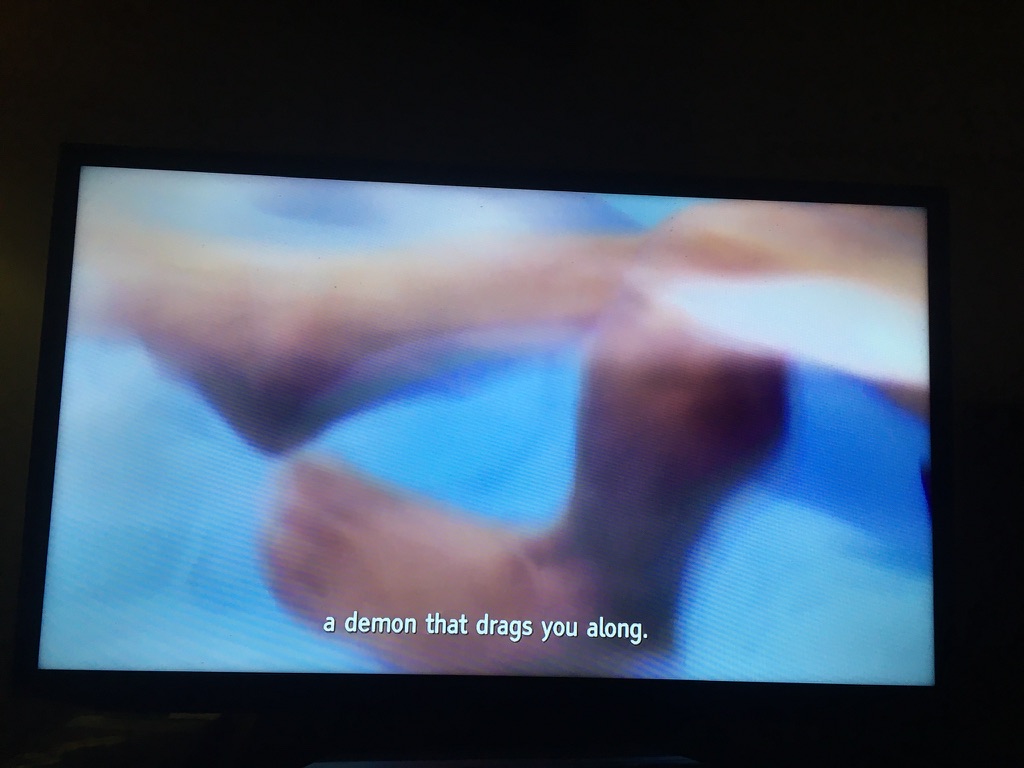
    It’s about two Japanese artists, Ushio Shinohara and Noriko Shinohara, living in New York City. They are a married couple and they are startlingly honest with one another. Their creative paths have caused them all sorts of suffering and tensions…and yet they can’t help but live for their art despite art being ‘a demon that drags you along’ as Ushio says at one point.

    Whenever I’m feeling a bit gloomy about my creative life…feeling fatigued from the endless tenacity it takes to keep writing on top of the endless demands of family/community life…I like to rewatch this film and it always lifts me back up and re-invigorates my love for the creative life.

    Both Ushio and Noriko are very dry, very blunt and very funny (maybe it’s a Japanese quality? I don’t know enough Japanese people to know.) Even though there are very sad elements to their story (poverty, alcoholism, domestic inequalities) …ultimately the film is a testament to never giving up your creative aspirations.

    Do you have any movies you like to watch over and over when you need a lift? Films that feed your creativity? Tell me in the comments – I’d love some recommendations. I especially love documentaries.

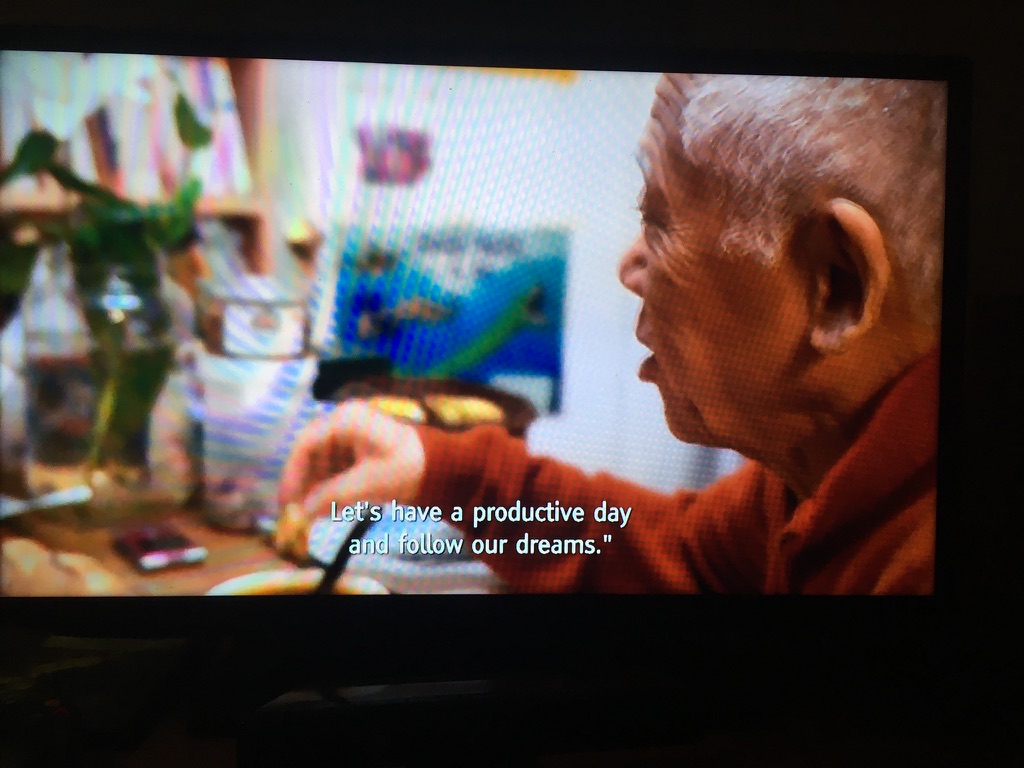
    Here’s one of my favourite Ushio moments from the film (I captured these by taking photographs of my TV screen so excuse their bad quality):

    *mic drop*

  • I’m (one of two) inaugural Verb Wellington Home Based Residency recipients!

    Today some news, rather than a musing…I’m very excited to share with you that…

    The other recipient is the wonderful Henrietta Bollinger.

    This residency is aimed at writers who can’t, for personal reasons, go away to multi-month/year-long residencies, or overseas residencies.

    I think it is so wonderful that Verb Wellington has created a residency with this kaupapa.

    Over the last couple of years, I’ve had raw and deep conversations with fellow-Taranaki writer Cassie Hart (who also finds it hard to get away from home) about how most residencies leave out writers who have health issues or care loads that prevent them from accessing the usual style of residency. We chatted about what our ideal residency would look like…and we agreed it would look like a financial stipend and no need to go anywhere!

    I thought about lobbying CNZ to try to make something like this happen but I never got around to it, because: care load …

    …and then Verb Wellington created one which looked just like what Cassie and I had talked about!

    It means SO MUCH to me to be selected for this residency. I have been writing poems and essays this year and the residency will assist in getting those closer to publication.

    Thank you so much, Verb Wellington!

  • 52 and still stumbling over the ‘A’ word…

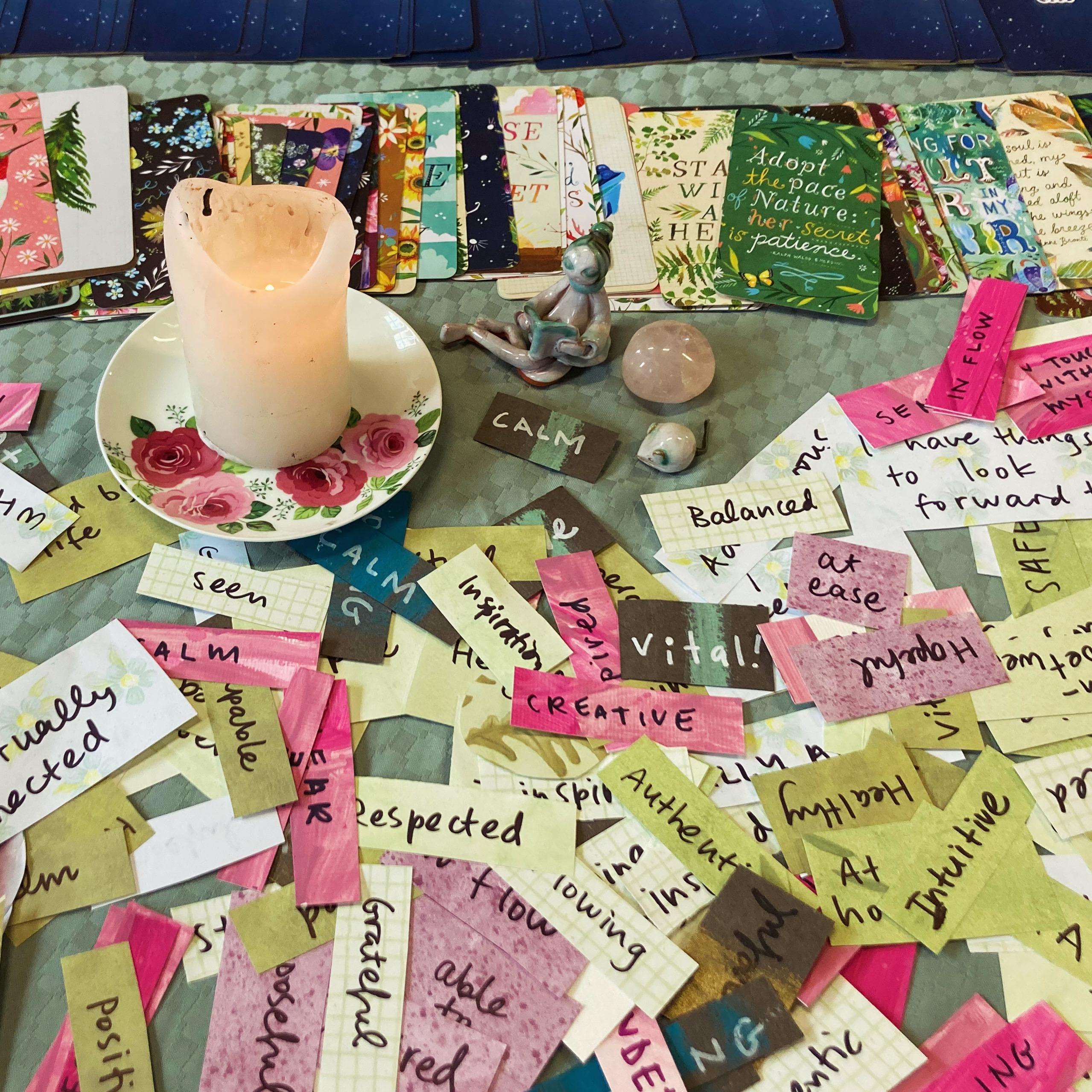
    (Above: journal word cards I make for my workshops.)

    Over the weekend, I was at a beach-side retreat for women so I was meeting some new people. I had just taught a journaling workshop (if you’re reading the blog because of foraging…you might not know my second book was about the practice of keeping a journal and I teach journal workshops) and a new acquaintance asked if I were an artist.

    I made some digressive, stumbling reply about how I loved to ‘mess about’ with art, had a visual element to my journal practice, love to play with art materials…mumble mumble… but ‘no, I am not a ‘proper’ artist.’

    My friend C, who was standing there, who is a visual artist, has been to art school, etc, interjected and said,

    ‘Helen, you are an artist. You are. You spend a lot of time doing art. You’re an artist!’

    I thanked her…the conversation moved on…but it left me reflecting.

    (Above: Mixed-media chamomile from a botanical sketchbook I’ve been working on.)

    I have taught creative writing for most of my working life (at university) and there I was, encouraging my undergrads to claim the ‘W’ word, ‘writer’ for themselves.

    ‘If you are passionate about writing, you spend your time writing, you are a writer!’ I said to them. I meant it, too. I felt there was power in the claiming of the word for themselves.

    And yet…and yet…here I am, old enough to know better, and still wiggling around doing the same thing for myself in another creative discipline. I studied creative writing at university and spend a great deal of time writing so it feels simple to claim ‘writer’ for myself. I still wobble around with claiming ‘artist’.

    Aren’t our brains fascinating, and odd, and annoying?

    (Above: Mixed-media red clover from a botanical sketchbook I’ve been working on.)

    I think part of it is where a passion intersects with an audience, or with capitalism. I find it easy to claim ‘writer’ because I have published things and had an audience respond to them. My words have earned me (a little!) money. I have been successful in selling books.

    (Above: art manifesto in the making. Sketchbook notes.)

    My art is mostly in the vein of play, experimentation and enjoyment of the creative process. I have exhibited art work and sold a few things. When my children were small, I supplemented my income with making self-designed and drafted textile crafts and paper goods. I love taking photographs. I feel I have a good visual eye.

    So how is it, I can, for years, have encouraged students to claim ‘writer’ for themselves and yet fail to take my own advice in another discipline?

    Do you have a creative practice noun -artist, writer, musician, singer, potter?-…..you yearn to claim and inhabit but struggle with? I’d love to hear about your blocks or advice for overcoming this odd phenomena.

    Love, Helen, (confident writer, tenuous artist.)

  • How I auditioned to play myself and got rejected

    (An occasional series where I write about things that happened around my book, ‘A Forager’s Life’.)

    (Above: The audiobook as a tangible object!

    In winter 2023,  a few months after ‘A Forager’s Life’ came out, I received the exciting news that the book was going to be made into an audiobook with Bolinda Audio.   

    (By the way, it’s also available as an e-book) 

    Bolinda told me that they would soon be casting a voice artist and it would be recorded in Australia. They also asked me if there was anything particular criteria I would like for the voice actor. I replied that I’d like a warm, friendly voice and that it was very important to me that the Māori words in the book be pronounced correctly. 

    After I sent that email, I got to thinking ‘hang on a minute, don’t some authors read their own audiobooks?’. Of course they do…although it’s more common with celebrity authors or for celebrity memoirs. But in 2020, I’d had a bit of a go at recording some of my original meditations for the meditation app, Insight Timer.  I’d really enjoyed doing this and I thought my voice sounded pretty good… calm, composed. 

    So then I did something I almost never do…I advocated for myself and asked them if it would be at all possible that I be cast as Helen Lehndorf for the narration of the audiobook?

    They were very gracious and replied, ok, although it was unusual for the author to narrate their own audiobook, I could send them an audition ‘tape’ (MP3)  of me reading a part of the book. 

    I duly locked myself in my office and spent a couple of hours getting a decent recording of about five minutes of one of the chapters which had a bit of dialogue in it so they could hear me doing multiple voices. Listening back to it, I thought it sounded pretty good. I sent it off feeling reasonably confident. 

    A few weeks passed…and then I got an email to say they were sorry, but they didn’t feel I was suitable. 

    In other words, I’d failed the audition to play myself.

    They told me they had cast a young Australian actor, Ayesha Gibson. Then, (possibly because they felt sorry for me?) they asked if I would like to record the book’s epilogue. It would involve a trip to Wellington and a few hours in a recording studio. By this stage I felt a bit embarrassed by my bid to read the book myself, however I thought it would be an interesting experience so I said yes

    (Above: A photograph Ayesha sent me of herself in the Melbourne recording studio.) 

    I was booked to record in the same week as Ayesha. She recorded the whole book over just a few days. (The audiobook version is around eight hours long.) On the day I travelled to Wellington to record my little bit, Ayesha and I were in Whatsapp conversation about the recording process. She was (very sweetly) giving me little updates on how it was all going and would occasionally send me a question about pronunciation or meaning. It felt surreal to be getting these messages as I travelled on the train southwards…knowing we were both recording bits of the book at the same time in two different countries, timezones, studios. 

    My recording session wasn’t until the late afternoon. I was so paranoid about wearing out my voice so bought throat lozenges, a lemon honey drink and tried not to talk as I mooched around Wellington waiting. 

    I turned up at The Armoury Studio trying to look nonchalant and no doubt failing. I had around 3000 words to record. 

    Friends, it was challenging. It was harder than I imagined. Now I understand why Bolinda prefers to hire professional actors. I had to do retake after retake because of all manner of things…throat-clearing, dropped words, flubbed bits, weird nervous breathing. 

    (Above: one of the lovely (and patient) sound engineers at Armoury on my recording day.

    I don’t mean to make it sound like I did a terrible job…I didn’t..but nor am I a professional voice actor. And the sound engineers were lovely and reassured me everything that was happening was totally normal and I was ‘doing great’. However, it was precise, intense work. After just a few hours in the studio, I was so tired. 

    On the train on the way home, I felt relieved I had failed the audition to narrate the whole thing myself. Ayesha did an amazing job and I feel so proud of the audiobook version. 

    A few months later, I got sent a few copies of the Audiobook as a tangible object … an MP3 CD! It’s also available on Audible and, if your local library uses the service, Borrowbox

    And that is the story of how I failed an audition to play myself. 

  • Slow-Small Media for the Weekend

    Introducing … Slow-Small Media for the Weekend, a weekly digest of things which have caught my eye lately. My hope for these digests is that you can curl up with with a cup of tea over the weekend and enjoy these things as an antidote to the overstimulation of social media. 

    A read

    I’ve been enjoying Kirsten Bradley’s new art/writing project about moon literacy and garden tending.  If you like thoughtful writing about land tending and community care coupled with an art practice (cyanoptye) and folk herbalism…this is for you.

    Her article about progressive pickles and caring for her child particularly resonated with me. I, too, have had to let go of a lot of ideas about what loving family routines ‘should’ look like. I have a family member who dislikes eating with us. He eats his meals alone out on the porch.

    Kirsten writes: 

    ‘I have learned that insisting that we do things in the Family Way (…) was something I needed to let go of. (…) 

    Care can look like learning to pay close attention to what is actually doable for this kid, this day, rather than assuming I know better and pushing them too far.’ 

    Read the full essay here. 

    If you have time, read her other essays, too. All rich, contemplative stuff about nature and art and care. 

    A song

    When I find a song I love, I listen to it over and over and over. It feels like spending time with a friend. This has been my song of early autumn: ‘Time to Bide’ by New Zealand artist, Monty Bevins. It’s a whole journey in one song and a great example of song as storytelling.

    I love the spaciousness of the beginning. The song begins in Māori and then switches to English. Then just as you think you have a handle on what the song is going to be… changes pace. It is a song which demands close-listening. 

    + It’s a song that references cold weather and fires so it is a beautiful one to play loudly beside the fire. 

    Read more about Monty here. 

    A zine

    The Theme Zine is a project which brings together an international cohort of artists and writers to collaborate on zines based around set themes. Their latest issue’s theme is ‘Nature as Sanctuary. It’s beautiful short read (and best read on a laptop so you can enjoy the art). 

    An artist crush

    I love the work of American artist Chelsea Granger. I have her plant oracle deck The Dirt Gems and it is just stunning. Her work is so beautiful, humane, colourful, intimate. It feels like steeping into another world…a better one. If you tap the first tile on the top left, you can then view all her art as a slideshow. Trust me, it’s worth it. You’ll feel better about the world afterwards. 

    A watch 

    I found this short (12 minute) film about the ARK (Acts of Restorative Kindness)rewilding movement so soothing and nourishing for my nervous system, I’ve rewatched it four times over the last week.

    It’s got me thinking about where in my small garden I can intervene even less and ‘rewild’ small pockets for all the other creatures I share this little patch of land with. We (humans) like to try to be in charge of our gardens…it takes some real reprogramming (deprogramming?) to let go of control and let nature do what it is so good at, romping greenly. 

    Read more about the ARK movement.

    + I recommend Mary’s two books, also. I’ve read both and they are beautiful and inspiring. 

    A recipe

    If you were too busy in late summer to make a tomato kusundi, Nicola Galloway has a fantastic version made from feijoas.  If you like Indian flavours and haven’t tried kusundi before you will love this spicy, aromatic pickle. It’s a great thing to have around to liven up winter sandwiches. 

    Or if you are in the northern hemisphere, where spring weeds are springing…here’s a great recipe for wild weed pesto with a guide to some suitable weeds. 

    *

    This weekend I’m planning on sharing a morning tea with friends, making Nicola’s kusundi with our feijoa abundance, painting a new sign for the sharing shelf (the orange one in this post got stolen) and digging up some of my abundant strawberry and yarrow plants to share. 

    Tell me what you’re getting up to in the comments. Happy weekend, friends! 

  • ‘now we recognise ourselves less and less’

    (Above: plastic rubbish I picked out from my vegetable beds last week. I collect around this much rubbish each time I tend or harvest from my vegetable beds.)

    I enjoy the writing on The Dark Mountain Project. It’s an ongoing project (based in the UK) that publishes ‘uncivilised writing’, holds gatherings, creates a space for conversations about all manner of unsettling and challenging elements of living at this point of human history. There you will find writing beyond polite eco poetics or nature writing that merely holds nature in a human/nature binary of saccahrine reverence. I don’t always agree with what I read there and that is why I like it.

    Last week I read this piece by Amy Kennedy from the most recent issue with the theme of ‘bodies‘.

    At first it seems a deceptively simple piece of writing, Amy describes a group of parents at a childrens’ birthdday party. One of them brings up the subject of the finding of microplastics in human placentas. The piece explores plastic: our culpability and the unavoidable enormity of the tsunami of plastics in our lives.

    I have a fairly high threshold for ingesting media about climate collapse and environmental degradation. I don’t have my head in the sand.This is not because of courage but more that I am an anxious person who approaches life in a ‘forewarned is forearmed’ sort of way. I like to know something of what’s coming so I can consider in advance how I might respond. (I’d prefer not to be built this way but there is only so much you can do about your neurological wiring.)

    I was surprised by my visceral reaction to this piece with it’s blunt presentation of human culpability in terms of the use of plastics and refusal to look away from the idea of microplastics in human placentas, in human bodies. ‘Now we recognise ourselves less and less’, Amy writes. A familiar feeling for the eco-anxious amongst us and a statement that works on many levels.

    A few years back I wrote a poem in a similar vein about digging up the backyard of my crappy Wellington flat to grow food for my oldest son when he was a baby …only to years later find out that backyard had been a dumping ground for old car bodies and broken machinery and was no doubt full of petrol and lead and other toxins. In my youthful naiveté, I hadn’t considered the urban soil’s history.

    These human missteps we make in the name of love: a birthday cake served with a plastic fork, feeding a baby mashed carrots grown in polluted soil…the hell we plod towards on our road of good intentions.

    The depth to which I was triggered by Amy’s writing surprised me at first (I thought I was made of tougher stuff by now). But then when I thought about it, I realised it touched on a tender spot in my own gardening practice…a spot where I choose to put blinders on.

    I live in the centre of a city. Every time I weed or harvest from my front yard garden (tended so carefully with the best organic soil amendments and lovingly homemade compost) I fish bits of plastic out of my garden: plastic bag fragments, fruit stickers, junk food packaging, lollipop sticks. Some of it seems to get into our compost somehow, despite careful sorting at the kitchen end. The plastic in the vegetable beds seems to blow in from the street.

    (I wondered if this plastic trash were an urban problem but a friend who lives rurally said that there is just as much plastic trash out her way, in the road gutters, in streams, from the plastic packaging of hay bales and farm products.)

    I throw the bits of plastic into a colander that I have with me in my harvest basket then put them in the rubbish bin where they will travel in a plastic bag to the plastic afterlife, which is to say slowly deteriorating into microplastics in the city’s landfill.

    I dwell in a space of both knowing that I have my stubborn blind spots (the macro and micro plastics in my own food garden and in the soil I am creating in my compost) and also having no inclination to stop. I will carry on composting. I will carry on growing food in this microplastick-y soil I am making.

    I enjoyed this essay about composting by Scottish writer Fraser MacDonald (found via Pip Lincolne) He, too, is carrying on composting on despite tangible evidence of plastics in his compost. He writes:

    ‘I make my own compost so that I can convince myself that even when the world seems socially and ecologically broken there are still mechanisms for recovery: it shows that change is possible. Composting is a simple habit of composition or gathering together that integrates past fragments into a future whole, so that what matters is not the individual ingredients but the fertile new thing they can become.

    & that ‘fertile new thing’ possibly contains microplastics…yet still I persist in habits which put me squarely in the ‘doing’ space of the world, in flawed creative acts which give me a sense of agency and regenerate my spirit if nothing else.

    For that purpose alone I believe they are worthy.

  • don’t buy a sympathy card, buy this

    Another thing that happened while I was too distracted by the release of ‘A Forager’s Life’ to give it the attention it deserved is that writer Iona Winter published a grief almanac called ‘a liminal gathering‘.

    I submitted poems to it and Iona chose one for the almanac, which I share below. I feel privileged to be amongst the writers, artists, musicians and photographers who are part of this precious container for giving voice to grief.

    Iona’s son, the musician and artist Reuben Winter killed himself in 2020. Since Reuben’s death, Iona has used her skills as a writer and communicator to be public with her grief in service to all who grieve and are silenced, or are too overcome by grief to speak themselves.

    A review of the almanac by Hester Ullyart says, ‘This is a hopeful resource, much needed. A rope of stars thrown out into the murk of grief. I recommend this almanac for every shelf, for death touches us all, and no one need struggle alone.’

    I so agree. This book contains both the intensity of new grief and the wearing plod of long-carried grief. It spans anger, raw shock and emotional pain through to gratitude, reverence, elegy…sometimes in the same piece of work.

    If someone you love loses someone they love, don’t buy a sympathy card, buy them this. You will be giving them the gift of a chorus of voices who dwell in the same place as them, a liminal gathering: grief.

    In his piece in the almanac Dear Reader, Rushi Vyas captures the some of the nuance of grief in his poem’s ending:

    ‘Dear Reader, go outside. Feel everything. The wind is cruel. And full of oxygen. The sun is deadly radiation. And our only source of warmth.’

    -Rushi Vyas

    & here is my poem from the almanac:

    negotiating boundaries with the dead

    grief: week one

    kaimanawa horse in my living room

    wild waters                        white flames

    grief: week two

    flower’s fingers holding medals 

    i’m a hobo pedestaled for bravery

    grief: week three

    in the musty cave mushrooms sprout from armpits

    it’s a total eclipse of the total eclipse

    grief: week four

    hurricane chasers, race to get best footage of worst damage

    a raggedy lone wolf to stare down

    grief week five: 

    bat-infested feeling my way   with echo-location

    drink puddle-water      trying for nutrition by chewing on a husk

    grief: week six

    (but wait there’s more

    were you looking for a neat trajectory?) 

    belly-crawling at toadstool height

    make the bed with a chainsaw

    grief: week seven

    turns out the source of the tinnitus is my own throat’s moaning

    some forest fires happen to crack the open the seeds of amoured shells. But not here.

    Just another searing morning. The petrol pours itself.

  • twenty years ago I started a commonplace book and didn’t even realise

    I was reading on writer Pip Lincolne’s delightful Wallflower Cordial the other day about her beginning a commonplace book. Then I remembered I had something similar, although I hadn’t realised it was a commonplace book.

    I called mine ‘The Brilliance of Others’. On the cover is a somewhat gloomy photograph of the reading chair of someone famous. (I didn’t record who so if you recognise it–let me know.)

    On the inside cover it says, “Personal Poetry Anthology: words by other people that move, stimulate, excite…& at the back, quotations.” 

    I guess I hadn’t heard of commonplace books then because that would have been a much more succinct title.

    I started it in April 2004 which was around when I became pregnant with my second child, Magnus. I guess that is why, after over twenty years, it is only half-way full. Nine months later, a decades-spanning distraction was born. 

    Still, from time to time, I remember it exists and I add something. There are currently 51 entries. 

    In it there are poems I’ve copied by hand from library books, some snipped out of the New Yorker (now yellowing…that New Yorker paper doesn’t age well), or printed out. From time to time I subscribed to the Academy of American Poets ‘Poem a Day’ emails and I would print out the ones I particularly liked. 

    (I’ve subscribed to this so many times over the years…usually when I feel like I’m not reading enough new poetry and I should make more of an effort to ‘keep up’…but a poem every day to your in-box is so many poems! & so many emails. Therefore I usually only last a month or two and then unsubscribe again after getting overwhelmed. It turns out even poets can be exposed to too much poetry.)

    (Above: This Merwin poem on brittle, yellowing New Yorker paper still gets me in the gut. What an ambiguous, radiant, brutal final stanza.)

    There’s also the occasional dashed-down note which must have seemed very relevant to something I was thinking about or working on at the time and now I have no clue why. Thus:

    According to USA lifestyle magazine The Good Trade, commonplace books are increasing in popularity again. Younger people are enjoying them as a kind of palate-cleansing, analogue and slow antidote to the relentlessness of social media. I totally approve of this trend. 

    Do you have a commonplace book or something like it?

    Here’s a quote I wrote down from G.K.Chesterton. Why younger me liked it so much, I’m not sure…possibly the poetry in the final eight words?

    “He discovered the fact that all romantics knowthat adventures happen on dull days and not on sunny ones. When the chord of monotony is stretched most tight then it breaks with a sound like a song.”