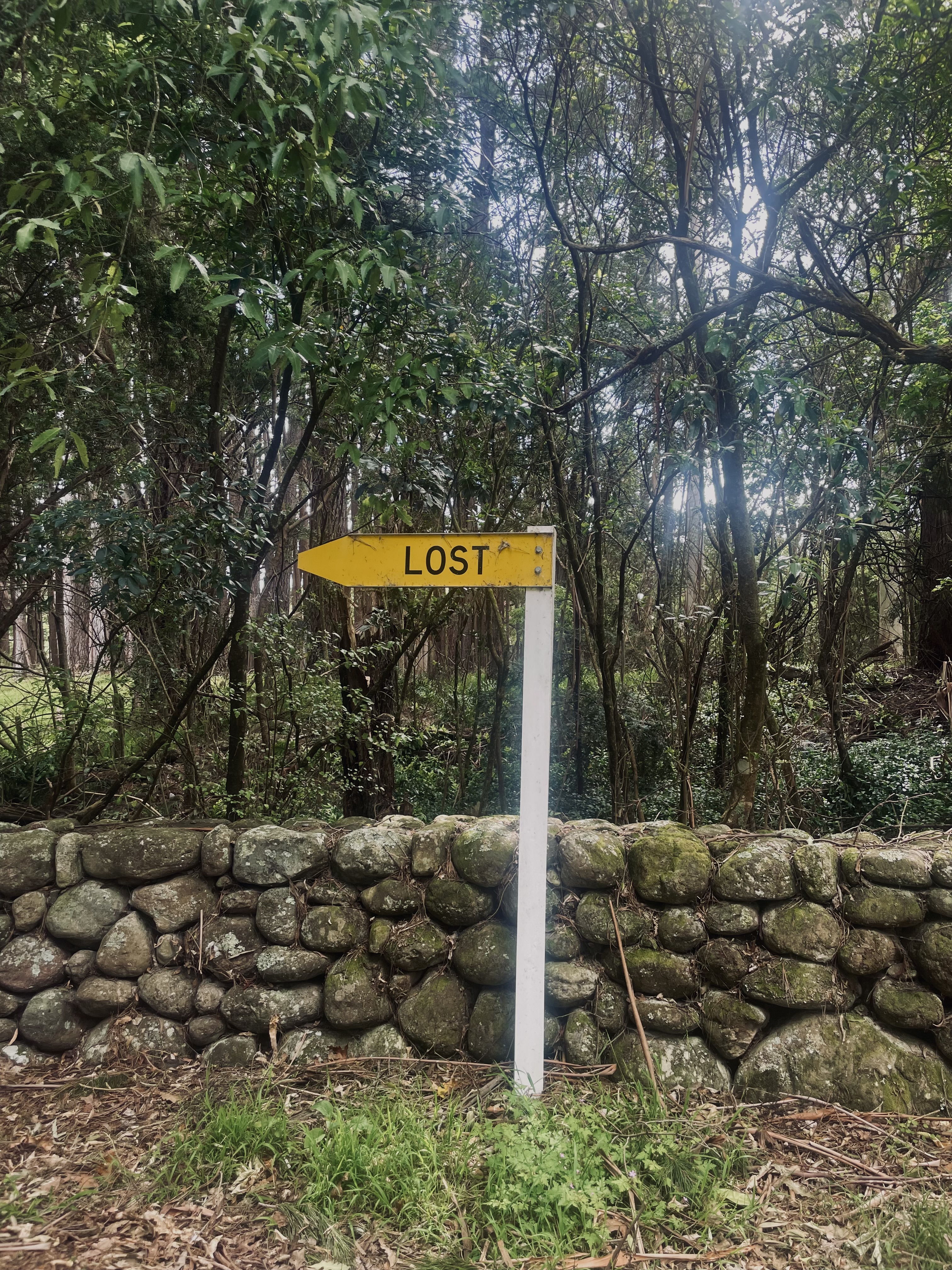
(Sign in Paul Melser’s yard. It looks convincingly like a NZ street sign but Paul’s wife told me an artist friend made it for them.)
I intended to write this last November after appearing at Wairarapa Word but a week after this event I suddenly lost my dear friend, a close family member got very ill and everything ‘normal’ was dropped.
I thought I’d write about it now, though, because it was a delightful dash down to Carterton and I also want to publicly acknowledge Wairarapa Word for their kind invitation.
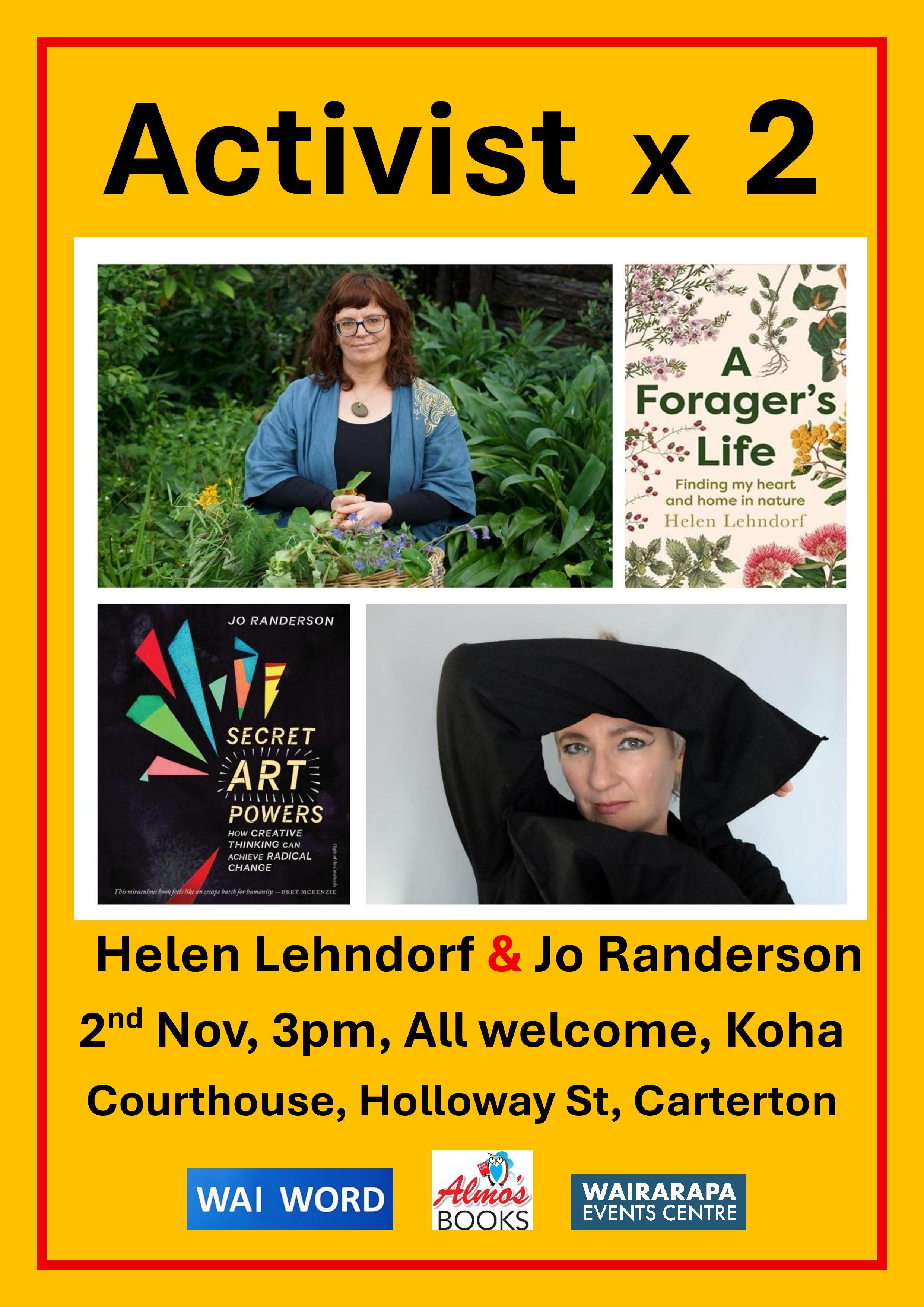
I was very excited to be a double-bill with the inimitable force of nature that is Jo Randerson under the title:
Jo’s latest book ‘Secret Art Powers’ is a must for any creative person. It’s full of inspiration, pep talks and courage and is a big boost to the spirits if you’re flagging. I read it before the event which made me all the more excited to be working alongside Jo.
While Carterton is close enough to Palmerston North that we could have ‘down and back-ed’ the journey, I booked us an Air BnB for the night so we could do a few touristy things as well.
There had been a massive storm shortly before Fraser and I drove down for the event and all the way along the road were giant wind-blown trees, their massive roots in the air. There were many farm workers out, chainsawing the felled trees, there were many post-storm burn-ups happening. It gave the trip quite a spooky feeling.
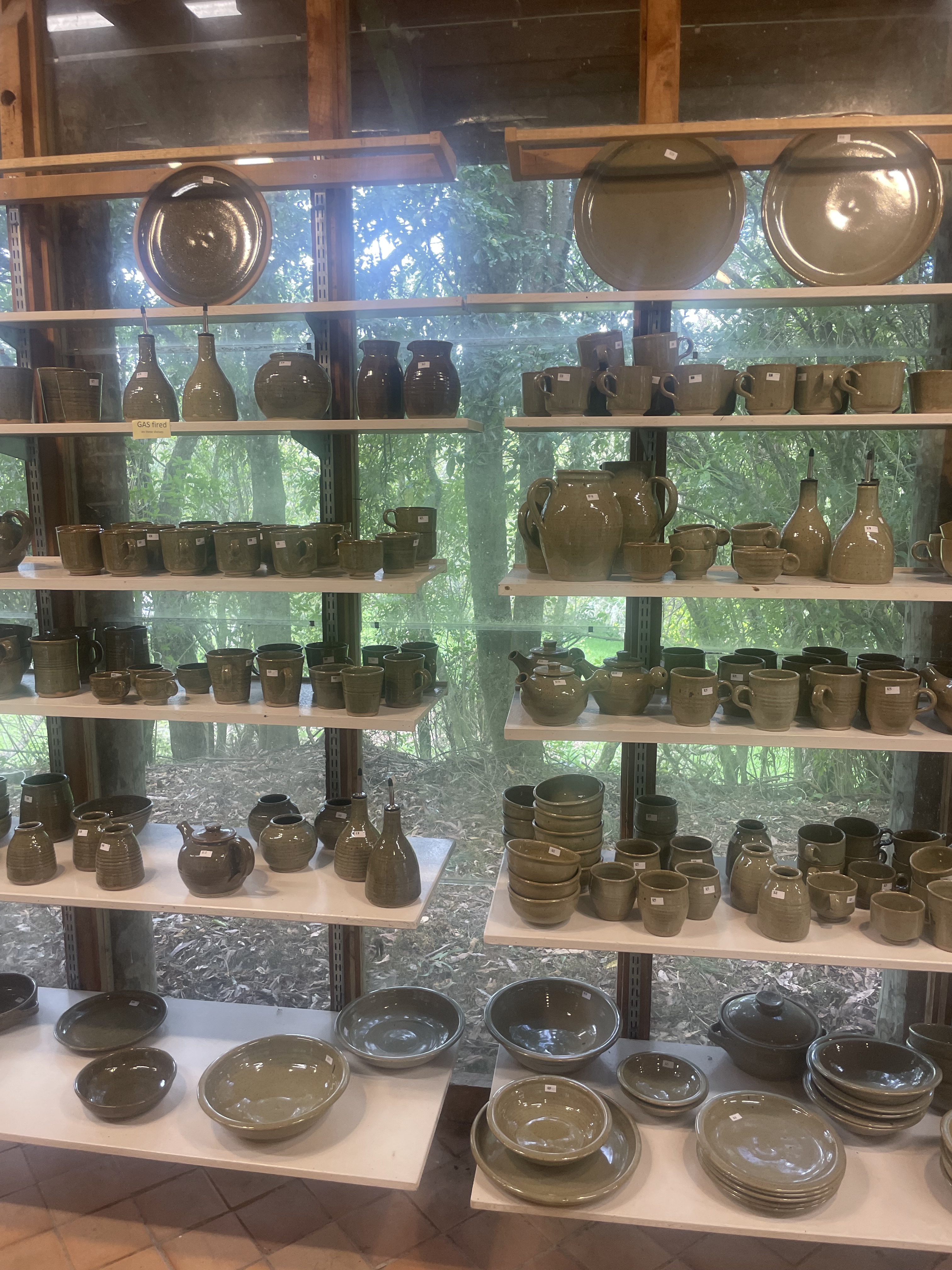
I love studio pottery and it is what we mostly use as dinnerware in the kitchen so we always stop in at Paul Melser Pottery just south of Masterton if the studio is open.
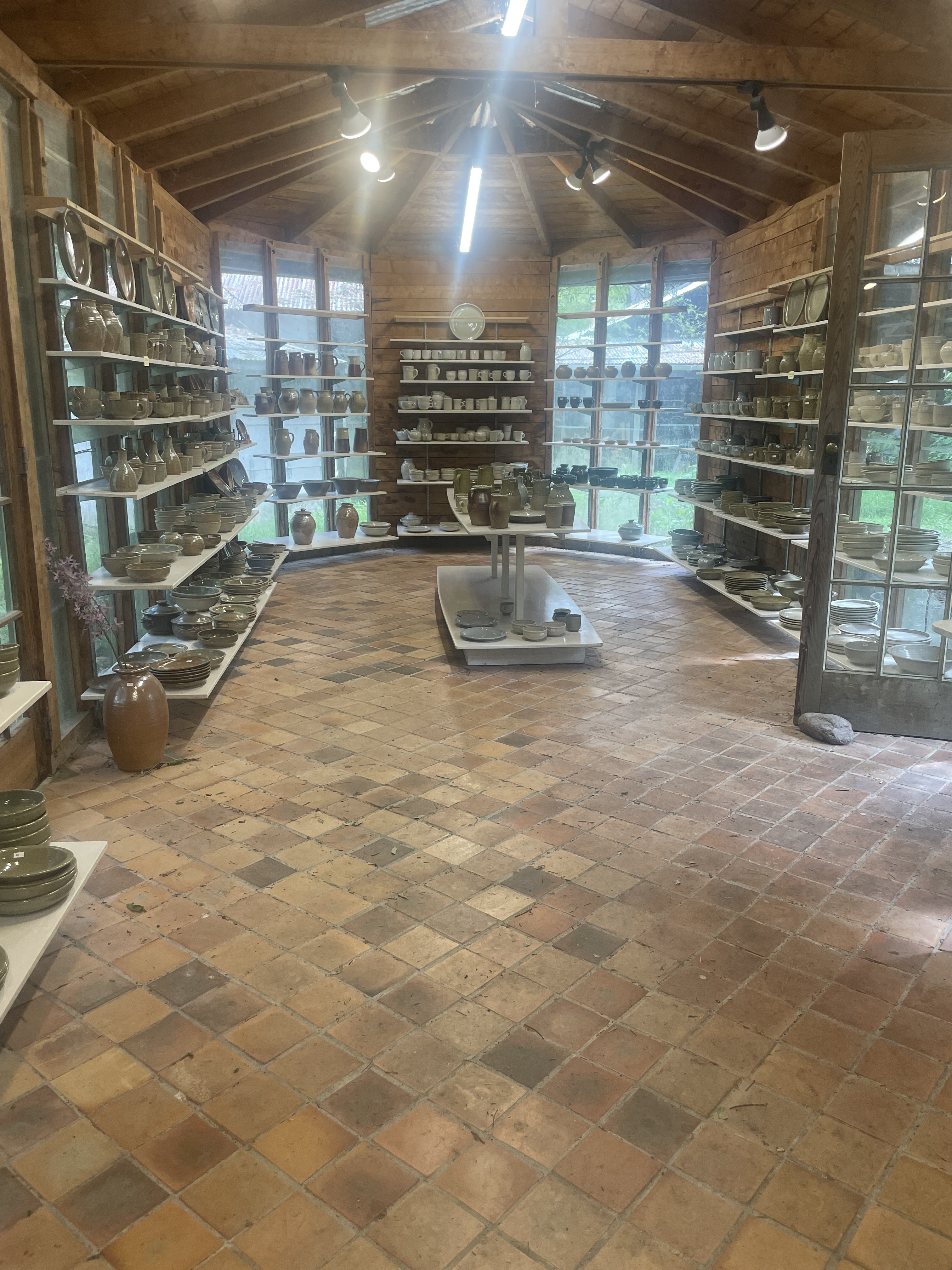
I love his studio shop with it’s glass walls. Peace washes over me there.
I forgot to take a picture of our purchases -we got a wonky cup and a bowl- but here’s a glimpse of Paul’s shop. It’s a little off the beaten track but definitely worth the trip:
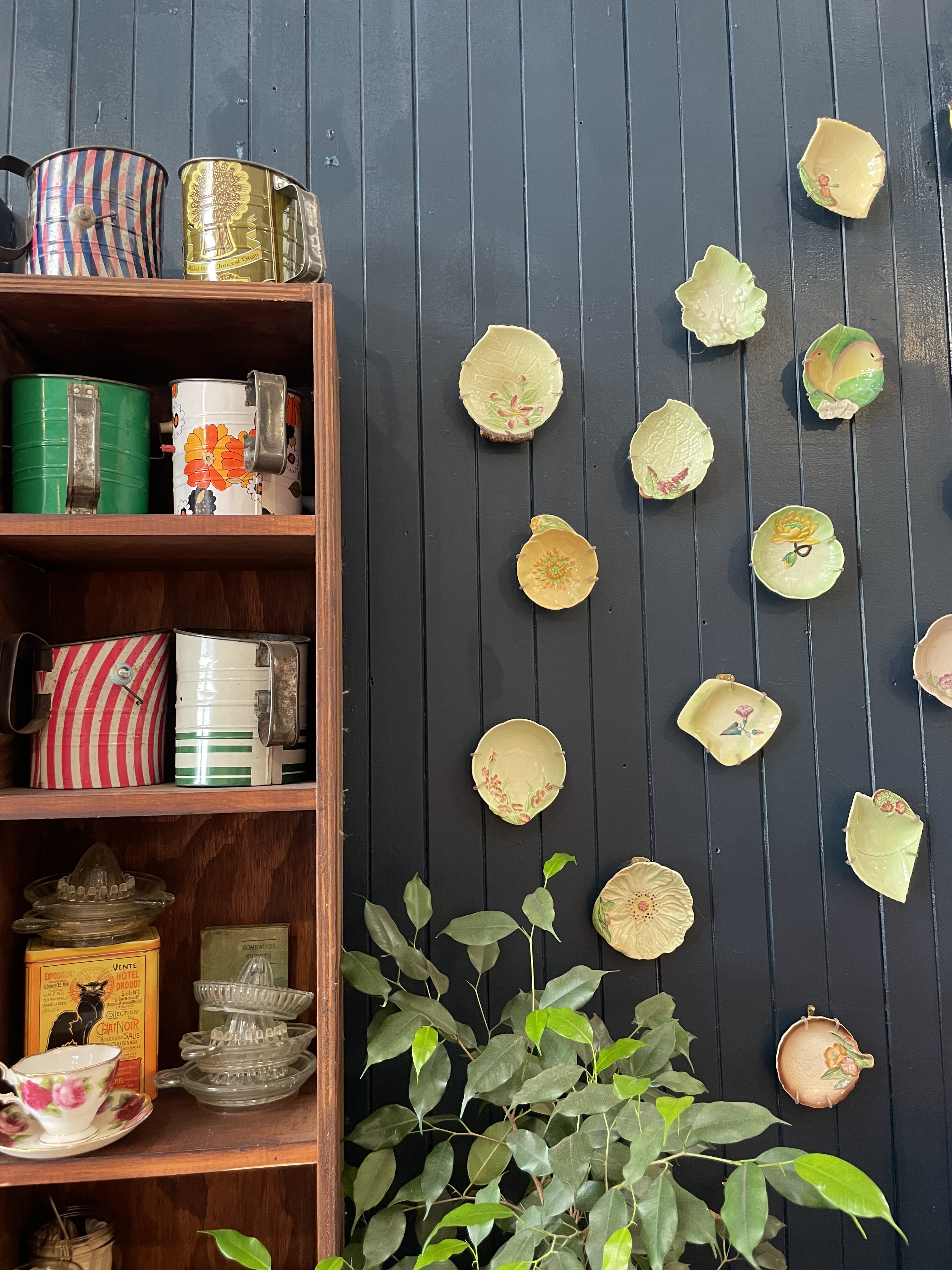
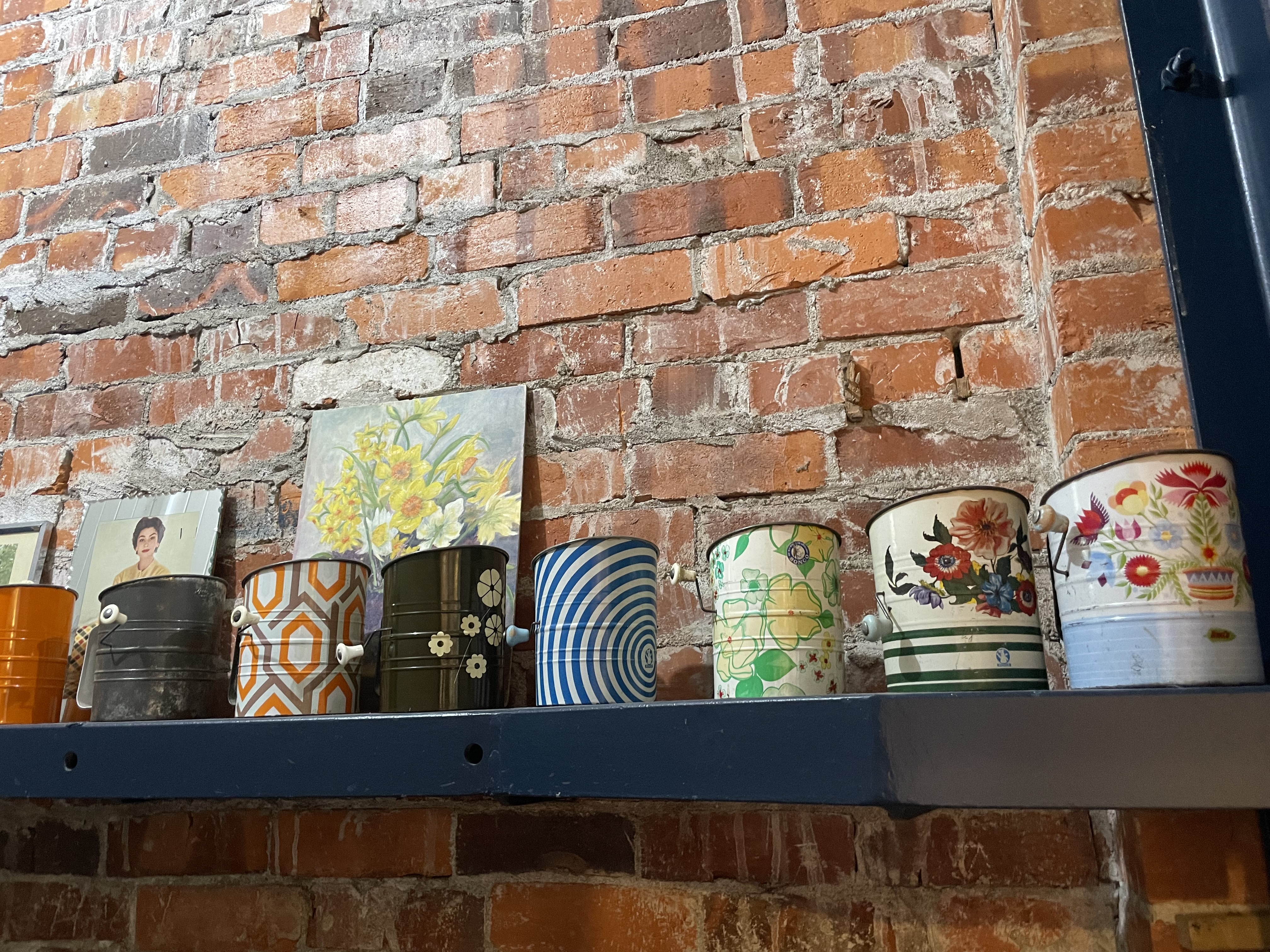
Once we arrived at Carterton, we popped into Aunt Ginger’s Cafe which a Wairarapa friend recommended. It’s a very good spot. Hearty, flavourful food and a great vibe with vintage kitchen ephemera providing a feast for the eyes:
(Above: cute details from Aunt Ginger’s Cafe in Carterton.)
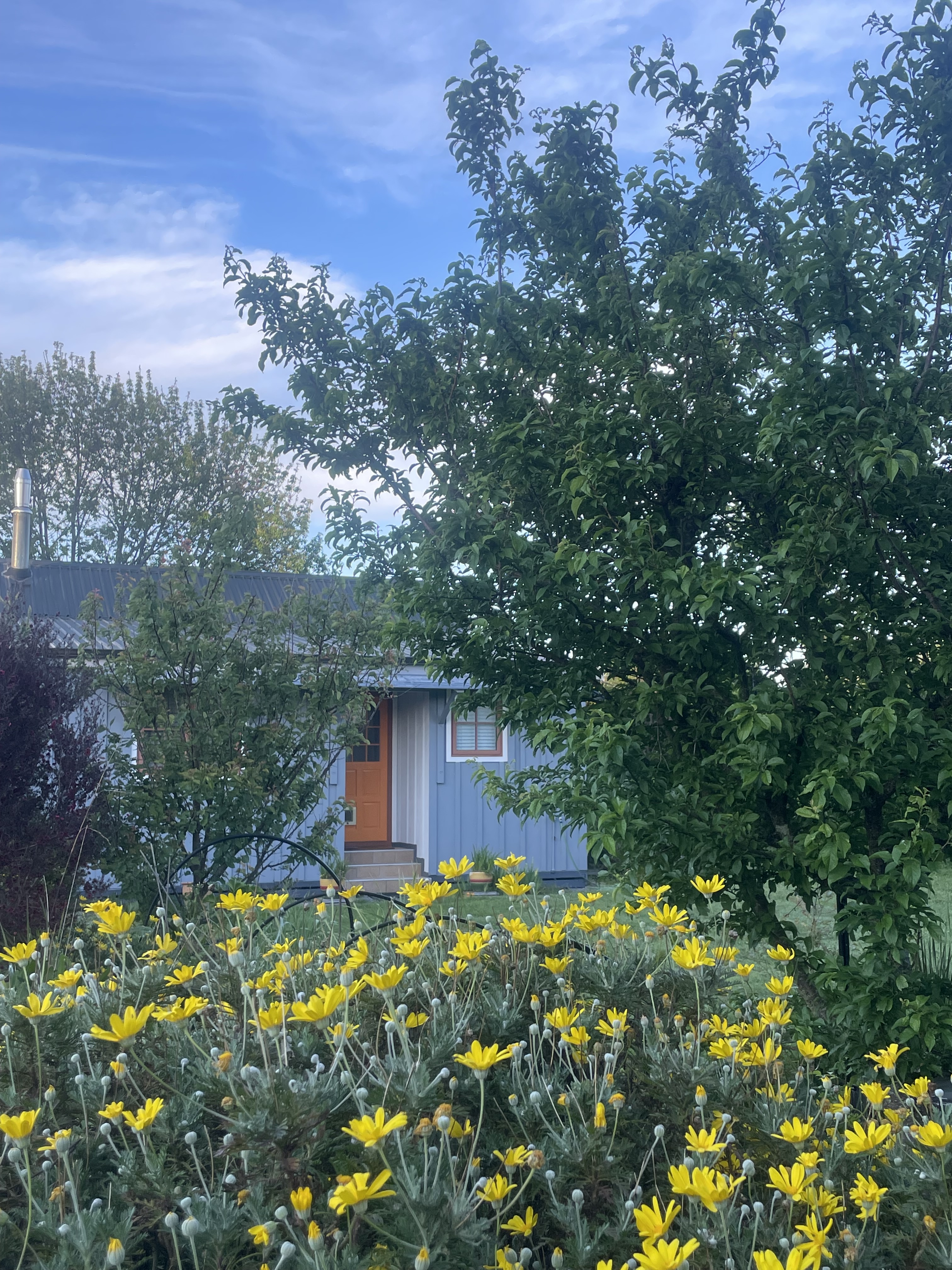
I was starting to get the impression that everything Carterton is sweet and characterful and the little Air BnB carried on that impression. It was a dear tiny cottage and a fun place to lay our heads for the night.
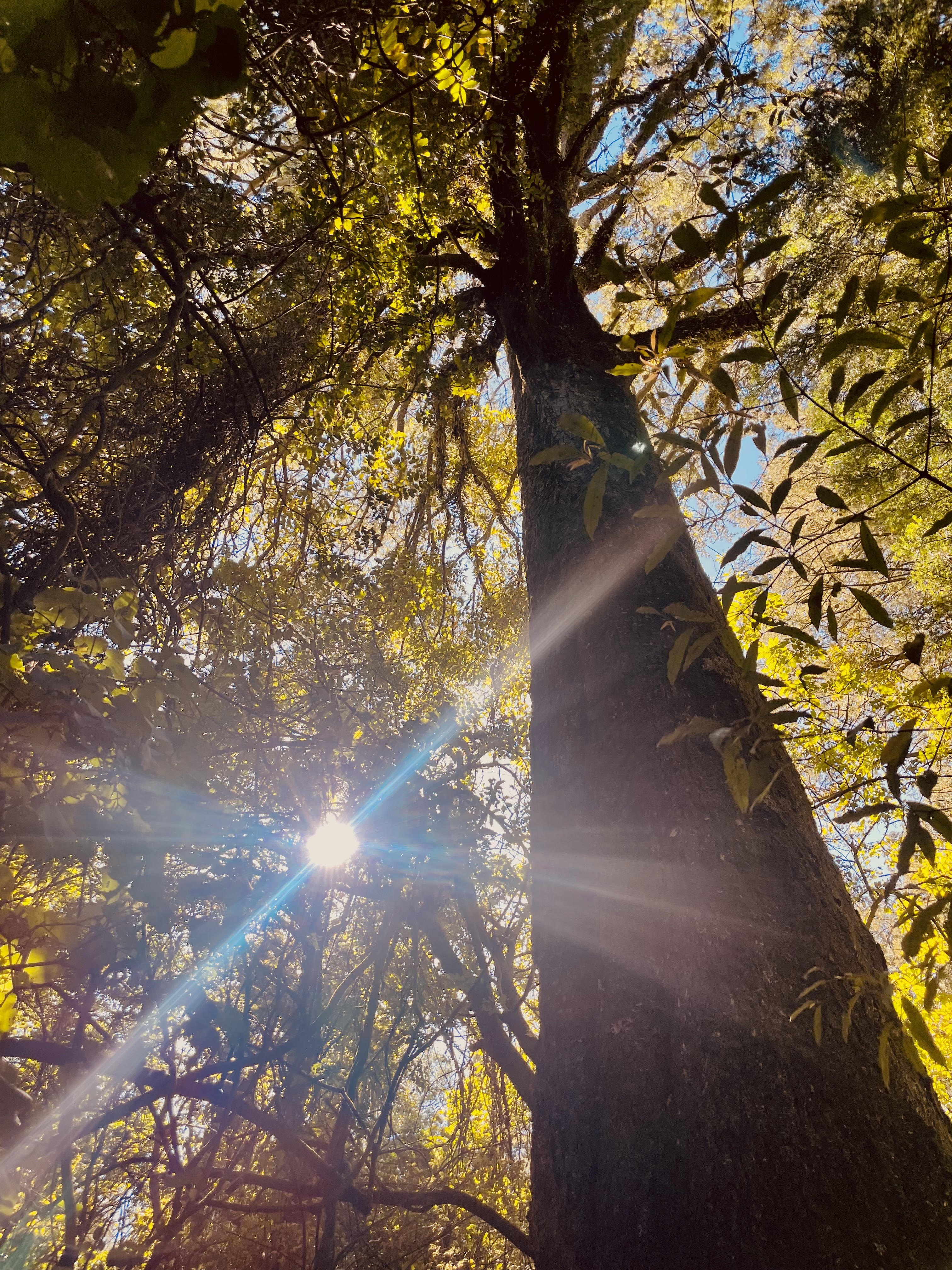
The next morning we looked up somewhere to get a dose of forest and found a nearby reserve which has a short loop track which we took slowly, sitting along the way to enjoy the manifold native birds.
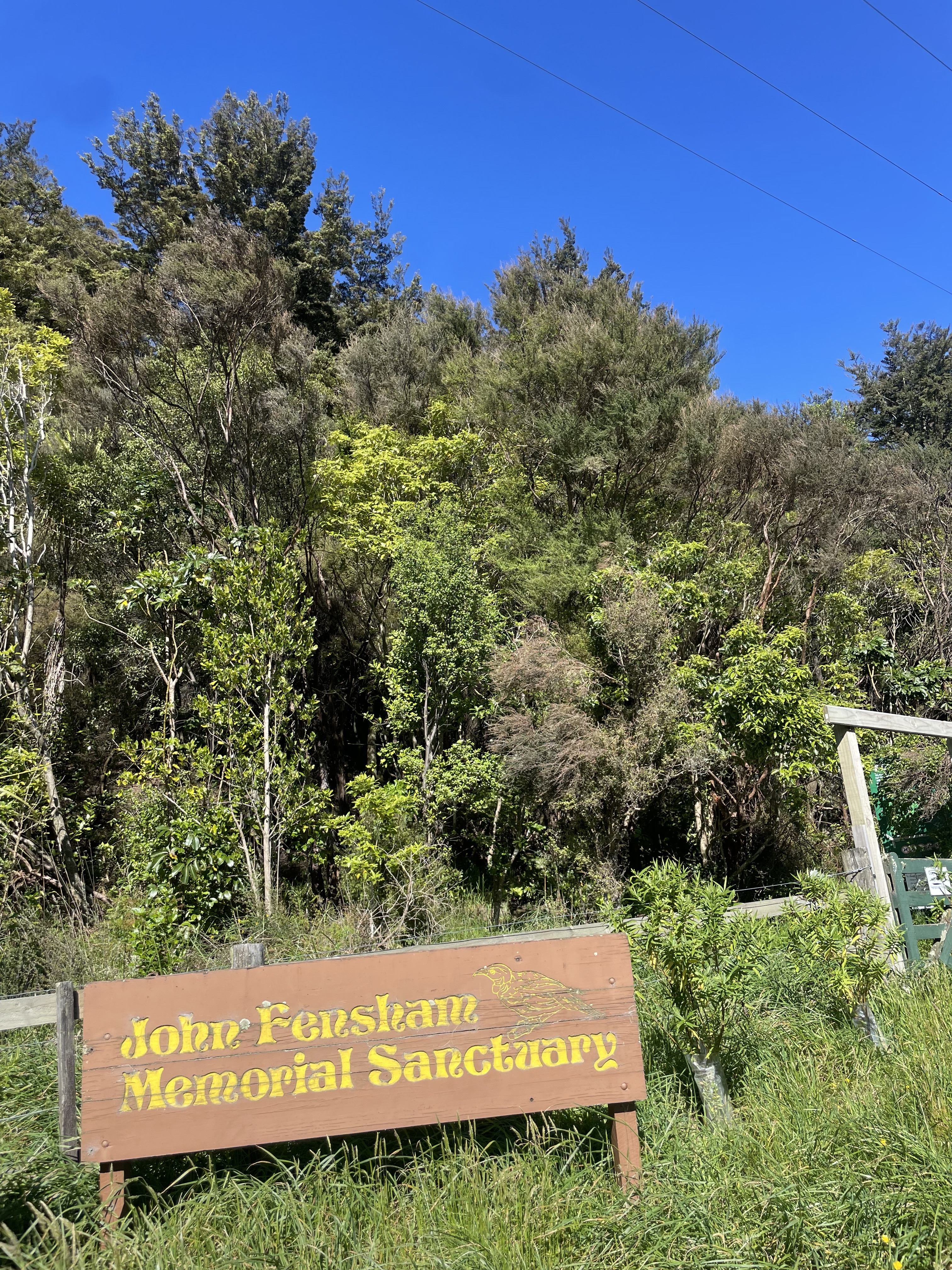
Below: l love the font on the (1980s?) sign for the reserve:
Thank you, John Fensham, for your thoughtful gift to nature lovers.
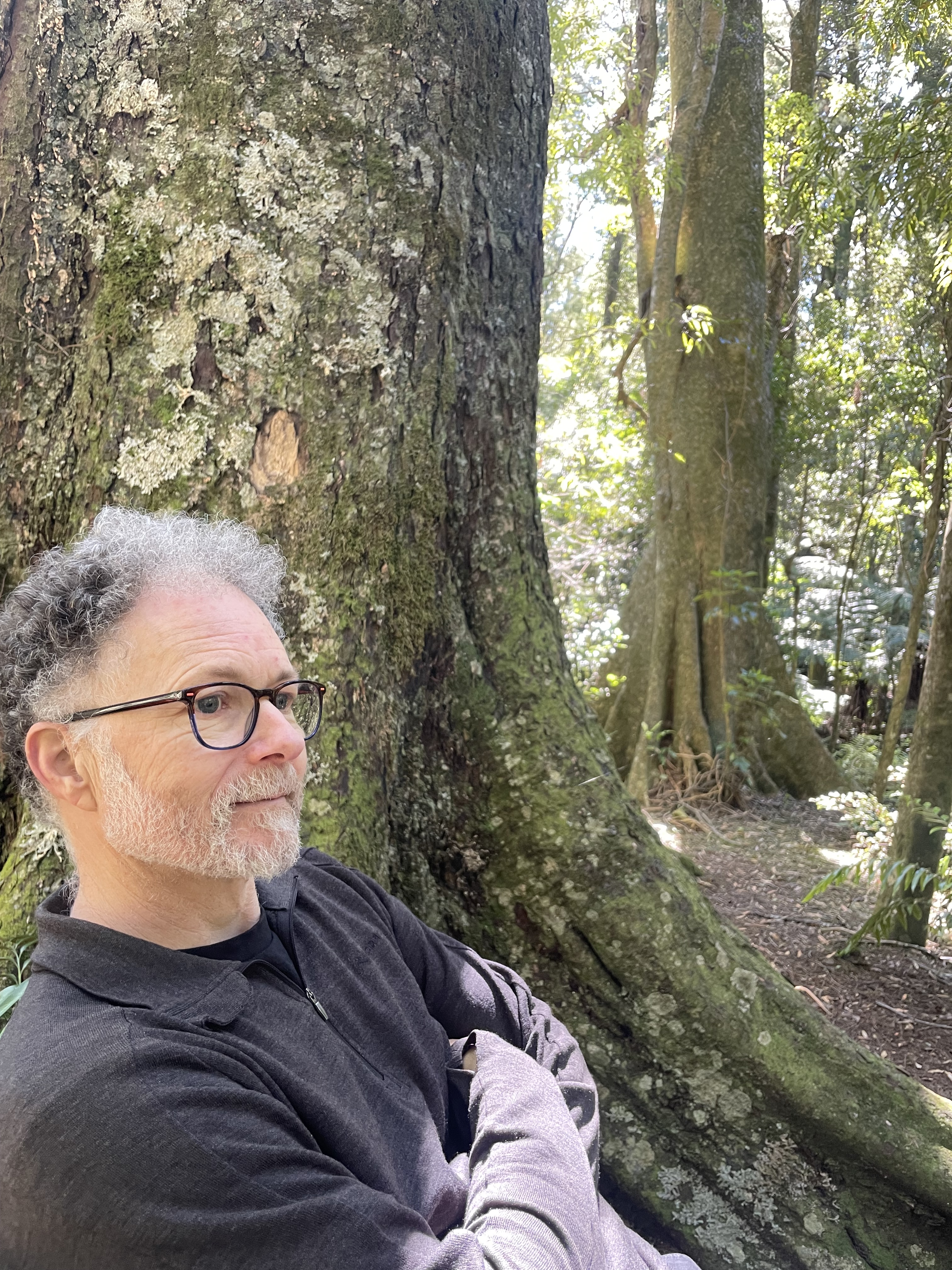
Above: My travel companion having a sit amongst the trees.
After our bush wander, it was time to lunch and then Wairarapa Word.
Meeting Jo was wonderful and we soon realised we had a similar energy and way of spontaneous riffing. We fed on one another’s rebel spirits and the talk ended up being feisty, energetic call-to-action. Wairarapa Word director Madeleine Slavick must have spotted something simpatico in Jo and I. Afterwards, I felt it had been a good pairing.
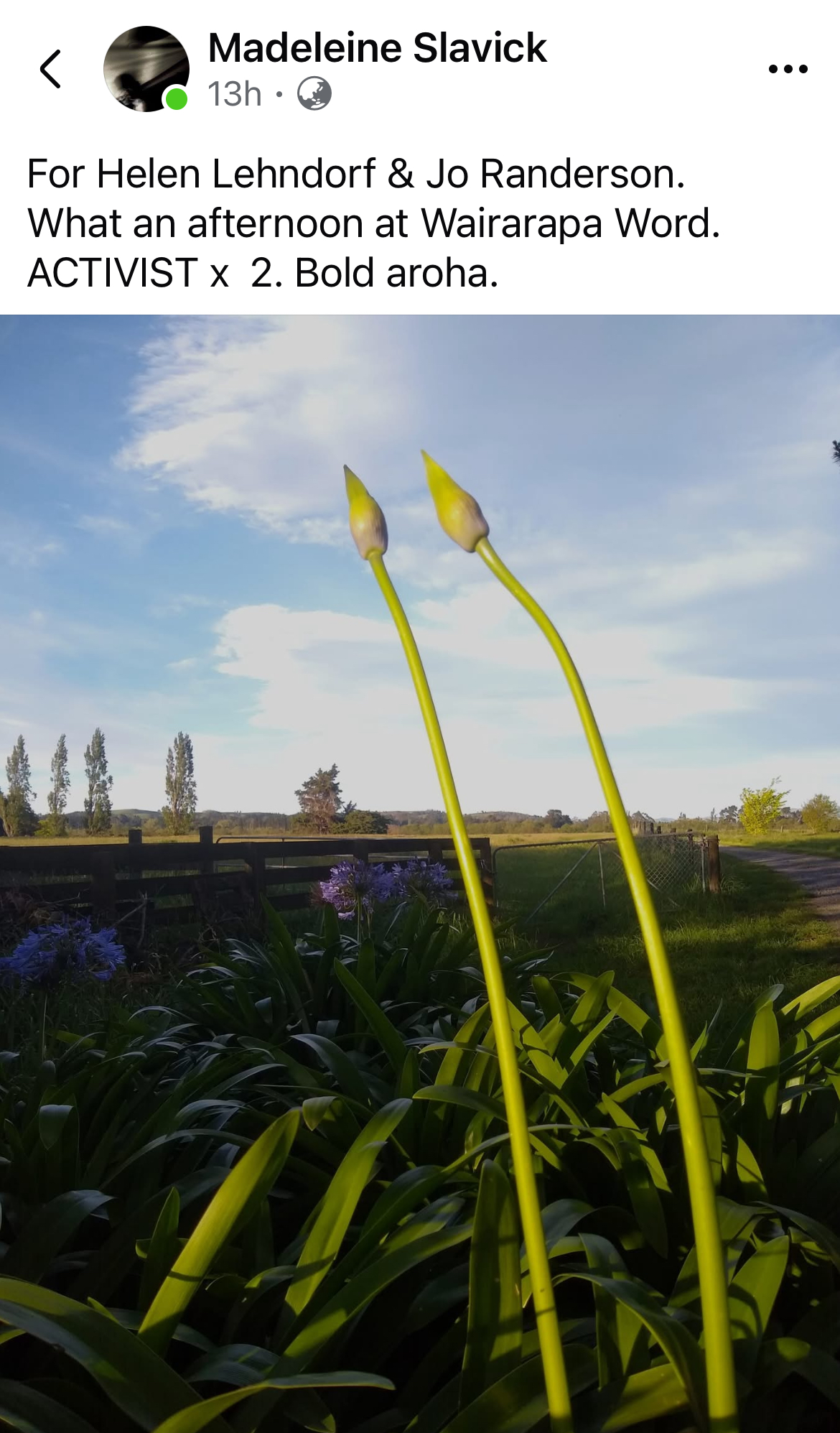
Above: Afterwards, Madeleine took this photograph for us. How lovely, hey?
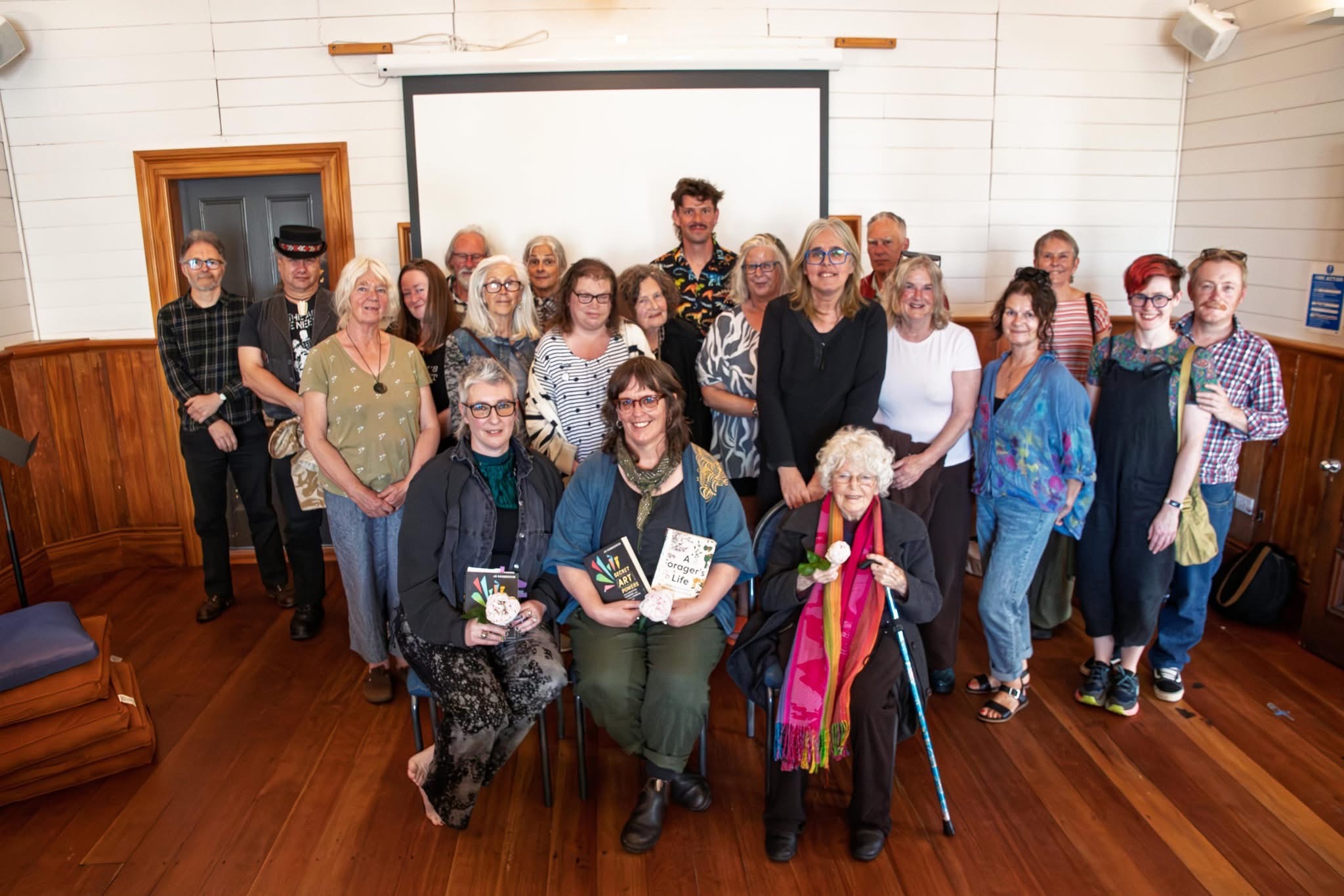
Here’s a photo of Jo and I with Madeleine and some of the lovely audience members.
(Above: front left is Jo, then me in the green pants, then local legend, Helen Dew (more on her later) and Madeleine is behind Helen Dew wearing black.)
Afterwards, Wairarapa Word took Jo and I out for Turkish food before we headed home. Sitting next to me was a wonderfully opinionated and eccentric man with a long white beard. I had a feeling from the way he conducted himself he must be some kind of artist and as our conversation carried on it transpired he was Burton Silver! aka, a very fun dinner companion.
Madeleine has written a fantastic book about her hometown of Carterton featuring short snapshot like stories and her beautiful photography. It’s a sardonic, moving and insightful book which really captures small town New Zealand life.
I came away with a warm impression of Carterton and it’s residents. It also reinforced my firm belief that you don’t have to travel far to have an adventure.
Big belated thank you to Madeleine and the Wairarapa Word committee, to Almo’s Books for selling books at the event, and to Jo Randerson for a heartfelt and incendiary riffing!
last spring, within weeks of each other, I found out a close family member had cancer and was facing a daunting treatment regime and then my oldest and most beloved friend died very suddenly. If that wasn’t hard enough, he left me all of his possessions so I had to fly to Auckland to organise, sort and pack up his house.
It has been a very difficult time.
I decided I would take a break from updating here for the rest of last year, then that turned into the summer, then I thought maybe I’ll do an update at Easter...and now it’s mid-May.
Thanks to a wee bit of time, various healing modalities, some therapy and a lot of crying…I am just now beginning to feel a little less sad and overwhelmed and ready to be world-facing again.
Life is complicated and hard and raw and intense and beautiful.
So…Hello! It feels nice to be here saying hi again.
I think that’s all I can say about the last six months for now.
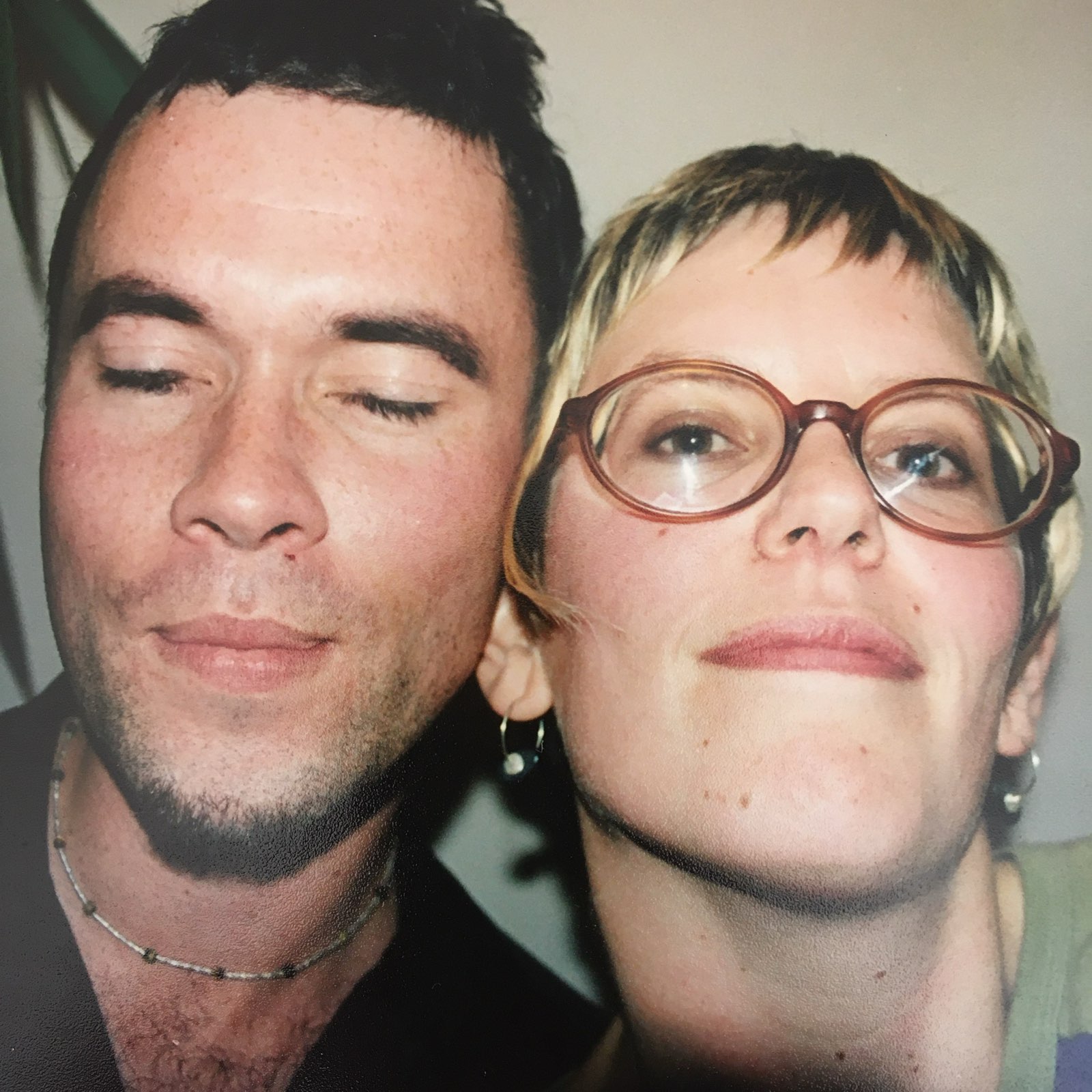
(Me and my dear friend in 1998. We have been friends since we were 14 and no one ‘got me’ like he did. I’ve lost so much shared history and quirky friend-intimacy things with his passing.)
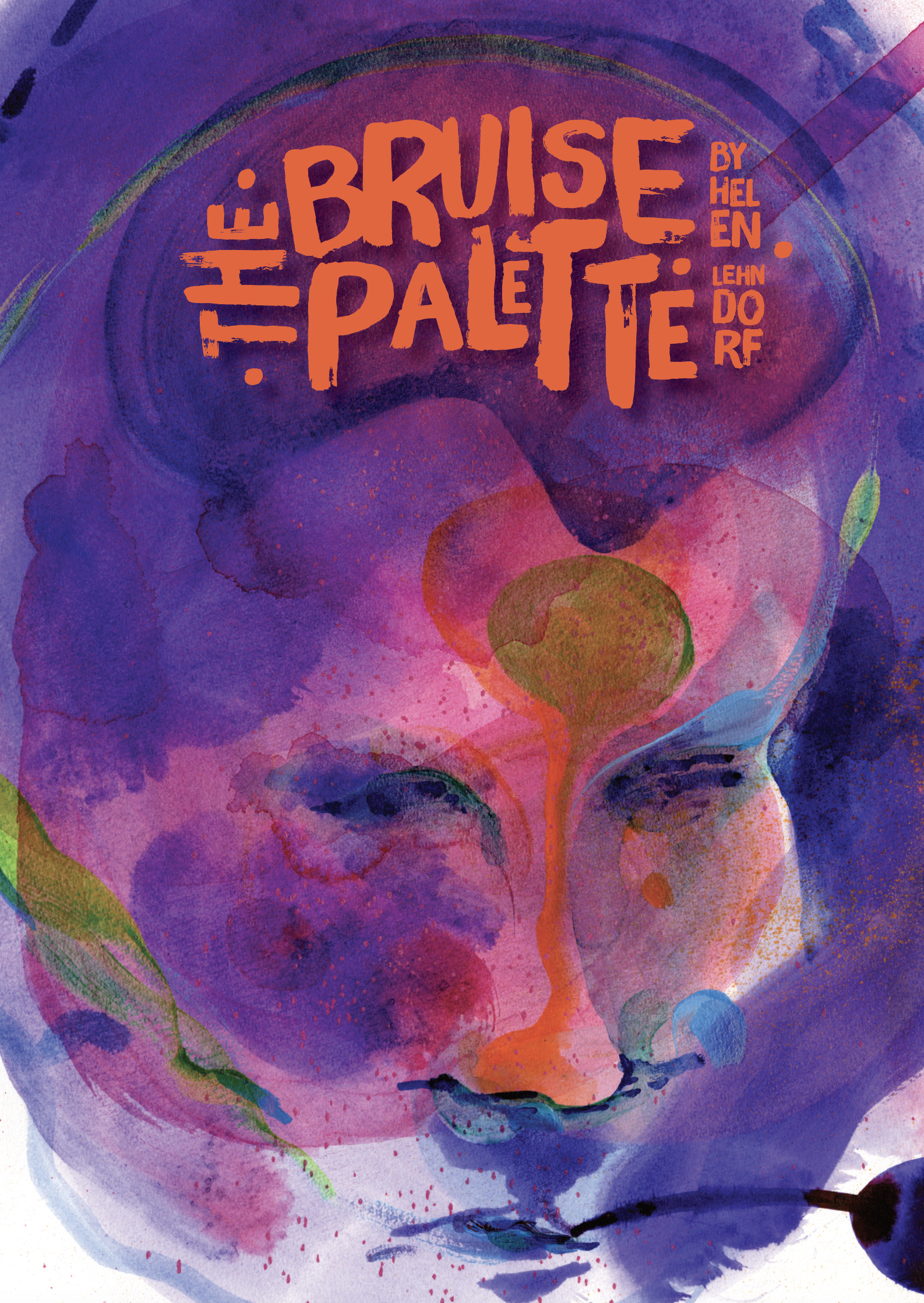
This time it is a volume of poetry, The Bruise Palette. It is a almost entirely Manawatū production: the writing, the cover art, the design, the publisher, the book trailer film maker, the advance praise artists are all from Palmerston North. We would have gotten it printed here also if we could but we don’t have a local printery so it is going to be printed a little South of here in the Wairarapa.
Me & some friends made a short and sweet book-trailer for it:
Here is the cover; the painting is by my friend Kirsty Porter.
We’re doing a couple of weeks of pre-orders to see if we can get the book into the top 20 Nielsen bestseller list for the week of publication (because it doesn’t have much chance after that. Poetry doesn’t much populate bestseller lists.) It doesn’t matter if it doesn’t work…it’s just fun to have a go…like betting on a horse.
There’s much to say about this book and life and everything! but given it’s been a while…I’ll sign off here.
(If you pre-order a book, you’re an absolute gem and I send you air-kisses and warmest wishes.)
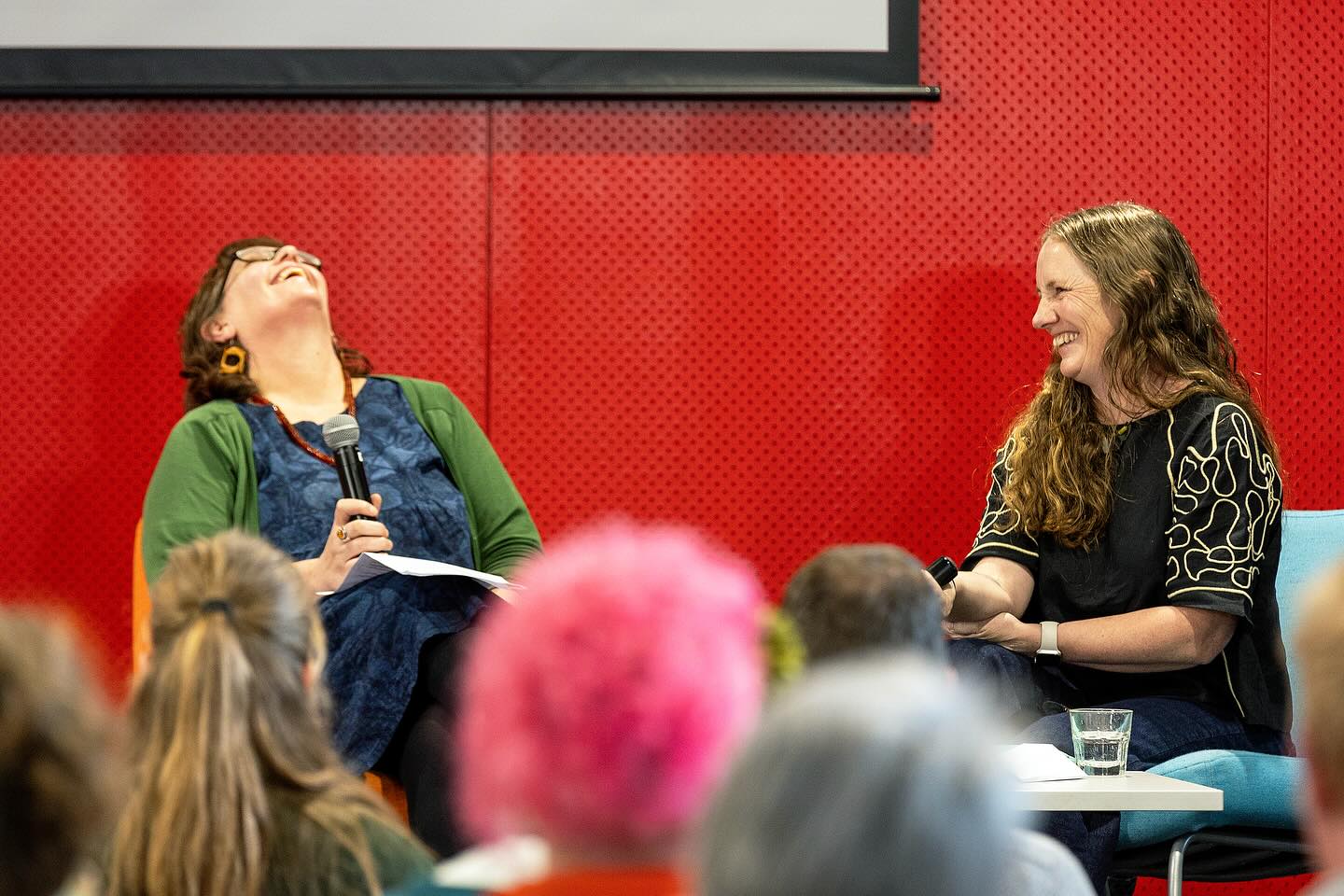
(Above: Me (on left) and Carly Thomas cracking each other up at her 11 October 2024 book launch at the Palmerston North City Library.)
Almost a year ago, I interviewed writer Carly Thomas live as part of her book launch event at the Palmerston North City Library. I don’t recall the specifics of the conversation but I do remember there was a lot of laughter. Carly is very funny. Also, very self-deprecating.
I kept insisting she was courageous, intrepid, fearless and she kept batting such suggestions away. She’s a very humble person. In winter, I invited her to be my second slow interviewee. These interviews take place via email exchanges in an unhurried way. The first one was with writer Iona Winter.
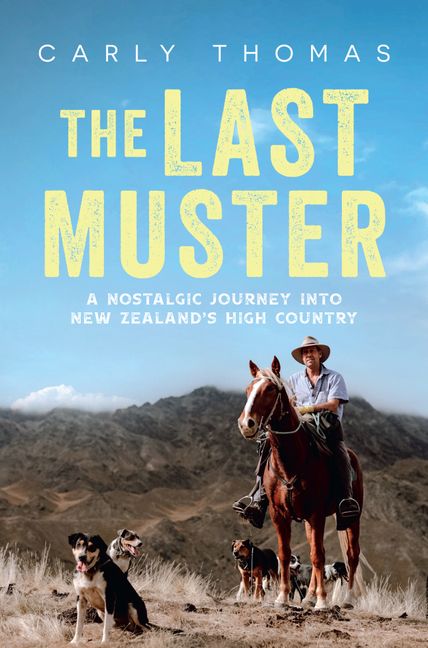
I wanted to check in with Carly a year out from the publication of ‘The Last Muster’: A nostalgic journey into New Zealand’s High Country.’
H: Congratulations on the publication of your book! & Thanks for inviting me to help you launch it. That was a great night.
Can you tell me a bit about your (very impressive) research trips for this book… you did a kind of ‘action research’ where you joined the mustering gangs. I reckon that was so brave!
C: The launch was so neat and you were a big part of that so a massive thanks to you, Helen. It all seems like a long time ago.
Writing a book is a funny old thing, it is all consuming and then it is done. It feels like you have been out at sea, in the thick of storms and intense sunshine and then you come ashore and the tide comes in and it goes out and all is calm. That sounds depressing but it’s not, it’s just there’s a lull, a pause, and then an in-between afterwards.
I knew straight away that I would go and work alongside the people I was writing about. I started ringing and emailing high country stations that I had already had contact with through previous writing gigs. It took a few calls before I figured out how to communicate what exactly it was that I was doing. It became apparent that I needed to head south for the Autumn weaning musters quickly and so I got straight into getting down there.
I’d read up a bit on each station I was going to, but not in depth, that would come later. I like to go into things a bit naive. I figure that asking stupid questions is better than assuming you already know, so I did a lot of that. I learnt as I went, was given ideas on where to go next and in that semi-informed/ follow-my-nose style I got passed onto musters.
I didn’t have a big planned out map of things, I really just took whatever next turn presented itself. I started down in Glenorchy at Greenstone Station and was well and truly thrown in the deep end on a four day muster with a motley crew of shepherds. After that the ball was rolling – I’d finish a muster, chuck my muddy saddle and gear in the car and head to the next one. Word got out about what I was doing and it got easier to get on the musters. I was learning skills as I went and got more handy as I went.
My tools for capturing everything were my phone recorder/ camera/ notes, my big Sony camera (not at all fancy) and my memory for conversations. People would say great stuff, as I was riding along trying to keep a bunch of unruly cattle in line, and I would have to remember it until I could do a voice memo of what they said. It was full on and it took my ADHD multitasking superpowers to a new level.
I’d do dumps of writing notes when I could, when I had a day or two in between musters, but not a lot of writing happened till I got home. There was a lot of writing in my head on long car journeys. I would try to hold onto each station’s colours, tone, sound, smell, taste and hum. When I did get to sit down, those were the first words to go down, then I got to the long and arduous job of transcribing.
Research came last, which I guess is a bit round-the-other-way from what some writers do. As I was travelling about I would try to go to local libraries to find historical tales of the area and old mustering yarns. I also collected a pretty big haul of old New Zealand mustering books from the many secondhand bookshops and op-shops I visited on my travels. Once back home I trawled through online archives and libraries to collect up old stories and facts. I went down massive rabbit holes.
One particular moment of connection was when I was trying to find the history of a particular homestead that had been abandoned on a station. I was coming up against dead ends and in frustration I called a tiny community library opened once a week by volunteers. As I was on the phone to the woman in charge that day who was telling me “just the person I should talk to was…..”, she paused and then said, “you won’t believe this, but she just walked in the door”.
The particular 90-something-year-old who was the missing link to the information I really needed was put onto the phone. It was magic. She told me things that were not written anywhere and could have been lost if she hadn’t stepped in right then. I just love that sort of thing and there really is something special about these encounters.
The whole book writing process was a combination of high adventure, a saddle-sore body, sleep deprivation, many kilometres on my little nana car’s clock and wondering where I would land next and spending hours researching in drafty libraries or sitting on my couch with a cat, a cup of tea and books piled high around me. I am a contrary soul and I enjoy both of those things equally.
H: Writing a book is so different from having a book published, isn’t it?
Yes, it really is and I think the main thing for me, this being my first experience of working with a big publisher, was knowing this project was bigger than me. I had to trust my publisher and editor and I took the opportunity to just say “yes” and be more open than I have ever been. It wasn’t just my book, it had many people involved, the most important part being all the people I encountered on the journey, who trusted me with their stories and way of life. It’s a responsibility to take care, while also telling it like it is.
And then it’s done, the final proof is FINAL and the printers crank into gear. And then you have to let it go, into the open, out into the world, into the hands of others.
The tide goes out, I take the dog for a walk, I look at the hills with new eyes and I wonder, ‘what’s next?’.
H: What did you learn about the horse mustering community over the course of writing the book? Did anything surprise you?
Every station was different but a few things were always the same. They love their horses and will always have them in their front paddock no matter what. They are people who choose horses over machinery to get the stock work done and that made them a certain kind of person. Horses may be a slower way of doing things, in some respects, but they are a quieter and kinder way to work stock. Stations that use horses tend to care about their animals, enjoy a slower, older way and there’s also a romance to it all as well.
The way you see things on a horse, the chats along the way possible without the roar of a bike and the relationship you have with your horse. So yeah, they were a certain type, often a little quirky and more often very stubborn about their way of life. And they all knew each other, the connections ran very deep.
I was sometimes surprised by their openness in having me along. Their honesty and their passion to really help me to understand what it all means to them. Sure, there were plenty of tight lipped cowboys, but I also experienced real moments of truth and authenticity.
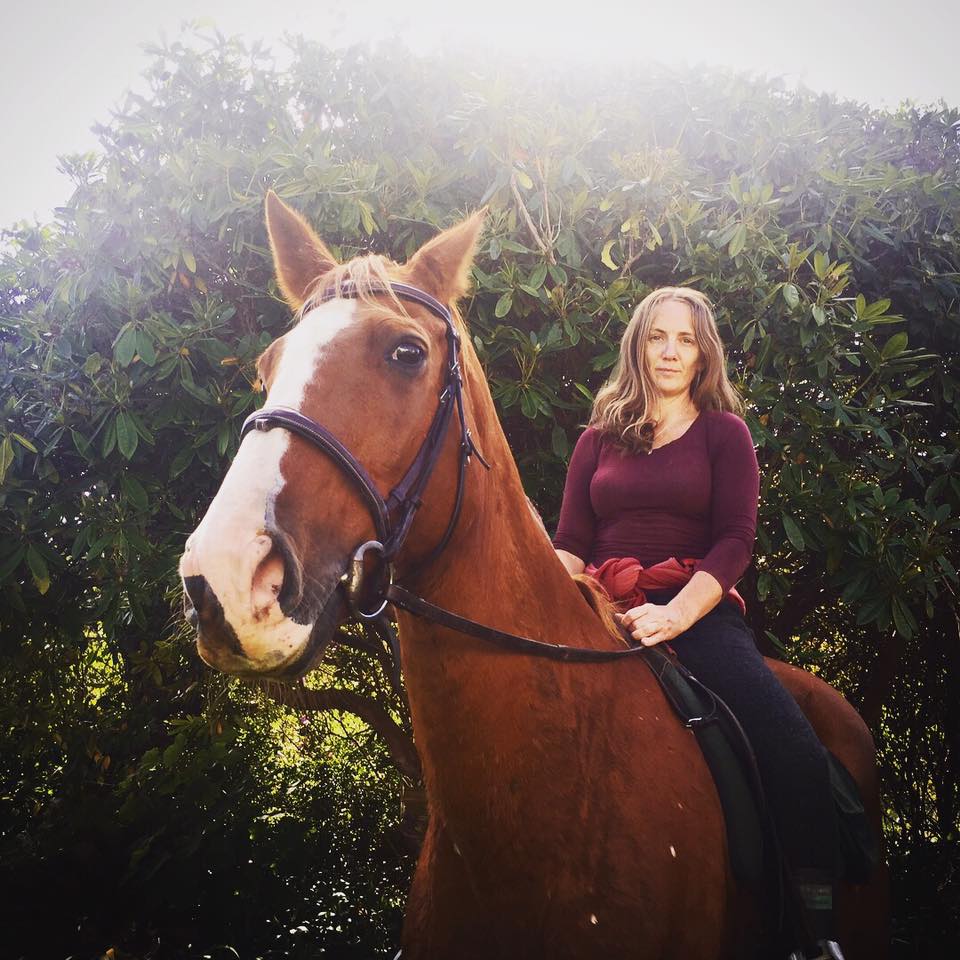
(Above: writer Carly Thomas on horseback.)
H: Do you want to share a favourite moment from your travels with us?
That’s got to be on Pitt Island on a day off from mustering the cattle and doing yard work. Me and the two kids from the family I was staying with went for a windy adventure with them leading the way. They proudly showed me the very steep cliff drop-off where they weren’t supposed to go, the quick (and very scary!) way down to the beach and the wharf and the old shearing shed retired back when wool prices dropped to pretty much nothing.
I was told the names of birds and horses and paddocks and we arrived back hungry, windswept and grinning. Brilliant day!
H: What have you been reading lately? Can you recommend a few recent reads?
Oh so many good books lately! I have discovered a New Zealand author, Fiona Sussman and now her book Addressed to Gretais a favourite. The main character Greta is one of those memorable ones that you fall in love with.
I have also become a little obsessed with Elif Shafak, a Turkish writer who wrote There are rivers in the sky. It’s an epic story told over different decades and cultures. A must-read I’d say.
I bought my monster desk from the Wellington Central Salvation Army op-shop in 1999 – the year I was studying creative writing full-time.
I think at the time I felt I needed a serious desk to be a serious writer.
When I got it home, it had old papers in the drawers from the Ministry of Education so I guess that’s where it spent the first part of it’s working life?
It’s huge and heavy and more than once when we’ve moved house we’ve had to take doors off their hinges to get it inside.
It’s heavy and daft…and I still love it, twenty-five years on.
Having begun my home-based residency, I want to publicly applaud Verb for their forward-thinking, compassion and generosity in establishing this (sadly) unique opportunity for writers who have circumstances which make applying for away-from-home artist residencies from challenging to impossible.
When I first saw the advertisement for the home-based residency, I felt so very moved and so happy for our NZ writing community. I know so many writers for whom travelling to writing opportunities is outside what is possible in their lives.
This home-based residency acknowledges and honours the unique challenges of disability, of care work and of care load.
More than anything else, it gives visibility to a strata of creatives who often feel invisible, unseen and unsupported. I know that while I have done my very best to keep my creative work alive it has often felt like swimming upstream of the demands of my life.
(Btw, If you don’t know me well enough to know what my circumstances are, I have an adult son (he’s 20) with autism and I am his main carer. I do my writing work around his care.)
I also wish to thank Verb for generously deciding to award two residencies in this inaugural year. They advertised for one and after considering the applications, awarded two. How marvellous, hey?
My fellow ‘at-home’ resident is the brilliant Henrietta Bollinger. Do go and read Henrietta’s book. It’s smart, fierce and very funny.
So here I sit, at home at the monster desk as usual…but with the warmest feeling of support, visibility and with large swells of gratitude.
(Above: Morag Gamble + my book! *squeals with delight* Image borrowed from Morag’s website.I love this photograph. I look at it when I’m having low moments to do with writing stuff and it cheers me up.)
Today I’m returning to an occasional series of sharing anecdotes from my experiences after publishing A Forager’s Life . This is a story about how I reached out to some writing or permaculture heroes, people I respect and look up to, and how it panned out.
I have an amazing publicist at Harper Collins, Sandra Noakes, without whom I would not have had such good reach with the book or opportunities like feature articles in national publications, appearances at literary festivals and featuring on the bill at WOMAD.
Any writer worth their salt, however, will do their best to get word out on their own steam as well. If you believe in your work enough to publish it…you have to keep backing it beyond publication. Publication isn’t the finish line. In some ways, it’s just the start line of phase two. Reaching out to people can be an excruciating experience. You have to steel yourself for plenty of ‘thanks but no thanks’ or, worse, silence. (*cue the sound of crickets chirping.*)
Just after the book came out, I wrote to a dozen people (nature writers, permaculture heroes, eco-podcast hosts) introducing myself, explaining why I thought they might be interested in the book and offering to send them a copy. Out of that dozen – two said yes.
Out of the two who said yes please to me sending a book…one worked out wonderfully well. The other person ghosted me. Being real with you, it’s hard not to take it personally…but for my mental health I’m choosing to believe that they were in a place of overwhelm with life and my book was one of the things that could fall off their ‘to-do’ list with minimal consequences …rather than: they just didn’t like the book.
I share these details with you, not for sympathy, but to demonstrate how thick-skinned you have to be in the writing. business (and I’m not particularly…I bruise fairly easy). Take my recent lovely news about the Verb Home Based Writer’s Residency. I’m still so over the moon about this. What people don’t see, though, is the manifold rejections from other opportunities that I have thrown my hat in the ring for. The writing life takes tenacity…the amount of tenacity demanded can be wearing and I have definitely had fallow years where I just couldn’t find the grit to keep on trying. Or when the responsibilities of my life precluded space for creative pursuits.
Anyway, this is a happy story, not a gloomy one!
One of the permaculture heroes I approached was the indomitable, prolific, generous Morag Gamble. This name might not mean much to you if you aren’t active in the permaculture world but in permie-land, it means a lot.
You can imagine my delight when she took me up on my offer to send her my book. I wrote a friendly letter and posted it off and then a while after that…she got back in touch to say that she’d read and really enjoyed the book (!!) and invited me to be a guest on her podcast! I was, and still am, thrilled.
The podcast was conducted via Zoom. On the day, I was so nervous, my mouth kept going dry which is very annoying when you want to chat away and try to sound relaxed. I needn’t have worried, though, because Morag is just as warm and genuine as she seems in her videos and podcasts and talking to someone so aligned in values was an absolute dream.
Here’s Morag’s description of our conversation: “As a published author of books like ‘A Forager’s Life‘, Helen has a beautiful way of emphasising humans’ reciprocal relationship with plants and the wisdom of plant tending. She also highlights the significance of hyperlocal food systems and the power of food commons and radical reciprocity.”
& while I didn’t have to tell you that I got the slot on Morag’s podcast because I chased it…I like to be honest about ‘behind the scenes’ things in the writing world in the hope it helps people get a sense of how things work and (maybe) to inspire you to keep going with whatever your dream is…even when things feel too huge or overwhelming.
People will say no to you or they won’t respond at all…and that’s okay. Everyone is busy, often to the point of overwhelm, and I think one out of twelve is not too bad…especially given how delighted I was with the outcome. A more courageous writer than me would have sent out hundreds of emails…not just a dozen…but that was the maximum of what my nervous system could handle.
I hope this story might have given you a little bit of inspiration to take the next step forward in working towards your aspirations. x
This residency is aimed at writers who can’t, for personal reasons, go away to multi-month/year-long residencies, or overseas residencies.
I think it is so wonderful that Verb Wellington has created a residency with this kaupapa.
Over the last couple of years, I’ve had raw and deep conversations with fellow-Taranaki writer Cassie Hart (who also finds it hard to get away from home) about how most residencies leave out writers who have health issues or care loads that prevent them from accessing the usual style of residency. We chatted about what our ideal residency would look like…and we agreed it would look like a financial stipend and no need to go anywhere!
I thought about lobbying CNZ to try to make something like this happen but I never got around to it, because: care load …
…and then Verb Wellington created one which looked just like what Cassie and I had talked about!
It means SO MUCH to me to be selected for this residency. I have been writing poems and essays this year and the residency will assist in getting those closer to publication.
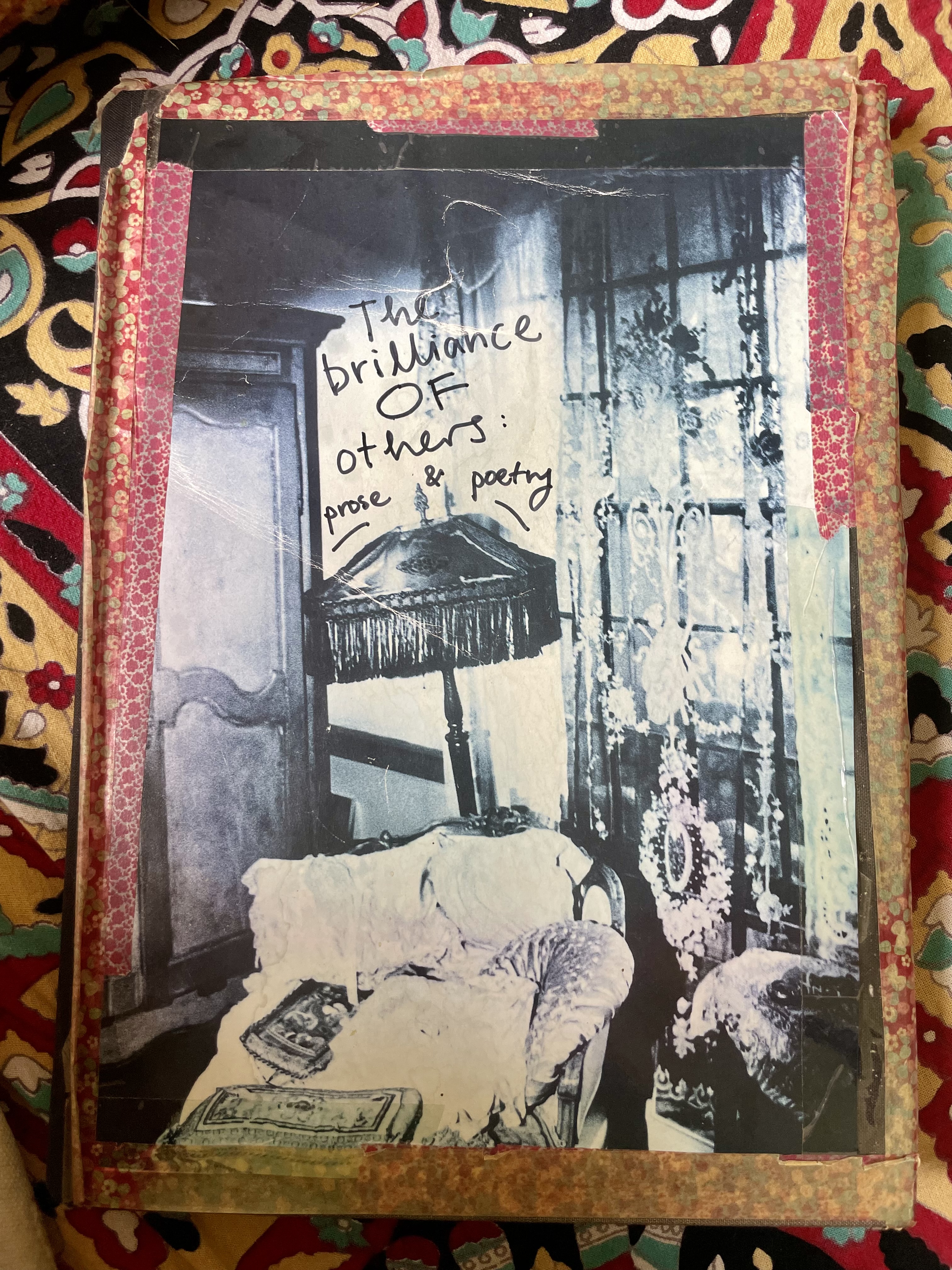
I called mine ‘The Brilliance of Others’. On the cover is a somewhat gloomy photograph of the reading chair of someone famous. (I didn’t record who so if you recognise it–let me know.)
On the inside cover it says, “Personal Poetry Anthology: words by other people that move, stimulate, excite…& at the back, quotations.”
I guess I hadn’t heard of commonplace books then because that would have been a much more succinct title.
I started it in April 2004 which was around when I became pregnant with my second child, Magnus. I guess that is why, after over twenty years, it is only half-way full. Nine months later, a decades-spanning distraction was born.
Still, from time to time, I remember it exists and I add something. There are currently 51 entries.
In it there are poems I’ve copied by hand from library books, some snipped out of the New Yorker (now yellowing…that New Yorker paper doesn’t age well), or printed out. From time to time I subscribed to the Academy of American Poets‘Poem a Day’ emails and I would print out the ones I particularly liked.
(I’ve subscribed to this so many times over the years…usually when I feel like I’m not reading enough new poetry and I should make more of an effort to ‘keep up’…but a poem every day to your in-box is so many poems! & so many emails. Therefore I usually only last a month or two and then unsubscribe again after getting overwhelmed. It turns out even poets can be exposed to too much poetry.)
(Above: This Merwin poem on brittle, yellowing New Yorker paper still gets me in the gut. What an ambiguous, radiant, brutal final stanza.)
There’s also the occasional dashed-down note which must have seemed very relevant to something I was thinking about or working on at the time and now I have no clue why. Thus:
Do you have a commonplace book or something like it?
Here’s a quote I wrote down from G.K.Chesterton. Why younger me liked it so much, I’m not sure…possibly the poetry in the final eight words?
“He discovered the fact that all romantics know–that adventures happen on dull days and not on sunny ones. When the chord of monotony is stretched most tight then it breaks with a sound like a song.”
On March 18 my book ‘A Forager’s Life’ turned two!
The two years since it emerged into the world have been, frankly, mad.
I’m a person who enjoys a slow, simple life and lots of huge (for me, anyway) and exciting things happened with the book since it’s release. In this space, I’m going to share some of the things that happened…even though they are old news in terms of the pace of the online world. They are still very much with me.
(Above: I threw a morning tea for the staff at my wonderful local bookshop, Bruce McKenzie Books on the day the books arrived in store, March 2023.)
I was unkind to myself and, freaking out about money once my book manuscript was delivered, started a new job before the book even came out. At the same time, my younger son who has a disability was finishing high school and in a massive phase of transition into post-school life. I had underestimated how intense of this phase would be for him, resulting in a high-pressured time where I was trying to enjoy the opportunities the book bought my way, learn and hold down a new job and be there for the kid. Oof.
It was all too much and, coupled with the NZ government’s slashes to disability support last year, I only lasted two years in the job before something had to give and I left it so I could adequately look after my boy.
Now I’m out the other side of the intense part of the booky fizz, the job debacle, am still navigating the kid’s shaky steps into adulthood (I guess I always will be), plus I’m in the midst of the intense mind/body/spirit shake up that is menopause.
I’m sitting here, a bit dishevelled, trying to put myself back together. It’s been a very strange time of immense, beautiful highs and difficult, fractious lows. (Then there’s everything going on in the world beyond my front door where the world appears to have gone completely mad.) Therefore, I’m hoping this winter is very boring and nesty so I can read mountains of books beside the fire and journal a lot (on paper and here) and let it all integrate into me at a pace I can cope with.
So, interspersed with posts about other things, there will be the occasional retrospective post my experiences with ‘Forager’s’.
I hope it’s interesting for you to read about such things from a writer’s perspective? As writers we are supposed to act very cool and nonchalant about the occasionally great things that can happen if you write something that people respond to…but I have never managed to be cool…I’m an awkward, nerdy, sensitive person who gets overwhelmed easily. I’m not at all nonchalant…I get very revved up about exciting things. In fact I get excited about non-exciting things, like the shape of a dried fennel seed head, finding a particularly niche-to-me second-hand book, or sampling from a pan of sun-ripened then slow roasted cherry tomatoes.
& I know blogging is long dead but (see above point about not being very cool) however I’m hoping if I write here, the right people will find me, despite claims that blogging and personal websites have been made irrelevant by speedy old social media and peoples’ diminishing attention spans. ‘The right people’ are folks who like reading longer form than an Instagram caption and appreciate the reedy, faint voice of a shaky woman trying to lure kindred people into giving their precious attention to her personal website rather than further furnishing the pockets of tech billionaires.
If that’s you, warmest of welcomes aboard.
(Do leave comments if you feel moved to. I read everything and promise to respond.)
Last year I received a grant from the Earle Creativity Trust to write a book about my life-long practice of keeping a journal. It was so wonderful to get the grant and I’ve been busy working on this time-bound project, which has to be completed in 2016 (a condition of the grant.)
I finished year one of a permaculture design course last year. I also had a go at making yoga teaching my main source of income, really didn’t like it and am back to teaching just two classes a week, which is just the right amount for me. I had a year’s contract working for an environmental trust, doing communications and events work, and now I’m back at Massey, teaching writing.
I taught at the 2016 Kahini Retreat – it was terrific, a whole weekend of being steeped in writing and writing conversation.
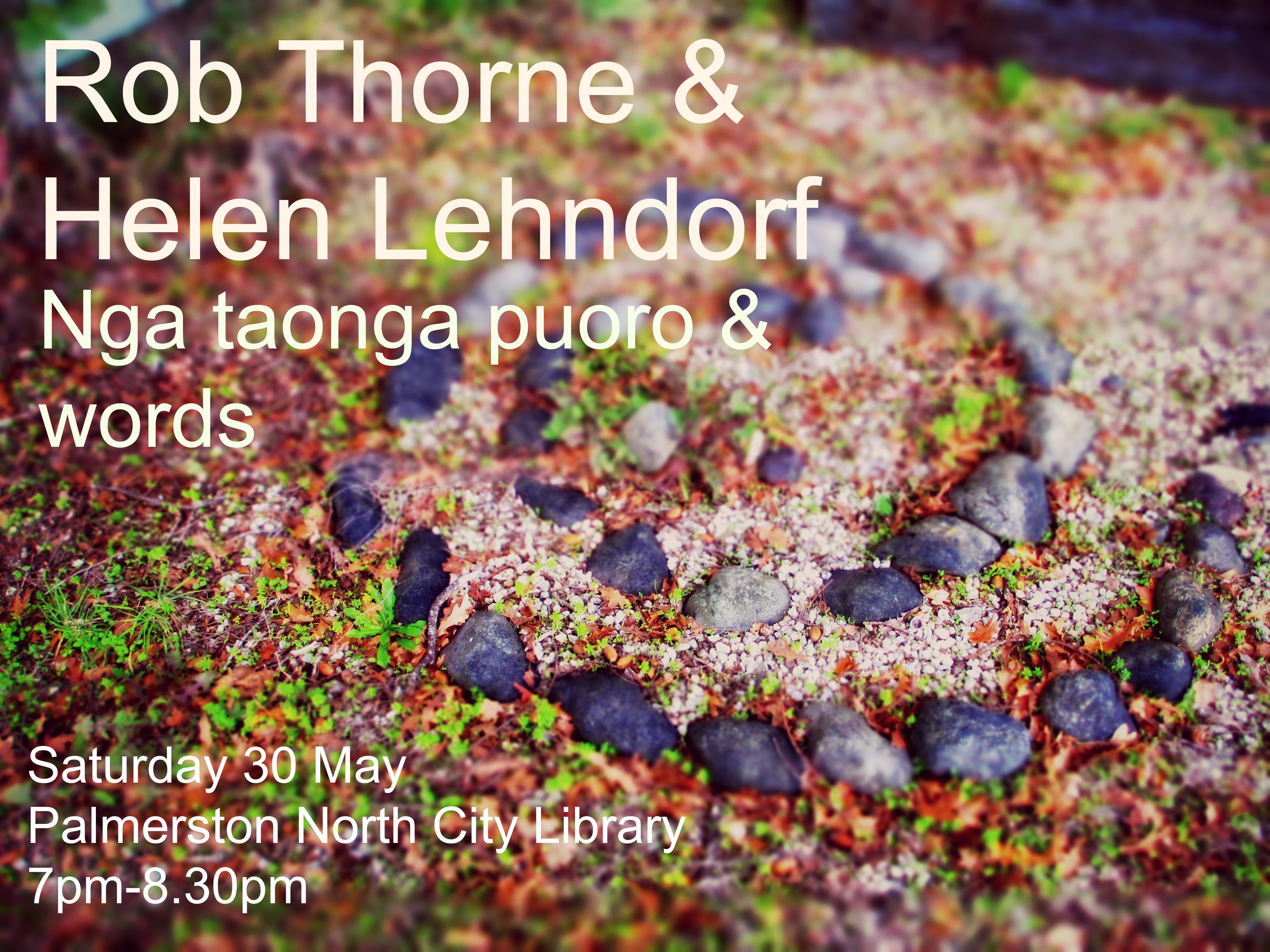
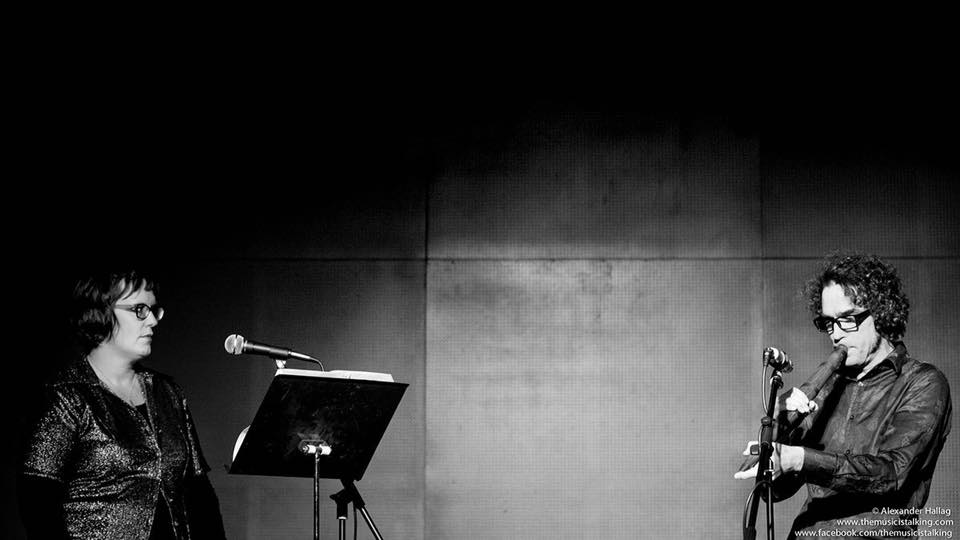
Me and my friend, Nga Taonga Puoro artist Rob Thorne collaborated on a performance combining poetry with music, called ‘Tohu’. Huge satisfying fun, and we hope to do it again soon.
I was part of Massey University’s ‘writing in / writing of’ talk series, in a panel about Manawatu writers.
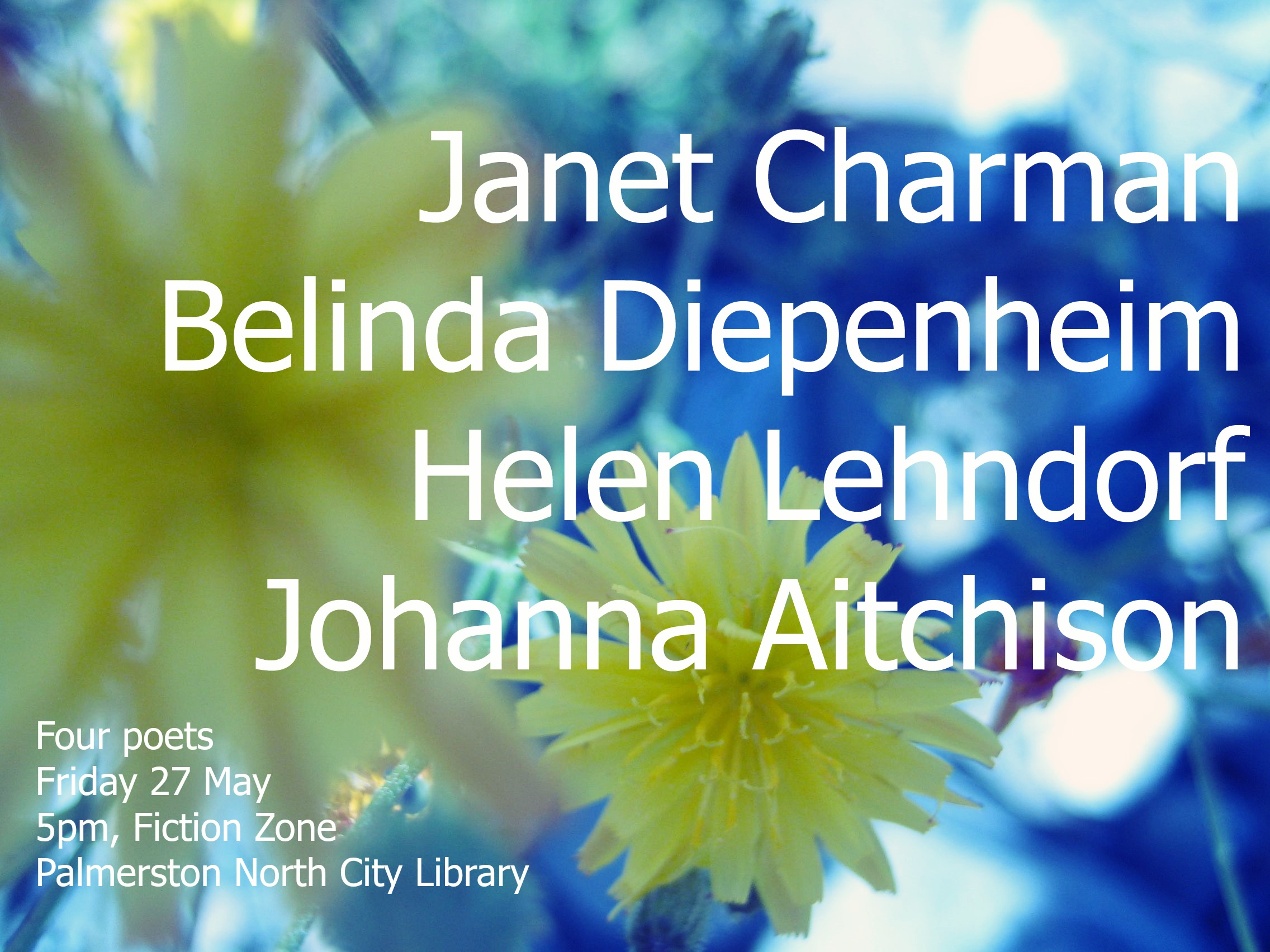
In May, I read with Janet Charman, Belinda Diepenheim and Johanna Aitchison at the Palmerston North City Library. I’ve loved Janet’s writing for a long time, so it was a real privilege to read with her when she visited Palmerston North from Auckland.
My most recent creative act, though, has been painting moons. My friend is opening a shop in town with a theme of earth-based and earth-friendly hand made things. So I’ve been making moon gift tags, wall strings and cards for the shop. It is so much more enjoyable than writing poetry, which is always kind of masochistic and gnarly for me.
If there are any locals (Manawatu, New Zealand) reading – I am about to start this:
Although I hope people will come every week – I am aiming to have each session work as an independent writing experience, so people might come to just one and get a good fix of inspiration, or come to each one and add community to their writing experience.






 Helen Lehndorf