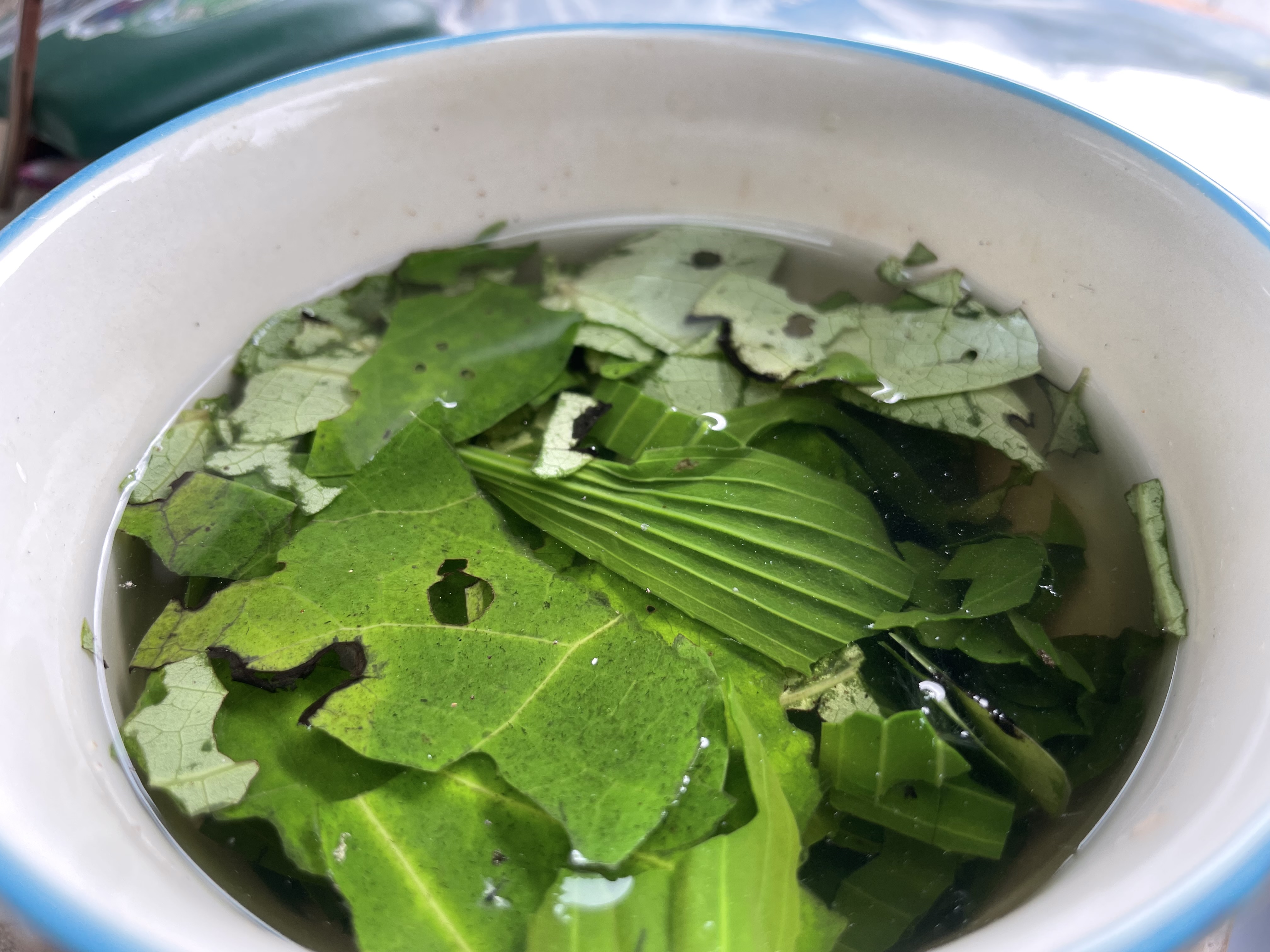
(Above: a freshly foraged brew: plantain and kawakawa.)
Happy weekending!
You did it! You made it through another week. Take a moment to congratulate yourself.
That’s a big achievement, atm, and if you were here with me I would bring you a nice hot cup of tea and pat you appreciatively on the shoulder. Well done.
Let’s digest…
A cleansing, sweet and delicious carrot soup recipe
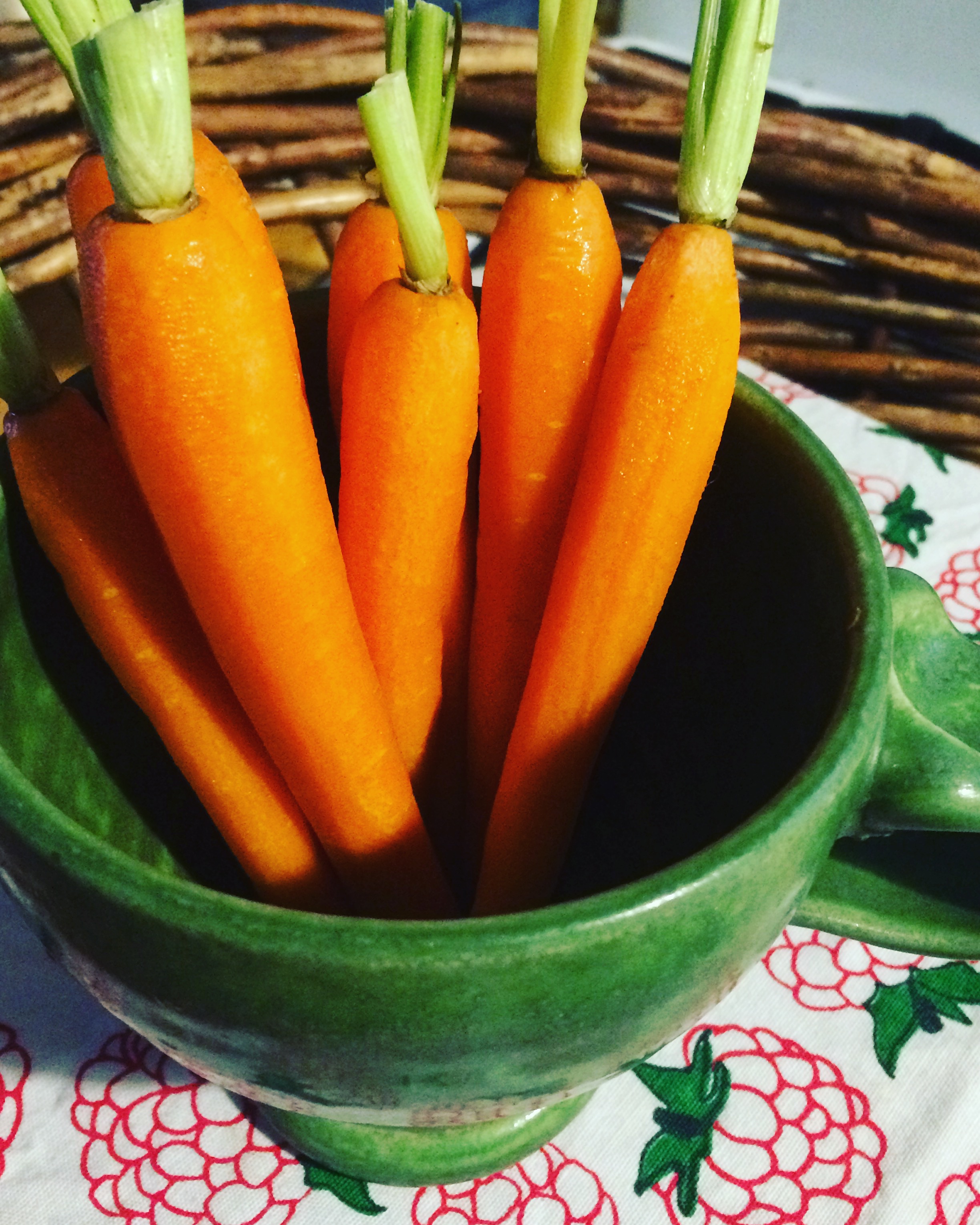
(Above: not actually the carrots I used for my soup but some baby carrots I grew and then served as a snack a while ago. I was proud of the ‘Frenchie’ way I’d pared them so took a photo.)
It might sound very simple but the result is delicious. The flavour combination is unique and feels very nourishing and pleasing to the palate. The cashew nuts give the soup real creaminess without the heaviness of dairy cream. It’s a soup I revisit every spring.
A wonderfully community-minded chap having fun in his own yard
If only more people were so generous, so creative, so playful…imagine the cities we could have!
The Arabs used to say, When a stranger appears at your door, feed him for three days before asking who he is, where he’s come from, where he’s headed. That way, he’ll have strength enough to answer. Or, by then you’ll be such good friends you don’t care.
Let’s go back to that. Rice? Pine nuts? Here, take the red brocade pillow. My child will serve water to your horse.
No, I was not busy when you came! I was not preparing to be busy. That’s the armor everyone put on to pretend they had a purpose in the world.
I refuse to be claimed. Your plate is waiting. We will snip fresh mint into your tea.
Song for the week: ‘Forever is a Charm’ by Princess Chelsea
A seductive, gentle, music-box-like song by New Zealand Indie-pop darling, Princess Chelsea. So sweet!
Nikki discusses the myth of closure and how messy endings can be.
She says: ‘People want a neat bow tied around messy endings: the final conversation, the goodbye ritual, the explanation that makes it all make sense. Closure is sold to us like it’s a finish line you can sprint across, complete with balloons, confetti, and a medal that says Congratulations, you’re over it now!‘
Do you have ambiguous/strange endings of relationships or situationships that still haunt you?
I know I do. Most of the time it’s okay but then in the wee hours of the morning when I occasionally have insomnia…that’s when those old, confusing, painful endings rise up and loop around my brain…so I really appreciated this gentle reframe about the fantasy of closure and some suggestions about other ways to integrate old grief.
I also heard on a podcast in recent weeks that most adults change their friends approximately every seven years (!) I don’t know if it’s true but it’s a comforting thought if you’ve lost some connections along the way.
Watch: Soothing nonsense
Last week I found at the op-shop one of my best finds EVER but I will have to show you next week because I haven’t had time to take a decent photograph of it yet.
In the meantime, as a bit of a clue, here’s half an hour of soothing nonsense: a sweet mother and daughter team faff about first foraging acorns together and then making a miniature tea set from the acorns. With gentle music and not much happening…this little clip could be the perfect thing to lull you into an afternoon nap…
I hope something there ‘amuse your bouche’, so to speak. (Forgive me, that makes no sense.)
I’m not sure what this weekend holds. Last weekend was full (all good stuff) so I’m intentionally leaving this weekend blank so it can fill itself as we go.
Until next time, may the sun shine on your face this week,
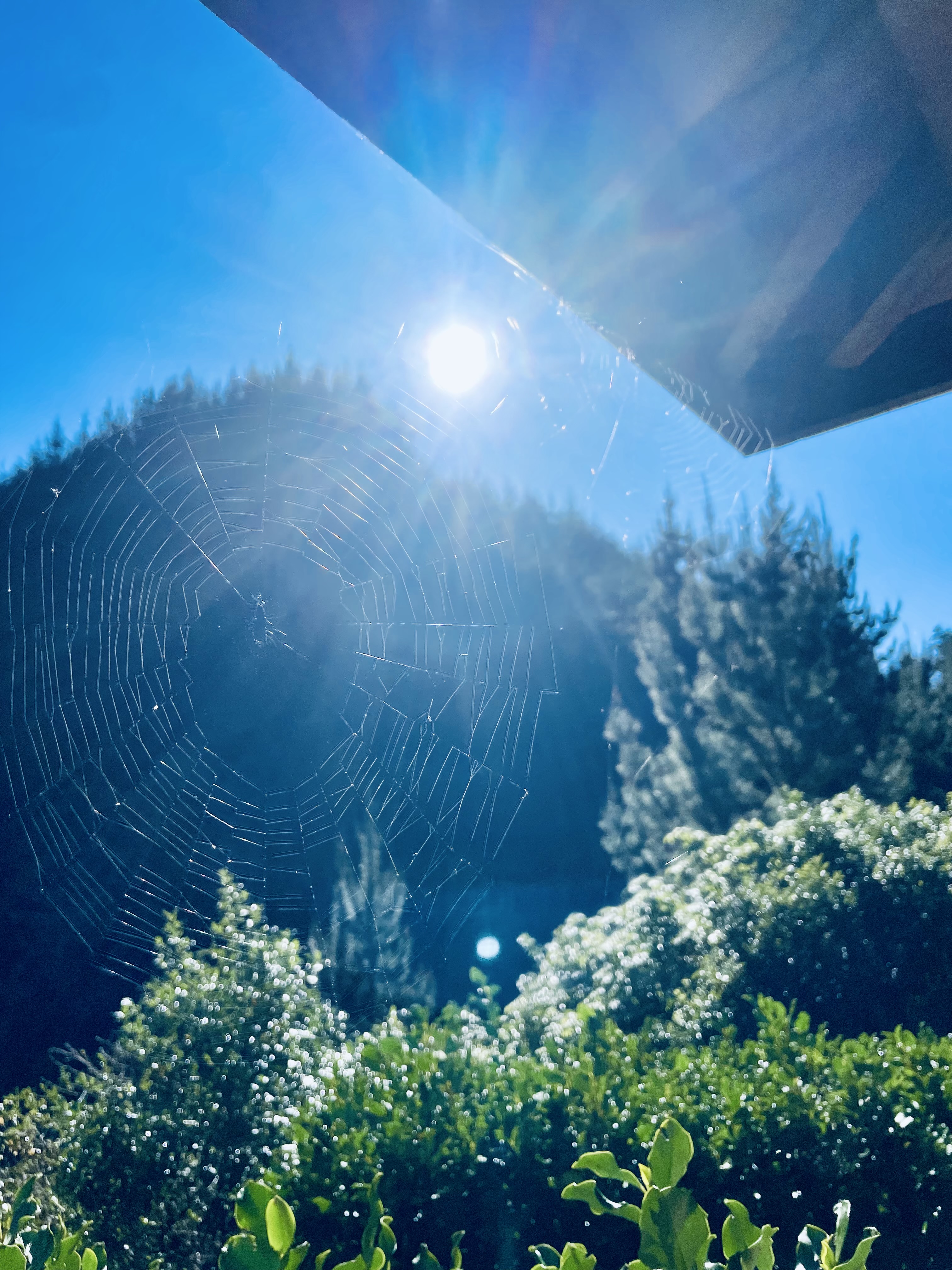
(Above: a spiderweb in sunlight, September 20 2025, Ōtaki Gorge.)
Last Saturday I turned 53. The above photograph was taken on my birthday. The sun came out!
It’s been a crappy spring (weatherwise) so the sun felt like such a gift.
I sat on the porch of the place I was staying and tried to read in the warmth…but the sun felt like such rich medicine I couldn’t hold my attention on my book and just kept closing my eyes and facing the sun like some kind of warmth-starved Tuatara.
We were travelling light so my birthday cake was a supermarket almond finger (one of my faves) with a birthday candle and some dandelion petals:
Article: A frugal and lighthearted person talks about simple living for financial freedom
I always read The Spinoff’s ‘Cost of Being’ series where people talk about their finances because I find it so fascinating. The way we approach money reveals so much about prorities, values and life circumstances.
I immediately sent it to Fraser and said ‘this could be us!’…not so much her particular circumstances…but more her attitude. A little bit broke (compared to many) but with a resilient, light-hearted, resourceful attitude.
This bit sounded very much like our household:
Typical weekly food costs
Groceries: I have no idea but it’s not much. A lot of my work involves food rescue and making community kai, so I’m always taking food home. I also grow most of my veges, and have excellent fossicking and scrounging skills!
A lively read and helped refresh my own commitment to simple living.
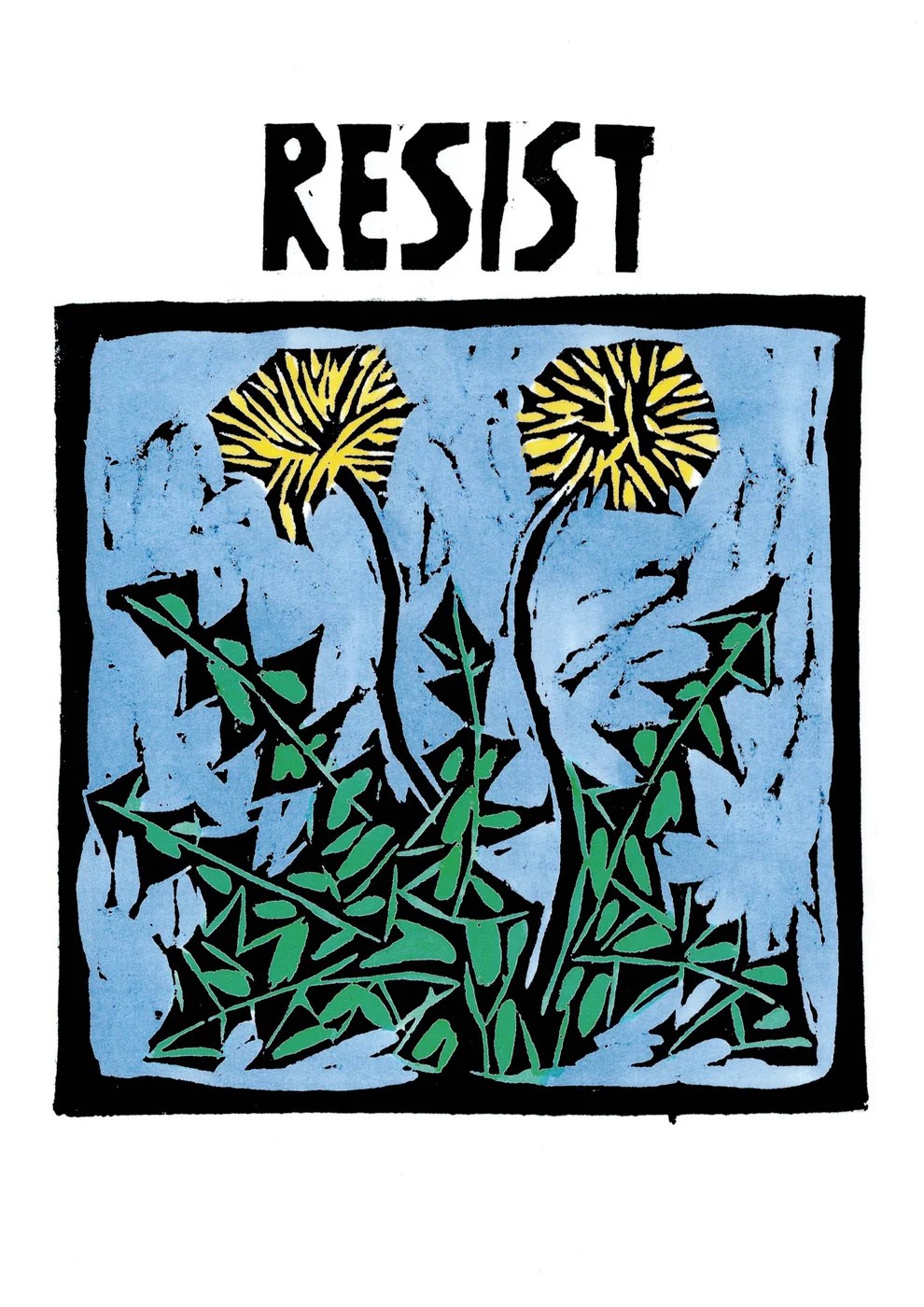
Affordable Art: ‘Resist’ by Bread and Puppet Theatre, Vermont, USA
(Above: nothing says ‘resist!’ like weeds which will grow in cracks in the concrete. Image borrowed from Bread and Puppet Press.)
I love dandelions. I love resistance. I love the work of the Bread and Puppet Theatre. I love this postcard and it comes in at a mere $6.00
(& Possibly once you add postage it would be close to $50 NZD, the cut off price for ‘affordable art’…)
A long and fascinating delve into the luddite movement
Speaking of voluntary simplicity, my pen-friend and Wizard of Wellington, Rosie Whinray, published a long, well-researched, fascinating and fun article about the Luddites:‘Summoning Ned Lud’.
It’s not just about the Luddites, of course, it’s about time and labour and music and materiality and injustice and autonomy and so much more.
Make yourself a POT of tea and sit and read this. It will take more than one cup of tea because it has various links to music and interviews on YouTube and no doubt you’ll want to savour them all.
Video> ‘Life is never still’: an inspiring 92-year-old artist and writer shows us all how to live
From the description:
‘His vibrant paintings burst with dramatic light and dark, playing with colour and drawing upon his Caribbean heritage. He powerfully captures the energy of Trinidadian carnival culture, folklore, and the cathartic power that the celebration holds.
Join us for an intimate look inside his studio, writing shed, and kitchen, and experience his unique creative process that blends painting, poetry, cooking – and most importantly – love. Learn why mistakes are essential, why stepping away can spark inspiration, and how collecting objects can fuel new ideas.’
He’s an absolute joy! You won’t regret spending 12 minutes watching his cruise through his day.
That’s it for the week’s digest. This weekend I am hoping the weather will permit gardening. I have letters to write, mending to attend to, a new stack of library books to hang out with.
My nettle patch is coming back to life so I’ve been making simple nettle soups and will make it again this weekend.
I also bought a bottle of vodka so I can make some lemonbalm tincture with the new season’s lemonbalm; it always feels at most potent in spring to me…the leaves bright green and shiny. Lemonbalm is good for stress and anxiety, is known for being a ‘gladdening’ herb. (Now there’s a sweet old-fashioned word.) Read more about it here.
I hope there are ‘gladdening’ things in your weekend.
Thanks for being here and sharing the things that I caught in my net this week.
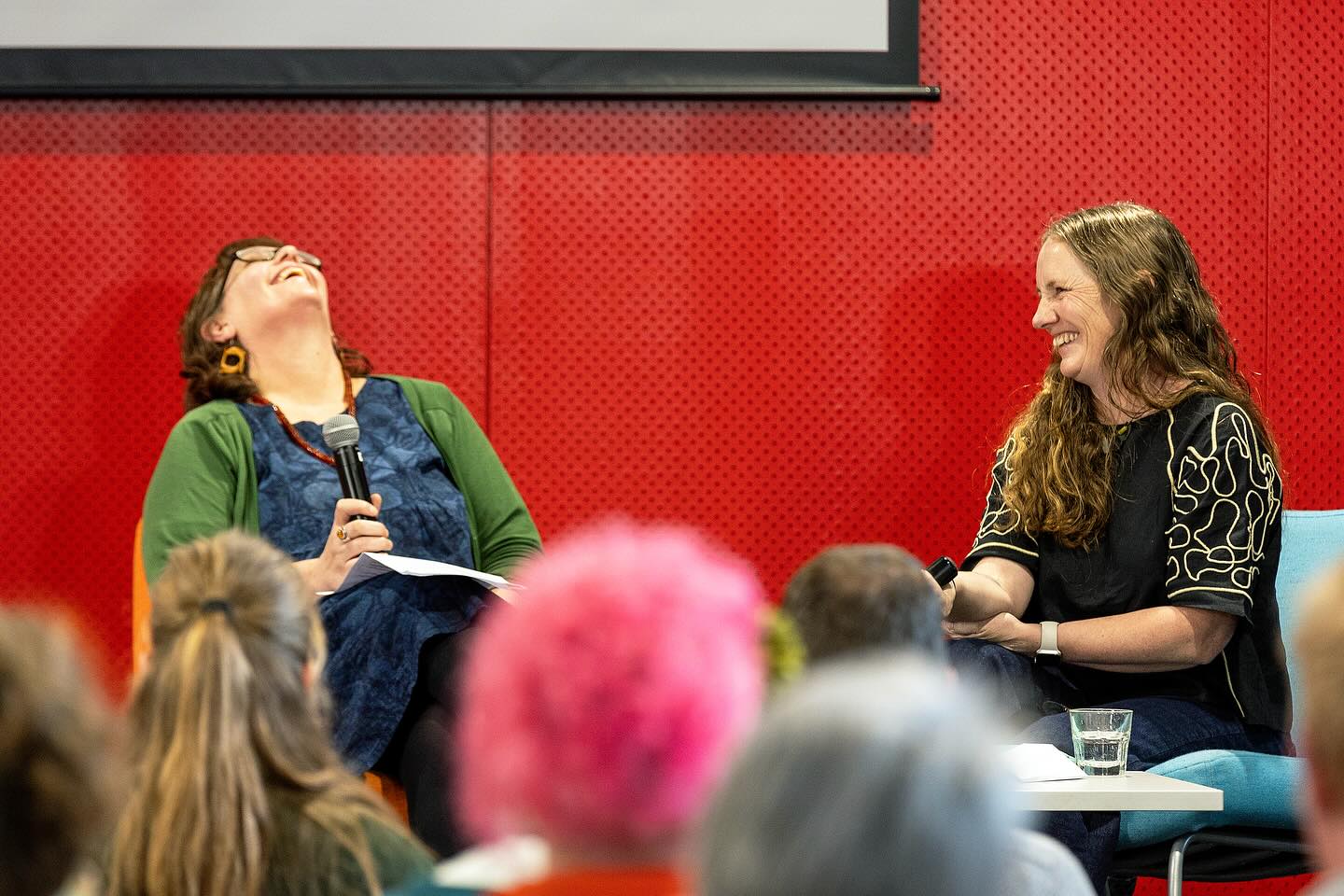
(Above: Me (on left) and Carly Thomas cracking each other up at her 11 October 2024 book launch at the Palmerston North City Library.)
Almost a year ago, I interviewed writer Carly Thomas live as part of her book launch event at the Palmerston North City Library. I don’t recall the specifics of the conversation but I do remember there was a lot of laughter. Carly is very funny. Also, very self-deprecating.
I kept insisting she was courageous, intrepid, fearless and she kept batting such suggestions away. She’s a very humble person. In winter, I invited her to be my second slow interviewee. These interviews take place via email exchanges in an unhurried way. The first one was with writer Iona Winter.
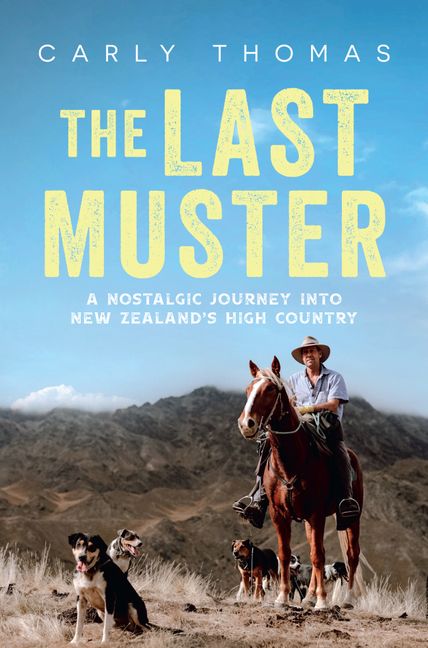
I wanted to check in with Carly a year out from the publication of ‘The Last Muster’: A nostalgic journey into New Zealand’s High Country.’
H: Congratulations on the publication of your book! & Thanks for inviting me to help you launch it. That was a great night.
Can you tell me a bit about your (very impressive) research trips for this book… you did a kind of ‘action research’ where you joined the mustering gangs. I reckon that was so brave!
C: The launch was so neat and you were a big part of that so a massive thanks to you, Helen. It all seems like a long time ago.
Writing a book is a funny old thing, it is all consuming and then it is done. It feels like you have been out at sea, in the thick of storms and intense sunshine and then you come ashore and the tide comes in and it goes out and all is calm. That sounds depressing but it’s not, it’s just there’s a lull, a pause, and then an in-between afterwards.
I knew straight away that I would go and work alongside the people I was writing about. I started ringing and emailing high country stations that I had already had contact with through previous writing gigs. It took a few calls before I figured out how to communicate what exactly it was that I was doing. It became apparent that I needed to head south for the Autumn weaning musters quickly and so I got straight into getting down there.
I’d read up a bit on each station I was going to, but not in depth, that would come later. I like to go into things a bit naive. I figure that asking stupid questions is better than assuming you already know, so I did a lot of that. I learnt as I went, was given ideas on where to go next and in that semi-informed/ follow-my-nose style I got passed onto musters.
I didn’t have a big planned out map of things, I really just took whatever next turn presented itself. I started down in Glenorchy at Greenstone Station and was well and truly thrown in the deep end on a four day muster with a motley crew of shepherds. After that the ball was rolling – I’d finish a muster, chuck my muddy saddle and gear in the car and head to the next one. Word got out about what I was doing and it got easier to get on the musters. I was learning skills as I went and got more handy as I went.
My tools for capturing everything were my phone recorder/ camera/ notes, my big Sony camera (not at all fancy) and my memory for conversations. People would say great stuff, as I was riding along trying to keep a bunch of unruly cattle in line, and I would have to remember it until I could do a voice memo of what they said. It was full on and it took my ADHD multitasking superpowers to a new level.
I’d do dumps of writing notes when I could, when I had a day or two in between musters, but not a lot of writing happened till I got home. There was a lot of writing in my head on long car journeys. I would try to hold onto each station’s colours, tone, sound, smell, taste and hum. When I did get to sit down, those were the first words to go down, then I got to the long and arduous job of transcribing.
Research came last, which I guess is a bit round-the-other-way from what some writers do. As I was travelling about I would try to go to local libraries to find historical tales of the area and old mustering yarns. I also collected a pretty big haul of old New Zealand mustering books from the many secondhand bookshops and op-shops I visited on my travels. Once back home I trawled through online archives and libraries to collect up old stories and facts. I went down massive rabbit holes.
One particular moment of connection was when I was trying to find the history of a particular homestead that had been abandoned on a station. I was coming up against dead ends and in frustration I called a tiny community library opened once a week by volunteers. As I was on the phone to the woman in charge that day who was telling me “just the person I should talk to was…..”, she paused and then said, “you won’t believe this, but she just walked in the door”.
The particular 90-something-year-old who was the missing link to the information I really needed was put onto the phone. It was magic. She told me things that were not written anywhere and could have been lost if she hadn’t stepped in right then. I just love that sort of thing and there really is something special about these encounters.
The whole book writing process was a combination of high adventure, a saddle-sore body, sleep deprivation, many kilometres on my little nana car’s clock and wondering where I would land next and spending hours researching in drafty libraries or sitting on my couch with a cat, a cup of tea and books piled high around me. I am a contrary soul and I enjoy both of those things equally.
H: Writing a book is so different from having a book published, isn’t it?
Yes, it really is and I think the main thing for me, this being my first experience of working with a big publisher, was knowing this project was bigger than me. I had to trust my publisher and editor and I took the opportunity to just say “yes” and be more open than I have ever been. It wasn’t just my book, it had many people involved, the most important part being all the people I encountered on the journey, who trusted me with their stories and way of life. It’s a responsibility to take care, while also telling it like it is.
And then it’s done, the final proof is FINAL and the printers crank into gear. And then you have to let it go, into the open, out into the world, into the hands of others.
The tide goes out, I take the dog for a walk, I look at the hills with new eyes and I wonder, ‘what’s next?’.
H: What did you learn about the horse mustering community over the course of writing the book? Did anything surprise you?
Every station was different but a few things were always the same. They love their horses and will always have them in their front paddock no matter what. They are people who choose horses over machinery to get the stock work done and that made them a certain kind of person. Horses may be a slower way of doing things, in some respects, but they are a quieter and kinder way to work stock. Stations that use horses tend to care about their animals, enjoy a slower, older way and there’s also a romance to it all as well.
The way you see things on a horse, the chats along the way possible without the roar of a bike and the relationship you have with your horse. So yeah, they were a certain type, often a little quirky and more often very stubborn about their way of life. And they all knew each other, the connections ran very deep.
I was sometimes surprised by their openness in having me along. Their honesty and their passion to really help me to understand what it all means to them. Sure, there were plenty of tight lipped cowboys, but I also experienced real moments of truth and authenticity.
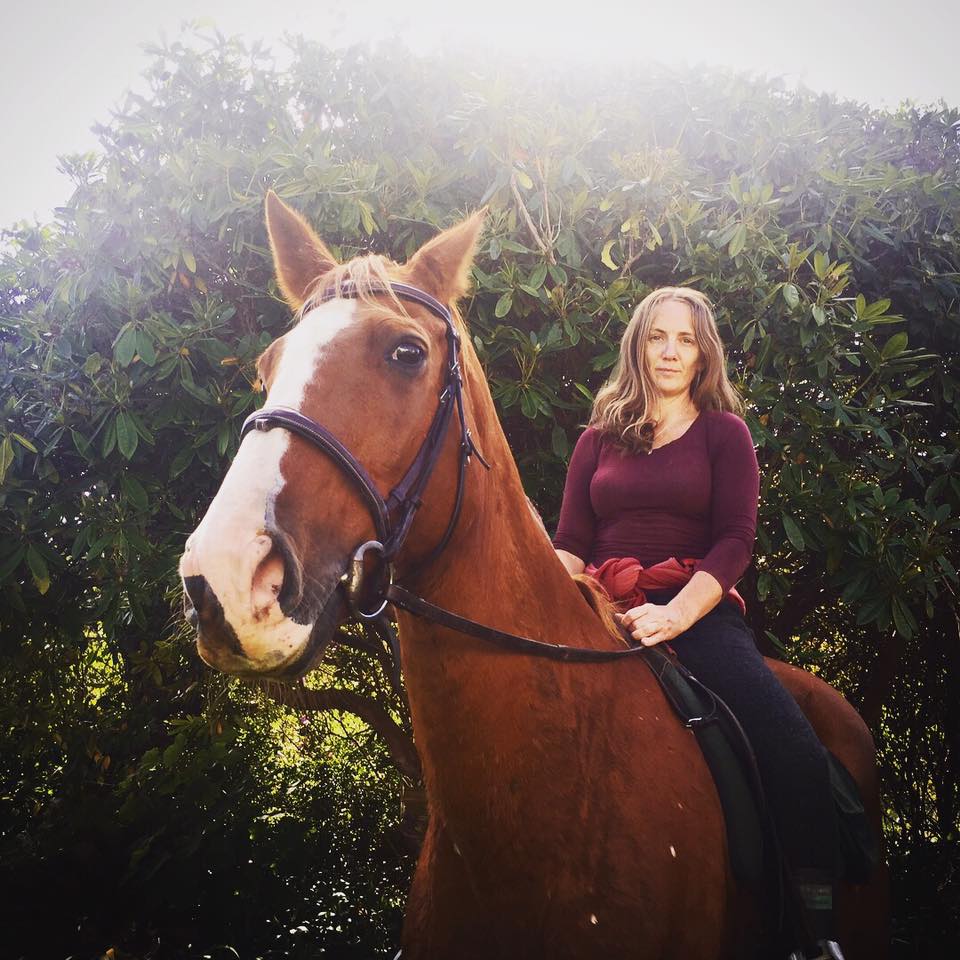
(Above: writer Carly Thomas on horseback.)
H: Do you want to share a favourite moment from your travels with us?
That’s got to be on Pitt Island on a day off from mustering the cattle and doing yard work. Me and the two kids from the family I was staying with went for a windy adventure with them leading the way. They proudly showed me the very steep cliff drop-off where they weren’t supposed to go, the quick (and very scary!) way down to the beach and the wharf and the old shearing shed retired back when wool prices dropped to pretty much nothing.
I was told the names of birds and horses and paddocks and we arrived back hungry, windswept and grinning. Brilliant day!
H: What have you been reading lately? Can you recommend a few recent reads?
Oh so many good books lately! I have discovered a New Zealand author, Fiona Sussman and now her book Addressed to Gretais a favourite. The main character Greta is one of those memorable ones that you fall in love with.
I have also become a little obsessed with Elif Shafak, a Turkish writer who wrote There are rivers in the sky. It’s an epic story told over different decades and cultures. A must-read I’d say.
(Above: last Sunday the wind briefly stopped and the sun came out and so I dressed the picnic table outside for an ‘al fresco’ meal. It was lovely for about an hour and then the chilly spring weather returned. I’m glad I grabbed the moment, though.)
Hey! How was your week?
Sometimes when I am describing to a friend the futility of resisting what is happening in life, I say: ‘Anyway, there’s no point resisting it. It’d be like trying to punch the wind.’
This week, though, I really did feel like trying to punch the wind!
The spring winds here are chilly, mercurial, and strong. Despite my continued attempts to reframe them: they’re ‘cleansing’; they’re ‘blowing out our cobwebs’; ‘they herald the advent of summer’… I landed on Thursday feeling fed up and cranky about the weather. (So pointless.)
There’s just so much I want to do in the garden but I don’t last long out there in these strong spring winds…maybe twenty minutes?
However, I have potted up my first tomatoes. And I bought some leek seedlings which will be ready for next autumn/winter if I plant them in September. I used to plant leeks in January to be ready for winter…but the last few years I’ve been planting them earlier and earlier. This may be the earliest, however.
Have you managed to start some spring planting yet?
Here’s some things I’ve been enjoying lately:
Dramatic (and philosophical) fire cooking with a charismatic Argentinian chef
This documentary about Argentinian chef contains multitudes. He’s famous for cooking with open fire and there’s plenty of inspiration for that in the film (he cooks a lot of meat…so if you’re vegetarian, take care) but there’s also slow-living philosophy, visible mending and nature appreciation.
He’s quite the charismatic, zen dude and I enjoyed this immersion into his life.
Song for the Week: ‘Under the Sun’ by Mia Doi Todd
Mia’s voice is high and sweet. The lyrics are dreamy. Discovering this song this week was a great antidote to being cranky about things I can’t change, like weather, politics and certain life circumstances. The song has a healing flowing feeling.
A tomato poem: ‘In My Next Life Let Me Be a Tomato’ by Natasha Rao
Because I’m dreaming into summer produce, especially tomatoes, I went looking for a tomato poem. There’s lots to love in this poem but I particularly love this line:
‘I want to be unabashed, audacious, to gobble
space, to blush deeper each day in the sun, knowing
I’ll end up in an eager mouth.’
In my next life let me be a Tomato
lusting and unafraid. In this bipedal incarnation
I have always been scared of my own ripening,
mother standing outside the fitting room door.
I only become bright after Bloody Mary’s, only whole
in New Jersey summers where beefsteaks, like baubles,
sag in the yard, where we pass down heirlooms
in thin paper envelopes and I tend barefoot to a garden
that snakes with desire, unashamed to coil and spread.
Cherry Falls, Brandywine, Sweet Aperitif, I kneel
with a spool, staking and tying, checking each morning
after last night’s thunderstorm only to find more
sprawl, the tomatoes have no fear of wind and water,
they gain power from the lightning, while I, in this version
of life, retreat in bed to wither. In this life, rabbits
are afraid of my clumsy gait. In the next, let them come
willingly to nibble my lowest limbs, my outstretched
arm always offering something sweet. I want to return
from reincarnation’s spin covered in dirt and
buds. I want to be unabashed, audacious, to gobble
space, to blush deeper each day in the sun, knowing
I’ll end up in an eager mouth. An overly ripe tomato
will begin sprouting, so excited it is for more life,
so intent to be part of this world, trellising wildly.
For every time in this life I have thought of dying, let me
yield that much fruit in my next, skeleton drooping
under the weight of my own vivacity as I spread to take
more of this air, this fencepost, this forgiving light.
Affordable Art: Kereru @ Whanganui River
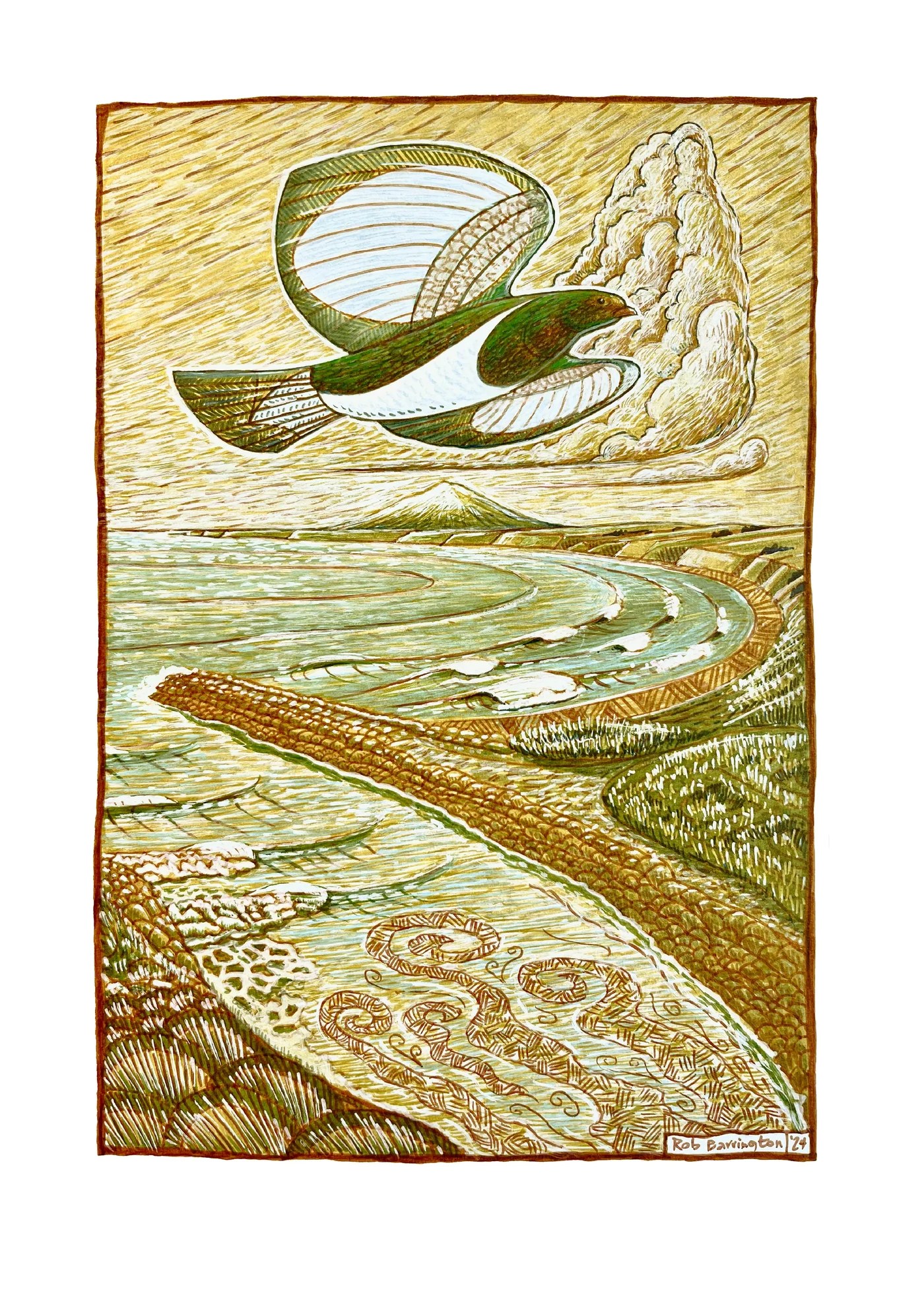
I’ve broken my self-imposed budget for affordable art this week. This beautiful print by Rob Barrington is $95 so almost twice the affordable art budget of $50. Forgive me. I love it so much I had to share it with you.
I live an hour’s drive from Whanganui, know the landscape well and love this depiction of the river, coast and ‘my’ mountain, Taranaki in the background. It has a vintage NZ school journal feel about it that I love, too. My folks gave me a little money for my birthday and I’m pondering this print as a contender for what I spend it on.
(Above: Kereru @ Whanganui River by Rob Barrington. Image borrowed from Kina.)
A meditation I wrote for processing and integrating ‘recent events’
Back in 2020, I wrote and recorded a meditation to offer solace for how unsettling and scary the pandemic was.
I didn’t specifically mention the pandemic in the meditation. I just referred to it as ‘recent events’. This good decision to be a bit vague has meant this meditation is perennial …because there are continual ‘recent events’ for us to cope with. My hope was that a listener might feel a little more calm, less scattered and ‘put back together’ after listening.
(And for my northern hemisphere readers…you can hear the short flat vowels of my very NZ accent!)
Recipe: Twenty Minute Tahini Biscuits
I made these biscuits this week. They are good for if you have someone coming over and you need something to serve quickly. I served some to my friend Kushla and she said they tasted like chewy halva.
They are quick to make (twenty minutes from go to woah) They have just three ingredients and are gluten-free.
Twenty Minute Tahini Biscuits
Mix:
one cup unhulled tahini
one cup powdered jaggery (Indian unrefined sugar)
one egg
It will make a stiff paste.
Roll into small balls. (Approximate a teaspoon full.) Put on a greased biscuit sheet.
Bake at 190 C for 9 minutes. (Keep an eye on them. They cook quickly and burn easily.)
Put on a cooling rack. Enjoy!
*
It’s my birthday this weekend and Fraser and I are going off-grid for two nights to a hut in the bush with outdoor cooking (hence watching the aforementioned fire-cooking documentary!) and an outdoor bath.
The description of the place says there are eels to feed, glowworms to visit and the bridge across the nearby stream is a giant log. I feel confident we’ll have a great time.
(Above: a tiny posy of small flowers from the garden: forget-me-not, pansies, calendula, & marigold.) )
Hello!
Another week of our lives has passed since the last time you were here…indulging me by reading my collected nonsense.
How was your week? Did you have time to look at the sky for a while? Read a good book? Wear something that makes you feel excellent and utterly yourself? Did you drink enough cups of tea?
If not, make yourself one now and settle in for some slow-small media imbibing…
The joy of simple well-made things
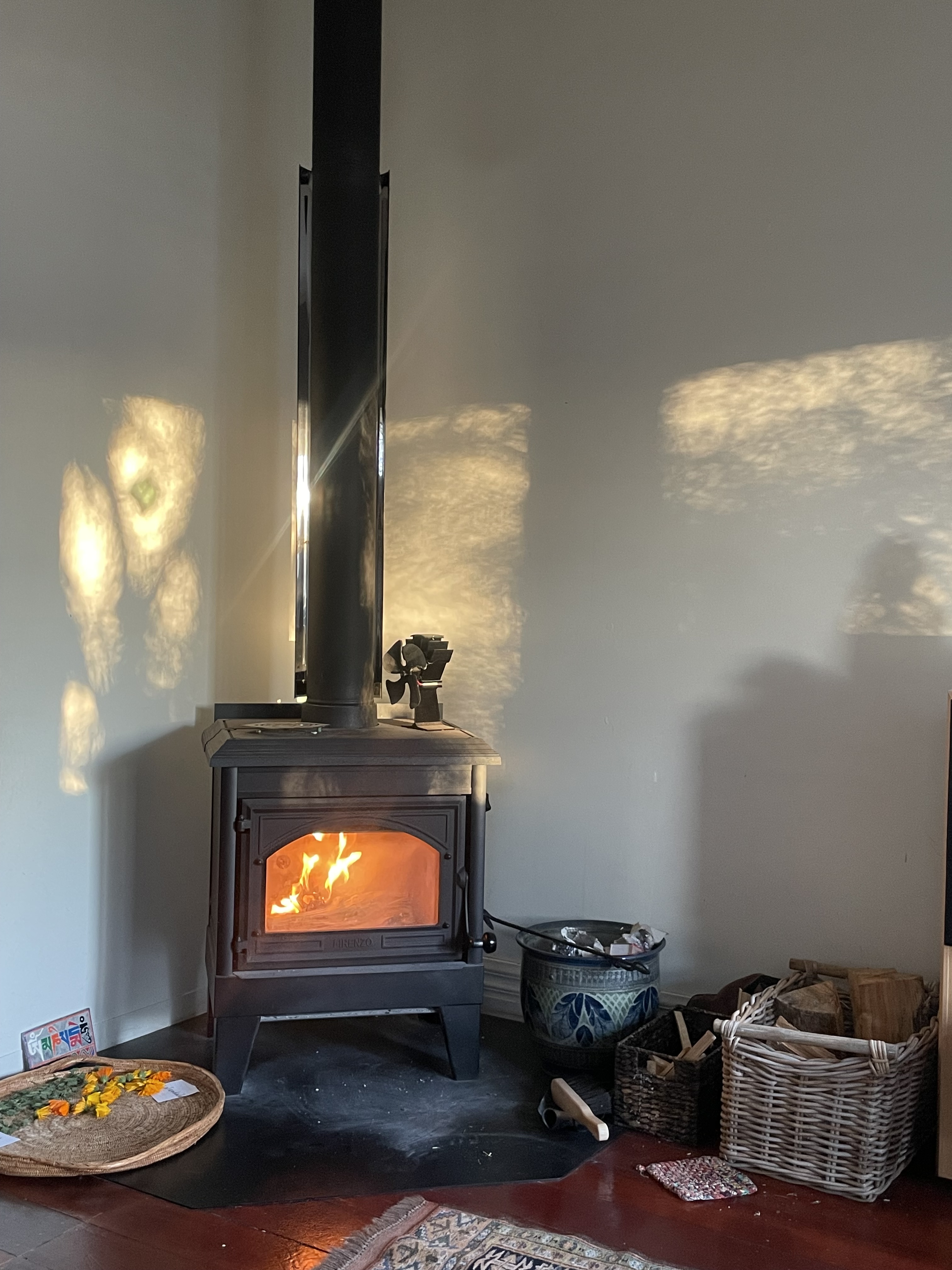
I write this from beside our fire. It’s stormy outside and today’s high is 12 degrees. The fire is just over a year old. We had it put in when our 1980s gas fire was condemned by the gas inspector. He recommended a heat pump. We did this instead and have not regretted the decision for even a second.
(Above: our little fire with the morning sun on her.)
When I was in Taupō last weekend, I upgraded our poker to a lovely hand made one from a metalsmith at the local Sunday morning market. I took a photo of him brandishing the poker at the market because he was a lovely chap and I am a nerd for the provenance of handmade things:
(Above: The maker of our new poker. He didn’t make the hooks on display but he did make the poker.)
Speaking of woodstoves, last week I stumbled on the YouTube account of Homewood Stoves, another NZ-made wood fire business – this time based near Whangarei.
Their videos are full of wholesome and homey videos featuring their beautiful homes, gorgeous kids and lovely kitchen…it’s peak #cottagecore content but in a NZ context. Very soothing viewing for a rattled nervous system. Which leads me to today’s recipe…
How to start a ginger bug for homemade ginger beer
Also on the Homewood Stoves channel, this aesthetically-pleasing and slow method video has really inspired me to brew up some ginger beer this summer.
This is a very helpful and nicely made video.
& I have kitchen-envy! >>
Poetry: A bit of Mary Oliver balm for another hard news week
On Thursday, I had a really long work day and was ‘head down, bum up’ all day so didn’t catch any news. When I finally knocked off, Fraser mentioned it had been a big news day in terms of global events and laid it all out for me. (I won’t rake it over here because it’s not Slow-Small-Media suitable… ) but again I was struck how, in these turbulent times, you can be offline just for a day and then plug back in and find the world has been through the wringer again…in new and newly-awful ways.
To that end, I feel this week we need one of the big guns of solace poetry…so here’s an excerpt from Mary Oliver’s ‘In Blackwater Woods’ (read the whole poem here):
Here she is on love and the necessity of detachment as part of that love:
‘To live in this world
you must be able to do three things: to love what is mortal; to hold it
against your bones knowing your own life depends on it; and, when the time comes to let it go, to let it go.’
A song for the week: ‘So Free’ by Lūka, & Mose
I appreciate every season…however, at this stage of late winter/crappy spring, I can’t help but begin to yearn for summer.
This newish song by Lūka & Mose gives me that spacious and bright summer-road-trip feeling…even on this stormy day.
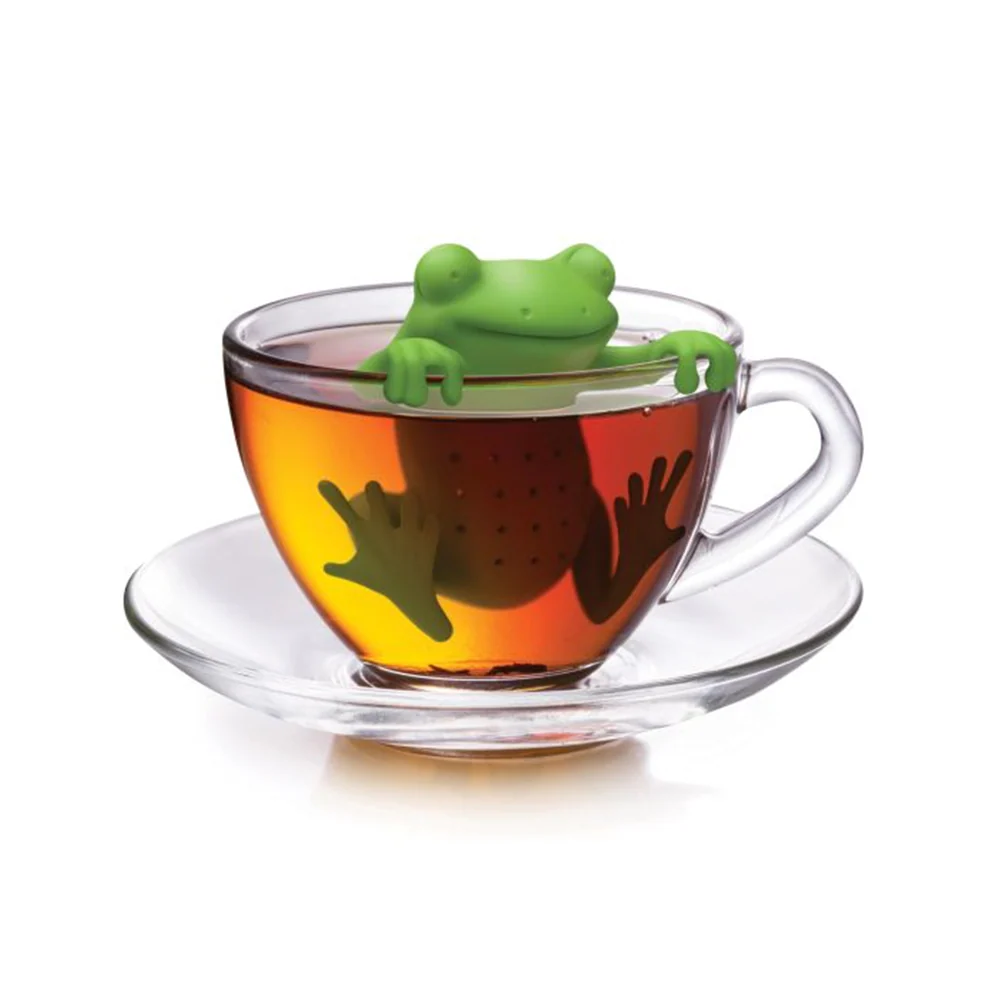
Affordable Art : the Tea Frog you probably don’t need at all but might make you smile
Oh, hi:
(Above: image borrowed from the IkoIko website.)
Look, I know nobody needs this ridiculous object…but how much fun, hey? )(+ Who ever went into IkoIko looking for something they needed?)
This little guy is $33 so he falls well within the affordable art budget of $50.
Is it ‘art’ though? I imagine you asking… I’d argue it makes having a cup of tea more artful…and so yes, he qualifies.
A short list of ‘sacred gifts’, from Alex Klingenberg
Returning to the topic of regulating the nervous system after feeling rattled by the noise of the world… this short article by Alex Klingenberg invites us to consider what we have to give in this moment, what our ‘sacred gifts’ are.
I particularly like this excerpt. As I read the list below, I think about how I can bring these qualities into my relationships, my family, my friendships.
Does my being in my presence leave people a little uplifted? I hope so.
Sacred Gifts of Being:
Presence – showing up fully to the moment.
Attention – the act of noticing, listening, and honoring.
Wonder – the childlike awe that keeps the world alive.
Stillness – the capacity to rest, pause, and make space.
Resilience – carrying light through difficulty.
Gratitude – choosing to see abundance and say thank you.
The article is gentle and thoughtful; I felt a little steadier after reading it.
(Hat tip for this link to Thousand Shades of Gray who also does a regular digest which I really enjoy and find a lot of good reads from.)
An artist who embraced the slow art of sewing after an illness
Speaking of gratitude and presence, this is a lovely watch. Louise Watson had to give up her teaching career after illness. Now, she lives more slowly and has begun and nature-based art practice as part of her new, slowed-down life:
& That’s a wrap for this week’s sharing.
This weekend I’ve been invited to a friend’s house for the inaugural paella in her new (from the op shop) paella pan; I’m going to be sharing early birthday cake with some fellow September-birthday friends and I’m going to a Sika Sound Journey as he’s passing through town. This will be my fifth time going to a Sika journey. I’ve been twice at yoga/kirtan camps and twice here in my home town. It’s always worth it. Transporting!
Sika often starts his journeys with the repeated phrase:
‘you are leaving time…you are leaving time…you are leaving time…’
I hope you can find some moments of presence, attention, wonder, stillness, resilience and gratitude this weekend and also maybe ‘leavetime‘ for a little bit.
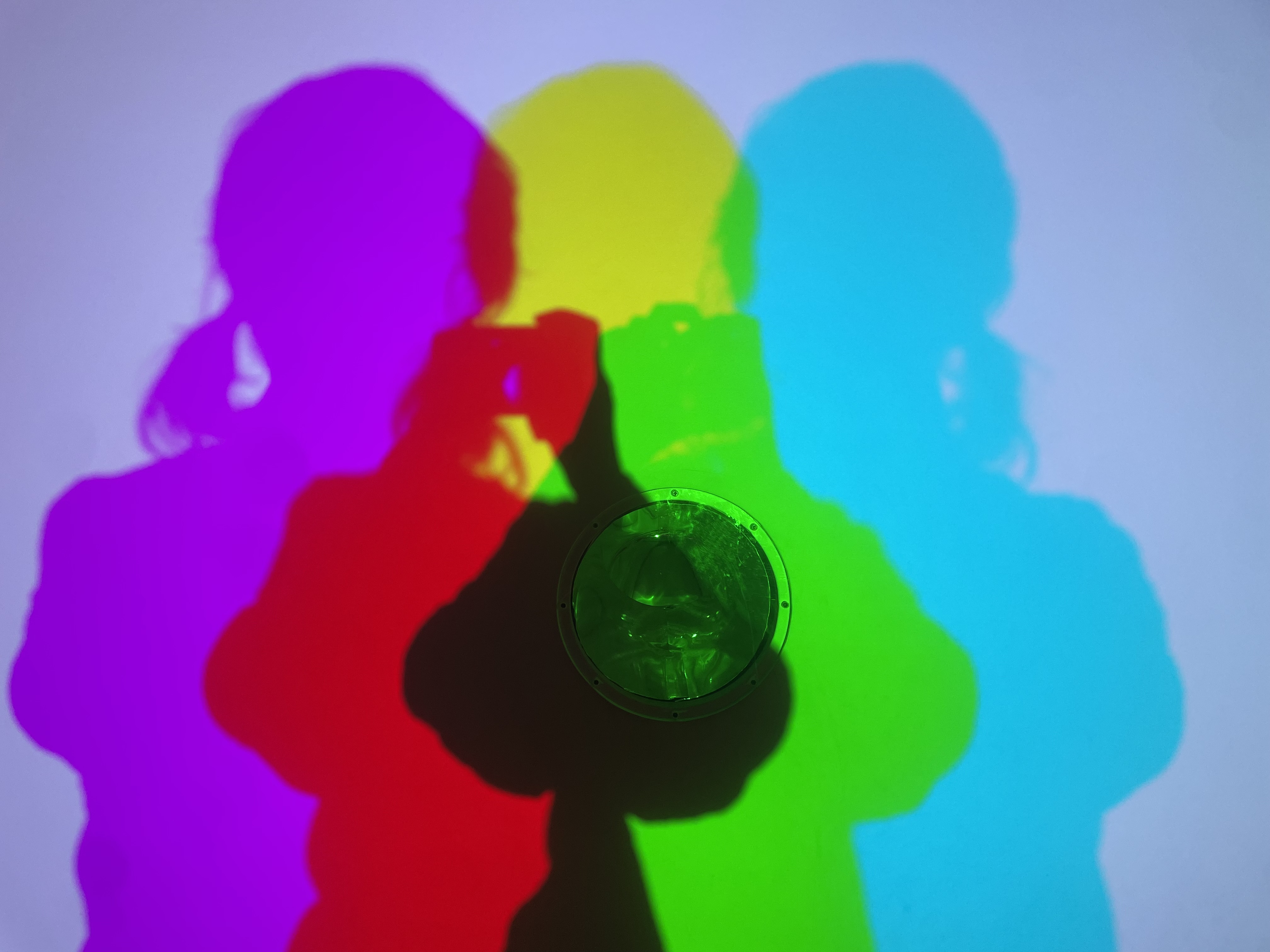
(Above: PN’s Te Manawa Museum currently has an exhibition about sunshine and light. Here I am playing with my shadow in the light box.)
Song for the week: Just George ‘Lungs’
This local tune is by my friend Abi Symes. I’m proud to have a little connection to this song, all about the overwhelming nature of grief, because Abi wrote it after we had a conversation about the physicality of grief. Abi got a bad lung infection after going through multiple griefs in quick succession and I told them that in Traditional Chinese Medicine, the lungs are an organ where grief is felt.
Abi sent me the song and I felt all tingly at the way, as creative people, we can cross-pollinate each other without even intending to. I love the song and I love Abi.
Be careful, this video may turn you into a total bird nerd
I loved everything about this little clip from Gardening Australia: the birds, the Australian native plants…but mostly, the enthusiasm and nerdy citizen-science of the sweet, sweet couple who are developing the bird garden. They gave me a deep case of ‘elder couple goals’ for me and F.
Watch this and then tell me people aren’t good:
A fun spring challenge: can you find enough edible flowers to make a ‘fairy salad’?
(Above: my fairy salad – all of this was growing in the garden.)
Spring in the Manawatū is pretty horrid. Squally winds, sudden temperature drops, weather that goes from warm to icy within the same outing…leaving me in the wrong clothing…all uncomfortable and cross.
It’s been like that all week….then on Wednesday…there was a brief reprieve and the sun came out. The garden was still. I could hear the tūi. I could hear my own thoughts.
I grabbed the sun-window to play in the garden and I made a fairy salad from edible flowers.
(btw, I’m still not sure about writing in two places. Here and Substack. I thought I’d do it for a year and then reassess. Do you have any opinions? I’d love to hear them in the comments.)
At just $48, I think this vase is such good value. Handmade, rustic, interesting, very original. The inside is glazed to hold water for the little stems you have foraged from around the place. I love it – so simple and eye-catching. The maker, jilly jam pots, has lots of other goodness in their shop, too, including this little vase that looks like a lotus pod. So good.
(*To qualify as ‘affordable art’, the item needs to be less than $50 NZD. Let me know if you’ve spotted anything around the internet you think people might enjoy and I’ll share it.)
Kelly is iconic among my generation of NZ writers. Punky, fierce, funny, no-bullshit, straight from the hip, generous, strong sense of justice and of course, a brilliant writer who didn’t get enough kudos and celebration.
As my FB feed filled with tributes and lamentations, I was again filled with that deep sense of life is so short and random.
Tell people you appreciate them now. If people cross your mind – get in touch and tell them you were thinking of them.
Tell a creaky, broke, vulnerable NZ artist that you love their work TODAY. Or if you can’t be bothered doing that, give them $20 via their online begging bowls or maybe, buy one their creative efforts.
It’s hard being an artist in NZ:
“This fucking stupid milk-loving piece of shit dumbass mean-spirited sale at Briscoes racist sexist 40% off deck furniture piss country.”
This week’s poem, ‘After Work’ I thought would be a good one as we (in NZ) leave winter…
It’s simple, it’s erotic, it’s amusing.
The stew simmering on the fire is not the only thing simmering.
& it reflects his Zen-eyes.
After Work

The shack and a few trees
float in the blowing fog

I pull out your blouse,
warm my cold hands
     on your breasts.
you laugh and shudder
peeling garlic by the
     hot iron stove.
bring in the axe, the rake,
the wood

we'll lean on the wall
against each other
stew simmering on the fire
as it grows dark
            drinking wine.
*
I think that’s all I have to share this week, friends. Soon we are driving up the Desert Road to visit my folks. I’m hoping there will be snow so we can have a snowball fight and I can take photographs of icicles.
(Above: I love this. Found it unattributed on Pinterest. If anyone knows the artist – please tell me so I can credit and link.)
Hello! Can you feel the change in seasonal energy out there? Barren-looking fruit tree branches now fat in bud or with the first green emerging. Magnolias doing their thing. Spring bulbs.
I’ve been eyeing up the vege gardens and wondering when the moment is to pull out the wintery stuff to prep the beds for those first tomato babies.
Lazy/easy hosting
I recently read an article about ‘imperfect hosting’. The jist of it was…what if we relaxed our standards for having people over so that it happens more often…rather doing it ‘perfectly’ but hardly at all because of that perfectionism?
Inspired by that, we had six friends over for a ‘Sunday Toast’. We supplied bread, butter and a couple of things to go on toast. (I made tomato dahl and a smoked fish + cream cheese dip.) We asked our friends to bring a toast topping.
We put all the toast toppings on the dining table. At dinner time, we took turns at the toaster making toast… then move to the dining table and applied toppings of choice. (Basically, yes, our friends had to cook their own dinner.) Dessert was a ‘zero dishes’ very lazy effort of a box of Cadbury ‘Favourites’ and some mandarins. It was interactive and fun, very easy and after they left – we were all cleaned up in about 15 minutes.
We also learned a cool thing from our friends Marolyn and Ruth. They invite people over for a specific window of time, e.g. ‘Come for dinner between 5 and 8pm.) Having an end time makes hosting feel more do-able, too. We copied them. Everyone had fun and then left round 8pm. We had the great feeling of having caught up with mates and hosted something AND we still had a couple of hours of our Sunday night left for chillin’.
Something good to watch: ‘Datastream’ Documentary
I really enjoyed this short documentary about legendary Wellington print shop, Datastream. They closed back in 2017 after 35 years in business!
They were a print shop with a radical heart but they worked with everyone local. It’s very heart-warming and a testament to the love a business can get when they commit to their community.
Homemade Worcestershire Sauce Recipe
I don’t think I’d ever consider what the base of Worcestershire Sauce is…or that I could potentially make it myself. I follow Australian food writer, Sally Wise’s blog and she recently published a recipe for it.
Turns out the base is plums so it’s a good recipe if you have plum trees. Part of me is intrigued to make it…the more logical part of me is questioning just how many bottles of Worcestershire Sauce one family needs…but on the other hand, a cool thing to gift or trade.
Affordable Art…on the move
Tote are a fun way to have art in your life. It’s art you can wear… it’s useful art.
A laid-back and heartfelt tune by UK hiphop artist, Little Simz. Lyrics as sweet and warm as a jar of honey sitting in the sun:
‘I think that love is forgiving yourself
I think that love is offering your immediate help
I think that love is everything that we need in this world
I think the key is being honest and being yourself
I think love is understanding that people can change
And loving them anyway through every stage.’
(I add one track each week to the slow-growing Slow Small Media playlist. You can listen to all of the tracks in the order they were added here on Youtube.)
A poem for the week: ‘What’s fun until it gets weird?’ by Chris Tse
Last week Chris Tse finished his time as New Zealand Poet Laureate. He did some amazing work in this role, travelling extensively and representing New Zealand so well. Here’s an excellent recent poem of his, ‘What’s fun until it gets weird?’
This weekend, we are chipping away at some changes we’re making to our back yard – extending our porch, moving plants, and first baby steps towards building me a home studio. This weekend marks the end of week two of my Verb Home-Based Residency. I’m planning on giving my little greenhouse a good sort out and clean up ahead of spring activities.
I hope you are faring well out there. Hope there are some lovely things in your weekend.
I consider the writer, Iona Winter my friend even though we’ve only met in real life once. We’ve exchanged lots of warm and intimate dialogue via email. I read an early draft of one of her poetry books for her. She included a poem of mine in her grief anthology ‘a liminal gathering’ which I wrote about back here.
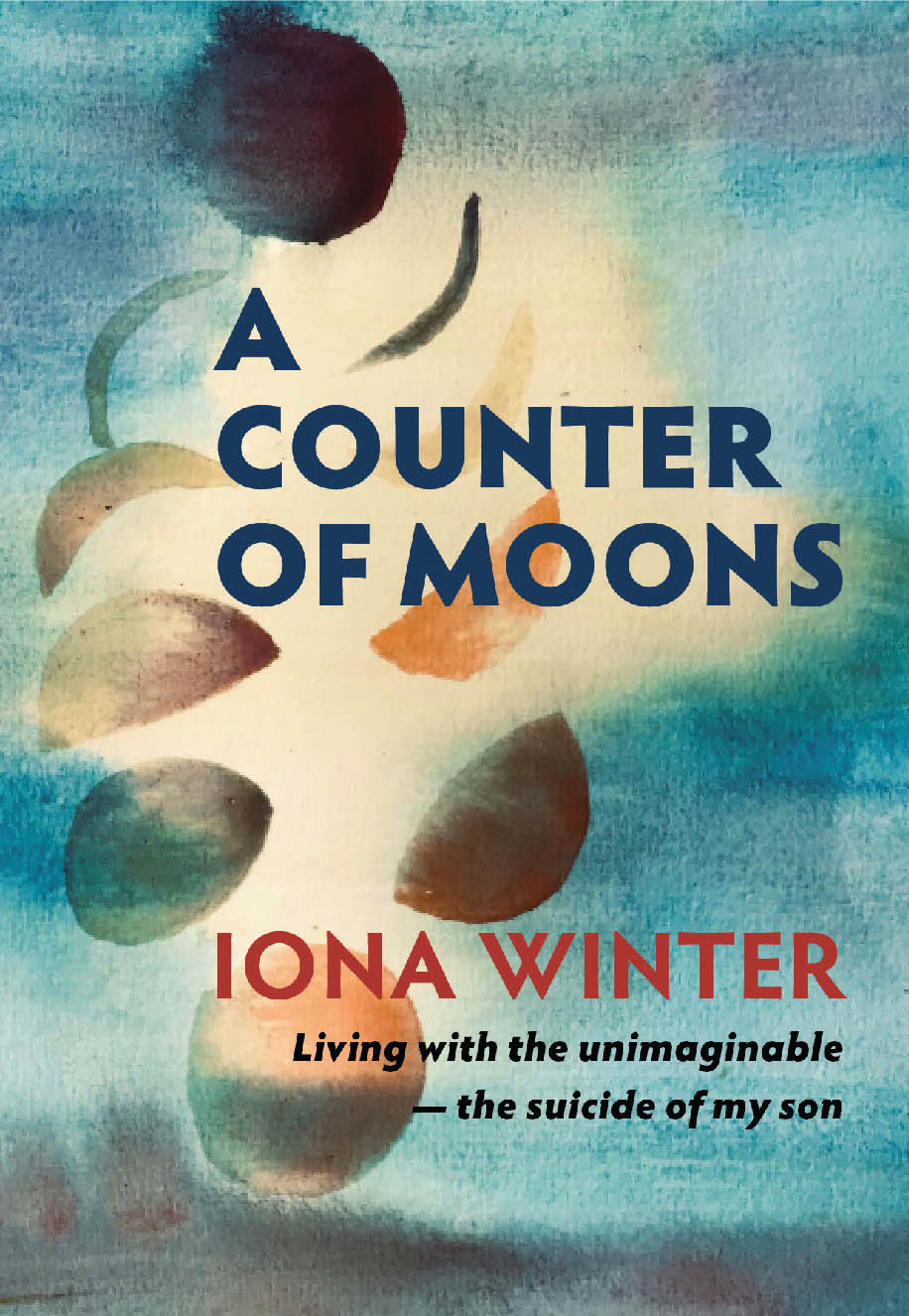
Iona recently released a hybrid memoir, A Counter of Moons. In it, she writes candidly about the time surrounding the suicide of her beloved son, the musician Reuben Winter.
I recently slow-interviewed (via email exchanges) Iona about her new book.
(Content heads-up: Iona’s book discusses suicide, mental health, grief so, naturally, all of these subjects feature in this interview as well.)
Kia ora Iona, thanks for talking to me about your beautiful new book. I really enjoy your poetry so I am looking forward to reading your memoir.
Can you share a little about how this book came into creation?
Iona: Kia ora Helen, thanks for inviting me along e hoa. I love the idea of a slow interview, it’s like we’re having a cuppa together, fireside, with a plate of delicious homemade biscuits!
A Counter of Moons is part of a body of work that began after my tama Reuben took his life, during Covid lockdowns in 2020. I’m deeply grateful to have received the 2022 CLNZ/NZSA Writers’ Award, that enabled me to complete the initial manuscript. This book and my poetry collection In the shape of his hand lay a river (2024), started out life together, as companions…but the world of publishing had other plans. Writing has been my main solace, while facing into an experience that is, for the most part, wordless.
The first project published was the multimedia grief almanac a liminal gathering (2023) Elixir & Star Press– a small indie press I set up in Ru’s memory. Knowing that grief is everywhere, from sharing my grief experiences, I kept hearing that many people carry their grief alone and feel dreadfully isolated. It was like Ru spoke into my ear then, saying, “You need to create a space for other people’s grief Mā”. It wasn’t really an option, more like an essential thing to do.
After Reuben died, I wrote diary entries, poetry, ranty-af essays and explored literature around suicide bereavement and grief. There wasn’t much, in terms of dead-child-grieving-mother books, and the rest was either academic or self-help. What I needed was to read people’s personal stories – something to mitigate the deep grief that accompanies suicide bereavement. I was active on social media for a couple of years, because I didn’t want Ru’s death to go into a void. It felt important not to disappear either, as a grieving māmā; not to garner attention but to raise awareness. Along the way I’ve attempted to challenge the social stigma attached to being a suicide bereaved mother in Aotearoa. A Counter of Moons is a hybrid non-fiction memoir; a snapshot of my life, Reuben’s life and his departure from this realm.
I think of you as a writer who can’t be confined to one genre so it makes sense the memoir turned into a hybrid book. It also makes sense in terms of how grief feels, right? You never know how you’re going to be one moment to the next.
Now that it’s out, how has it been (so far) having it out in the world?
Iona: Yeah, grief is hybrid by its very nature, as is love. I guess you’ll never find me writing something straightforward, probably because my brain doesn’t work that way, but also because I don’t see life, or death for that matter, as linear, formulaic or clearcut. Everything is interconnected and interdimensional. I’ve crafted a hybrid book because that’s how grief is for me – all over the freakin show, intermingled with moments of clarity and belonging, and at others feeling desperately alone and silenced.
It’s been odd since the book came out; a mix of relief, exhaustion, and flatness. Reuben used to say that too whenever he released a new album, and how it often felt ‘over-cooked’. Truckloads of energy went into these grief projects, but putting everything into grief-art, despite being purposeful for myself and others, has taken a massive toll on my wellbeing.
The feedback from those who’ve connected with A Counter of Moons has been potent, heartfelt and moving. To date, I’ve been blessed with generous and hearty responses; yet alongside this I’ve noticed the same pervasive silence that accompanies suicide. All I can do is trust that it’ll make it into the right hands. As a bereaved mother, I saw a major gap in the literature and have attempted to place a signpost there. I’m under no illusion that this book will be a bestseller, because most people seem reluctant to engage with the subject matter; including those who’ve said they can’t because they don’t want to feel sad. I say in the book, “We are expected to get over grief, not wallow in it, and to hide our teary-eyed sleep-deprived faces. Except if you’re me, and these days I say, bugger that. I’ll be real about this, even if it kills me.” It hasn’t killed me yet, and I’m pretty feisty about everyone’s right to do grief in their own way.
In making these three books, I do wonder if there’d be more engagement if I was a shouty wahine standing on the steps of the Beehive! The silence with suicide and difficult emotions, I believe, speaks to our collective fears of going there with our own grief and internal pain. Heaven help us if we are triggered into feeling something other than the socially prescribed or accepted norms.
Here in Palmerston North, a well-known local writer, Paula Harris killed herself in 2023.
Paula was very open, very vocal about her mental health struggles, her suicidal thoughts, her feelings of isolation & her despair at her treatment by mental health professionals.
She wrote about being sectioned in essays published on The Spinoff.
It seemed to me that there was often silence after Paula spoke out on social media or published one of her essays or poems. Not total silence, some people would response and try to say supportive, buoying things, however, it was to little effect.
Whenever suicide features in an art work, there is a often a list of links afterwards and a statement like ‘if you are struggling…help is available.’ In Paula’s case, though, ‘the help’ seemed to make things worse…and with mental health services so underfunded…IS help available, really?’
I’d be interested in your reflections on this, not Paula’s case so much, but more the ‘help is available’ phrase we see/hear so often.
Iona: Thank you for mentioning Paula, and naming the silence.
Last time I saw Paula was at the Verb Writers Festival, we’d followed each other for years on social media. It was great to have a hug, put a face to the name and have a shared rant about the state of the world. It’s important to mention Paula, because she’s just as ‘with us’ as Reuben is. Our dead don’t go into a box, as I’ve mentioned in the book.
Canadian artist Tanya Tagaq says in Split Tooth, “We carry our dead with us like helium ballons. There is no breaking the umbilicus. They have always been with me. They are me.” And it’s up to us to keep their names in the conversation, rather than not. Less avoidance would go a long way towards developing more honest kōrero in our communities.
While I have theories about why people are so afraid to speak about suicide, grief, mental health; when there have been decades of awareness-raising, it still doesn’t make sense. I’ve written about my take on this in A Counter of Moons. The ways we speak of our dead varies a great deal, is often dependant on how they died, and their death-stories seem to have a hierarchy. It’s like I can’t celebrate Reuben’s life, because he took himself out of that life, and the lives of everyone who loved him. It’s as though I must feel ashamed as his mother, for not being a good enough parent. There are many shitty things people have flippantly said to me, about Ru’s suicide. I understand the anger about being suicide bereaved, I’ve been like Mahuika or Kali at times, but beneath any anger are myriad emotions (as we well know). What if we looked inside ourselves first, before opening our māngai to comment on things we know nothing about? What if we made more time for one another without time limits (frankly a preposterous idea when it comes to any kind of grief)?
The silence when we have been open about what’s really going on for us, is palpable. But I reckon the ‘what’s really going on’ is what the general populous find repellent, triggering or easy to avoid. Reuben was often met with silence, as was Paula, and I’ve experienced this in life too. The ‘afterwards list’ of people to contact is probably a way of covering butts, as if to say, “I’m sorry that happened but we did make a list of people for you to connect with.” It’s like there’s even less responsibility taken because of that. I’ve spoken for years about the lack of resources and the lack of funding – and I promised myself not to be political today – but can see that it’s never been high on any politician’s list of priorities. It’s as though we don’t want to see what’s going on in our own backyards; the many dire situations including suicide, homelessness, poverty, and the ways these are spoken to with an increasingly more tokenistic vibe.
In terms of ‘Help’ being available; it can only be available if you are willing and able to access it and there are enough people to provide it. I remember working at Youthline in the 90’s, and how many people would call up simply to have someone on the end of the phone, to combat loneliness. Perhaps we need to attend to the ways we silence one another, and the subsequent loneliness and isolation first?
Can you speak to this? What do you think it is about writing / creativity that has kept you going?
Writing has always been my go-to, when life has overwhelmed me, or when I’ve had nobody to share it with. There’s something incredibly immediate about writing whatever’s in my head down onto the page.
Much of how I defined myself (aka society’s labels) has been stripped away over the last decade with a brain injury, a mesh injury from medical misadventure, being unable to work a normal job ever again, and Reuben’s death. There’s been a great deal of grief and loss to attend to, and with limitations on ‘help’ and a lack of financial resources, I’ve had to dig deep in my own soul and find ways to navigate this.
Poetry, either reading another’s or writing my own, creates space to express what’s going on for me internally. I don’t think we have many options these days, for this kind of expression, that feel safe. The good thing about writing on paper is that you can always use it as a firestarter if you don’t like it! When there’s more space in my head and heart, after expression of intense emotions, I think it leaves space for something new to emerge.
Thank you, my friend, do you have any final thoughts you want to share?
If people want a copy of A Counter of Moons, or the other books I’ve mentioned, I have copies and am happy to post anywhere. Or if money is a barrier, perhaps people could request their local library gets copies? Alternatively, copies can be purchased direct from Steele Roberts Aotearoa.
My hope is that these books will start and continue conversations around suicide bereavement and grief, perhaps even making these conversations more commonplace and without fear or avoidance. As I’ve written in this book, death is a part of life and we need the same village that raises our children, to wrap around us when we face death.
Thank you, Helen, for inviting me along, and for being unafraid to go there with me. Thank you for not joining in with the silence that pervades our society, and for meeting me in a beautiful heart-space, I’m very grateful.
I bought my monster desk from the Wellington Central Salvation Army op-shop in 1999 – the year I was studying creative writing full-time.
I think at the time I felt I needed a serious desk to be a serious writer.
When I got it home, it had old papers in the drawers from the Ministry of Education so I guess that’s where it spent the first part of it’s working life?
It’s huge and heavy and more than once when we’ve moved house we’ve had to take doors off their hinges to get it inside.
It’s heavy and daft…and I still love it, twenty-five years on.
Having begun my home-based residency, I want to publicly applaud Verb for their forward-thinking, compassion and generosity in establishing this (sadly) unique opportunity for writers who have circumstances which make applying for away-from-home artist residencies from challenging to impossible.
When I first saw the advertisement for the home-based residency, I felt so very moved and so happy for our NZ writing community. I know so many writers for whom travelling to writing opportunities is outside what is possible in their lives.
This home-based residency acknowledges and honours the unique challenges of disability, of care work and of care load.
More than anything else, it gives visibility to a strata of creatives who often feel invisible, unseen and unsupported. I know that while I have done my very best to keep my creative work alive it has often felt like swimming upstream of the demands of my life.
(Btw, If you don’t know me well enough to know what my circumstances are, I have an adult son (he’s 20) with autism and I am his main carer. I do my writing work around his care.)
I also wish to thank Verb for generously deciding to award two residencies in this inaugural year. They advertised for one and after considering the applications, awarded two. How marvellous, hey?
My fellow ‘at-home’ resident is the brilliant Henrietta Bollinger. Do go and read Henrietta’s book. It’s smart, fierce and very funny.
So here I sit, at home at the monster desk as usual…but with the warmest feeling of support, visibility and with large swells of gratitude.
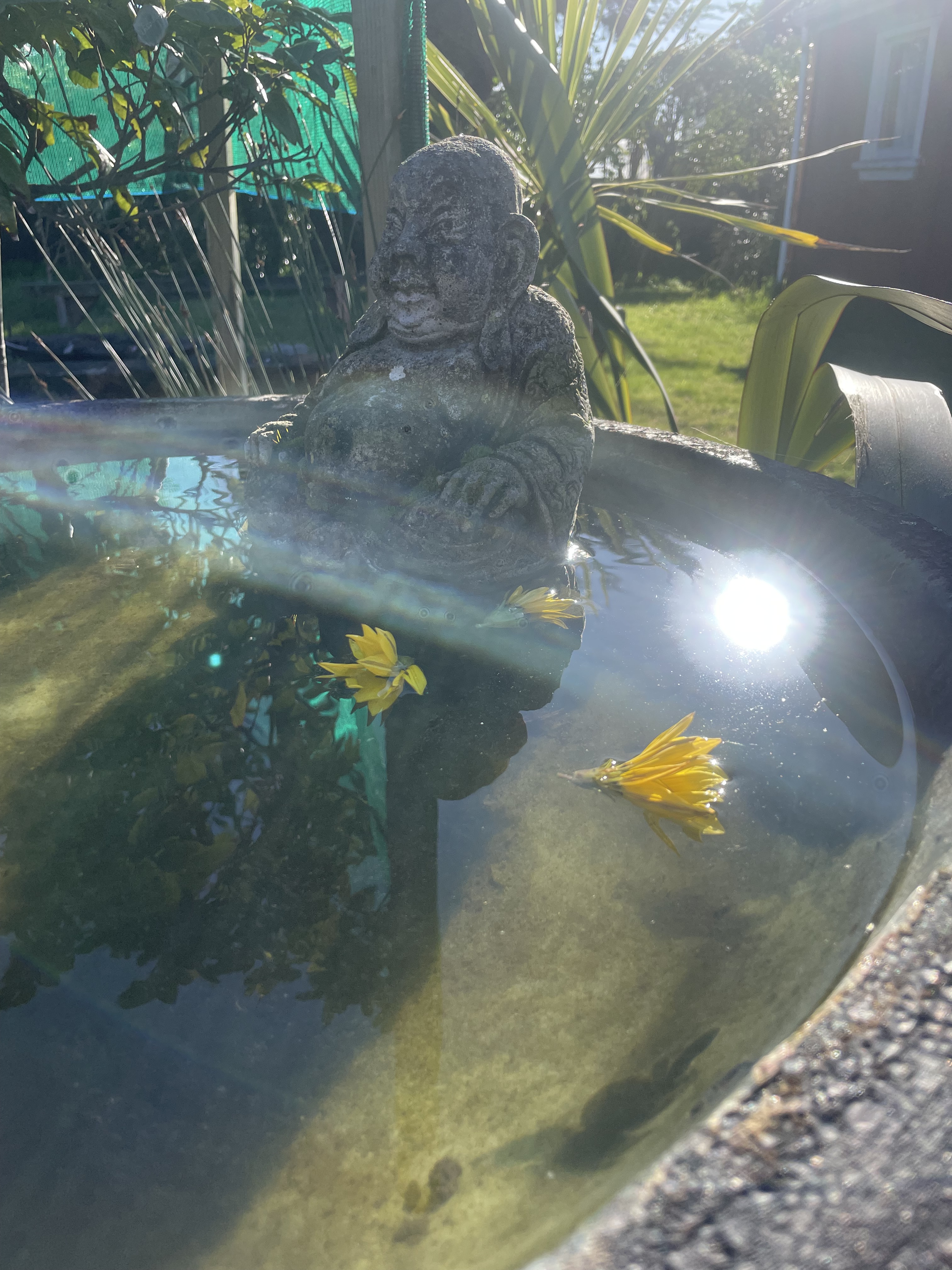
(Above: resident garden Buddha at the bach I stayed in at Ōtaki.)
I’m back from my residency in Ōtaki.
How was it?
Well, all these things are true at once:
It was a wonderful experience. Parts of it were challenging. I got sick. Woke up sick on the first morning. A nasty dose of ‘flu – fevers, sweats, body aches, etc. I managed to do all of my public-facing things but I did not manage to sparkle. I’m a bit sad that I was a depleted version of myself when I was so keen to converse and connect. I was too sick to catch up with my local friends. The beach was stunning. The beach was my new best friend. The cottage I was housed in was wonderful. simple, sweet, one block from the beach. The organisers of the residency are warm, generous, kind people. Once my eyes stopped stinging and streaming, I read a lot. I did not manage to work on my manuscript…too ill to be generative or analytical. I did keep a journal about the whole experience so maybe there’s something in there? Or possibly it’s a load of feverish waffle. I can’t face looking at it right now but will crack it open when I’m all the way recovered and fully landed back in normal life. It was weird. It was confusing. It was perfect.
I know I go quiet when I’m feeling overwhelmed and I observe that many friends do, too.
Let’s try to be there for each other…even when it feels hard.
A recipe for a very weedy pie: ‘Hortopita’
Last week in Ōtaki, I chatted all things winter forage-able weeds with some lovely locals in the beautiful Ōtaki library. (We had planned to do a foraging walk in a near-by park, but rain stopped play so we talked weeds indoors in the warm and dry.)
In every season, something in nature is thriving, and winter is great for fresh, bright green greens, well-watered from all the rain. Here is a recipe which calls for 11 cups of weeds! It’s a wild weeds version of spanokopita, ‘Hortopita’.
I think a lot about food as love and food as care because I’ve had 25 years of cooking for a family.
I like the simplicity and poignancy of this poem about a small moment of a food offering spurned.
(+ Lehndorf-trivia: I flatted with Therese when we were in our 20s. Back then we were part of a performance poetry group called ‘Poetry For Real’.)
By Sunday
You refused the grapefruit
I carefully prepared
Serrated knife is best
less tearing, less waste
To sever the flesh from the sinew
the chambers where God grew this fruit
the home of the sun, that is
A delicate shimmer of sugar
and perfect grapefruit sized bowl
and you said, no, God, no
I deflated a little
and was surprised by that
What do we do when we serve?
Offer little things
as stand-ins for ourselves
All of us here
women standing to attention
knives and love in our hands
Affordable art: original moka pot linoprint
We have a big espresso machine. F is a coffee aficionado and roasts our coffee. Coffee is a big part of our daily ritual.
When I got home F surprised me by telling me that while I was away he didn’t turn on the big noisy coffee beast and just made stove top for himself each morning.
Stove top is what we used to have before we had fancy espresso machines and it’s what we have when traveling.
There’s something so handsome about the classic Bialetti moka pot and it has so many warm associations for me.
I’ve followed Faythe’s creative life since falling in love with her film ‘Handmade Nation’ 16 years ago! (I was part of that wave of renaissance of handmade things and used to make a bit of money selling at Indie Craft Fairs. It was a huge and exciting scene at the time. It’s hard to convey the unique vibe of those first fairs now but at the time they were very fresh and exciting.)
In the article, Faythe finds a very charming hand-illustrated book at a second hand shop and then follows her enamouredness into a research side-road.
The book she finds is charming, Faythe’s writing is so good, the whole premise is very entertaining.
‘The Candy Factory’ – a charming short film
I can’t find the words to express how beautiful this film is so just, please, trust me and watch it. (Content warning: heartbreak.)
*
OK, that’s the digest for this week. Did you miss it last week? & If you’ve read or watched or listened to anything you think I might like, please share in the comments.
Last night I got my 100th subscriber on Substack which is so lovely. If you didn’t know, I write over there about permaculture, radical reciprocity, attempts to live in gift economy, voluntary simplicity, permaculture, foraging & more. I’m still finding my way there, to be honest…but trying not to apply feelings of urgency to things that don’t really need it.
This weekend I am going to:
continue getting better, clean! (house is looking a bit end-of-winter-ish), in the garden, all my rocket is ready at once so I might make a rocket pesto, read more of this book and I’ve been doing some Japanese-inspired visible mending of pants…so I might carry on with that. It’s slow work but looks so great.