news + musings

  • What do green tomatoes have to do with mutual aid?

    (Above: many hands make work fun. A harvesting and chopping working bee at Kirsty’s place. Photo by Kirsty Porter.)

    Fascism is on the speedy rise, climate collapse is escalating, increasingly our governments and power structures are unreliable at best, malevolent at worst. What is there to be done?

    I am reading a lot of Margaret Killjoy , Adrienne Maree Brown, Bayo Akomolafe and Donna Harraway. Listening to a lot of collapse-aware podcasts. & Trying to be (mostly) off (anti)social media. But beyond what I consume and intake…I am making slow steps towards deeper resilience within my friend groups.

    I’m in a couple of ‘conscious-collapse’ groups. One is aimed more at emotional support and mutual aid (deep listening, space-holding, nourishing one another with beauty and soothing art), the other is more about practical supports, and intentional-relationship-building over time (working bees, resource sharing, fun gatherings.)

    While both groups have group chats in messaging apps, we make a conscious effort to take them offline and get together regularly, because actually being together is so much more healing than more time staring at our phones.

    The photo above is the latter group. We had a working bee to harvest all the end-of-season green tomatoes, then we sat around Kirsty’s kitchen table and chopped up the harvest. We filled four buckets (!) with chopped green tomatoes. Kirsty kept two, M & R took one and I took one. Kirsty, M&R turned theirs into Kirsty’s Grandmother’s recipe for green tomato chutney and I turned mine into a spicy Mexican green sauce.

    While we worked, we chatted, we laughed and the folks in the group who had only recently met got to know each other better. It might not seem to have much to do with the mitigation of fascism & climate collapse…but it was a practical, positive, soul-warming way to spend an afternoon. Every small action like this brings us closer, braids us together a little more…all while we work on our food resilience skills.

    Kirsty might have struggled to ‘capture and store’ her green tomato abundance alone…but with five of us at work…we got it all done in a couple of hours.

    ‘Communities are not built, relationships are built. Communities build themselves.’

    -Patrick Jones

    What sorts of things are you doing to nourish yourself in these challenging times?

    In other tomato news…I like to challenge myself to memorise high-rotate recipes, like fruit crumbles, scones, pikelets, simple cakes…so in the unlikely event I am somewhere I can’t use my recipe books or the internet, I can still make these things. I figure it’s good for my brain, at the very least. Also, it makes me feel next-level to be able to bash them out without cracking a book.

    This winter, I am attempting to perfect and memorise focaccia. I made this one with one of the last crops of cherry tomatoes and basil from the garden.

    In my household, we are seasonal eaters, which gives the last tomato harvests a real poignancy.

    The basil is valiantly carrying on, despite some colder nights…but how much longer for? Time to make some big batches of pesto, I think.

  • don’t buy a sympathy card, buy this

    Another thing that happened while I was too distracted by the release of ‘A Forager’s Life’ to give it the attention it deserved is that writer Iona Winter published a grief almanac called ‘a liminal gathering‘.

    I submitted poems to it and Iona chose one for the almanac, which I share below. I feel privileged to be amongst the writers, artists, musicians and photographers who are part of this precious container for giving voice to grief.

    Iona’s son, the musician and artist Reuben Winter killed himself in 2020. Since Reuben’s death, Iona has used her skills as a writer and communicator to be public with her grief in service to all who grieve and are silenced, or are too overcome by grief to speak themselves.

    A review of the almanac by Hester Ullyart says, ‘This is a hopeful resource, much needed. A rope of stars thrown out into the murk of grief. I recommend this almanac for every shelf, for death touches us all, and no one need struggle alone.’

    I so agree. This book contains both the intensity of new grief and the wearing plod of long-carried grief. It spans anger, raw shock and emotional pain through to gratitude, reverence, elegy…sometimes in the same piece of work.

    If someone you love loses someone they love, don’t buy a sympathy card, buy them this. You will be giving them the gift of a chorus of voices who dwell in the same place as them, a liminal gathering: grief.

    In his piece in the almanac Dear Reader, Rushi Vyas captures the some of the nuance of grief in his poem’s ending:

    ‘Dear Reader, go outside. Feel everything. The wind is cruel. And full of oxygen. The sun is deadly radiation. And our only source of warmth.’

    -Rushi Vyas

    & here is my poem from the almanac:

    negotiating boundaries with the dead

    grief: week one

    kaimanawa horse in my living room

    wild waters                        white flames

    grief: week two

    flower’s fingers holding medals 

    i’m a hobo pedestaled for bravery

    grief: week three

    in the musty cave mushrooms sprout from armpits

    it’s a total eclipse of the total eclipse

    grief: week four

    hurricane chasers, race to get best footage of worst damage

    a raggedy lone wolf to stare down

    grief week five: 

    bat-infested feeling my way   with echo-location

    drink puddle-water      trying for nutrition by chewing on a husk

    grief: week six

    (but wait there’s more

    were you looking for a neat trajectory?) 

    belly-crawling at toadstool height

    make the bed with a chainsaw

    grief: week seven

    turns out the source of the tinnitus is my own throat’s moaning

    some forest fires happen to crack the open the seeds of amoured shells. But not here.

    Just another searing morning. The petrol pours itself.

  • witch sticks & autumn harvests

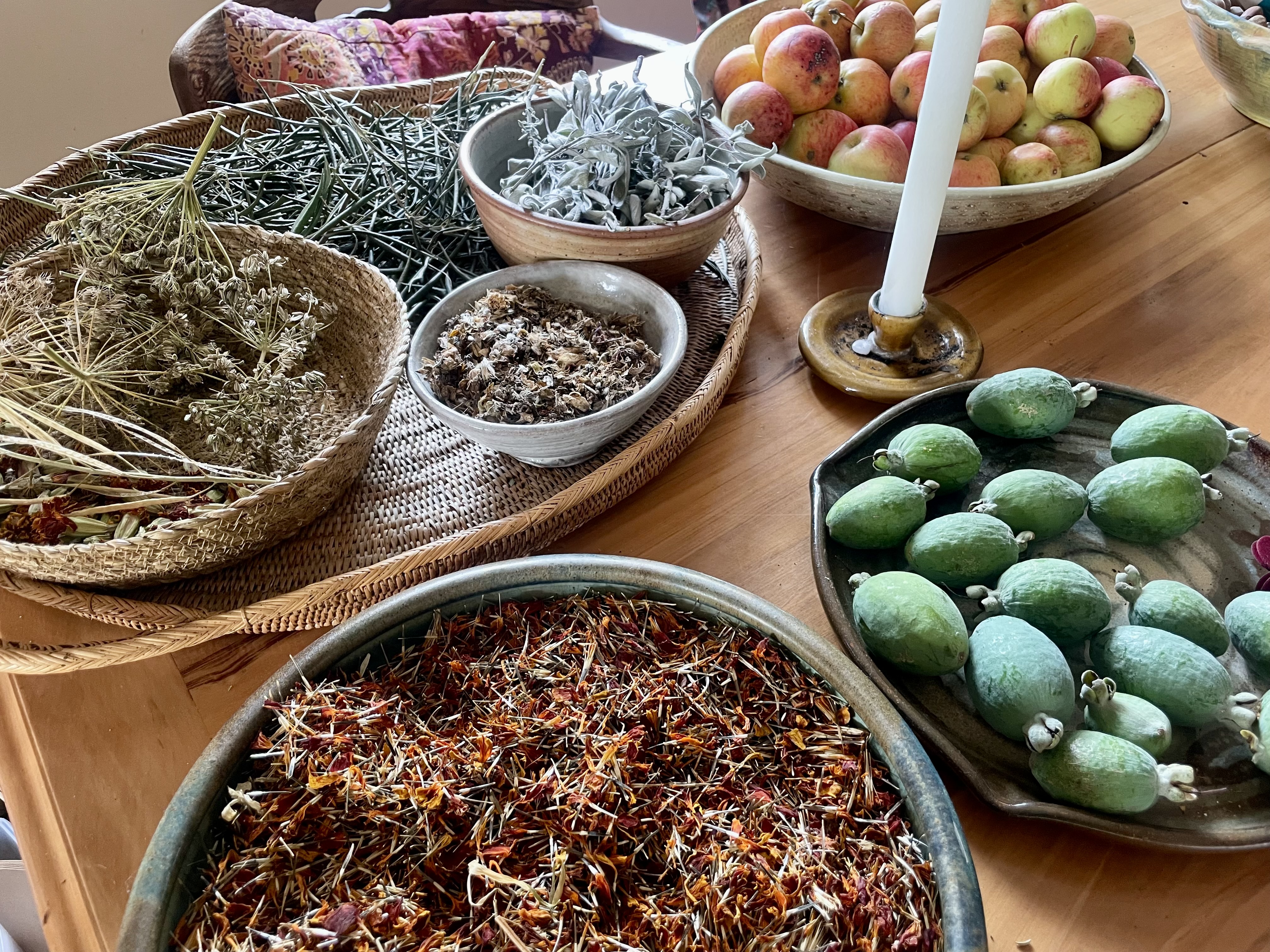
    (Above: Our kitchen table is a busy surface with often-changing bowls and baskets reflecting what is going on in the garden and the foraging season: things drying or waiting to be processed.)

    Autumn is my favourite season and, as a permaculture household, a busier season than summer with our labours to ‘capture and store’. There’s lots of picking and gathering and then kitchen work processing everything.

    (Above: Last sunday morning’s harvest chore was bottling a box of apples from our friend Bev’s orchard. These will turn into crumbles or top our porridge this winter.)

    Last week I gave my potted white sage plant a prune, ready to overwinter it in the greenhouse. White sage is a desert plant, native to the American southwest and Mexican northwest, so it doesn’t love the Manawatū winters.

    In the summer, I put it outside in full sun then prune it down to almost sticks at the end of summer and put it in the greenhouse where it sulks the winter away…but it (just) survives. Mine is about six years old now.

    (Above: white sage prunings, cotton thread. It’s on the sofa because I made the witch sticks while watching something in the evening. I do a lot of processing tasks (this, peeling fruit, cutting up herbs for tea, seed saving jobs) on the sofa…which might seem a bit odd…but I don’t see it as much different from knitting or hand-sewing in front of the TV. Does anyone else do this?)

    The prunings can be turned into what I call ‘witch sticks’ for burning by folding up the leaves on the stalk, weaving and rolling them longways and then tying with cotton thread. (Never use synthetic thread: it will melt and emit toxic smoke.) When the leaves have all burned down, you can burn the stalks, too.

    (White sage is a plant sacred to Indigenous people in USA and Mexico, so if you want some…have a go at growing it rather than buying imported sage. White sage is overharvested in the USA particularly. In ‘A Forager’s Life’, I write about alternative plants to white sage for making cleansing/burning sticks.)

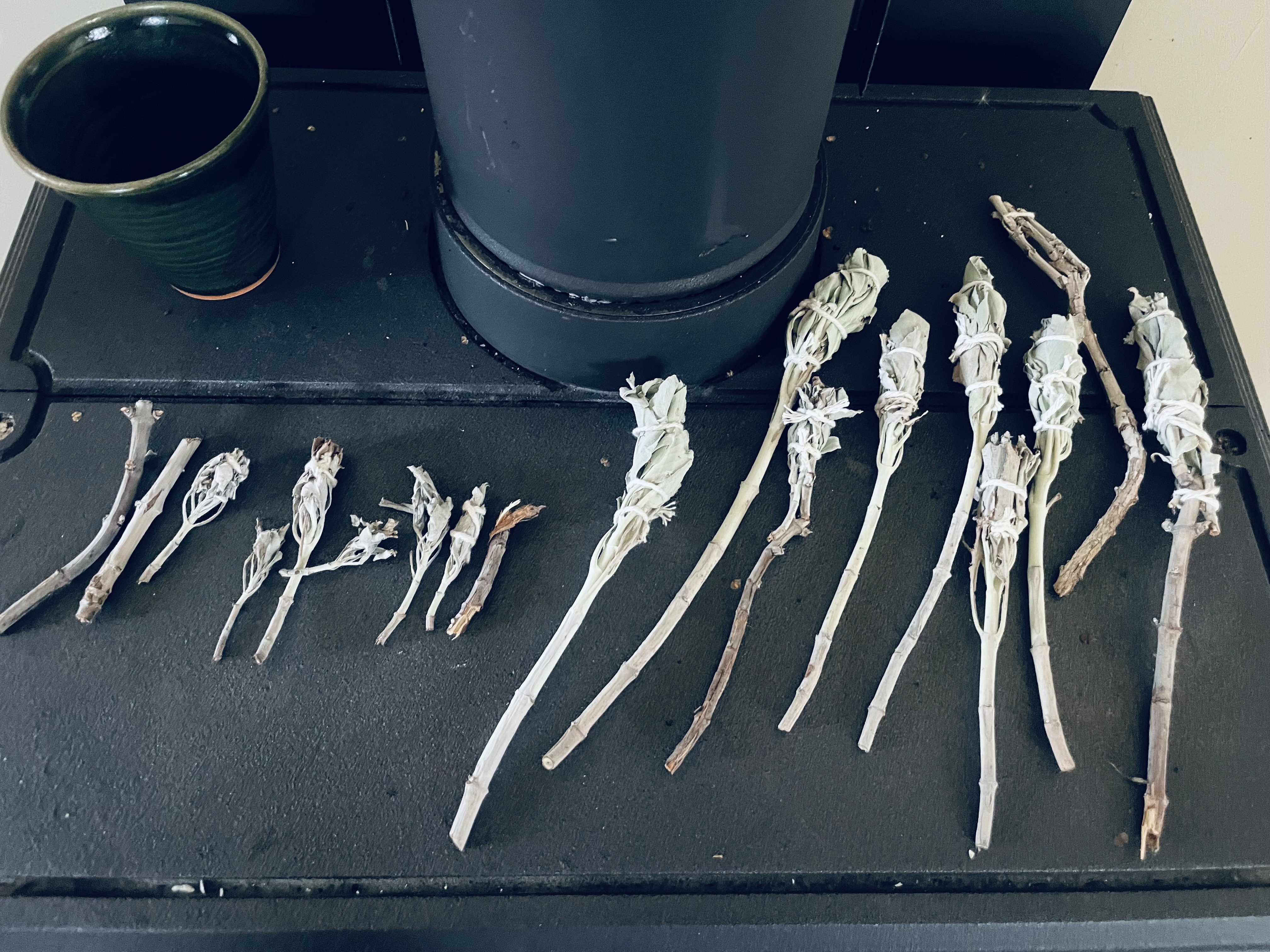
    (Above: I got eight decent witch sticks, plus some smaller bits and pieces of stalk…all of which can be burned. Here they are drying on my fire top.)

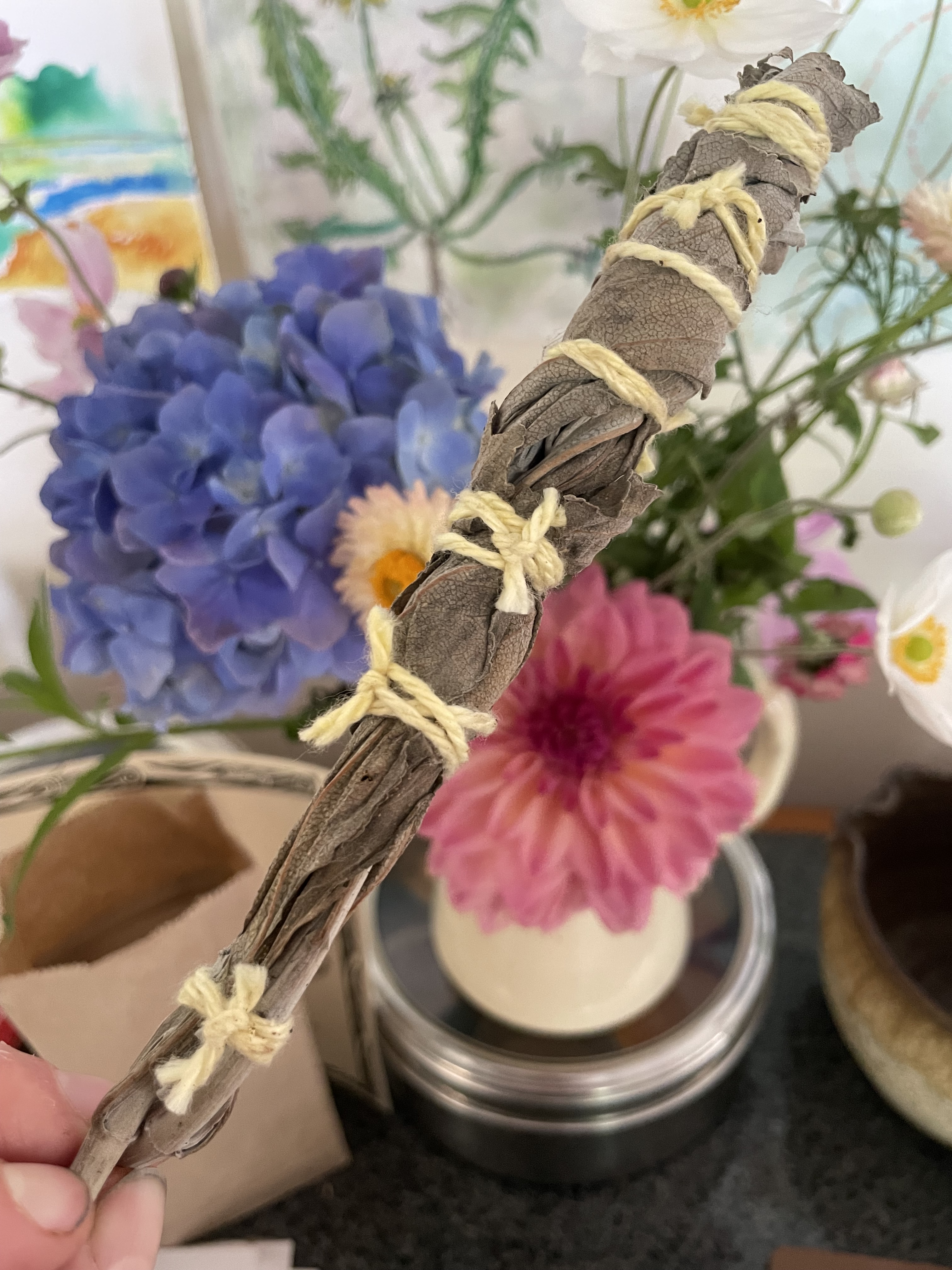
    I see a lot of ‘how-to’ articles about making cleansing/burning sticks around…but they often forget a detail which I think is important. For them to burn well and safely, don’t wind the string around and around the bundle, securing only at top and bottom. This will mean your stick will fall apart as the thread burns and you could have a higher risk of embers dropping off it. Instead, tie it tightly with small pieces of string at regular intervals, like in this photograph:

    (Above: please forgive my ‘dirt manicure’ as garden writer Gayla Trail calls it. I scrub* my nails regularly but folks who ‘touch soil’ (which is ilke ‘touching grass’ only more grubby) every day struggle to have photogenic hands. ((I have to buy a new nail brush every couple of months…so intent is my endless scrubbing.))

    Do you have a favourite season or are you one of those calm, rational people who loves them all equally?

    I’d love to hear what kitchen or garden chores you’ve been doing lately. Let me know below.

    “As long as autumn lasts, I shall not have hands, canvas or colours enough to paint the beautiful things I see.”

    -Vincent Van Gogh

  • twenty years ago I started a commonplace book and didn’t even realise

    I was reading on writer Pip Lincolne’s delightful Wallflower Cordial the other day about her beginning a commonplace book. Then I remembered I had something similar, although I hadn’t realised it was a commonplace book.

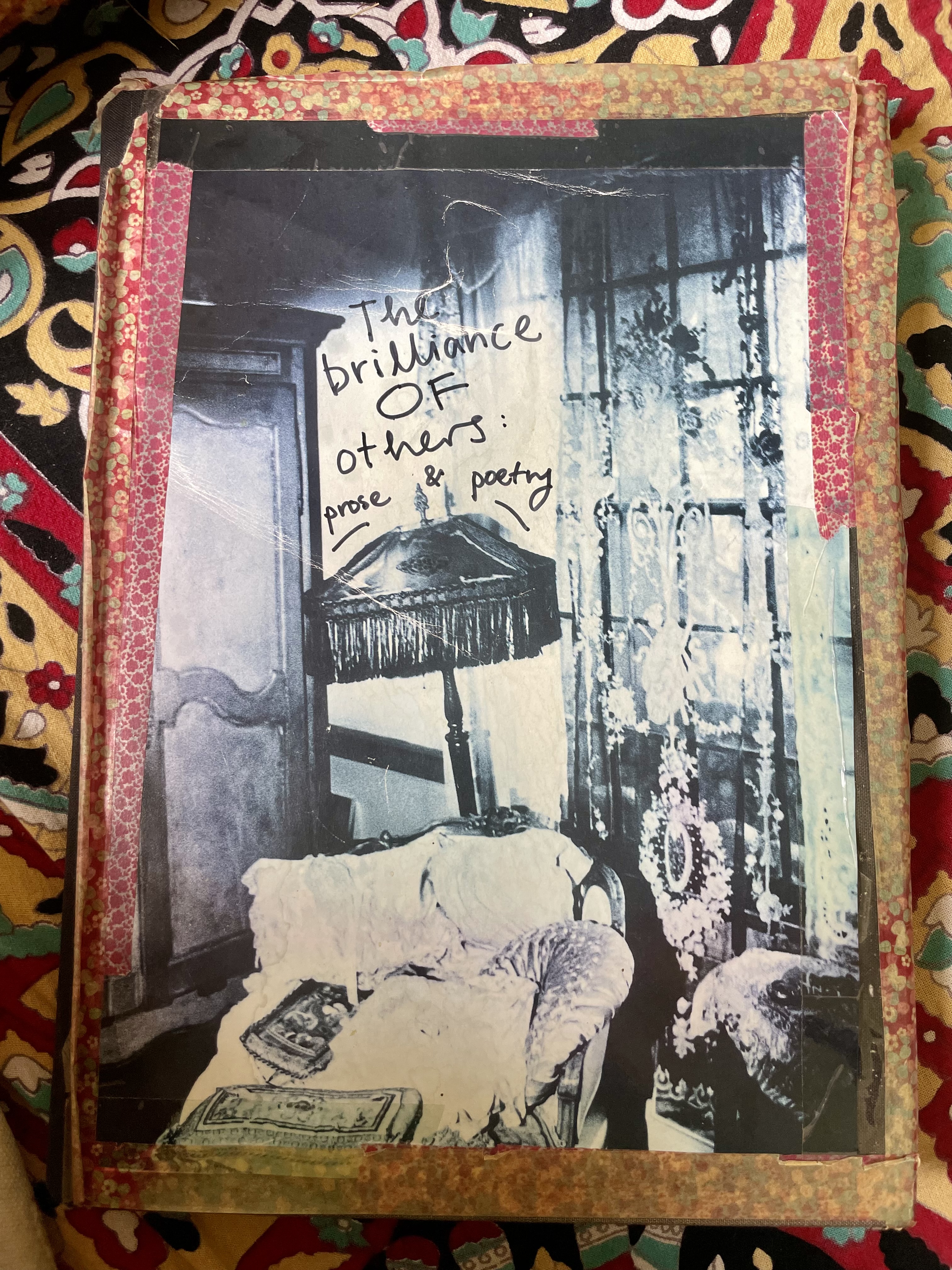
    I called mine ‘The Brilliance of Others’. On the cover is a somewhat gloomy photograph of the reading chair of someone famous. (I didn’t record who so if you recognise it–let me know.)

    On the inside cover it says, “Personal Poetry Anthology: words by other people that move, stimulate, excite…& at the back, quotations.” 

    I guess I hadn’t heard of commonplace books then because that would have been a much more succinct title.

    I started it in April 2004 which was around when I became pregnant with my second child, Magnus. I guess that is why, after over twenty years, it is only half-way full. Nine months later, a decades-spanning distraction was born. 

    Still, from time to time, I remember it exists and I add something. There are currently 51 entries. 

    In it there are poems I’ve copied by hand from library books, some snipped out of the New Yorker (now yellowing…that New Yorker paper doesn’t age well), or printed out. From time to time I subscribed to the Academy of American Poets ‘Poem a Day’ emails and I would print out the ones I particularly liked. 

    (I’ve subscribed to this so many times over the years…usually when I feel like I’m not reading enough new poetry and I should make more of an effort to ‘keep up’…but a poem every day to your in-box is so many poems! & so many emails. Therefore I usually only last a month or two and then unsubscribe again after getting overwhelmed. It turns out even poets can be exposed to too much poetry.)

    (Above: This Merwin poem on brittle, yellowing New Yorker paper still gets me in the gut. What an ambiguous, radiant, brutal final stanza.)

    There’s also the occasional dashed-down note which must have seemed very relevant to something I was thinking about or working on at the time and now I have no clue why. Thus:

    According to USA lifestyle magazine The Good Trade, commonplace books are increasing in popularity again. Younger people are enjoying them as a kind of palate-cleansing, analogue and slow antidote to the relentlessness of social media. I totally approve of this trend. 

    Do you have a commonplace book or something like it?

    Here’s a quote I wrote down from G.K.Chesterton. Why younger me liked it so much, I’m not sure…possibly the poetry in the final eight words?

    “He discovered the fact that all romantics knowthat adventures happen on dull days and not on sunny ones. When the chord of monotony is stretched most tight then it breaks with a sound like a song.” 

  • somehow, ‘a forager’s life’ is two

    On March 18 my book ‘A Forager’s Life’ turned two!

    The two years since it emerged into the world have been, frankly, mad.

    I’m a person who enjoys a slow, simple life and lots of huge (for me, anyway) and exciting things happened with the book since it’s release. In this space, I’m going to share some of the things that happened…even though they are old news in terms of the pace of the online world. They are still very much with me.

    (Above: I threw a morning tea for the staff at my wonderful local bookshop, Bruce McKenzie Books on the day the books arrived in store, March 2023.)

    I was unkind to myself and, freaking out about money once my book manuscript was delivered, started a new job before the book even came out. At the same time, my younger son who has a disability was finishing high school and in a massive phase of transition into post-school life. I had underestimated how intense of this phase would be for him, resulting in a high-pressured time where I was trying to enjoy the opportunities the book bought my way, learn and hold down a new job and be there for the kid. Oof.

    It was all too much and, coupled with the NZ government’s slashes to disability support last year, I only lasted two years in the job before something had to give and I left it so I could adequately look after my boy.

    Now I’m out the other side of the intense part of the booky fizz, the job debacle, am still navigating the kid’s shaky steps into adulthood (I guess I always will be), plus I’m in the midst of the intense mind/body/spirit shake up that is menopause.

    I’m sitting here, a bit dishevelled, trying to put myself back together. It’s been a very strange time of immense, beautiful highs and difficult, fractious lows. (Then there’s everything going on in the world beyond my front door where the world appears to have gone completely mad.) Therefore, I’m hoping this winter is very boring and nesty so I can read mountains of books beside the fire and journal a lot (on paper and here) and let it all integrate into me at a pace I can cope with.

    So, interspersed with posts about other things, there will be the occasional retrospective post my experiences with ‘Forager’s’.

    I hope it’s interesting for you to read about such things from a writer’s perspective? As writers we are supposed to act very cool and nonchalant about the occasionally great things that can happen if you write something that people respond to…but I have never managed to be cool…I’m an awkward, nerdy, sensitive person who gets overwhelmed easily. I’m not at all nonchalant…I get very revved up about exciting things. In fact I get excited about non-exciting things, like the shape of a dried fennel seed head, finding a particularly niche-to-me second-hand book, or sampling from a pan of sun-ripened then slow roasted cherry tomatoes.

    & I know blogging is long dead but (see above point about not being very cool) however I’m hoping if I write here, the right people will find me, despite claims that blogging and personal websites have been made irrelevant by speedy old social media and peoples’ diminishing attention spans. ‘The right people’ are folks who like reading longer form than an Instagram caption and appreciate the reedy, faint voice of a shaky woman trying to lure kindred people into giving their precious attention to her personal website rather than further furnishing the pockets of tech billionaires.

    If that’s you, warmest of welcomes aboard.

    (Do leave comments if you feel moved to. I read everything and promise to respond.)

  • the sharing shelf

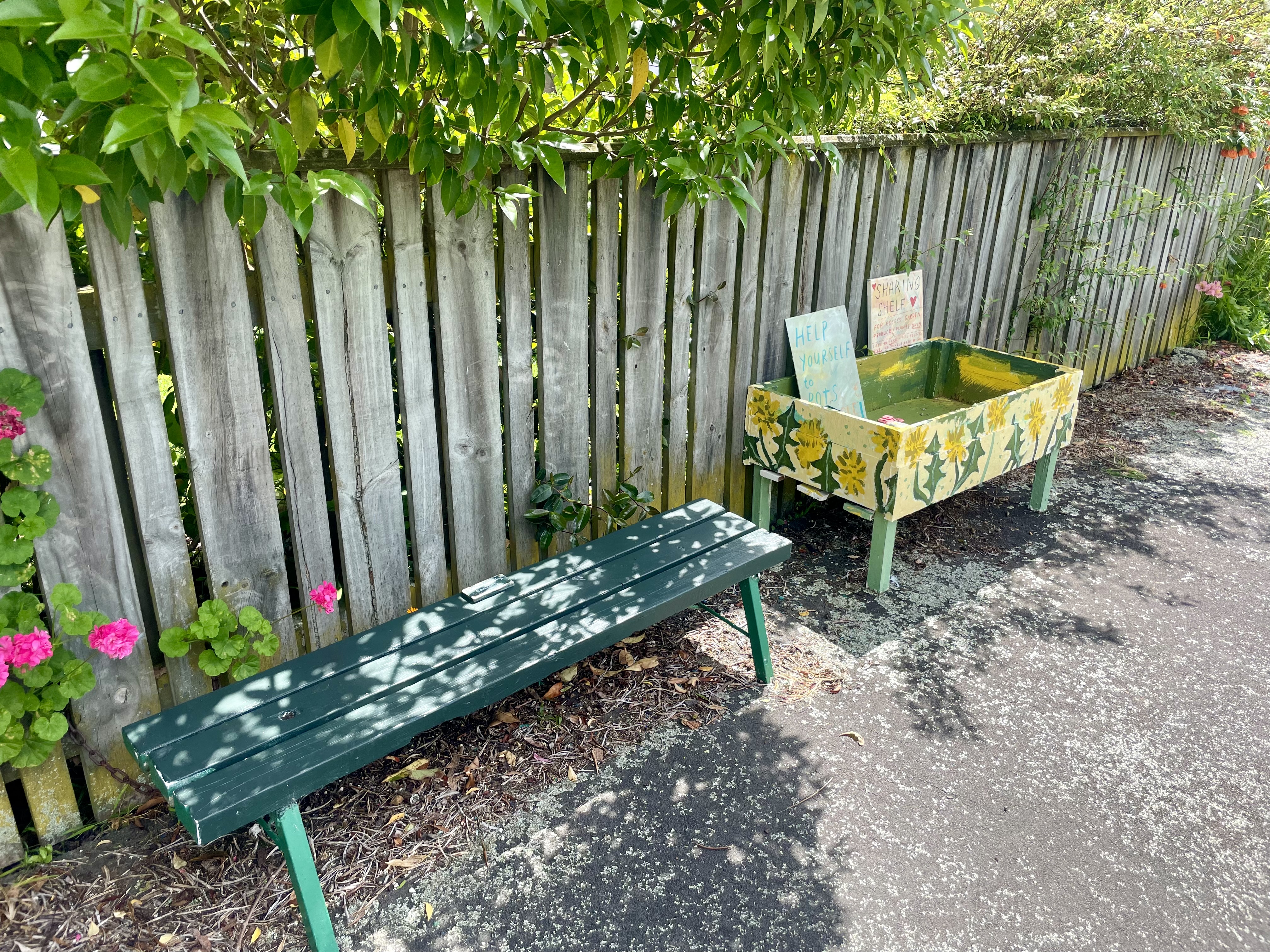
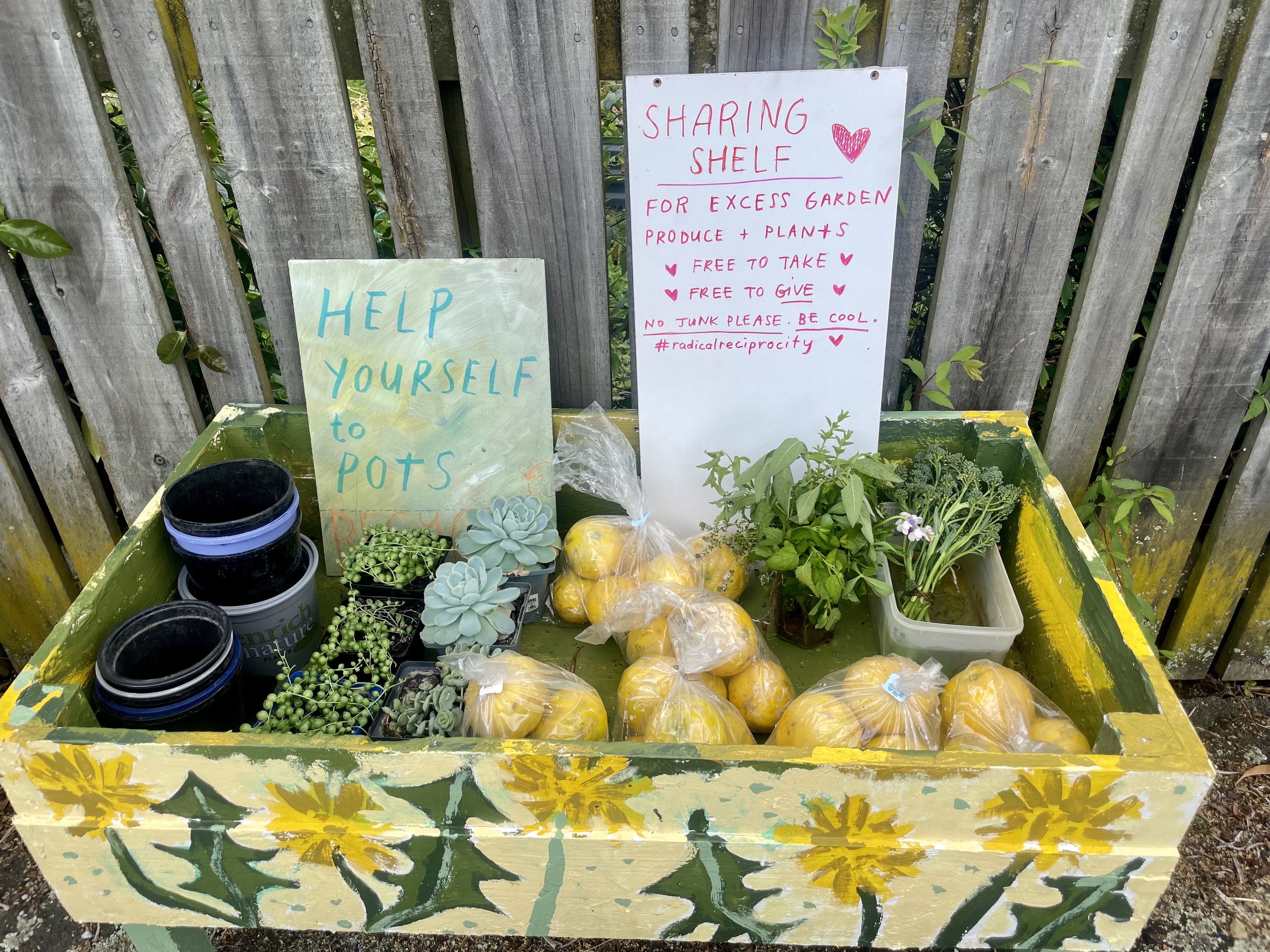
    Late last year we put a sharing shelf outside our front fence.

    We’ve always shared excess produce from our vegetable garden by putting it in a box on the community seat (for more about the community seat, check out my last book, ‘A Forager’s Life‘) but I wanted to make it a little more formal so that it could be a site of #radicalreciprocity* in the neighbourhood and many people could contribute to it.

    (#radicalreciprocity is how I try to live my life. Giving generously, receiving with gratitude and humility, and trusting that there is more than enough to go around if we can all learn to do both.)

    I bought the planter from a local young woman who makes them from upcycled pallets and then I painted a dandelion motif on it. The dandelion is a plant that means a lot to me and acts as a symbol of courage and generosity in my personal symbology.

    It didn’t take long -a few weeks or so- for neighbours to get the idea and things began to appear in it that weren’t from us.

    Part of putting something like this into a public sphere requires a willingness to look after it well so I check it twice a day, first thing in the morning and then at dusk.

    Although the purpose of it is to share the excess garden produce and garden related things, occasionally people put perishable or pantry food in it. The perishable food (things like bread, sandwiches, etc) I dispose of (usually feed it to the backyard birds, or my worm farm, if possible) because I don’t want to be responsible for anyone getting ill from spoiled food. Mostly, though, people seem to get the idea. There’s been all sorts of vegetables, seedlings, cut herbs. It’s been mostly delightful things.

    My original sign (paint and vivid marker on an art canvas) melted away in the rain, so I painted an old cutting board with outdoor paint in an attempt to make a more weather-proof sign:

    People have not 100% ‘been cool’. There’s the occasional beer bottle or pizza box after a Friday or Saturday night. There was one incident when someone kicked the front of it in, breaking a board. But for the most part, it’s been a success and a fun, new element in my days.

    March has definitely been the month of the giant marrow. Hearteningly, these swollen offerings have all been taken, though so I guess there are some good marrow recipes being cooked around Takaro. There’s also been lots of bags of tomatoes and apples.

    Every day is different in the sharing shelf. Things flow in and out.

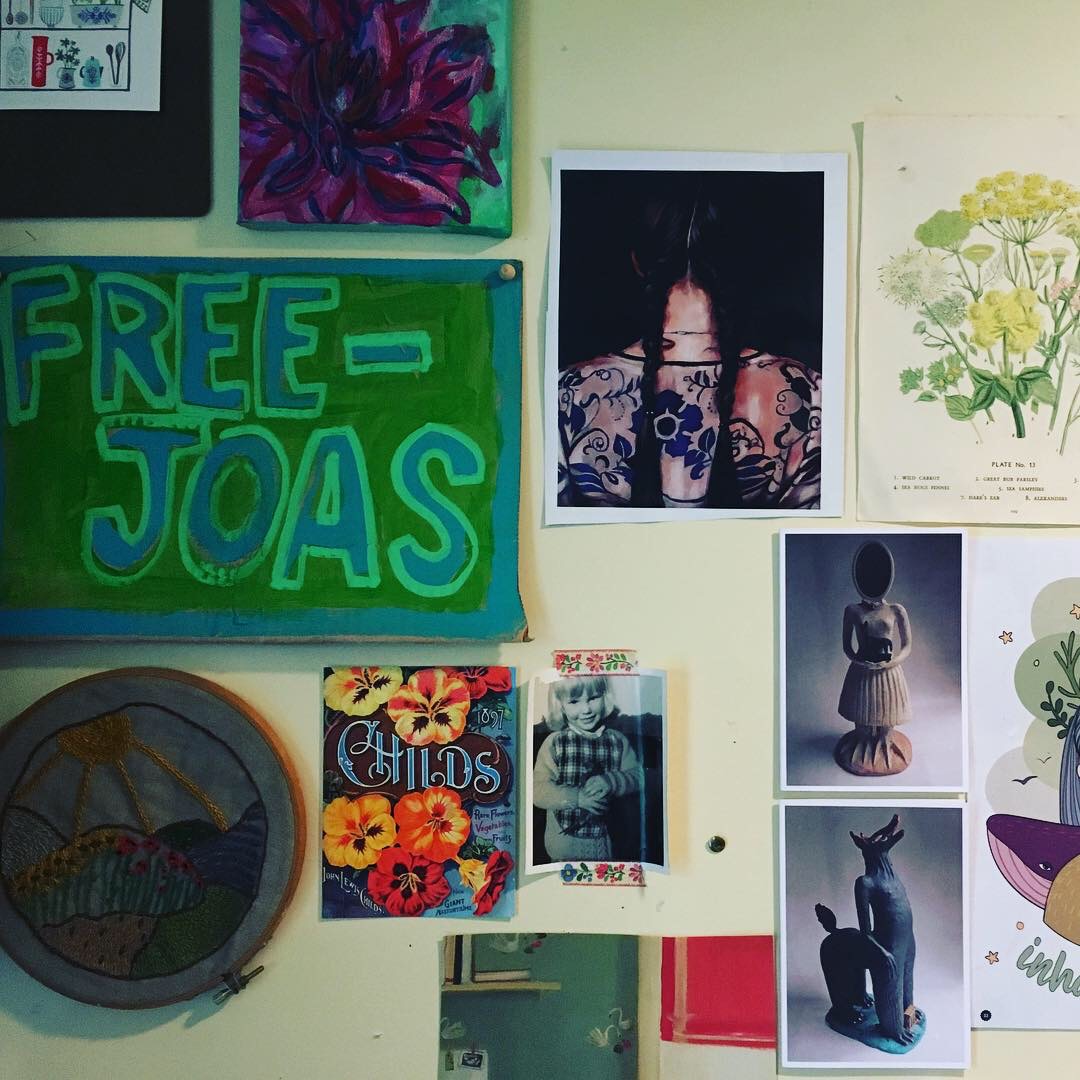
    With feijoas just beginning, I’m expecting it to become mostly a ‘freejoa’ booth any day now.

  • The poem I needed right now, from Mary Walker

    The poem I needed right now, from Mary Walker

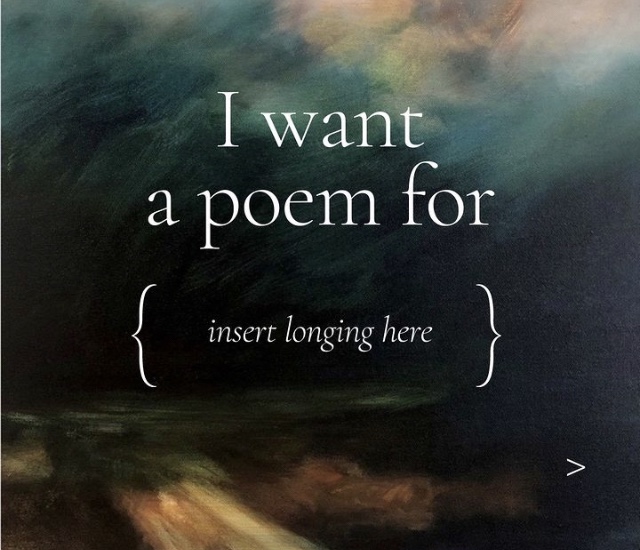
    My friend, the writer Mary Walker, recently invited her Instagram followers to request a poem for a particular mood or need. She said she would see which of her poems came forward as answering the request. Mary is a sensitive listener -of both people and the land- so I immediately took her up on the call.

    Mary’s invitation…

    I have a new book coming out next month. It’s a funny thing…publication is both a writer’s dream…and yet is not without it’s challenging elements. It can feel so strange and exposing. Each time I’ve done it I feel a very odd mix of elation and also queasiness and vulnerability. As writers we hope our offerings will be met with kindness, generosity…but once the book has gone from the writer’s mind to becoming a tangible artefact – all control is lost and the work must be let go to have a life of its own, for good or ill.

    So I asked Mary for a poem for ‘vulnerability and visibility’.

    Here is what stepped forward for me…

    Mary’s ‘Wild Fruit’

    A more perfect poem I could not imagine. I was moved to tears when I read it.

    Mary can’t know this (and yet somehow she did) but my book opens with a scene about me picking blackberries as a child…and about blackberries as a powerful edgeland plant with much to teach us about boundaries, courage and tenacity. Mary gave me just the poem I needed…at the moment I needed it. I cannot thank her enough.

    Mary’s new book is available for order now. Her poems reveal her deep enmeshment with the land and a fearless engagement with all of the challenges of being a deeply-conscious human in this world. Thank you, Mary, for this timely gift. Thank you for gifting blackberry back to me…an uncanny coincidence, a portent, and a sign…that there is magic in this world if we invite it and then listen carefully for the evidence.

  • Communitea

    Communitea

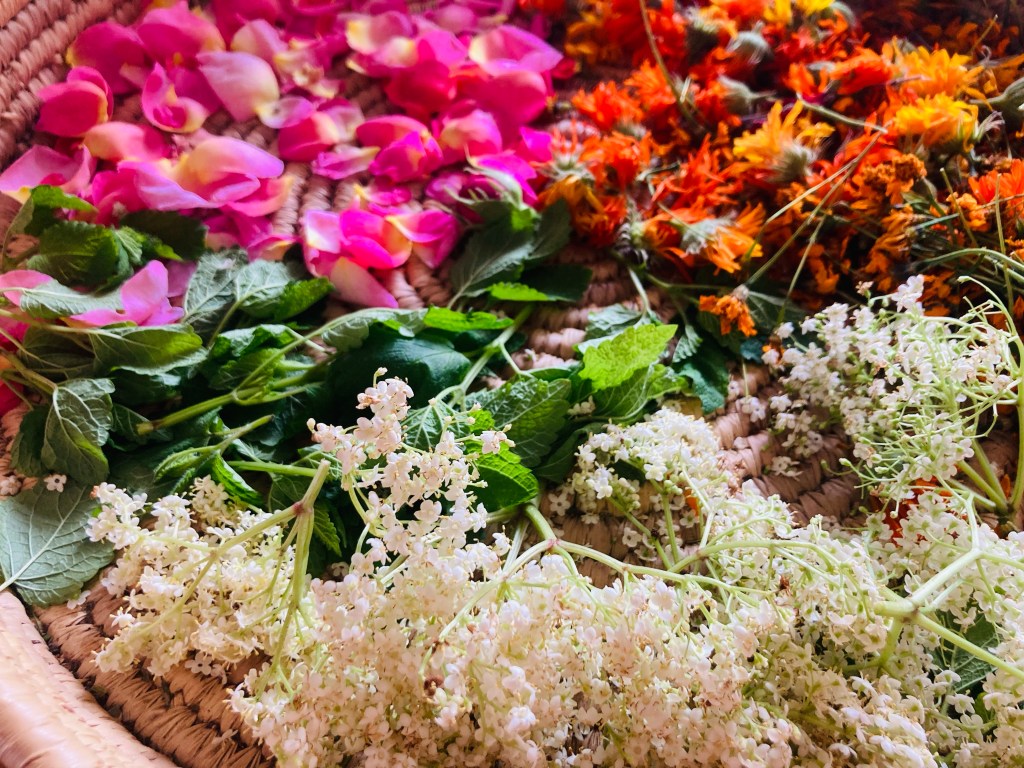
    Over recent years, I’ve started making large amounts of what I call ‘communitea’…herbal tea blends made from whatever I can find in the 4412 postcode of Palmerston North…the postcode I live in. It’s an exercise in locavorism and sharing and fun. I dry things foraged and grown, cultivated and gifted, rub and snip them into a tea blend and then give most of it away at community events, like garden working bees, crop swaps and garden education activities. Some of the plants that I’ve used include: nettle, various mints, calendula, violet, rose, dandelion, lemon verbena, lemon balm, chamomile, kawakawa, plantain, pineapple weed, elderflowers, Mexican marigold, rose and more!

    Plants from a summer foraging session drying on a basket

    I get a real kick out of sharing small bags of the dried tea and telling folks that it’s from plants that are growing all around them!

    What plants which grow around you do you like to make into tea?

  • Can we slow down?

    Can we slow down?

    I made this sign for a wild plant identification stall I ran at a recent community event.

    A huge part of learning to forage is learning to slow down…to observe closely…to ask questions of the environment around and settle down enough to hear the answer. I’m not always good at slowing down…but when I do…my senses awaken and the plants seem lean in towards me.

    ‘The times are urgent…we must slow down.’ -Bayo Akomolafe

  • Elderberries and Red Clover

    Elderberries and Red Clover

    It’s elderberry season … I foraged these from an abandoned yard in the middle of the city and there was a thick patch of red clover near by, as well, so I picked a big bag of that.

    Every summer I make elderberry elixirs ahead of winter. It’s great for when I can feel myself getting a cold …a dose of this seems to stave it off.

    The dark shine of the berries is so beautiful. Here they are soaking in my kitchen sink before processing.