Category: garden gluts

  • Capture and store: Silverbeet

    A couple of weeks ago I wrote about how we were eating a lot of silverbeet in an effort to keep up with the spring bolts of the plant.

    This has continued, I’ve discovered that if you snip off the ‘bolt’ stem…the thick stem growing up the centre that is beginning the process of sending the plant to seed…sometimes the plant will do another flush of leaves so I’ve delayed having to remove the plants entirely. (While our local spring continues to be more like winter…with ground temperatures too low for summer meditteranean plants like tomatoes and zucchini…there’s no urgency to make space.)

    If you’re not a permaculture practitioner, ‘Capture and Store’ is one of the main permaculture principles. The idea being…it isn’t enough to grow things (or create energy)…an important piece of the equation is to honour the garden by capturing the harvest and, if possible, storing some for later on.

    Occasionally, I like to write articles about the ways our permaculture family ‘captures and stores’ around our small, urban property. As food and energy prices rocket, I imagine these skills will ripple out beyond permaculture to become more important for households.

    Yesterday, my son Willoughby and I spent around an hour and a half processing the silverbeet, celery and flat leaf parsley plants which had begun to bolt.

    The celery stalks went into dinner and the fridge. The celery greens and flat leaf parsley bolt-stems we chopped up and put into our dehydrator. I will put them and some NZ sea salt through our electric spice grinder to make a herb salt which is great for adding to soups and stews.

    We picked a huge amount of silverbeet. Approximately the equivalent of five of those plastic-wrapped bunches you can buy at supermarket.

    Here’s how we processed it to become freeflow bunches of chopped silverbeet, similar to the way spinach comes frozen at the supermarket.

    We harvested the ‘bolt’ stems. I cut off the leaves with a pair of kitchen scissors into a large bow of water and gave it a wash.

    We then chopped it.

    Next step was a quick blanch in a shallow pan of boiling water. Just long enough that it wilts and goes bright green.
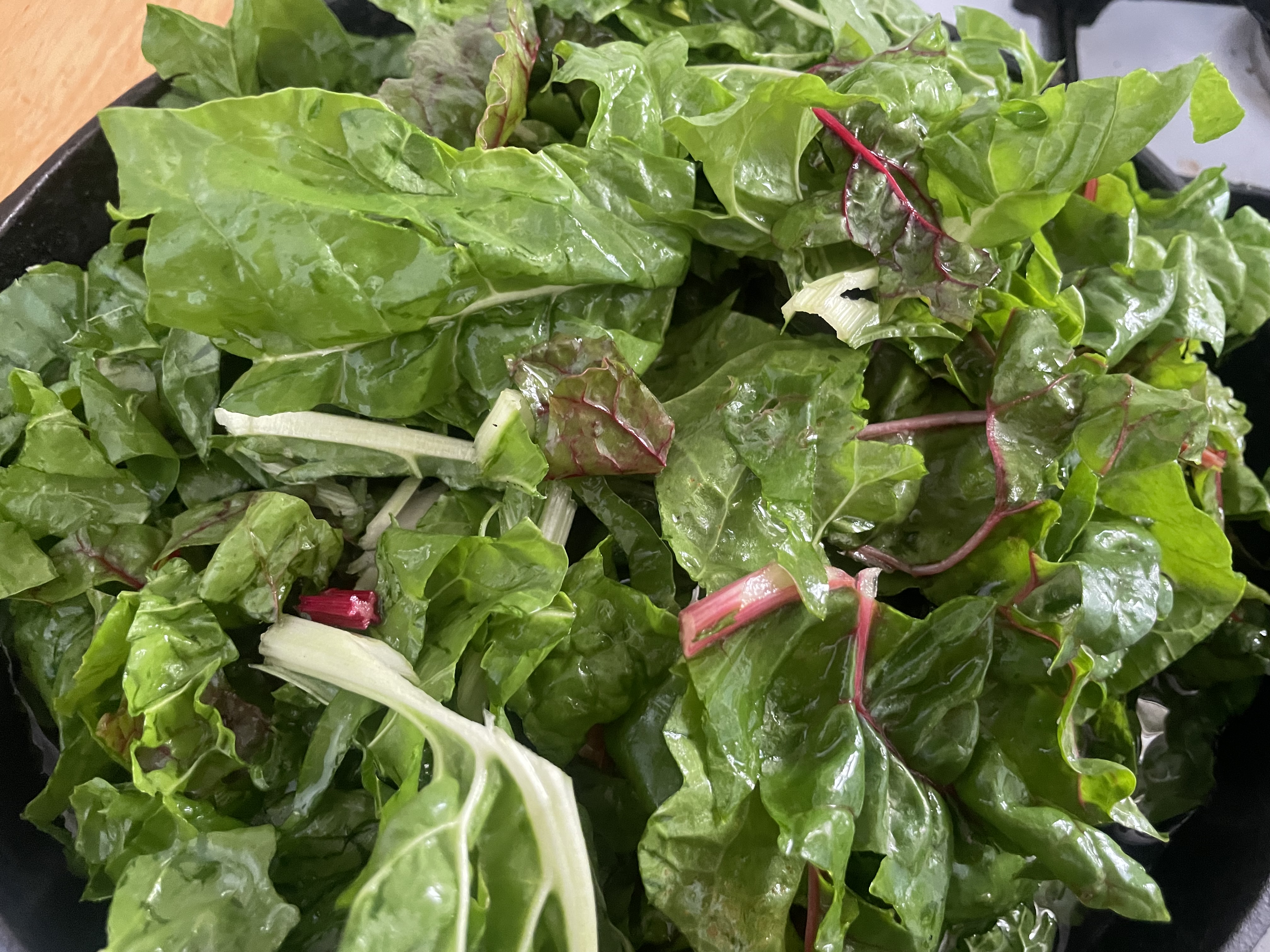
    Then I strained it and pushed as much water out as I could with a wooden spoon (obviously it is too hot to touch with bare hands at this stage. I left it sitting in the strainer to cool.

    Once it had cooled enough to handle, I formed it into balls. (Think about the amount you’d like to add to a soup or stew.) The trick to a tasty end result is to squeeze and squeeze it getting out as much of the liquid as you can. Silverbeet seems to retain a lot of liquid so keep squeezing…think of it as a workout for your hands!

    After that, place the fistfuls on a biscuit tray and put into the freezer.

    Once they are frozen, remove from the freezer, put into a ziploc bag or plastic container and put back into the freezer and there you go, you have one meal amounts of pre-prepared silverbeet ready to add to your cooking.

    You might ask why we’d bother doing this when silverbeet grows all year round in most of New Zealand’s climate? I suppose a big motivator is frugality, but also, I find I use more silverbeet if it is prepared this way. I also loathe waste and, because I know the effort I’ve put into growing the food, I prefer to have it travel through the kitchen rather than go straight from garden bed to the compost heap.

    Silverbeet is so nutritious! I think it needs a PR campaign. In NZ we tend to take if for granted or spurn it because it’s so ubiquitous in our vegetable gardens. Forget about overpriced supermarket spinach….eat your silverbeet!

    If I’ve inspired you to make more of your silverbeet, here are two excellent links with multiple tasty-looking silverbeet recipes.

    11 tasty silverbeet recipes from Delicious magazine

    12 yummy silverbeet-based dinners from NZ Woman’s Weekly magazine

    One of my favourite ways to eat A LOT of silverbeet at once is to make an Indian Saag Aloo, using silverbeet instead of spinach. Delicious and so greeeeeeen.
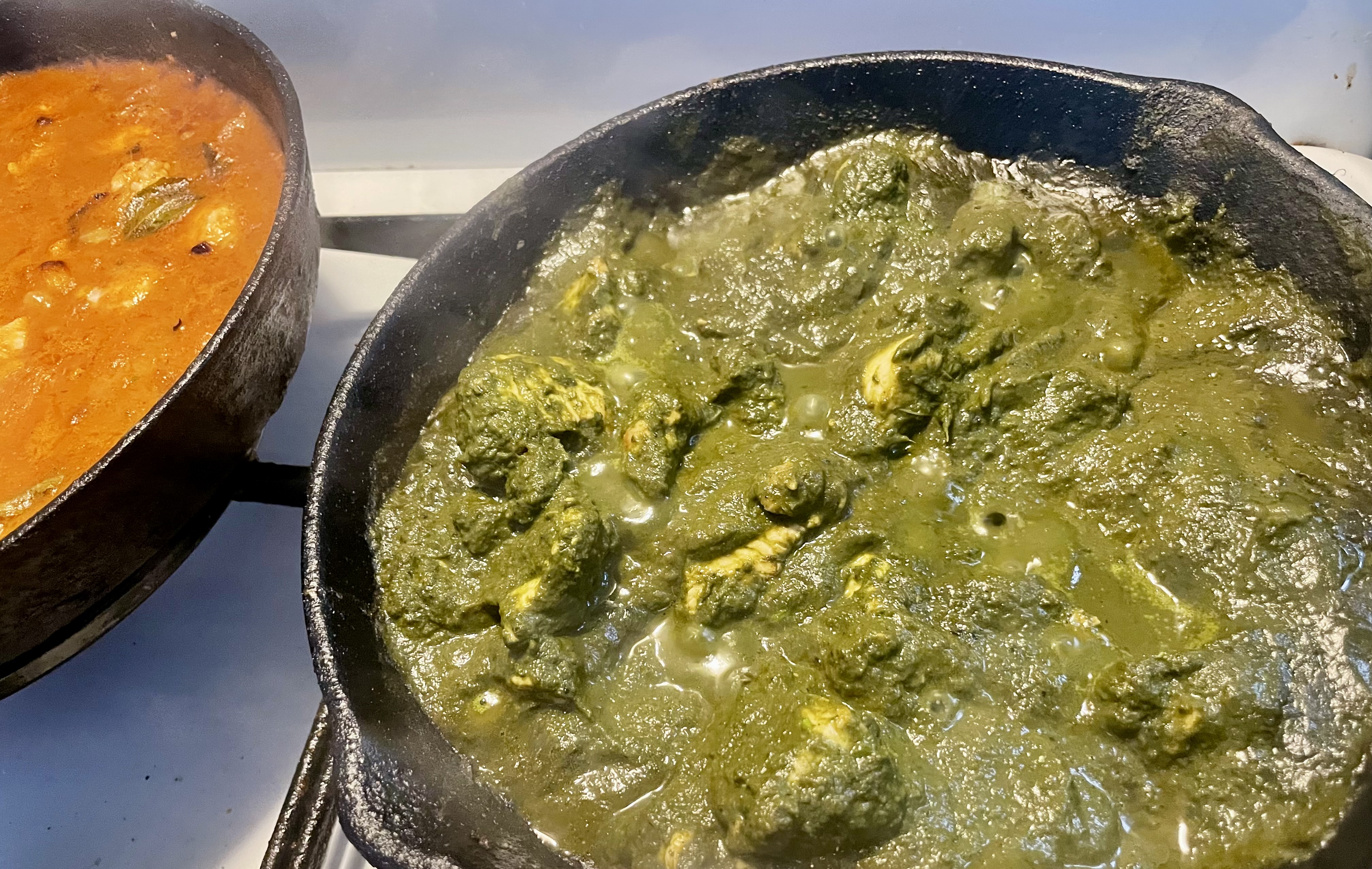
    If you have a signature silverbeet dish…please share it with me.

  • Winter is a great time for harvesting volunteer ‘microgreens’ from your garden (or local park)

    (Above: today’s bounty from a little wander around my own garden.)

    Do you buy sprouts, bags of mesclun mix or microgreens from the supermarket?

    Winter is a great time to find volunteer (‘weed’) microgreens, or young greens, around your garden or local park for FREE!

    Because of winter’s rain and damp, the young weeds will be beautifully bright green, healthy and not heat-stressed.

    To share some likely contenders with you, I took a walk around my small urban yard and here’s what I harvested.

    I took care to only harvest volunteers/weeds and nothing that I’d planted intentionally. (Violet grows like a weed in my yard.)

    The trick is to just harvest the young leaves, or the tips in the case of the dead nettle.

    These wild ‘microgreens’ can be used in a salad, or chopped and sprinkled on top of soup, or in sandwiches, or blended into a smoothie…the same as you would use supermarket or homegrown microgreens.

    I numbered the plants for ease of ID-ing them:

    1. Nasturtium leaves. These are peppery in flavour so great in salads and on sandwiches, not so great in smoothies.
    2. Dead Nettle tips. Great stand-in for lettuce.
    3. Young violet leaves and flowers. Use in salad or cook as your would spinach.
    4. Young ribwort plantain leaves. Important to pick the young ones as the older ones get stringy. The young leaves have a nutty flavour.
    5. Chickweed. Such an enthusiastic garden volunteer. Use the young growth and chop finely.
    6. Young dandelion leaves. These add a nice bitter element to a salad or sandwich. Not so great in smoothies.
    7. Oxalis (known in the UK as ‘wood sorrell’ and the USA as ‘sour grass’) Has a sour, lemony flavour similar to sorrell. Use just a little at a time as it contains oxalic acid. Treat it more like a herb than a main vegetable.
    8. Young mallow leaves. Mallow (also know as ‘Malva’) is a much-used vegetable in Middle-Eastern cuisine and parts of Italy. You can make dolmades with the leaves in place of grape leaves, making it useful during the winter when there are no grape leaves about. Young leaves are good in salad or cooked like spinach.

    & of course, these plants have medicinal properties as well, (most plant food does.

    I hope this inspires you to have a close look at what might be growing in your own back yard and save yourself a little money (or time) by eating some of the weeds around you.

    Let me know in the comments if you have any questions.

    Do you eat any of the weeds in your garden?

  • witch sticks & autumn harvests

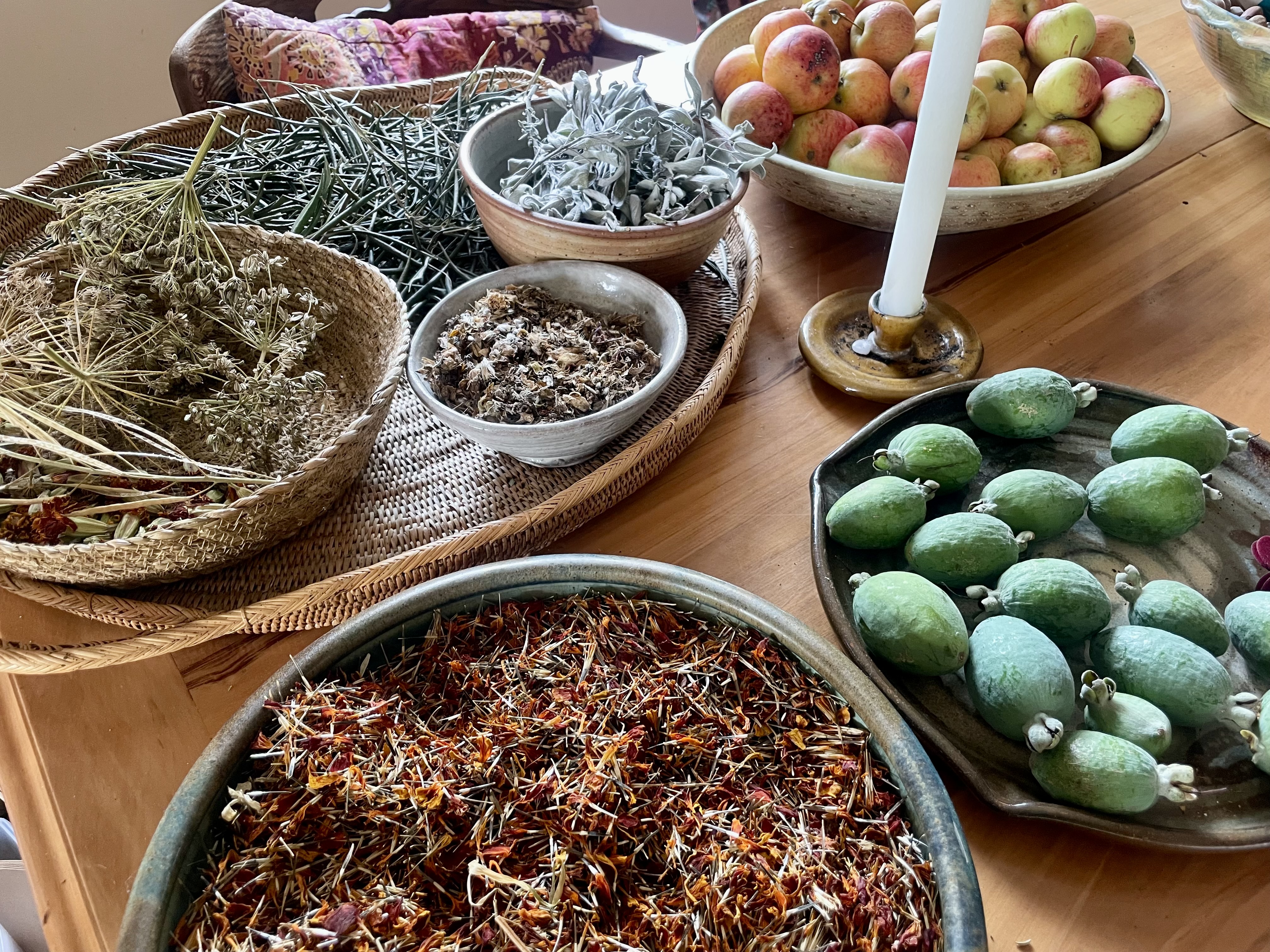
    (Above: Our kitchen table is a busy surface with often-changing bowls and baskets reflecting what is going on in the garden and the foraging season: things drying or waiting to be processed.)

    Autumn is my favourite season and, as a permaculture household, a busier season than summer with our labours to ‘capture and store’. There’s lots of picking and gathering and then kitchen work processing everything.

    (Above: Last sunday morning’s harvest chore was bottling a box of apples from our friend Bev’s orchard. These will turn into crumbles or top our porridge this winter.)

    Last week I gave my potted white sage plant a prune, ready to overwinter it in the greenhouse. White sage is a desert plant, native to the American southwest and Mexican northwest, so it doesn’t love the Manawatū winters.

    In the summer, I put it outside in full sun then prune it down to almost sticks at the end of summer and put it in the greenhouse where it sulks the winter away…but it (just) survives. Mine is about six years old now.

    (Above: white sage prunings, cotton thread. It’s on the sofa because I made the witch sticks while watching something in the evening. I do a lot of processing tasks (this, peeling fruit, cutting up herbs for tea, seed saving jobs) on the sofa…which might seem a bit odd…but I don’t see it as much different from knitting or hand-sewing in front of the TV. Does anyone else do this?)

    The prunings can be turned into what I call ‘witch sticks’ for burning by folding up the leaves on the stalk, weaving and rolling them longways and then tying with cotton thread. (Never use synthetic thread: it will melt and emit toxic smoke.) When the leaves have all burned down, you can burn the stalks, too.

    (White sage is a plant sacred to Indigenous people in USA and Mexico, so if you want some…have a go at growing it rather than buying imported sage. White sage is overharvested in the USA particularly. In ‘A Forager’s Life’, I write about alternative plants to white sage for making cleansing/burning sticks.)

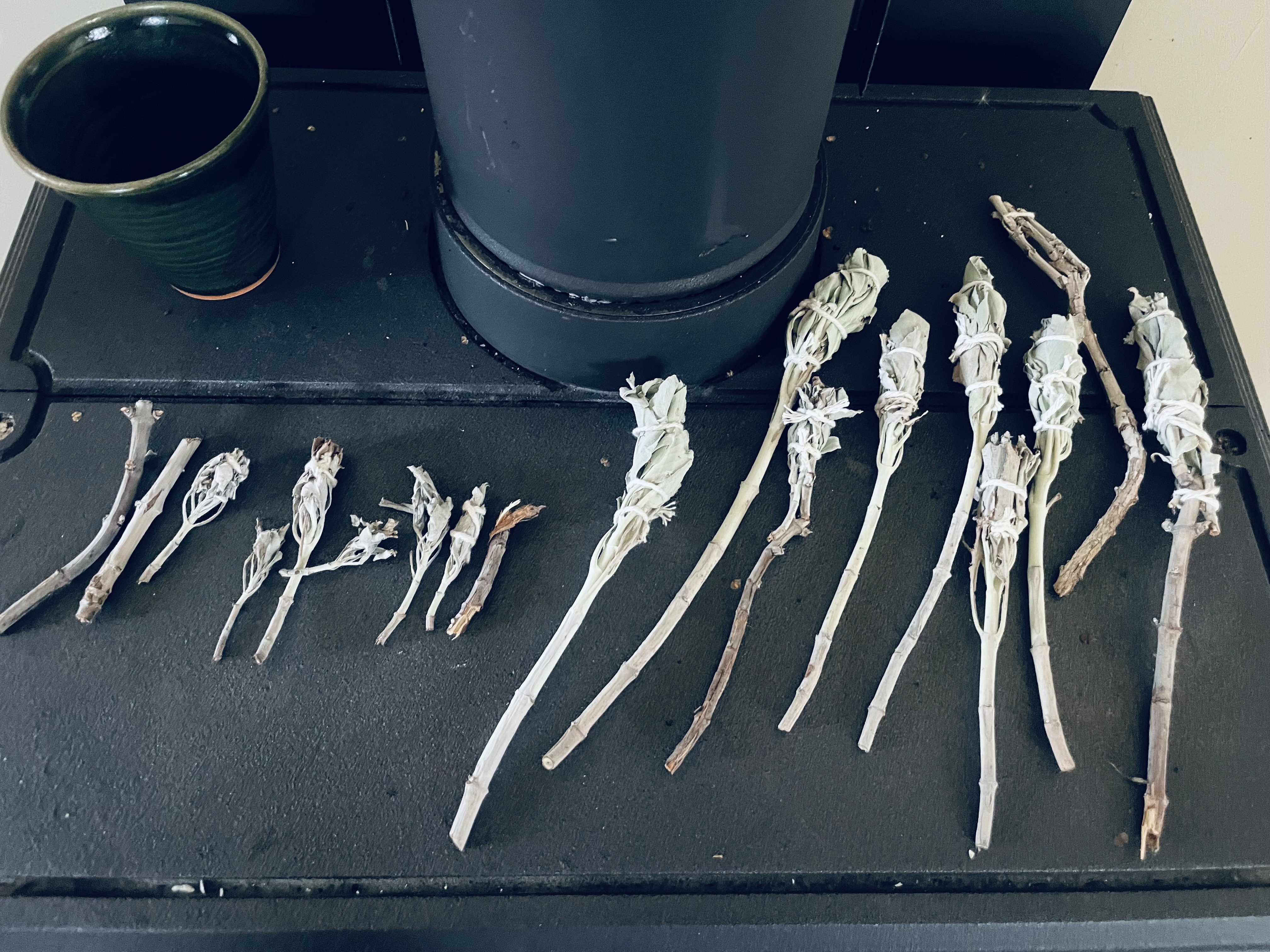
    (Above: I got eight decent witch sticks, plus some smaller bits and pieces of stalk…all of which can be burned. Here they are drying on my fire top.)

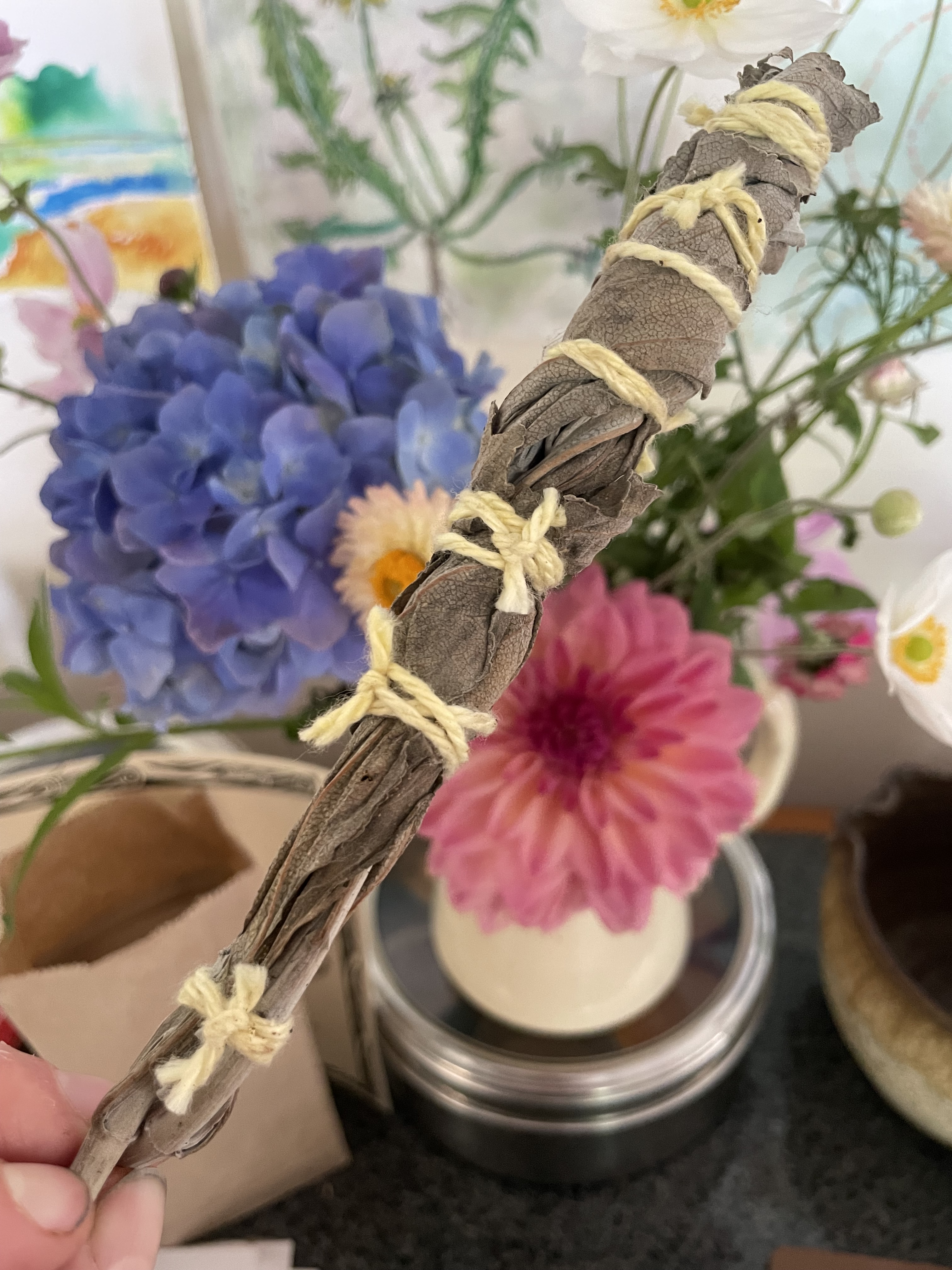
    I see a lot of ‘how-to’ articles about making cleansing/burning sticks around…but they often forget a detail which I think is important. For them to burn well and safely, don’t wind the string around and around the bundle, securing only at top and bottom. This will mean your stick will fall apart as the thread burns and you could have a higher risk of embers dropping off it. Instead, tie it tightly with small pieces of string at regular intervals, like in this photograph:

    (Above: please forgive my ‘dirt manicure’ as garden writer Gayla Trail calls it. I scrub* my nails regularly but folks who ‘touch soil’ (which is ilke ‘touching grass’ only more grubby) every day struggle to have photogenic hands. ((I have to buy a new nail brush every couple of months…so intent is my endless scrubbing.))

    Do you have a favourite season or are you one of those calm, rational people who loves them all equally?

    I’d love to hear what kitchen or garden chores you’ve been doing lately. Let me know below.

    “As long as autumn lasts, I shall not have hands, canvas or colours enough to paint the beautiful things I see.”

    -Vincent Van Gogh

  • Communitea

    Communitea

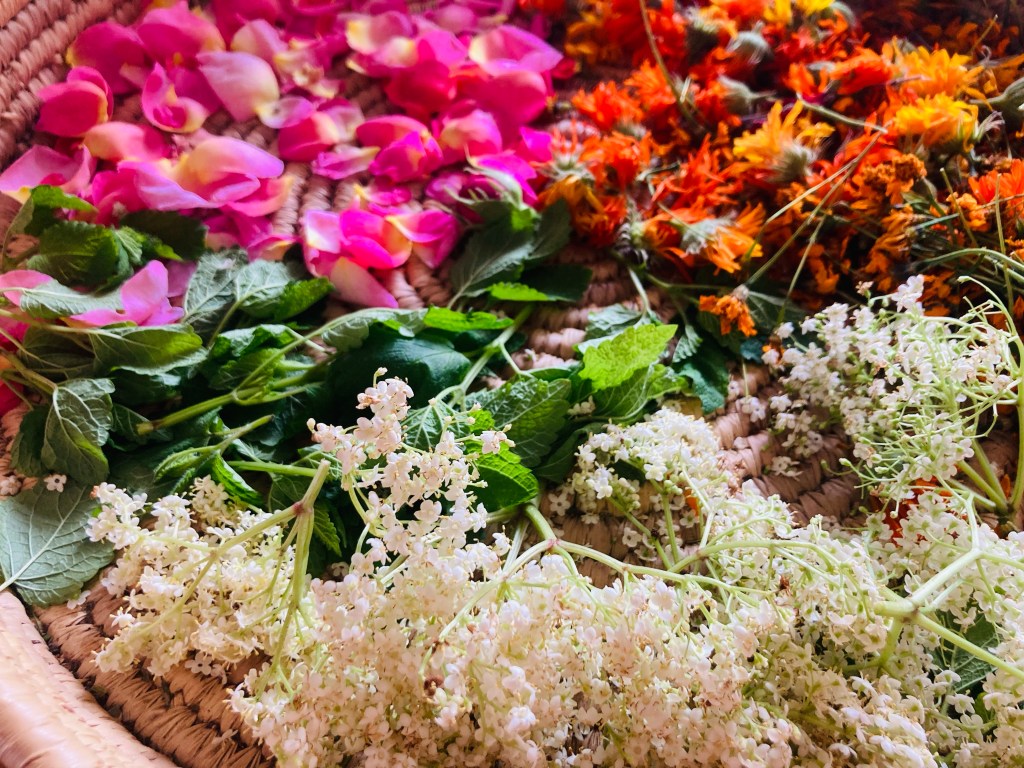
    Over recent years, I’ve started making large amounts of what I call ‘communitea’…herbal tea blends made from whatever I can find in the 4412 postcode of Palmerston North…the postcode I live in. It’s an exercise in locavorism and sharing and fun. I dry things foraged and grown, cultivated and gifted, rub and snip them into a tea blend and then give most of it away at community events, like garden working bees, crop swaps and garden education activities. Some of the plants that I’ve used include: nettle, various mints, calendula, violet, rose, dandelion, lemon verbena, lemon balm, chamomile, kawakawa, plantain, pineapple weed, elderflowers, Mexican marigold, rose and more!

    Plants from a summer foraging session drying on a basket

    I get a real kick out of sharing small bags of the dried tea and telling folks that it’s from plants that are growing all around them!

    What plants which grow around you do you like to make into tea?

  • Apple season

    Apple season

    Apple cheeks, apple weeks, the race against the birds…

    The inherited tree which has the codlin moth – I know it’s time to strip the tree when the birds begin to peck at the apple tops – this means they are sweet and ready. Cutting around the moth tunnels, making apple sauce which turn into breakfast or crumbles or just eaten with a teaspoon standing at the fridge when I realise I’m starving but have to do the school run in two minutes. (I continue to ‘battle’ against the codlin moth. They are determined creatures.) The commitment of using seasonal abundance. It’s a gift, sure, but it’s work. Sometimes hours and hour of work. Sitting at the table, making the meditation ‘can I take all the peel off in one go?’ Buckets and buckets of practice later tell me that I can’t, but it’s fun trying.

    apples_2 apples_3

    The Ballerina apple tree which was a wedding present 20 years ago, and moved with us from flat to flat in a big pot, finally planted into the ground here and produces the most beautiful green and red apples, like the ones from Snow White…

    apples_1

    This tree on an abandoned section – the way fruit trees give and give, regardless of how they are tended or neglected. Walking onto ‘private property’ to pick the apples. Respecting the tree’s gift more than the human’s claim. Not wanting the generosity of the tree to go unnoticed, unappreciated. Leaving plenty for the birds.

    apples_8

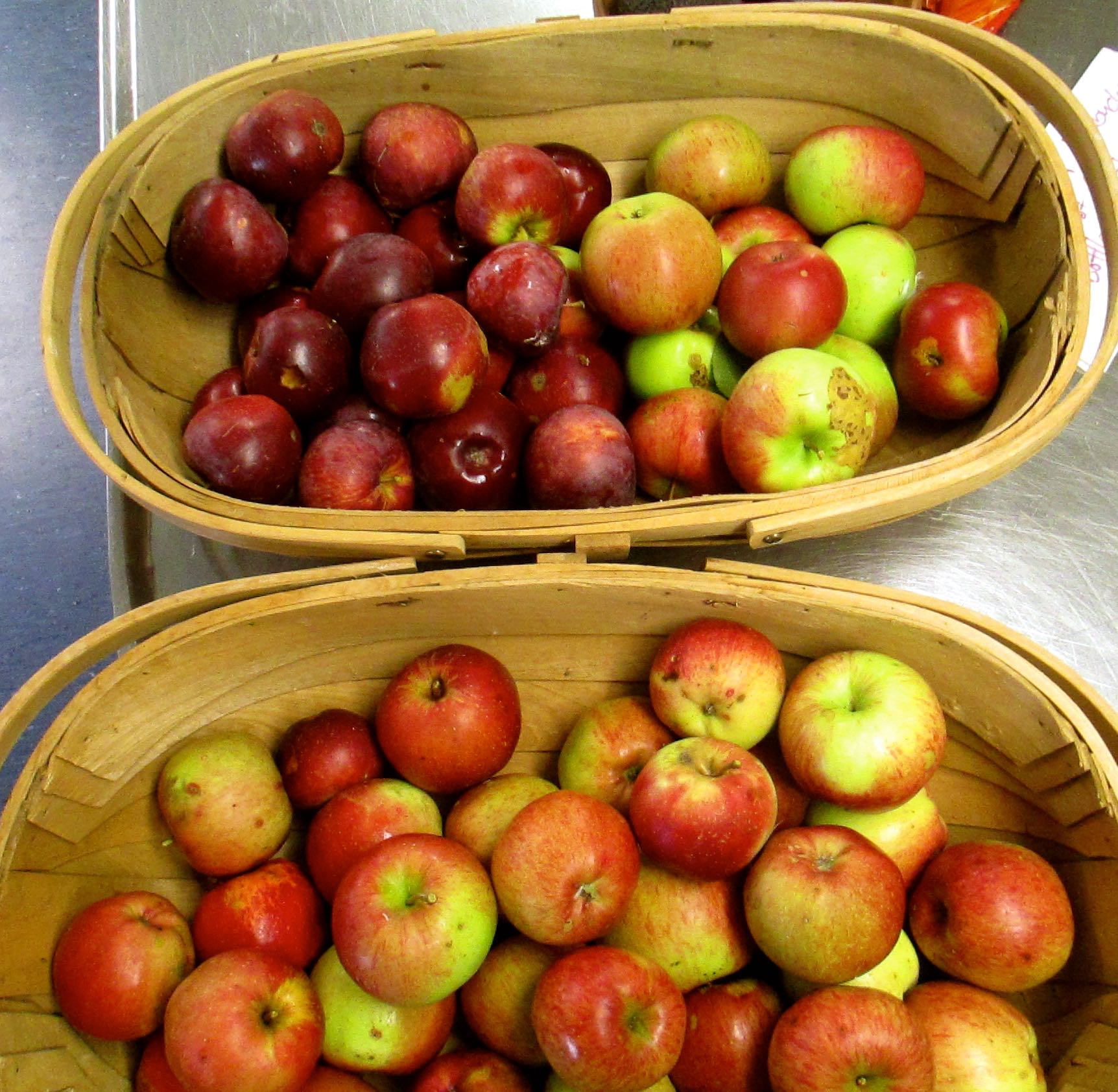
    At my permaculture course, Duncan brings two beautiful baskets of apples from his small farm. Four heritage varieties – enough for everyone to take a few home to taste. On the permaculture course, people are passionate about plants, about fruit trees, about the earth. People have strong opinions – in discussion time the debates are weighty, rich, sometimes a little heated…but at lunch time, we sit around munching Duncan’s apples. That they are fine, crisp, tasty apples, we all agree on.

    apples_5 apples_6 apples_7

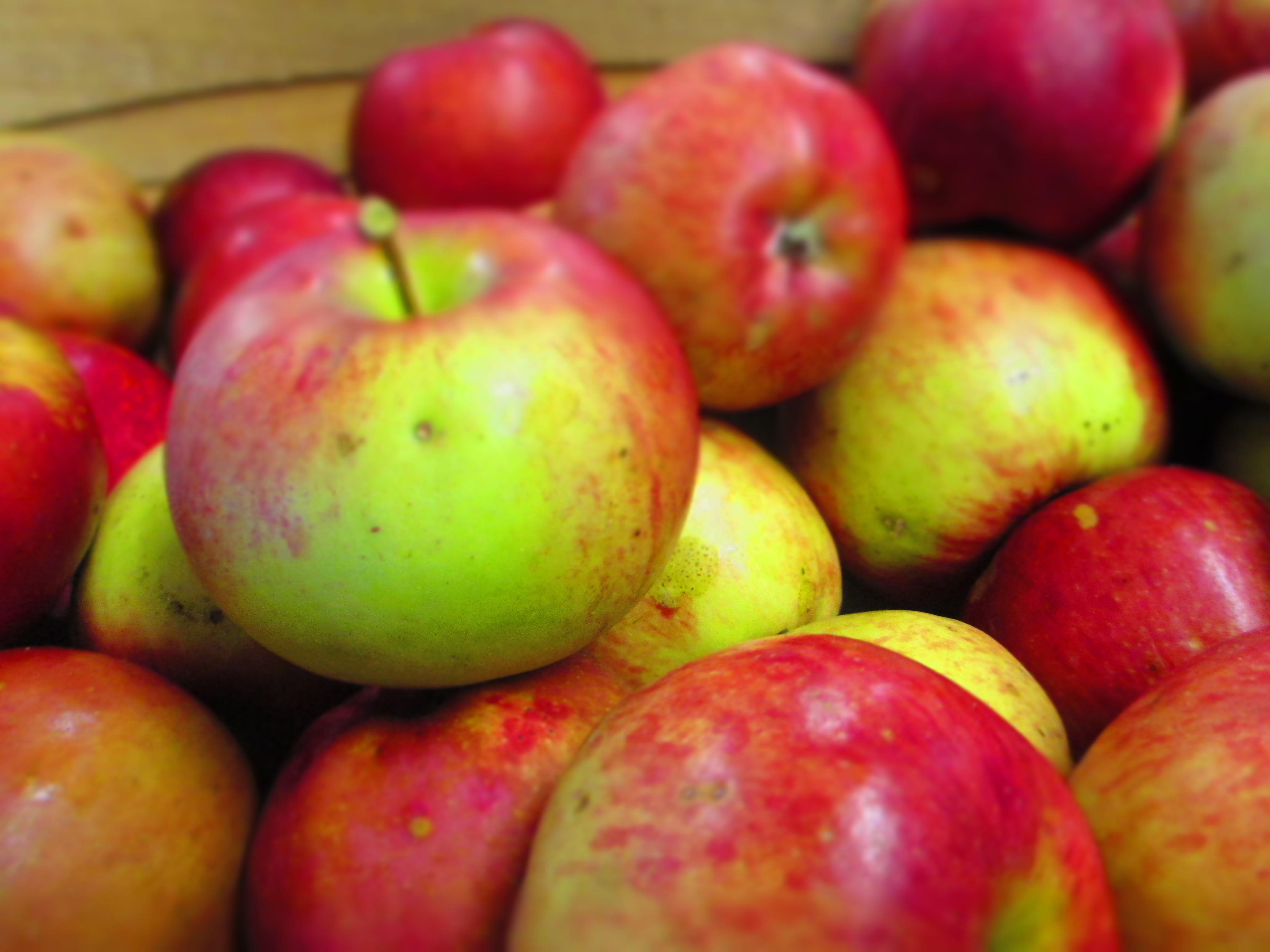
    The beauty of the simple backyard apple, wet from being rinsed in cold water, fresh-picked off the tree.

    apples_4

  • Walnuts, irises, peas….

    Over autumn I foraged HEAPS of walnuts, plus my parents gave me a big box….they’ve been drying off for six weeks. I’ve just started cracking into them and they are good, fresh, earthy, delicious. Now I have a happy walnut glut and will be thinking of ways to use walnuts so if you have any good recipes or food combinations, let me know! I started with cake, because…..cake. I made an Alison Holst Date & Walnut Cake recipe, a rich combination of finely chopped dates and walnuts with only two tablespoons of flour! I made ginger icing for it and we devoured it for afternoon tea. It was more like a pudding in consistency….no bad thing!

    walnut_cake

    On Saturday, I bought these irises at the vegetable market and also a twin bunch for my mother who was visiting. When I bought them they were very tightly closed. She took hers back to Taupo. Mine all opened at the same time the next day, hers didn’t open until today! Swamp-plain versus mountain-plain, I guess. What do plants MAKE of being shipped away from their home-terroir? Do they feel it?

    iris

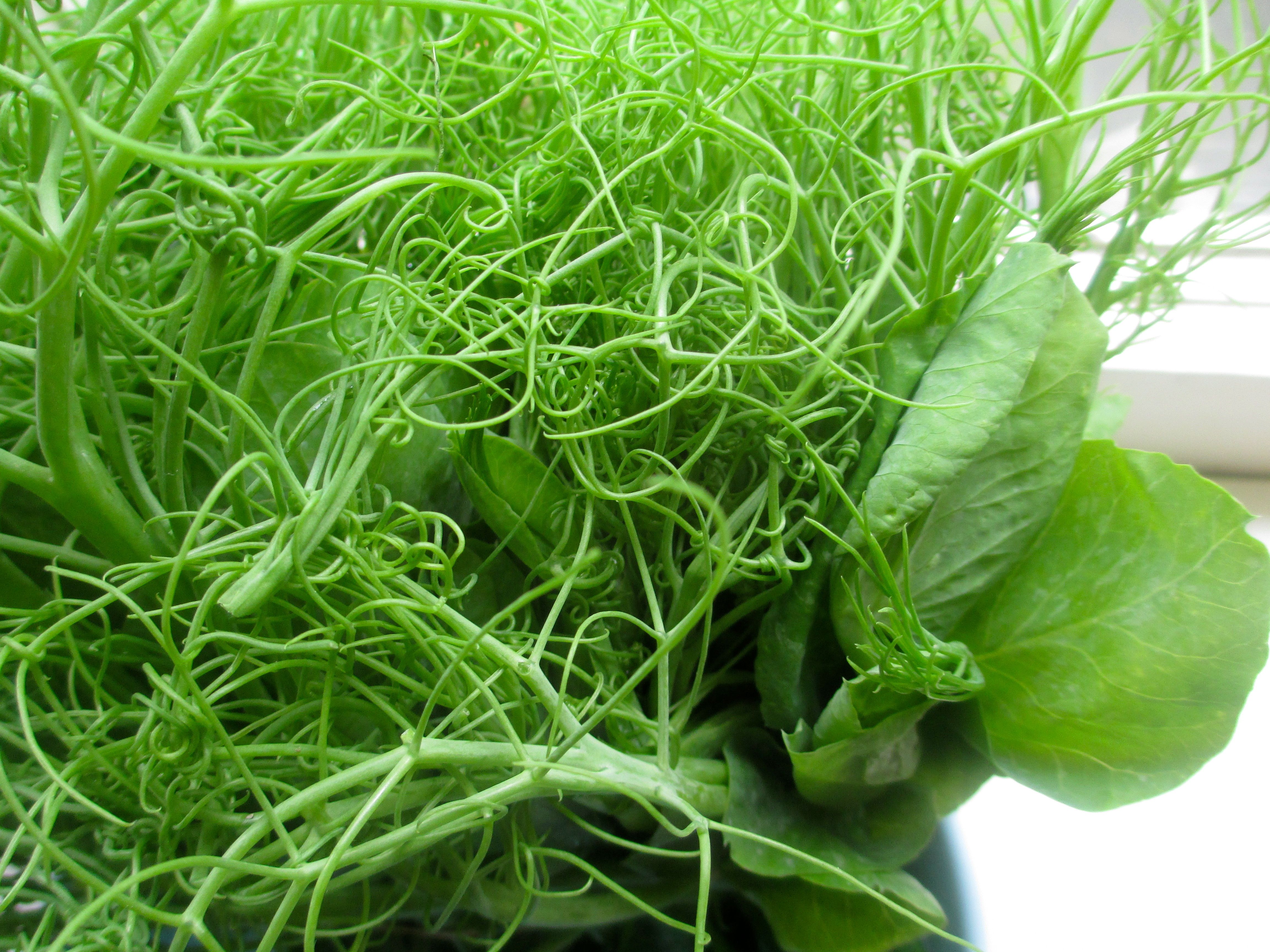
    Finally, also at the vegetable market I bought this bunch of pea tops. I have a bit of a fetish for pea plants – I love them! Something about those curly little climbing tendrils makes me feel all strange and happy. I hadn’t seen such a thing for sale as a vegetable before. I would be happy to buy them every week!

    peas_1

    They taste slightly of pea, but mainly just of chlorophyl, of healthy green. I ate them in sandwiches and threw them into a soup I was making.

    peas_2

    I am writing a long, ongoing poem about vegetables in the vegetable garden and the way they grow. It’s an odd project – I’m trying to capture each plants ‘essential nature’ in a short 4-8 line stanza. Why am I doing this? I don’t know…a combination of fun and to get to know the things I grow more intimately? Here is the ‘pea’ stanza:

    peas_3

    Pea:

    fragile bright filigree

    upwards gentle

    spirals intently

    tiny hands holding

    tender opaque baby

  • picking up what the wind drops

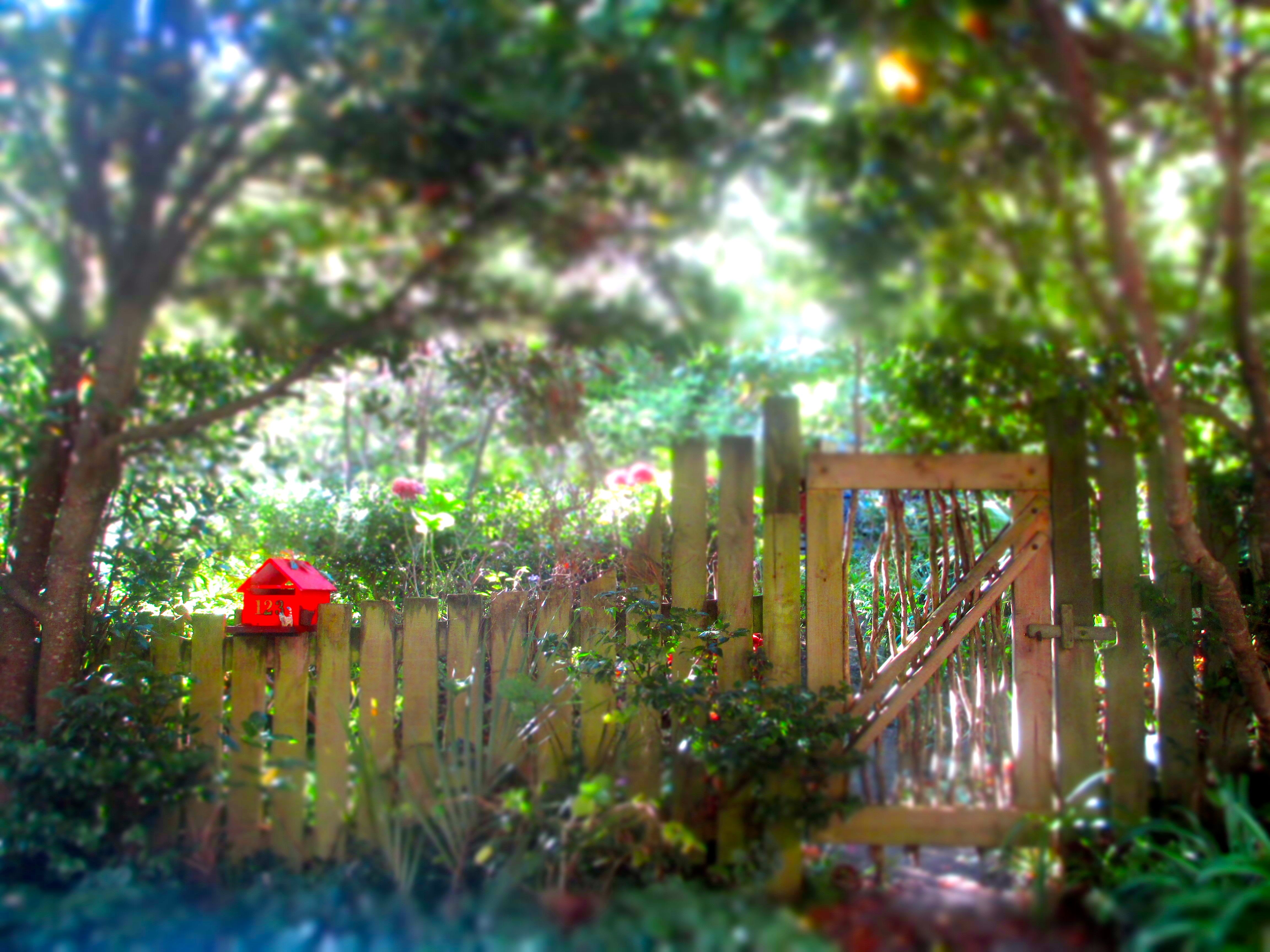
    I took a walk to a nearby section where an old house had recently been demolished. They are building shops there. I dug up a wormwood plant and rescued an iron gate from a skip which I’ll use as a frame for beans in the vegetable garden. 

    When I walk I am looking for stray plants and clues of what other humans are doing, their leavings, their signs.

    So many gardens are neglected and full of mistakes – odd plantings, strange schemes gone wrong. It’s a lexicon of thwarted plans, migration, human error. But I love all the gardens, all of them. I love where weeds come in and grow where no one thought there was any dirt. I love the twee tidy gardens around the brick units where the widows live – all pansies and polyanthus and tight little roses. I love the student flat gardens with the crushed comfrey and the gnarled old lemon trees. There is a place deep in my heart for the gardens inside the gates of kindergartens – old tractor tyres full of marigolds and strawberry plants, glitter and matchbox cars.

    These dahlias were planted behind a tin-shed, hard up against a damp bank…..in entirely the wrong place and where no one can see them (except me, because I creep and snoop) so I pick them and drop them at a friend’s door.

    white_dahlias

    I pick up windfall apples from the house across from the supermarket. They are a bit bruised but will do for pie. At another house someone has left ice-cream containers of passionfruit for $2 each on their fence. I take one and leave a coin in the letterbox.

    I don’t fully understand my own instinct for gleaning. It’s more than acquisition. It’s something to do with control, and side-stepping capitalism and burrowing into a universe where people trade in fruit and the urban environment is one big shared playground. I like my own company but I spend too much time in it and then I read the street and try to draw meaning from the random and the incidental.

    Occasionally a garden is stunning and special and makes perfect sense, but these gardens are rare:

    holloway_1holloway_2

    Right now, there is an American oil company doing exploratory drilling in the hills near Dannevirke. If they find enough, they have plans to frack for oil. Local farmers and  Iwi have been protesting there this week and it is getting almost no media coverage. There are similar exploratory tests going on near Whangarei, but for gold.

    I have been following the effects of fracking in Pennsylvania, USA where fracking for natural gas has been happening for some years now. None of the news is good. Profound pollution, deformities and stillbirths in animal stock, rising cancer rates and the tap water is flammable.

    Hold a lighter to your running tap and it lights up. Imagine.

    Parts of the Manawatu River are so polluted from intensive dairy farming and factory run-off IT SPONTANEOUSLY CATCHES FIRE.

    Water on fire. Water on fire.

    On the way to pick the youngest up from school I pass a house with a big walnut tree. There are walnuts all over the path, so I pick them up. I always carry a cloth bag in my hand bag for spontaneous foraging. It’s like maybe if I notice the trees enough, maybe if I honour the fruit enough, maybe if I pick up enough windfalls and rescue enough plants….maybe then…? Maybe then.

  • the last

    I write about the seasons a lot, don’t I? I can’t help it. I grew up in a small town in the middle of farmland – my Dad was (still is) a hunter and fisherman and so we ate with the seasons and the seasons were meaningful in a way they may not be for city-folks. Most of my friends lived on farms, so the drying off of cows marked the start of winter, new lambs heralded spring. Because I do write about the seasons so much, the editor of The Comforter, Helen Rickerby, organised the book into seasonal parts. I still can’t believe it didn’t occur to me to do that – but that’s why you need a good editor, right? To show you things which are right under your nose but you can’t see because you are over-exposed to your own work.

    Anyhow, of all the seasons, autumn is my favourite. The harvest, the golden days with cold edges, the sense of melancholy. Garden fires, washing the woolens which have been in storage since September, quinces, feijoas, walnuts…picking apples – we have two apple trees at our place:

    In my book, there is a poem about the beginning of autumn, the final day of daylight saving. There is a point at the end of summer/early autumn, if you are a gardener and eat seasonally, like we do, where you know it is likely to be the ‘last’ time you taste that particular thing for some time. That final meal has autumnal melancholy all over it – it’s a farewell to summer. In the poem, ‘the last’ has a deeper resonance – because of my beliefs about the environment, I feel that anything could be our ‘last’ time, because our existence on this ailing earth is so precarious right now, and growing more so.

    Late summer this year, we ate corn for a good eight weeks, thanks to the 60 corn plants I grew – & no, I didn’t tire of it, like I do with some gluts. With the last of our fresh corn, I made a bean succotash which also contained the last of our tomatoes:

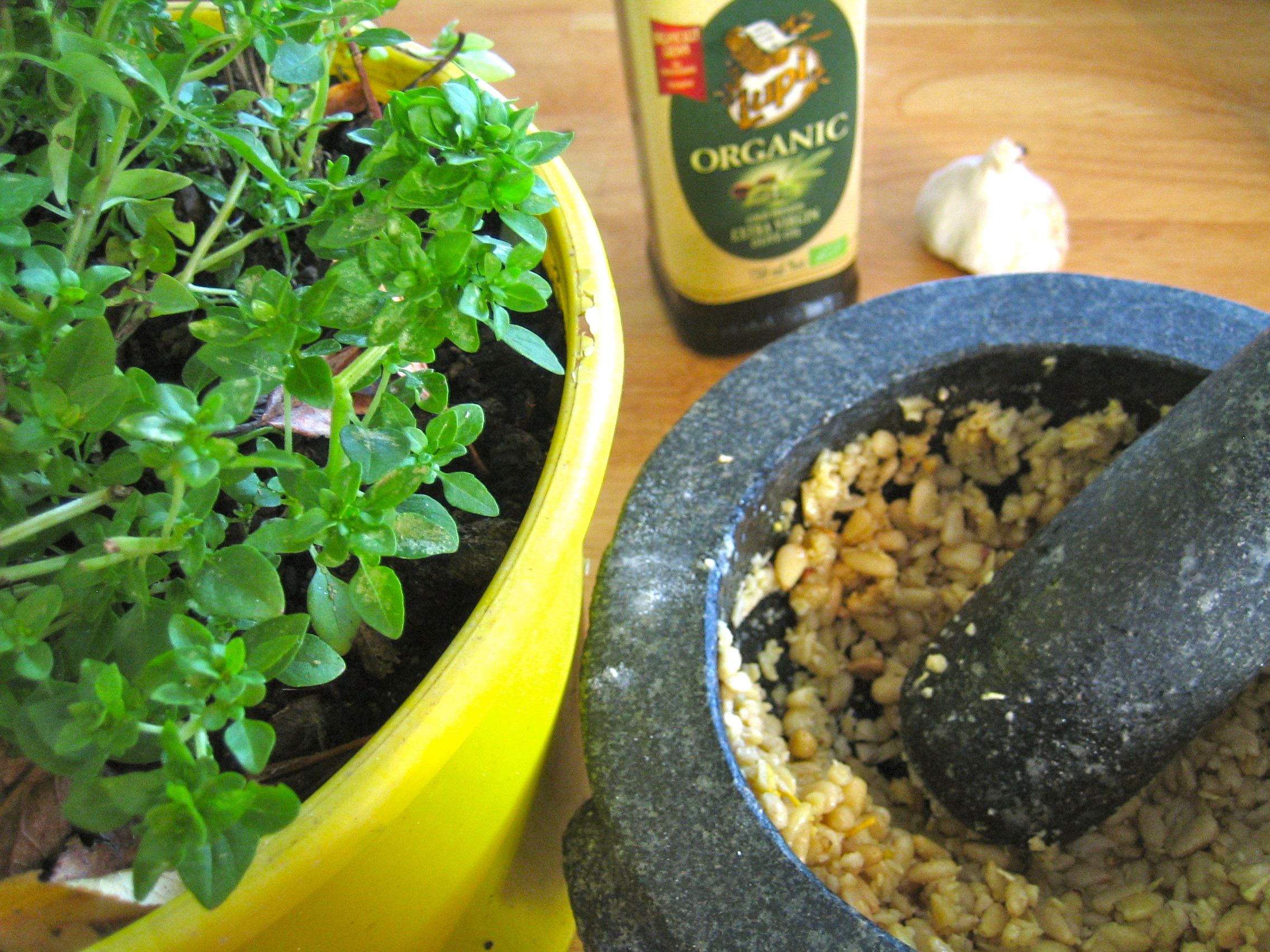
    Also, ‘last’ for the season – I made a ‘pistou’ or paste with the last of our bush basil, some pine-nuts, garlic, olive oil and salt. It’s always a sad day when the last of the basil goes. We ate it on pasta.  I like to grind such things up in my big mortar and pestle, rather than blitzing with an electronic device. It’s calming and meditative to hand-grind.
    (A Wellington friend who has never visited me at home was surprised to learn that I don’t live on a farm – he thought I did from reading my blog. I don’t know if it was just him, or if others have that impression as well – but just to be clear, I live on a very average not-quite quarter-acre section right in the heart of Palmerston North. You can take a girl out of the country, but she’ll bring her small-town/country ways to the city!)

    Anyway, here’s that poem I mentioned, from The Comforter:

    FALL BACK

    Insects everywhere – dead bees in the garden, moths

    stud the bathroom ceiling like dusty ornaments, praying

    mantises crawl out of the compost bucket. The flies.

    The last day of daylight saving. Everyone

    tired and wistful on Sunday. That feeling

    like you lost something all day.

    The last-day-of-summer pasta sauce – made with the last aubergines,

    last cherry tomatoes, the last zucchini. The garden now

    full of fledgling winter vegetables: spindles of cabbage, arrowheads of spinach.

    Manawatu gothic. Even these bright days are tinged

    with a kind of violence. There is a black velvet ribbon

    threaded through your head, collecting debris.

    The last dinner on the dehydrated lawn.

    *

  • In the garden…

    The tomatoes are ripening by the bowlful every day and we are eating lovely pasta sauces and soups which taste of the sun and make me realise how insipid tinned tomatoes are! The chillies are starting to fruit – just in time for the cold of autumn, which will stunt their growth in no time. Every year I try to grow chillies – every year I get about two weeks worth of fruit before the autumn shrivel. You’d think I’d learn, right? Hope springs eternal. One day I’ll build a little glasshouse for year-round chillies.

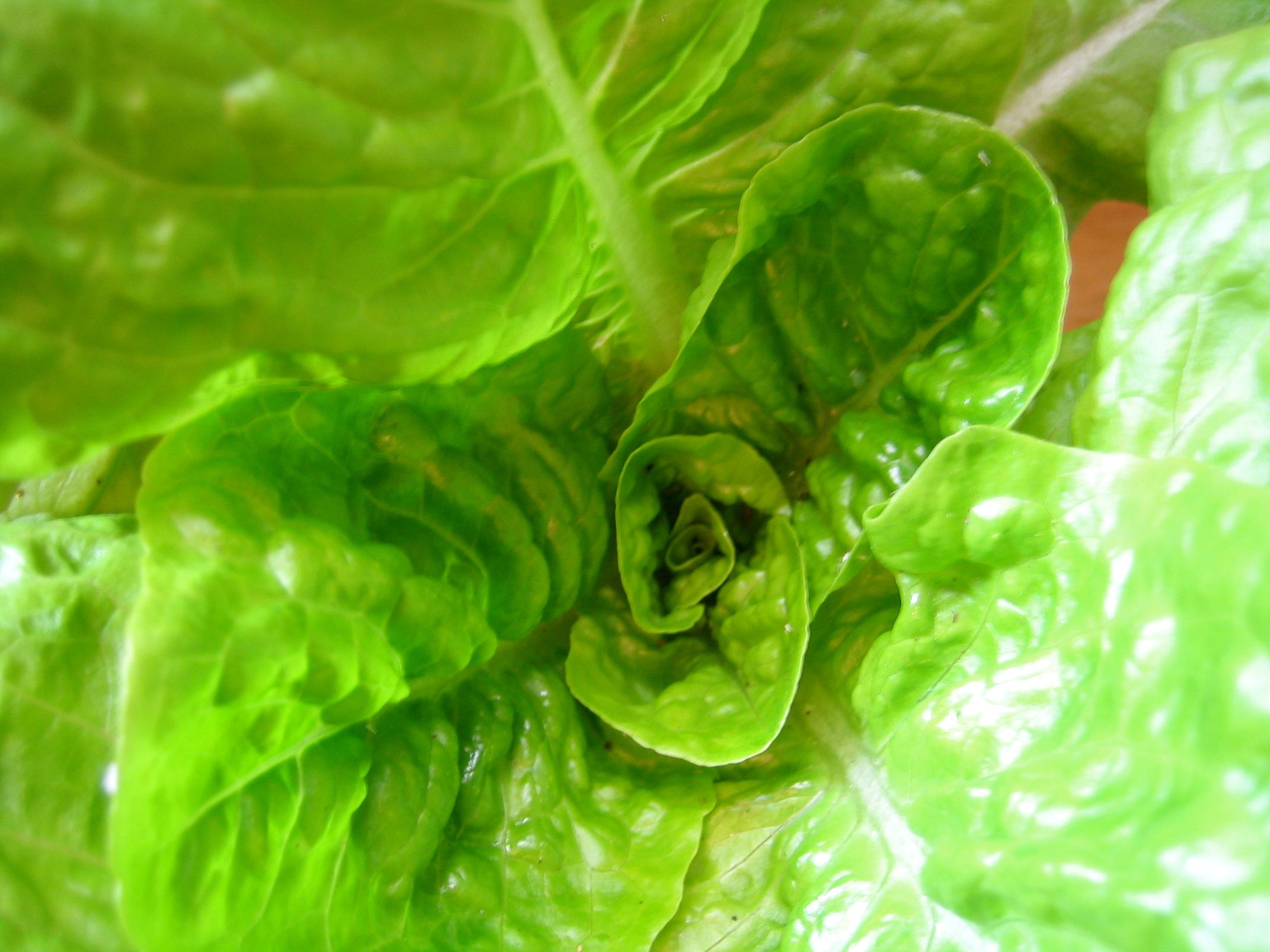
    I love these lush little gem lettuces, so much nicer than ice-berg and I eat one a day. They grow very quickly – from seedling to edible head in about three/four weeks.

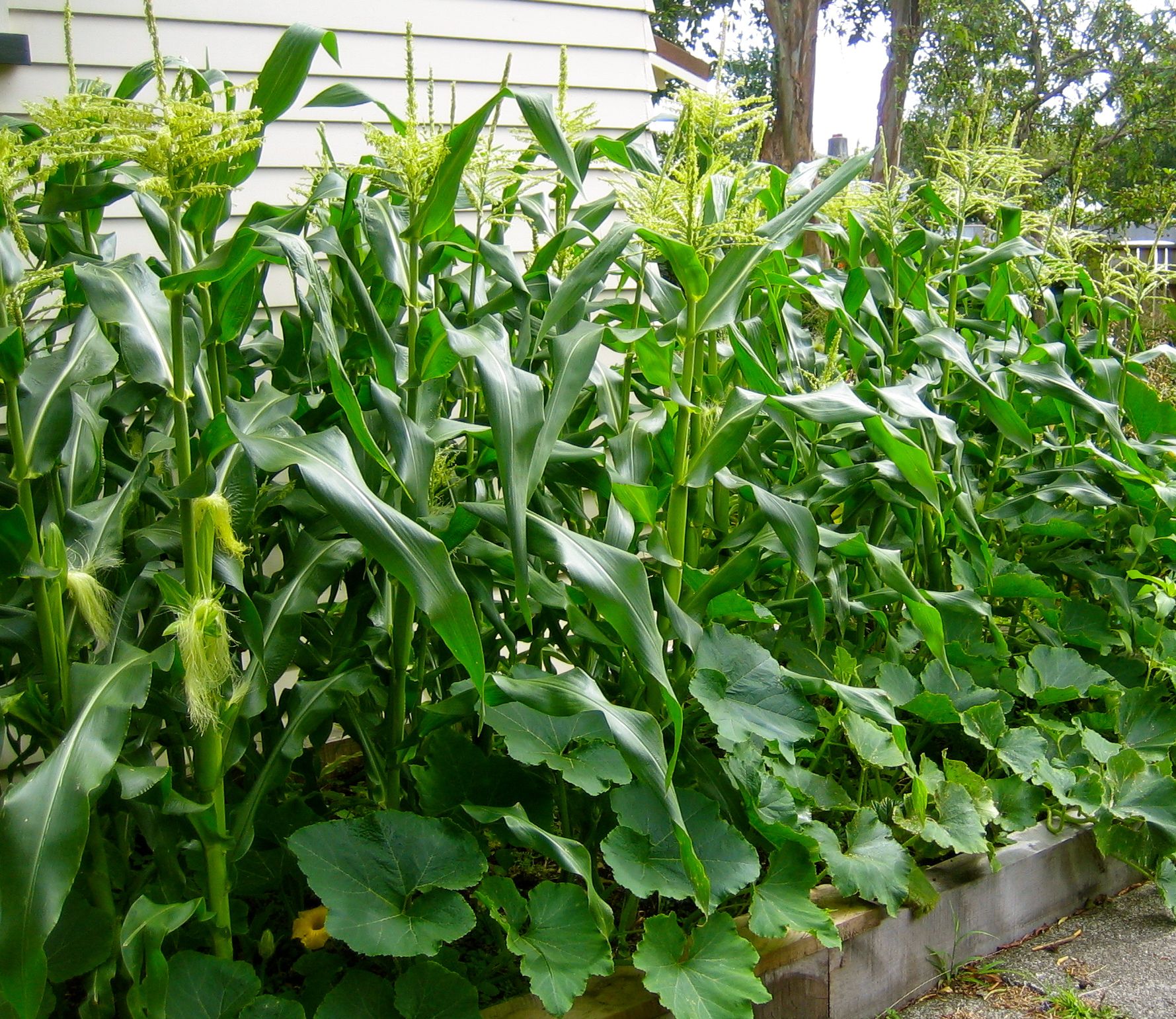
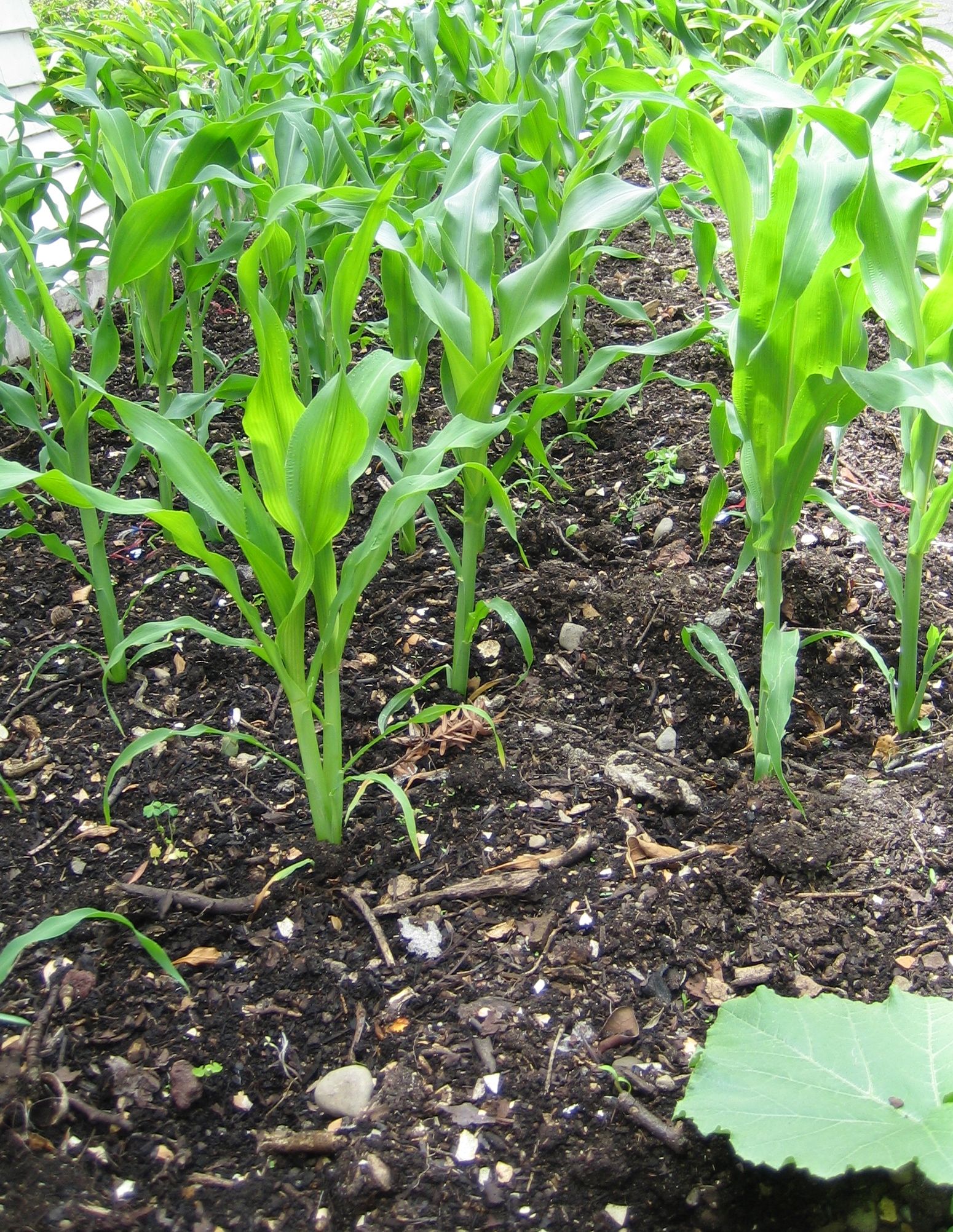
    The corn is nearly there – it seems like only yesterday I was pushing corn seeds into the warm earth…there are lots of pumpkins growing around the corn’s ‘feet’ too – we are going to have an abundant autumn!

    This is going to sound like such a cliche – but I swear, when I started growing my own vegetables, aged around 28 when I had my first baby, time seemed a lot slower and I was aware of my plants growing and can remember waiting patiently for crops to appear.

    Twelve years on, time seems to go a lot faster -I’m not sure if it is because of getting older, or because life is busier – and the seasons romp around. I feel like I turn my back for a second and the garden changes, vegetables appear, or plants die before I realised they were ailing.

  • What the garden was doing at the turn of the new year…

    Happy New Year! I’m starting my year on the blog as I mean to go on – with excessive photographs of plants.

    Here is a snapshot of the garden on January 1 2012.

    There are new peas everyday – they never make it inside because we always eat them right there, standing beside the garden. It is my personal garden snack bar…

    The corn is getting taller…

    The apples we will enjoy in autumn are starting to look like apples, rather than little swollen buds….

    The herb garden is running riot: oregano, marjorum, sage, borage, mint, parsley, chives…

    The hydrangeas are doing their purple-pom-pom thing to the fullest…

    & the poppies continue to pop, then flop…