Category: grew it myself

  • the poppies live on

    A few years ago, I rescued a whole lot of plants from a garden in my old neighbourhood which was about to be demolished.

    When I moved to my new house, just over a year ago, I was careful to shift a lot of the tiny poppy baby plants from the legacy of that garden-save. (At the time, with a whole household to move, faffing about digging up tiny seedlings seemed kind of mad – but I now I am glad I took the trouble to do it!) I am happy to report they are doing well, and doing what poppies do in their second year, which is ‘pop’ up in all kinds of places which are often not garden beds.

    As well as the red poppies from the old house, this year I also planted big pink poppies. Alas, on the verge of flowering magnificently – they got blown over in last week’s winds. I will leave them in anyway, in the hope they still go to seed, so I can at least have them next year.

    (Photo one above is the pink poppies about to pop. Photos two and three are rununculas, in lieu of the (now horizontal) pink poppies. The rununculas are being the pink poppies ‘stand-in’ for this post – lol.

    I also planted yellow californian poppies. These are lovely, elegant plants. In New Zealand you often see them around lakes and rivers. There are lots of bright orange ones around Lake Taupo, for example.
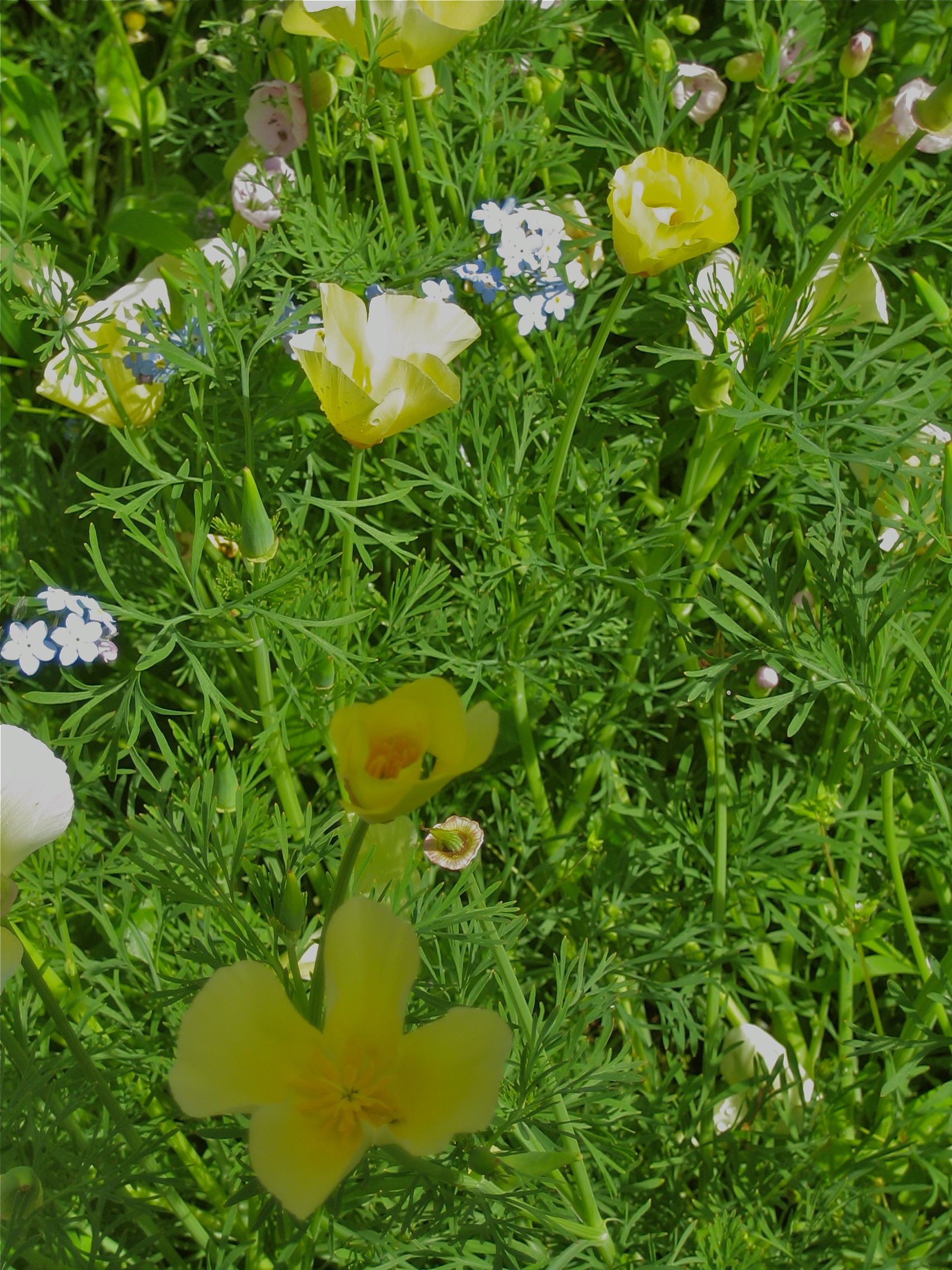
    As well as poppies, I’m planting as many self-seeding flowers as possible so that after a few years, I will have a low-labour, self-sustaining flower garden.

    Viva la poppies!

  • peel the beet

    The garden is warming up to the point that some of the things which have been in it over the winter are starting to bolt.

    I harvested my beetroots the other day, as they’d been in there since autumn. Time to pick them to make room for some more exciting summer vegetable.

    Beetroots are great to have in the garden over winter because while they are growing you can pick the leaves off them and eat them as you would spinach. So by the time you come to harvest the roots, you’ve had months of greens off them as well – making them a very generous plant.

    People think beetroot is messy to prepare, but I’ve worked out that by doing it the following way – there is not a stain anywhere. Not even on my hands.

    Ignore all the recipe books which tell you that they are too hard to peel raw and that you should cook then peel. Cooking then peeling = MESS! & They are no harder to peel raw than a potato.

    Of course you don’t have to cook them – you can eat them raw, but I prefer them cooked as I’m not a huge fan of their uncooked dirt-like flavour.

    Helen’s No-Stain No-fuss Beetroot Preparation Method

    1. Fill the sink with warm water.

    2. Chop the leaves off the beetroots. Keep the tender leaves for eating, (leaves not in this recipe, put them in your fridge and eat them later!) discard the rougher ones.

    3. Throw the beetroots into the warm water. Using a potato peeler, peel the beetroots UNDER THE WATER. Check it out! No stains on your hands. Awesome.

    4. Cut the wet beetroots into appealing chunks. Throw into a pot.

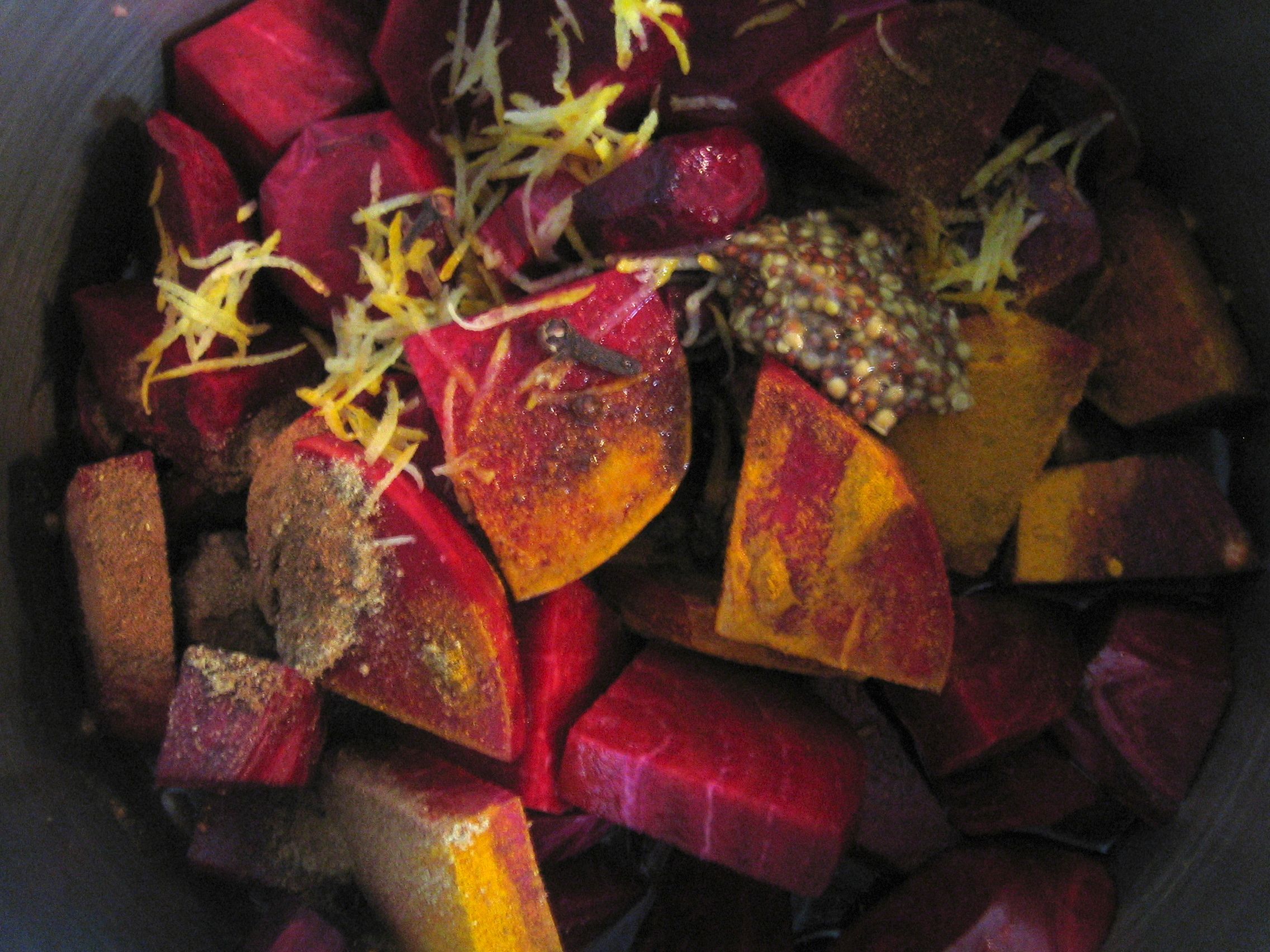
    5. Fill the pot with 1/3 vinegar (I use white or cider), 2/3rds water, a teaspoon of salt and the spices of your choice. Because the beetroot is so plain and earthy tasting, I like to use strong flavours like a bit of curry powder, lemon zest, cloves and wholeseed mustard.

    6. Boil until the beetroots are just tender. Cool. Eat! They are great added to salads, sandwiches or just as a side-dish by themselves.

    (Because they are cooked in vinegar, what you don’t eat right away can be stored in the fridge in a container with a lid and will last a couple of weeks.)

    & Super-thrifty tip: when you have finished eating your beetroots, the juice can be used as a natural dye for cotton or wool or a food-colouring replacement for baking (you only need a drop or two, so the vinegar-taste won’t appear in your baking.)

    So there you go – that’s what I do with my beetroot! How do you like to eat beets?

    …& the beet goes on…(groan)…

  • colour in the winter vegetable garden

    I know it is spring now – but in terms of the vegetable garden, most of what is in there is still wintery-fare.

    Where I live, what I can grow in the winter is mostly green things: silverbeet, leeks, spinach, spring onions, brassicas, herbs. I’m grateful to live somewhere where it is possible to grow food all year around, but all the same, by the end of winter – I get a little tired of just greens and look forward to the colours of the summer garden: chillies, tomatoes, nasturtium flowers, the bright red flowers of scarlet runner beans…

    In winter, I have to sneak a bit of colour into the garden – just to cheer me up. This is how I do it:

    Choosing rainbow silverbeet – the stalks are wonderful candy colours – bright pink, orange, yellow.

    & Growing marigolds as companion plants. I know some people think they are tacky – but I love the colour they bring to an otherwise pretty dark winter garden.

    Harvesting greens in my op-shopped bright red colander.

    & Growing radishes – their hot pink pop can really liven up yet another green salad. Also, they grow from seed to plate in about three weeks. The closest thing you can get to instant gratification in a vegetable garden. These ones are ‘French Breakfast’ – which I grow because they are much sweeter and milder than other varieties, so more child-friendly.

    I saw on an Anthony Bourdain Food show that in France people smear these with butter as part of a breakfast meal. I tried it and found it to be kind of gross, to be honest. I think I’ll stick to chopping them up and chucking them in a salad. The French love to put butter on everything, don’t they?

    Have you got any other ideas about adding colour to a winter vegetable garden?