Category: use what you have

  • witch sticks & autumn harvests

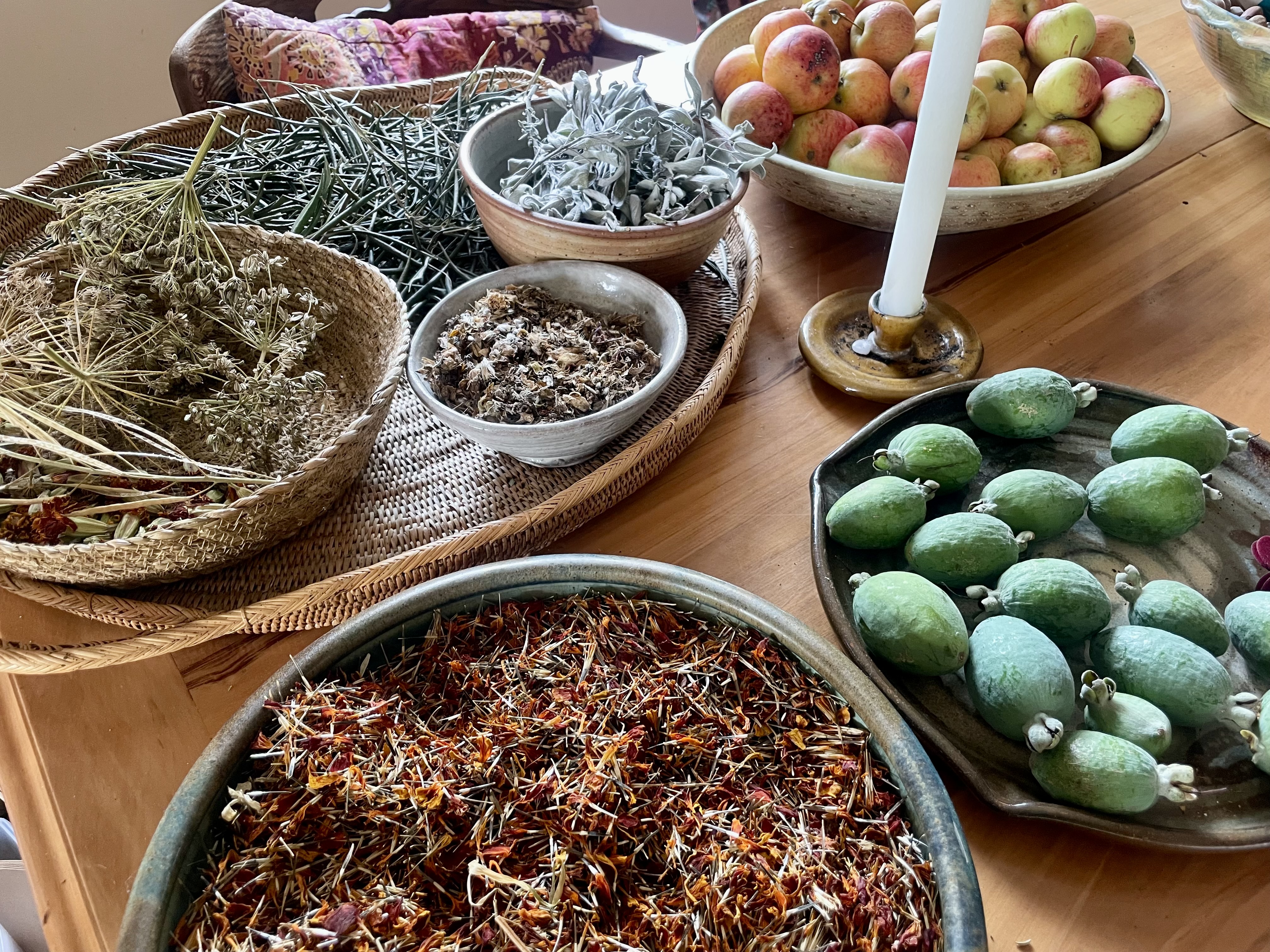
    (Above: Our kitchen table is a busy surface with often-changing bowls and baskets reflecting what is going on in the garden and the foraging season: things drying or waiting to be processed.)

    Autumn is my favourite season and, as a permaculture household, a busier season than summer with our labours to ‘capture and store’. There’s lots of picking and gathering and then kitchen work processing everything.

    (Above: Last sunday morning’s harvest chore was bottling a box of apples from our friend Bev’s orchard. These will turn into crumbles or top our porridge this winter.)

    Last week I gave my potted white sage plant a prune, ready to overwinter it in the greenhouse. White sage is a desert plant, native to the American southwest and Mexican northwest, so it doesn’t love the Manawatū winters.

    In the summer, I put it outside in full sun then prune it down to almost sticks at the end of summer and put it in the greenhouse where it sulks the winter away…but it (just) survives. Mine is about six years old now.

    (Above: white sage prunings, cotton thread. It’s on the sofa because I made the witch sticks while watching something in the evening. I do a lot of processing tasks (this, peeling fruit, cutting up herbs for tea, seed saving jobs) on the sofa…which might seem a bit odd…but I don’t see it as much different from knitting or hand-sewing in front of the TV. Does anyone else do this?)

    The prunings can be turned into what I call ‘witch sticks’ for burning by folding up the leaves on the stalk, weaving and rolling them longways and then tying with cotton thread. (Never use synthetic thread: it will melt and emit toxic smoke.) When the leaves have all burned down, you can burn the stalks, too.

    (White sage is a plant sacred to Indigenous people in USA and Mexico, so if you want some…have a go at growing it rather than buying imported sage. White sage is overharvested in the USA particularly. In ‘A Forager’s Life’, I write about alternative plants to white sage for making cleansing/burning sticks.)
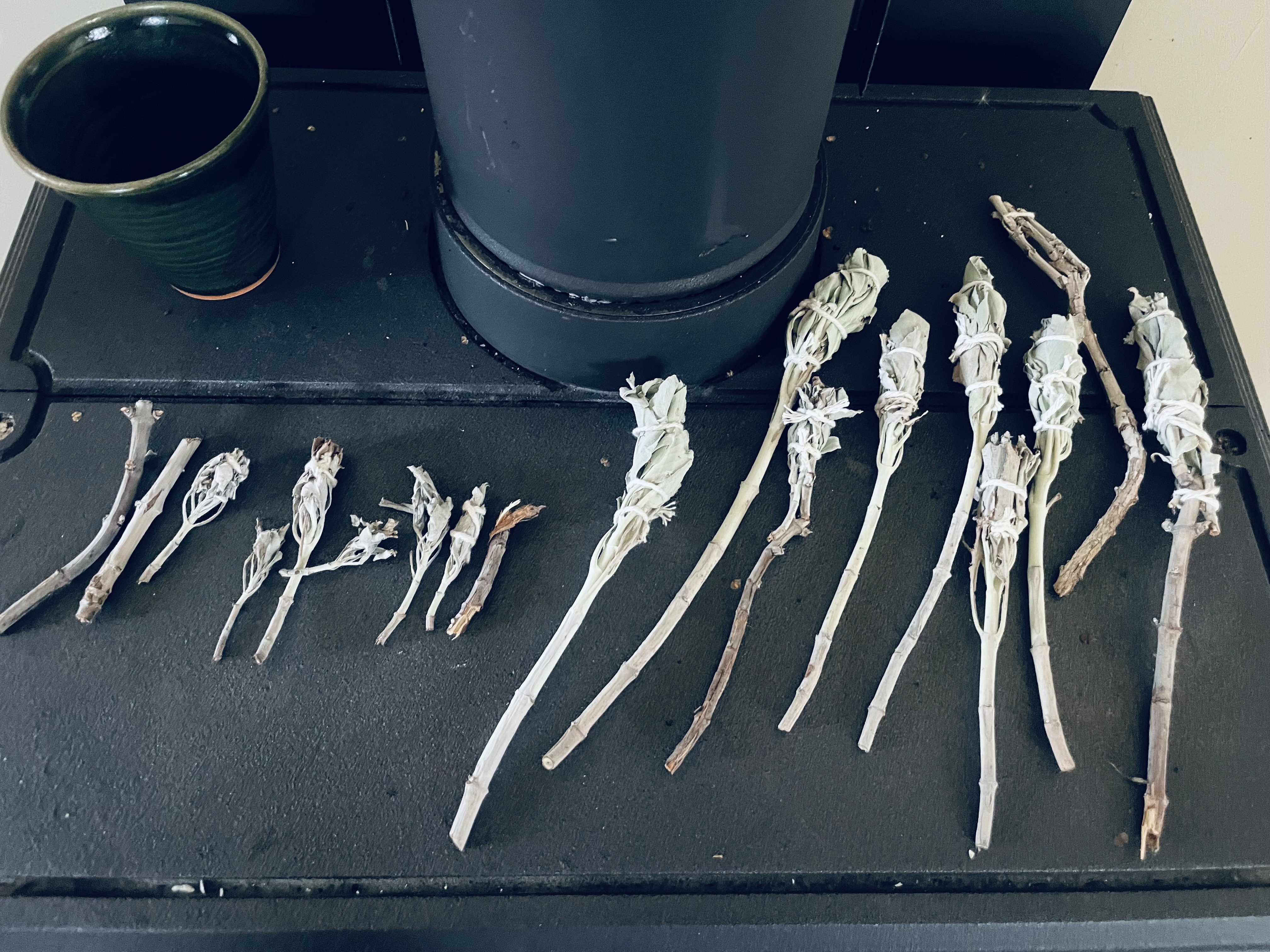
    (Above: I got eight decent witch sticks, plus some smaller bits and pieces of stalk…all of which can be burned. Here they are drying on my fire top.)

    I see a lot of ‘how-to’ articles about making cleansing/burning sticks around…but they often forget a detail which I think is important. For them to burn well and safely, don’t wind the string around and around the bundle, securing only at top and bottom. This will mean your stick will fall apart as the thread burns and you could have a higher risk of embers dropping off it. Instead, tie it tightly with small pieces of string at regular intervals, like in this photograph:
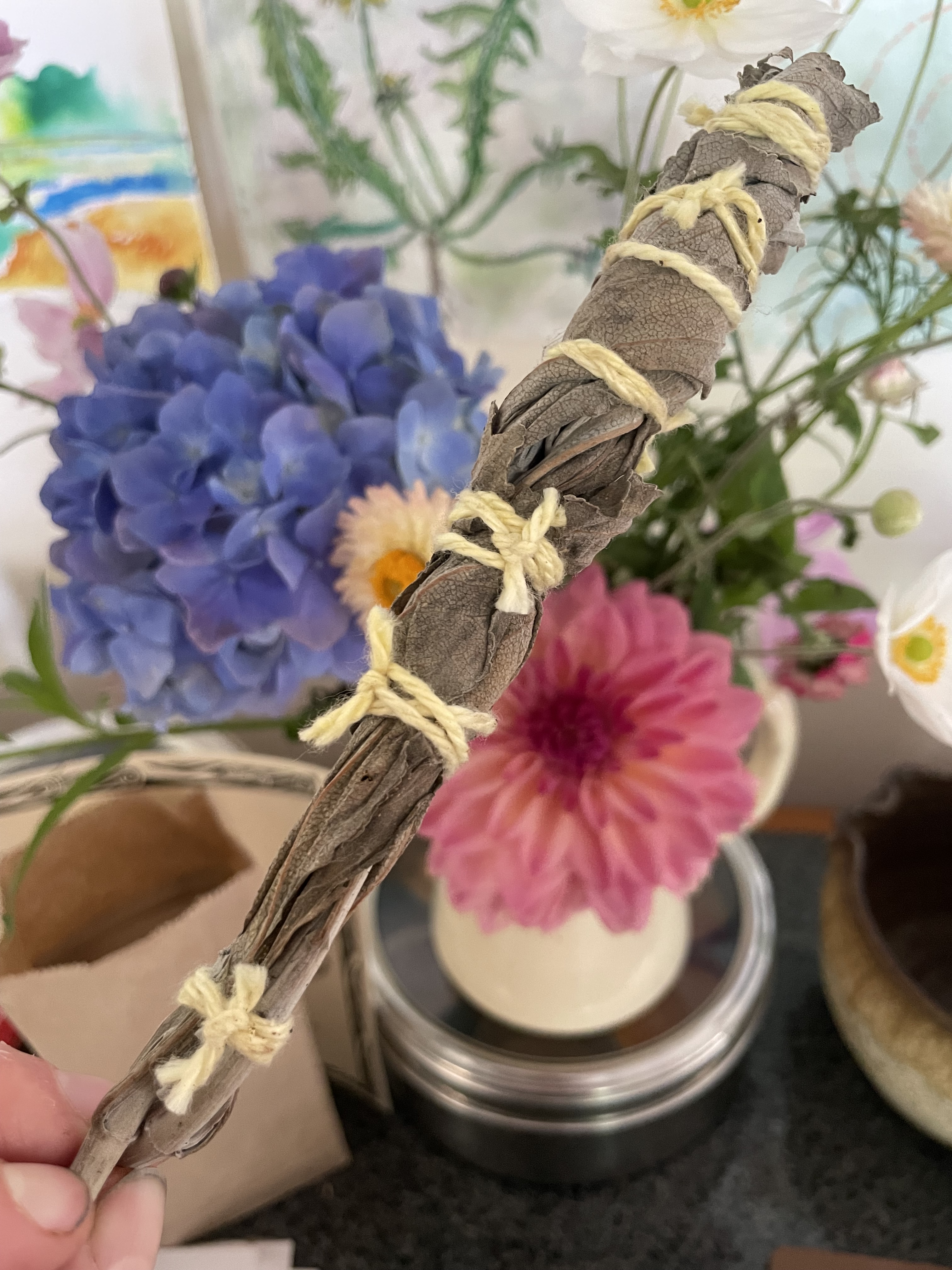
    (Above: please forgive my ‘dirt manicure’ as garden writer Gayla Trail calls it. I scrub* my nails regularly but folks who ‘touch soil’ (which is ilke ‘touching grass’ only more grubby) every day struggle to have photogenic hands. ((I have to buy a new nail brush every couple of months…so intent is my endless scrubbing.))

    Do you have a favourite season or are you one of those calm, rational people who loves them all equally?

    I’d love to hear what kitchen or garden chores you’ve been doing lately. Let me know below.

    “As long as autumn lasts, I shall not have hands, canvas or colours enough to paint the beautiful things I see.”

    -Vincent Van Gogh

  • fresh inspiration

    When is an ‘inspiration wall’ not an inspiration wall?

    When it’s been up for almost two years and you’ve stopped seeing it anymore…

    I have a creative room out in my backyard. Our garage was converted to a sleepout by previous owners and now we’ve set it up so half of it is guest-room (well, guest-nook) and half is my creative space.

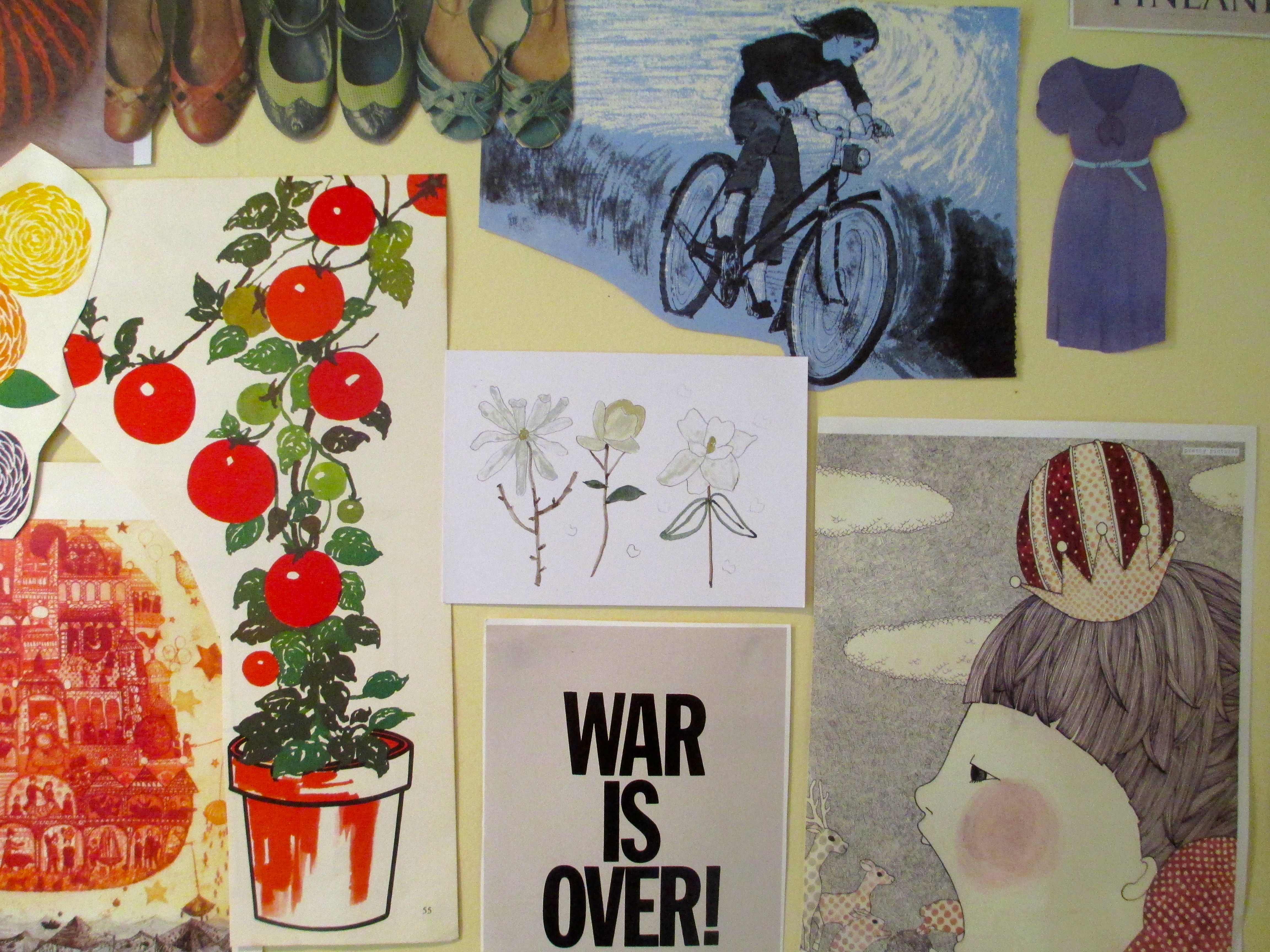
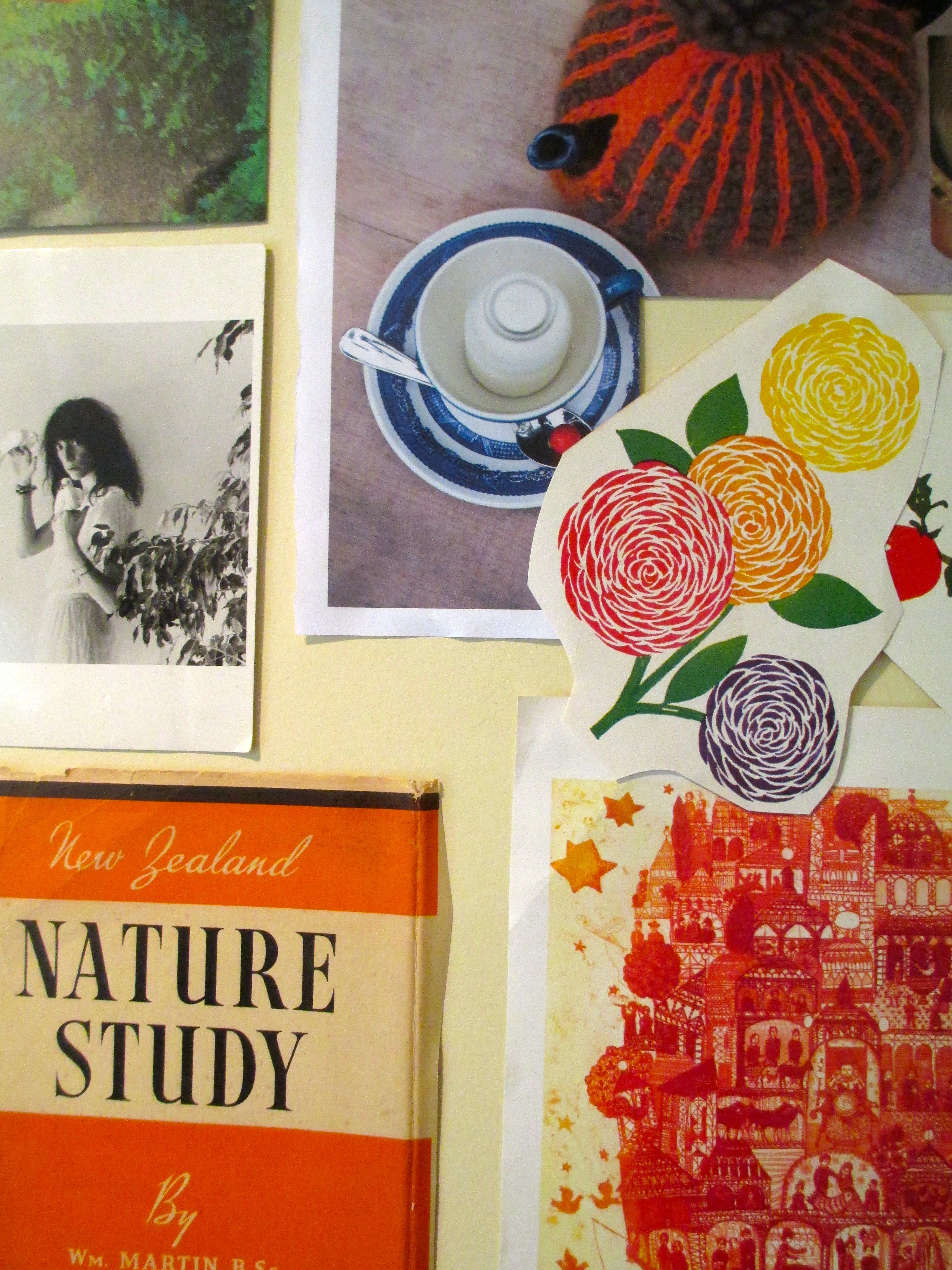
    The wall beside my desk I put up a montage of inspirational images. It was overdue for a freshen up, so for a couple of months I slipped anything that caught my eye into a folder (magazine cuttings, mail my friends sent me, vintage book pages etc etc) until I had enough material to redo the wall.

    Here is the old inspiration wall:

    sw_old

    & Here is the new:

    sw_2sw_3 sw_4

  • Pioneer cooking for energy efficiency


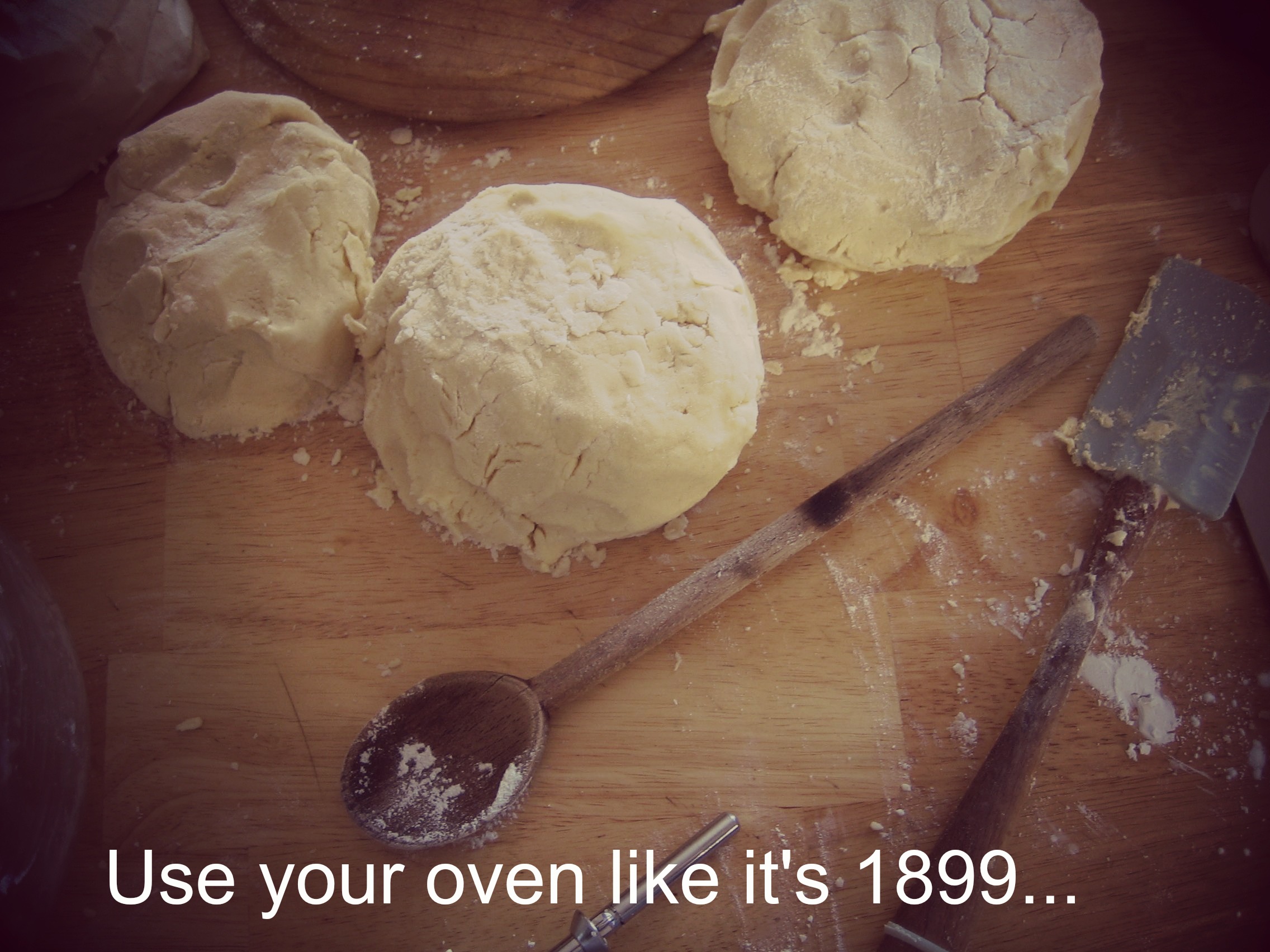
    In an effort to be more energy efficient, save money on bills and be more organised with food practices, for the last few years I have gotten into viewing a warm oven like a pioneer woman would. What do I mean by that? Well, as anyone who has read ‘Little House On The Prairie’ will know, pre-electricity, getting an oven hot took a lot of human and resource energy, so people would do all sorts of things with the oven while it was hot, and even cooling – making the most of it.

    Of course these days I can have a hot oven at the flick of a dial, but I try to respect the energy it took to heat the oven, and save money on my gas bill by using the heat for multiple things and trying to avoid heating it just for one purpose.

    This takes a little bit of organisation, lateral thinking and time, but once you get into the swing of it, it becomes second nature.

    Once the oven is turned off – it stays hot for a long time! Think up ways to use the warm but cooling oven. I have a few suggestions below but would like more…

    Here are some of the ways I maximise a hot oven – if you have other suggestions, please let me know in the comments!

    -when baking, if I’m baking a cake, or biscuits or muffins – I often bake a double mixture, freezing excess for school-lunches or whatever, so I’m not heating the oven to make one thing

    -bake multiple things at once…a cake, a loaf of bread, some muffins…

    -when baking, think ahead to dinner – could you use the heat of the oven to roast or bake something for dinner so you don’t have to later?

    -when baking, wrap potatoes in foil and tuck them around the baking trays, then take them to work for an easy lunch

    -when baking, pour two inches of rice into a casserole dish, cover with stock until stock is about two inches above rice. Put lid on, put in oven. Check occasionally to make sure there is enough liquid. The rice will absorb the stock, cook, and you will end up with yummy flavoured baked rice for re-heating at dinner time or for a salad base.

    -when baking, why not also whip up something for lunch? Beat eggs, add greens and cheese. Grease muffin trays, pour in eggy mixture and you have a dozen baseless ‘quiches’ for lunch with minimal effort!

    -put a mixture of dried fruit into a small oven dish (apricots, dates, figs, prunes, sultanas, whatever), add a couple of teaspoons of spices (cinnamon, ginger – whatever flavours you are fond of), cover with warm water, put lid on, put in oven. You will end up with delicious macerated fruit – yummy on cereal, ice-cream or by itself with whipped cream.

    -bake fresh fruit using same method as above…

    -put oats in an oven tray and toast the oats for muesli. You can add sweetners and oil to the oats, but you don’t have to – even toasting the oats without sweetners adds a lot of flavour

    -thinly spread roughly dessicated coconut on a pizza tray and toast. Toasted coconut is delicious spread over desserts, yoghurt or curries. (You have to watch it though – whip it out as soon as it goes lightly brown. It burns easily.)

    -toast nuts, or seeds. A yummy snack is stirring a tablespoon of tamari into one cup each of pumpkin seeds and sunflower seeds. Then toast. Delicious by itself or sprinkled over salads. Also adds a yummy crunch to sandwhiches.

    -in tomato season, if you have a tomato glut, or if they are really cheap and you buy a box or whatever, cut in half, brush with olive oil and put in turned off oven to make ‘sun-dried’ tomatoes. You will have to do this a few times to get entirely dry tomatoes, but even semi-dried tomatoes are delicious and intense in flavour, you will just have to use them up faster than dried.

    -if you have people over and you have used the oven to make dinner, put some kalamata olives in a about half a cup of olive oil, add finely grated lemon peel, herbs of your choosing and black pepper. Warm in the cooling oven and serve with bread. Olives are delicious at room temperature, but slightly warmed with these additions? SUBLIME.

    -turn elderly bread into croutons – cut into small squares, brush with oil using a pastry brush, bake

    -rice crackers gone stale? Don’t throw them out – put them on a pizza tray and put them into the oven after you’ve finished baking and oven is turned off. It brings them back to life. Works for wheat crackers, also.

    -if you are a gardener, keep your eggshells. Put them into the turned off, cooling oven. They will go dry and brittle, making them easy to crush up with a mortar and pestle (or just use a bottle!) for sprinkling onto your vege garden. They add calcium and trace elements to the soil. You can also sprinkle rings of egg-shell around brassicas and salad vegetables to deter slugs. (Of course the egg-shells will break down by themselves if you throw them whole into the compost, but this way they will break down much much faster and you can put them directly on the garden, skipping the compost heap.)

    -if you have a herb garden, use the turned off/cooling oven to dry herbs for cooking or herbal tea. Pick herbs, wash, dry very thoroughly with a tea-towel, spread thinly on an oven tray, put into oven. (I do this with lavender and it fills the house with a heady lavender smell.)

    -thinly grate lemon peel on the fine side of your grater, spread thinly on a pizza tray, put into a cooling/turned off oven. Then you have dried lemon peel for adding to cooking or making lemon salt.

    -use the turn off/cooling oven to dry dishes! If you are hand washing dishes, put some of the large, space-taking items like pots and pans into the warm oven to dry. Gets them off the bench, out of the way and drying so there is room for the rest of the dishes.

    OK! I hope that gives you some ideas, anyway. Now that I’ve been doing this a few years, I get all twitchy when I see people heat their ovens just to bake a dozen muffins! There will no doubt come a time when we have to return to some pioneering ways because of the world’s diminshing resources, so I am getting into the swing of it now. I hope I might have inspired you too, as well, if you weren’t already.


  • the last

    I write about the seasons a lot, don’t I? I can’t help it. I grew up in a small town in the middle of farmland – my Dad was (still is) a hunter and fisherman and so we ate with the seasons and the seasons were meaningful in a way they may not be for city-folks. Most of my friends lived on farms, so the drying off of cows marked the start of winter, new lambs heralded spring. Because I do write about the seasons so much, the editor of The Comforter, Helen Rickerby, organised the book into seasonal parts. I still can’t believe it didn’t occur to me to do that – but that’s why you need a good editor, right? To show you things which are right under your nose but you can’t see because you are over-exposed to your own work.

    Anyhow, of all the seasons, autumn is my favourite. The harvest, the golden days with cold edges, the sense of melancholy. Garden fires, washing the woolens which have been in storage since September, quinces, feijoas, walnuts…picking apples – we have two apple trees at our place:

    In my book, there is a poem about the beginning of autumn, the final day of daylight saving. There is a point at the end of summer/early autumn, if you are a gardener and eat seasonally, like we do, where you know it is likely to be the ‘last’ time you taste that particular thing for some time. That final meal has autumnal melancholy all over it – it’s a farewell to summer. In the poem, ‘the last’ has a deeper resonance – because of my beliefs about the environment, I feel that anything could be our ‘last’ time, because our existence on this ailing earth is so precarious right now, and growing more so.

    Late summer this year, we ate corn for a good eight weeks, thanks to the 60 corn plants I grew – & no, I didn’t tire of it, like I do with some gluts. With the last of our fresh corn, I made a bean succotash which also contained the last of our tomatoes:

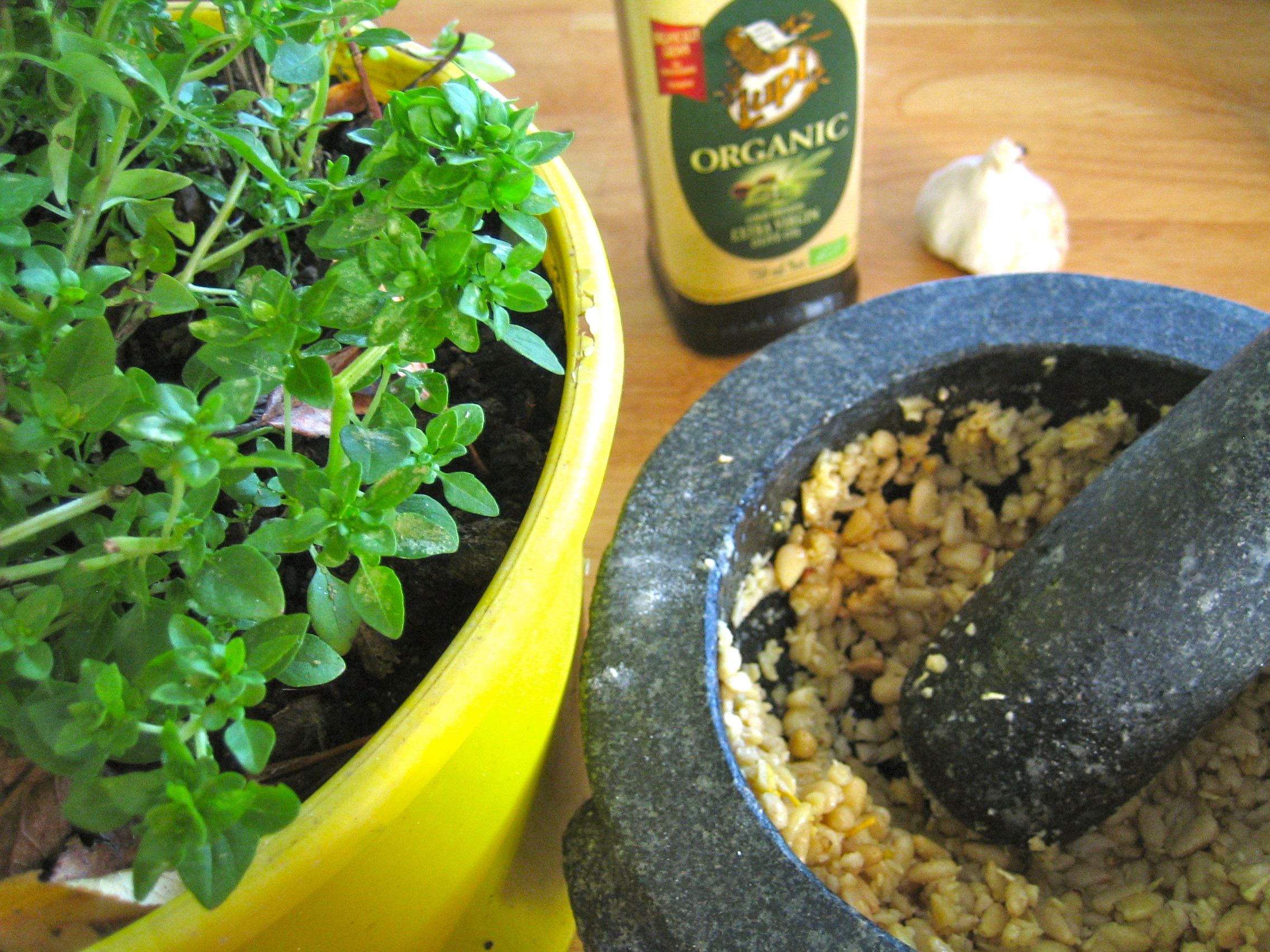
    Also, ‘last’ for the season – I made a ‘pistou’ or paste with the last of our bush basil, some pine-nuts, garlic, olive oil and salt. It’s always a sad day when the last of the basil goes. We ate it on pasta.  I like to grind such things up in my big mortar and pestle, rather than blitzing with an electronic device. It’s calming and meditative to hand-grind.

    (A Wellington friend who has never visited me at home was surprised to learn that I don’t live on a farm – he thought I did from reading my blog. I don’t know if it was just him, or if others have that impression as well – but just to be clear, I live on a very average not-quite quarter-acre section right in the heart of Palmerston North. You can take a girl out of the country, but she’ll bring her small-town/country ways to the city!)

    Anyway, here’s that poem I mentioned, from The Comforter:

    FALL BACK

    Insects everywhere – dead bees in the garden, moths

    stud the bathroom ceiling like dusty ornaments, praying

    mantises crawl out of the compost bucket. The flies.

    The last day of daylight saving. Everyone

    tired and wistful on Sunday. That feeling

    like you lost something all day.

    The last-day-of-summer pasta sauce – made with the last aubergines,

    last cherry tomatoes, the last zucchini. The garden now

    full of fledgling winter vegetables: spindles of cabbage, arrowheads of spinach.

    Manawatu gothic. Even these bright days are tinged

    with a kind of violence. There is a black velvet ribbon

    threaded through your head, collecting debris.

    The last dinner on the dehydrated lawn.

    *

  • ‘The Comforter’ launches (2)

    Launch one:

    The first launch was in Palmerston North at the City Library.

    The speakers were Helen Rickerby, my editor, Thom Conroy, friend and creative writing professor at Massey University, and Natasha Allan did a beautiful blessing of the book.

    This one felt like a slightly more formal, ‘family, colleagues, local community’ (and friends, of course) one.  People bought books, I had my first experience of signing books, like a proper writer and it felt weird and really wonderful all at once. I tried to write something meaningful in each book I signed, so by the end of the launch my hand was really sore.

    Launch two: 

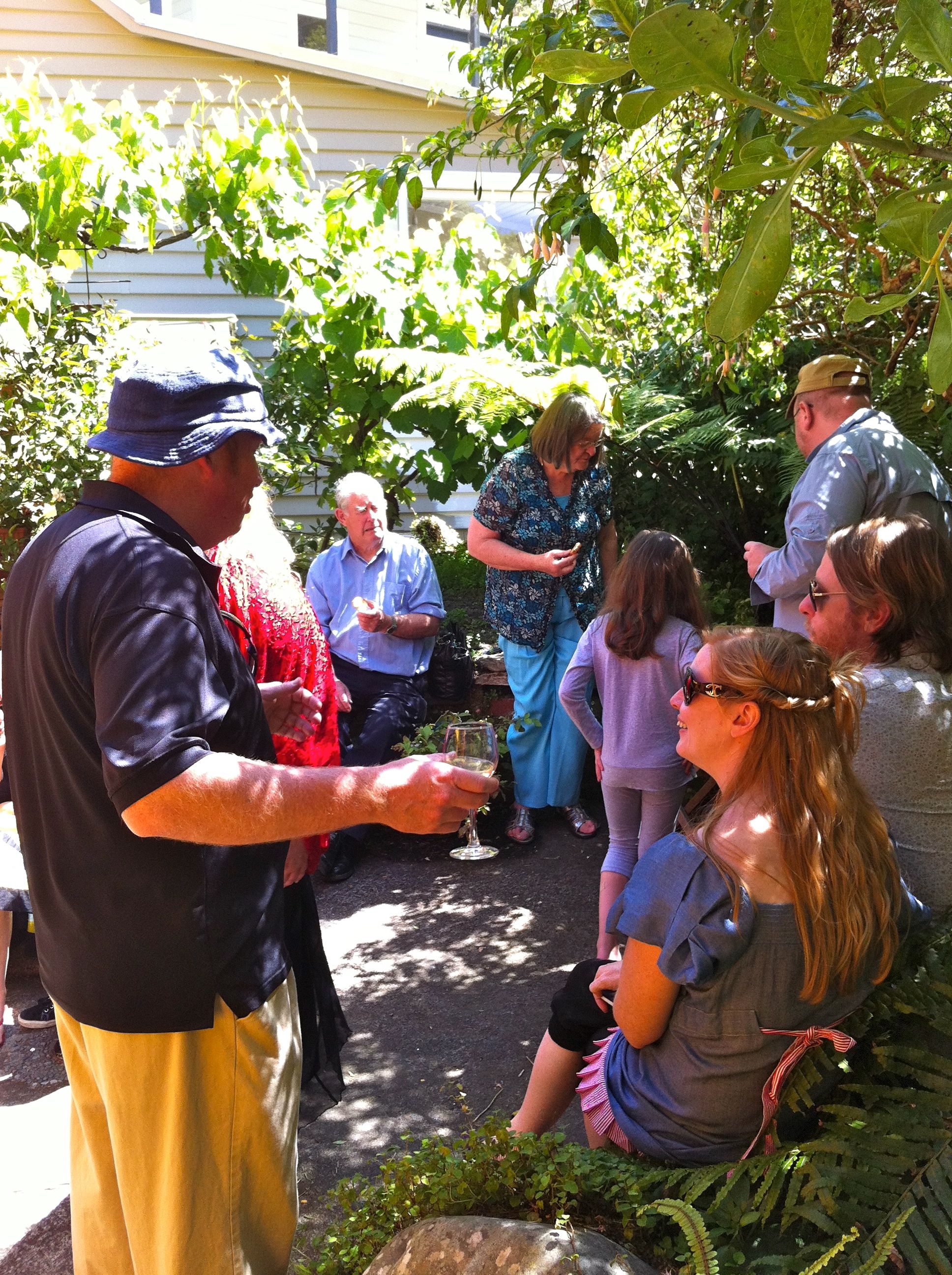
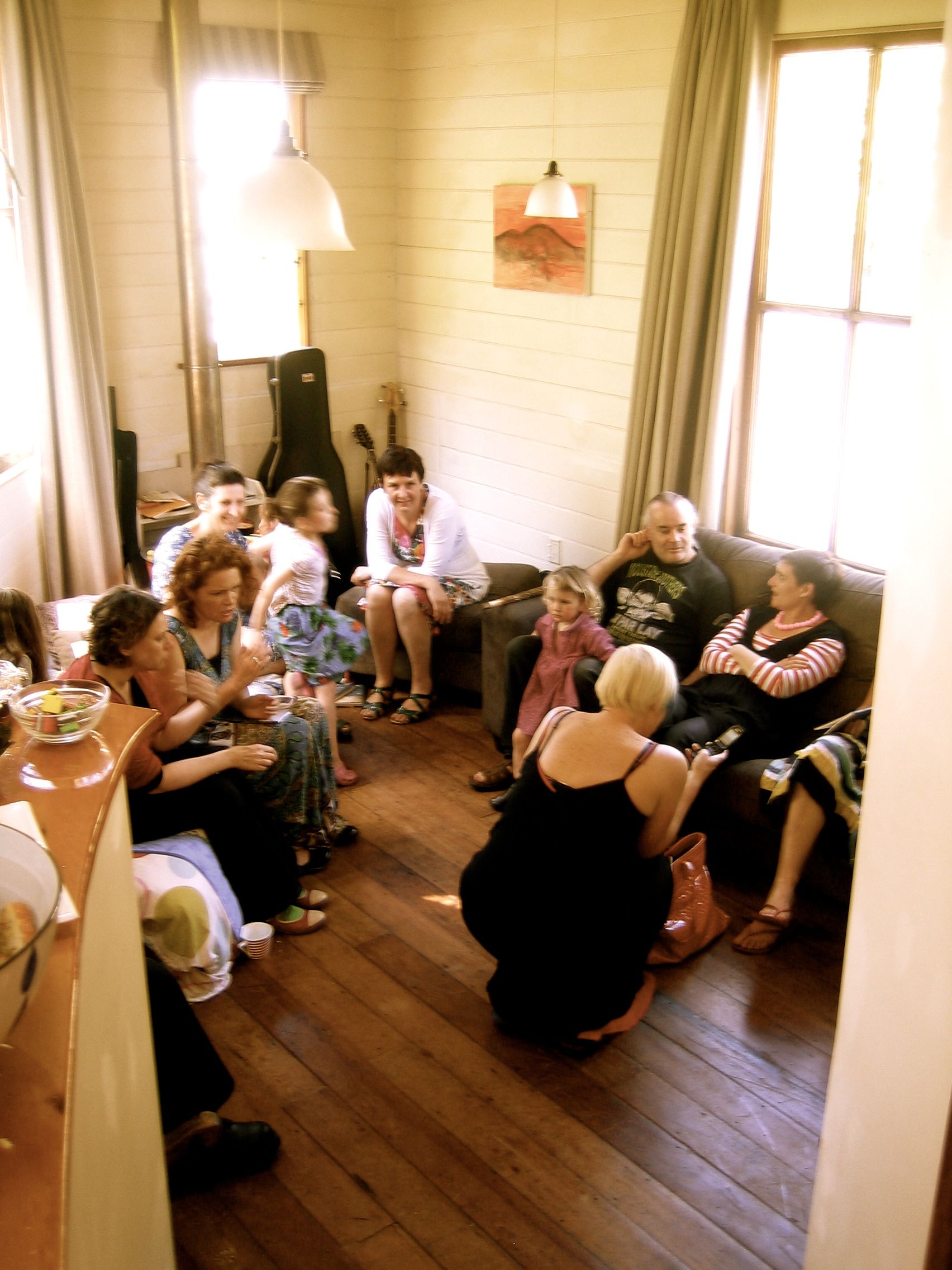
    Launch two was the next day in Wellington at my friend Emma Barnes’s house in Aro Valley. Wellington turned on the sunshine for us and it was a stunning day. This one was at 3pm in the afternoon and because of the perfect weather and all the women who obliged my request for floral frocks – it felt like a luscious garden party, (Emma McCleary said it felt to her like a wedding!).

    There was good food, plentiful wine, The Comforter cocktail, Simon (Emma B’s partner) played live banjo, which was just beautiful. The guests were many different kinds of lovely!

    For the ‘formal’ bit at this launch, Helen spoke again, then Pip Adam and Maria McMillan spoke about my writing and said extremely humbling things, then I read poems and all that, and then Natasha Allan did a closing blessing, which set me off crying a lot.

    (Oh and there was a notable earthquake.)

    Both launches went without a hitch and were just (as far as I’m concerned) perfect. I really couldn’t be any happier. Sometimes dreams come true. Check out this cheesy grin:

    If you want to see more photographs, I made a set on Flickr HERE.

    *

    NEWS! My poem ‘Garlic Planting Time’ is the Tuesday Poem on the Booksellers Blog today, HERE.

    & I’m also the Tuesday Poet, on Winged Ink, Helen Rickerby’s blog, HERE. & Helen wrote a little bit about the launches on the Seraph Press site HERE.

    *

  • beets and pieces

    First some writing news – Fourth Floor Literary Journal is up and I have two poems in it! Yay! You can read them HERE.

    Back HERE I mentioned my friend Helen wrote an essay about ‘Taking Care’ (killing) ‘Of Animals’. It’s also in 4th Floor. It is a funny, chilling read – you can read it HERE.

    *

    I continue to be tired. It’s like when you’re on a Merry-Go-Round and you jump off and you have to run so you don’t fall over and then you feel a bit dizzy and woozy until you get your balance back. That’s me right now.

    *

    The Beetroot liquid makes a great vegetable dye (the vinegar in it acts as the ‘fixer’.)

    After we ate the beets, I had some beautiful hand-spun wool that a friend had given me, but it was in pastel colours. I prefer stronger colours so I dyed it with the beet juice. Here is how it turned out:

    What am I going to use the wool for? No idea. Back into the stash cupboard it goes for now.

  • keeping the prunings

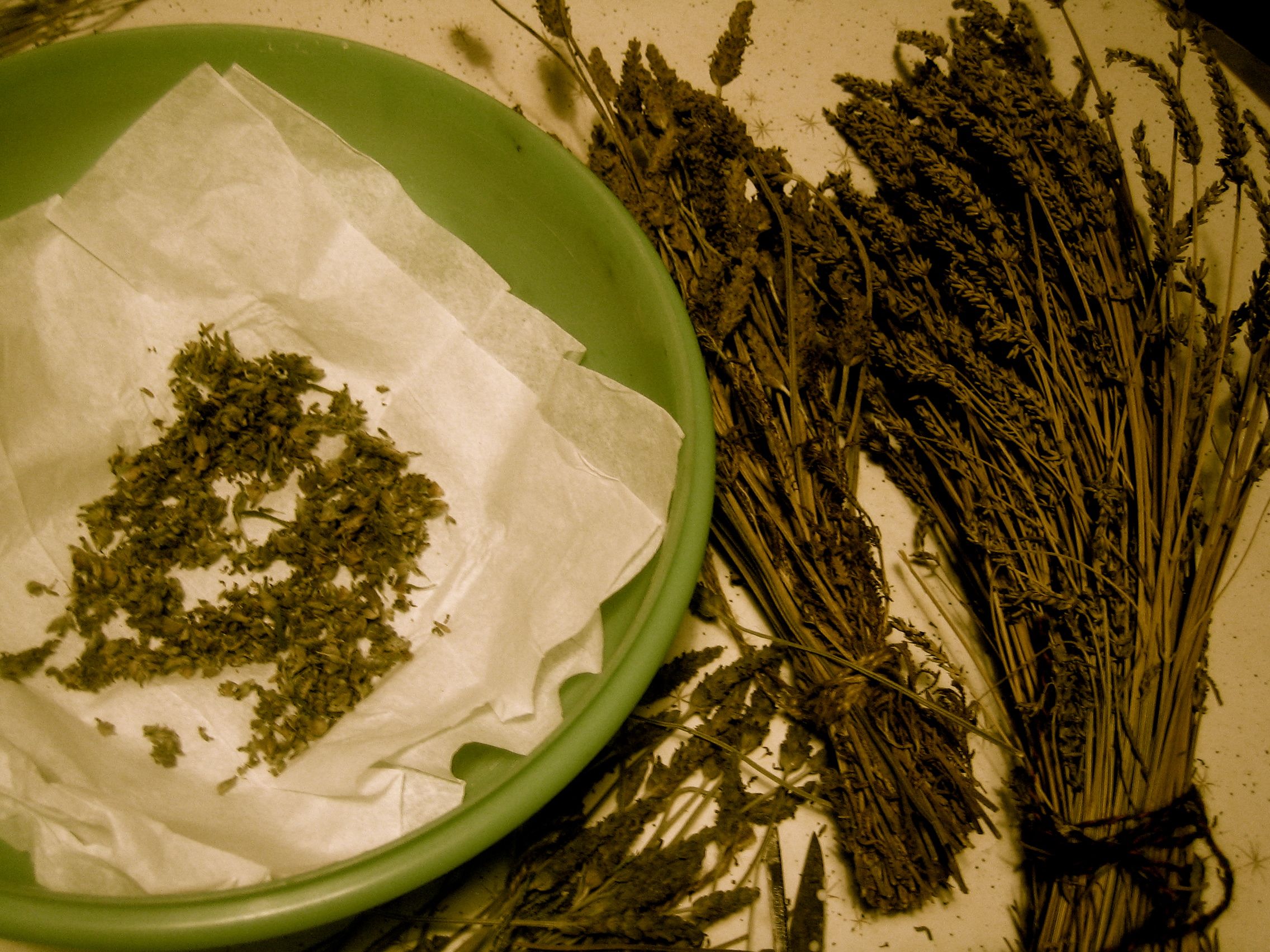
    Every time my lavender needs a prune, I tie up the prunings and hang them up in our porch to dry. Then, some months later when I have a spare hour, I pull the dried blooms off the stalks and add them to my lavender jar.

    My friend Melissa makes lovely lavender sachets with hand-printed linens. I think everything Melissa makes is beautiful.

    I like being thrifty and so I get a kick out of turning prunings into something useful. It’s a process that (to me) is lovely at every stage – the lavender is beautiful on the bush while it’s growing, it’s attractive hanging to dry on the porch, it looks nice in a jar and it will be delicious in a sachet – the heady scent of the blooms living on long after the stems have turned to compost.