Author: helenlehndorf

  • peel the beet

    The garden is warming up to the point that some of the things which have been in it over the winter are starting to bolt.

    I harvested my beetroots the other day, as they’d been in there since autumn. Time to pick them to make room for some more exciting summer vegetable.

    Beetroots are great to have in the garden over winter because while they are growing you can pick the leaves off them and eat them as you would spinach. So by the time you come to harvest the roots, you’ve had months of greens off them as well – making them a very generous plant.

    People think beetroot is messy to prepare, but I’ve worked out that by doing it the following way – there is not a stain anywhere. Not even on my hands.

    Ignore all the recipe books which tell you that they are too hard to peel raw and that you should cook then peel. Cooking then peeling = MESS! & They are no harder to peel raw than a potato.

    Of course you don’t have to cook them – you can eat them raw, but I prefer them cooked as I’m not a huge fan of their uncooked dirt-like flavour.

    Helen’s No-Stain No-fuss Beetroot Preparation Method

    1. Fill the sink with warm water.

    2. Chop the leaves off the beetroots. Keep the tender leaves for eating, (leaves not in this recipe, put them in your fridge and eat them later!) discard the rougher ones.

    3. Throw the beetroots into the warm water. Using a potato peeler, peel the beetroots UNDER THE WATER. Check it out! No stains on your hands. Awesome.

    4. Cut the wet beetroots into appealing chunks. Throw into a pot.

    5. Fill the pot with 1/3 vinegar (I use white or cider), 2/3rds water, a teaspoon of salt and the spices of your choice. Because the beetroot is so plain and earthy tasting, I like to use strong flavours like a bit of curry powder, lemon zest, cloves and wholeseed mustard.
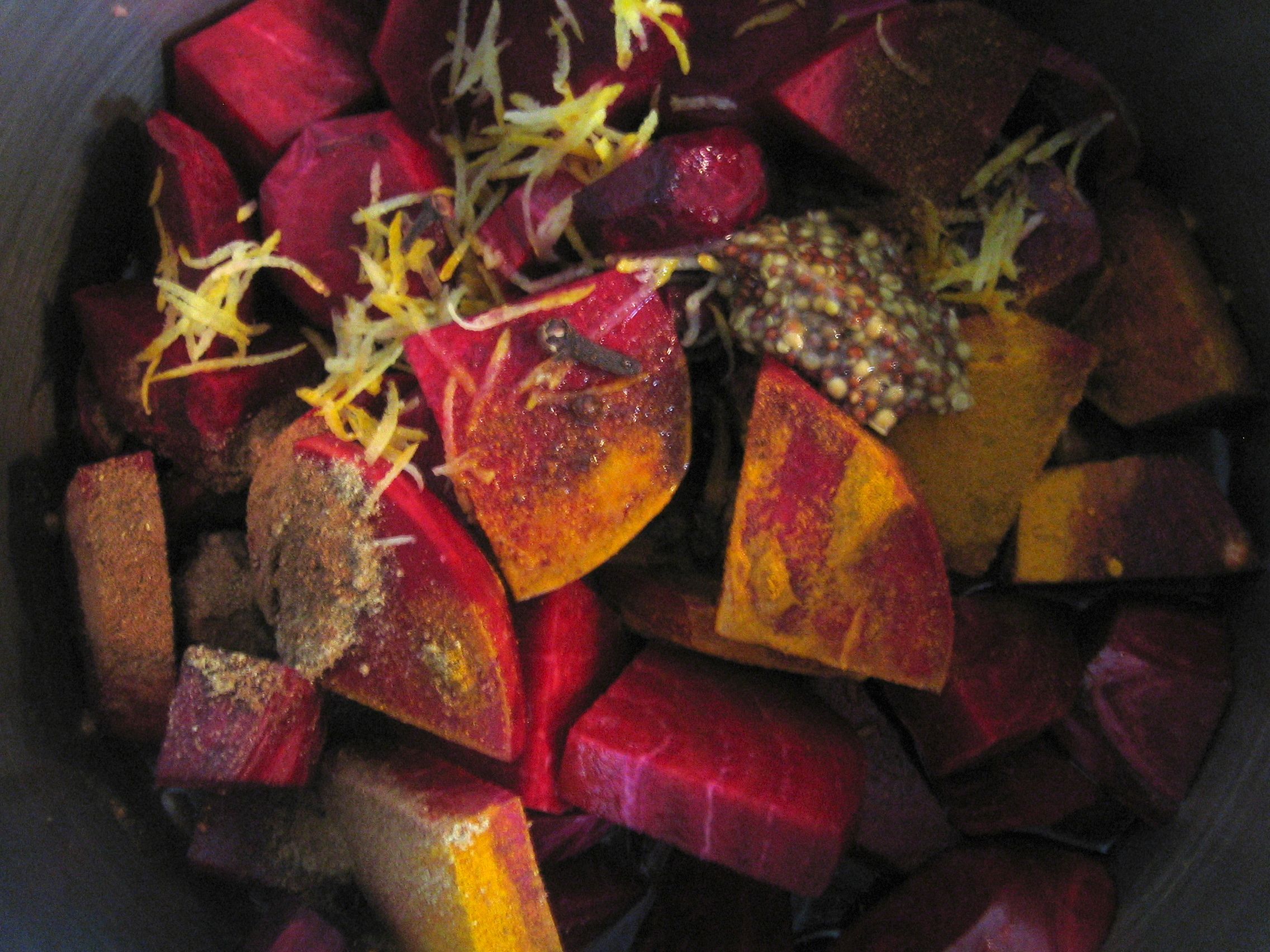
    6. Boil until the beetroots are just tender. Cool. Eat! They are great added to salads, sandwiches or just as a side-dish by themselves.

    (Because they are cooked in vinegar, what you don’t eat right away can be stored in the fridge in a container with a lid and will last a couple of weeks.)

    & Super-thrifty tip: when you have finished eating your beetroots, the juice can be used as a natural dye for cotton or wool or a food-colouring replacement for baking (you only need a drop or two, so the vinegar-taste won’t appear in your baking.)

    So there you go – that’s what I do with my beetroot! How do you like to eat beets?

    …& the beet goes on…(groan)…

  • snatched creativity

    Mothers who are also creatives (writers/artists/musicians etc) are extremely resourceful in terms of snatching creative time from days that fill up (and sometimes overflow) with children and domestic stuff and work.

    I feel like everything I make is done in intense short bursts, taking half an hour here, an hour there, ten minutes over here to quickly write/stitch/grow.

    Like most creative mothers, I look back on how I spent my pre-children time and shake my head at the ‘waste’….ha ha. But to do that is silly and ‘mooching’ is an important part of being young.

    It’s an interesting issue. On one hand, I get enormously frustrated at the lack of time I get to spend on creative work, I long for the space to deeply engage with the thinking and processing needed for quality creative work. I daydream about what I could create with more time.

    On the other hand, my creative ‘muscle’ is in peak condition. I can whack out a poem draft in a stolen ten minutes, I can add another layer to a journal collage while I wait for pasta to boil, I draft writing in my head while taking the kids to the park – scrawling notes on the back of receipt.

    Something about the urgency of snatching the time makes me more determined, more tenacious. I value my time more than I ever have before and I try not to waste it. I am good at saying ‘no’ to things I don’t really want to do (a skill which took YEARS of conscious work.)

    I feel like I could write lots, lots more about the topic of mothers who are creatives (maybe I will when I get time – lol). I would love to hear from you about how you cope with the twin demands of children and the creative compulsion…? How do you cope? What methods have you employed to stay sane and keep in the flow?

  • keeping the prunings

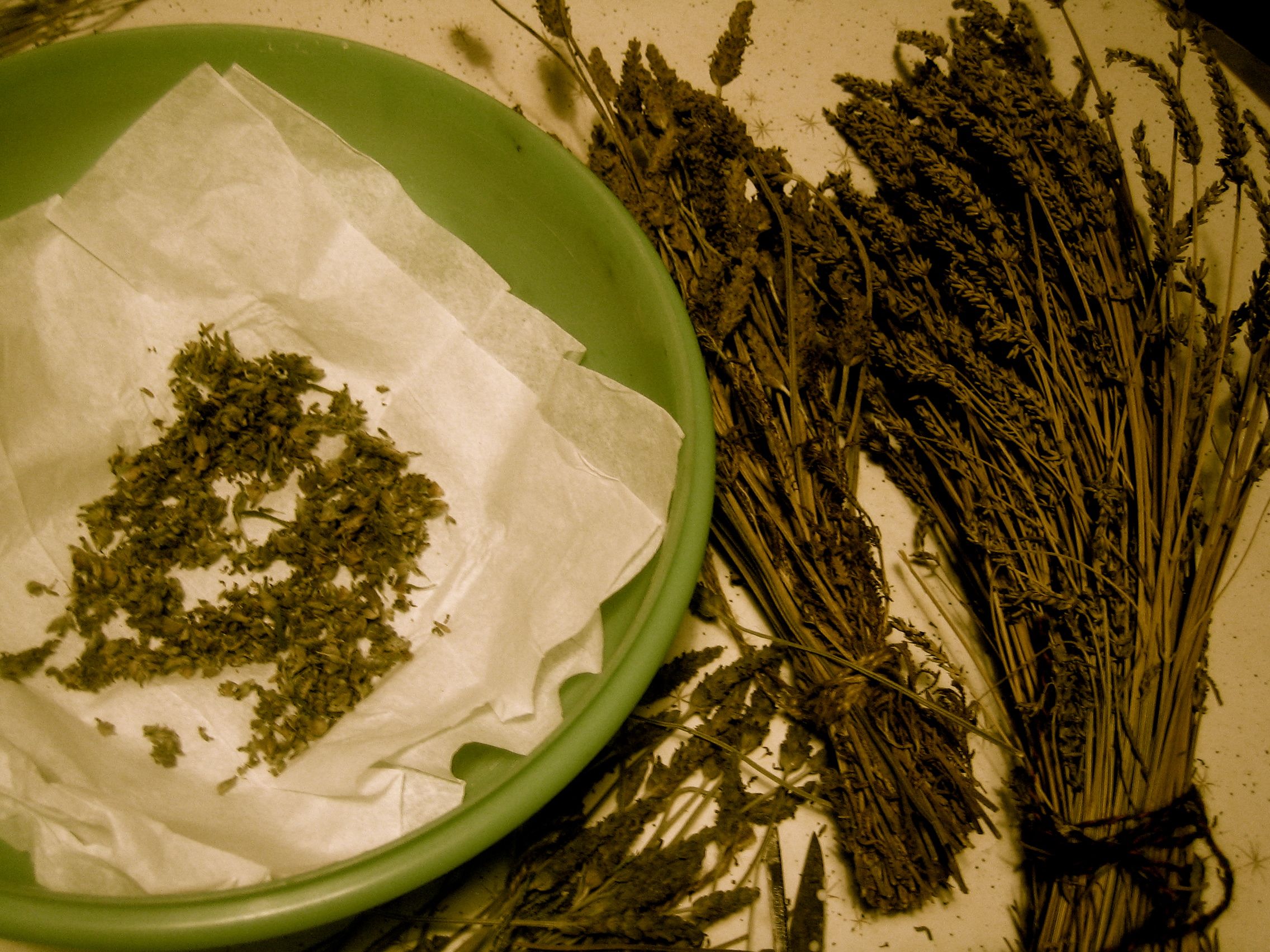
    Every time my lavender needs a prune, I tie up the prunings and hang them up in our porch to dry. Then, some months later when I have a spare hour, I pull the dried blooms off the stalks and add them to my lavender jar.

    My friend Melissa makes lovely lavender sachets with hand-printed linens. I think everything Melissa makes is beautiful.

    I like being thrifty and so I get a kick out of turning prunings into something useful. It’s a process that (to me) is lovely at every stage – the lavender is beautiful on the bush while it’s growing, it’s attractive hanging to dry on the porch, it looks nice in a jar and it will be delicious in a sachet – the heady scent of the blooms living on long after the stems have turned to compost.

  • fly away home

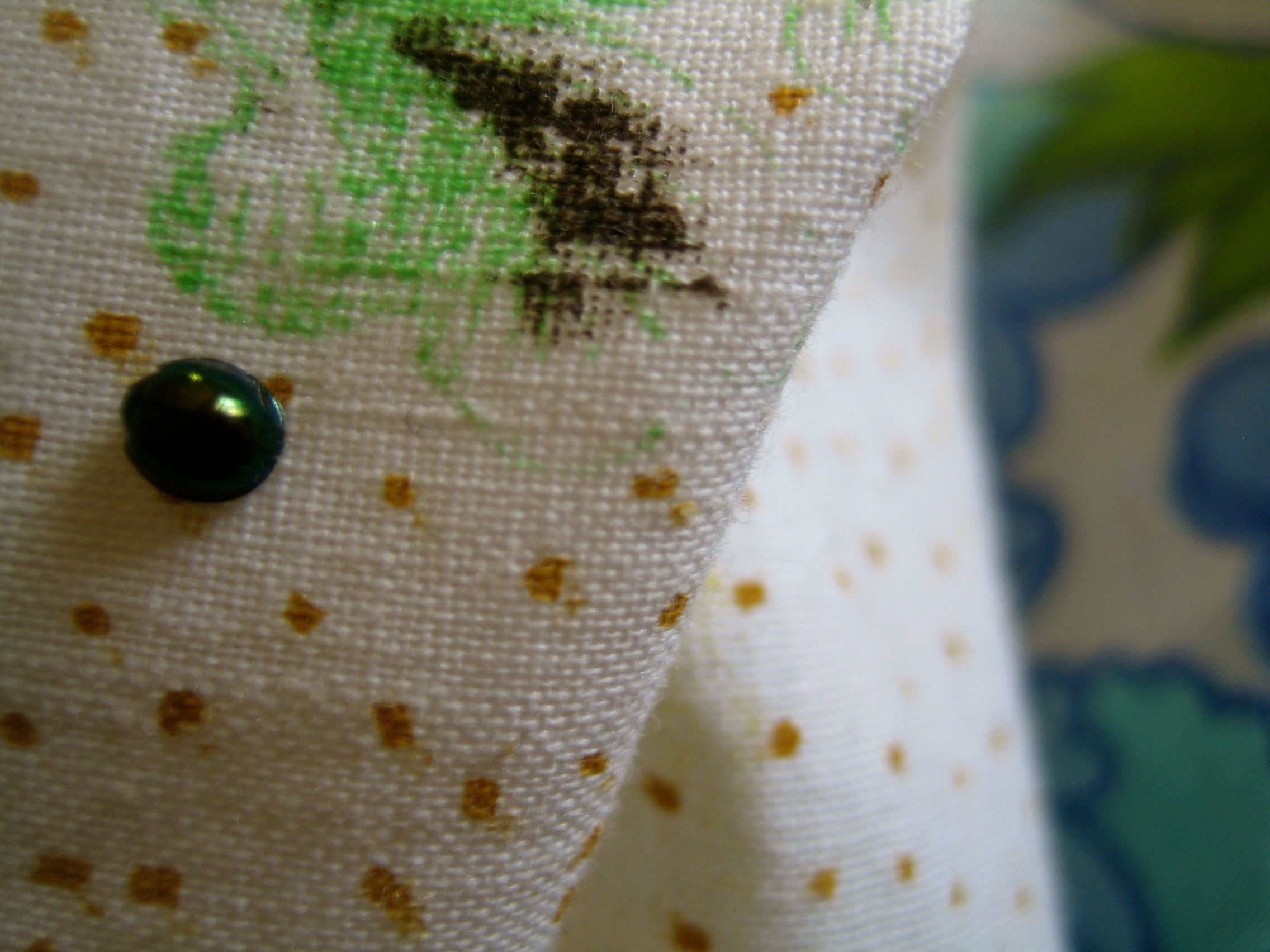
    I was sitting at the table and Willoughby said: ‘What’s that black spot on your skirt, Mum?’

    It was a green ladybird (I think) – dark, pearlescent green. I’ve never seen a green ladybird before. I looked it up on the ever-wise internet and found that ladybirds can be “yellow, green, orange, grey, white and brown, but are most commonly red. There is even a breed of ladybird which is black with coloured spots.”

    I got her to model for a couple of photographs and then I went and released her back outside.

    When you wear a lot of floral, you attract all kinds…


  • forgetting and remembering

    I’ve had a week of battling my ‘monkey mind’ – that part of the mind that is unsettled and dissatisfied, busy and graceless. This week my monkey mind has been a place of impatience and regret – both fairly useless emotions.

    It’s the school holidays, I’ve got far too much work on my plate (which I can’t get to, because it’s the school holidays) and I’m burning, itching, yearning to get to some creative work -writing and making- which is coming waaaaay last at the moment, because of the aforementioned kids, work.

    Cue the negative internal brain loops.

    The good thing is, I see it, I notice it for what it is – useless thoughts, pointless mental torture – and so as they arise, I work (and boy, does it feel like work) to let them go.

    Feel it, notice it, let it go. Feel it, wrangle with it, notice it, let it go. Feel it, watch it flare, notice it, let it go.

    When I’m wrestling with my demons, the best thing for me to do is to go outside. Be with my plants. They bring me solace. I can get perspective out in the garden, also nothing soothes a restless mind like a bit of weed pulling.

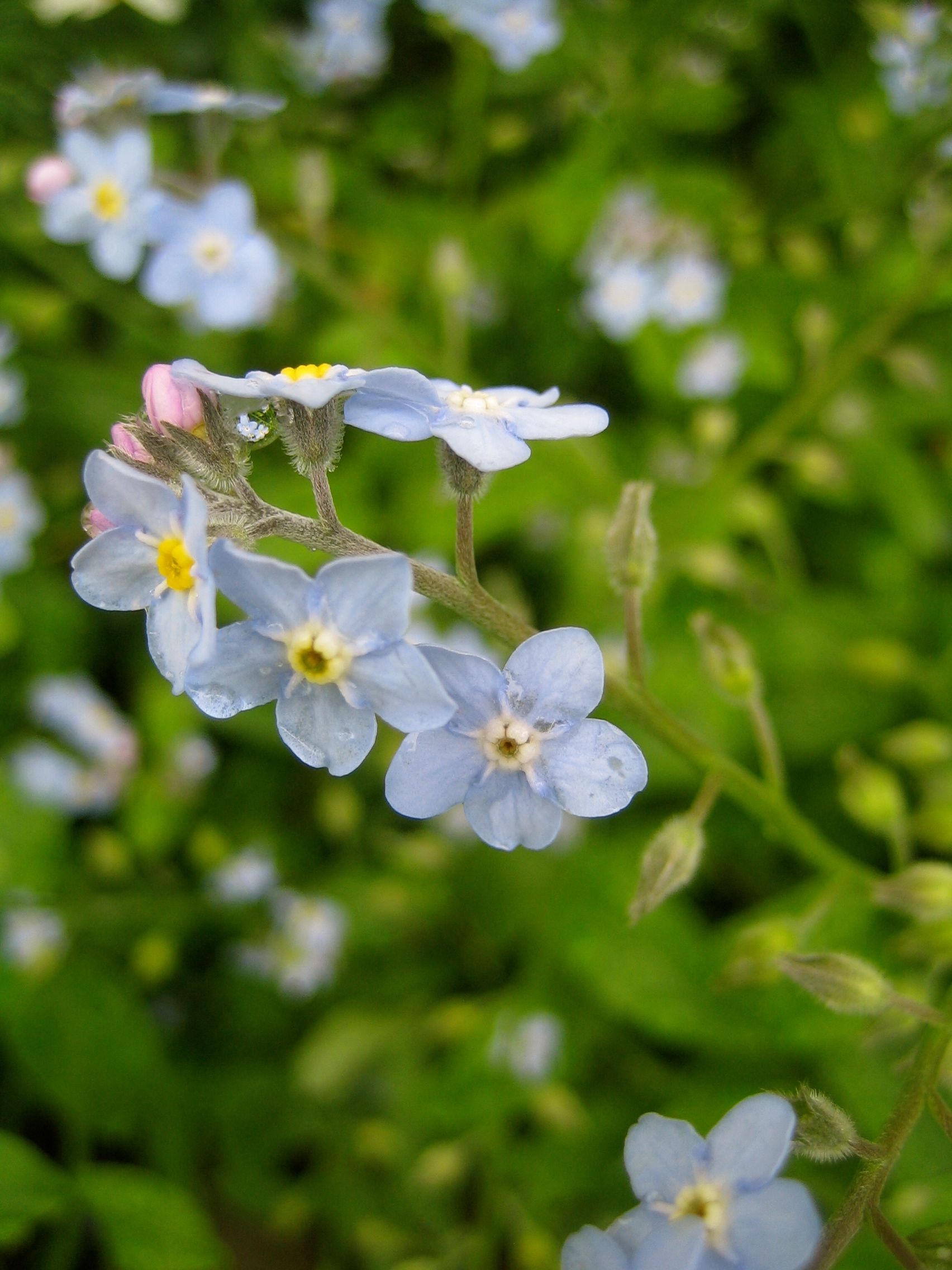
    All over the garden, forget-me-nots have self-seeded. They are growing all over the place, occasionally in an actual garden bed. I didn’t bring them to this yard, so they are an inheritance from the gardeners who lived here before me. I love the self-seeded flowers best of all – staunch, self-sufficient little fellas.

    Bright blue flares of tiny flowers everywhere – they’ve come in just the right week, when I need reminding what is worth remembering and what to forget.


  • colour in the winter vegetable garden

    I know it is spring now – but in terms of the vegetable garden, most of what is in there is still wintery-fare.

    Where I live, what I can grow in the winter is mostly green things: silverbeet, leeks, spinach, spring onions, brassicas, herbs. I’m grateful to live somewhere where it is possible to grow food all year around, but all the same, by the end of winter – I get a little tired of just greens and look forward to the colours of the summer garden: chillies, tomatoes, nasturtium flowers, the bright red flowers of scarlet runner beans…

    In winter, I have to sneak a bit of colour into the garden – just to cheer me up. This is how I do it:

    Choosing rainbow silverbeet – the stalks are wonderful candy colours – bright pink, orange, yellow.

    & Growing marigolds as companion plants. I know some people think they are tacky – but I love the colour they bring to an otherwise pretty dark winter garden.

    Harvesting greens in my op-shopped bright red colander.

    & Growing radishes – their hot pink pop can really liven up yet another green salad. Also, they grow from seed to plate in about three weeks. The closest thing you can get to instant gratification in a vegetable garden. These ones are ‘French Breakfast’ – which I grow because they are much sweeter and milder than other varieties, so more child-friendly.

    I saw on an Anthony Bourdain Food show that in France people smear these with butter as part of a breakfast meal. I tried it and found it to be kind of gross, to be honest. I think I’ll stick to chopping them up and chucking them in a salad. The French love to put butter on everything, don’t they?

    Have you got any other ideas about adding colour to a winter vegetable garden?

  • the birthday cloth

    I enjoy ironing. I think if you like to sew, you have to like to iron because ironing is such an key part of sewing.

    I even have a poem about ironing in my book, called ‘Sunday Night’.

    It doesn’t mean all my clothes are perfectly ironed, because I am a haphazard ironer. I only do it when I have a spare hour, which isn’t often.

    The other day was a lovely sunny spring day, perfect for a bit of laundry – I got my vintage tablecloths out of storage – thinking ahead to summer meals on our porch. I gave them a wash, dried them in the sun and then spent a happy while ironing them.

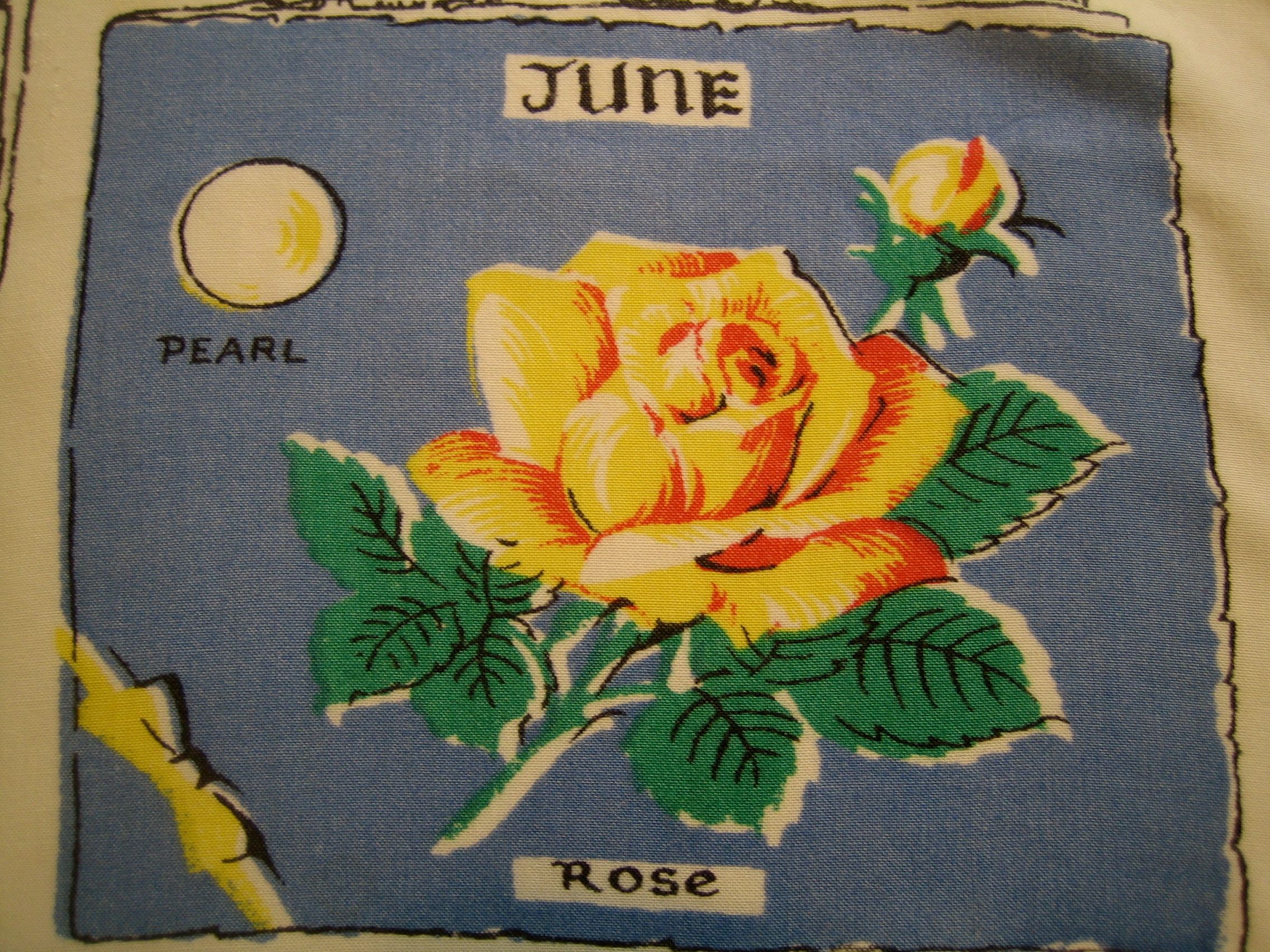
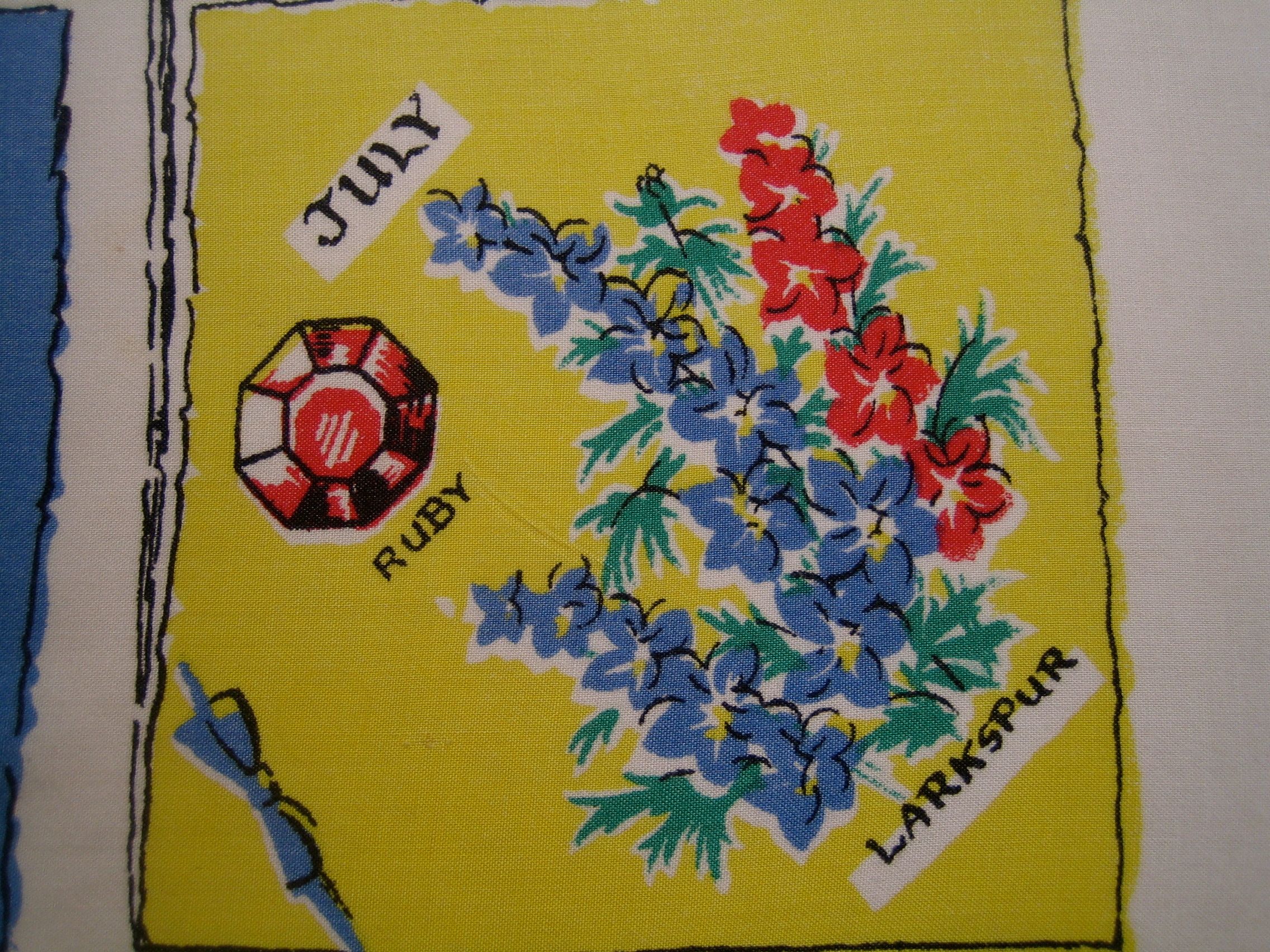
    One of my favourite cloths is one I picked up at an opshop, ‘The Birthday Cloth’:

    It has all the months of the year around the outside, with that month’s birth-flower and birth-stone. Here are a few of my favourites:

    As well as the vintagey (50s? 60s?) flowers, I love how quaint and twee it is. A cloth just for birthdays, which women must have laid on the table to serve tea and birthday cake to their friends or family.

    If you like vintage textiles, there is a great New Zealand blog called Glory Box here – where they examine all manner of fascinating stuff around textiles and textile history.

    I think it is important to USE the vintage textiles (and anything else!) you have – don’t worry about spills and wear. I firmly believe there is no point owning beautiful things just to store them. If they get ruined, ah well. It’s a good lesson in not getting attached to arbitrary things…nothing is permanent, nothing lasts forever.

    I’ve used the birthday cloth a few times for friend’s birthdays. It makes people smile.

    I like imagining all the birthdays that might have happened around this tablecloth.


  • grow your own way

    In autumn I planted a whole lot of bulbs: ranunculus, freesias, gladioli…and the other day the first of my ranunculus flowered.

    I bought all white bulbs, as I’d planned to have all white flowers in pots on the porch for added cooling effect, come summer.

    As you can, see not all of the bulbs came up white.

    Hello, bright pink interloper.

    The same thing happened with the dahlias I planted. The packet said ‘white’ and they flowered bright red.

    I don’t really care – in fact it makes me like them even more somehow. I always do like rebels and non-conformists best.

    Also, why should I get to dictate what ends up in my garden? I share the space with all manner of flora and fauna.

    White or not, they are very pretty, right?


  • travel in a tin

    Often when I mooch around a deli it is the food packaging that catches my eye more than the contents.

    Chillies from Mexico…

    Smoked paprika from Spain…

    Plain old tinned tomatoes from Italy…but somehow the Italians manage to make a quotidian product look appealing. Those bold, shiny tomatoes against that black background. Whoar!

    (Although this is obviously their export packaging because the text is in English.)

    I like the packaging so much…I’m loathe to eat the contents because I like having the tins on my shelf…cheering me up with their hints of hot, exotic locations and a life less ordinary.

  • my journals keep me

    Do you keep a journal?

    Sometimes I feel like my journals keep me.

    They keep me sane, keep me engaged, keep me feeling creative even when I don’t have time for larger creative endeavours.

    I’ve been teaching journal-writing for years. Teaching is a good reminder to me in how important it is to keep on with journals. People often start the journal workshops with slightly skeptical, guarded expressions…(I don’t know what they are thinking, but I imagine it is something along the lines of ‘Is she going to make me write about my feelings and then read it out?’) but after a couple of hours of my raving and sharing my work wth them, they light up, they see possibility, they go out the door with a new resolve.

    Now that book one is nearly birthed, I am working on the next projects. There will be more poetry, of course, there’s another thing I’m working on which I am calling ‘writing blobs’ at the moment, because I’m not sure what they are yet – not poems, not stories, just blobs. Finally, I want to write a journaling book. I’m feeling my way into what that might look like – probably a mix of my teaching and my own journal pages. Would you read a journaling book? What would you like to see in a journaling book?

    Here is a recent journal collage: ‘water’: