Category: frugal

  • Winter is a great time for harvesting volunteer ‘microgreens’ from your garden (or local park)

    (Above: today’s bounty from a little wander around my own garden.)

    Do you buy sprouts, bags of mesclun mix or microgreens from the supermarket?

    Winter is a great time to find volunteer (‘weed’) microgreens, or young greens, around your garden or local park for FREE!

    Because of winter’s rain and damp, the young weeds will be beautifully bright green, healthy and not heat-stressed.

    To share some likely contenders with you, I took a walk around my small urban yard and here’s what I harvested.

    I took care to only harvest volunteers/weeds and nothing that I’d planted intentionally. (Violet grows like a weed in my yard.)

    The trick is to just harvest the young leaves, or the tips in the case of the dead nettle.

    These wild ‘microgreens’ can be used in a salad, or chopped and sprinkled on top of soup, or in sandwiches, or blended into a smoothie…the same as you would use supermarket or homegrown microgreens.

    I numbered the plants for ease of ID-ing them:

    1. Nasturtium leaves. These are peppery in flavour so great in salads and on sandwiches, not so great in smoothies.
    2. Dead Nettle tips. Great stand-in for lettuce.
    3. Young violet leaves and flowers. Use in salad or cook as your would spinach.
    4. Young ribwort plantain leaves. Important to pick the young ones as the older ones get stringy. The young leaves have a nutty flavour.
    5. Chickweed. Such an enthusiastic garden volunteer. Use the young growth and chop finely.
    6. Young dandelion leaves. These add a nice bitter element to a salad or sandwich. Not so great in smoothies.
    7. Oxalis (known in the UK as ‘wood sorrell’ and the USA as ‘sour grass’) Has a sour, lemony flavour similar to sorrell. Use just a little at a time as it contains oxalic acid. Treat it more like a herb than a main vegetable.
    8. Young mallow leaves. Mallow (also know as ‘Malva’) is a much-used vegetable in Middle-Eastern cuisine and parts of Italy. You can make dolmades with the leaves in place of grape leaves, making it useful during the winter when there are no grape leaves about. Young leaves are good in salad or cooked like spinach.

    & of course, these plants have medicinal properties as well, (most plant food does.

    I hope this inspires you to have a close look at what might be growing in your own back yard and save yourself a little money (or time) by eating some of the weeds around you.

    Let me know in the comments if you have any questions.

    Do you eat any of the weeds in your garden?

  • Communitea

    Communitea

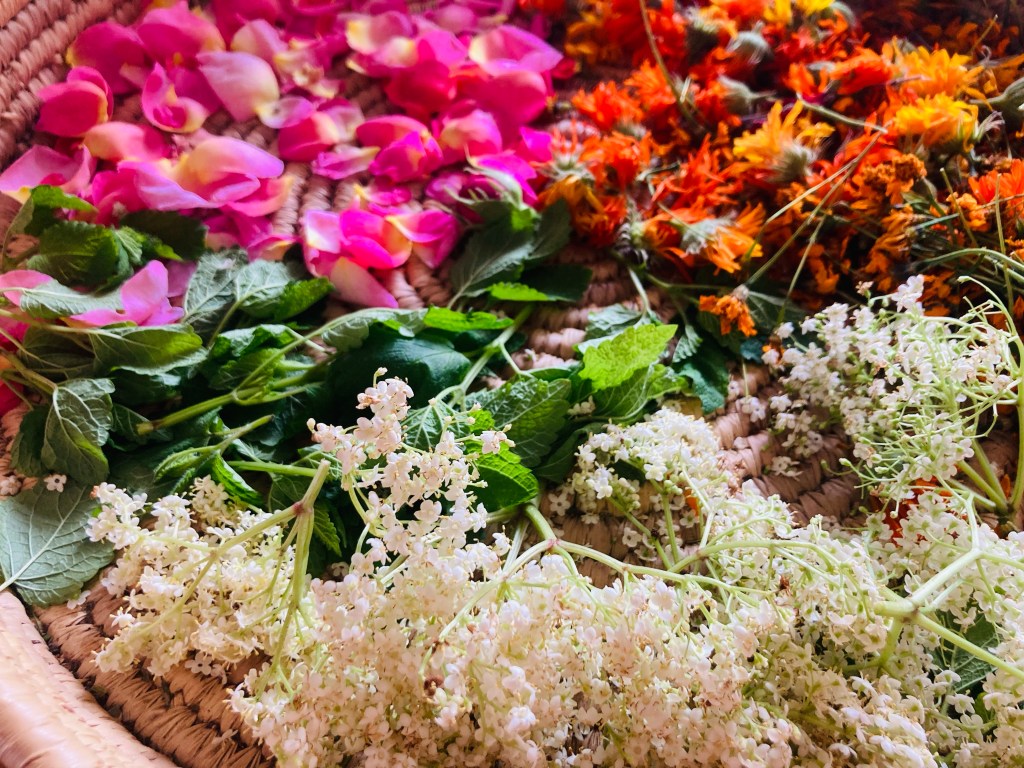
    Over recent years, I’ve started making large amounts of what I call ‘communitea’…herbal tea blends made from whatever I can find in the 4412 postcode of Palmerston North…the postcode I live in. It’s an exercise in locavorism and sharing and fun. I dry things foraged and grown, cultivated and gifted, rub and snip them into a tea blend and then give most of it away at community events, like garden working bees, crop swaps and garden education activities. Some of the plants that I’ve used include: nettle, various mints, calendula, violet, rose, dandelion, lemon verbena, lemon balm, chamomile, kawakawa, plantain, pineapple weed, elderflowers, Mexican marigold, rose and more!

    Plants from a summer foraging session drying on a basket

    I get a real kick out of sharing small bags of the dried tea and telling folks that it’s from plants that are growing all around them!

    What plants which grow around you do you like to make into tea?

  • Apple season

    Apple season

    Apple cheeks, apple weeks, the race against the birds…

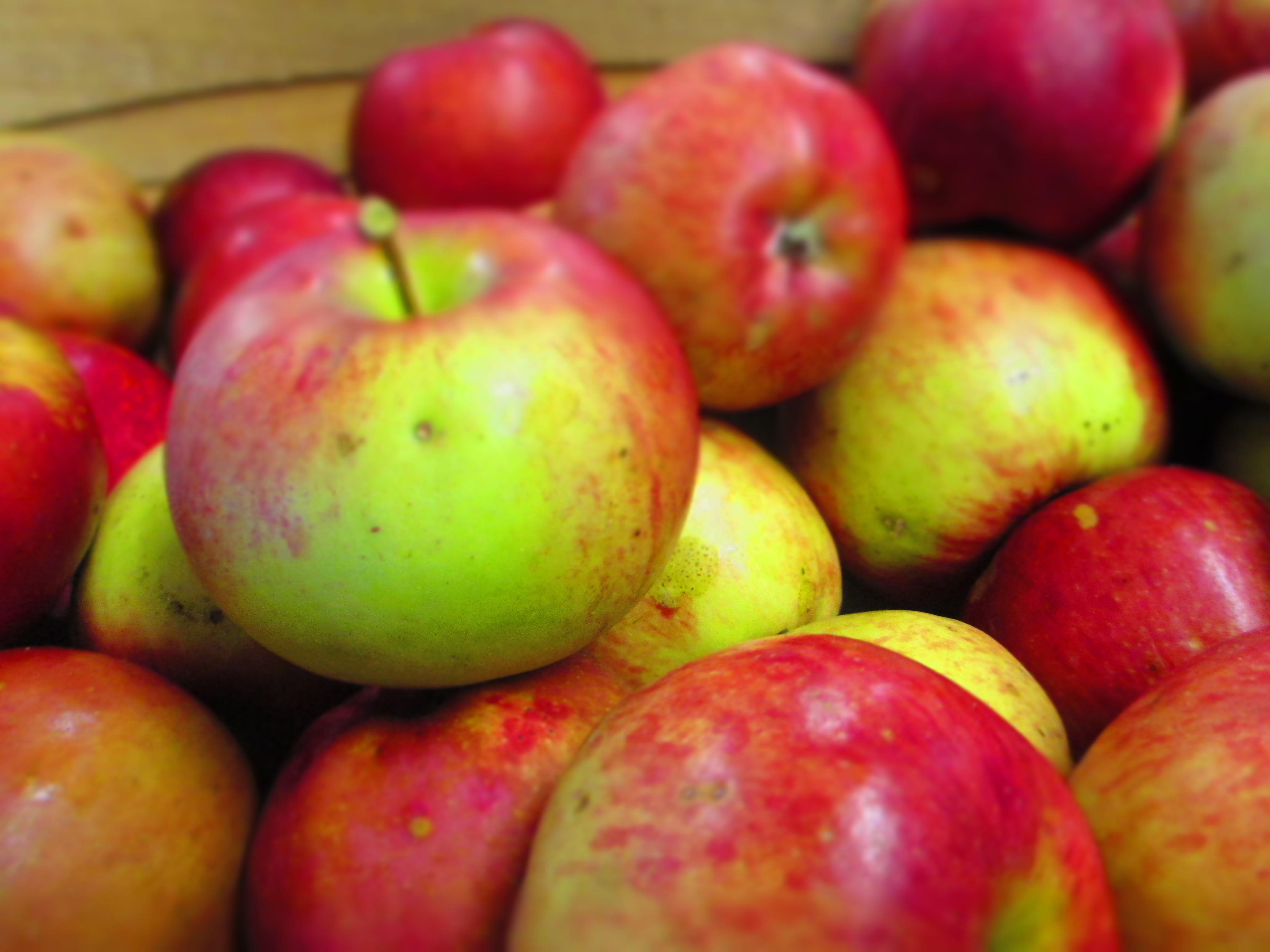
    The inherited tree which has the codlin moth – I know it’s time to strip the tree when the birds begin to peck at the apple tops – this means they are sweet and ready. Cutting around the moth tunnels, making apple sauce which turn into breakfast or crumbles or just eaten with a teaspoon standing at the fridge when I realise I’m starving but have to do the school run in two minutes. (I continue to ‘battle’ against the codlin moth. They are determined creatures.) The commitment of using seasonal abundance. It’s a gift, sure, but it’s work. Sometimes hours and hour of work. Sitting at the table, making the meditation ‘can I take all the peel off in one go?’ Buckets and buckets of practice later tell me that I can’t, but it’s fun trying.

    apples_2 apples_3

    The Ballerina apple tree which was a wedding present 20 years ago, and moved with us from flat to flat in a big pot, finally planted into the ground here and produces the most beautiful green and red apples, like the ones from Snow White…

    apples_1

    This tree on an abandoned section – the way fruit trees give and give, regardless of how they are tended or neglected. Walking onto ‘private property’ to pick the apples. Respecting the tree’s gift more than the human’s claim. Not wanting the generosity of the tree to go unnoticed, unappreciated. Leaving plenty for the birds.

    apples_8

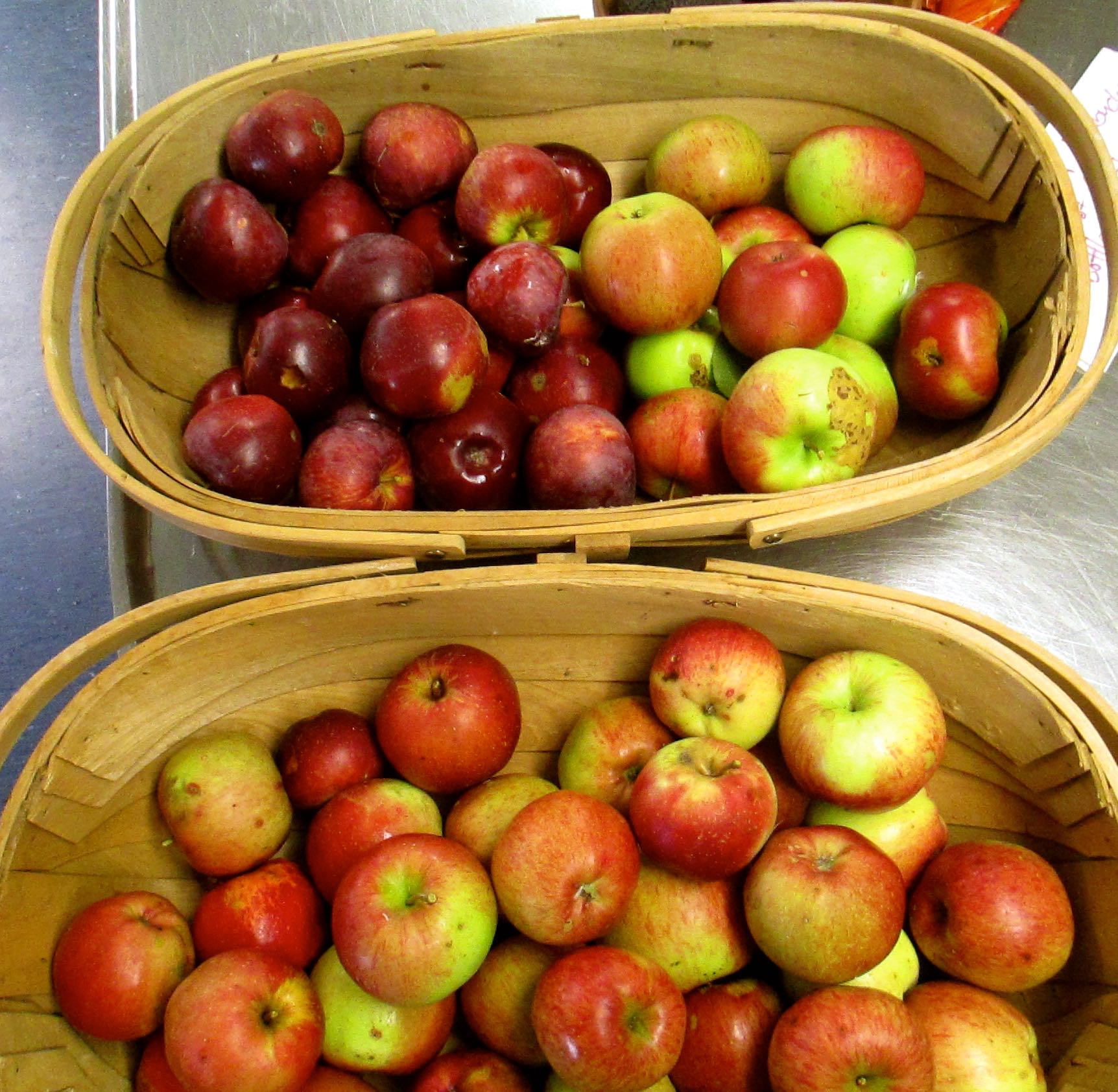
    At my permaculture course, Duncan brings two beautiful baskets of apples from his small farm. Four heritage varieties – enough for everyone to take a few home to taste. On the permaculture course, people are passionate about plants, about fruit trees, about the earth. People have strong opinions – in discussion time the debates are weighty, rich, sometimes a little heated…but at lunch time, we sit around munching Duncan’s apples. That they are fine, crisp, tasty apples, we all agree on.

    apples_5 apples_6 apples_7

    The beauty of the simple backyard apple, wet from being rinsed in cold water, fresh-picked off the tree.

    apples_4

  • victory gardens / mend and make do

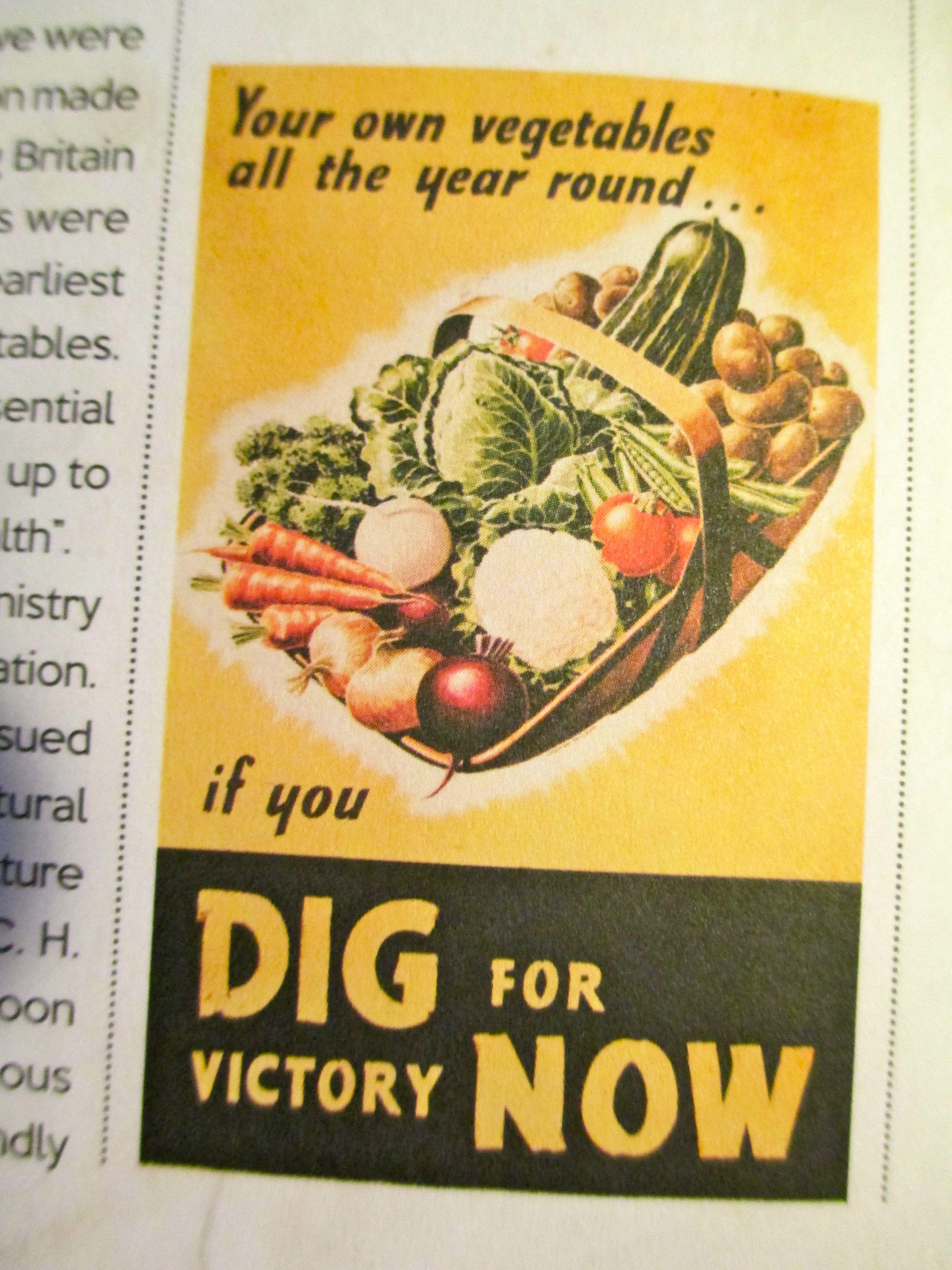
    I’m very inspired by World War Two imagery around Victory Gardens and Mend & Make Do campaigns. I’m also fascinated by the Land Girls / Womens’ Land Army, and the way WW2 changed work life for women in the West forever.

    I recently had a pile of WW2 social history books out of the library and wanted to share with you some of the images. (Sorry I didn’t have the time/patience to scan them, so they are photographs of book pages. Not ideal. Forgive me.)

    I don’t at all idealise the 1940s. I’m know it was a very hard time, a frightening time, lots of death and fear and sadness and people worked very hard just to keep their houses clean and keep their families fed. All the same, I enjoy the parallels between the Victory Garden movement and the 21st zeitgeist of backyard chicken farming, raised bed gardening, community gardening, CSA schemes, Seed Banks, recycling, upcycling etc….the similarities are strong.

    There’s a great shop on etsy which sells modern day ‘victory garden’ posters – great witty designs. It’s called ‘The Victory Garden of Tomorrow’. I so want to buy something from the shop for my kitchen, but I can’t make up my mind which one I like the best!

    Here are some of my favourite WW2 images from the books:

    Women darning their tights….

    digvic_9

    In today’s world of ‘from sweat-shop to landfill’ fashion, I’m proud to say I DO mend my clothes…as below…

    digvic_8

    Dig for victory NOW!

    digvic_7

    I would join this girl gang of happy gardeners!

    digvic_6

    Have you ever seen a sugar beet? Not the most inspiring of vegetables…. 

    digvic_5

    The lawns of Kensington Park in London were dug up for food production….

    digvic_4

    Love the way the word ‘FOOD’ is made from vegetables here… 

    digvic_3

    Even Yardley face cream got in on the victory gardening trend for it’s advertising… 

    digvic_2

    WOMEN MUST DIG!

    digvic_1


  • Interview with Johanna Knox author of ‘A Forager’s Treasury’

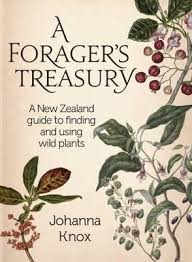
    forager_treasury_coverAs a keen forager myself, I was so excited to hear that my friend Johanna Knox was writing a foraging guide for New Zealand, but despite the fact I was pre-disposed to like it, I am truly impressed and in awe of what she has produced. It is a beautifully written, helpful and down-to-earth book with great illustrations and in a handy format for toting along on foraging expeditions. I talked to Johanna about foraging recently and here is what she said:

    HL: Congratulations on your new book, Johanna! Can you tell me how you got into foraging? 

    JK: Thanks Helen! I was always fascinated by all the uses of plants, and I experimented madly as a child and a teen. As an adult I got into it again after I had children. I saw the natural world anew – through a child’s eyes again. Plus I got interested in food activism, and foraging kept cropping up as part of that.

    HL: Why do you think foraging is an important skill to have? 

    JK: In the Western world we’ve grown so distant in our relationships with the plant kingdom. Obviously there are exceptions – all the amazing researchers and trampers and wanderers, and gatherers and growers like you, who are maintaining and developing give-and-take relationships with the plant world. But as a society in general we’ve become disconnected from the truth about how we need plants for our survival and wellbeing.

    If we forget how all that works, we also forget what plants need from us in return. That way lies disaster. So foraging is a fun and productive way to help revive that relationship.

    You can definitely save money foraging too! Plus it’s empowering to be able to look around you, wherever you are, and see the ingredients for food or medicine or perfume or dye. johanna_2 

    HL: What have you learned from your foraging adventures? 

    JK: To be patient about knowledge! To not try and identify everything and know all about every plant at once.  That’s just frustrating. You have to read and listen and think and observe, and gradually things dawn on you. You can short circuit parts of that process if you get someone to show you stuff directly, but you still have to do your own research and observation and thinking.

    HL: Do you dumpster dive, too, or is your ‘foraging’ restricted to natural foods? What do you think of dumpster diving? 

    JK: Dumpster diving is admirable. I haven’t been party to it since before I had kids. Maybe I’ll take it up seriously one day …  I like the idea of doing it as a 70 year old.

    HL: What would your ‘Absolute Top Five List of Things To Forage (even if you are not a keen forager)’ be, and why? 

    JK: This is hard! I reserve the right to change this list tomorrow.

    Today:

    Kawakawa: my first native plant friend, so easy to identify, so abundant, so useful in so many ways.

    Fennel: I never used to like fennel – it gave me a stomach ache, but once I learned to use it more subtly in cooking and also found you could dye things almost fluoro yellow with it, I gained a new appreciation for it.

    Nasturtium: Every part is edible – and nutritious – and medicinal in that mustardy old-time-remedy way … And it’s so decorative. Good for party foods.

    Elderberry: Gather the flowers around November, and the berries late in summer and gather heaps. Make bulk syrup and freeze it and then use it in everything all year round. It’s so expensive in shops, and so cheap to make your own. And this tree is not endangered in the slightest.

    New Zealand mint: I love it that New Zealand has a native mint. But like many New Zealanders it’s a bit reserved and self-deprecating. Tough though, with hidden depths … and it gets louder when you mix it with alcohol. If you can’t find it wild, grow it in your garden as a ground cover.

    HL: How has foraging changed the way you see the world? 

    JK: I think I have a much greater appreciation for New Zealand’s native plants now, what they need, and their enormous value in ecosystems, as well as all the amazing things you can do with them.

    HL: Do your family & friends ever get embarrassed when you forage and collect windfalls when you are out with them? 

    JK: Not so much embarrassed – just impatient! I always hope I can sweep them along in my own enthusiasm, but there are times when I have to accept they’ve got other things on their mind!

    HL: Do you forage for mushrooms? Just how dangerous is it? 

    JK: I have anxiety around fungi. I realise rationally that if you know what you’re doing it’s not dangerous. And I can identify certain fungi that are edible – like boletes and basket fungus… but I can’t bring myself to eat them.

    I gathered field mushrooms once, cooked them up, and ate them. I knew beyond reasonable doubt that they were field mushrooms. But for a couple of hours afterwards I was still hyper-aware of my body, and every odd twinge, wondering if I’d poisoned myself.

    I’ve been wondering if this goes back to reading the Babar books as a child.

    Do you remember that bit where the old king elephant eats a ‘bad mushroom’ and dies? There’s this awful picture of him lying on the ground all green and wobbly. That’s one of my most vivid book memories from my preschool years – staring and staring at that picture in horrified fascination, trying to comprehend it … Now I wonder if that book set me up for a lifetime of anxiety around wild mushrooms!

    Whatever the reason, A Forager’s Treasury takes a botanical approach rather than a mycological one.

    HL: Is there a foraged food you eat almost every day? 

    JK: There’s no one foraged food, but definitely a recipe I pull out more regularly than most others – that’s weed pakoras. It’s such an easy, substantial, satisfying way to use any edible weeds you can find near your house, and whip up a meal or a side dish when you’re running short of stuff in the pantry

    HL: What is your best discovery in terms of our native plants? (Recently, I had delicious tea at a cafe which had Kawakawa in it, and now I’m keen to try that.)

    JK: Perhaps harakeke. There are so many varieties, and you never stop learning about it. It’s just this most incredible multi-purpose plant – the nectar as a sweetener, the pollen as a nutritious condiment, the seedpods as a rich chocolate-brown dye (and I love the smell of them), the sap as a healing gel … and that’s not counting all the uses of the leaves as fibre.

    HL: Does foraging have a spiritual element to it for you, or is it strictly pragmatic? 

    JK: I’m not a very spiritual person I’m afraid. I was brought up in a family of geeky atheists. But I think science has served some of the same purposes for me as a spiritual or religious path might for some others.

    It’s given me a sense of awe and wonder about nature and the universe, a feeling of being just a small part of something grand and mysterious, and a reassuring sense of my own insignificance. It also helps provide the co-ordinates for a moral compass (however hard it is to follow that compass sometimes).

    I can’t say it’s helped me fully come to terms with human mortality – I’m still working on that one! But I have the impression many people on spiritual or religious paths struggle with that one too.

    When you’re out gathering, all those feelings and ideas certainly come into play.

    Thanks so much, Johanna! Over the next couple of weeks I intend to post a review of ‘A Forager’s Treasury’ and Johanna has also given me a recipe to share with you all as well.

    If you want to learn a little more about Johanna – look HERE. HERE is a recent review of the book, and there is a website which goes along with the book HERE.

    Happy foraging!


  • picking up what the wind drops

    I took a walk to a nearby section where an old house had recently been demolished. They are building shops there. I dug up a wormwood plant and rescued an iron gate from a skip which I’ll use as a frame for beans in the vegetable garden. 

    When I walk I am looking for stray plants and clues of what other humans are doing, their leavings, their signs.

    So many gardens are neglected and full of mistakes – odd plantings, strange schemes gone wrong. It’s a lexicon of thwarted plans, migration, human error. But I love all the gardens, all of them. I love where weeds come in and grow where no one thought there was any dirt. I love the twee tidy gardens around the brick units where the widows live – all pansies and polyanthus and tight little roses. I love the student flat gardens with the crushed comfrey and the gnarled old lemon trees. There is a place deep in my heart for the gardens inside the gates of kindergartens – old tractor tyres full of marigolds and strawberry plants, glitter and matchbox cars.

    These dahlias were planted behind a tin-shed, hard up against a damp bank…..in entirely the wrong place and where no one can see them (except me, because I creep and snoop) so I pick them and drop them at a friend’s door.

    white_dahlias

    I pick up windfall apples from the house across from the supermarket. They are a bit bruised but will do for pie. At another house someone has left ice-cream containers of passionfruit for $2 each on their fence. I take one and leave a coin in the letterbox.

    I don’t fully understand my own instinct for gleaning. It’s more than acquisition. It’s something to do with control, and side-stepping capitalism and burrowing into a universe where people trade in fruit and the urban environment is one big shared playground. I like my own company but I spend too much time in it and then I read the street and try to draw meaning from the random and the incidental.

    Occasionally a garden is stunning and special and makes perfect sense, but these gardens are rare:

    holloway_1holloway_2

    Right now, there is an American oil company doing exploratory drilling in the hills near Dannevirke. If they find enough, they have plans to frack for oil. Local farmers and  Iwi have been protesting there this week and it is getting almost no media coverage. There are similar exploratory tests going on near Whangarei, but for gold.

    I have been following the effects of fracking in Pennsylvania, USA where fracking for natural gas has been happening for some years now. None of the news is good. Profound pollution, deformities and stillbirths in animal stock, rising cancer rates and the tap water is flammable.

    Hold a lighter to your running tap and it lights up. Imagine.

    Parts of the Manawatu River are so polluted from intensive dairy farming and factory run-off IT SPONTANEOUSLY CATCHES FIRE.

    Water on fire. Water on fire.

    On the way to pick the youngest up from school I pass a house with a big walnut tree. There are walnuts all over the path, so I pick them up. I always carry a cloth bag in my hand bag for spontaneous foraging. It’s like maybe if I notice the trees enough, maybe if I honour the fruit enough, maybe if I pick up enough windfalls and rescue enough plants….maybe then…? Maybe then.

  • the last

    I write about the seasons a lot, don’t I? I can’t help it. I grew up in a small town in the middle of farmland – my Dad was (still is) a hunter and fisherman and so we ate with the seasons and the seasons were meaningful in a way they may not be for city-folks. Most of my friends lived on farms, so the drying off of cows marked the start of winter, new lambs heralded spring. Because I do write about the seasons so much, the editor of The Comforter, Helen Rickerby, organised the book into seasonal parts. I still can’t believe it didn’t occur to me to do that – but that’s why you need a good editor, right? To show you things which are right under your nose but you can’t see because you are over-exposed to your own work.

    Anyhow, of all the seasons, autumn is my favourite. The harvest, the golden days with cold edges, the sense of melancholy. Garden fires, washing the woolens which have been in storage since September, quinces, feijoas, walnuts…picking apples – we have two apple trees at our place:

    In my book, there is a poem about the beginning of autumn, the final day of daylight saving. There is a point at the end of summer/early autumn, if you are a gardener and eat seasonally, like we do, where you know it is likely to be the ‘last’ time you taste that particular thing for some time. That final meal has autumnal melancholy all over it – it’s a farewell to summer. In the poem, ‘the last’ has a deeper resonance – because of my beliefs about the environment, I feel that anything could be our ‘last’ time, because our existence on this ailing earth is so precarious right now, and growing more so.

    Late summer this year, we ate corn for a good eight weeks, thanks to the 60 corn plants I grew – & no, I didn’t tire of it, like I do with some gluts. With the last of our fresh corn, I made a bean succotash which also contained the last of our tomatoes:

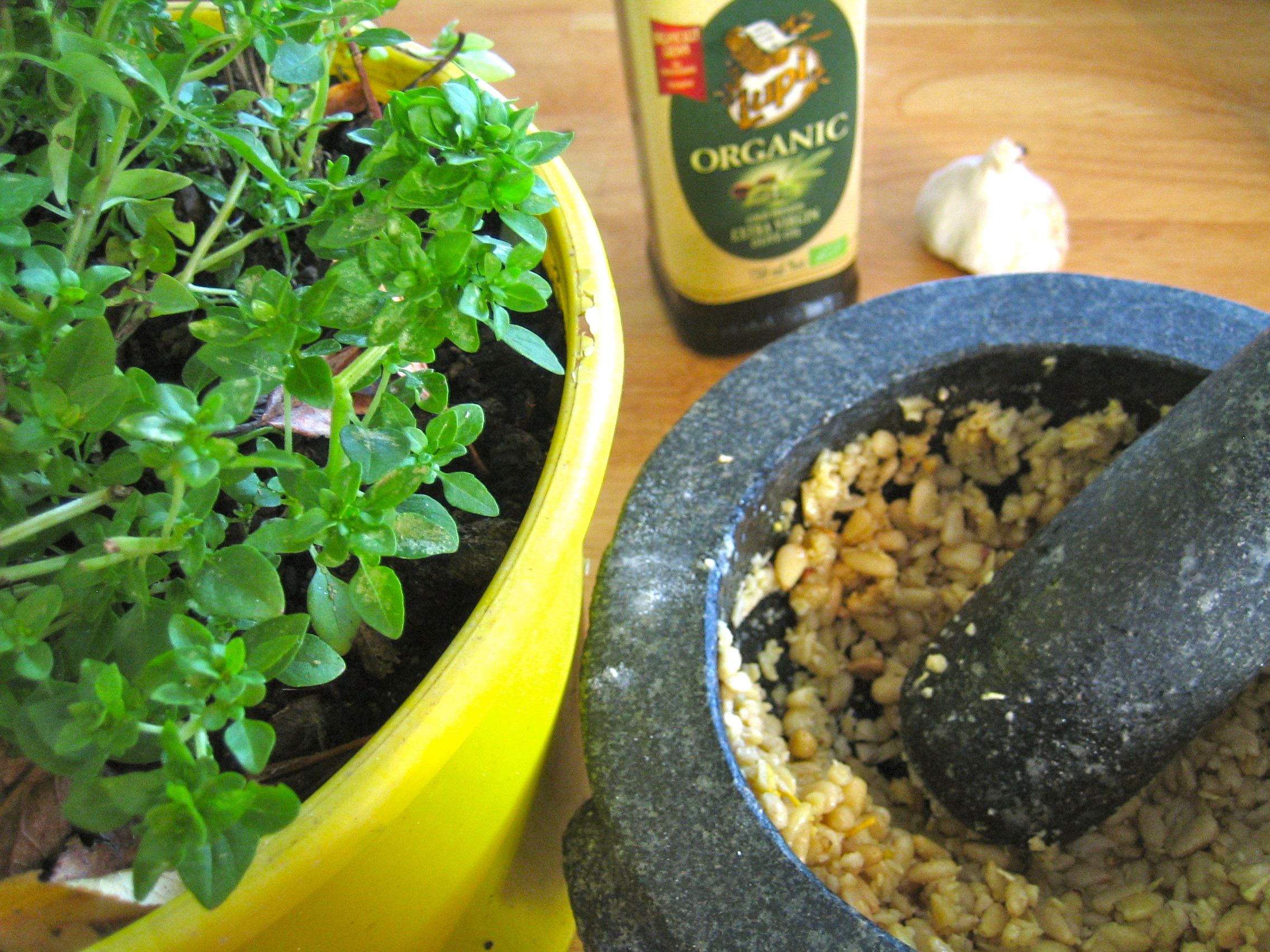
    Also, ‘last’ for the season – I made a ‘pistou’ or paste with the last of our bush basil, some pine-nuts, garlic, olive oil and salt. It’s always a sad day when the last of the basil goes. We ate it on pasta.  I like to grind such things up in my big mortar and pestle, rather than blitzing with an electronic device. It’s calming and meditative to hand-grind.

    (A Wellington friend who has never visited me at home was surprised to learn that I don’t live on a farm – he thought I did from reading my blog. I don’t know if it was just him, or if others have that impression as well – but just to be clear, I live on a very average not-quite quarter-acre section right in the heart of Palmerston North. You can take a girl out of the country, but she’ll bring her small-town/country ways to the city!)

    Anyway, here’s that poem I mentioned, from The Comforter:

    FALL BACK

    Insects everywhere – dead bees in the garden, moths

    stud the bathroom ceiling like dusty ornaments, praying

    mantises crawl out of the compost bucket. The flies.

    The last day of daylight saving. Everyone

    tired and wistful on Sunday. That feeling

    like you lost something all day.

    The last-day-of-summer pasta sauce – made with the last aubergines,

    last cherry tomatoes, the last zucchini. The garden now

    full of fledgling winter vegetables: spindles of cabbage, arrowheads of spinach.

    Manawatu gothic. Even these bright days are tinged

    with a kind of violence. There is a black velvet ribbon

    threaded through your head, collecting debris.

    The last dinner on the dehydrated lawn.

    *

  • beets and pieces

    First some writing news – Fourth Floor Literary Journal is up and I have two poems in it! Yay! You can read them HERE.

    Back HERE I mentioned my friend Helen wrote an essay about ‘Taking Care’ (killing) ‘Of Animals’. It’s also in 4th Floor. It is a funny, chilling read – you can read it HERE.

    *

    I continue to be tired. It’s like when you’re on a Merry-Go-Round and you jump off and you have to run so you don’t fall over and then you feel a bit dizzy and woozy until you get your balance back. That’s me right now.

    *

    The Beetroot liquid makes a great vegetable dye (the vinegar in it acts as the ‘fixer’.)

    After we ate the beets, I had some beautiful hand-spun wool that a friend had given me, but it was in pastel colours. I prefer stronger colours so I dyed it with the beet juice. Here is how it turned out:

    What am I going to use the wool for? No idea. Back into the stash cupboard it goes for now.

  • unexciting gluts

    Sometimes I end up with an unexciting glut in the garden. Recently it was silverbeet.

    A silverbeet glut is not like a tomato glut, or an apple glut – where your friends will get excited and happily take bagsful off your hands or you can make bulk delicious things like ketchup and apple sauce.

    I tried giving away some of my silverbeet and got either screwed-up faces or ‘No thanks, I’ve got lots of my own in the garden.’

    Poor old silverbeet.

    While it does freeze well – in the Manawatu I can grow silverbeet twelve months of the year, so I didn’t feel especially motivated to freeze what I know I will have on hand fresh. However, if you live somewhere with a snowy winter – there is an excellent photo-tutorial of how to prepare greens for freezing over on TEND BLOG HERE.

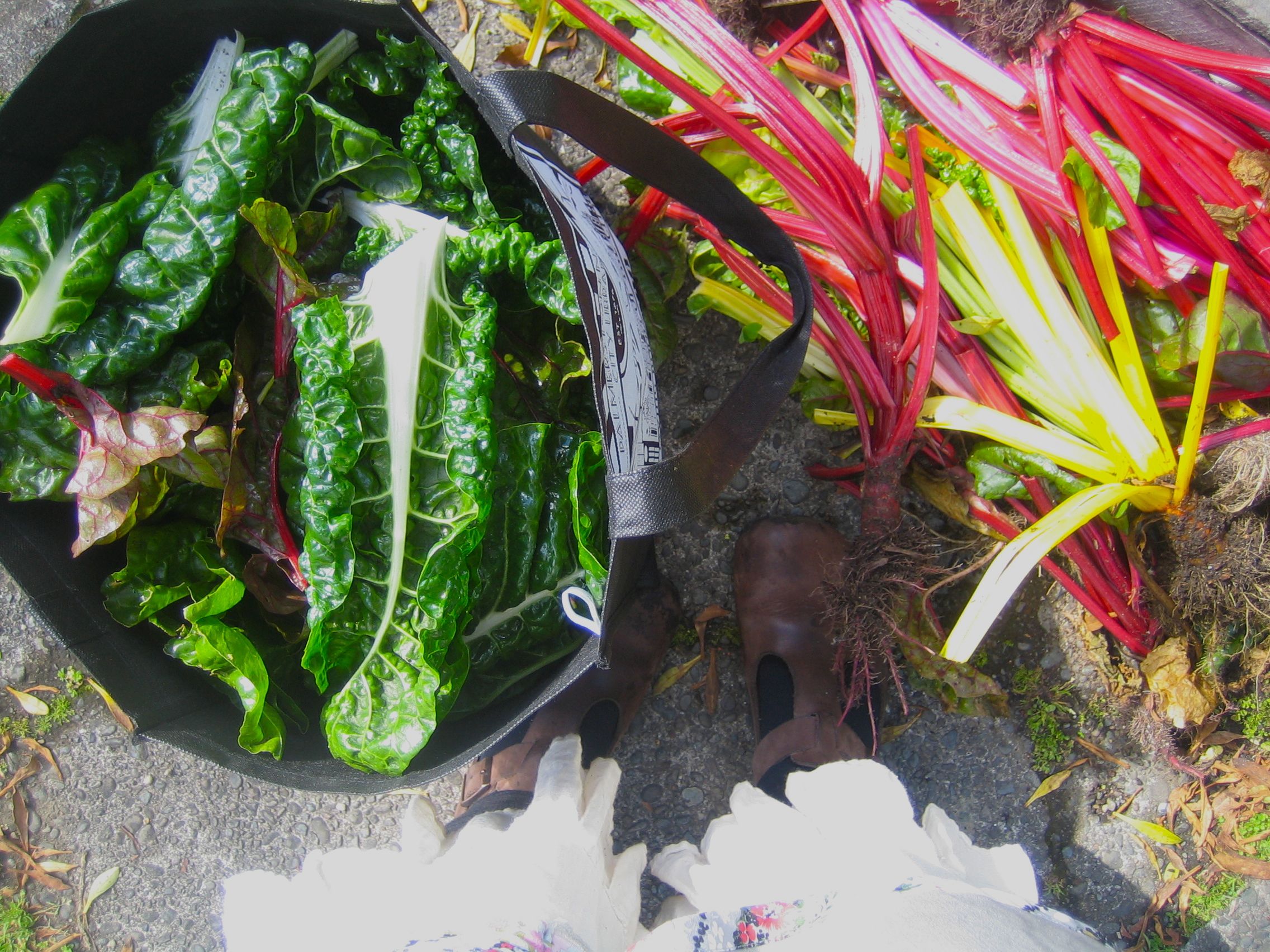
    I am, however, thrifty to the core and wasn’t going to let it go to waste – so I picked it all. It was a green supermarket bag absolutely chocka. Once cooked down, it was about twelve cups. That’s a lot of silverbeet.

    I love silverbeet, but it does have a strong iron flavour – so I thought, right, I’ll do something with it which will temper the iron flavour.

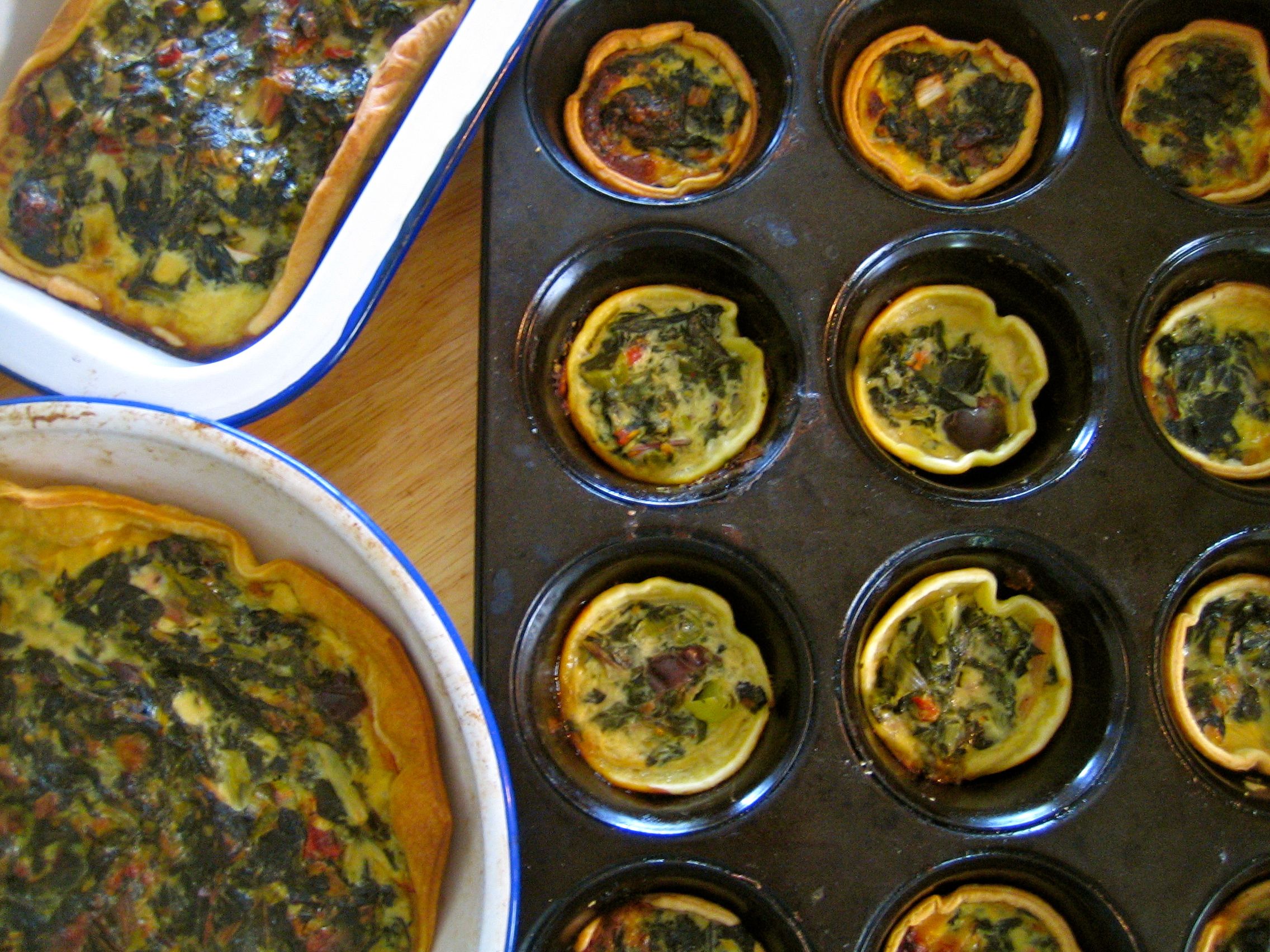
    I made a huge mixture of egg, strong cheese, fried onions, chopped olives and chopped sundried tomatoes – I figured the cheese and olives would be a good accompaniment to the strong flavour of the silverbeet. Then I made pies. And pies. And some more pies.

    I made four full sized pies and two dozen mini-pies. We ate one that day, and the rest I wrapped and  froze. The mini-pies have been great for taking to work for lunches.

    & that is the story of the great silverbeet glut of ’11.